-
-
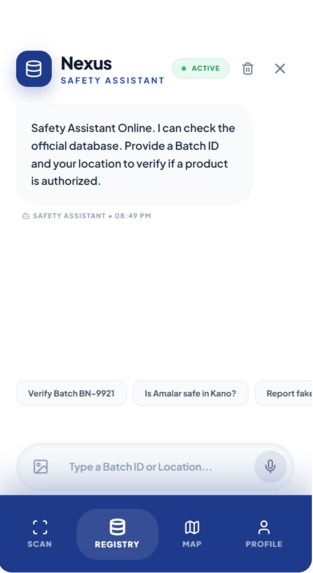
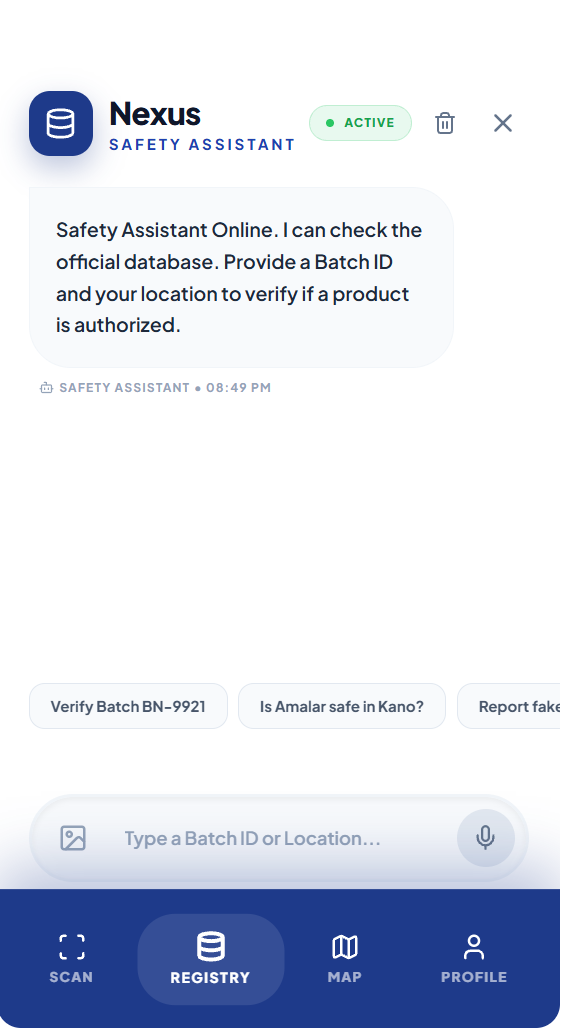
Safety Assistant
-
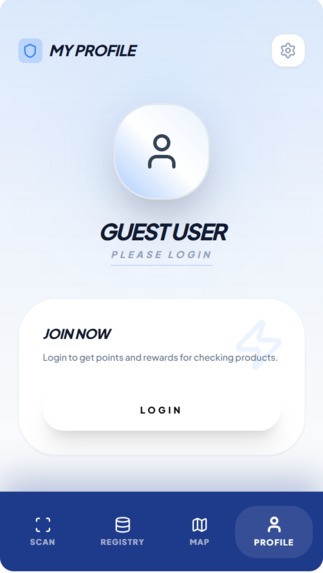
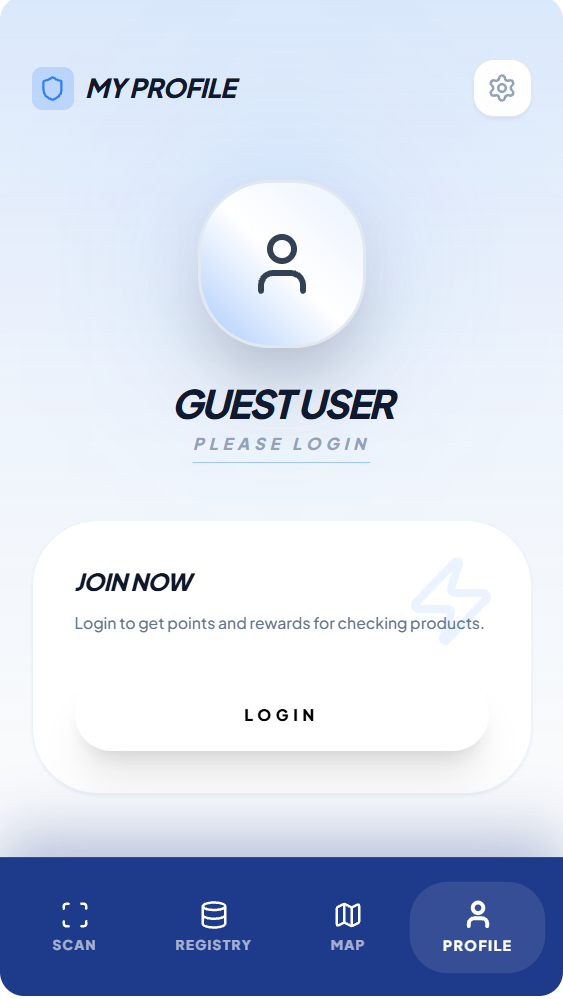
Login Page
-
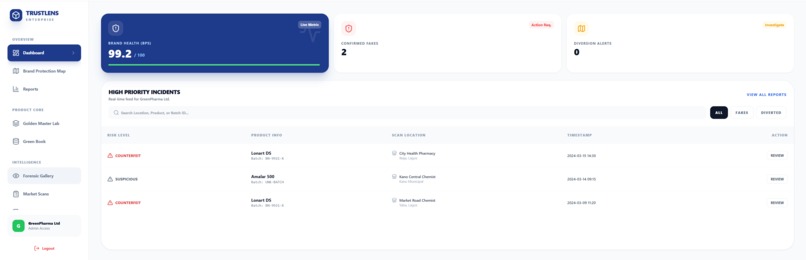
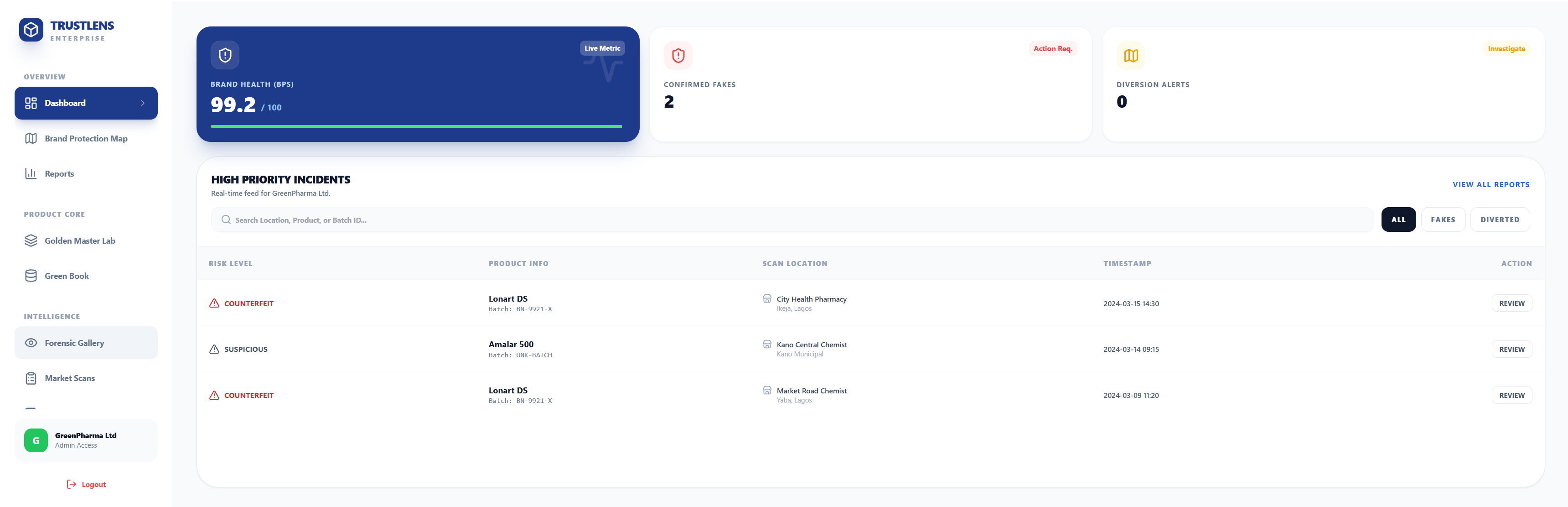
Manufacturer Dashboard
-
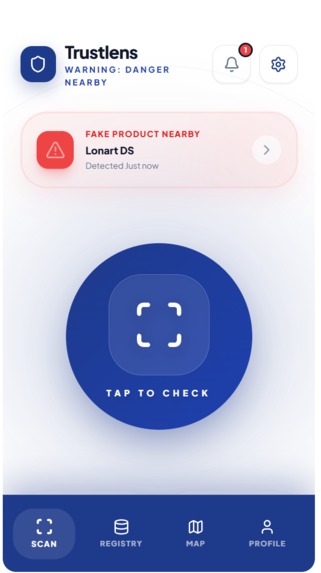
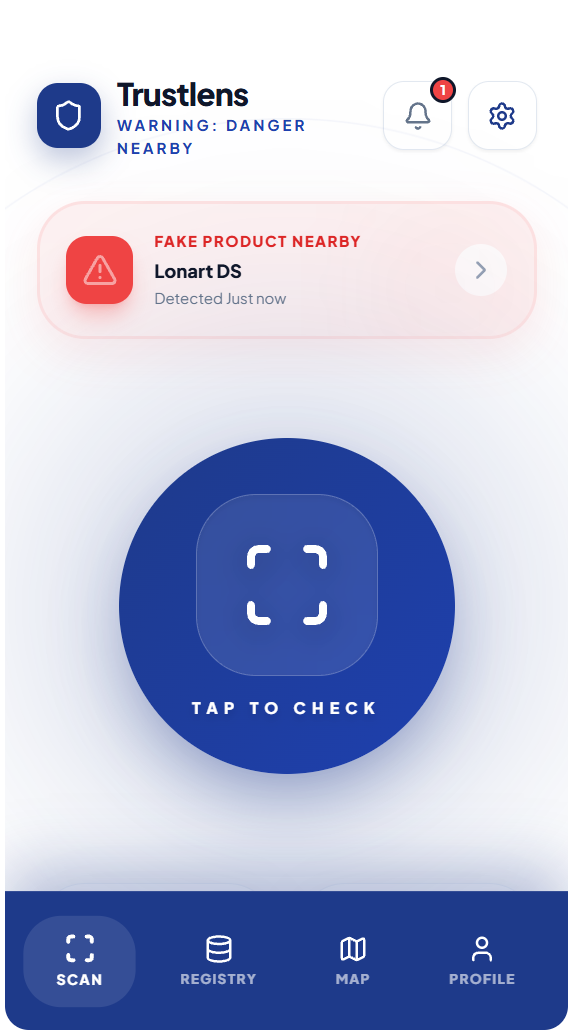
Home Screen
-
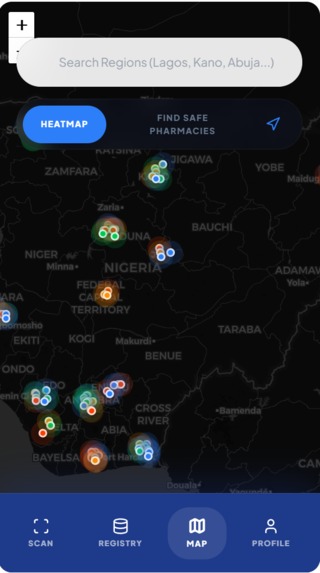
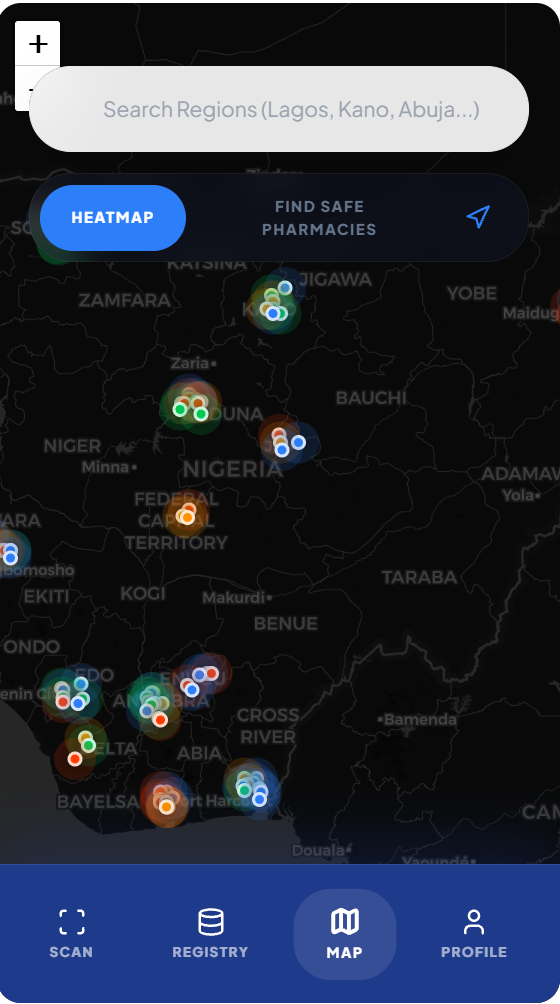
Heap Map and Safe Pharmacy
-
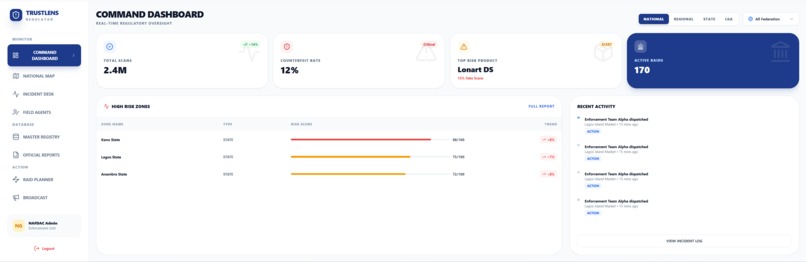
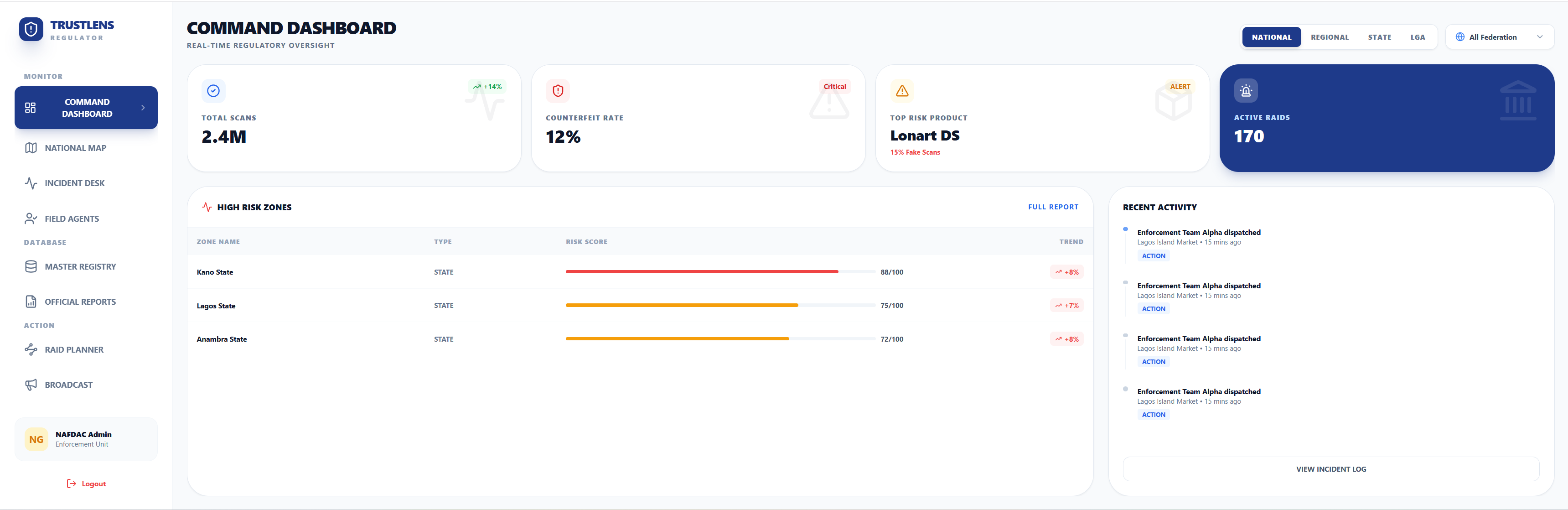
Regulator Dashboard
-
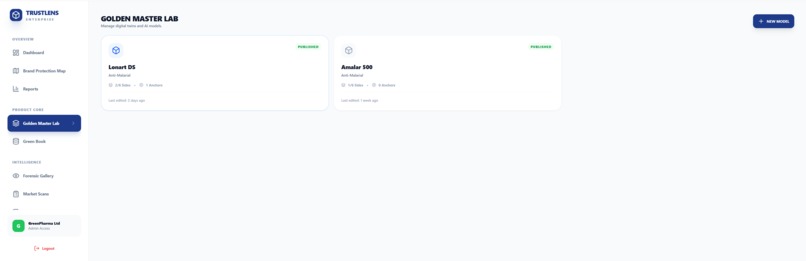
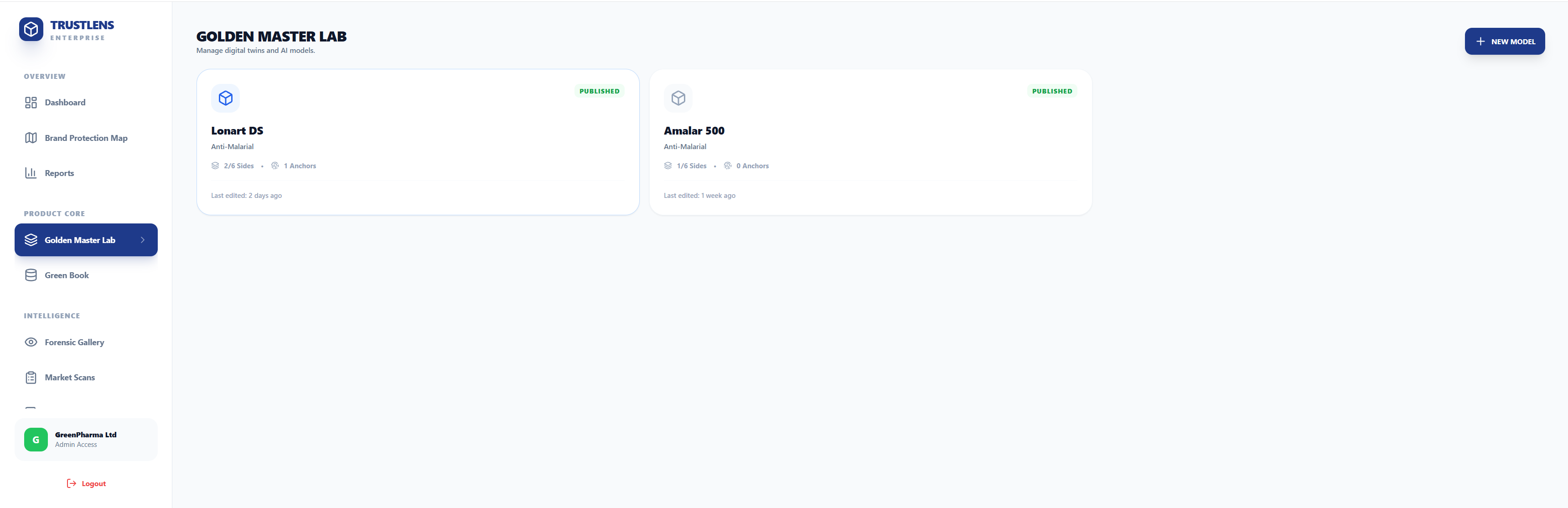
Golden Master Lab
-
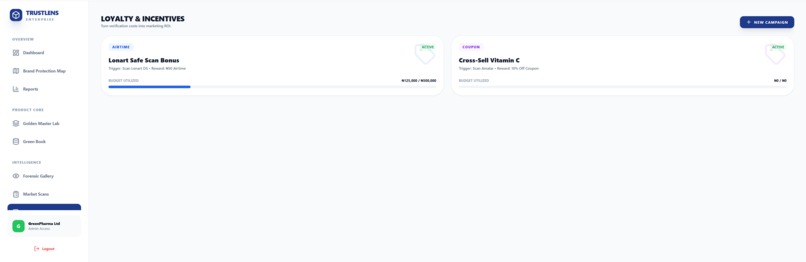
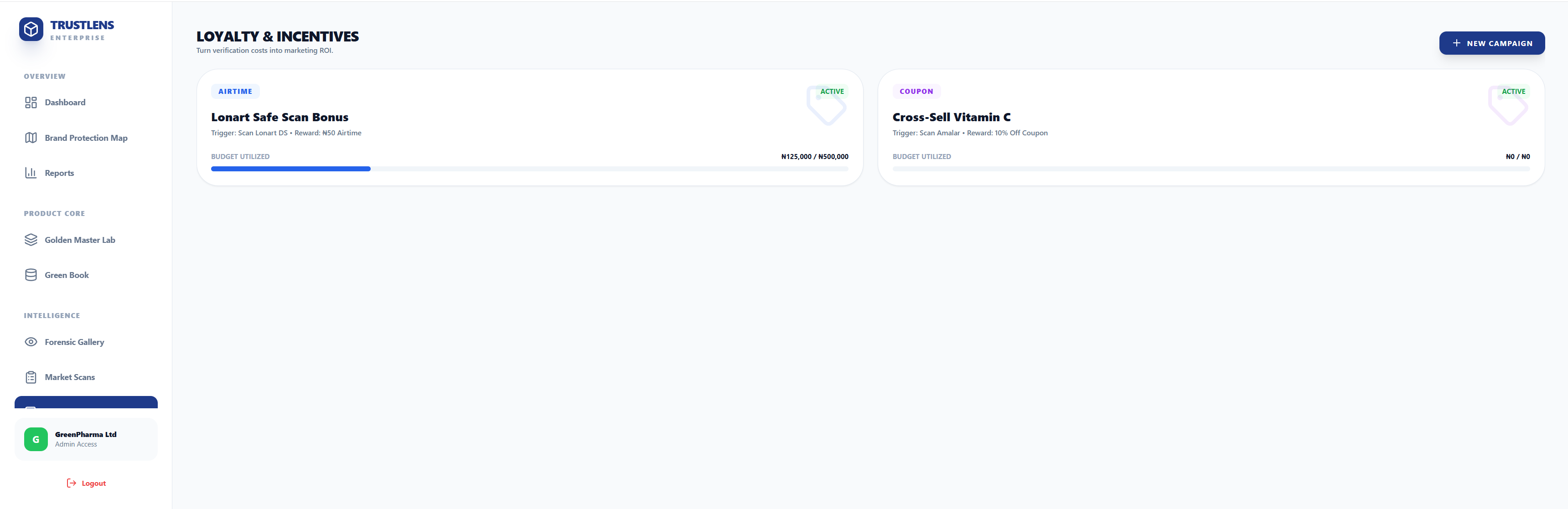
Incentive
-
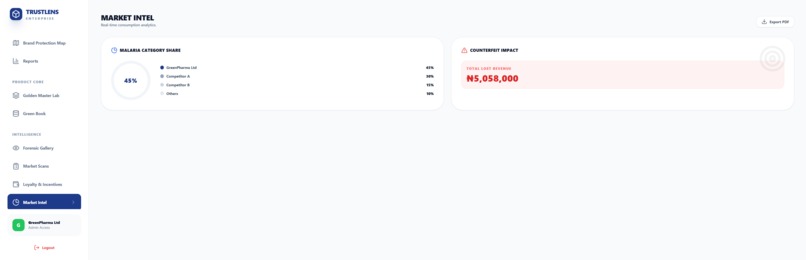
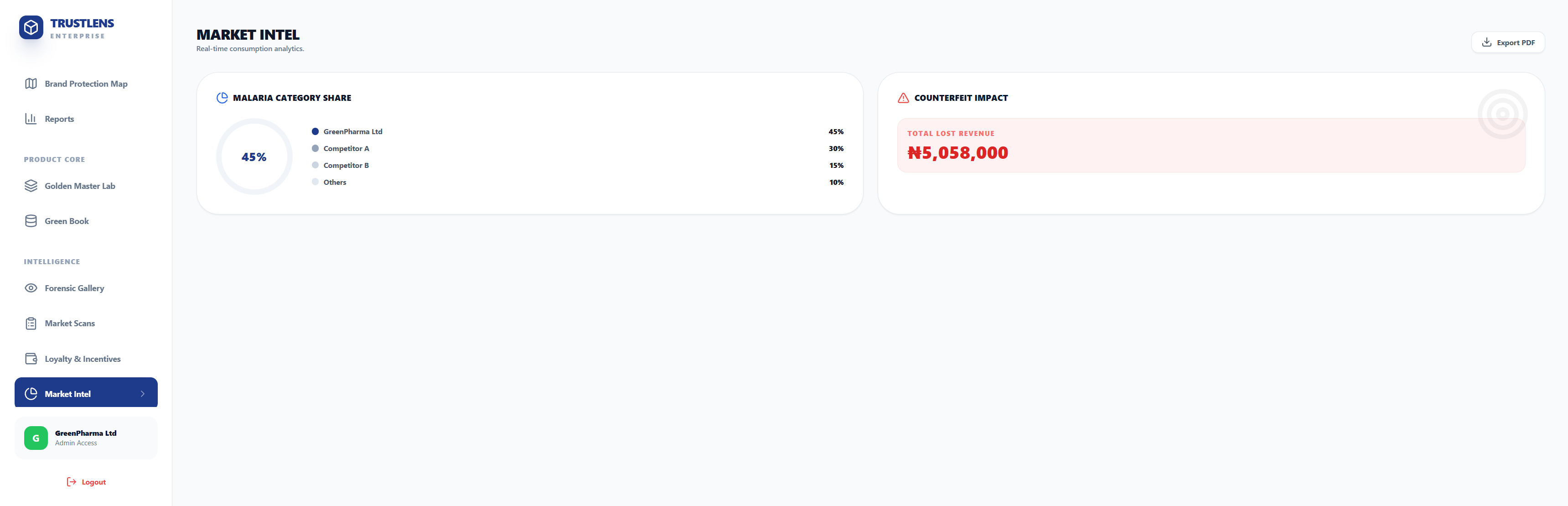
Market Intel
-
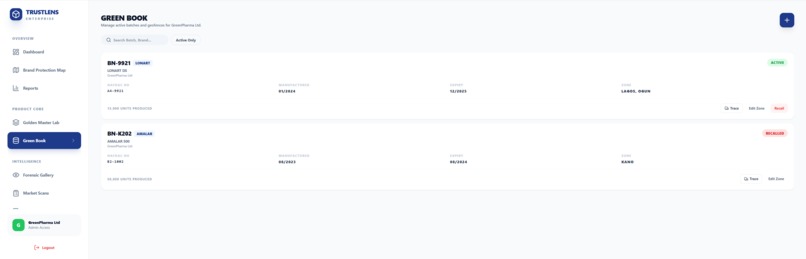
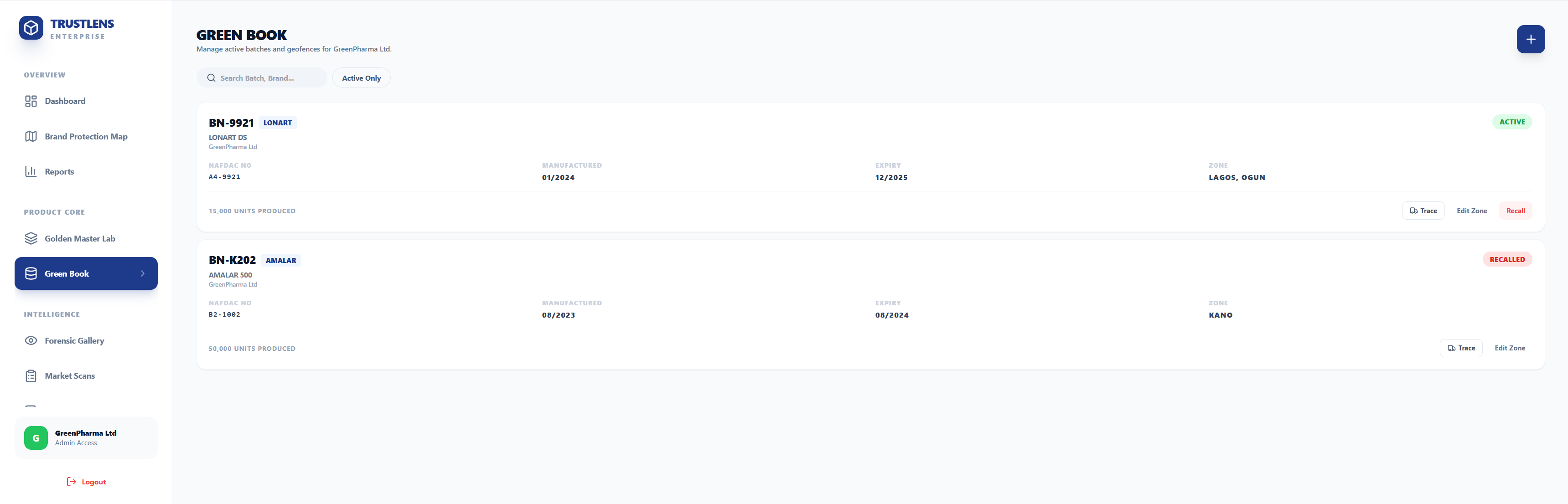
Product Green Book
-
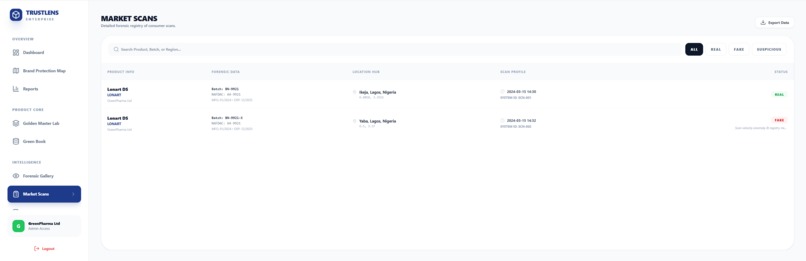
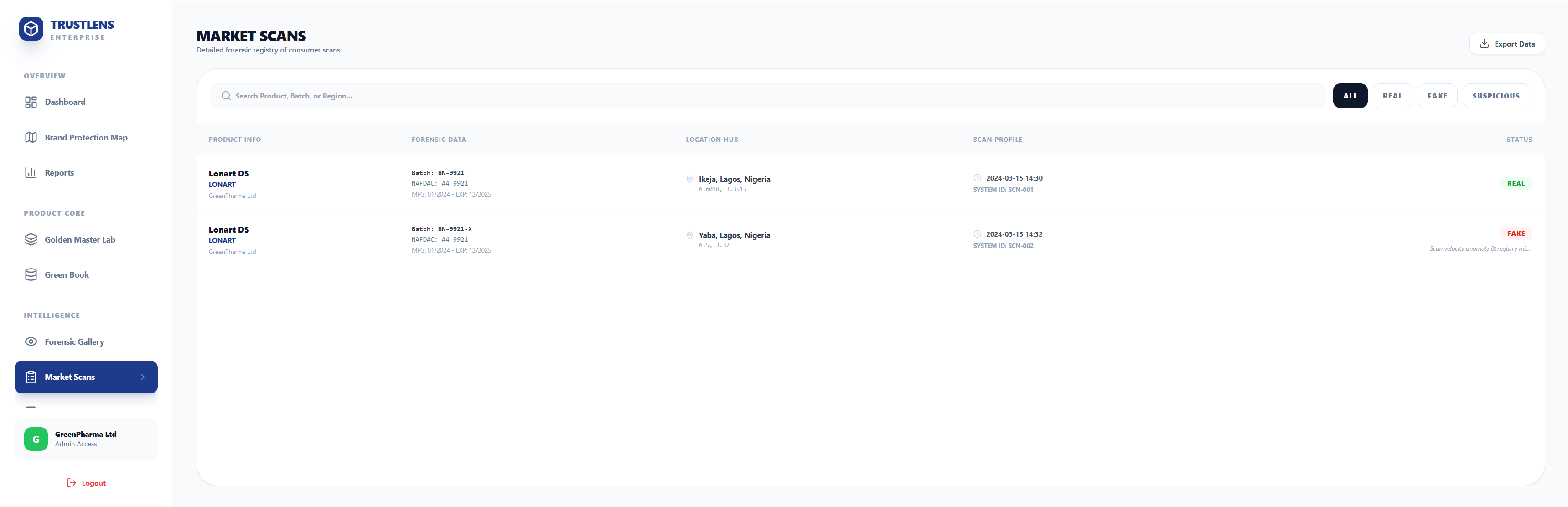
Total Product Market Scan - Product Based
-
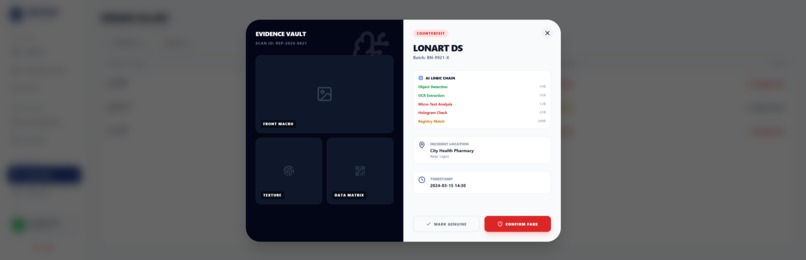
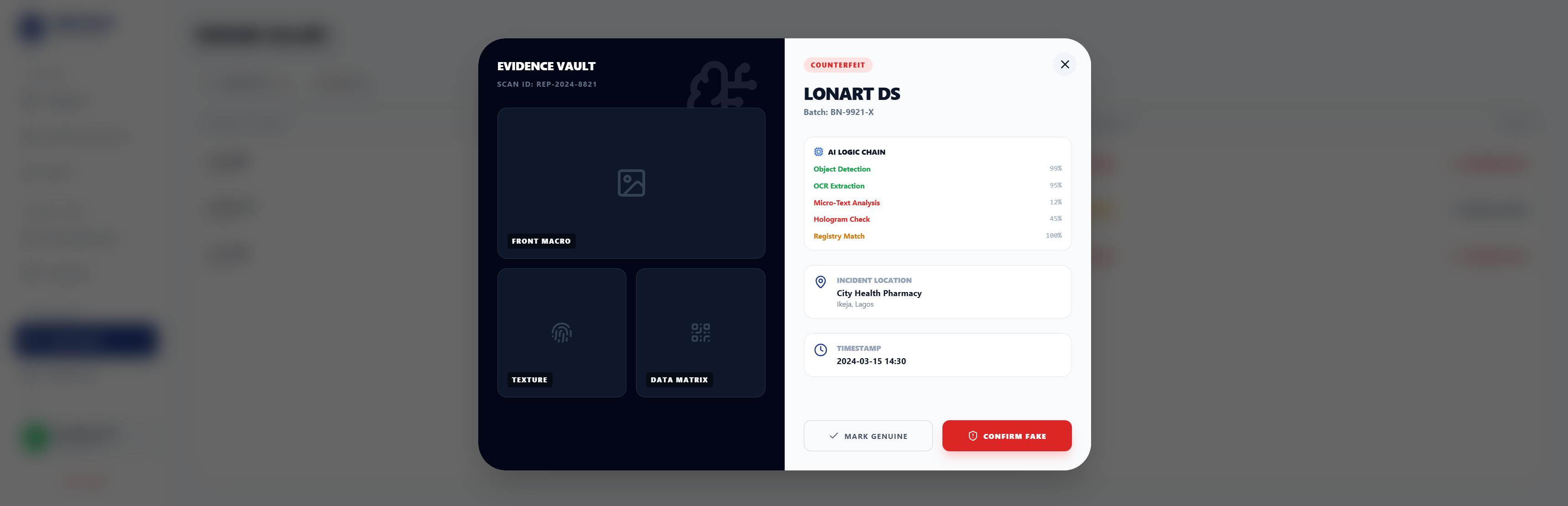
Evident Vault - Product Based
-
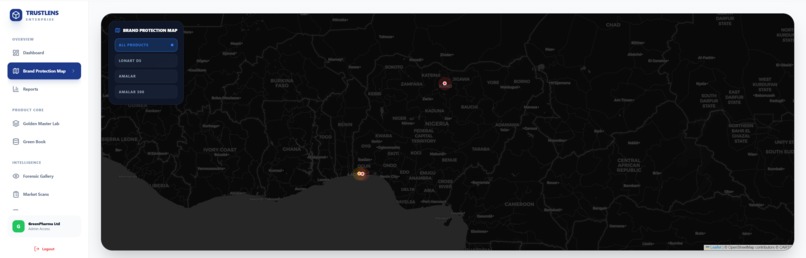
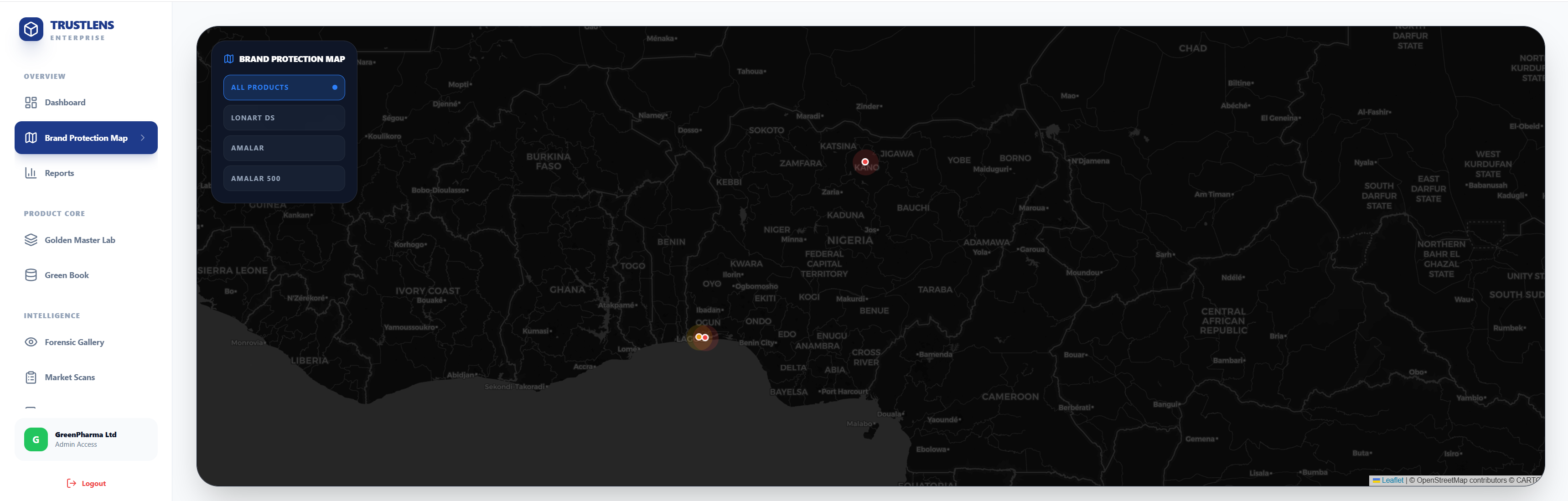
Manufacturer Heat Map
-
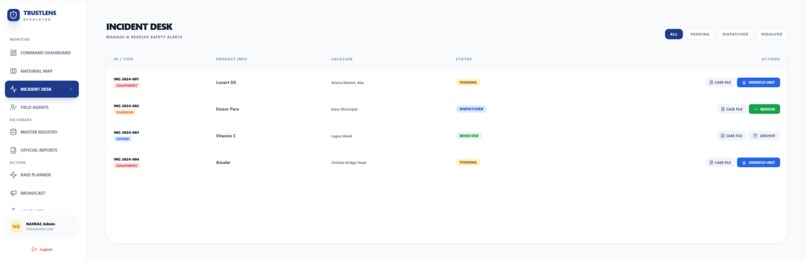
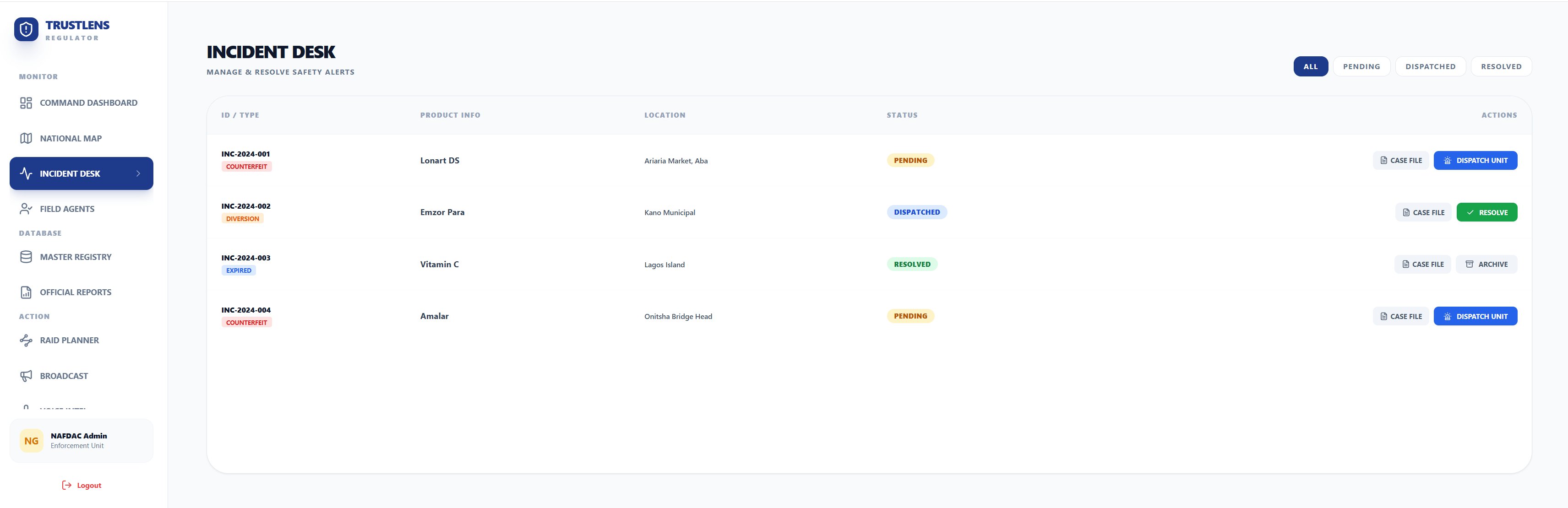
Incident Desk for Regulators
-
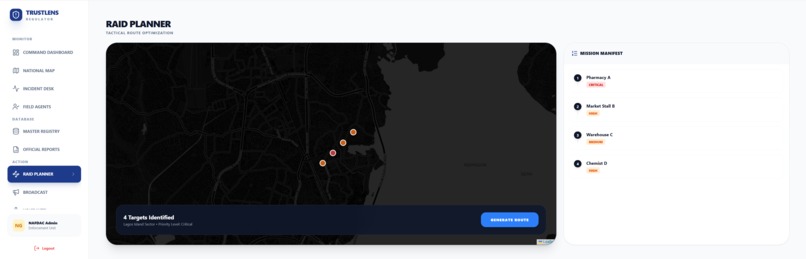
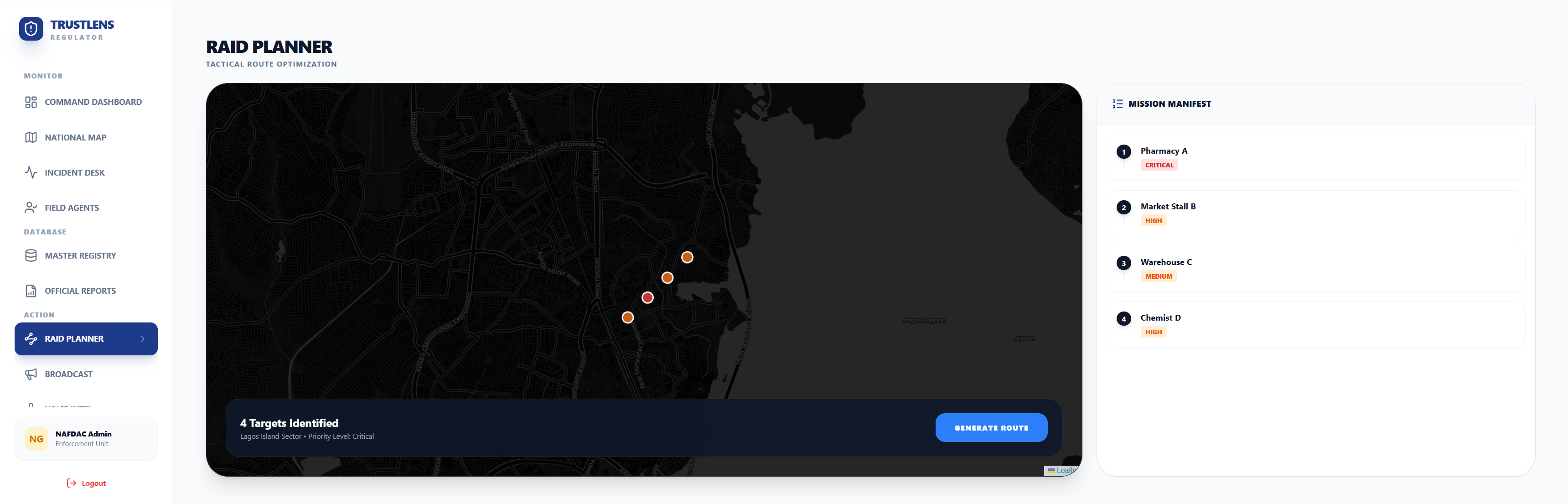
Raid Planner for Regulator
Inspiration
I grew up in a bustling Lagos neighborhood where grabbing medicine often felt like taking a gamble. I remember the day my little cousin developed a persistent fever. We rushed to buy what was supposed to be antibiotics, but within days her condition worsened. It turned out that a large batch of those drugs was fake – a truth painfully common in Nigeria. Hearing stories of friends and family falling ill from counterfeit pills inspired me to act. In many African markets, over 30% of medicines are estimated to be counterfeit – and Nigeria was once cited as having as much as 70% fake drugs circulating. By 2025, even Nigerian regulators admitted they had “struggled for years with counterfeit drugs” like anti-malarial and antibiotics. Each news report about a fake-drug bust, or a family poisoned by an under-strength malaria drug, hit me hard. I thought: if I were a mother or a child patient, I’d want an easy way to know that a pharmacy is selling real medicine. Those experiences – and the fear and frustration I saw – became the spark for Trustlens. I realized that our ever-present smartphones, combined with modern AI, could empower ordinary Nigerians to verify medicines instantly before taking them.
The conceptualization of Trustlens was born from the harrowing intersection of economic instability and the predatory nature of illicit pharmaceutical networks in Nigeria. In recent years, the exit of major global pharmaceutical entities such as GSK and Sanofi have created a vacuum in the availability of legitimate medical products, making essential drugs scarcer and significantly more expensive. This scarcity has provided a fertile ground for "unpatriotic businessmen" to manufacture and distribute substandard and falsified medicines that target high-volume treatments for malaria, bacterial infections, and chronic conditions like hypertension and diabetes.
The human cost of this crisis is quantified in a devastating toll on the most vulnerable members of society. In sub-Saharan Africa, falsified and substandard medicines are estimated to cause up to 500,000 deaths annually. Specifically, as many as 267,000 deaths per year are linked to falsified antimalarial medicines alone, while up to 169,271 deaths are attributed to substandard antibiotics used to treat severe pneumonia in children. One particularly resonant story involves the widespread failure of oxytocin injections in Nigerian hospitals. Oxytocin is a critical hormone used to manage postpartum hemorrhage—the leading cause of maternal mortality in the country. A 2016 study revealed that 74.07% of oxytocin samples in Nigeria failed quality tests, largely due to poor storage and the infiltration of fakes that lacked active ingredients. This reality means that for thousands of Nigerian mothers, the very medication intended to save their lives during childbirth is ineffective, leading to preventable maternal deaths and orphaned children.
Beyond the direct mortality, the crisis erodes public confidence in the entire healthcare system. When patients do not respond to genuine medications after a history of consuming counterfeits, medical workers face an uphill battle in clinical management. The inspiration for Trustlens is rooted in the belief that forensic-grade verification should not be confined to elite laboratories but should be accessible to the consumer at the point of purchase. Whether in the bustling open drug markets of Onitsha Head Bridge or the pharmacies of Lagos, every citizen deserves the right to verify that their life-saving medicine is what it claims to be.
What it does
Trustlens turns a smartphone into a “forensic scanner” for pharmaceuticals, empowering consumers at the point of sale. Its core is a four-step verification engine: Visual Forensic Scan: The user snaps photos of a drug’s packaging (front, back, etc.). Behind the scenes, the app uses Google’s Gemini AI models to analyze logos, microtext, colors and textures. Vision algorithms can detect subtle visual inconsistencies in packaging that humans often miss. For example, if a counterfeit has a slightly wrong hologram or blurred microprint, the AI flags it as abnormal. OCR & Data Extraction: The AI reads printed codes (NAFDAC registration number, batch ID, expiration date, etc.) from the image. Since copycats often fake serials, the system applies custom regex rules (set by manufacturers) to catch invalid numbers. “Green Book” Grounding: The extracted data is immediately checked against a secure “Green Book” registry. This is a dynamic database of all legitimately registered batches uploaded by manufacturers. (This mirrors Nigeria’s own NAFDAC Greenbook app for drugs.) If the batch isn’t found or is expired, the system warns the user instantly. Geofence Validation: Each batch can be geolocked by its maker. The app compares the user’s GPS location to the batch’s authorized region. If a Lagos pharmacy is selling a batch registered only for Kano, Trustlens flags it as “diverted” (stolen or rerouted). This turns location into a third piece of evidence about authenticity. Finally, the app gives the consumer a clear verdict: Likely Real, Likely Fake, Recalled or Diverted.
Trustlens operates as a decentralized integrity platform that bridges the communication gap between four primary stakeholders: the Consumer, the Manufacturer, the Regulator (NAFDAC), and the Platform Administrator. By leveraging the multimodal reasoning of the Gemini 3 series, the platform transforms the verification of physical goods into a data-rich, interactive experience.
Consumer App (Mobile Interface)
The Consumer App is a Progressive Web App (PWA) for the general public to verify medications before purchase or consumption. It prioritizes inclusivity and resilience for users in diverse, low-bandwidth environments. Key features include: Inclusive Onboarding & Localization: The app supports five local languages (English, Nigerian Pidgin, Yoruba, Hausa, and Igbo) to reach all demographics. Users can switch between light/dark modes or enable data-saver mode for slower mobile connections. Forensic Audit Scanning Engine: ** This is a four-step AI-powered analysis (rather than a simple barcode lookup) that checks both the packaging and metadata of a product: **Visual Forensic Scan: The smartphone camera captures the drug’s packaging (all visible sides). Using Google’s Gemini 3 Pro model, the app analyzes the image for physical anomalies – checking logo integrity, font/typography consistency, color accuracy, hologram presence, and even texture under different light. It can spot subtle forgery signs that barcode scanners miss. OCR & Data Extraction: TrustLens’s AI reads any printed identifiers on the package (like the NAFDAC registration number, batch number, and expiry date) via optical character recognition. This digitized data is collected for verification. Green Book” Grounding: The extracted identifiers are cross-checked against the manufacturer’s Green Book (a secure, verified digital registry of all legitimate products). This step ensures that the batch ID and other details exist in the official records. Geofence Validation: The app uses the phone’s GPS to confirm the batch’s authorized location. For example, if a batch is only supposed to be sold in the Kano region, a scan in Lagos will trigger an alert. This prevents “diverted” products from appearing outside their approved zones. Resilient Connectivity (Offline-First): Recognizing that internet access can be unreliable, the app caches scans locally. If connectivity is lost, each scan is stored in a queue and automatically uploaded once the connection is restored. Additionally, there is a USSD/SMS fallback: users can dial a short code (e.g., 555*BATCHID#) to verify a product via text message if data service is unavailable. This ensures TrustLens can function even in very remote areas. *“Nexus” AI Assistant:** A context-aware chatbot (powered by Google Gemini Flash) is built into the app. Consumers can ask Nexus safety questions, have it double-check batch numbers via text chat, or inquire about nearby safe pharmacies. The AI assistant “remembers” the context of previous scans to provide coherent guidance. Voice Audit Mode (Accessibility): For illiterate or visually impaired users, TrustLens offers a live voice-audio interaction (using Google Gemini Live). The user can speak to the app; the AI “sees” through the camera and then verbally confirms whether the product looks safe, guiding the user through the process with spoken feedback in real time. Community & Gamification: TrustLens encourages community participation with social features. A heatmap shows aggregated data: pharmacies where users frequently verify and pass products are marked in green, while areas with many counterfeit reports appear in red. Users earn reward points for each scan, redeemable for mobile airtime or data – providing a financial incentive (and improving inclusion). A built-in Prascor Report Form lets any user report a suspected fake: it automatically captures GPS coordinates, the pharmacy name, and a photo as evidence, and sends this report directly to regulators for action.
Manufacturer Portal (Enterprise Dashboard)
The Manufacturer Portal is a secure B2B dashboard for pharmaceutical companies to manage their product information and monitor brand health. It turns each legitimate drug into a monitored digital entity. Core components include: Golden Master Lab (Digital Twin Creation): Manufacturers upload high-resolution “golden master” reference images of each product – usually photos of the front, back, top, and bottom packaging. They annotate specific security features (holograms, microtext, UV inks, etc.) in these images. The AI then learns to look for those exact features in consumer scans. Manufacturers also define OCR patterns (via regex rules) for batch/lot numbers and codes so that any deviation (like an invalid but visually plausible number) is flagged automatically. Green Book (Active Registry): This is a dynamic database of all active batches for every product. Manufacturers register each new batch into the Green Book, including details like release date and intended markets. They can set geofences on each batch (for example, “This batch is only for distribution in Nigeria’s South-West region”). If a batch is scanned outside its authorized zone, TrustLens instantly flags a Diversion Alert in the system, indicating potential illegal re-routing. Intelligence Map & Hotspots: A live map visualizes real-time scan data. Manufacturers see scan velocity (number of verifications per area) and counterfeit incidence. The system automatically highlights hotspots – locations where many suspicious scans occur. From this interface, brand protection teams can even deploy field enforcement (like sending investigators or tracing shipments) to targeted regions with high risk. Forensic Gallery (Human-in-the-Loop): Flagged scans are sent to a review queue. Human experts in the company review these suspicious scans – for example, if the AI is unsure whether a scan shows a true counterfeit or just a printing quirk. This “human-in-the-loop” process sharpens the model: confirmed counterfeits help retrain the AI, improving accuracy over time. Loyalty Campaigns: To boost consumer engagement, manufacturers can launch campaigns through the portal (e.g., “Scan [Drug X] and earn ₦50 airtime”). This encourages people to verify products regularly, increasing scan volume and data for the system while rewarding good customers.
Regulator Hub (NAFDAC/Government Dashboard)
The Regulator Hub gives national drug enforcement agencies (such as NAFDAC) a command center to oversee drug safety in real time. It includes tools for analytics, enforcement planning, and public alerts: Command Dashboard: High-level metrics update live: total verifications performed, percentage of counterfeit detections, diversion incidents, etc. Data can be viewed at multiple levels of granularity (national, state, or even local government area). This helps regulators spot trends or emerging threats quickly. Incident Desk: This acts like a helpdesk/ticket system. Every consumer report (from the Prascor form) becomes a ticket. Regulators can track each case, add evidence, and assign investigations. The desk also lets regulators generate Digital Warrants – for instance, once enough forensic evidence is gathered (photos, location data), an inspector can digitally sign a search or seizure warrant via the system. Raid Planner: Using the geospatial data from scans and reports, TrustLens can optimize raid routes for enforcement teams. If a cluster of pharmacies all in one area have multiple counterfeit reports, the app can plot the best path for inspectors to cover them efficiently. This ensures field resources focus on real problem spots. Sentinel Broadcast: Regulators can send mass alerts or announcements to all consumer apps in a chosen region. For example, if a bad batch is found, an alert like “Recall Notice: Stop sale of Batch XYZ immediately” pops up on users’ phones in Lagos or whichever area is targeted. This broadcast feature helps quickly warn consumers and pharmacies of verified threats. Voice Intelligence: Transcripts from all “Voice Audit” sessions (where the AI spoke with consumers) are analyzed for sentiment and keywords. The system flags signs of panic or mentions of adverse reactions. For instance, if many users in one city report hearing symptoms like “rash” or show anxiety in their recordings, regulators get alerted to a possible public health issue that needs urgent attention.
Technical Architecture & Innovation Behind these portals is a robust, AI-driven architecture: AI Engine (Google Gemini): TrustLens leverages Google’s Gemini models for all its AI needs. Gemini 3 Pro handles the heavy visual forensic analysis (complex reasoning about images). Gemini Flash powers the high-speed chatbot interactions in the app. Gemini Live supports the low-latency, real-time audio-visual mode for the Voice Audit. Together, they provide cutting-edge multimodal AI capability. Privacy by Design: User privacy is carefully protected. Each consumer’s identity is masked as a Shadow ID: when a user registers, their personal data is hashed. Manufacturers and regulators only see this pseudonymous ID, never real names or contact info. There’s also a “Ghost Mode” option – consumers can choose to make a scan without saving any history to their account. This way, people can check products anonymously if they prefer. Chain of Custody Tracking: TrustLens visualizes the entire journey of a drug batch from factory to patient, similar to a blockchain ledger but without cryptocurrency. Every scan or checkpoint (factory release, port entry, distributor handoff, retailer sale) is logged. On the app, consumers can trace a batch’s path – giving full transparency. This immutable log of hand-offs makes it exponentially harder for counterfeiters to slip products into the official supply chain unnoticed.
How we built it
I developed Trustlens entirely on my own, stitching together modern web tech with Google’s new AI models using AI Studio. First, the front end is a cross-platform Progressive Web App written in JavaScript (using a framework like React). By being a PWA, users can install it on any phone with their browser, no app store needed. I implemented multi-language support for English, Nigerian Pidgin, Hausa, Yoruba and Igbo, using localization libraries and translations, so anyone can use it in their mother tongue.
The construction of Trustlens was predicated on the need for extreme visual precision and conversational accessibility. The technical architecture is built upon the Google Gemini 3 series, which represents a generational leap in visual and spatial reasoning.
The "Forensic Vision Core" utilizes Gemini 3 Pro with the media_resolution_high parameter. This setting allows the model to process images with up to 1120 tokens of detail, enabling it to read fine text and identify holographic inconsistencies that would be lost at lower resolutions. To accurately identify coordinates of security features, the system employs pixel-precise pointing, which outputs normalized coordinates in the format $[y_{min}, x_{min}, y_{max}, x_{max}]$. This allows the platform to verify if a NAFDAC registration number or a manufacturer's seal is in the exact mathematical location specified in the original design.
The back end is a Local Storage for persisting settings and the offline "Store & Forward" queue. It stores the manufacturer-generated “Golden Master” images and batch registry (the Green Book) and enforces geofence rules. Manufacturers can upload their product images and specify which holograms or microtexts to check; I used simple JSON and regex rules to define these, ensuring the AI uses the right criteria. I also built a chain-of-custody log: whenever a batch is scanned, we record a hashed event (using a Merkle-tree style ledger) tracking its journey from factory to retailer. To protect privacy, each user has a “Shadow ID” – a hashed identifier – so they can be tracked for points and reports without revealing personal info. For mapping and geolocation, I used open APIs (like Leaflet + OpenStreetMap) to plot scans and hotspots. I coded the reward system and USSD fallback in parallel: the USSD string 555# hits a backend endpoint that returns a brief text verdict. Since I worked solo, I also did all the UI/UX design and testing by myself, iterating on feedback from local volunteers. In sum, I pulled together web development (PWA, React, Service Workers), cloud databases, and Google GenAI (Gemini 3 Pro/Flash/Live) to build the full prototype.
Challenges we ran into
Building Trustlens as a one-person team was intense. The hardest challenge was the AI accuracy: training the forensic model required good data. Real product packages come in many variations; I spent weeks collecting reference images from open sources and mock-ups to create “Golden Master” sets. Tuning Gemini 3 Pro to notice tiny printing differences took trial and error – sometimes it missed a misaligned logo or misread a blurred serial.
Another challenge was offline and poor-network usage. Nigeria has many rural areas with spotty internet. I had to design the app to degrade gracefully: scans must queue up when offline, and the interface must not freeze. Achieving a smooth offline-first PWA (and testing it by turning off Wi-Fi on purpose!) was tedious work. Also, implementing the GSM fallback (555USSD) required coordinating with a telecom API – another tech stack I hadn’t used before.
Accessibility and localization were also tricky. I wanted the app to be simple enough for someone with no tech experience. That meant adding the live voice mode and support for five languages. Recording natural-sounding local dialect prompts and validating voice recognition in Pidgin or Igbo took time. There were integration hurdles too: Gemini Live’s real-time API is cutting-edge, and I ran into latency issues in early tests. Optimizing video resolution and compressing frames helped. Privacy was another concern – I had to ensure all biometric-like data (voice, face) is processed securely on-device or anonymized in transit, so I hashed user data and didn’t log camera images unnecessarily. Finally, staying motivated and organized was a challenge. This project covers consumer, manufacturer, and regulator use cases all at once – a huge scope for one developer. I had to prioritize features carefully and build a prototype that showcases the core forensic verification without getting bogged down by every possible detail.
Accomplishments that we're proud of
The most significant accomplishment of the Trustlens project is the democratization of pharmaceutical forensics. Historically, technologies like the Mobile Authentication Service (MAS) or portable spectrometers like TruScan were too expensive or required specialized training to be accessible to the average consumer. By successfully implementing a pure-software solution that utilizes the raw power of Gemini 3 Pro, the platform effectively places a world-class laboratory in the pocket of every Nigerian.
Despite being a solo effort, Trustlens now works end-to-end in simulation. I’m proud that I implemented:
- A fully localized PWA that looks and feels like a polished app on Android and iOS browsers, with dark/light modes and intuitive UI.
- AI-powered scanning using Gemini 3 Pro to truly analyze images, not just read barcodes. Being able to feed a photo and get a “likely genuine” result with anomalies highlighted feels like magic.
- Voice-assisted verification that can talk a non-literate person through safety checks. Adding that feature really made the app inclusive – a family member on the app could “hear” that a medicine is safe even if they can’t read.
- End-to-end user flow: from consumer scan to brand owner response to regulator alert. I built the parts so that if I scan a fake, manufacturers instantly see the image in a dashboard (for their brand protection team), and regulators see an incident report. Pulling all those roles into one ecosystem was complex but rewarding.
- Gamification and rewards that I sketched out: I even created a demo airtime-coupon system in the code. Incentivizing users is crucial, and having that prototype ready to show made our idea more complete.
Finally, the development of the "Gemini Live Emergency Response" module has been a point of immense pride. In simulation trials, the AI agent successfully guided a user through the reporting of an Adverse Drug Reaction, adopting an empathetic "Affective Dialogue" while simultaneously notifying the nearest medical facility and NAFDAC state coordinator. This proactive safety mechanism demonstrates the potential of AI to move from passive observation to active intervention Finishing a working prototype with these features (especially advanced AI ones) makes me proud – it shows the vision is feasible. Each time I ran a scan against a fake example and got the right alert, it felt like a small victory.
What we learned
Through this project I learned not just about technology but about people and processes. On the tech side, I mastered integrating Google’s new GenAI models (Gemini Live and Flash) – once I understood how to call the APIs, I saw their real-time power. I learned how to craft prompts that make the AI focus on packaging details. On the human side, I learned how critical trust and UX are. An app like this lives or dies by user adoption. I spent time thinking like an everyday Nigerian: what if I’m a mother who can’t read? The voice mode and local languages came from that empathy. I also discovered privacy concerns are very real – users want to know we’re not tracking who they are, so features like Shadow ID (anonymous scanning) are non-negotiable. I also learned the power of storytelling – connecting technology to saving real lives made my work more meaningful. Talking to pharmacists and regulators (even informally) helped me see how data could empower them. And as a solo developer, I learned project management the hard way: breaking down big problems into tiny tasks, setting milestones, and not getting overwhelmed by the end goal. Finally, I learned about Nigeria’s regulatory landscape. For example, I saw that NAFDAC is already using tech (their Greenbook app) and how receptive they were to a concept like mine. This gave me confidence that Trustlens can fit into the real ecosystem.
What's next for Trustlens
As of early 2026, Africa's population is approximately 1.57 to 1.58 billion people, representing about 19% of the total world population. It is the world's second-most populous continent, characterized by the youngest median age (19.5 years) and the fastest growth rate. The next big step is implementing Trustlens on the ground in Nigeria. Over the coming years I plan to pilot the system with a few local pharma companies and pharmacists’ associations. The goal is to integrate it with the actual NAFDAC Greenbook database, so scans query real government data. I also aim to partner with community health workers to roll out the app in one or two states, refining features from real usage. Once we prove it in Nigeria (the continent’s largest market), the plan is to scale across Africa. This means localizing the app further (for example adding French for West Africa, Swahili for East Africa, etc.) and forging ties with regulators like Ghana’s FDA or Kenya’s PPB. Beyond pharmaceuticals, Trustlens has a roadmap of other product domains. Counterfeiting isn’t limited to medicine – it plagues foods (spurious baby formula, fake cooking oil), electronics (fraudulent phone chargers), and even fashion (fake designer clothes). I’m already sketching how the same forensic scanning could work for these. In fact, vision-based AI is proving effective across industries, and I envision adding categories in the app like “Food & Drink” or “Electronics” after the drug launch phase. We’re also exploring verification of academic credentials and official documents. Nigeria has had a flood of fake university certificates, and our chain-of-custody approach could be applied to diplomas and transcripts. (Imagine scanning a QR code on a diploma to see if it matches a university’s registry.) This was even on the Ministry of Education’s agenda in 2024 – a perfect future use case. And some day, why not currencies? High-value notes could have scannable patterns too. Ultimately, I see Trustlens becoming a pan-African verification platform. In Nigeria’s fight against fake drugs, I want Trustlens to be part of the solution within a year – a truly local “giant of Africa” solving a real menace. Then we’ll package that success as a model for neighboring countries. The vision is broad: every time someone in Lagos scans a real Zinox phone charger or an authentic university certificate, Trustlens will give a confident thumbs-up, cutting counterfeiting off at the pass. By demonstrating this prototype now, I’m laying the groundwork for that future. With further investment and partnership, Trustlens can expand beyond its pharmaceutical roots and become a guardian of trust for all kinds of products across Africa.
Built With
- browser-geolocation-api
- cartodb
- gemini-3-pro-preview
- leaflet.js
- openstreetmap
- react-19
- tailwind-css
- typescript
- web-audio-api

Log in or sign up for Devpost to join the conversation.