-
-
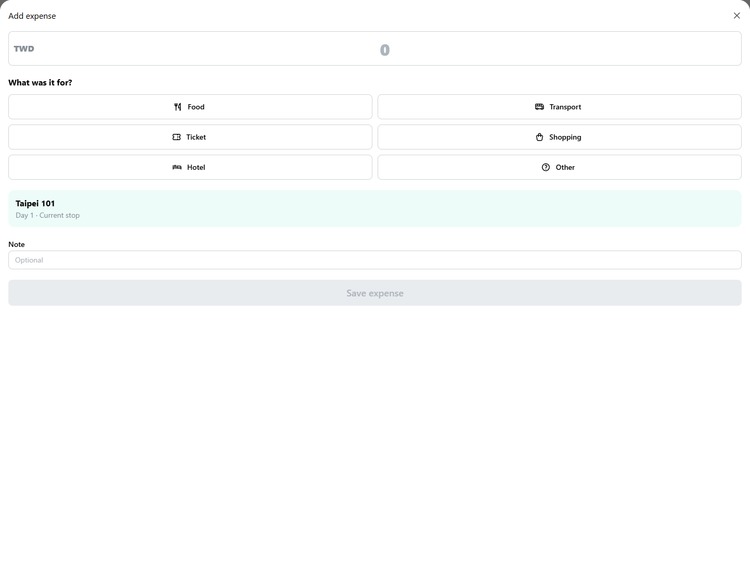
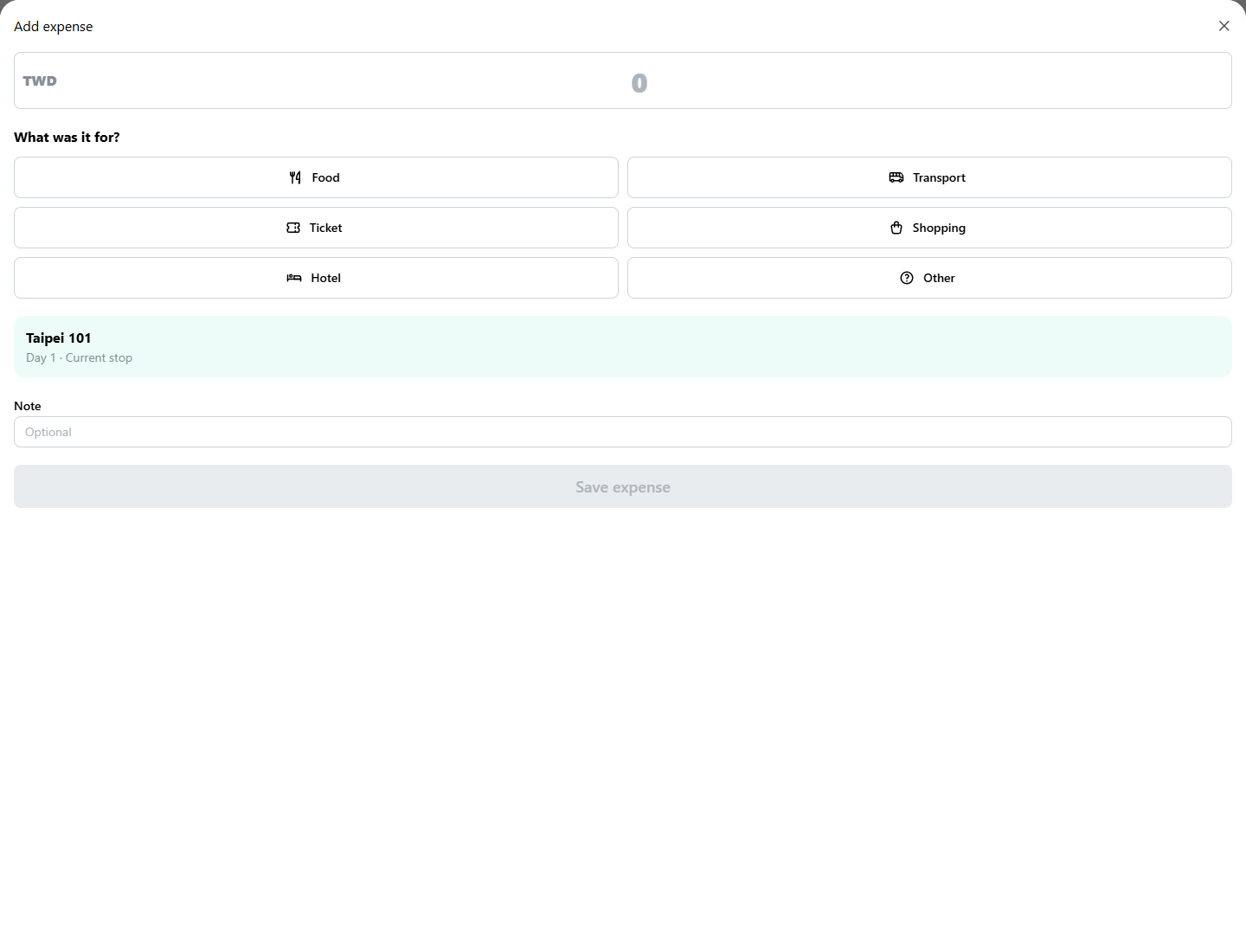
record in-trip spending
-
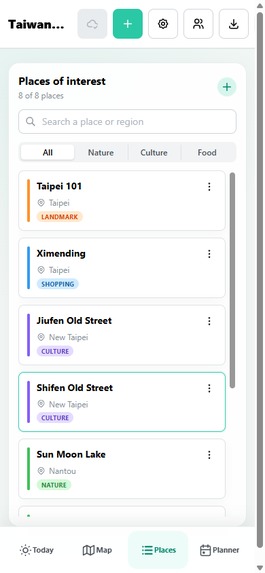
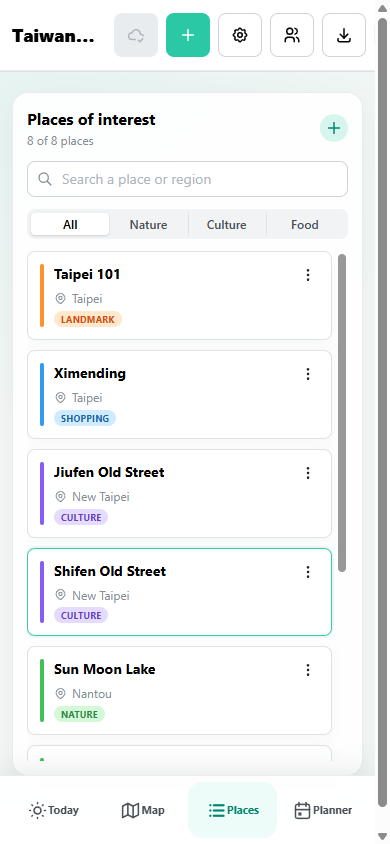
mobile place discovery
-
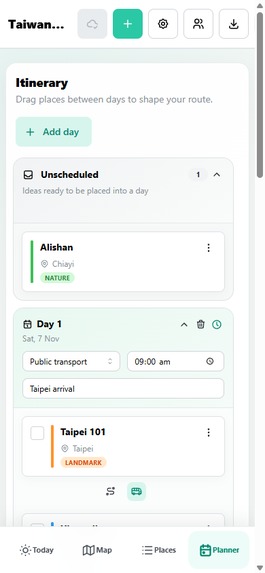
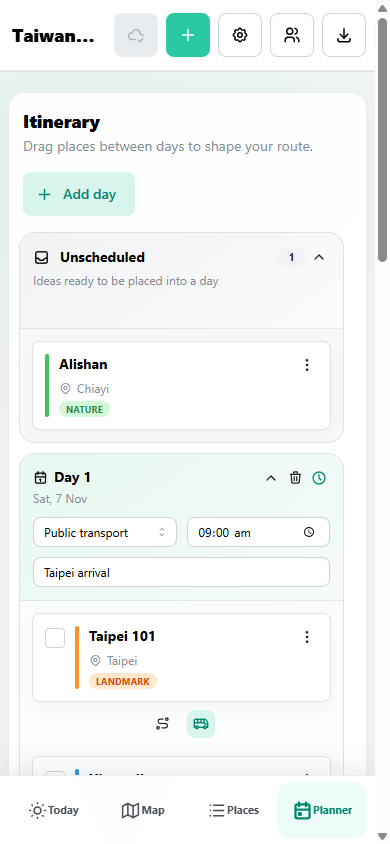
mobile itinerary editing
-
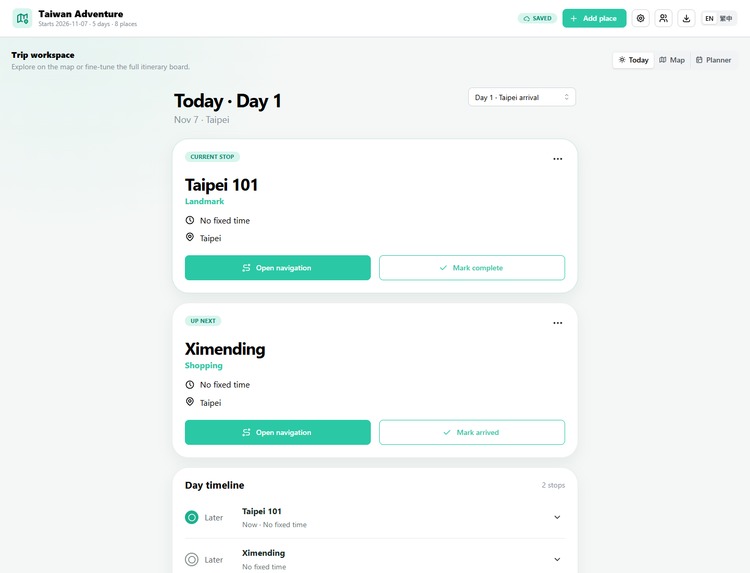
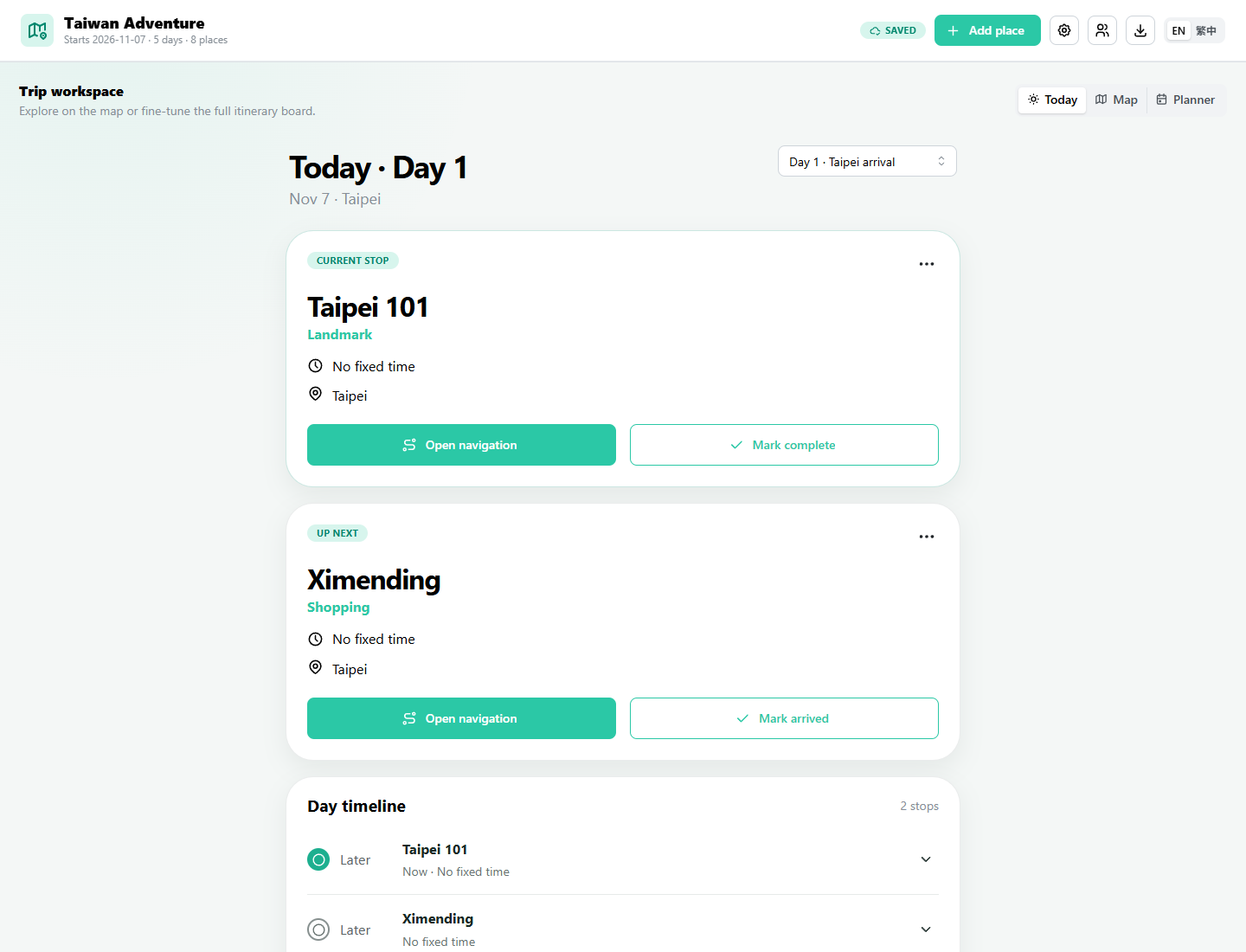
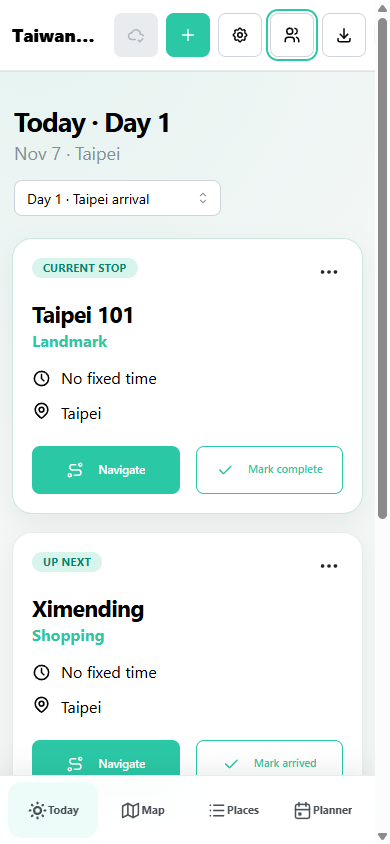
execute the day with current and next stops
-
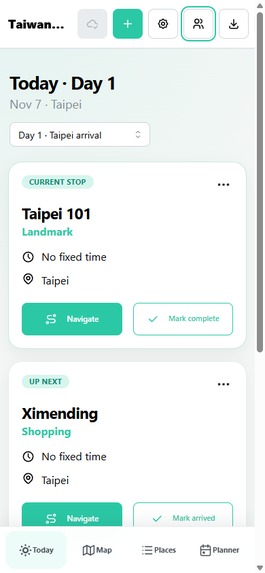
mobile execution view
-
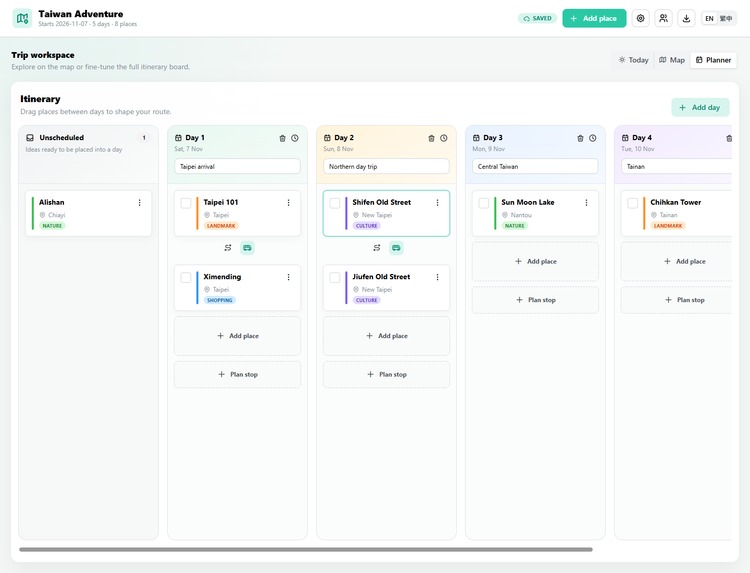
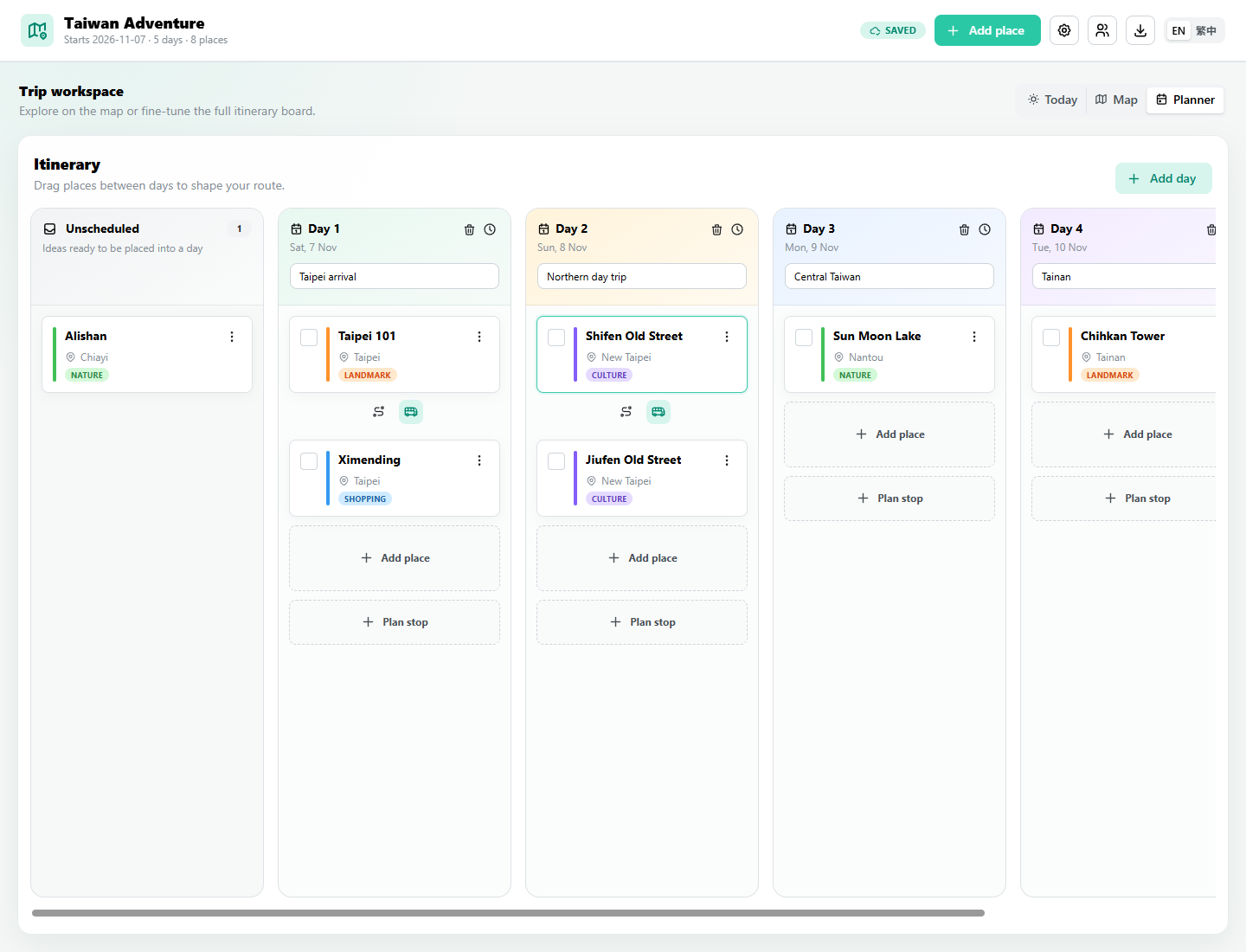
drag places between itinerary days
-
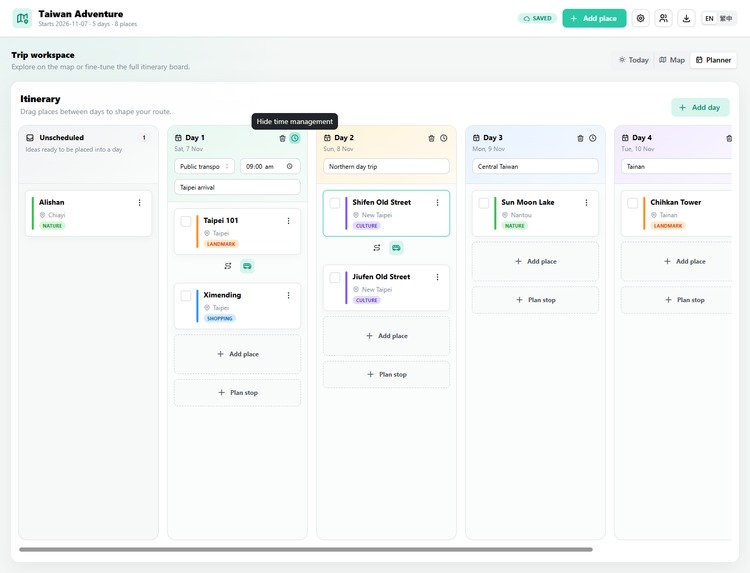
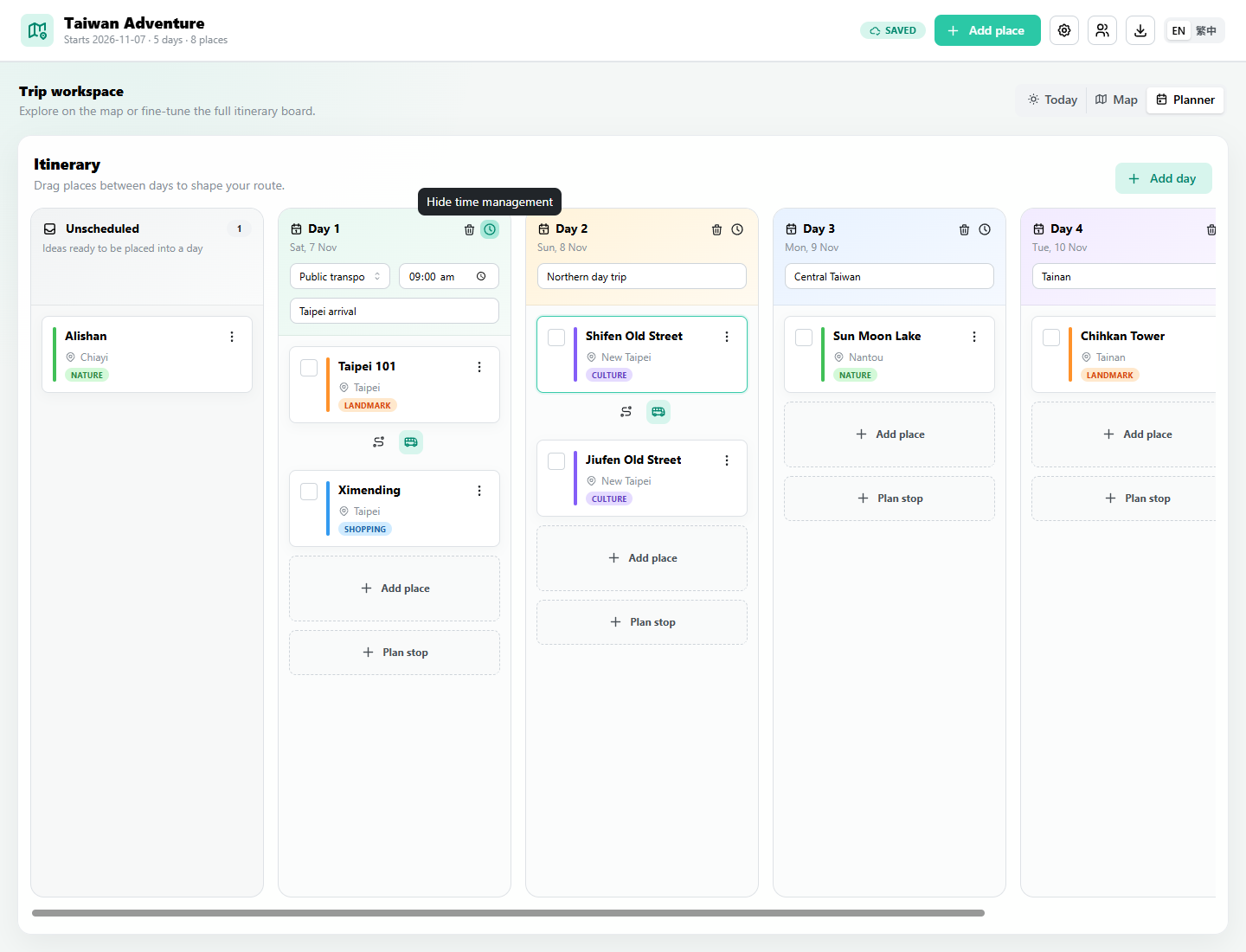
set start time and travel mode
-
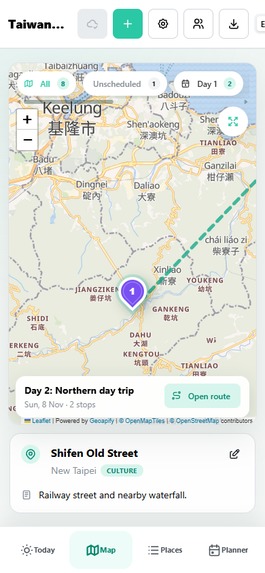
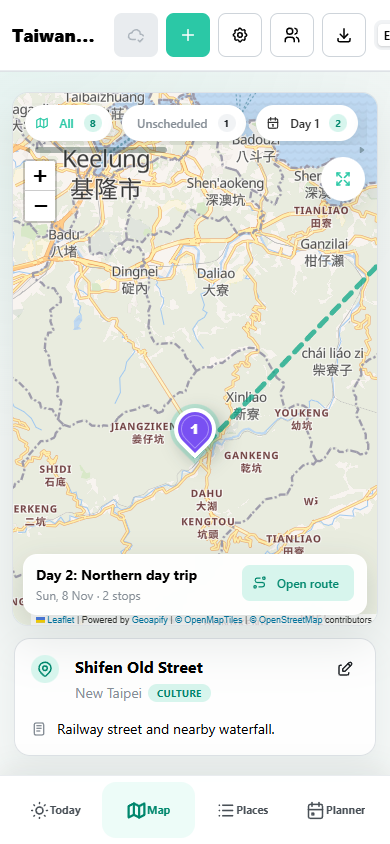
mobile map and route selection
-
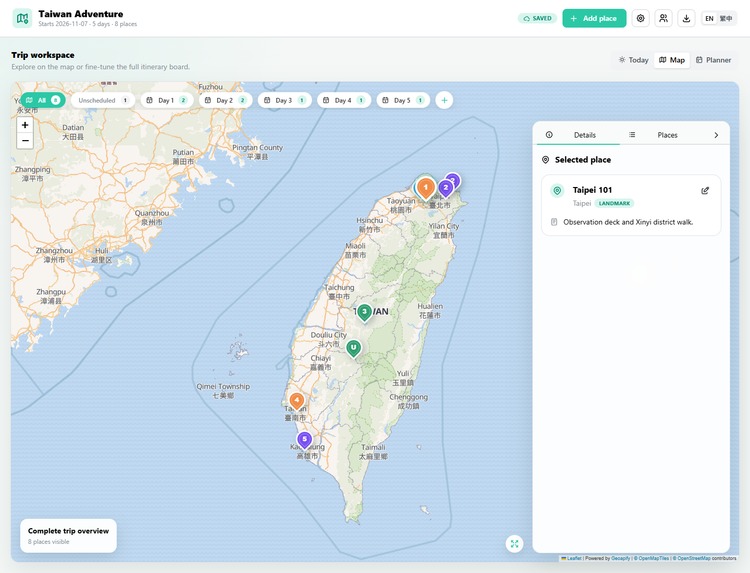
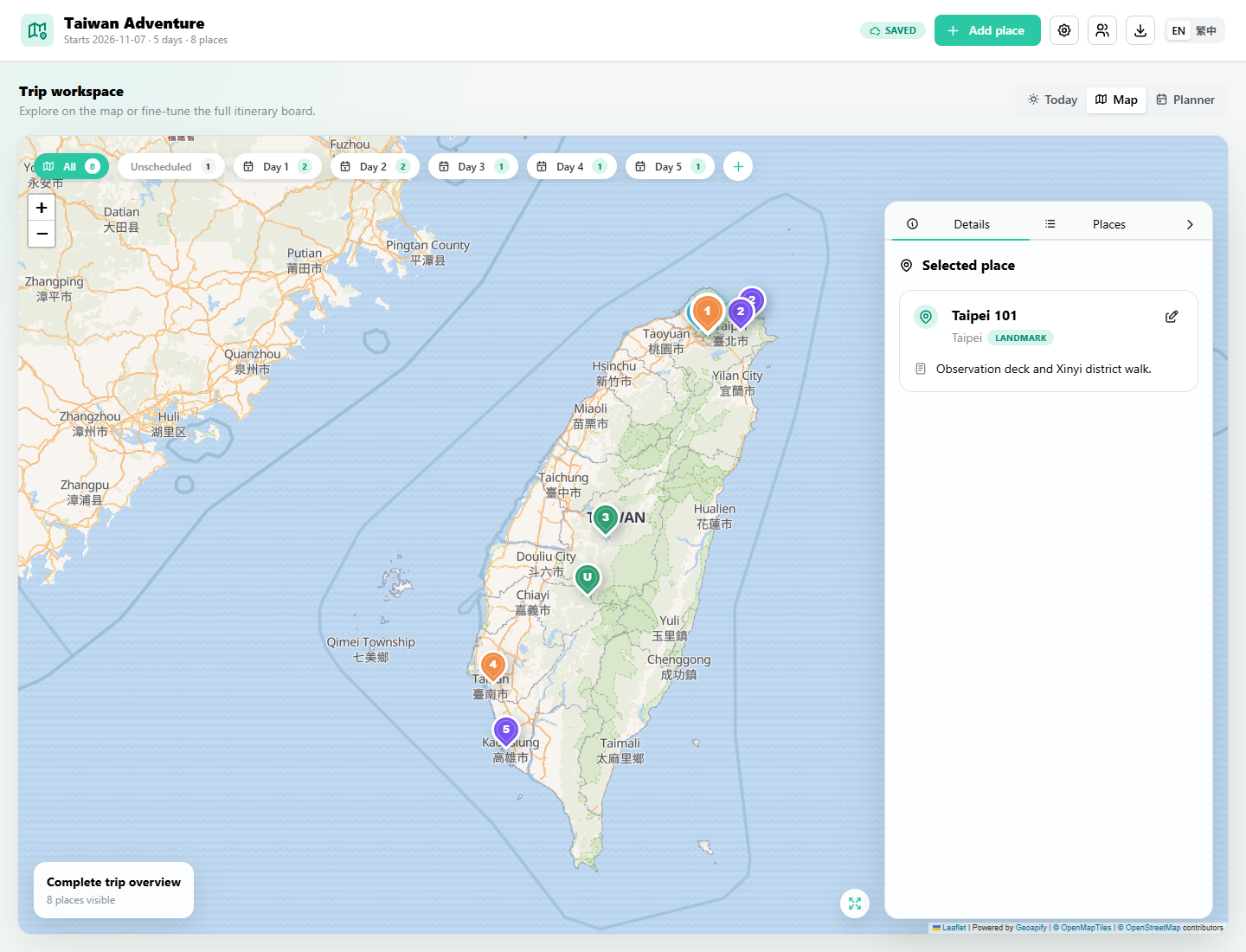
whole-trip map with grouped day pins
-
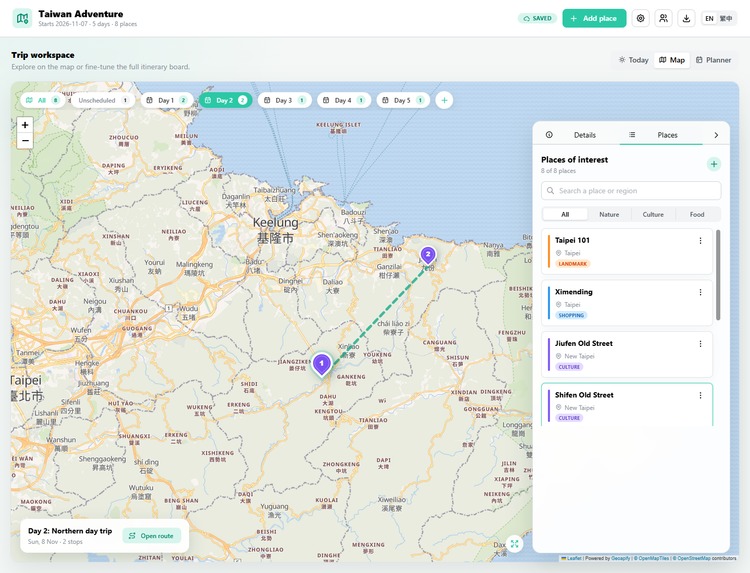
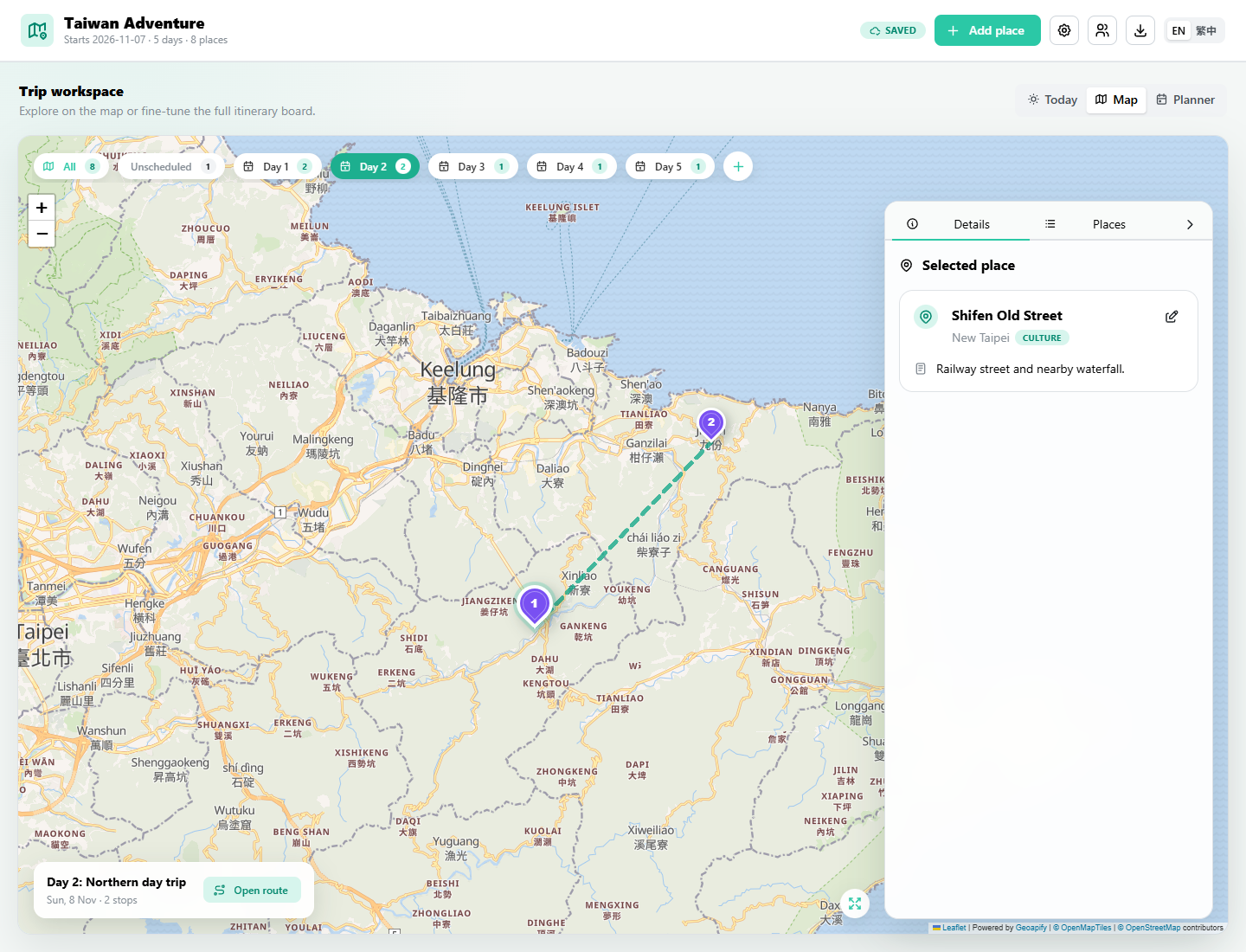
searchable, categorized place library
-
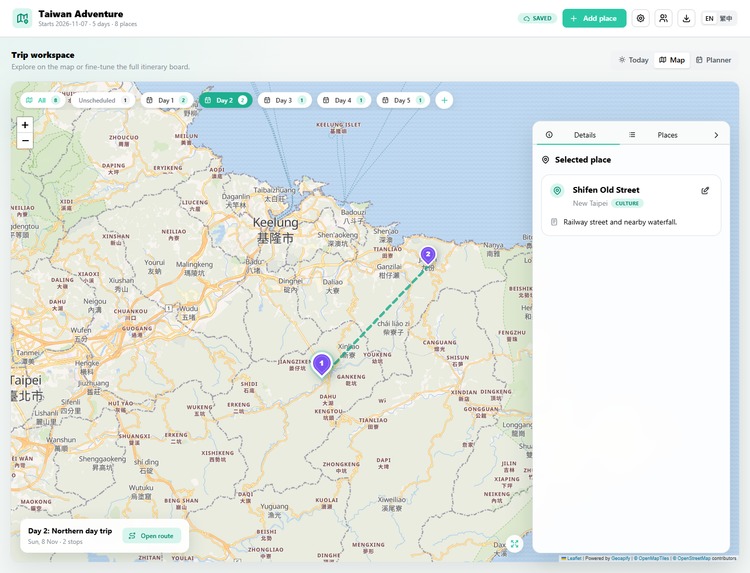
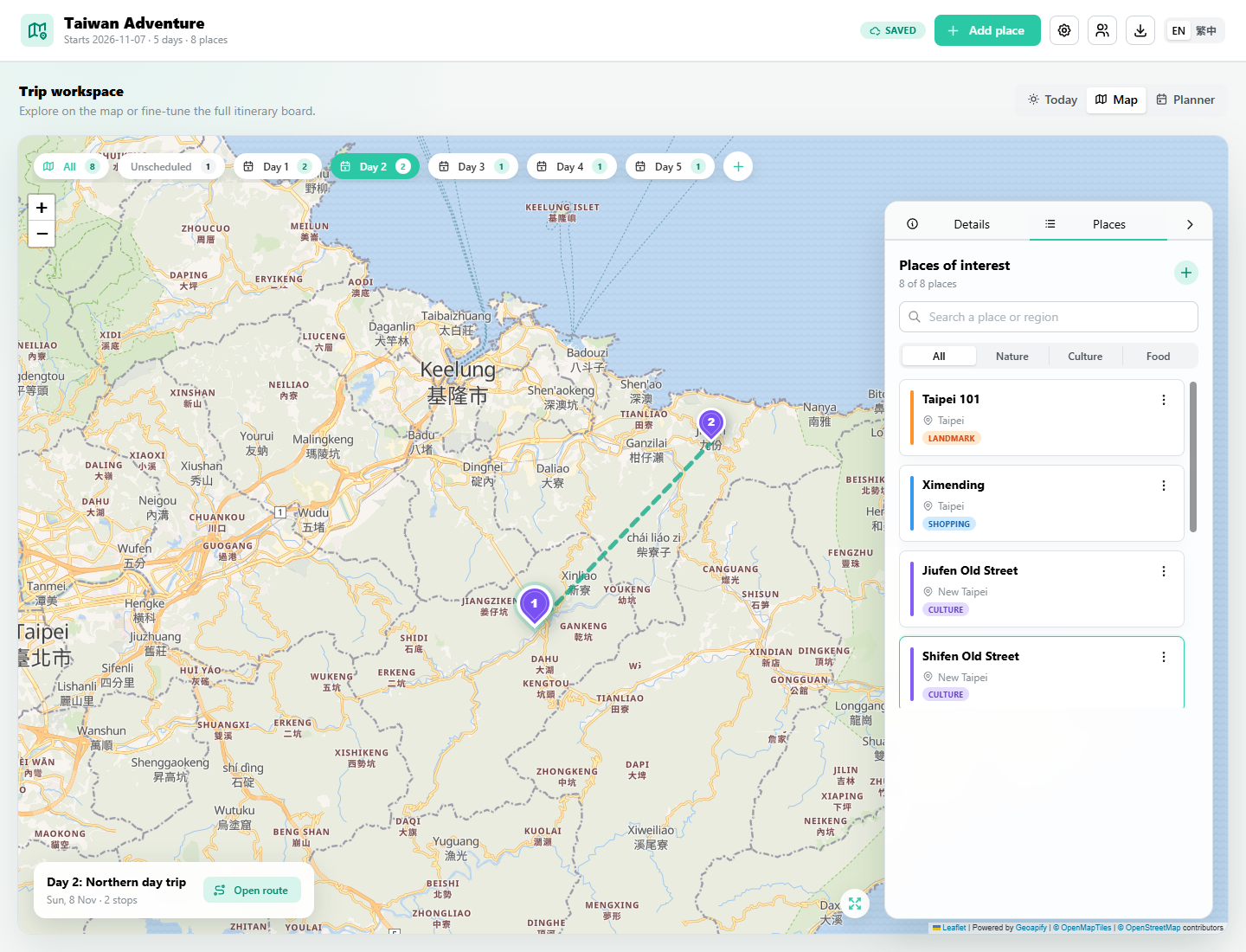
isolate one day and hand off its route
-
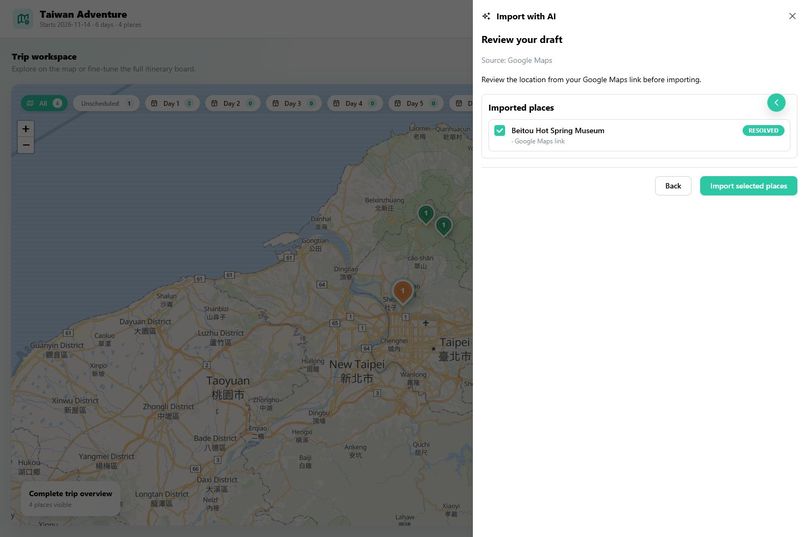
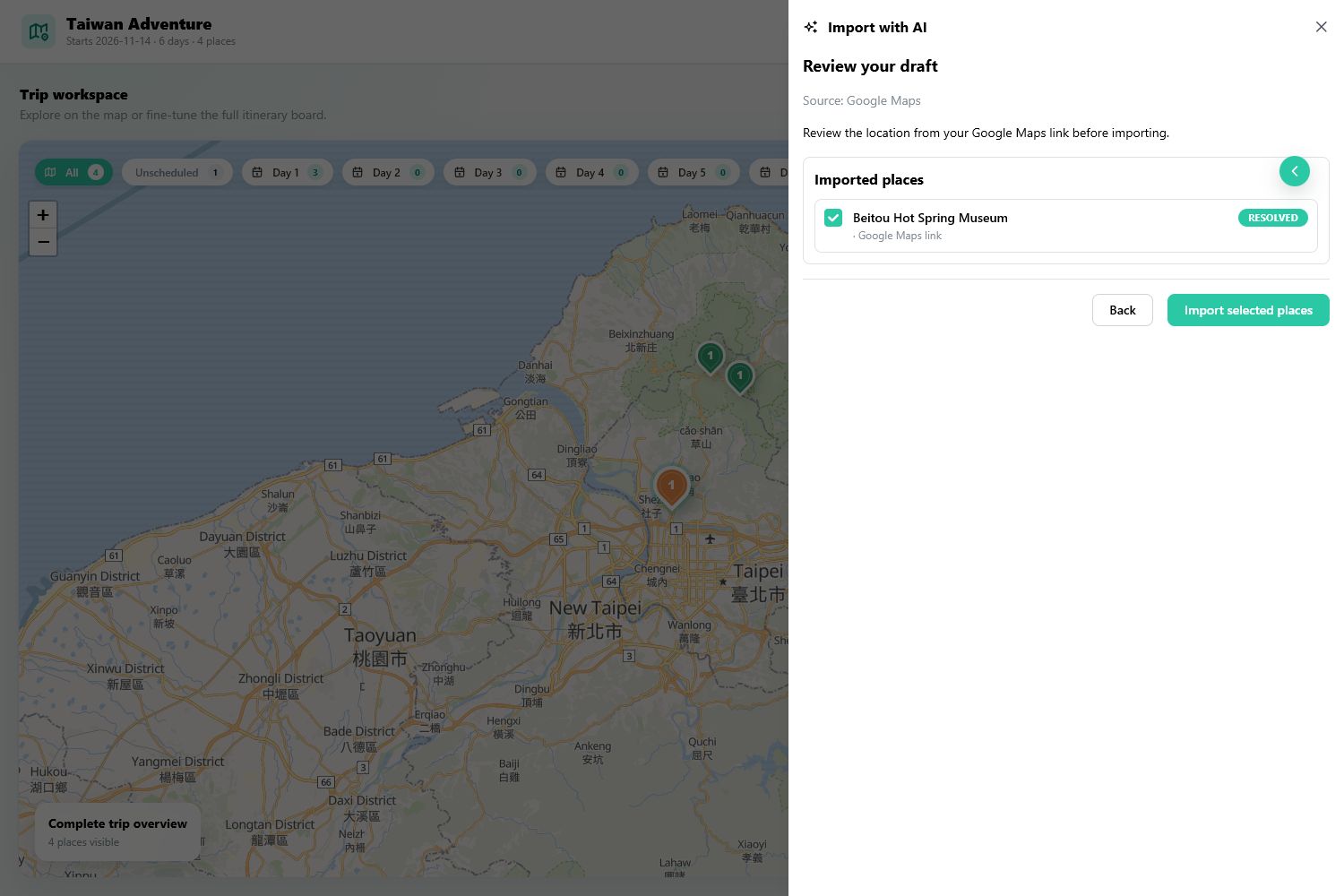
AI Import review showing a pasted maps.app.goo.gl link resolved into the Imported places scheduled card.
-
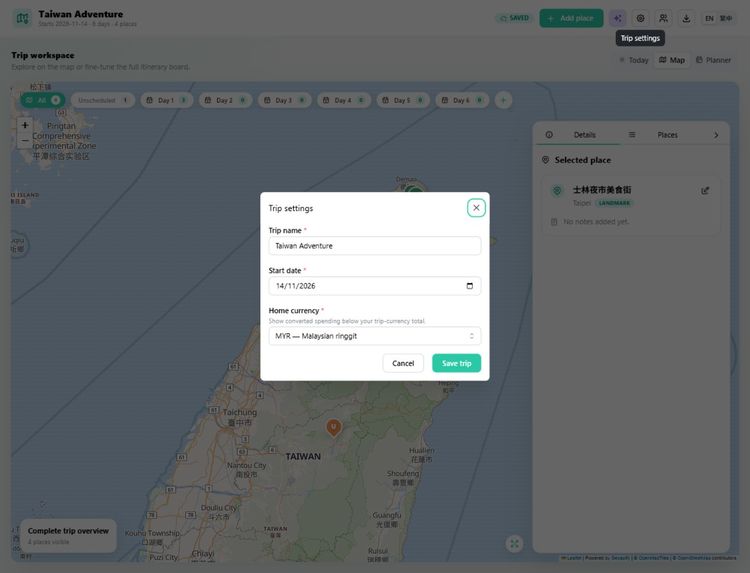
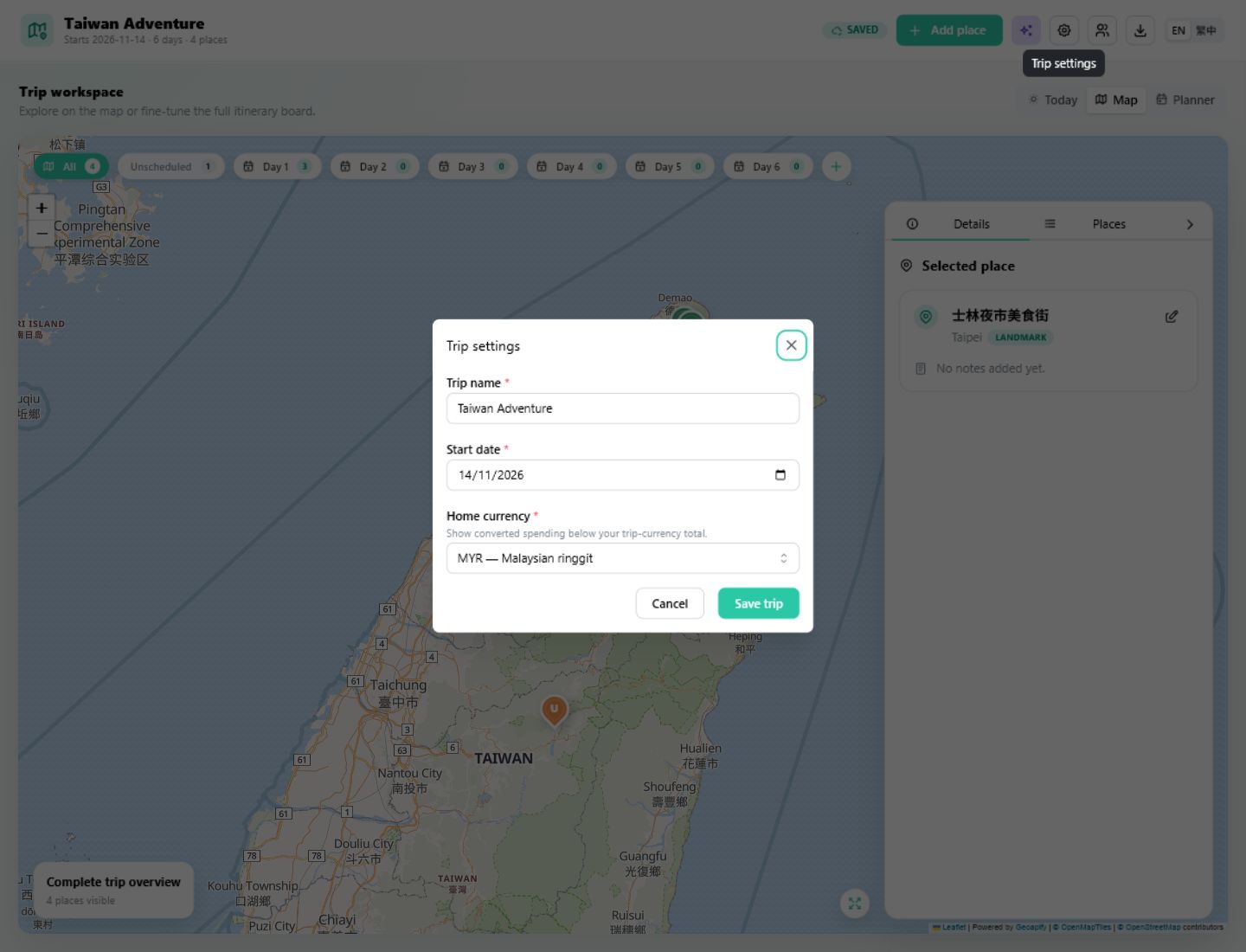
trip configuration and home-currency conversion
-
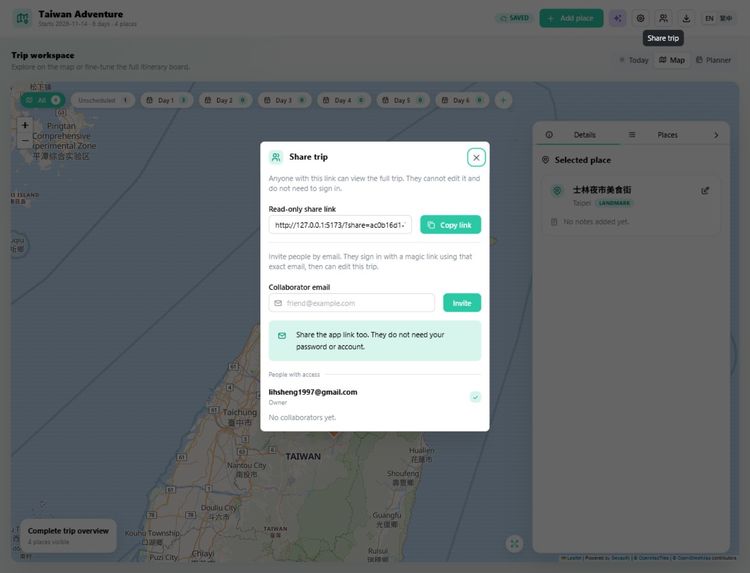
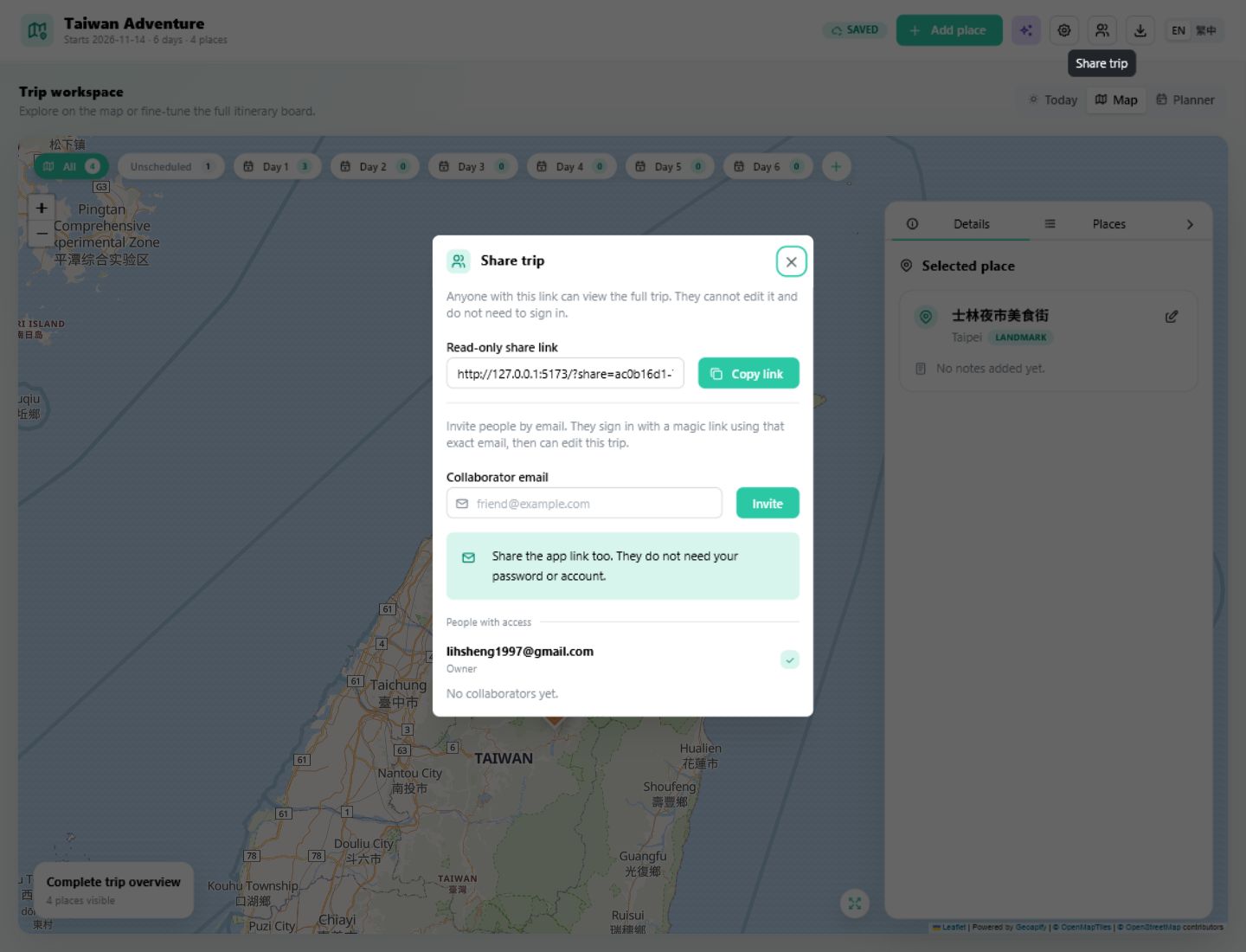
Supabase sync and collaborator invite entry point
-
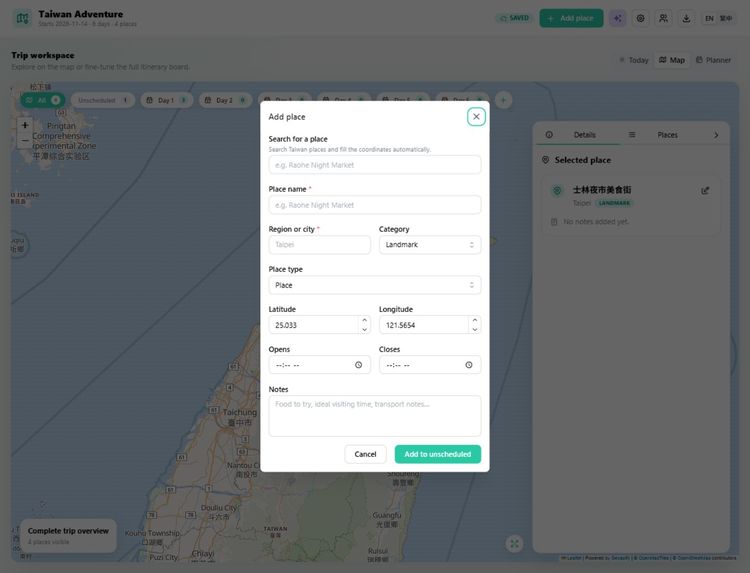
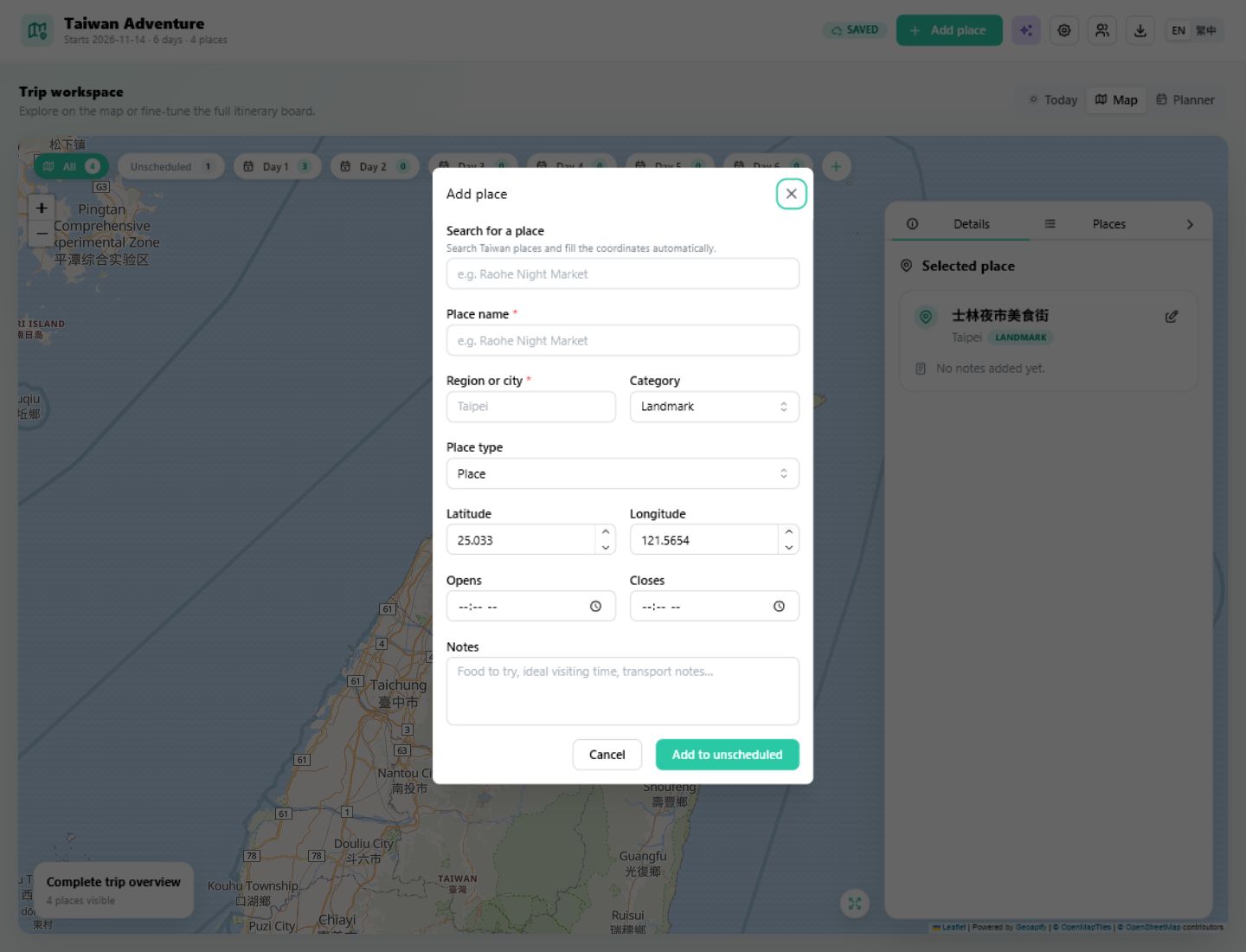
structured place creation with coordinates and notes
Inspiration
I just decide to have a trip to Taiwan and I'm just so confused to organize the schedule inside a google sheet or notes. And boom openai build week are here come to a chance for me to create a simple visual workspace where travellers can plan their entire journey without relying on multiple disconnected tools.
What it does
Trip Planner helps users organize and manage their trips through a desktop and mobile-friendly interface.
Users can:
- Add places they are interested in visiting
- Organize destinations into different travel days
- Drag and drop locations to rearrange the itinerary
- View planned destinations on an interactive map
- Switch between days to see the relevant map markers
- Track daily activities using a simplified Today view
- Record travel expenses quickly
- Share a read-only version of the trip with friends or travel companions
- Export trip schedules for offline reference
The goal is to make Trip Planner useful both before the trip and while the user is travelling.
How we built it
Trip Planner was built using React and TypeScript with a responsive, mobile-first interface. The application uses:
- Mantine for reusable UI components
- Supabase for authentication and persistent cloud storage
- Interactive map components for visualizing destinations
- Drag-and-drop functionality for itinerary planning
- A structured trip, day, location, and expense data model
- GitHub Actions for automated testing and deployment
- GitHub Pages for hosting the frontend application
It is orchastrated by me and AI agent are fully controlled on the code. AI-assisted development tools, including ChatGPT and Codex, were used to explore product requirements, improve the architecture, review code, and accelerate implementation.
Challenges we ran into
One major challenge was designing an interface that works equally well for detailed trip planning and quick mobile usage during the actual trip.
Other challenges included:
- Serverless environment, due to time constraint i didnt come out a proper backend and decided to just go with serverless.
- TOKENNNNN! Well this been handled by codex credit. Thanks for that!
Accomplishments that we're proud of
coming out idea, execute it well, make my partner happy! All just using codex
What we learned
We learned that trip planning is not only about building a schedule. Travellers also need flexibility when plans change, when activities do not have fixed times, and when they need information quickly while moving between locations.
We also learned that mobile usability is especially important for travel applications. Features that work well on a desktop may need to be simplified significantly for travellers using one hand on a mobile phone.
What's next for Trip Planner
I would integrate the AI in more expect, like planner, route suggestion, weather notification etc. And very first version is the place import feature. The AI assistant will extract locations and useful travel information. But AI can be do more on that i believe.
Other planned improvements include:
- Automatic route optimization between destinations
- Estimated travel time between itinerary items
- Weather information for each travel day
- Booking and reservation management
- Collaborative trip editing
- Budget summaries and expense splitting
- Offline access for important itinerary information
- Smarter recommendations based on location, available time, and travel preferences
Our long-term goal is to make Trip Planner an intelligent travel workspace that supports users from the first planning idea until the final day of their journey.
Built With
- chatgpt
- codex
- drag-and-drop
- github
- github-actions
- leaflet.js
- mantine
- mobile-first-design
- openstreetmap
- postgresql
- progressive-web-app
- react
- responsive-design
- supabase
- typescript
- vite

Log in or sign up for Devpost to join the conversation.