



Inspiration
Planning a trip should be exciting, but the process often becomes overwhelming. Travelers constantly switch between itinerary planners, booking websites, maps, budgeting tools, and social media to organize a single vacation.
The bigger problem comes when something goes wrong. A canceled activity or unexpected expense can disrupt an entire itinerary, forcing travelers to reorganize their schedules and budgets manually.
We built TravelRelay to solve this problem.
Our vision was to create an intelligent travel companion that doesn't just generate an itinerary, but helps travelers plan, manage, and adapt their entire journey in one place.
What it does
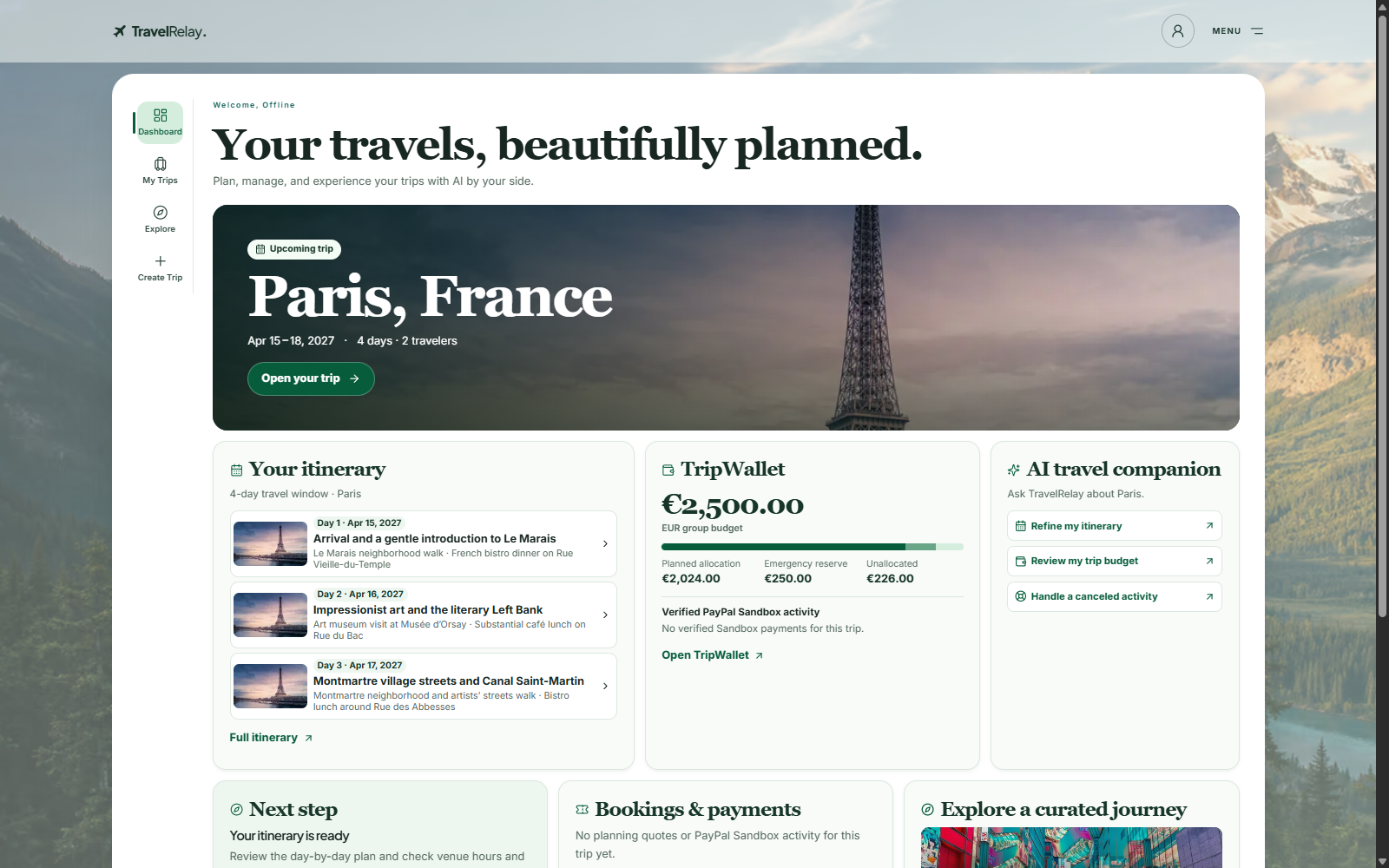
TravelRelay is an AI-powered travel planning platform that combines personalized itineraries, interactive scheduling, financial management, and intelligent trip recovery.
Its core features include:
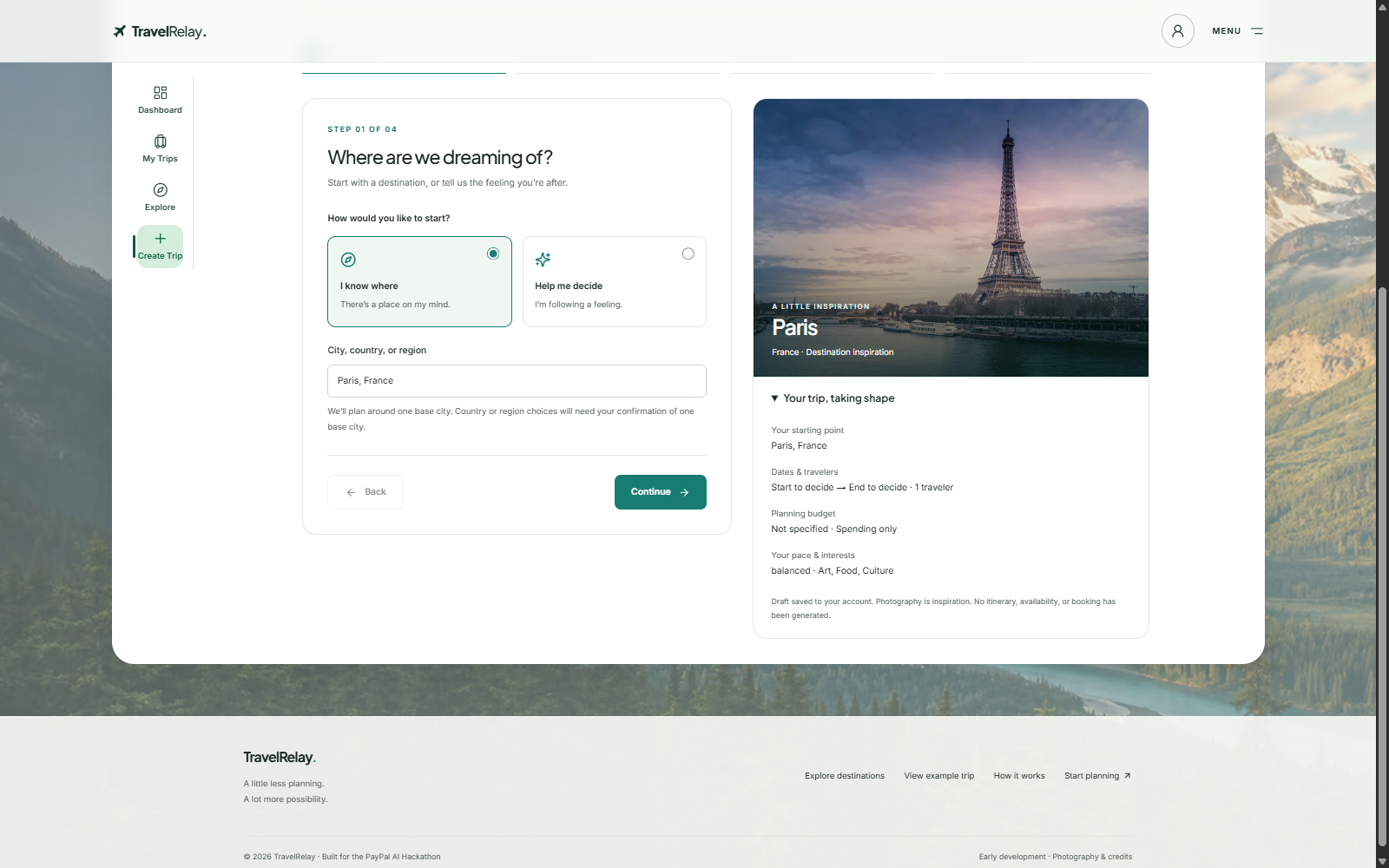
- AI Trip Generation: Create personalized itineraries based on destination, dates, budget, interests, travel preferences, and spending style. TravelRelay accounts for travel days, realistic activity schedules, meals, and transportation time.
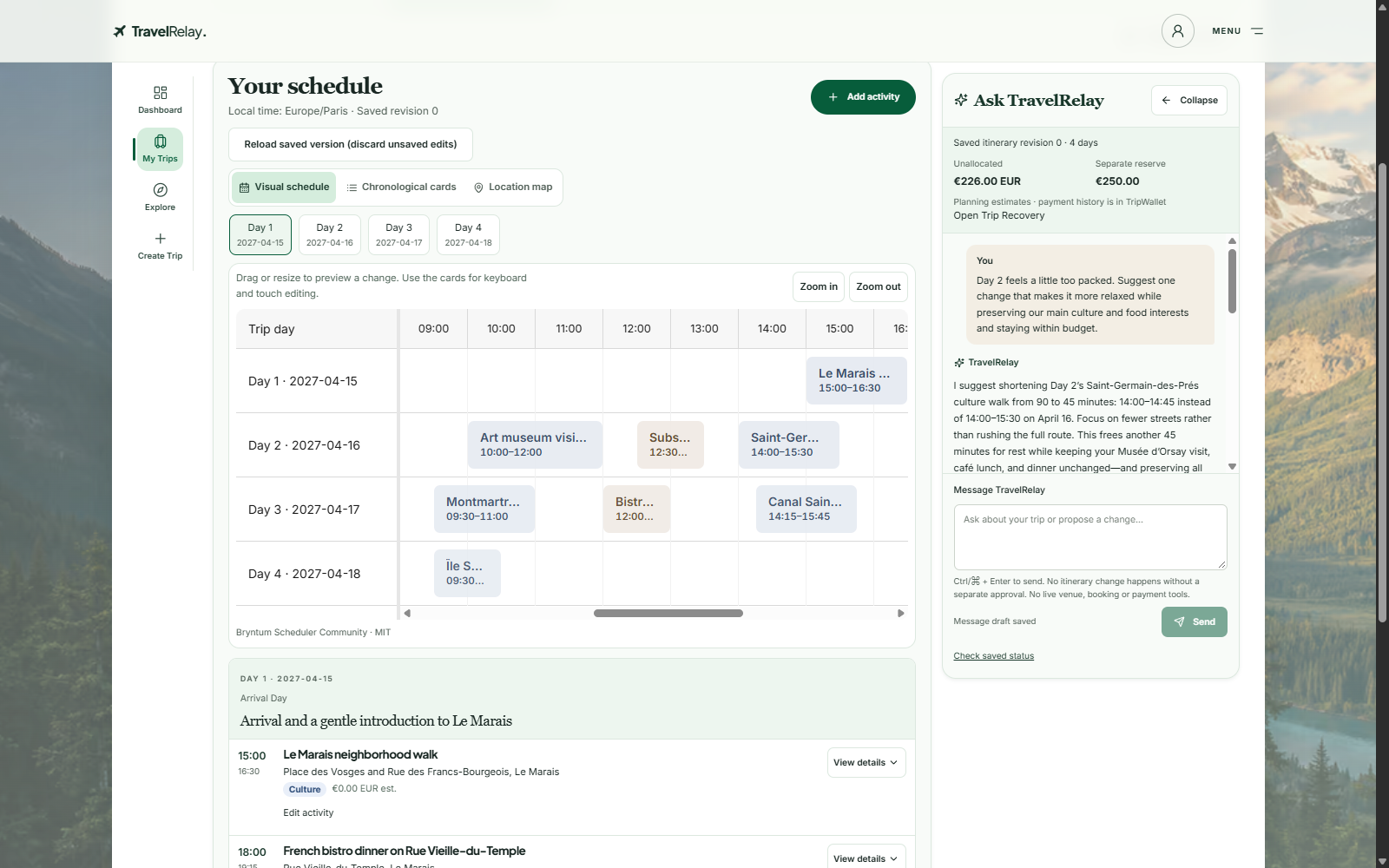
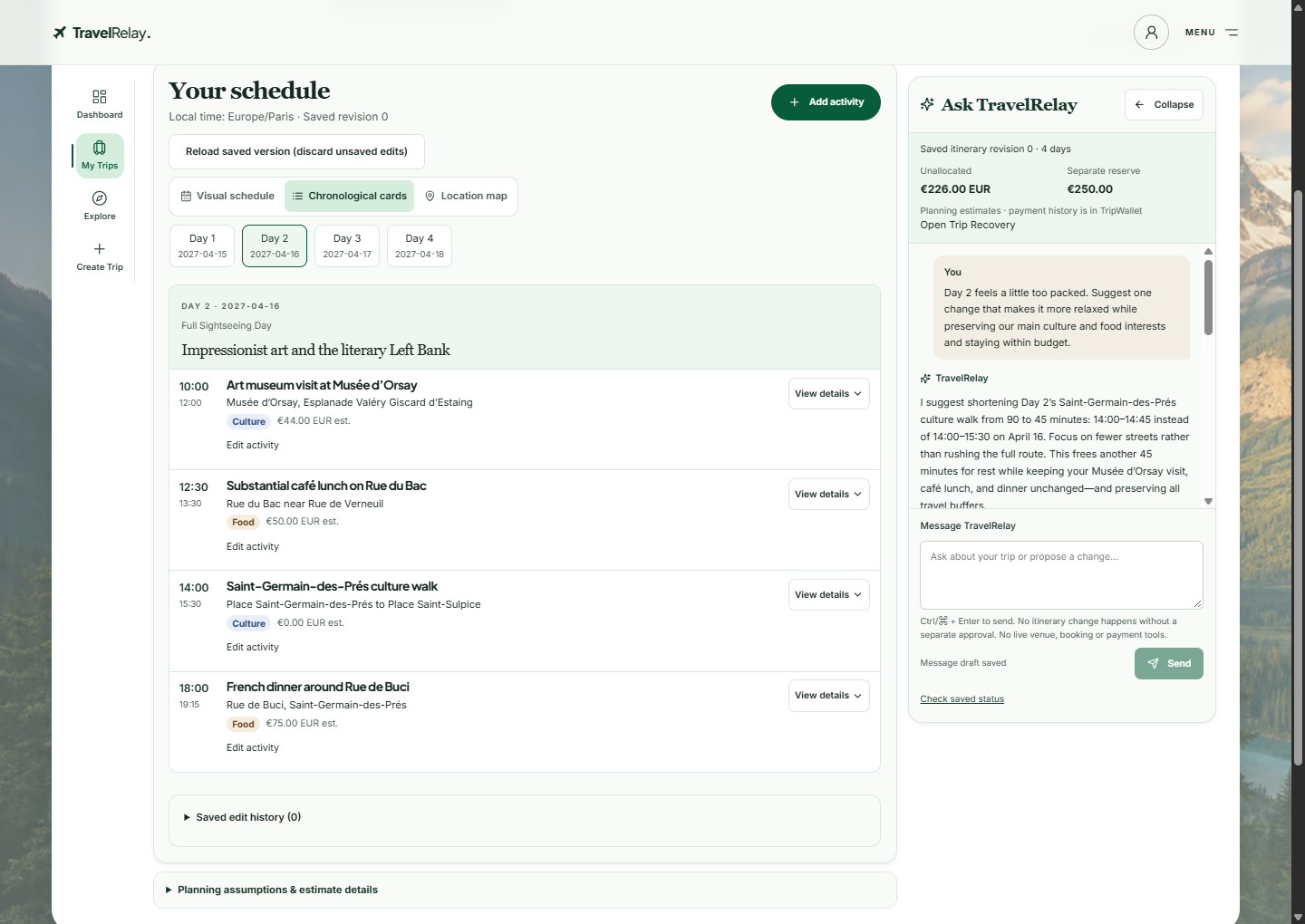
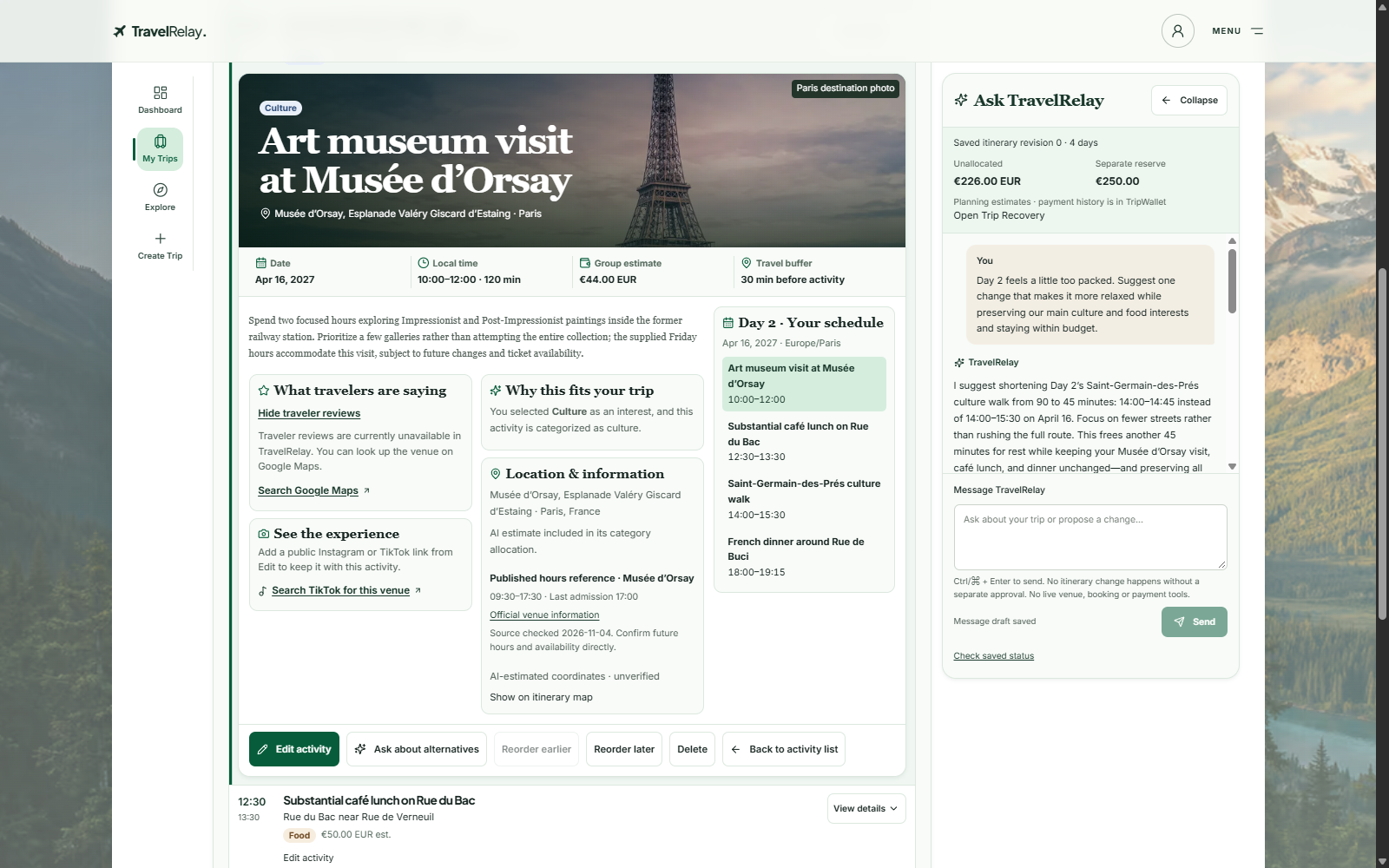
- Interactive Itinerary: Explore daily schedules, view activities on a map, and drag or resize events using Bryntum Scheduler. Changes are validated before being saved.
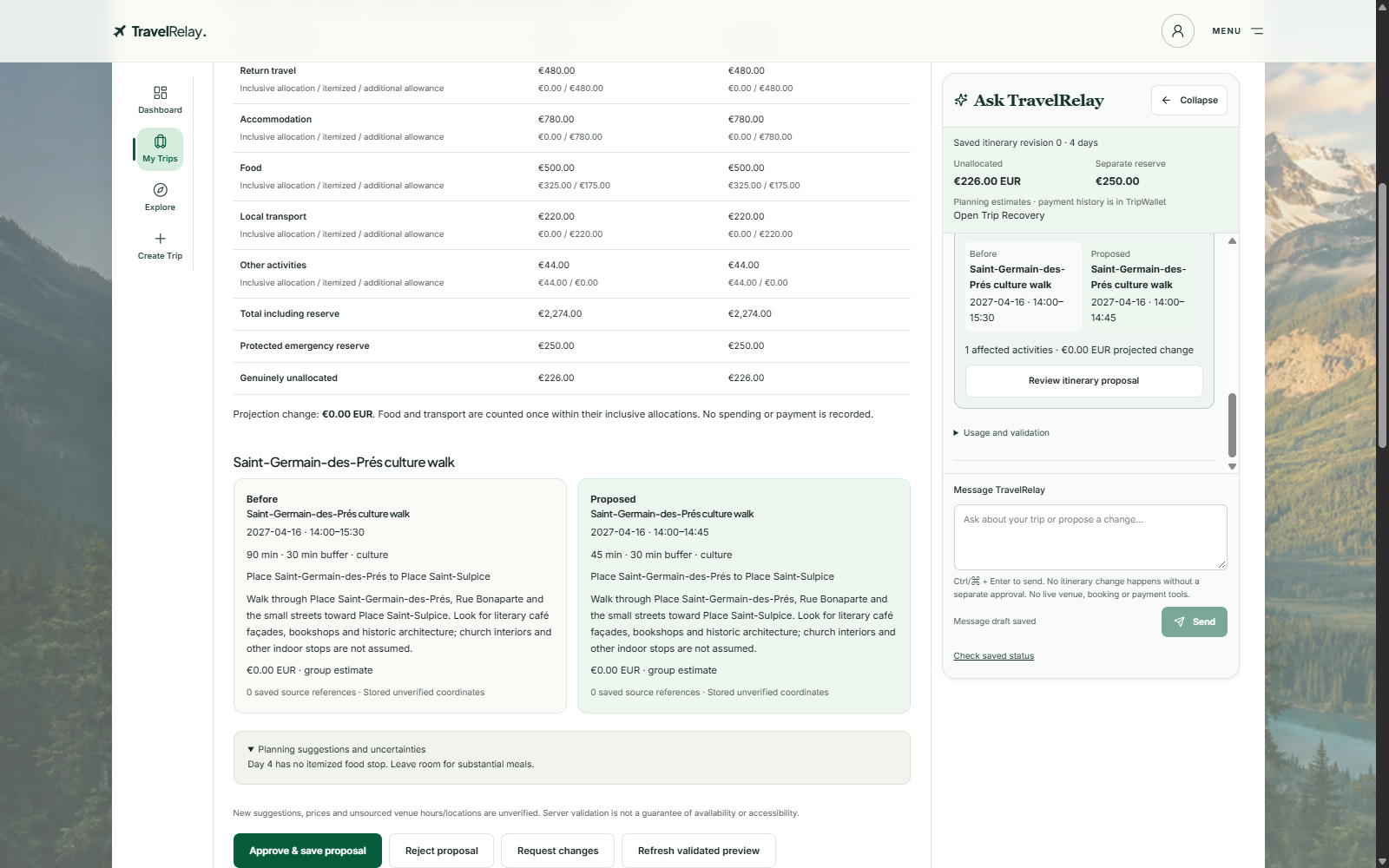
- AI Travel Assistant: Ask questions, adjust activities, and receive personalized recommendations. The assistant presents before-and-after previews so travelers can approve changes before they're applied.
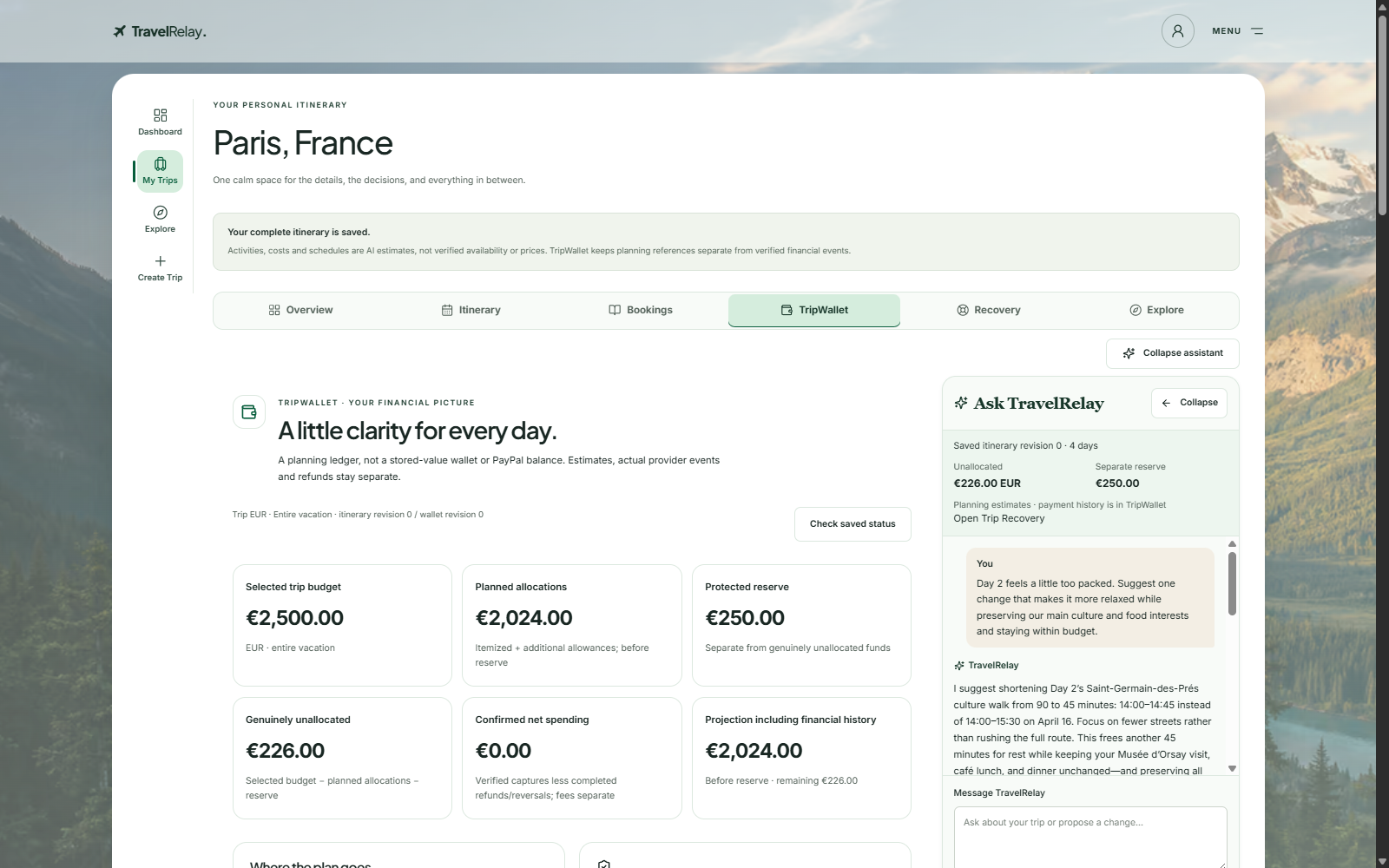
- TripWallet: Track estimated expenses, actual payments, available funds, and protected emergency reserves in one place.
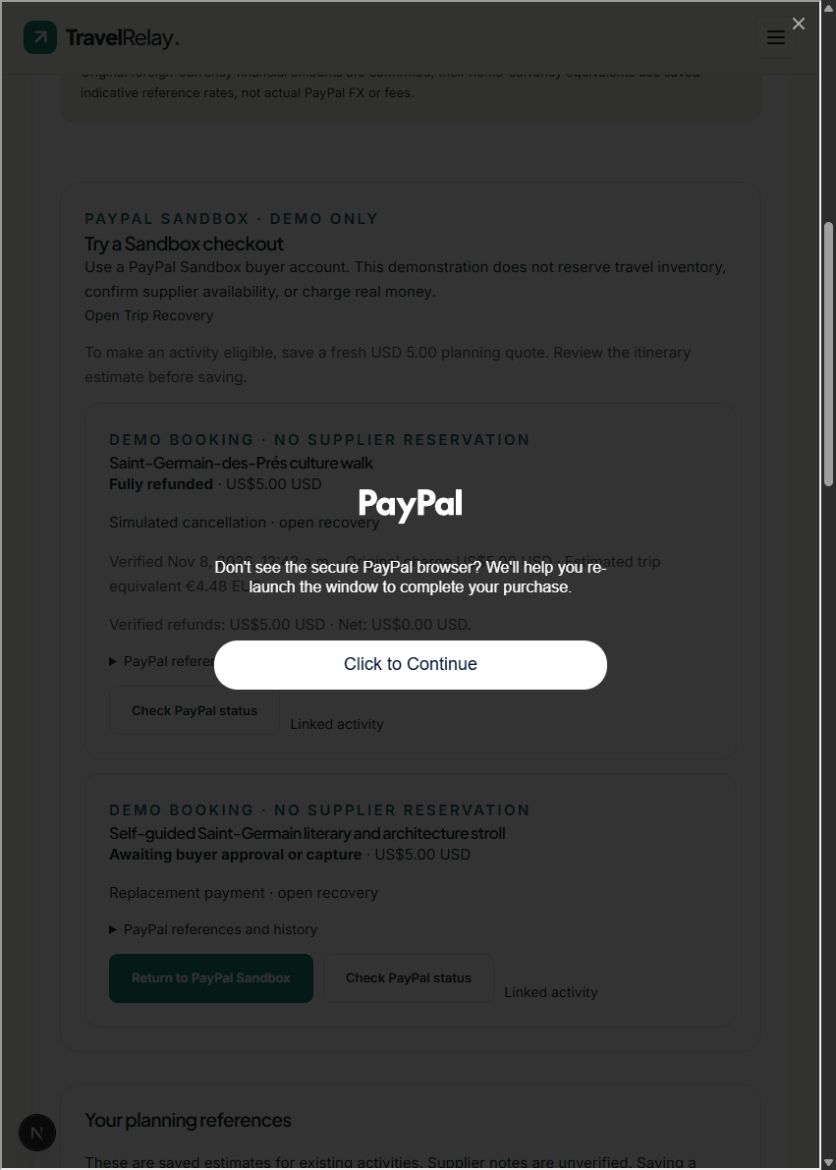
- PayPal Integration: Demonstrate buyer-approved Sandbox payments, verified captures, refunds, and payment reconciliation.
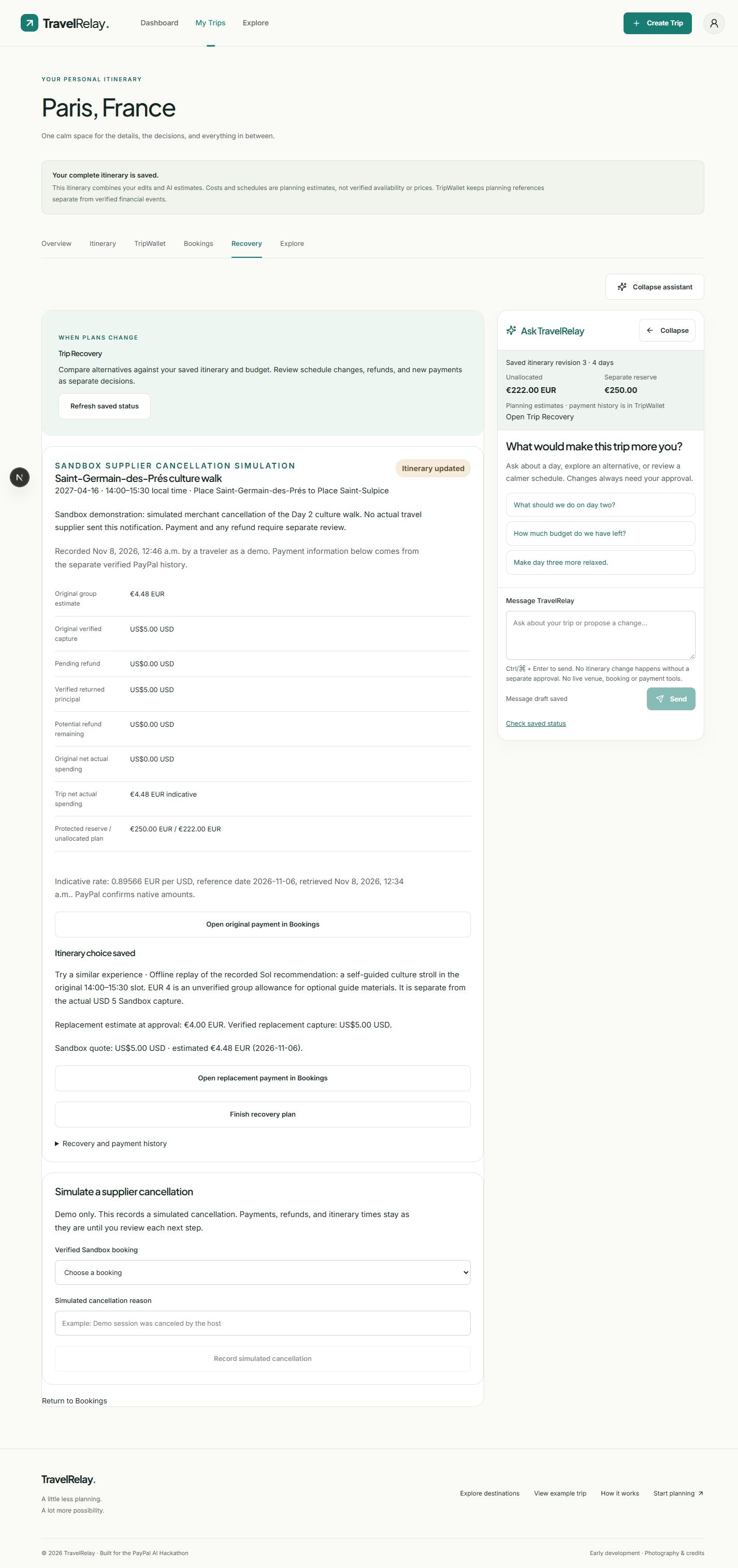
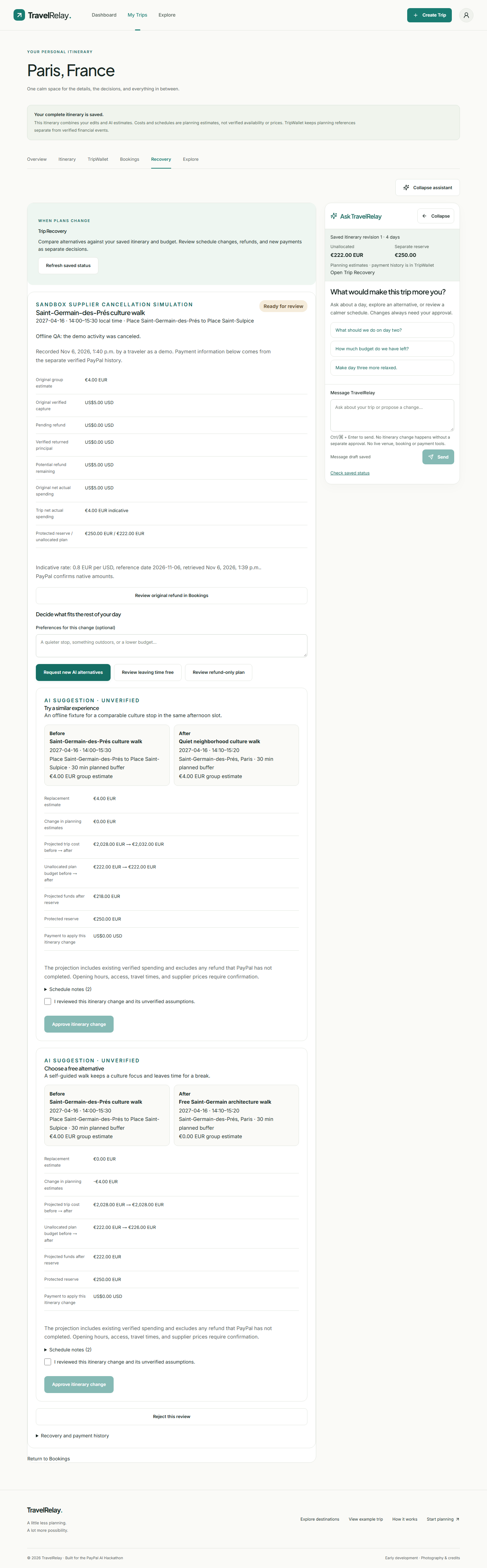
- Intelligent Trip Recovery: When a cancellation disrupts an itinerary, TravelRelay can suggest alternatives while considering scheduling constraints and budget impact.
- Activity Insights: Help travelers research recommended activities through Google Maps links and available social-media references, with an optional integration designed for live Google reviews.
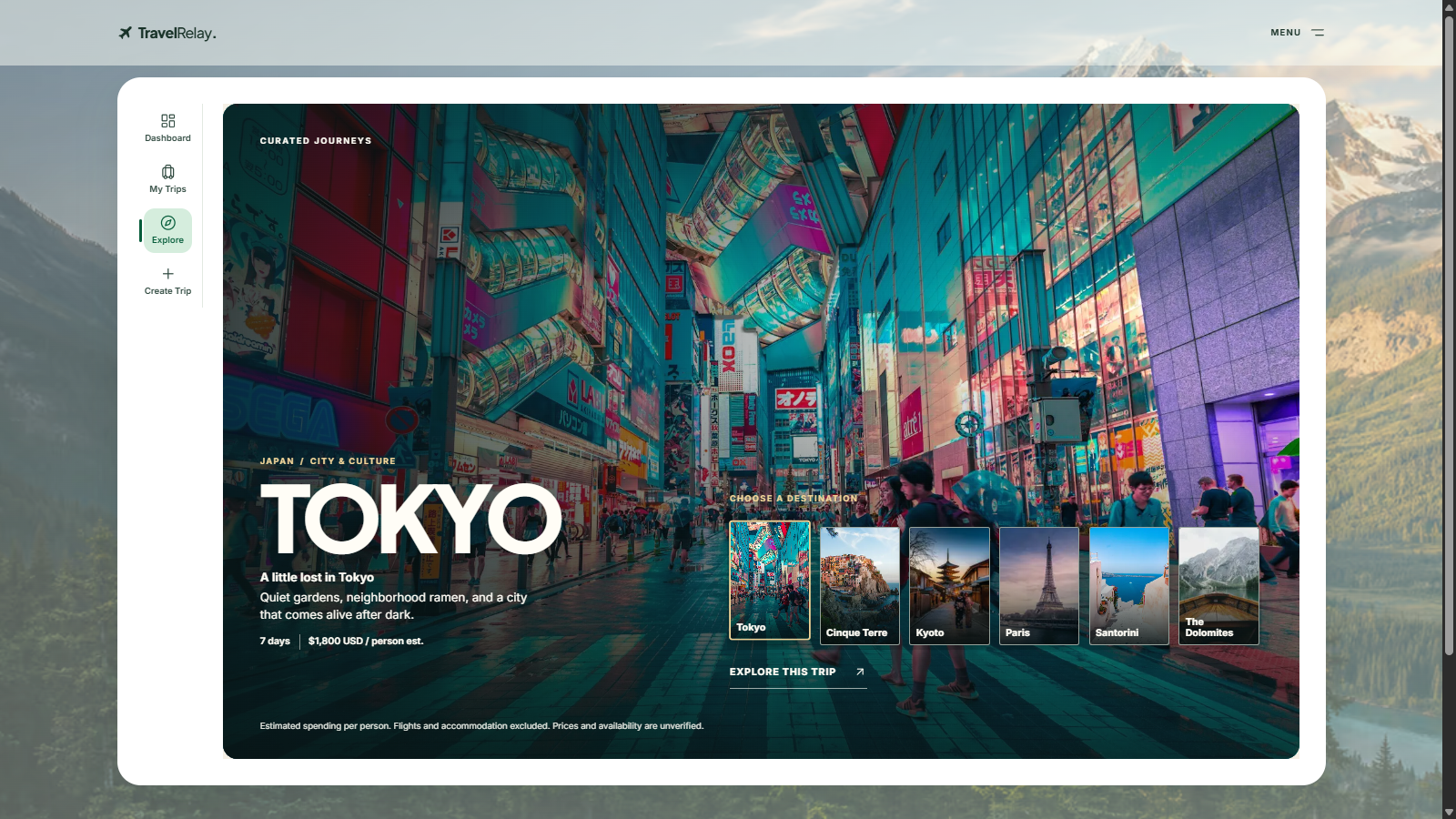
- Curated Journeys: Explore premade destination experiences and customize them into personalized trips.
The goal is to make travel planning feel seamless while keeping travelers in control of important decisions.
How we built it
TravelRelay is a full-stack web application built with Next.js, React, TypeScript, and PostgreSQL.
The application uses OpenAI's GPT-6.1 Sol for itinerary generation and intelligent planning assistance, with Google's Gemini available as a configurable alternative.
AI-generated itineraries pass through a structured validation pipeline that checks scheduling conflicts, travel buffers, activity requirements, budget reconciliation, and trip feasibility before saving the final result.
PayPal's Sandbox APIs power the payment demonstration, including checkout, capture verification, refunds, and transaction reconciliation. Payments are tracked separately from AI-generated expense estimates.
For the interactive experience, we integrated Bryntum Scheduler for itinerary editing and Leaflet/OpenStreetMap for location visualization.
Financial functionality also incorporates foreign-exchange reference data, while server-side authorization, audit records, and transactional database operations help protect user data and financial integrity.
TravelRelay is deployed using Vercel and Neon PostgreSQL, with a cinematic, responsive green-and-white interface designed around destination photography and intuitive navigation.
Challenges we ran into
One of our biggest challenges was making AI-generated itineraries genuinely realistic rather than simply producing attractive schedules.
For example, an international trip from Toronto to Tokyo initially failed because the AI's flight assumptions conflicted with the activity requirements. The planner expected sightseeing activities on a day when the traveler would still be in transit.
We resolved this by introducing consistent travel-day handling across AI generation, itinerary validation, editing, and the visual scheduler.
Another challenge involved keeping trip budgets accurate when combining estimated expenses, emergency reserves, currency conversions, actual payments, and refunds.
We also had to make AI-driven itinerary editing reliable. A suggested change cannot simply overwrite an existing schedule. It must preserve activity identities, detect conflicts, respect the budget, and require approval.
Finally, integrating PayPal required careful handling of payment verification, duplicate requests, refund reconciliation, and the separation between a Sandbox payment and a real travel reservation.
Accomplishments that we're proud of
We're especially proud of building an application where the major features work together rather than existing as disconnected demonstrations.
TravelRelay can generate a personalized itinerary, display it in an interactive scheduler, help users modify it through AI, and keep the financial consequences visible.
Some of our biggest achievements include:
- Building a complete AI itinerary generation and validation pipeline.
- Implementing interactive drag-and-resize scheduling with validated edits and undo.
- Creating a context-aware AI assistant with user-approved changes.
- Building a budget system that separates planned costs from actual PayPal transactions.
- Successfully testing PayPal Sandbox capture, refund, and recovery workflows locally.
- Deploying a functional, authenticated application with persistent trips.
- Passing 187 automated regression tests and completing production acceptance checks.
We're also proud of the visual experience. We wanted TravelRelay to feel like a premium travel platform rather than another generic AI dashboard.
What we learned
Building TravelRelay showed us that reliable AI applications require much more than connecting an LLM to an interface.
We learned how important structured outputs, validation, state persistence, and careful error handling are when AI recommendations affect real user plans.
We also gained experience integrating payment infrastructure, building secure financial workflows, handling asynchronous AI operations, and deploying a full-stack application with a production database.
Most importantly, we learned that AI works best when it assists users rather than replacing their judgment. TravelRelay is designed around transparency, meaningful recommendations, and explicit user approval.
What's next for TravelRelay
Our long-term goal is to turn TravelRelay into a complete intelligent travel companion.
Future improvements include:
- Integrating real booking providers for flights, hotels, and activities.
- Enabling live PayPal checkout and signed webhook verification in the hosted experience.
- Expanding Activity Insights with live Google reviews and richer social-media discovery.
- Adding real-time travel disruption monitoring and proactive itinerary recovery.
- Supporting collaborative planning and shared trip budgets.
- Expanding multi-city itinerary planning and transportation optimization.
Ultimately, we want TravelRelay to become a platform that supports travelers from their first destination idea to the moment they return home.
TravelRelay isn't just about planning the perfect trip. It's about having an intelligent companion when the journey doesn't go according to plan.
Built With
- betterauth
- bryntum
- drizzle
- frankfurtherapi
- gemini
- gpt-6.1sol
- javascript
- leaflet.js
- neon
- next.js
- node.js
- openai
- openstreetmap
- paypalrestapi
- postgresql
- react
- tailwind
- typescript
- vercel

