Inspiration
This idea didn’t come from a textbook or a fancy seminar. It came from real life.
Back in secondary school, my brothers and I used to gather scrap metals from around the house. Anytime something broke or got replaced especially car parts from my mom’s vehicle we’d take them to sell. We knew the value of waste before we even understood what recycling meant. At Oyigbo in Rivers State, we could sell 1kg of metal for ₦1000. It wasn’t a lot, but it meant something. It gave us pocket money, and more importantly, it showed us that what people throw away could actually be turned into cash.
That memory stayed with me. Years later, as I walked through communities with trash littered everywhere bottles, cartons, metals, plastics I thought to myself, what if everyone could do what we did? But easier, safer, and faster?
That’s how Trash4Cash was born.
What it does
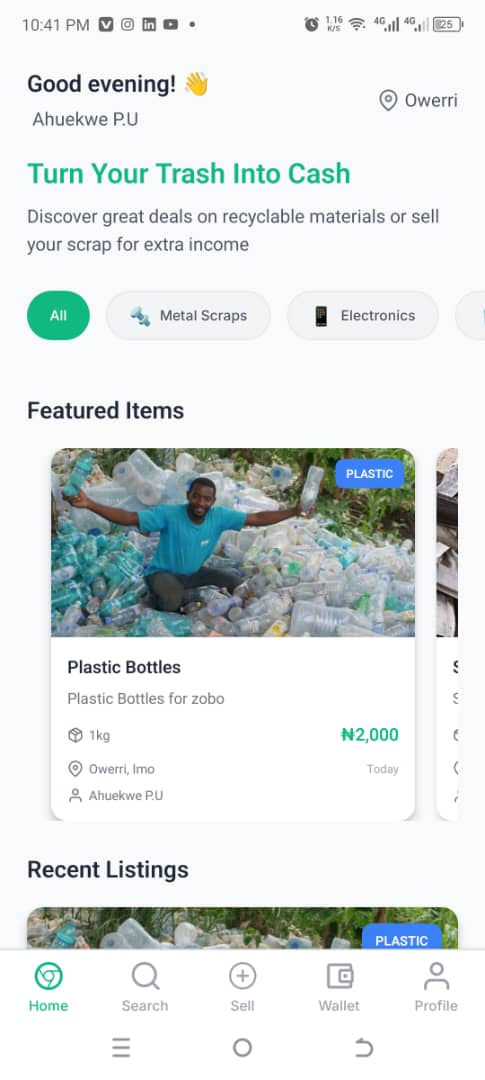
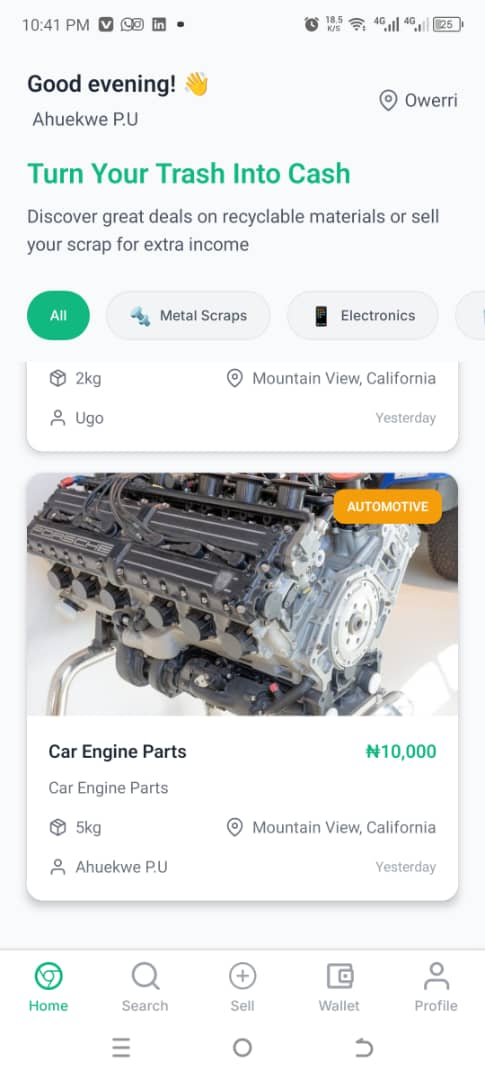
Trash4Cash is a mobile marketplace that lets Nigerians buy and sell trash plastics, scrap metals, used electronics, cartons, and more.
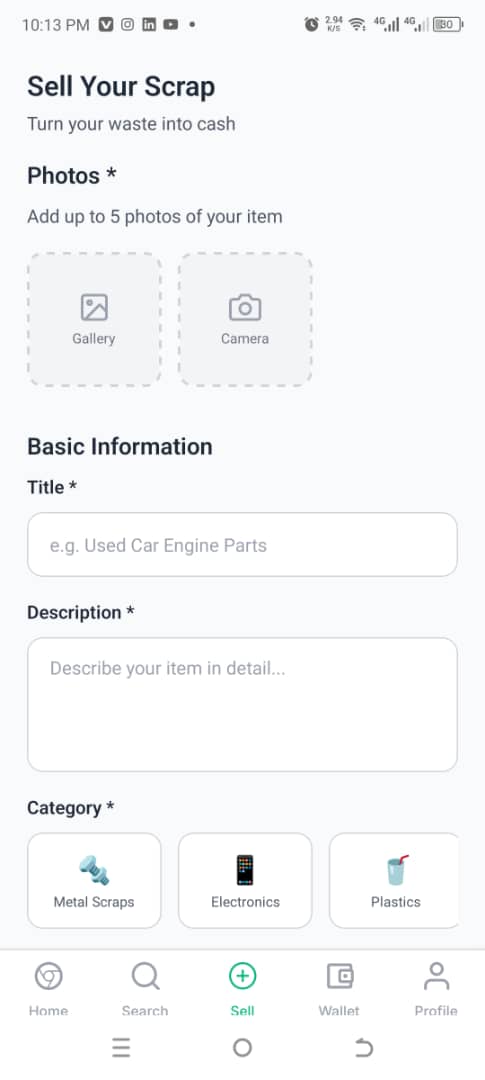
Sellers snap a photo of what they want to sell (trash), upload it, and set their price.
Buyers browse listings, contact sellers on WhatsApp, and make purchases.
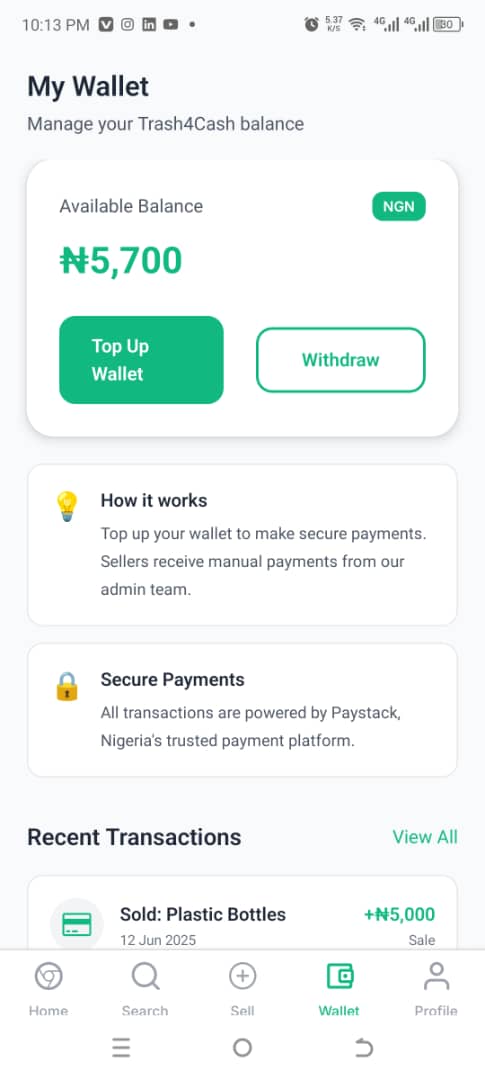
Users can top up their in-app wallet via Paystack and use it to shop directly.
Admins handle payment transfers manually for better safety and cost control.
No expensive geo-tagging or maps. Users manually select or type in their locations using OpenStreetMap integration a totally free alternative to Google Maps.
It's simple, fast, and optimized for Nigerian life low data, basic devices, and a growing youth population that wants to earn and stay clean.
How I built it
I approached building Trash4Cash like a scrappy startup team with limited tools but big vision.
I used React Native Expo with the latest Expo Router for the frontend. It gave me that smooth mobile-native experience users love, especially on Android devices.
For the backend, I picked FastAPI and MongoDB for fast development, async performance, and flexible data storage perfect for marketplace listings and user wallets.
FastAPI Backend was hosted on render.com
Cloudinary handles all image uploads, ensuring sellers can easily snap and post pictures of their trash.
For payments, Paystack was the obvious choice Nigerian-friendly, reliable, and perfect for topping up user wallets.
Users don’t need to download any extra apps to chat we integrated WhatsApp deep links so buyers can message sellers instantly with one tap.
For location, I ditched Google Maps (because of API costs) and used OpenStreetMap, which is completely free and still gives users the ability to select or type in their locations easily.
But here’s the human part:
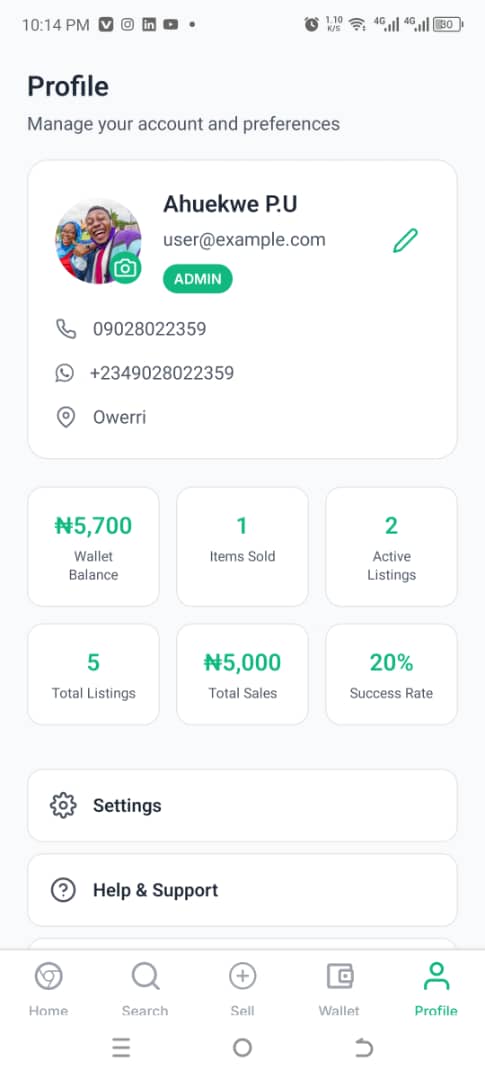
To build the app fast and beautifully, I relied on Bolt.new to wireframe and visually map out the user flow. This tool became my canvas. I sketched the onboarding, wallet, listing, and buyer flows in minutes not hours. It was fast, intuitive, and it actually made me feel like a real product designer. From day one, I wasn’t just coding I was creating experiences.
When stuck on complex flow ideas and product clarity, I turned to Claude.ai it helped me brainstorm naming conventions, simplify UX decisions, and generate clean boilerplate FastAPI logic when i needed a second brain.
Challenges I ran into
Avoiding costly services: I had to ditch Google Maps and dig into free alternatives like OpenStreetMap and manual location entry.
Payment complexity: I didn’t want to spend on advanced wallet features, so I built a hybrid Paystack for top-up, and admin-managed payouts.
Building trust: Creating a trash marketplace meant designing for credibility clear images, secure wallet handling, and verified listings.
Keeping it lightweight: Many Nigerian users have low-end Android devices and limited internet. The app had to be extremely optimized for them.
Accomplishments that I'm proud of
I took a childhood memory and turned it into a real tech solution.
Built a full-stack marketplace from scratch with zero cost APIs.
Designed an intuitive experience for people with no technical background.
Integrated Paystack and WhatsApp without overengineering.
Most of all, I created a tool for empowerment one that can clean up streets and put cash in people’s hands.
What I learned
People don’t need complex solutions they need something they can understand and use.
Nigerian problems require Nigerian context. No one-size-fits-all model.
Trust is everything in peer-to-peer apps images, reviews, and communication matter a lot.
Simplicity in design doesn’t mean sacrificing power it means clarity and speed.
What's next for Trash4Cash
Ratings and reviews for sellers, to boost credibility.
Geo-clustering to help users find trash or buyers nearby.
Push notifications for new deals and seller responses.
Trash categories and sorting features for recyclers.
Admin dashboard to manage payouts and flag fake listings.
Community campaigns: partner with schools and churches to encourage digital cleanup drives.
Built With
- bolt
- claude
- cloudinary
- eas
- fastapi
- github
- mongodb
- openstreetmap
- paystack
- react-native
- render

Log in or sign up for Devpost to join the conversation.