-
-
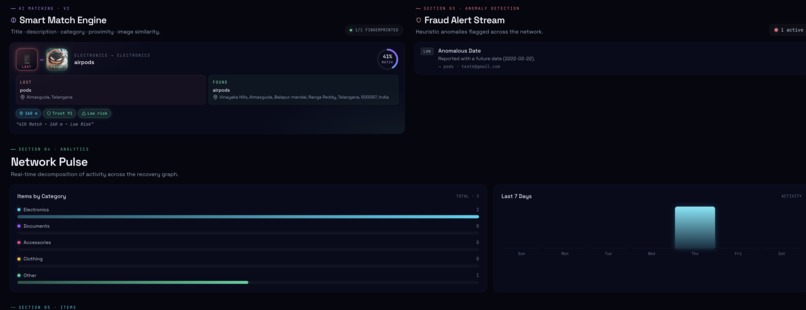
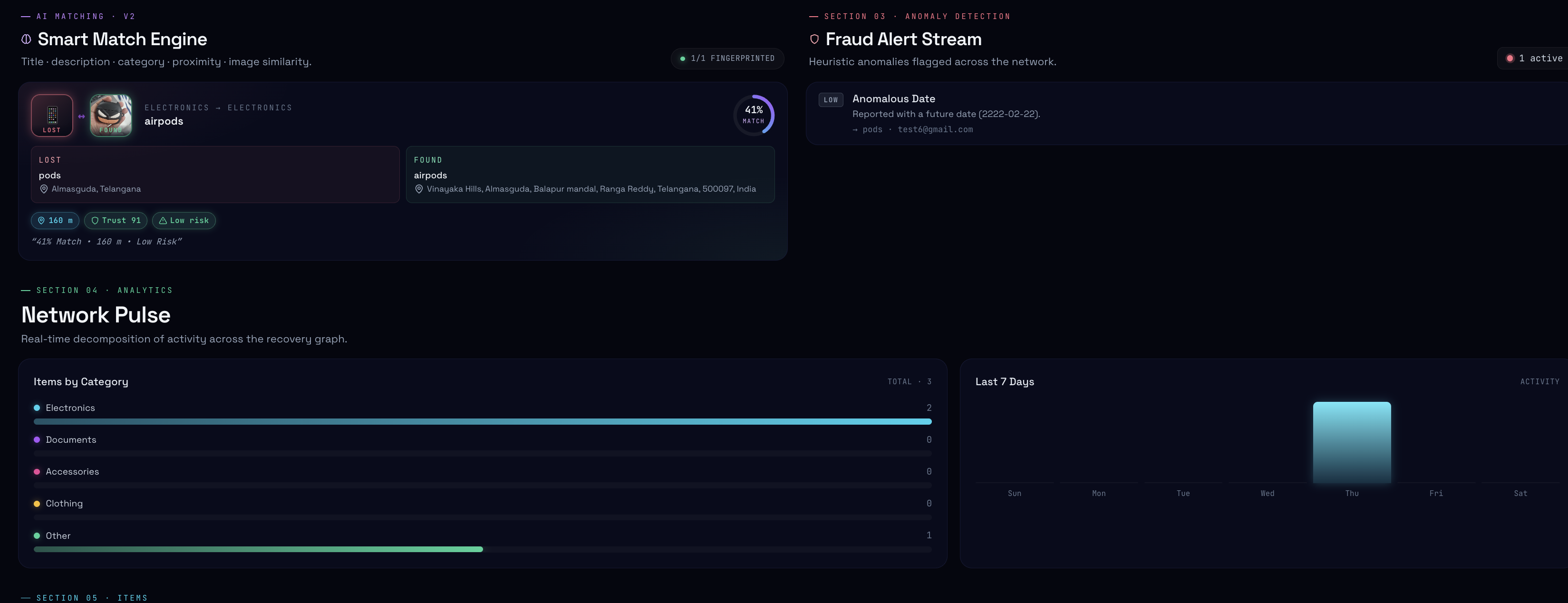
smart match engine
-
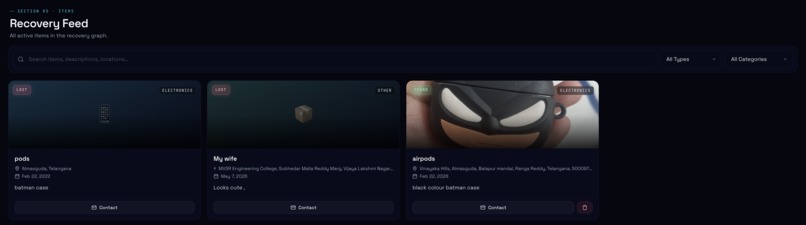
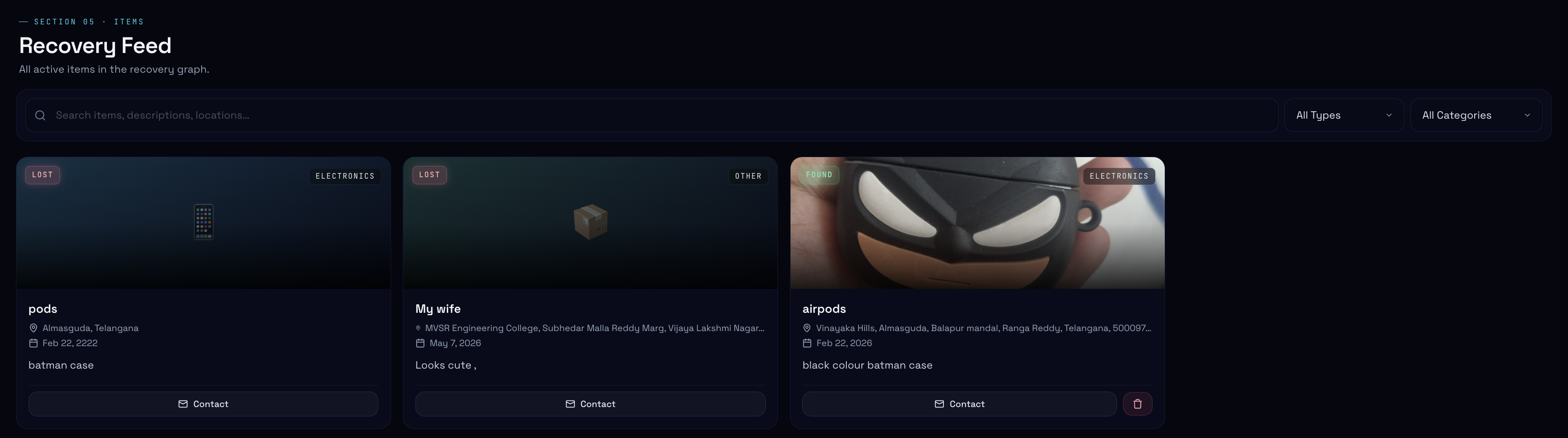
recovery feed
-
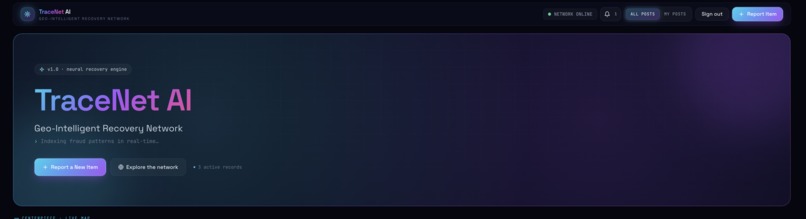
starting
-
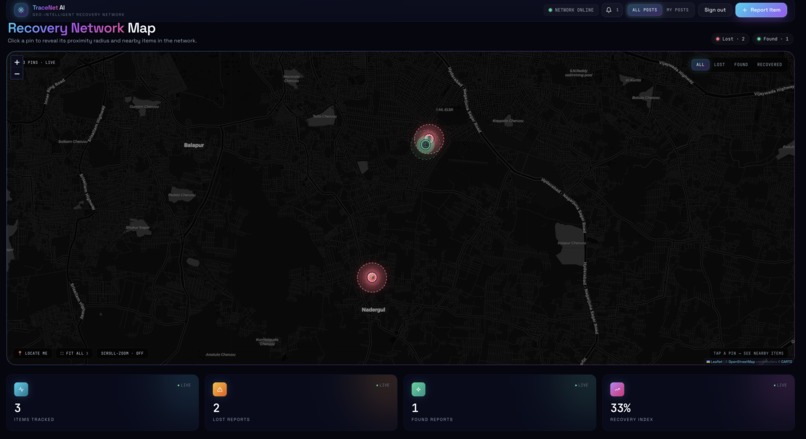
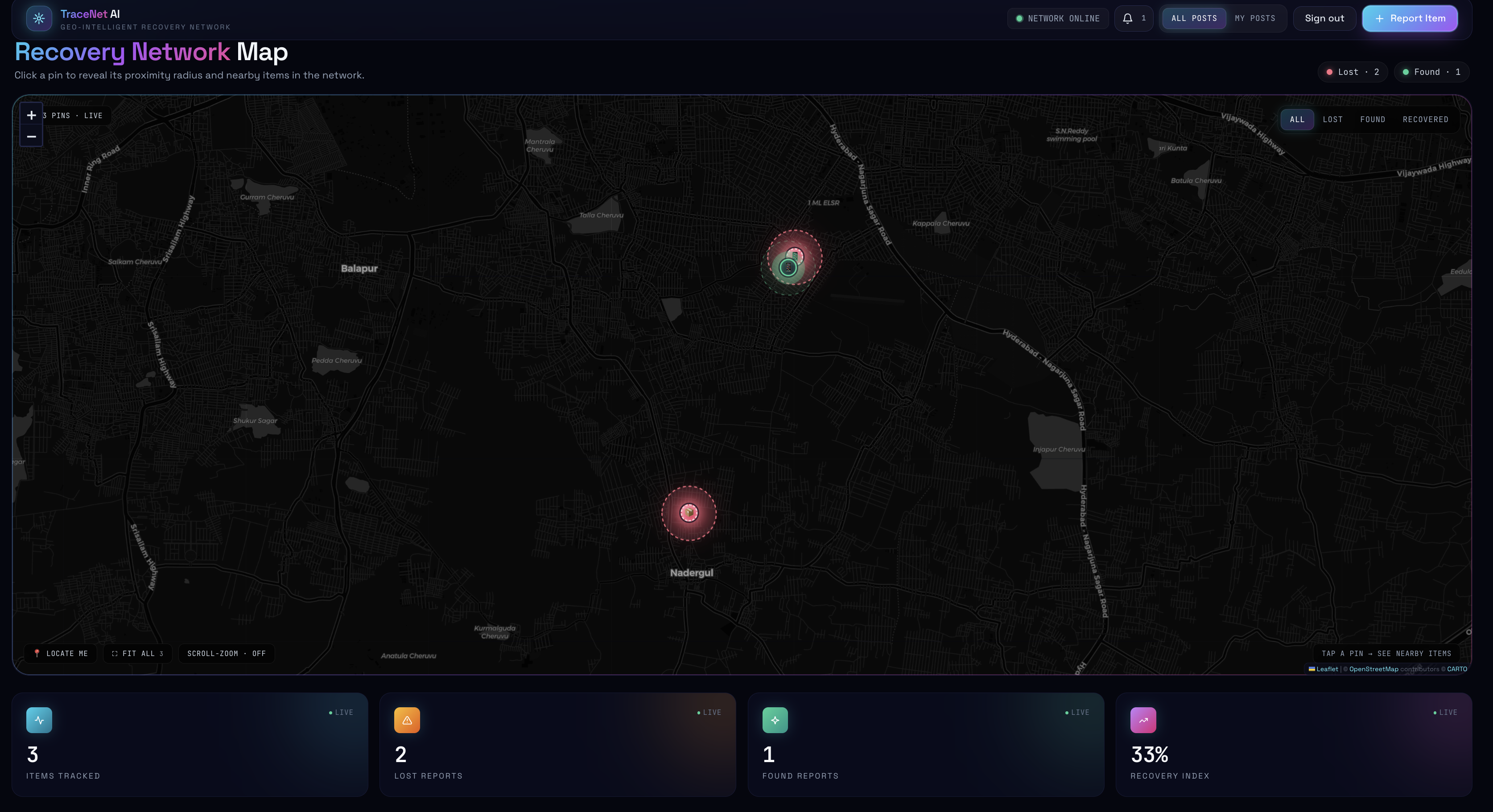
recovery network mapping
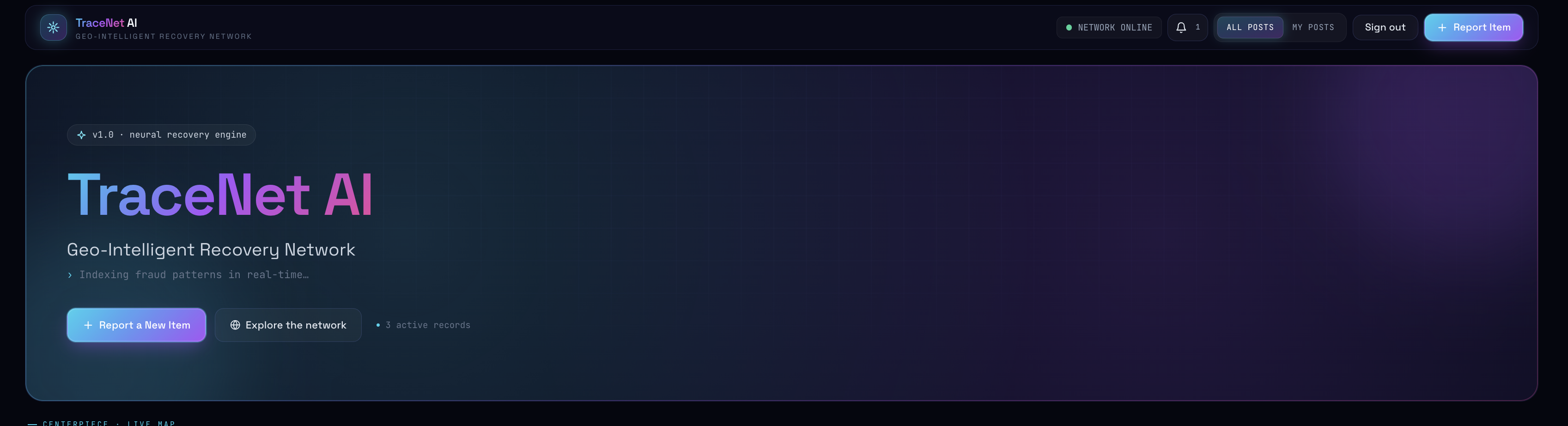
TraceNet AI Geo-Intelligent Lost & Found Recovery Platform
Inspiration
The idea for TraceNet AI came from a real experience when I lost my AirPods during a college event. Finding lost items in crowded places is difficult, and most traditional lost-and-found systems are unorganized and unreliable. This inspired me to build an AI-powered platform that can intelligently help users recover lost items using smart matching and live location tracking.
What It Does
TraceNet AI is an AI-powered lost-and-found platform that uses:
- Image similarity
- Text similarity
- Geo-location proximity
- Time correlation
to intelligently match lost and found items nearby.
The platform also includes:
- AI fraud detection
- TrustScore verification
- Live map radius tracking
- Recovery heatmaps
- Secure recovery coordination
to make the recovery process safer and more reliable.
How I Built It
I built the project using: Next.js React Tailwind CSS Node.js Express.js MongoDB
I also integrated AI-based matching, fraud detection logic, and live map tracking systems.
The matching system works using:
MatchScore = ImageSimilarity + TextSimilarity + LocationProximity + TimeCorrelation
Challenges I Faced
Some major challenges included:
- Detecting fake claims and spam reports
- Building accurate AI-based matching
- Managing real-time map tracking efficiently
- Creating a secure and trustworthy recovery system
What I Learned
Through this project, I learned:
- Full-stack development
- AI-assisted matching systems
- Fraud detection techniques
- Geo-location integration
- Real-world problem solving using AI
Impact
TraceNet AI aims to make lost-item recovery faster, smarter, and safer by combining AI, geo-intelligence, and secure community verification into one intelligent recovery platform.
Built With
- chart.js
- css
- firebase(auth
- firestore
- geolocation-api
- github
- html
- javascript
- leaflet.js
- openstreetmap
- storage)
- tailwind-css


Log in or sign up for Devpost to join the conversation.