-
-
Home_Page_1
-
Home_Page_2
-
Home_Page_3
-
Sign_in_Page
-
-
-
-
-
-
Inspiration
More than half of pregnancy-related deaths in the US happen after the baby is born, and most are preventable. A CDC review of 1,018 deaths found that 53% happened between a week and a year after birth, and 84% were judged preventable. Yet many new parents see a doctor only once, around six weeks, if at all. The riskiest stretch gets the least attention.
We built Tidewell for the parent who is exhausted at 3 a.m., has a headache she is not sure about, and has no one to ask.
What it does
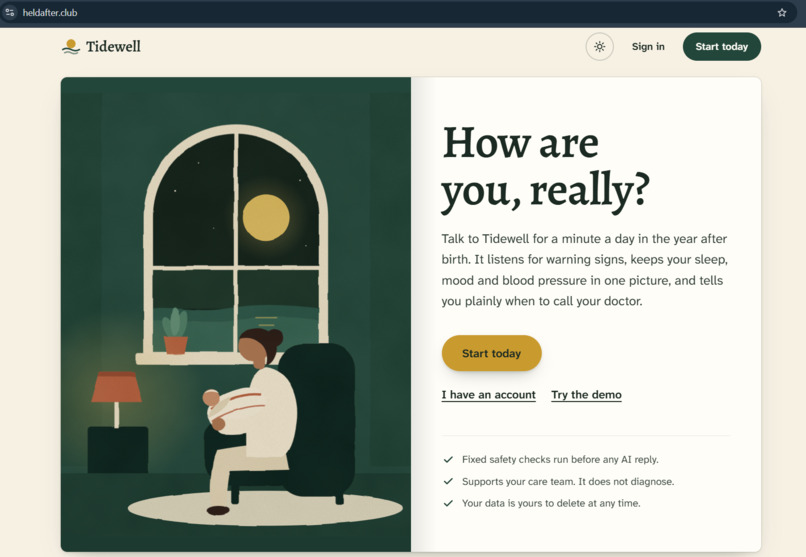
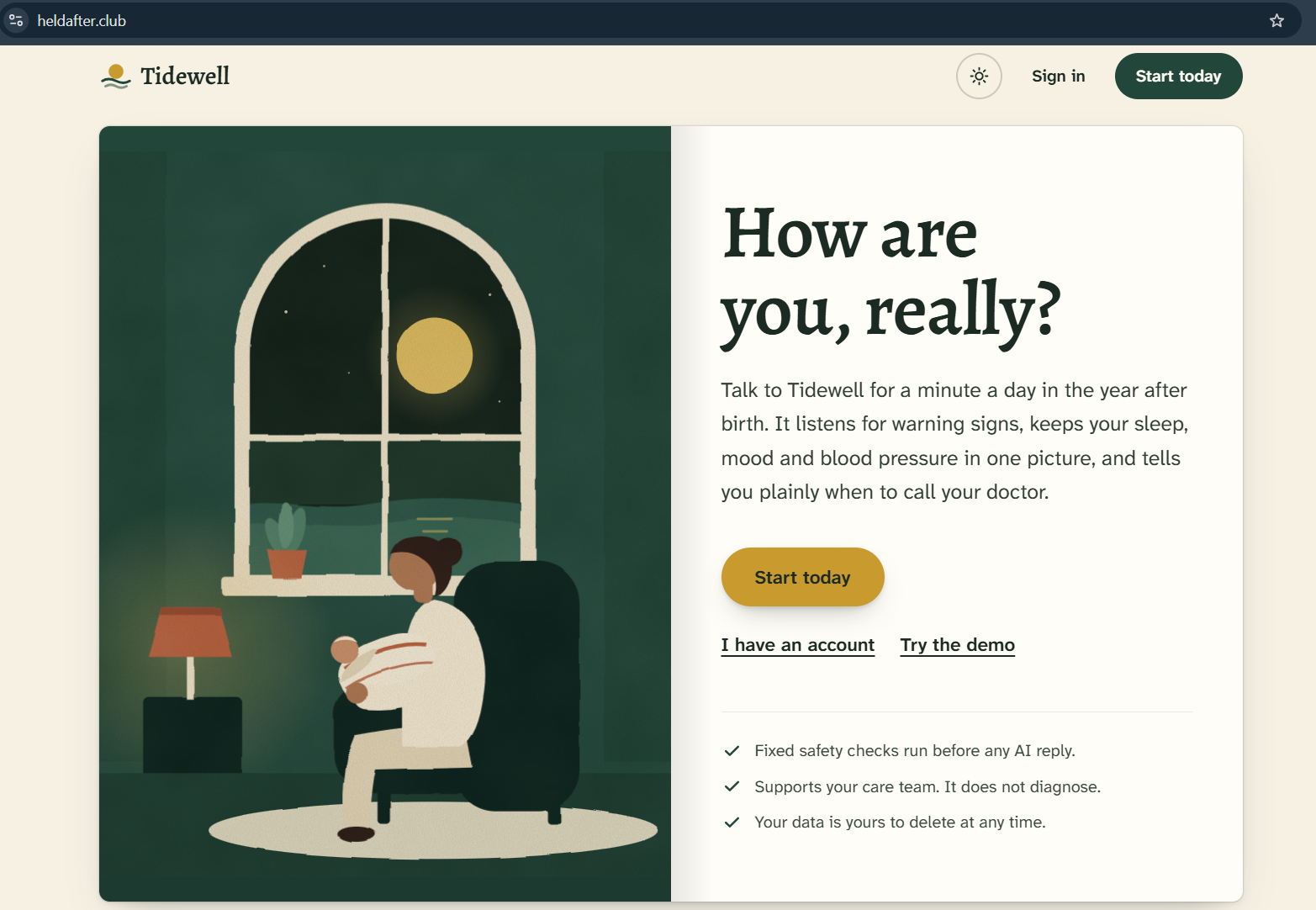
Tidewell is a voice-first companion for the first year after birth.
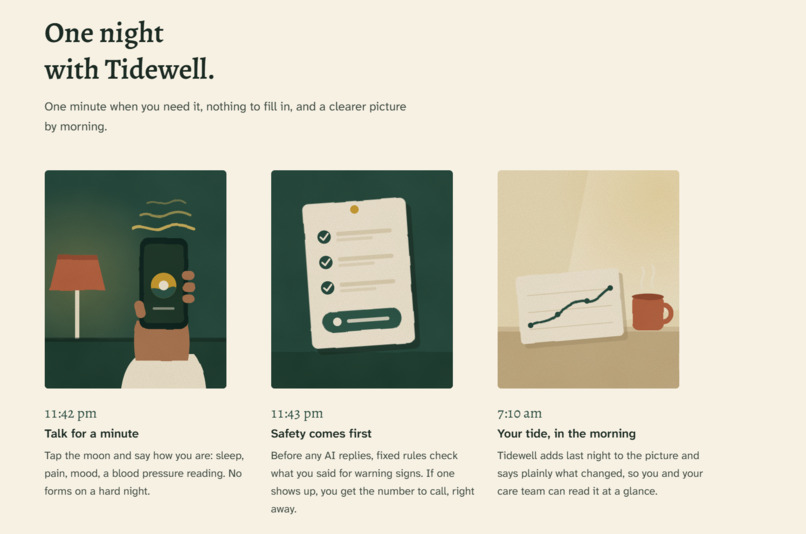
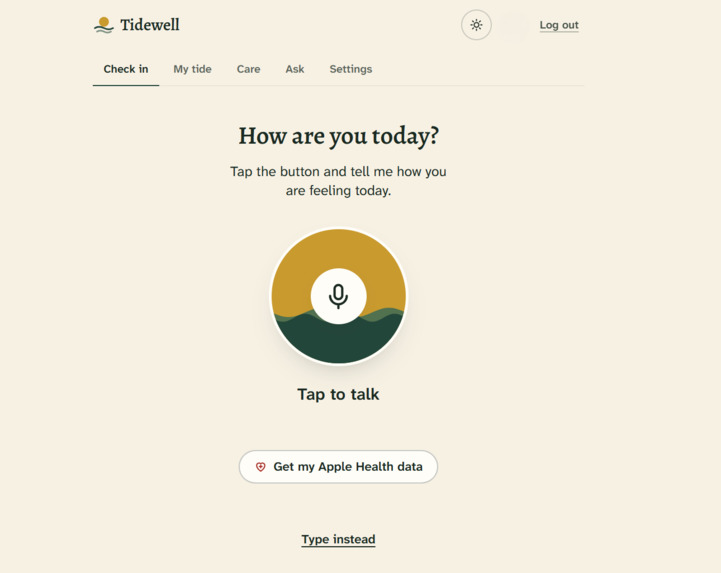
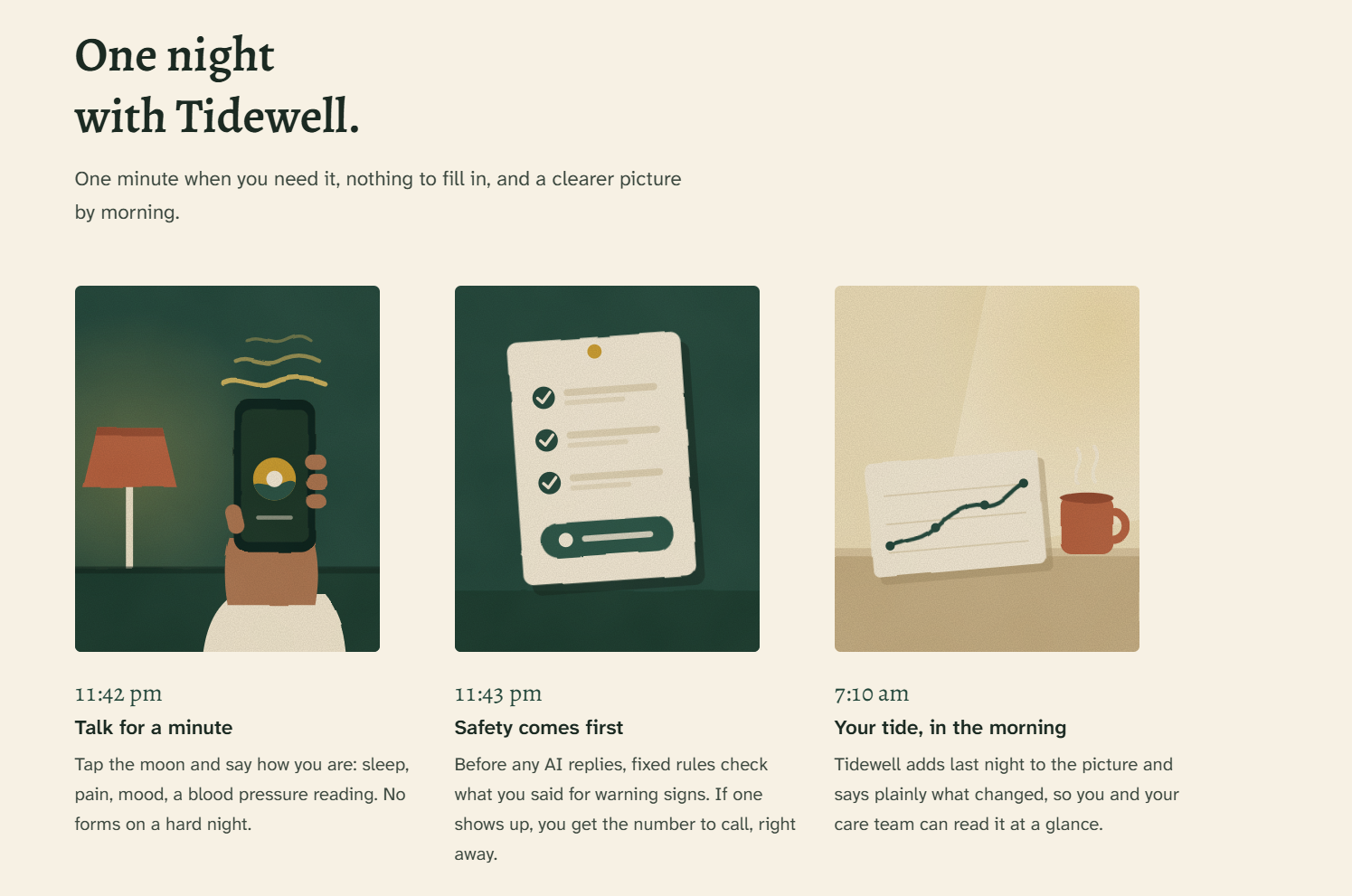
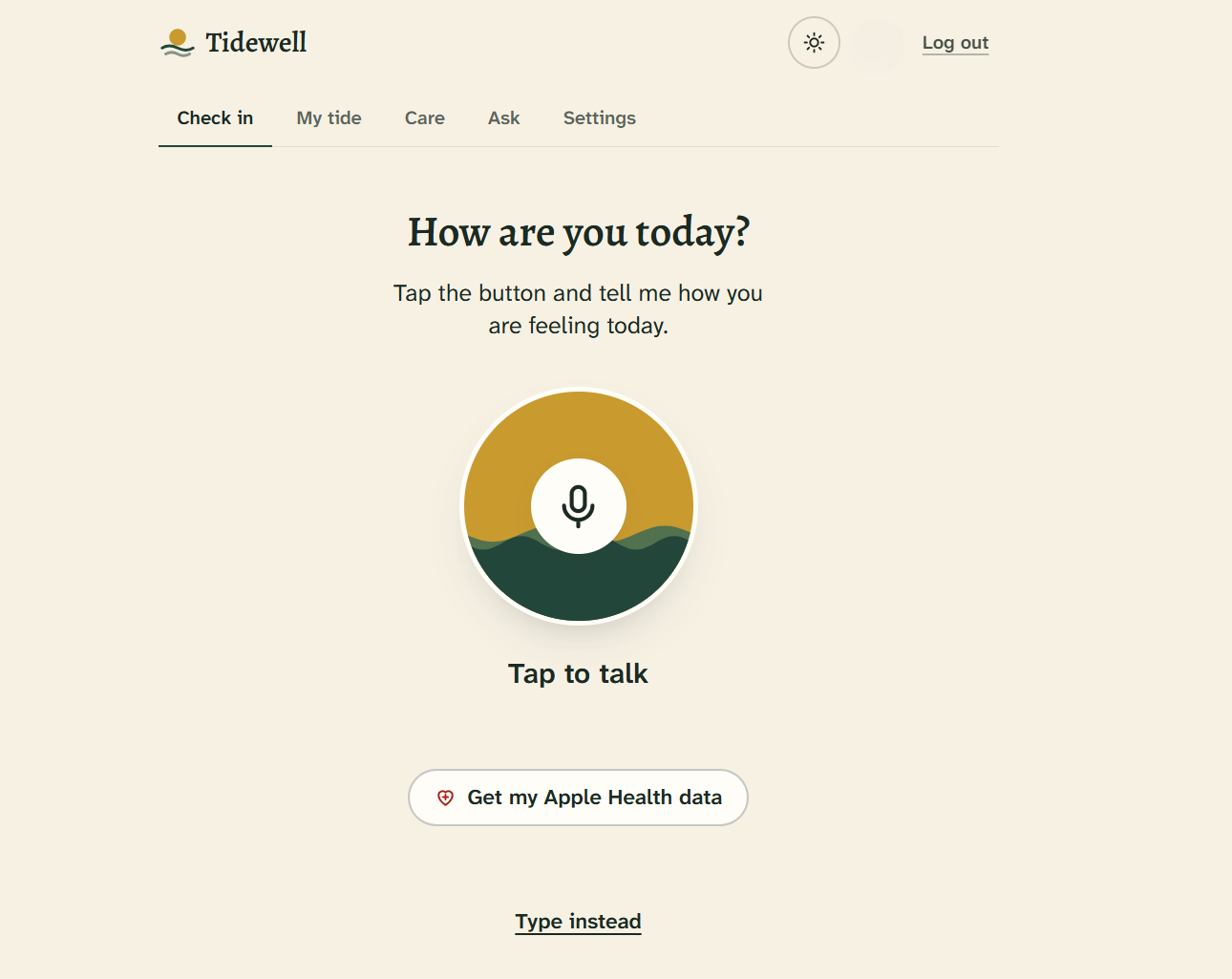
- Talk for a minute. One big button. Say how you slept, your pain, your mood, a blood pressure reading. Type instead if you prefer, or photograph your home cuff. Tidewell answers out loud and remembers last week.
- Safety comes first. Before any AI replies, fixed rules check for warning signs. A danger sign gets a pre-written "get care now" answer with the numbers to call, and an emergency also texts your support person. The AI never improvises an emergency.
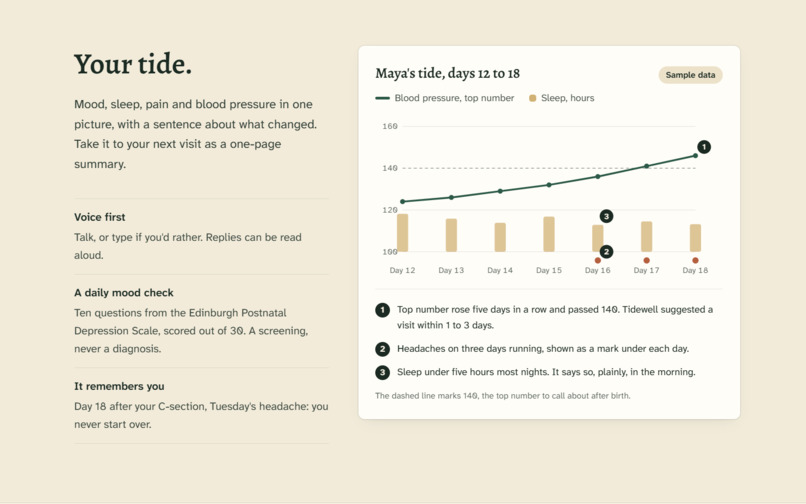
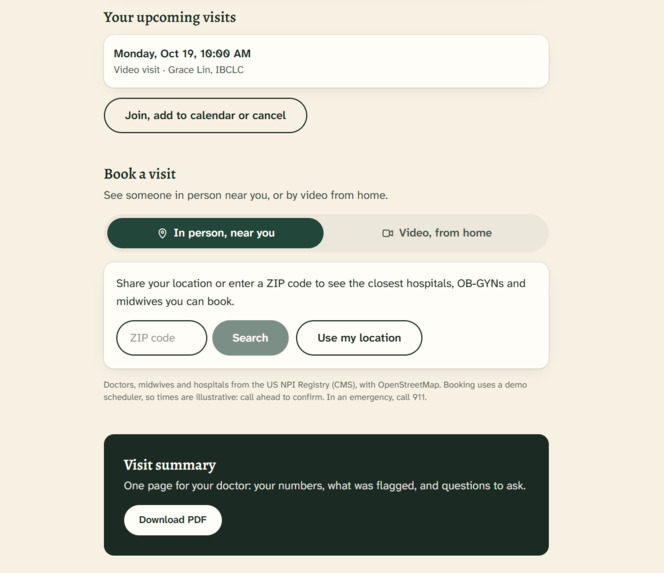
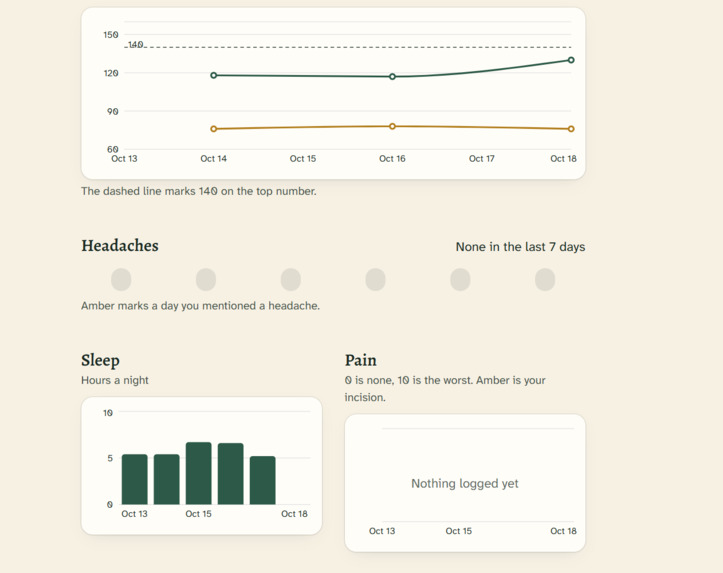
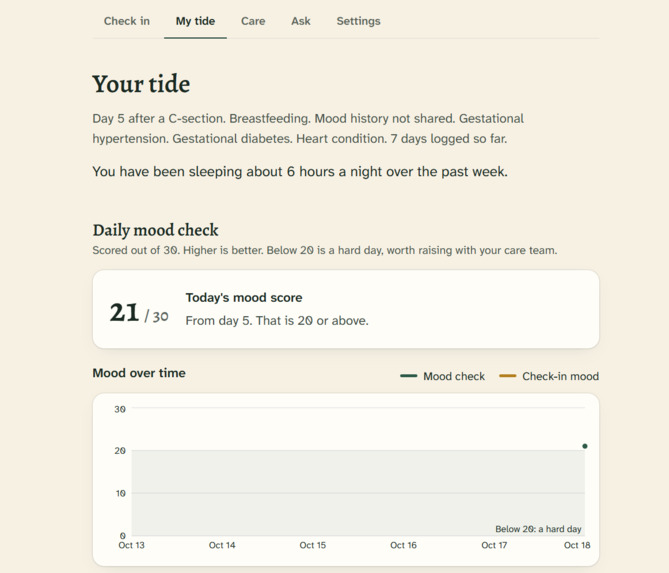
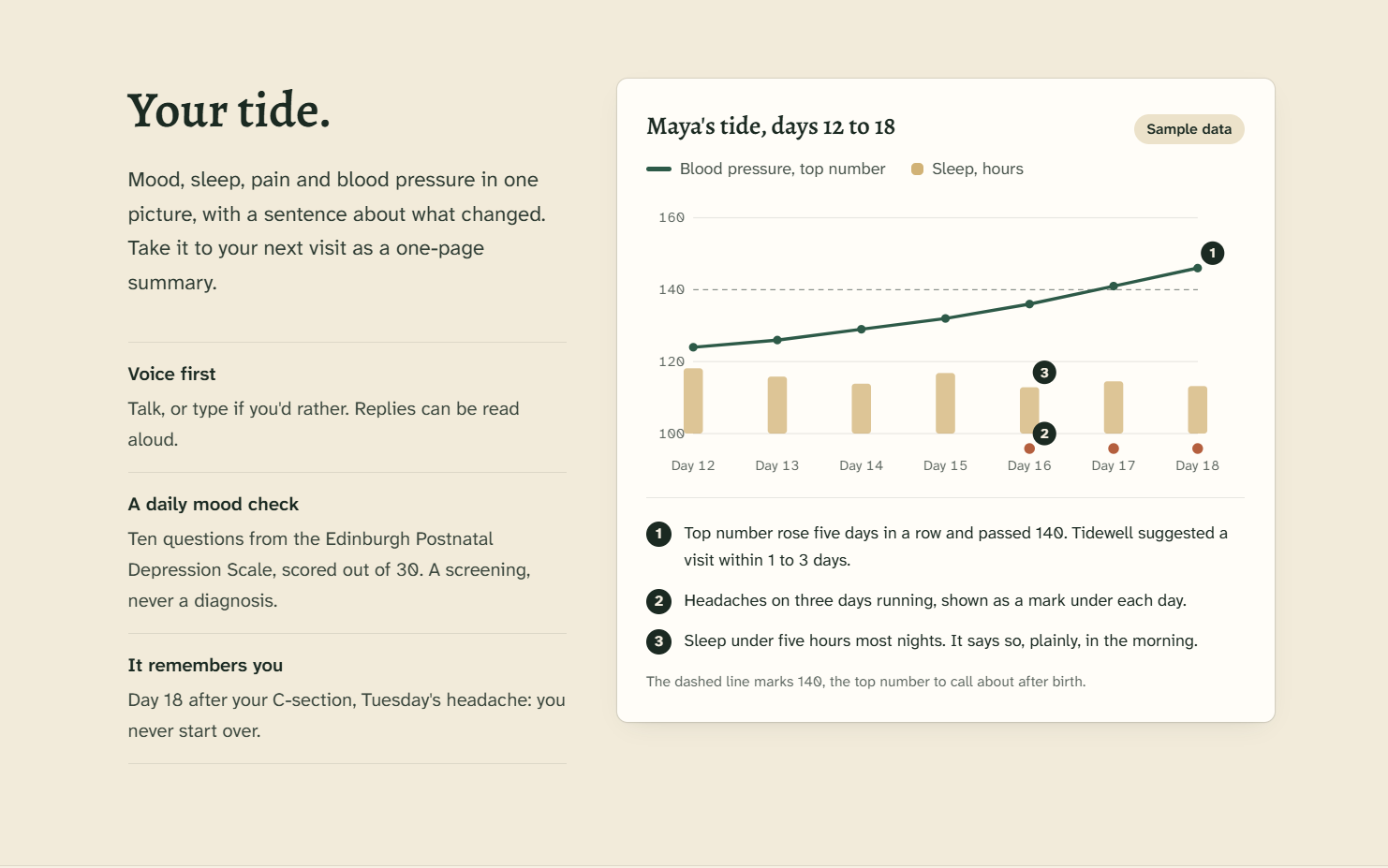
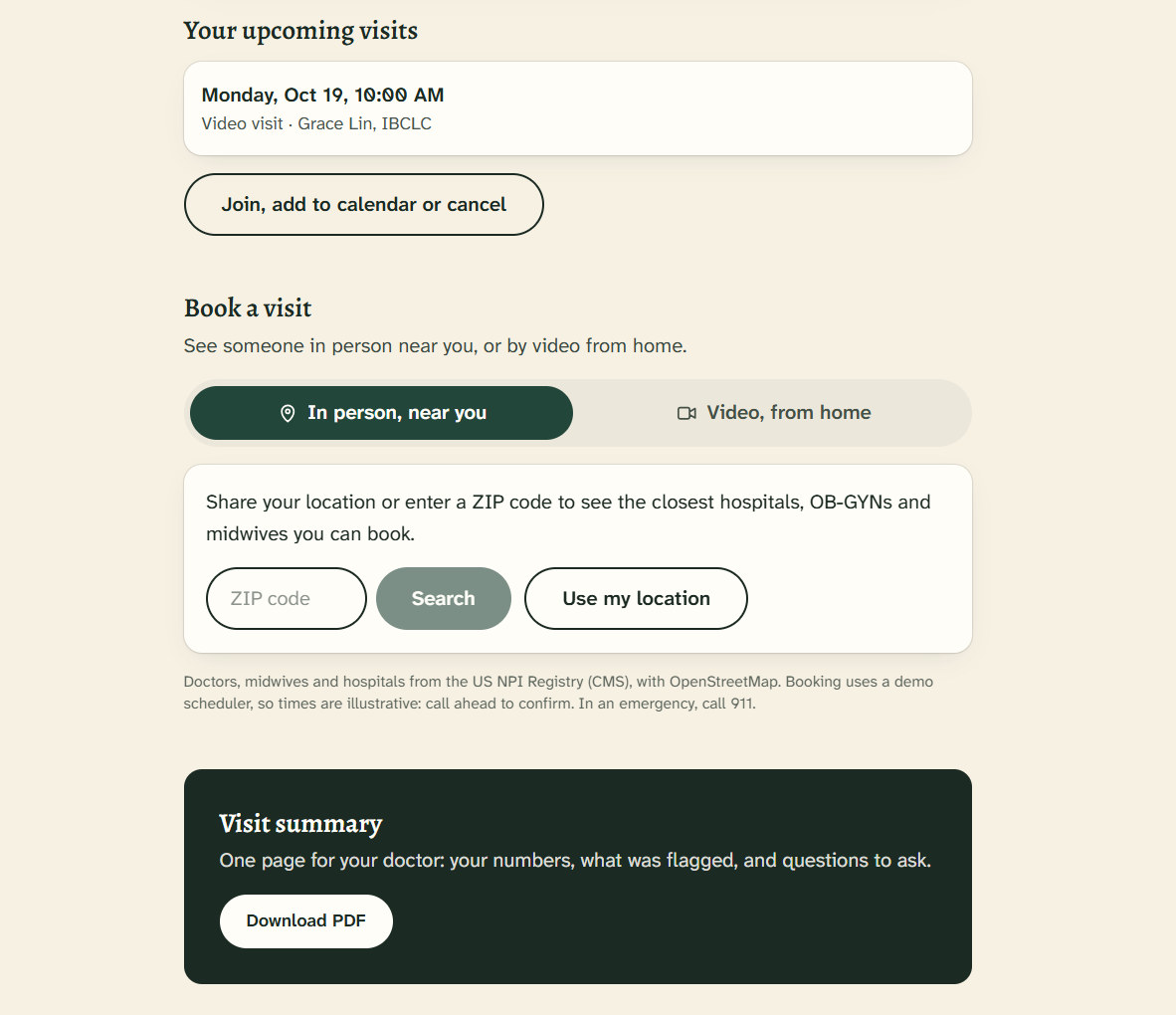
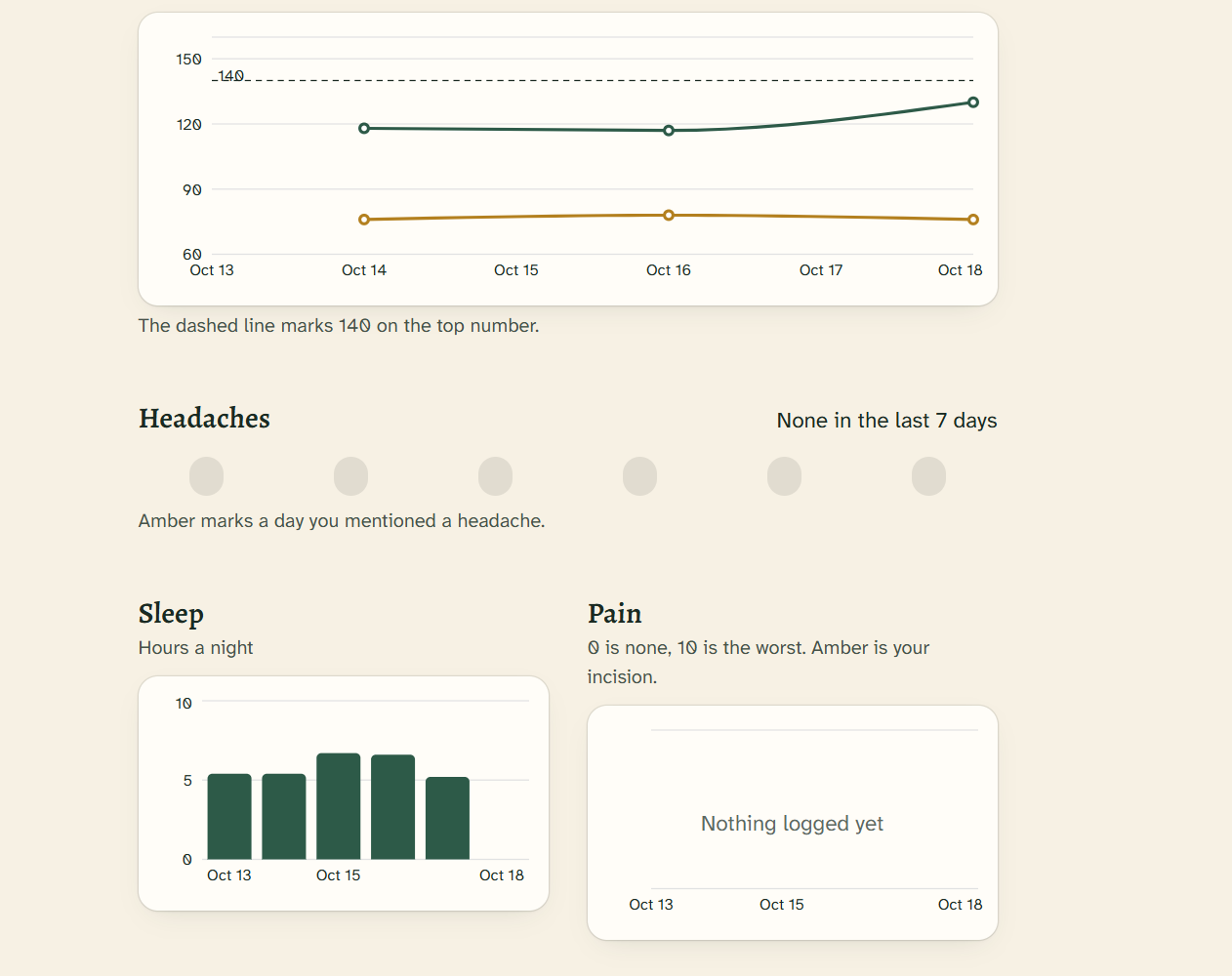
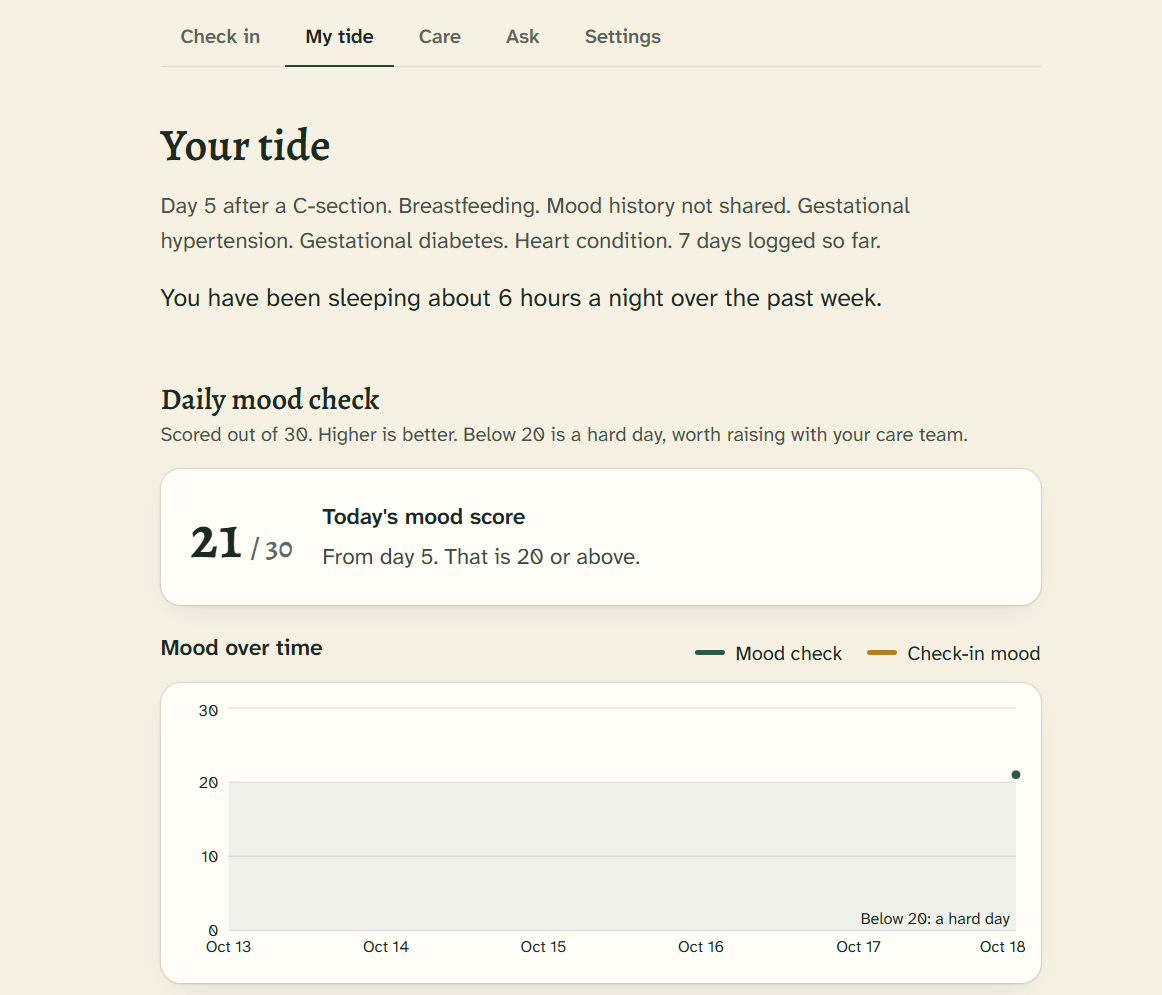
- See your tide. The dashboard draws mood, blood pressure, sleep and pain over time, with a weekly mood check, so you and your care team can read the pattern at a glance. One tap makes a one-page visit summary PDF.
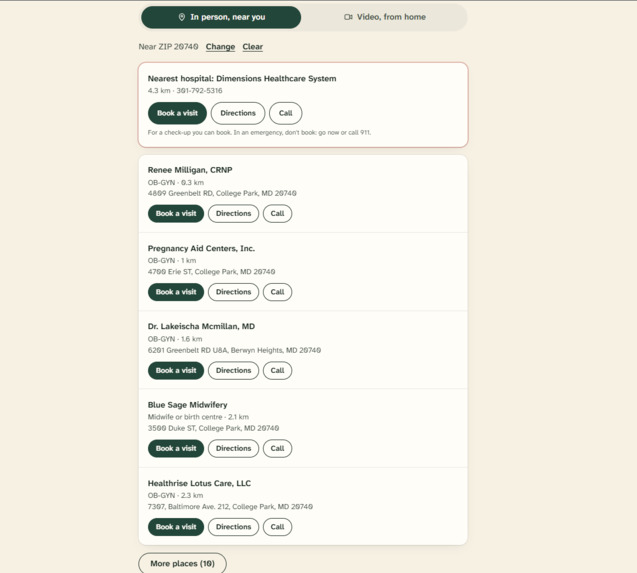
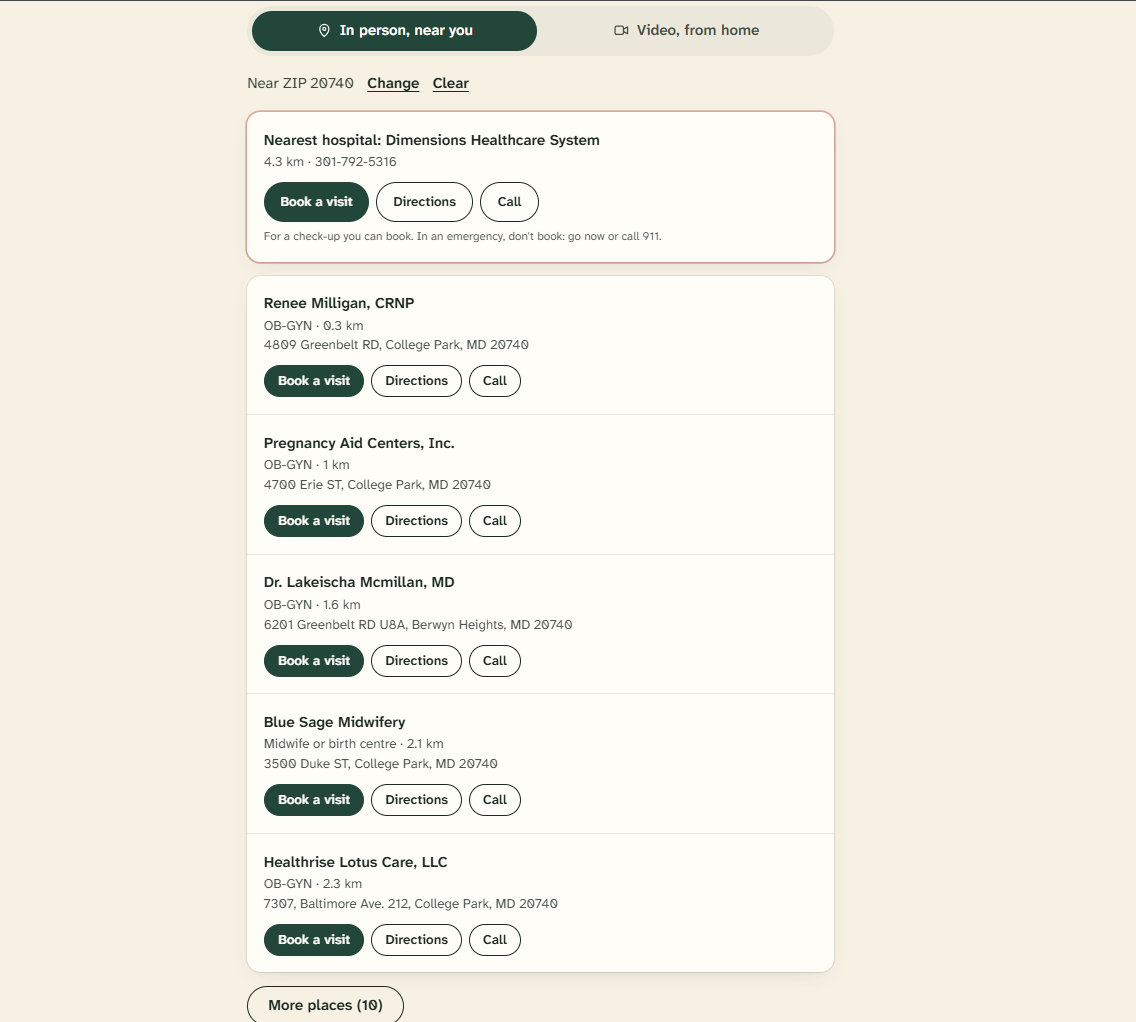
- Care when the pattern changes. A Watch agent reads the data after every check-in and every 30 minutes. If something needs action, a Booking agent finds the nearest OB-GYN, midwife or hospital and proposes times. You book in person or by video from the Care page, and the provider gets an emailed link to a private video room.
- Built for trust. Tidewell never diagnoses and never tells you to start or stop a medicine. You can delete your account and every record with one tap.
How it fits Technica’s mission
Technica supports women and non-binary people in tech. Tidewell takes on a problem that falls almost entirely on women and birthing people: the year after birth. It is also a problem medicine has long overlooked. Maternal care is a clear case of health research and tools not being built around the people they serve. Most care is designed around pregnancy and the baby, and the parent drops out of view once the baby arrives.
We built for the people Technica centres:
- Their health. The postpartum year is when most preventable pregnancy-related deaths happen. Tidewell watches that window instead of waiting for a six-week visit. Equity. Black mothers in the US die at about three times the rate of white mothers, and rural and low-income parents often live far from care. Tidewell is free to use on a phone, finds the nearest clinic and offers video visits.
- Being believed. Many women say their symptoms were dismissed. Tidewell turns a parent’s own words into a clear record with a plain reason for every flag. Their concerns arrive as data a clinician can act on.
- Inclusive design. Voice, text and photo input, large high-contrast type and calm motion make it usable for a tired parent holding a baby, and for people with different abilities.
How we built it
- Frontend: Next.js 16 and Tailwind 4, with a calm ocean palette, high-contrast type (Atkinson Hyperlegible), a night mode, and motion that turns off with reduced-motion settings.
- Backend: FastAPI on Render. Time-series check-in data lives in Tiger Data (Postgres with TimescaleDB and pgvector).
- Voice: ElevenLabs for speech-to-text and the spoken replies.
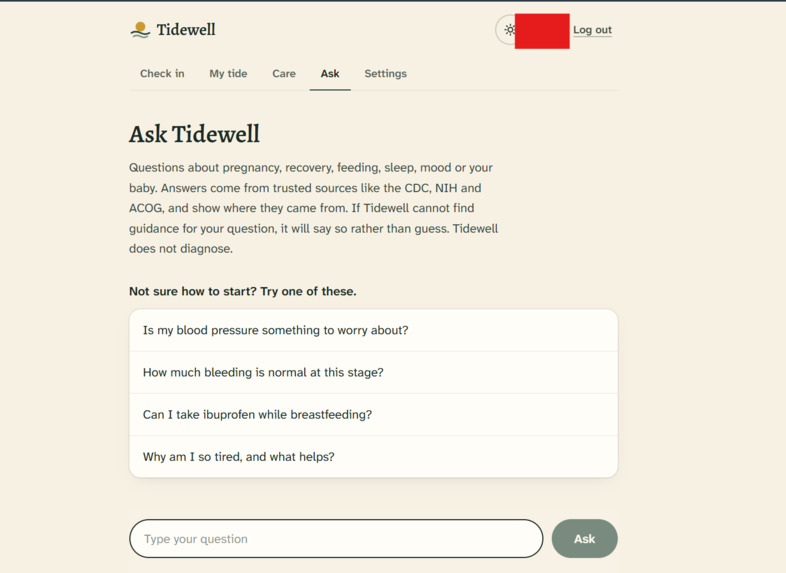
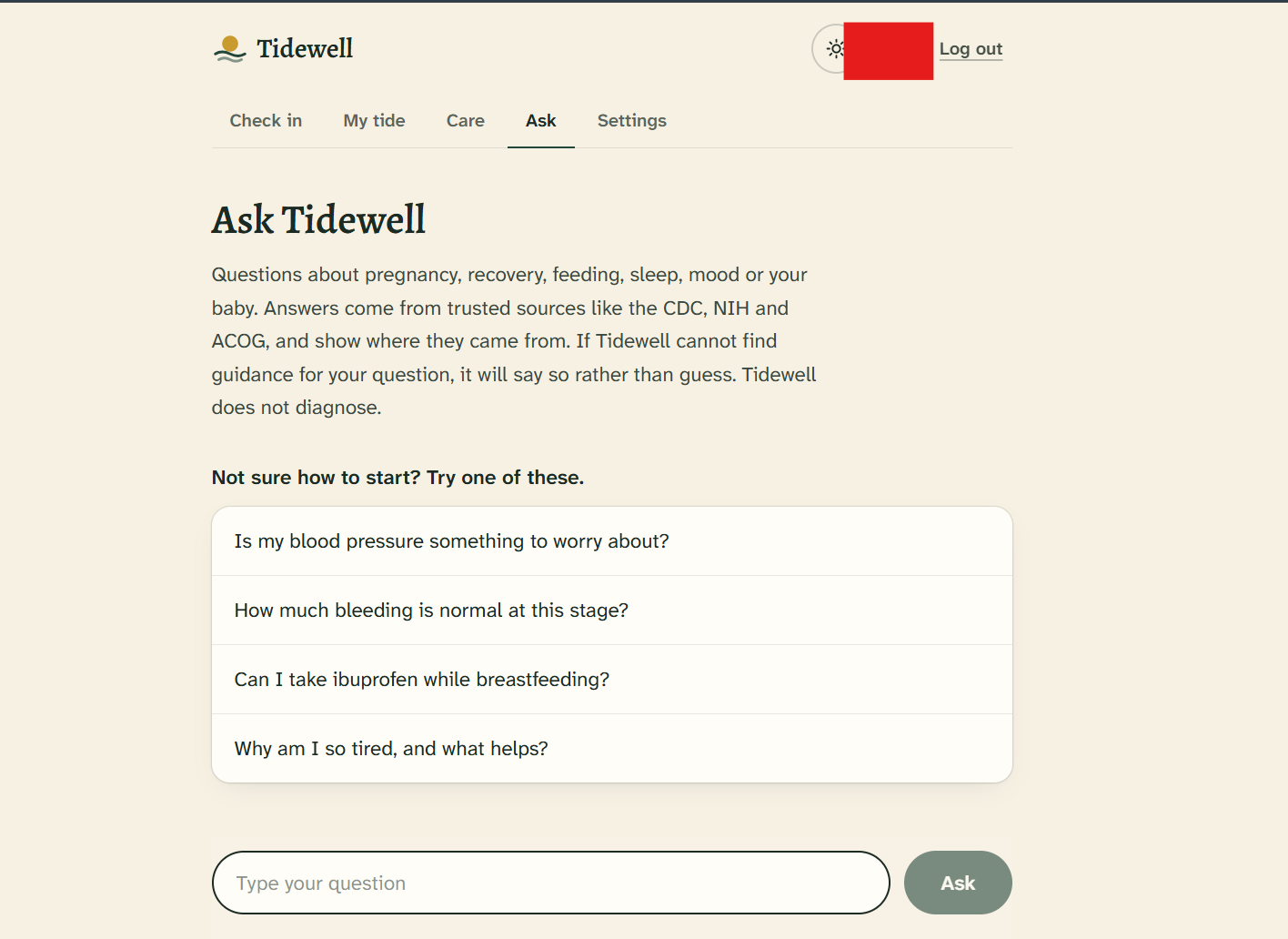
- AI: Gemini extracts structured metrics from what you say, reads cuff photos, and powers the Care Navigator, which answers questions with trusted sources (CDC, NIH, WHO, ACOG) and citations. Claude helps with guideline answers.
- Memory: Backboard keeps long-term memory across check-ins.
- Safety and agents: a rules-based red-flag layer runs before any model. The Watch and Booking agents use fixed thresholds, so every flag has a plain reason. The model only writes the clinician note.
- Care and video: nearby clinics from OpenStreetMap, visit booking, a WebRTC video room (Flask-Socket.IO), Twilio texts for emergencies, and Resend emails to the provider.
- Wearables: Apple Health sync brings in sleep and heart data as gentle nudges. Only a real blood pressure cuff reading goes through the same fixed rules as a typed one.
Challenges we ran into
- Keeping AI out of emergencies. We had to decide what a model may never do. Danger signs are matched by fixed rules and answered with fixed wording before any AI call.
- Staying explainable. We kept detection deterministic and used the model only to write notes, so a clinician can see exactly why a patient was flagged.
- Model limits. Free-tier Gemini quotas forced us to add a fallback model and to keep calls per check-in low.
- Real-time video. WebRTC signaling needs a single long-lived worker, so the video server runs separately from the API, and join links are validated by the backend before a provider is let in.
- Four people, one codebase. Agents, data, frontend and clinical logic moved in parallel, so we merged often and reworked migrations as the schema grew.
Accomplishments that we're proud of
- A full loop that works end to end: voice check-in, safety check, tide chart, agent flag, booked visit, and a live video room.
- A safety layer where urgent wording is never generated by a model.
- An interface a sleep-deprived parent can use with one thumb and one button.
What we learned
- In health, the interesting design question is what the AI must not do, and how to make that boundary visible.
- Deterministic rules plus a model for language are easier to trust than a model for everything.
- Accessibility choices (voice, text and photo input, large type, calm motion) make the product better for everyone.
What's next for Tidewell
- Clinical review of every threshold (blood pressure, mood score) with a partner clinician before real use.
- Spanish and other languages, and a transcript of each voice check-in.
- Phone-call check-ins for parents without smartphones.
- Real clinic calendars through FHIR, and fairness testing across groups.
Tidewell is a bridge between visits, not a replacement for care. Its effect on outcomes would need clinical testing.
Built With
- apple-health
- backboard
- claude
- elevenlabs
- eventlet
- fastapi
- flask
- gemini-api
- next.js
- openstreetmap
- pgvector
- postgresql
- python
- react
- render
- resend
- socket.io
- tailwindcss
- tiger-data
- timescaledb
- twilio
- typescript
- vercel
- webrtc


Log in or sign up for Devpost to join the conversation.