Inspiration
I wanted to take the tower defense genre somewhere it hadn't been, most TD games give you a fixed map and ask you to optimize a static layout. I asked: what if the map itself was the opponent? The tidal system came from thinking about how sailors historically had to read the sea before committing to a route. That tension between anticipation and reaction felt like the core of something genuinely new in the genre.
What it does
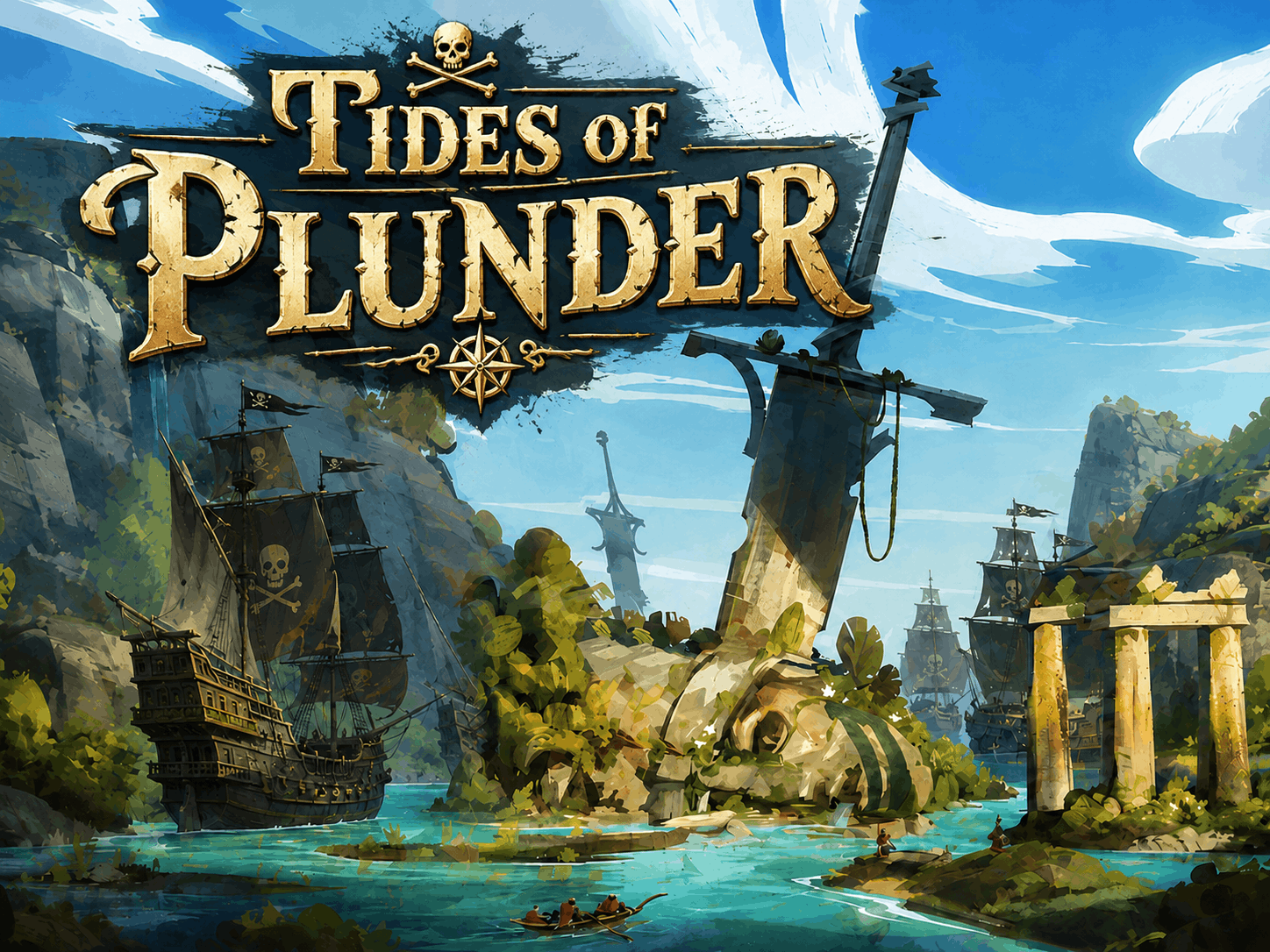
Tides of Plunder is a mobile tower defense game where you defend an island harbor from waves of pirate ships. The twist is a tidal mechanic that physically opens and closes sea lanes between every wave, forcing you to constantly relocate and adapt your defenses rather than settling into a solved layout. Players progress through an endless chain of islands, each with its own coastline shape and tidal pattern, unlocking new towers and crew members as they push further out to sea.
How we built it
I developed the game as a design-first hackathon submission, producing four artifacts: a Game Design Document laying out the full system design, a Player Journey Map tracing the first 15 minutes of play moment to moment, a Visual Concept Package with AI-generated concept art for towers, enemies, bosses, island maps, and UI screens, and a Production Plan with a dependency-ordered build sequence and testable MVP definition. The visual package was generated using Gemini with carefully engineered prompts and assembled into a cohesive art bible.
Challenges we ran into
The hardest design problem was making the tidal mechanic feel fair rather than random. If lanes open and close without warning, players feel cheated. I had to design a telegraph system, the Tide Shift Alert, that gives players 5 to 10 seconds of advance notice before any lane changes, so every loss is explainable and every good defense feels earned. Communicating that on a small mobile screen without cluttering the battle view was the core UI challenge.
Accomplishments that we're proud of
The visual concept package came out significantly better than I expected, the tower upgrade sheets showing all three tiers for each tower, the UI mockups showing live gameplay states like the Tide Shift Alert and Pirate Lord Encounter, and the island progression maps all feel like quality art for a real mobile title. I'm also proud of the design coherence across all four documents, they all tell the same story about the same game, which is harder to achieve than it sounds.
What we learned
Designing around a single mechanical innovation, the tide, forced us to be rigorous about every other decision. Every tower, every enemy type, every UI element had to justify itself against the question: does this make the tide more interesting or does it add noise? That constraint made the design sharper than it would have been with a broader scope. I also learned how much the Player Journey Map improves the GDD, writing the first-15-minutes arc revealed gaps in the onboarding that the GDD alone never surfaced.
What's next for Tides of Plunder
The immediate next step is building the MVP: one complete Saltrock Bay island run with three towers, three enemy types, the live tide system, and a results screen, playable in under 12 minutes. If the core loop proves that players anticipate the tide rather than react to it, I expand into the full island chain, the crew loadout meta, co-op harbor defense, and eventually procedurally generated coastlines. The clearest go signal is a player voluntarily tapping Shattered Reach after seeing Island Cleared.


Log in or sign up for Devpost to join the conversation.