-
-
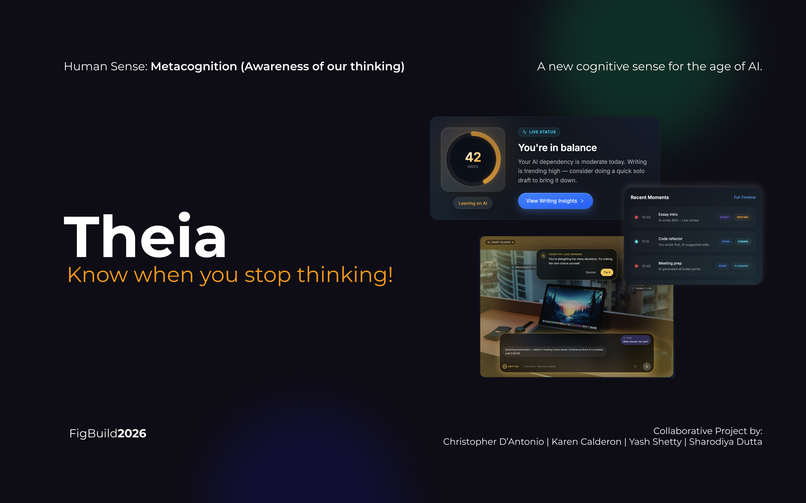
Our Core Concept
-
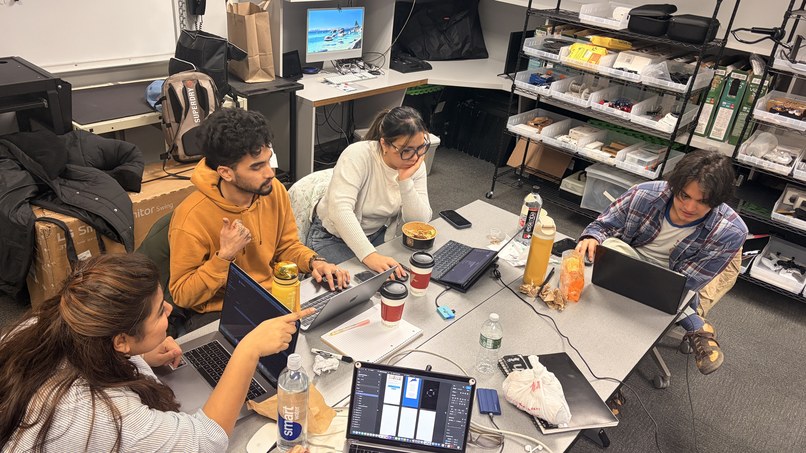
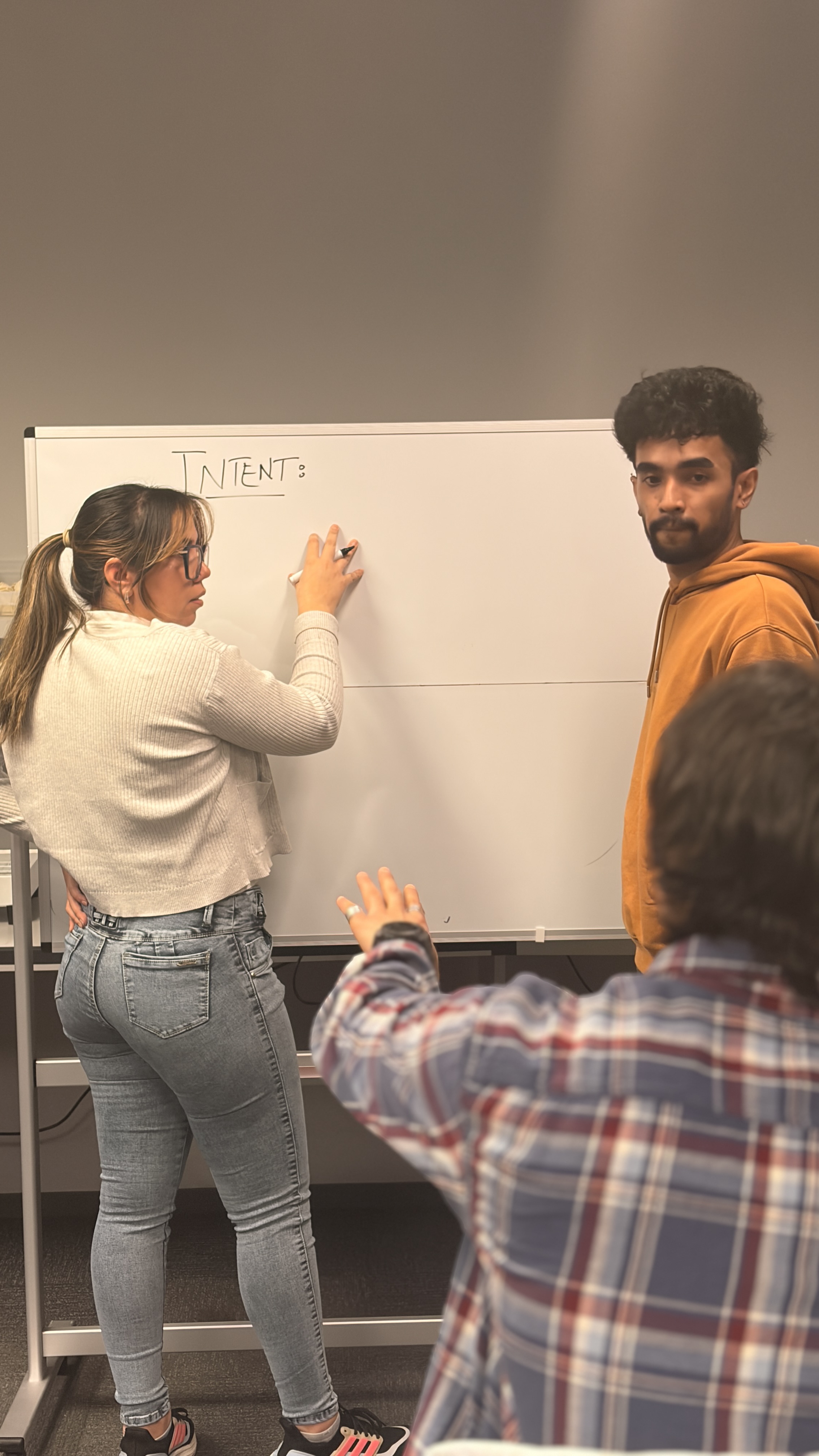
Fighting over what to do!!!!!
-
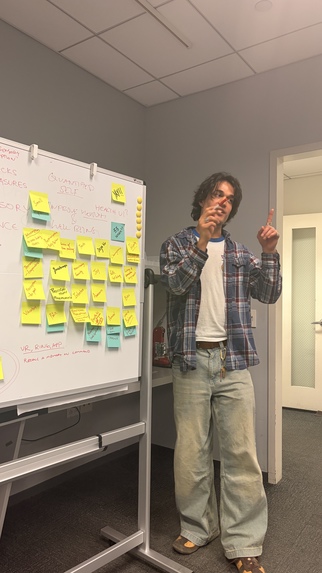
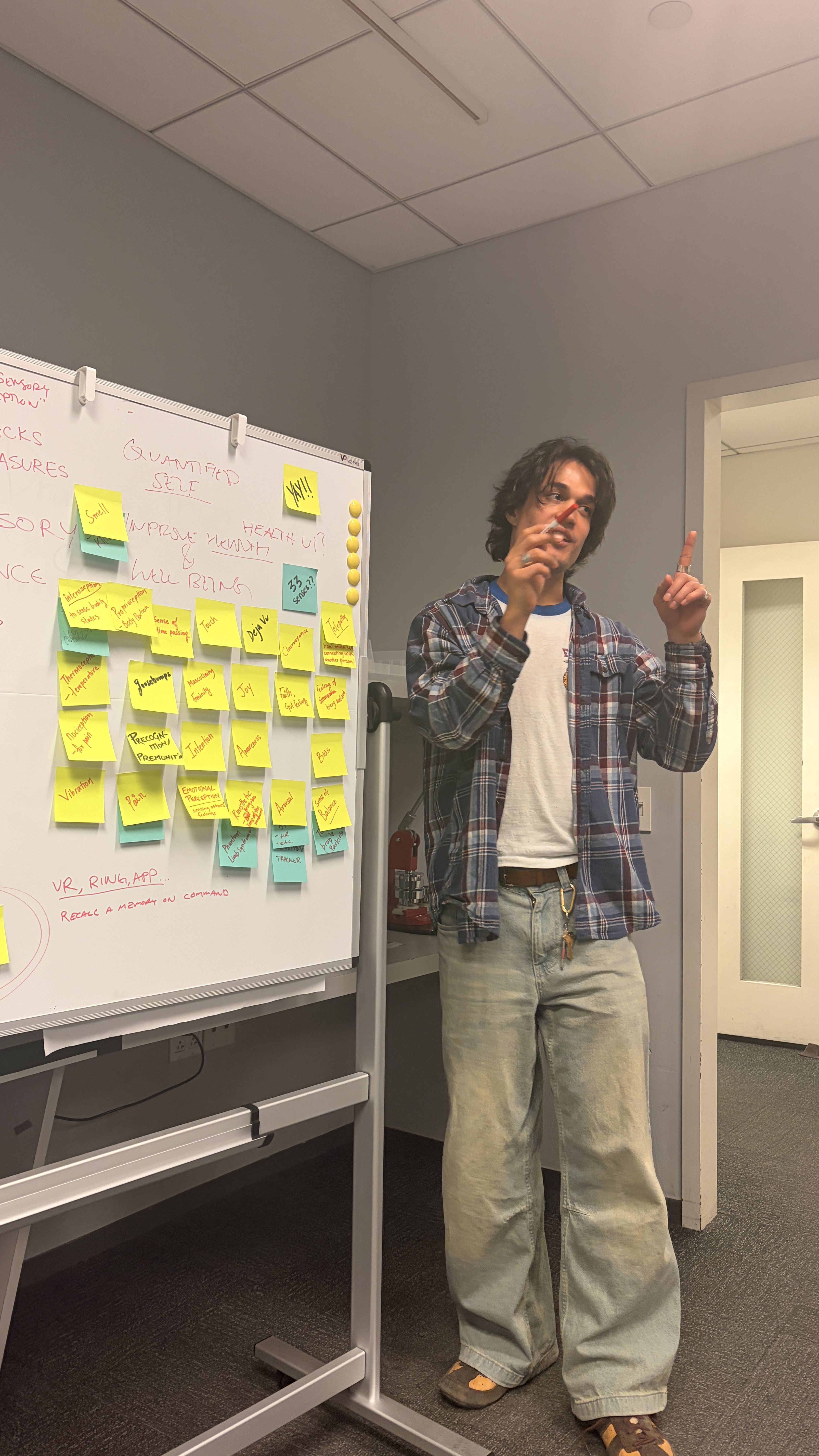
Brainstorming
-
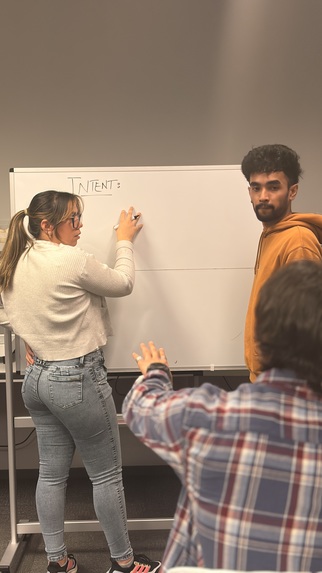
Deciding our Intent
-
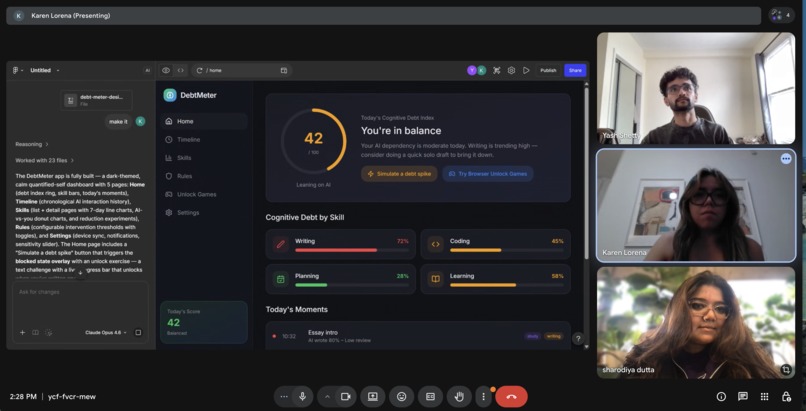
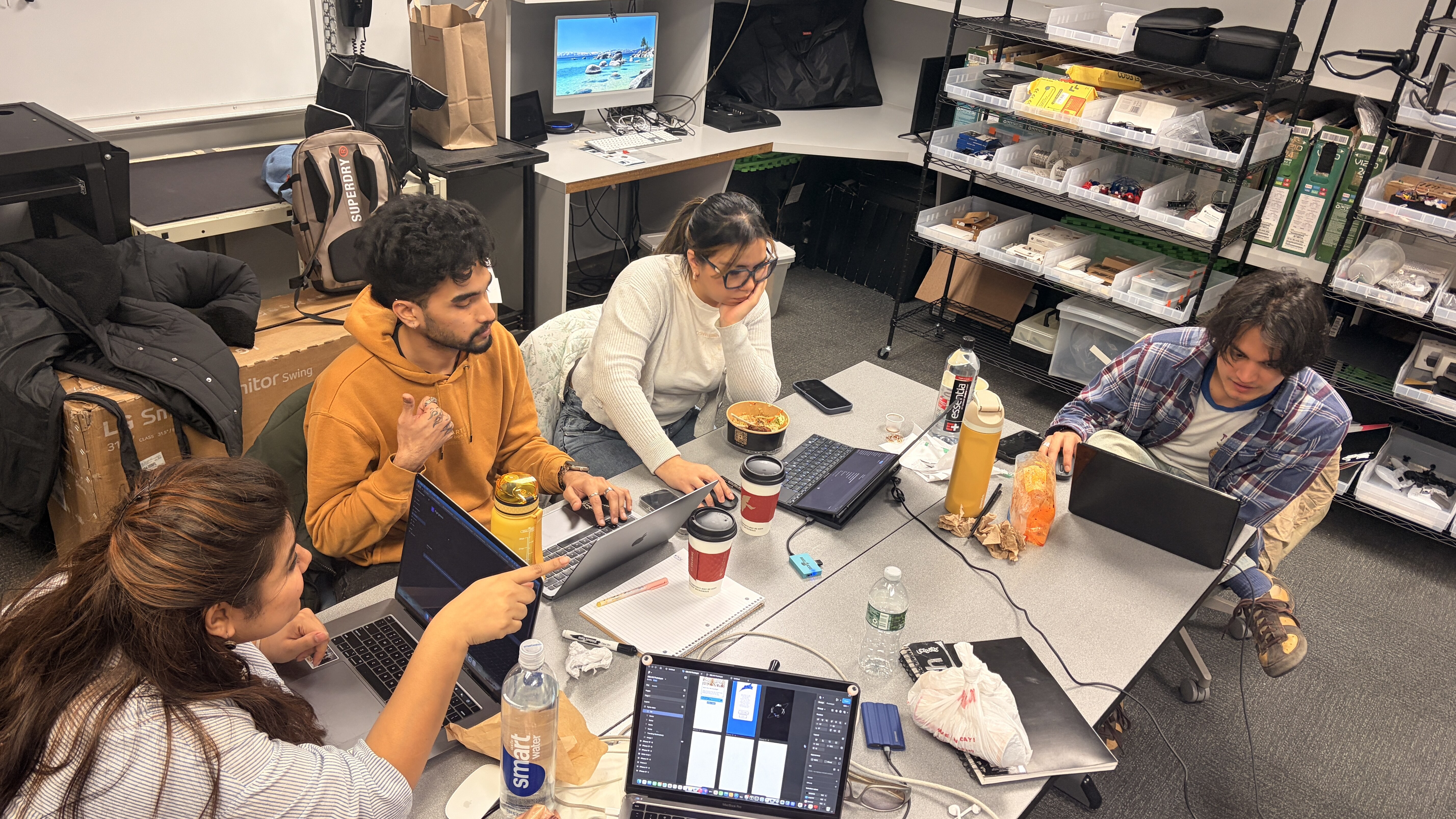
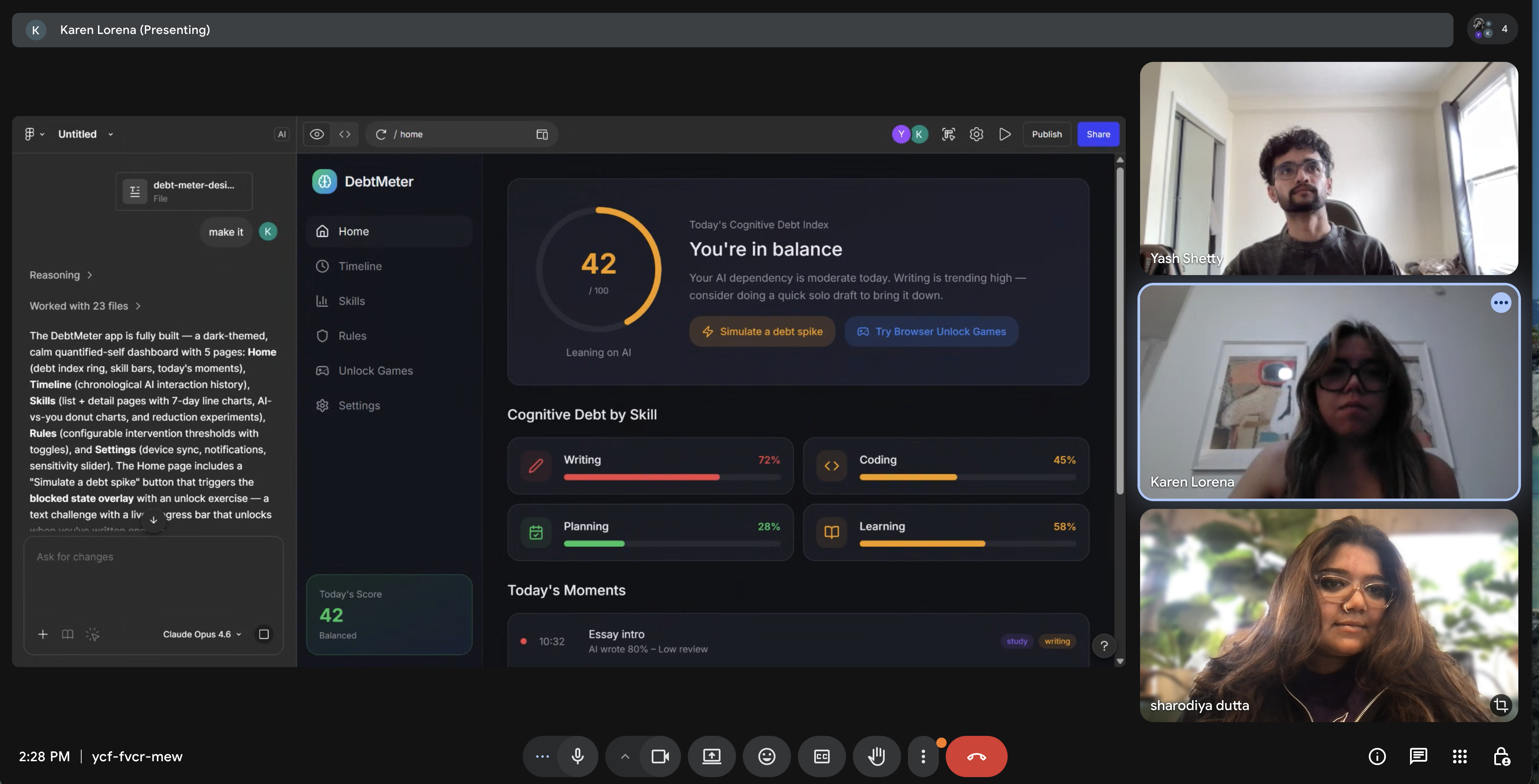
In our Prototyping process
Inspiration
Artificial Intelligence is rapidly becoming a partner in how we write, code, research, and solve problems. But as AI becomes more powerful, a subtle issue emerges: people often accept AI-generated answers without fully processing or understanding them.
Psychologists call this the illusion of understanding—the feeling that we understand something simply because we read it.
Our team was inspired by a simple question:
What if we could sense when our thinking becomes passive?
Just like fitness trackers measure physical activity, we imagined a system that could measure cognitive engagement in the age of AI.
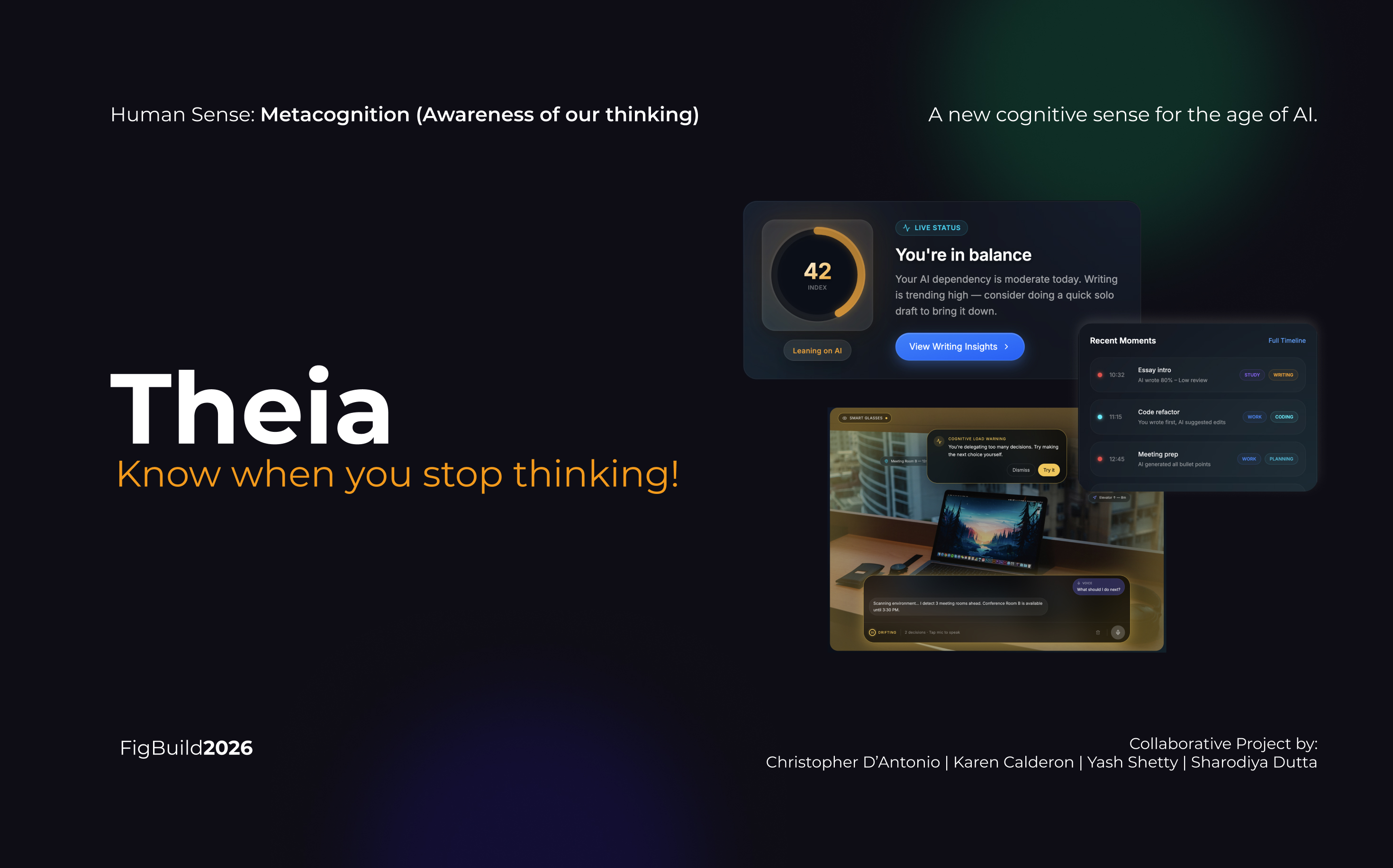
That idea became THEIA — a tool that helps users know when they stop thinking.
What it does
THEIA is a speculative UX system that helps users become aware of when they rely too heavily on AI.
By analyzing interaction patterns such as editing behavior, prompt frequency, and engagement time, THEIA detects when users may be passively accepting AI-generated output.
When this happens, the system gently nudges the user to pause and re-engage with their own thinking through small reflection prompts.
Rather than blocking AI tools, THEIA encourages a balanced collaboration between human intelligence and machine assistance.
The goal is not to reduce AI use — but to help people stay cognitively present while using it.
How we built it
We designed THEIA as a cross-platform speculative system consisting of:
• A desktop dashboard that visualizes cognitive engagement across tasks • A browser extension that monitors interaction patterns while users work with AI tools • Smart glasses / XR concepts that provide real-time awareness through subtle visual feedback
We prototyped the experience using UX design workflows, interaction models, and speculative sensing signals such as edit ratios, prompt repetition patterns, and reflection time.
The focus of our build was not just technical feasibility but designing a new kind of cognitive awareness interface.
Challenges we ran into
One of the biggest challenges was designing a system that encourages reflection without feeling intrusive or judgmental.
We had to carefully rethink language and interaction design so that THEIA feels like a supportive guide rather than a surveillance tool.
Another challenge was conceptualizing how to measure something as abstract as thinking engagement, since cognition cannot be directly measured. This required combining behavioral signals with speculative sensing approaches.
Accomplishments that we're proud of
We are proud of creating a concept that reframes the conversation around AI from productivity to cognitive wellbeing.
Instead of asking “How can AI help us do more?” we asked:
“How can we make sure AI doesn’t replace our thinking?”
We’re especially proud of designing THEIA as a new cognitive sense—a system that helps users perceive something that was previously invisible.
What we learned
Through this project, we learned that designing for AI is not just about functionality—it’s about human cognition, psychology, and responsibility.
We also learned that speculative design can be a powerful tool for exploring future challenges before they fully emerge.
THEIA helped us think critically about how designers can shape healthier relationships between humans and intelligent systems.
What's next for THEIA
The next step for THEIA is exploring how cognitive awareness systems could be integrated into real-world tools such as:
• AI writing assistants • developer environments • learning platforms • productivity software
We also want to explore more advanced sensing methods such as attention tracking and cognitive load indicators to better understand thinking engagement.
Ultimately, our vision is for THEIA to become a new layer of awareness in the AI ecosystem—helping people use AI without losing their ability to think independently.
THEIA — Know when you stop thinking.
Built With
- claude
- figma
- openai


Log in or sign up for Devpost to join the conversation.