-
-
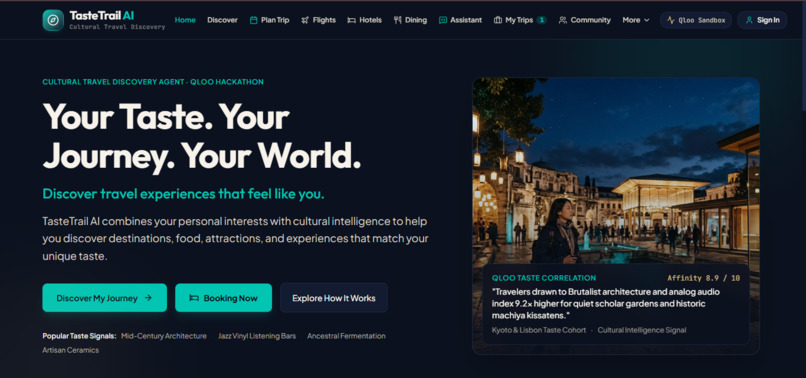
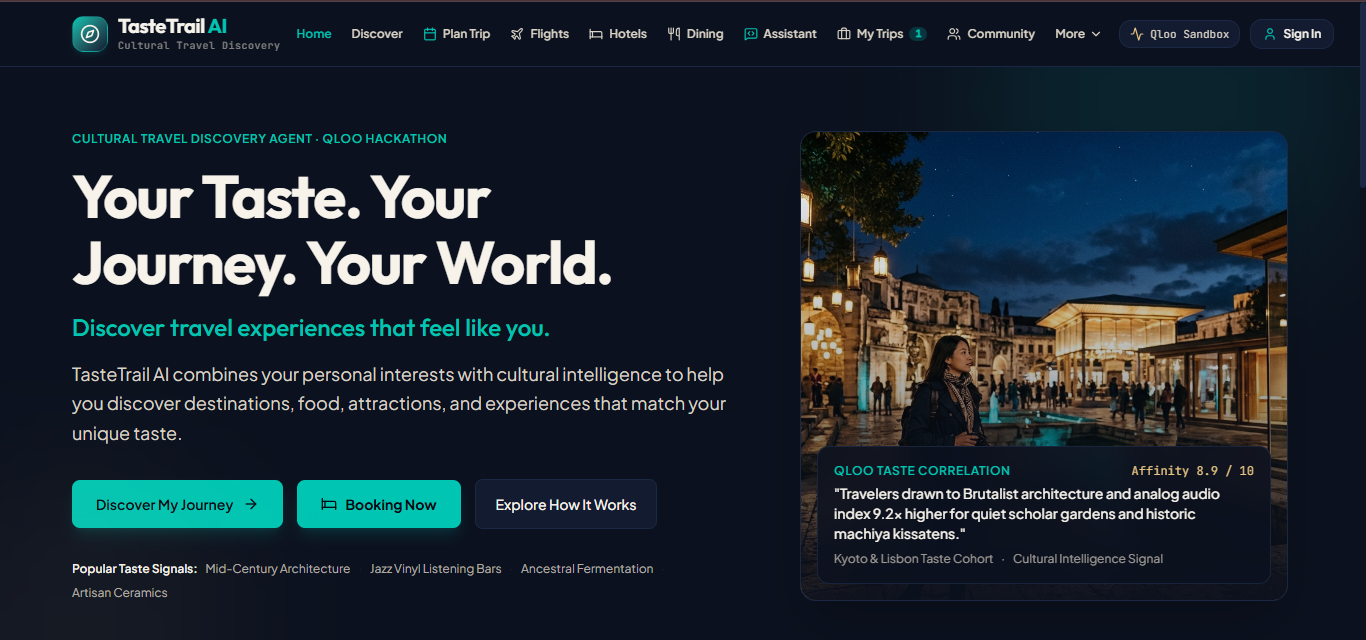
Homepage
-
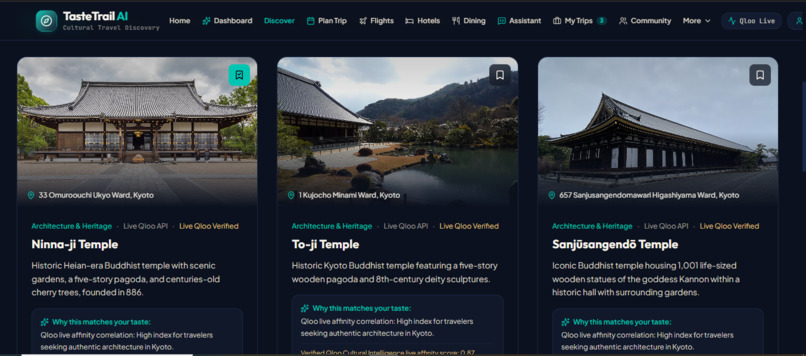
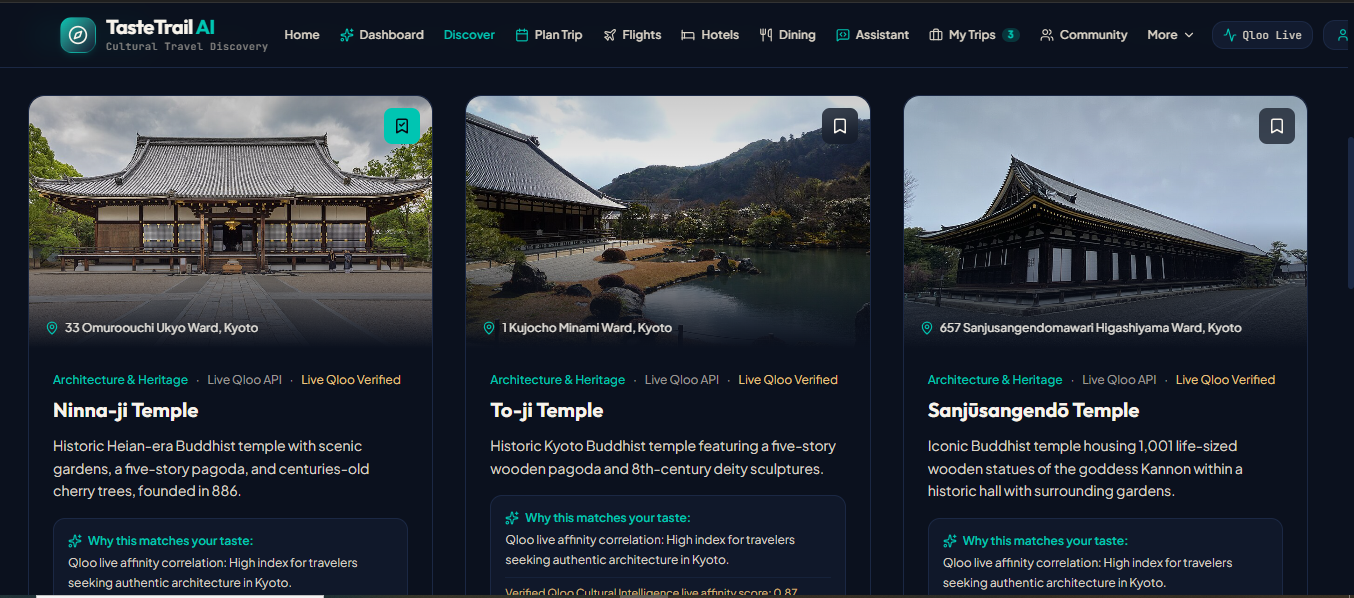
Discover
-
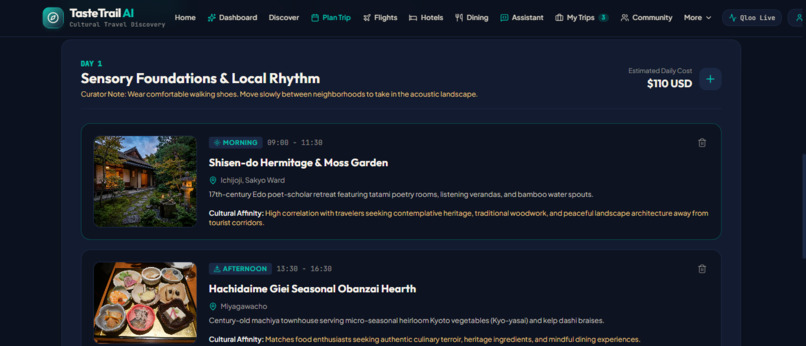
Plan Trip
-
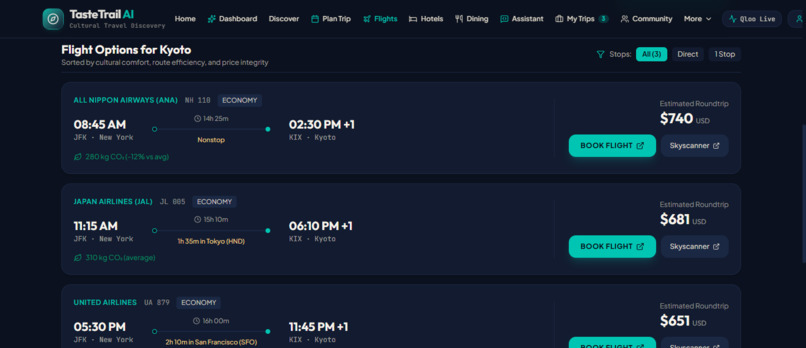
Flight
-
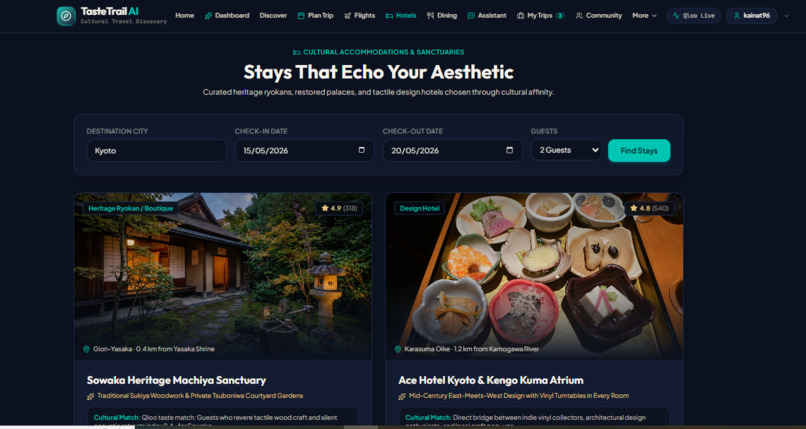
Hotals
-
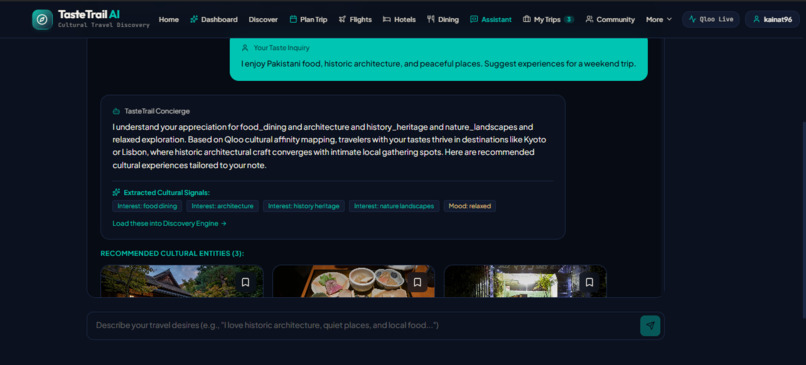
AI Assistant
-
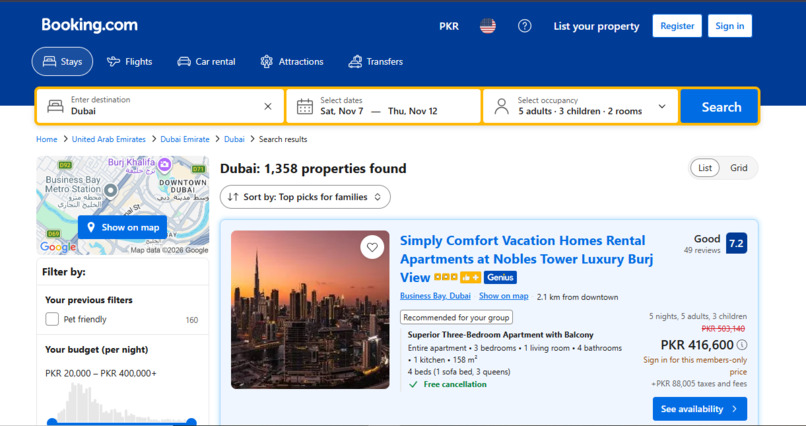
Booking
-
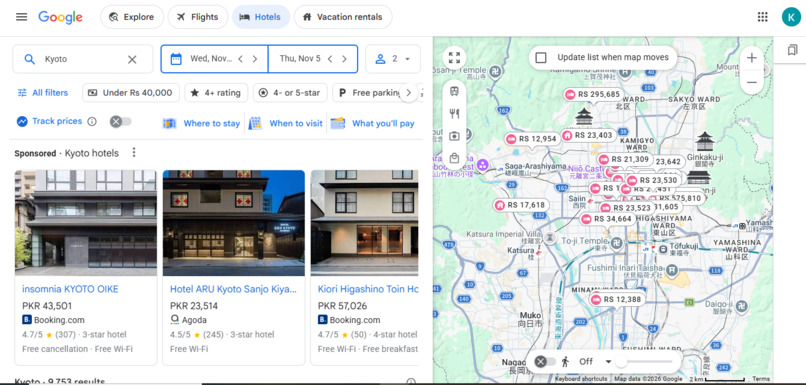
-
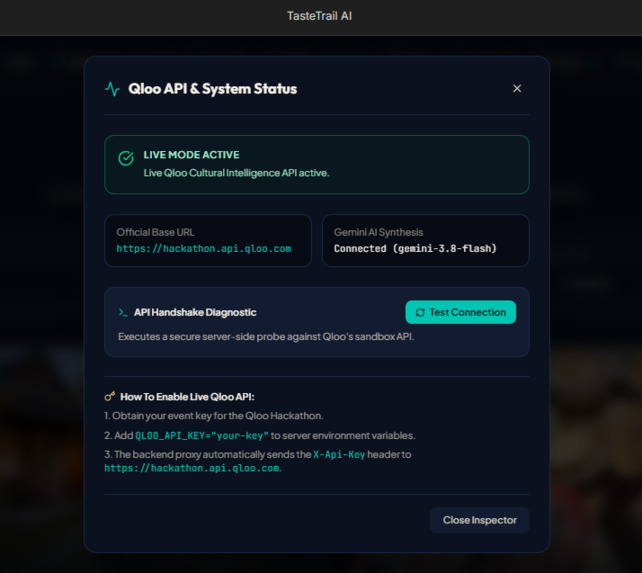
API Integration
-
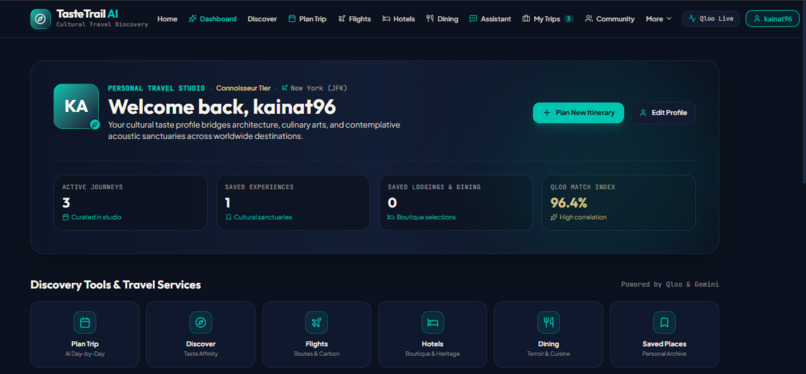
Dashboard
Inspiration
Travel is more than visiting famous places; it is about discovering cultures, exploring local food, and experiencing the traditions that make every destination unique. However, finding destinations and experiences that match a traveler's cultural interests can be challenging when information is spread across different platforms.
I created TasteTrail AI to make travel discovery more personalized and culturally meaningful. My goal is to combine AI-powered assistance with cultural intelligence to help travelers explore destinations, discover local experiences, and plan trips that match their interests.
What It Does
TasteTrail AI is an AI-powered cultural travel discovery and trip-planning platform designed to help users explore the world through their interests.
Its key features include:
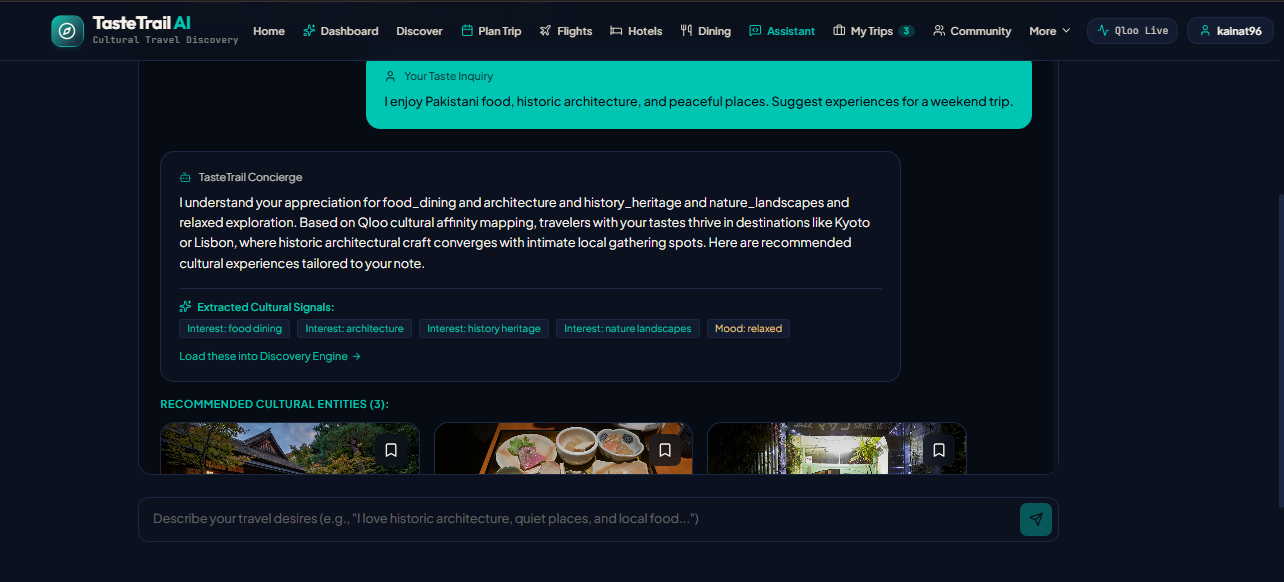
- AI-Powered Travel Assistance: Uses Google Gemini integration to support AI-assisted travel discovery and planning.
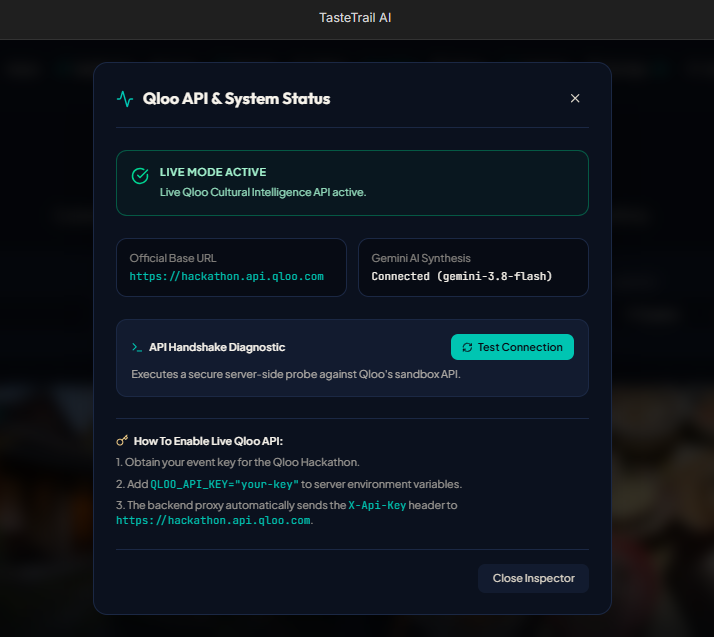
- Cultural Discovery: Integrates with the Qloo API to support interest-based cultural discovery.
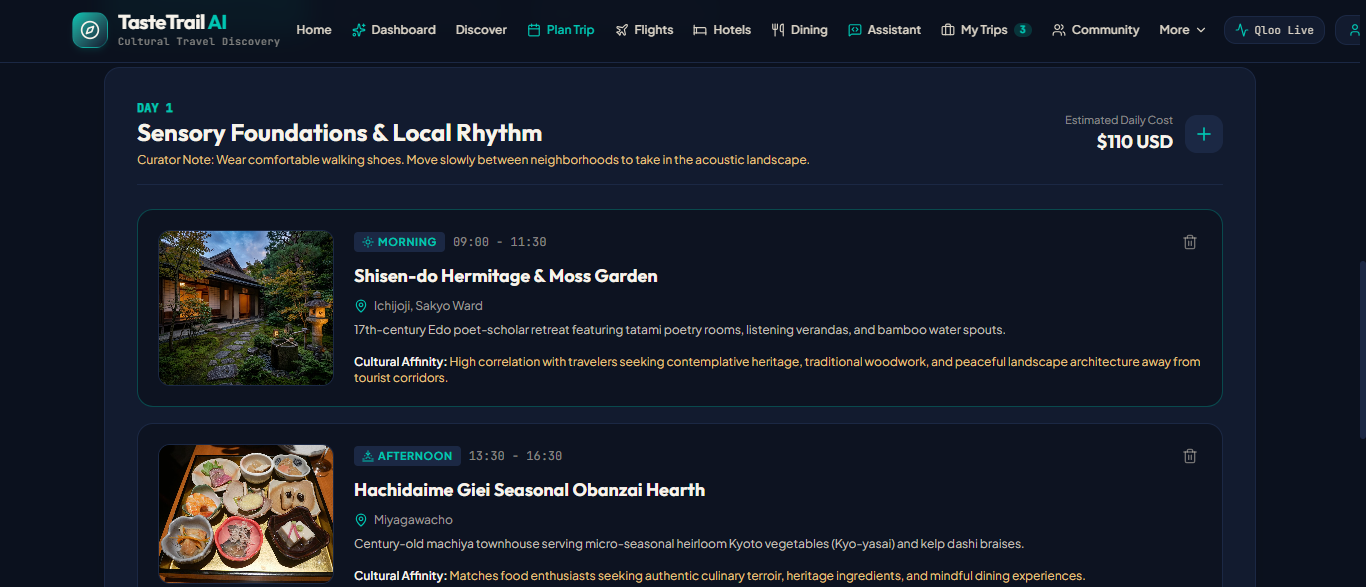
- Destination Exploration: Helps users explore curated cultural destinations and experiences.
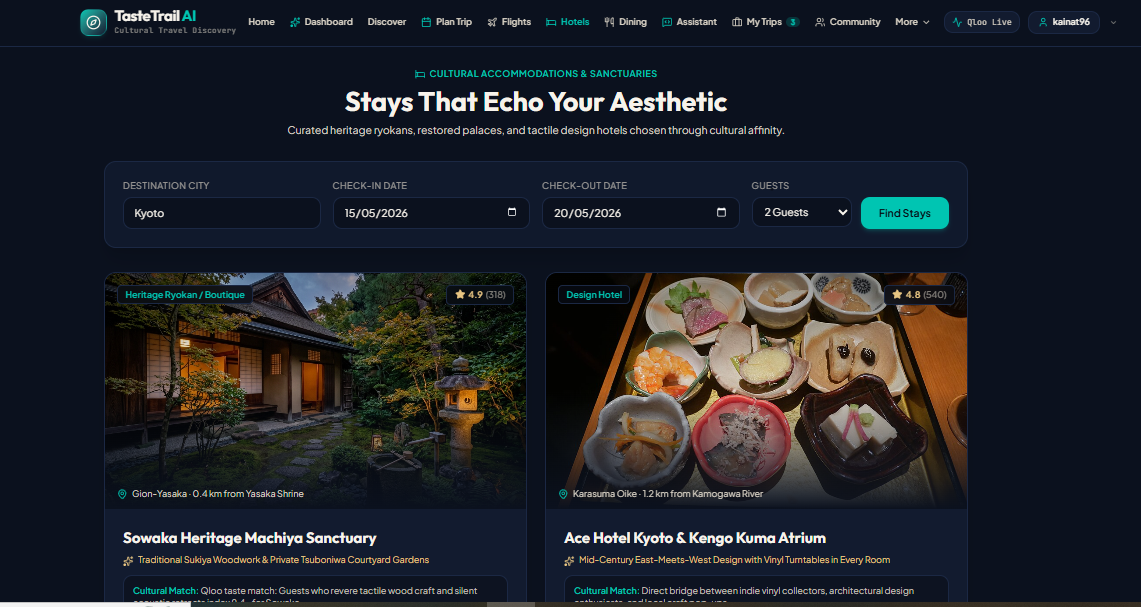
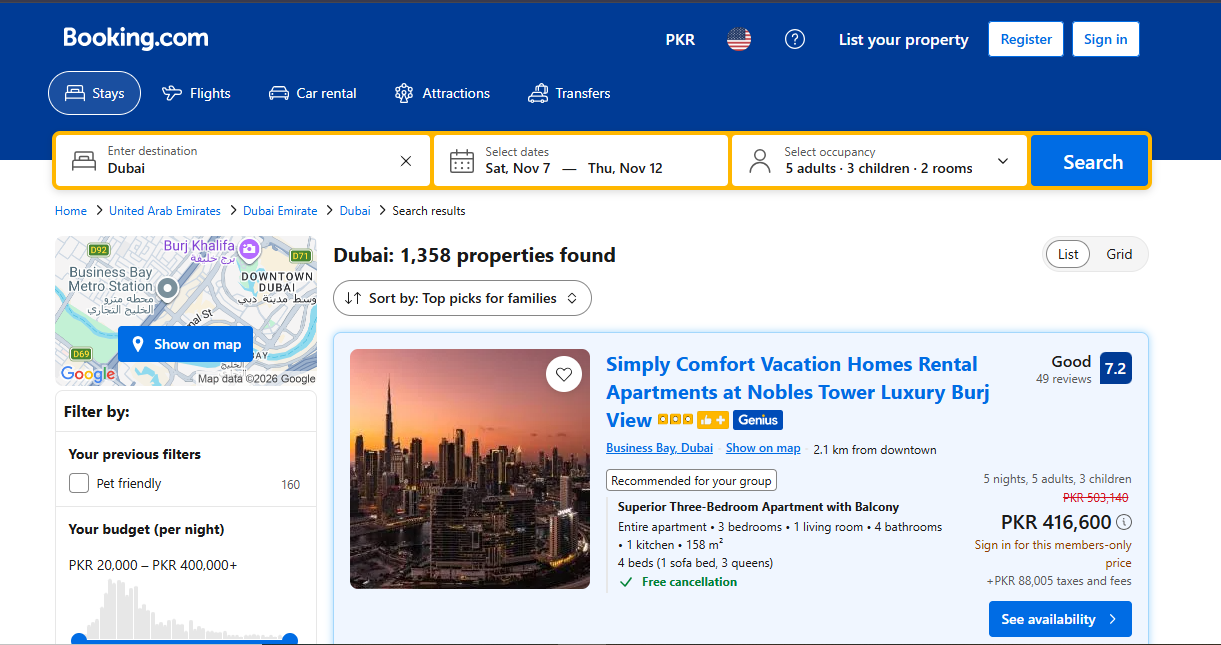
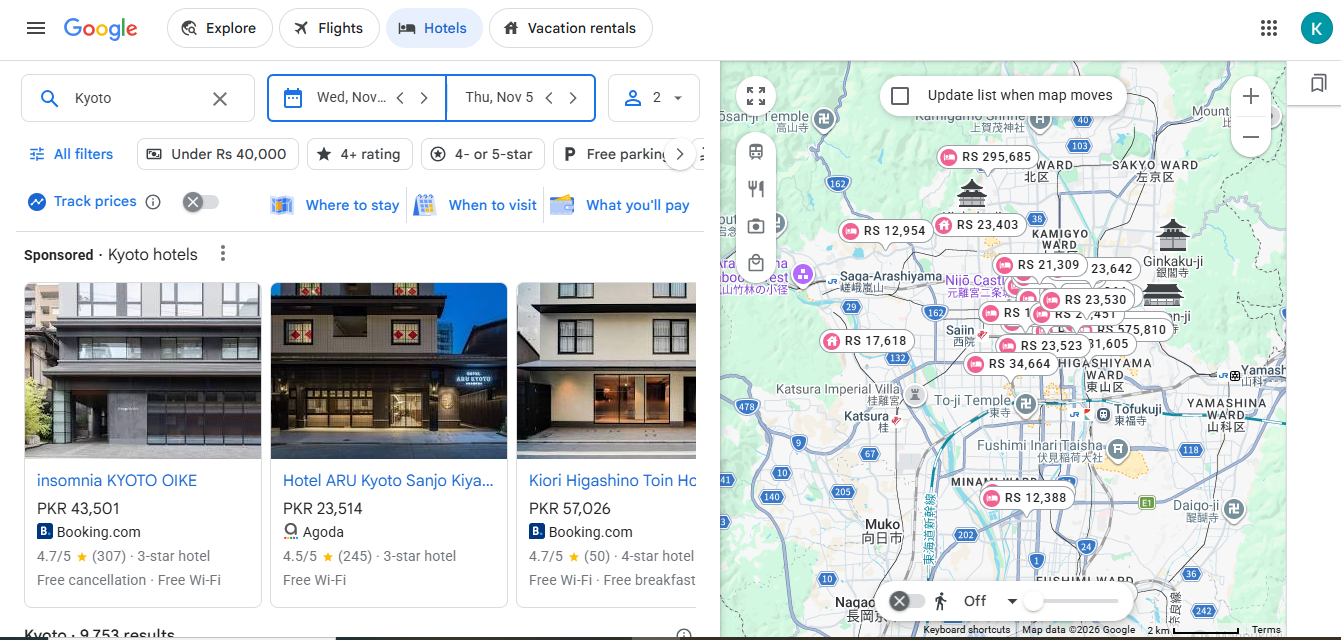
- Hotel Discovery: Provides hotel search interfaces, hotel information, and external booking links.
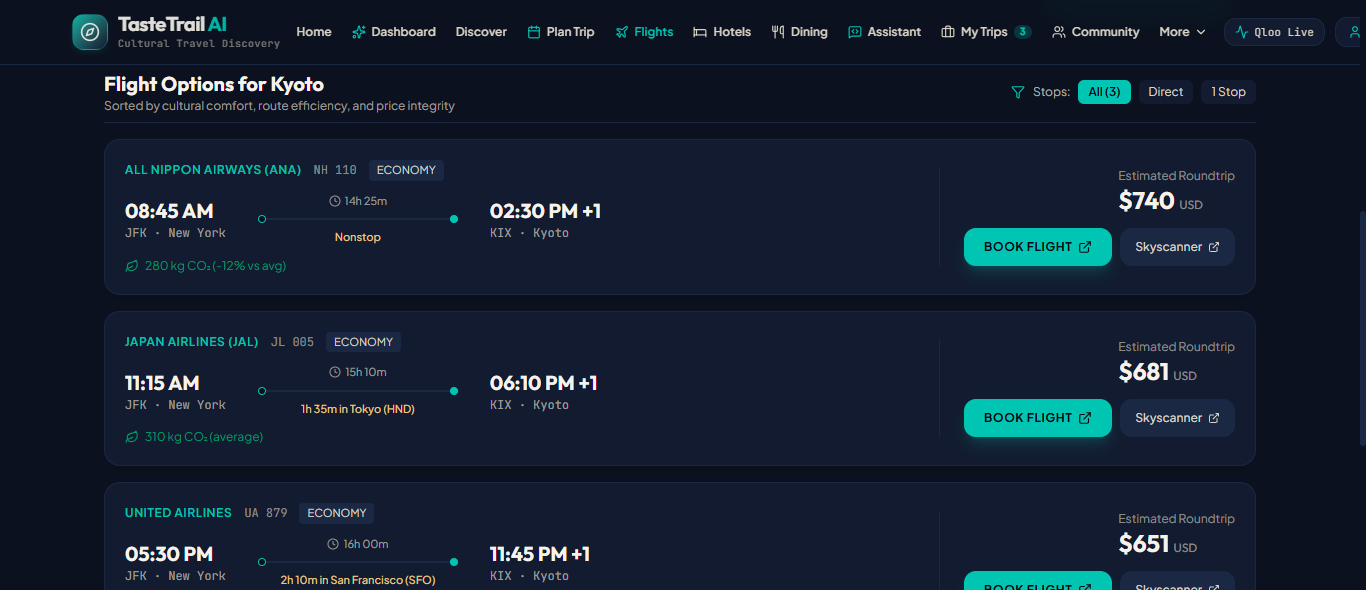
- Flight Search: Offers a flight-search interface with links to external flight-search services.
- Restaurant Discovery: Helps users explore restaurants and access external reservation links.
- Trip Planning: Includes itinerary generation and trip-saving functionality.
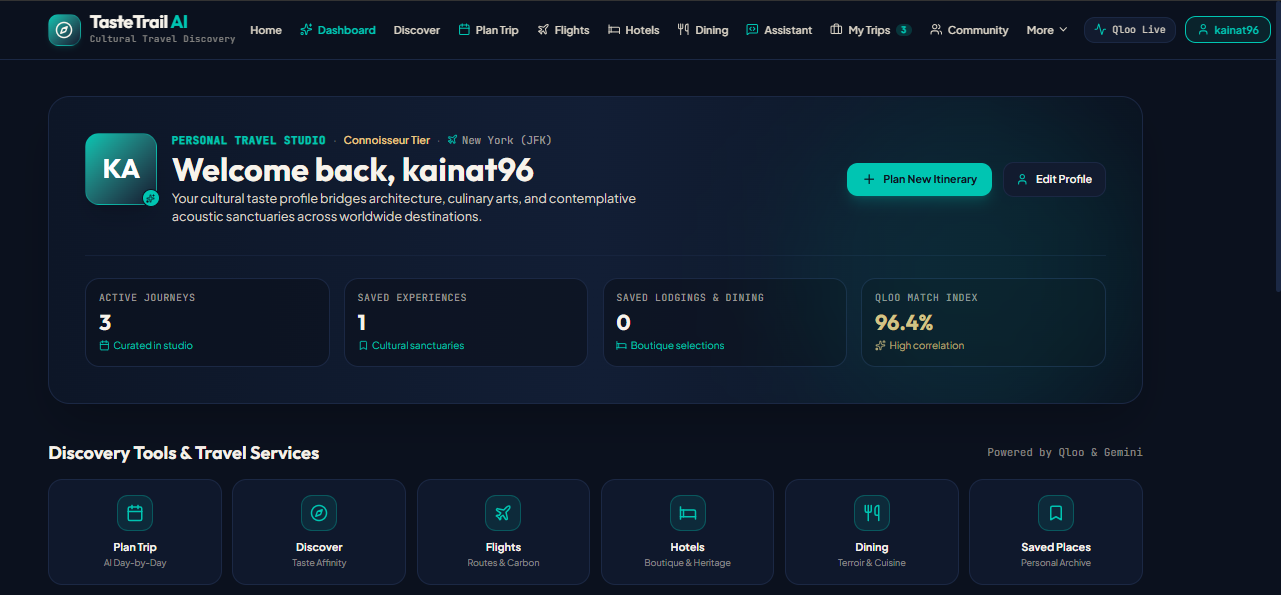
- Personal Dashboard: Provides a dashboard for accessing saved items, trips, and profile-related information.
TasteTrail AI brings these travel discovery and planning features together in one platform, focusing on making cultural exploration more accessible and engaging.
How I Built It
I built TasteTrail AI using a modern web development stack that combines an interactive frontend with a server-side application.
The technologies I used include:
- Frontend: React and TypeScript for building the user interface and interactive components.
- Backend: Node.js and Express for server-side functionality.
- AI Integration: Google Gemini API integration for AI-assisted features.
- Cultural Intelligence: Qloo API integration for interest-based cultural discovery.
- Maps: Leaflet and OpenStreetMap integration for map-related functionality.
- Data Persistence: Browser localStorage for saving supported user data locally.
- Travel Services: Search interfaces and external links for exploring hotels, flights, and restaurants.
I brought these components together to create a unified travel discovery experience that connects cultural exploration with practical trip-planning tools.
Challenges I Ran Into
One of my main challenges was bringing different types of travel functionality together in a single, easy-to-use platform. Cultural discovery, AI-assisted planning, destination exploration, and travel search each have different requirements.
Another challenge was integrating external services while designing a consistent user experience. I also had to consider the difference between demonstrating a feature through sample data and retrieving information from a live external service.
Designing a platform that combines cultural relevance with practical travel planning taught me the importance of clear interfaces, well-organized components, and realistic feature boundaries.
Accomplishments That I'm Proud Of
I am proud to have developed TasteTrail AI as a unified cultural travel discovery and planning experience.
My key accomplishments include:
- Bringing cultural discovery and travel planning into one web application.
- Integrating AI and cultural-intelligence services into the project architecture.
- Building dedicated interfaces for destinations, hotels, flights, and restaurants.
- Creating itinerary and trip-saving functionality.
- Developing a personal dashboard for accessing saved travel information.
- Exploring how AI can make travel discovery more relevant to individual interests.
Most importantly, TasteTrail AI represents my effort to move beyond generic travel recommendations and explore a more culturally focused approach to discovering the world.
What I Learned
Building TasteTrail AI helped me better understand how frontend and backend technologies work together in a modern web application.
I gained experience with React, TypeScript, Node.js, and Express while exploring integrations with AI and cultural-intelligence APIs. I also learned about organizing multiple features into one application, managing locally saved data, and connecting users to external travel services.
This project reinforced an important lesson: building a useful AI-powered application requires more than integrating an AI model. It also requires thoughtful user experience design, reliable integrations, clear functionality, and careful testing.
What's Next for TasteTrail AI
I see several opportunities to improve TasteTrail AI in the future:
- Strengthen and validate live integrations with AI and cultural-intelligence services.
- Improve the relevance of cultural recommendations based on users' interests.
- Expand destination and local-experience information.
- Enhance itinerary personalization and trip management.
- Improve user authentication and secure data storage.
- Explore more reliable live hotel and flight information integrations.
- Further test the platform and refine the user experience based on feedback.
My long-term vision is to make TasteTrail AI a helpful companion for travelers who want to explore the world through culture, food, traditions, and personal interests.
Built With
- ai
- express.js
- gemini
- generative
- javascript
- leaflet.js
- node.js
- openstreetmap
- qloo
- react
- travel
- typescript
- web

Log in or sign up for Devpost to join the conversation.