Inspiration
Travel planners are good at getting you from A to B and bad at everything that makes a trip feel like yours: where to eat when you arrive, whether the line is closed this weekend, and whether a suggestion comes from evidence or a confident guess. We wanted an agent that reasons over real signals and shows its sources. Tastebound was designed and built by a solo developer.
What it does
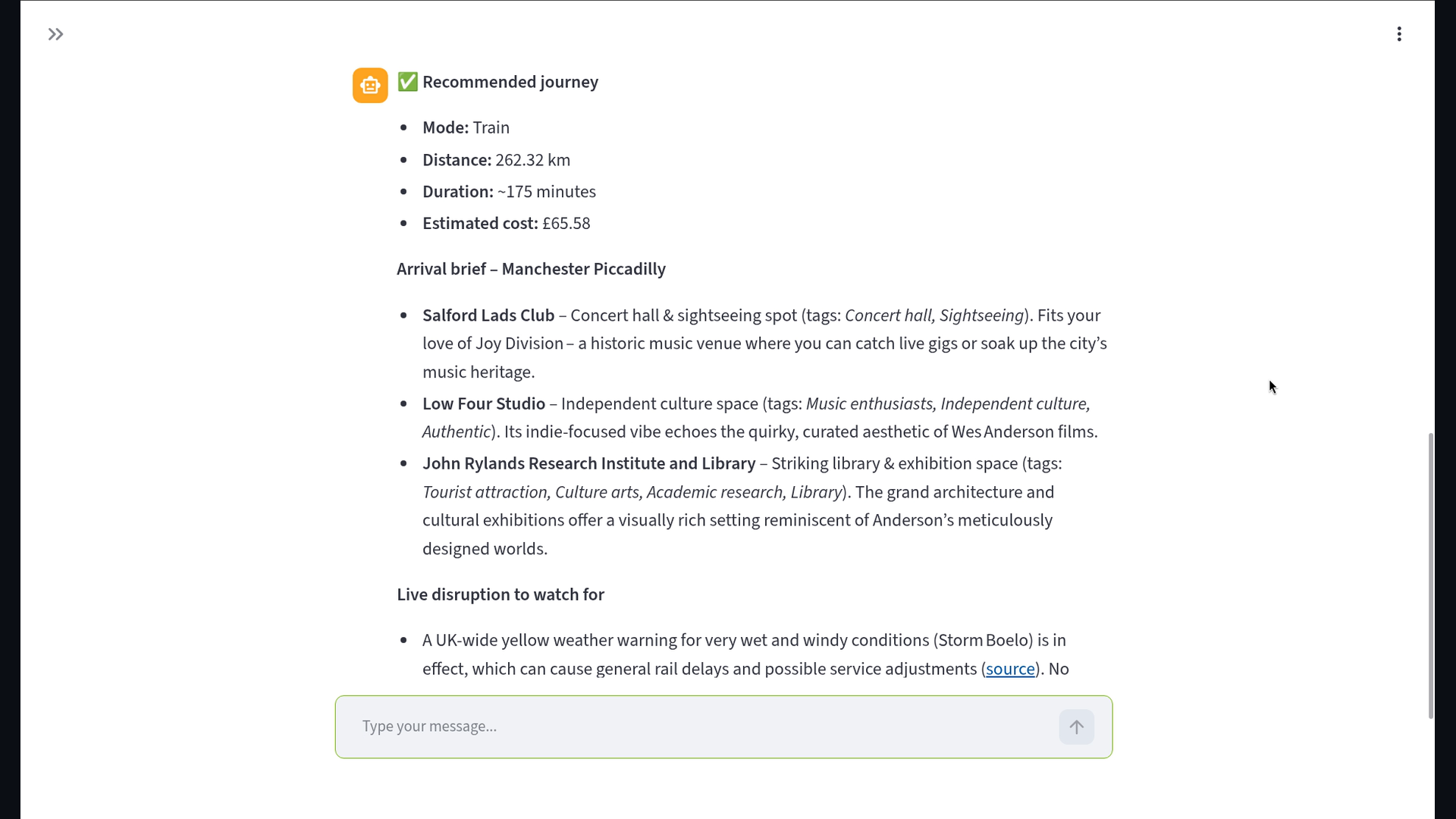
- Plans a UK journey in a short chat (start, destination, time, and a time/money/balanced preference) and compares bus, train and flight options, with estimates clearly labelled as estimates.
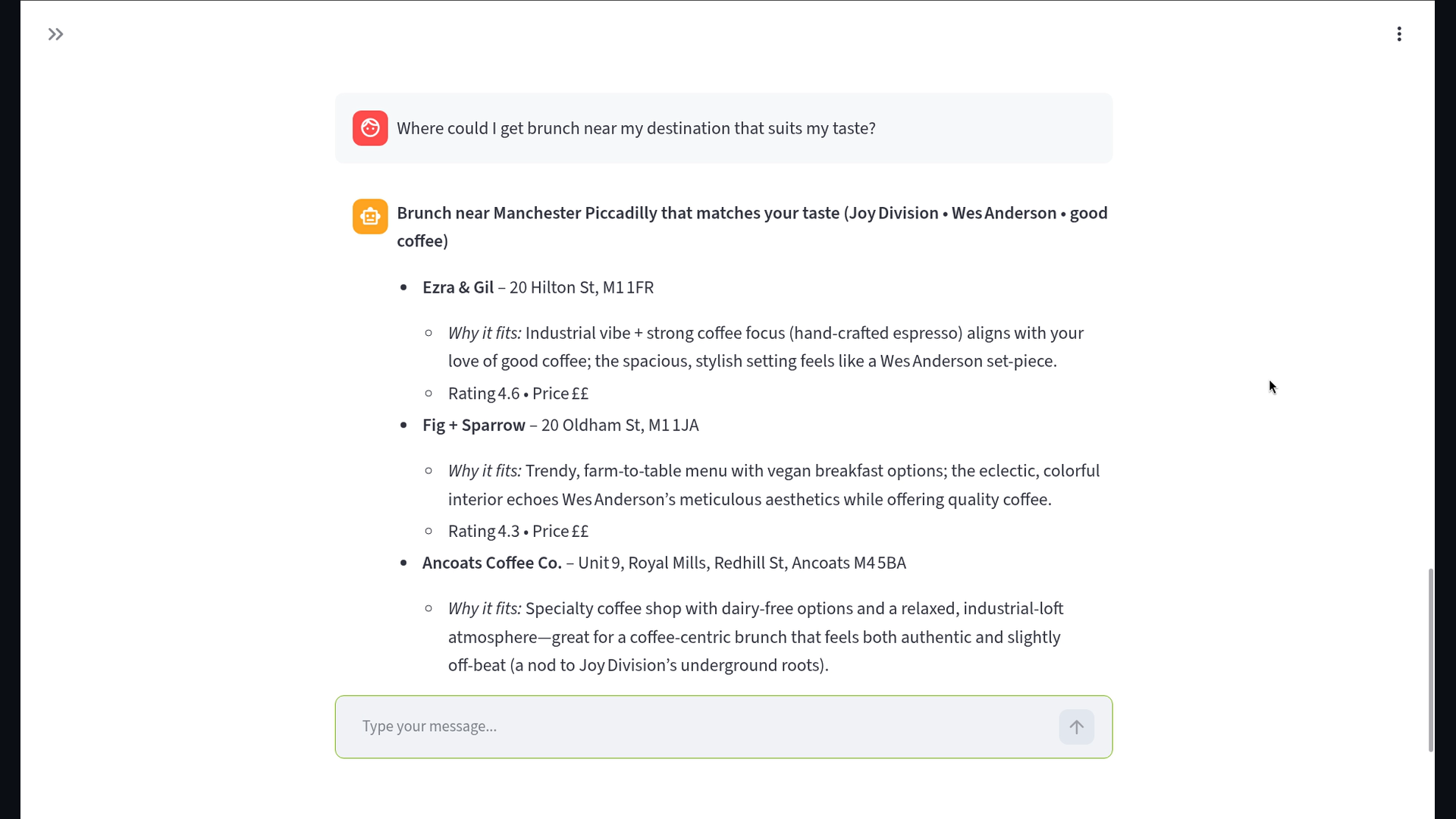
- Asks what you love (bands, films, books, food) and uses Qloo's taste graph to recommend places at your destination ranked by cultural affinity, explaining why each fits.
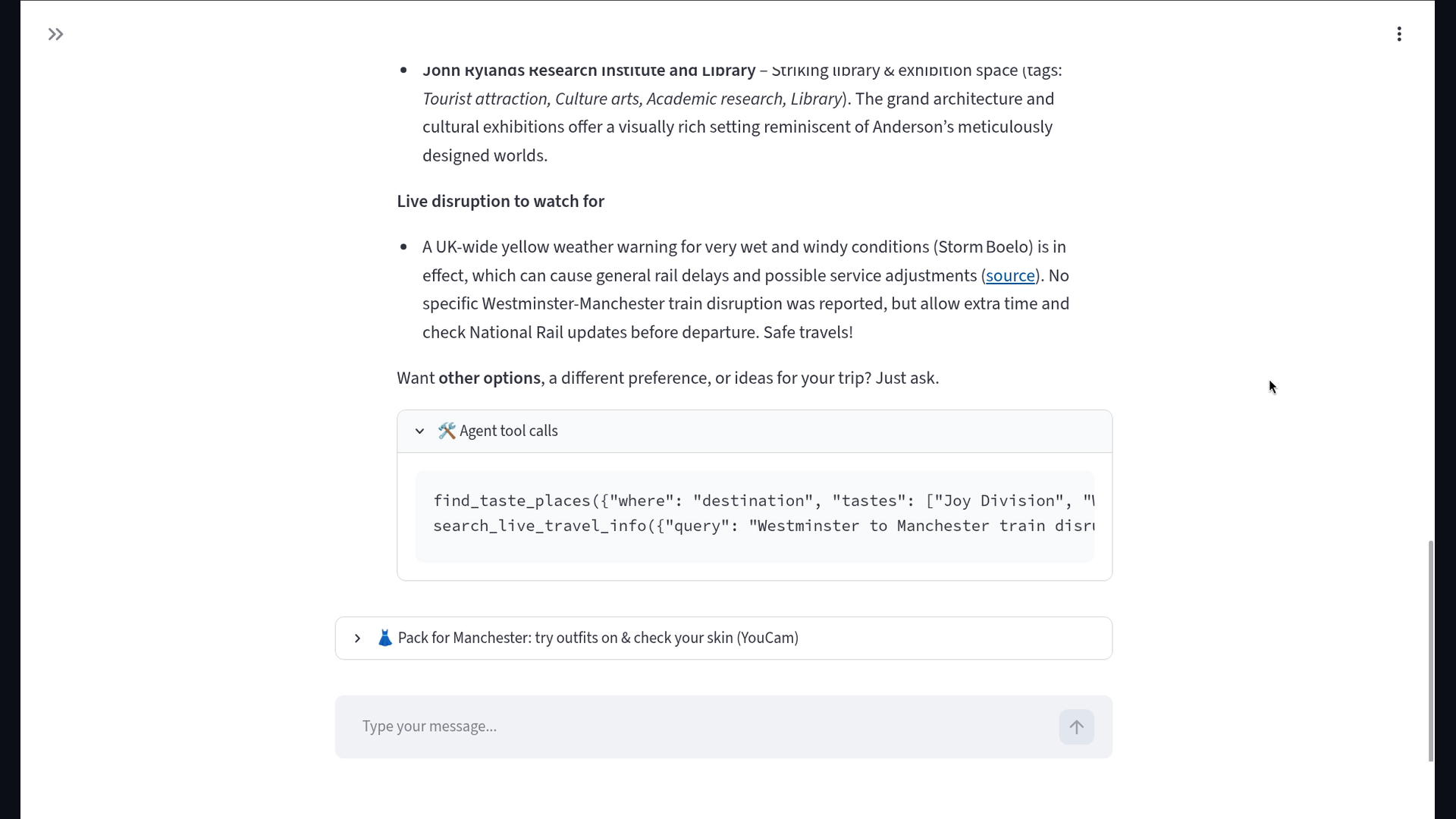
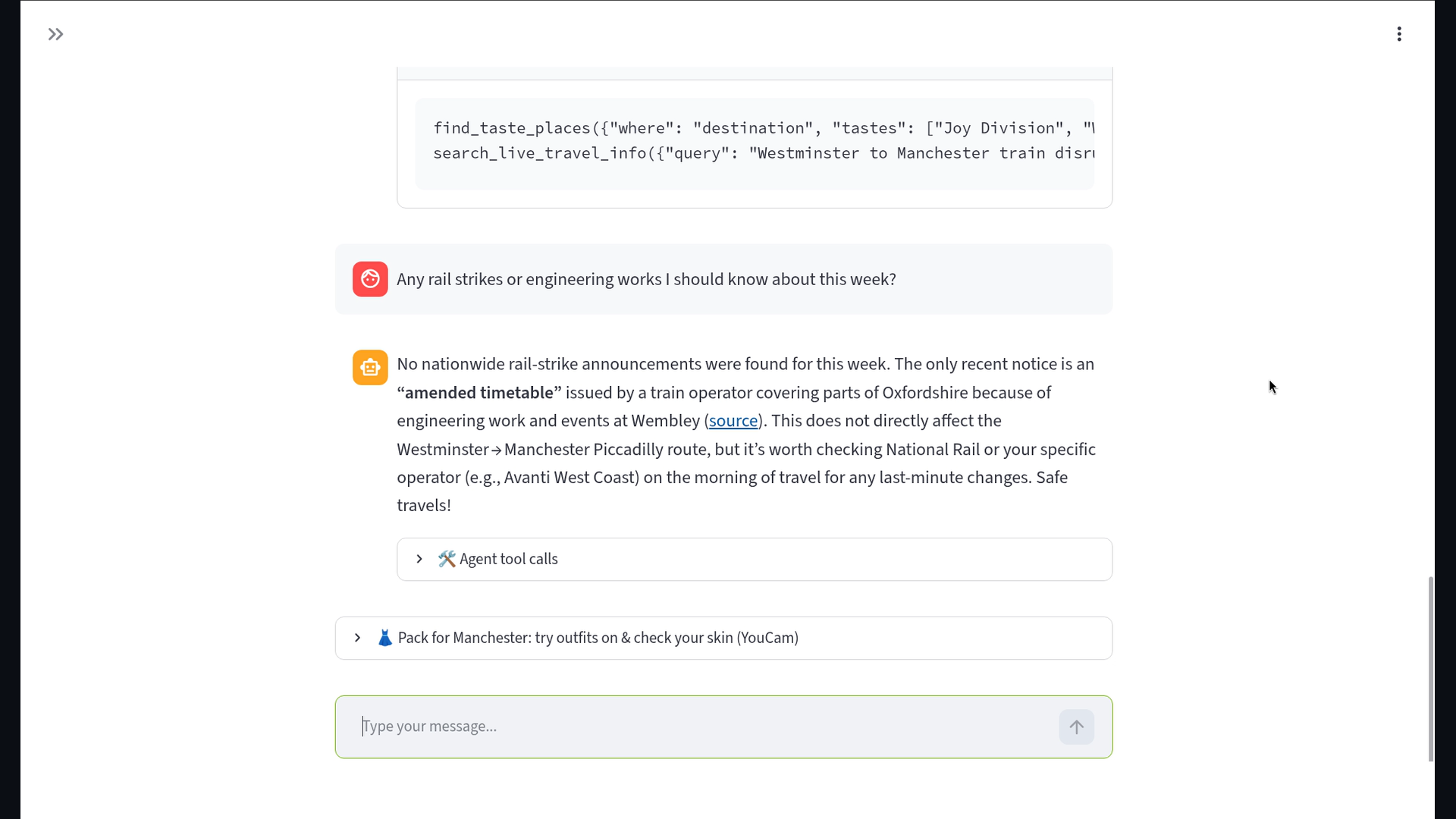
- Checks Tavily for past-week disruption news (strikes, engineering works, weather) and always shows the sources.
- Handles open-ended follow-ups ("brunch near my destination that suits my taste?") through a tool-calling concierge.
- Shows every tool call the agent made, under each answer.
- Pack for your destination: an optional outfit virtual try-on and skin check (YouCam API), with weather-aware tips.
How we built it
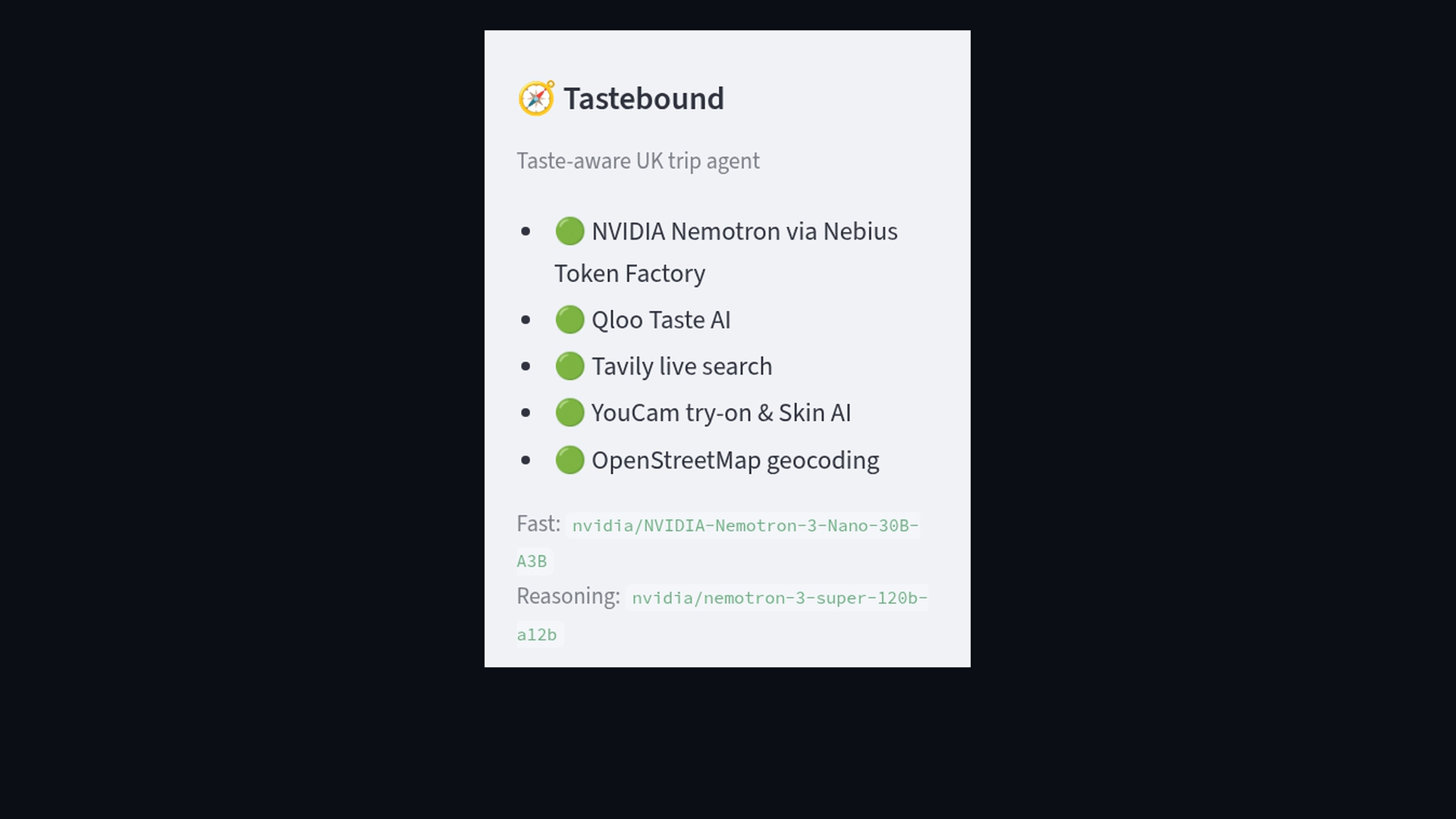
- Two NVIDIA Nemotron models on Nebius Token Factory, routed by job:
nvidia/NVIDIA-Nemotron-3-Nano-30B-A3Bturns every chat turn into structured intent, called withchat_template_kwargs.enable_thinking=false: about 0.4 s per call.nvidia/nemotron-3-super-120b-a12bruns the concierge, a bounded tool loop (OpenAI-compatibletools) overfind_taste_places(Qloo),search_live_travel_info(Tavily) andget_route_options. It may only make claims that come from tool results.
- Token Factory accelerated the workflow: it's OpenAI-compatible, so routing between models is a one-line change per call, and
/v1/modelslet us discover the exact Nemotron IDs available to our key. - Python + Streamlit, hosted on Streamlit Community Cloud. The agent is UI-agnostic and covered by 113 offline tests (fakes with synthetic data) plus live smoke tests.
- Built for a public demo with real bills:
- A hard Token Factory spend cap is enforced in code: each call is charged its worst case before it's sent, and refused if it could cross the cap.
- App-wide hourly and daily limits for every paid API stop abuse spread across many sessions.
- For paid image tasks, a floor on the provider's real balance is checked live, so it survives restarts of the free host.
- When a limit is hit, the app degrades gracefully. Keys never leave the server.
Challenges we ran into
- With thinking on and
max_tokens=256, Nemotron Nano used all of its tokens reasoning and returned empty content.enable_thinking=falsefixed it; a/no_thinkprompt prefix did not. - With thinking off, Nano sometimes invented fields for very short inputs. Few-shot examples took our 14-case intent eval from 5/14 to 13/14. We also check that extracted values actually appear in the message.
- Nemotron Super occasionally emits internal citation markers (
【{"cursor": 0, "loc": 1}】), which we clean up before display.
Accomplishments that we're proud of
- Recommendations grounded in tool results, with sources you can click.
- A full 8-turn planning conversation costs well under one US cent on Token Factory.
- Spend and abuse safety enforced in code and covered by tests.
What we learned
Routing a small model to the frequent, simple calls and a reasoning model to the few calls that need it gives both speed and quality.
What's next for Tastebound
- Getting things done: a module that hands a last-mile check to a vetted human via Tendem (e.g. phoning a restaurant to confirm it's open with a table free) is implemented behind an operator passphrase and hard price caps; its first live run is next.
- A general "research mode" with cite-every-claim answers.
- Deploying on Nebius Serverless Endpoints (a Dockerfile is included).
Built With
- mcp
- nebius-token-factory
- nvidia-nemotron
- openai-sdk
- openstreetmap
- python
- qloo
- streamlit
- tavily
- youcam
