-
-
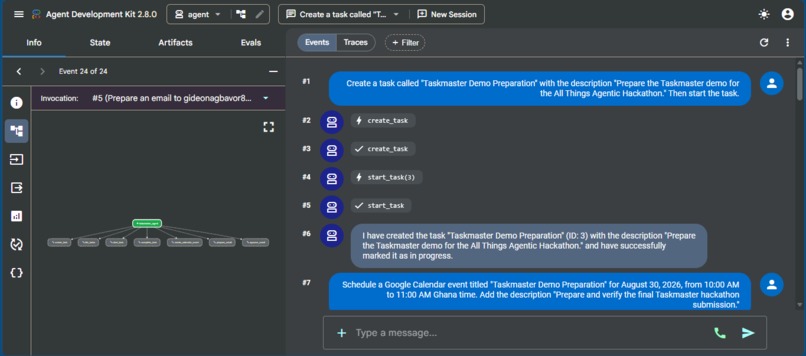
Agent Development Kit Dev UI
-
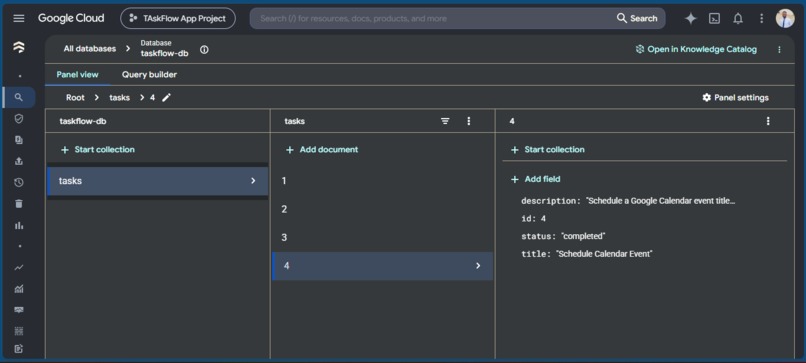
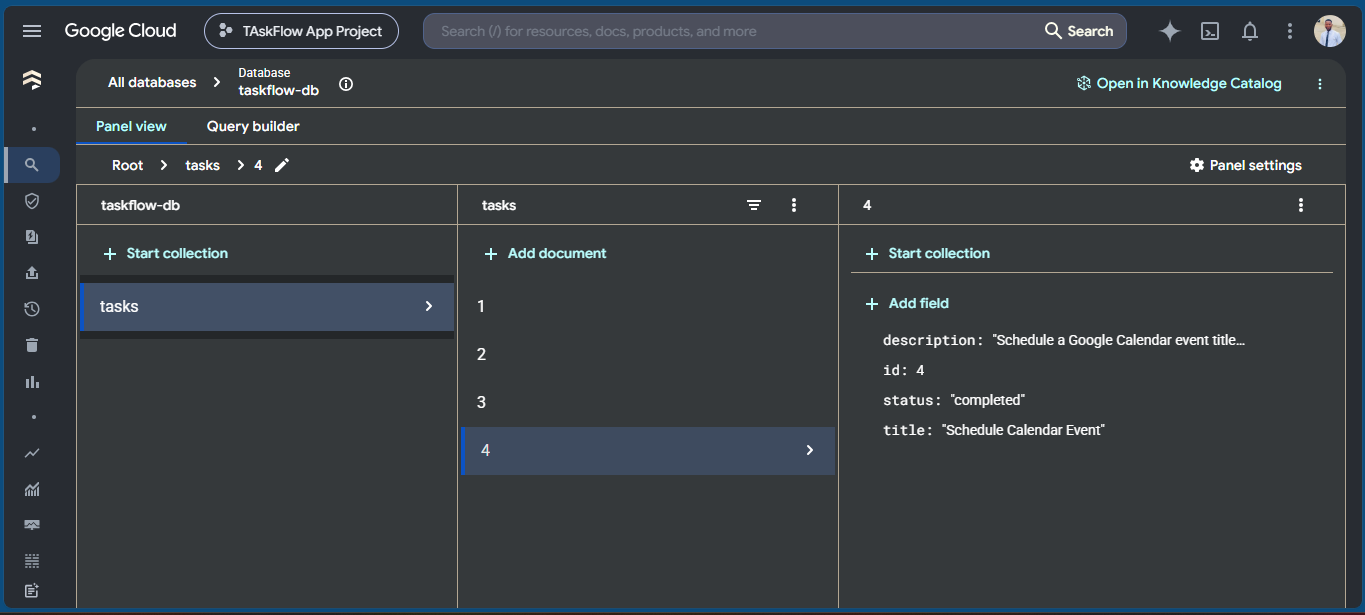
Firestore Studio-TaskFlow App Project
-
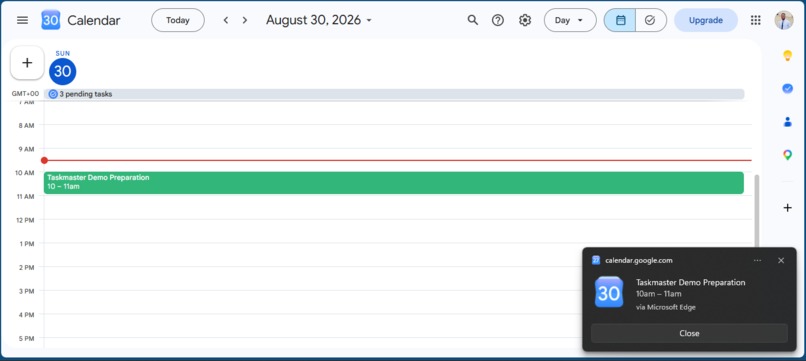
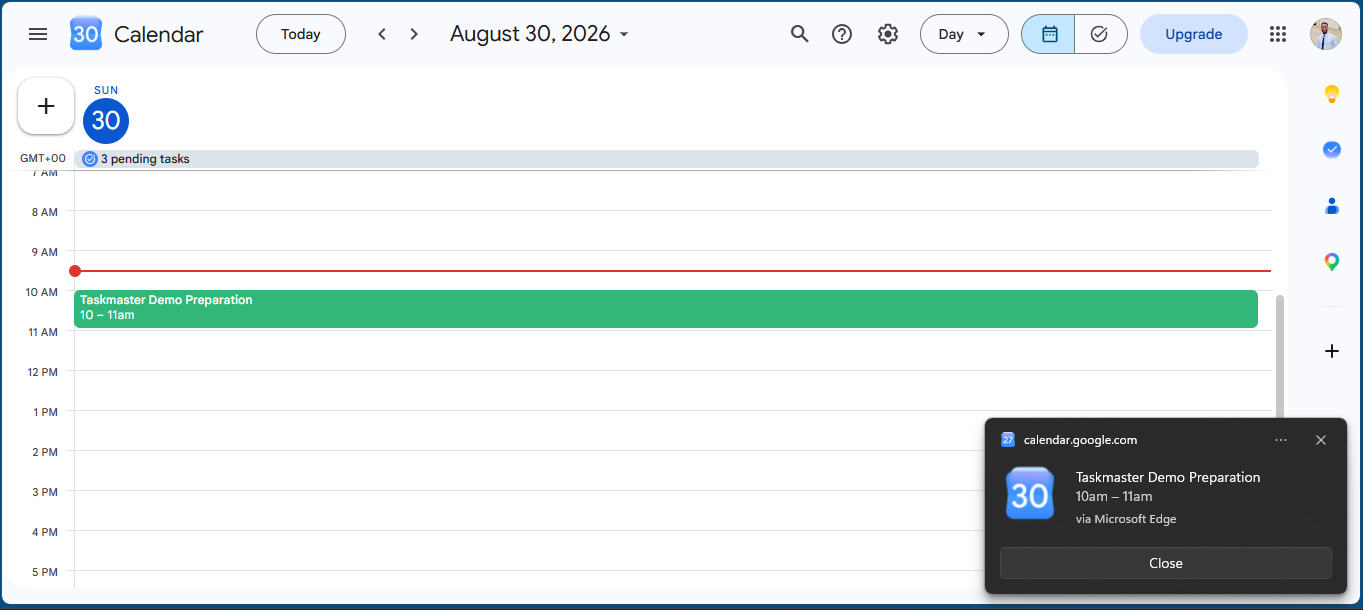
A proof of a scheduled task by the agent in my Google Calendar
-
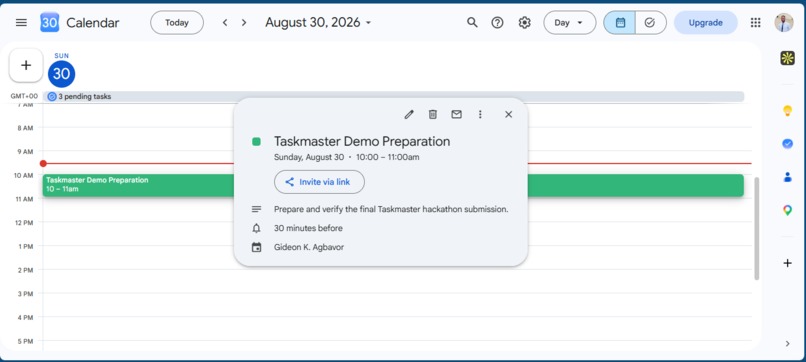
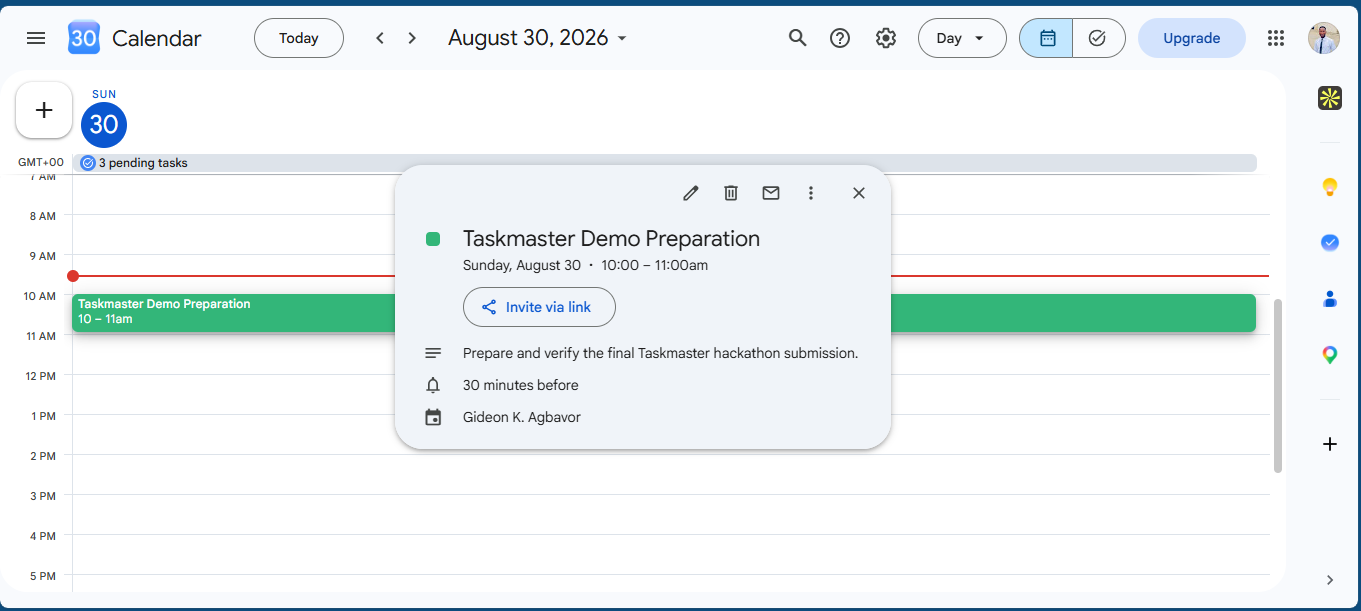
A proof of a scheduled task by the agent in my Google Calendar
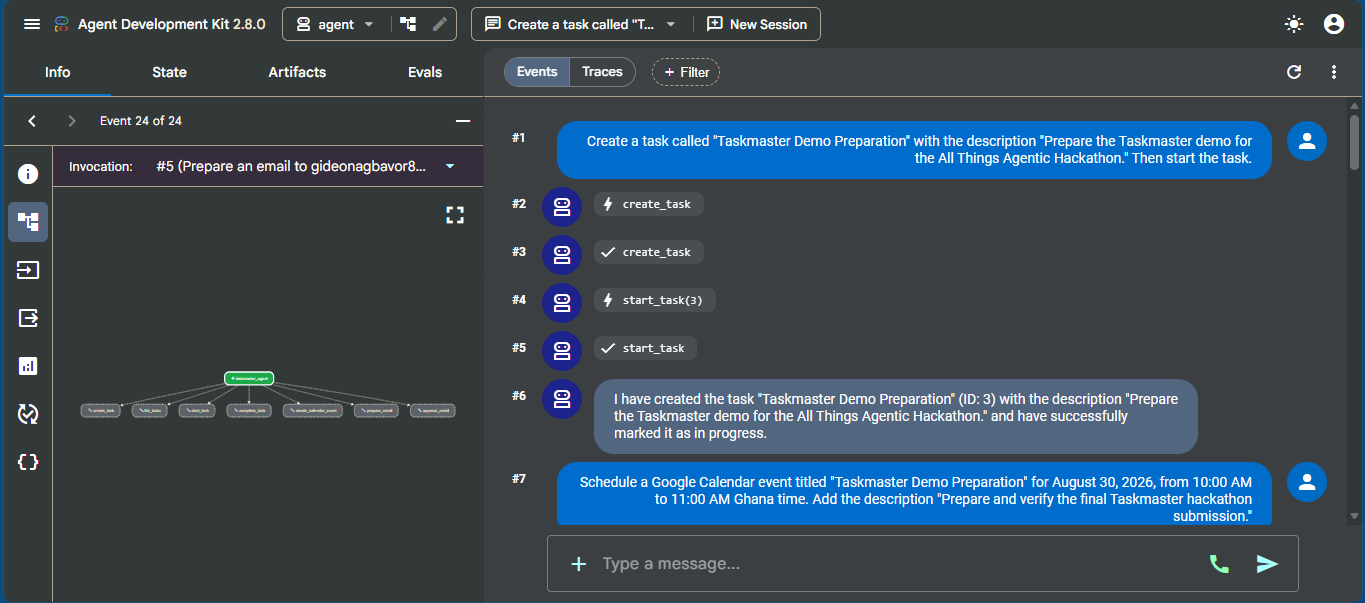
Inspiration
Most productivity tools stop at telling users what to do. I wanted to build an agent that could actually take a goal, plan the work, execute actions, track progress, and verify the outcome.
Taskmaster was inspired by everyday multi-step workflows where completing the task requires more than generating text, such as creating tasks, preparing emails, scheduling events, and confirming that actions were actually completed.
What it does
Taskmaster is an autonomous workflow execution agent built with Gemini 3.5 Flash and Google Agent Development Kit (ADK).
A user provides a natural-language goal, and Taskmaster:
- Understands the objective and breaks it into actionable steps.
- Creates and tracks tasks through a controlled lifecycle.
- Starts tasks before performing the associated work.
- Selects and executes available tools.
- Prepares and sends emails through Gmail after explicit user approval.
- Creates Google Calendar events when scheduling is required.
- Verifies successful actions before marking work as completed.
- Persists task state in Google Cloud Firestore.
Taskmaster is designed to execute workflows, not just have conversations.
How I built it
Taskmaster was built in Python using Google's agent ecosystem.
The core stack includes:
- Gemini 3.5 Flash for reasoning, planning, and tool selection.
- Google ADK for the agent and tool orchestration.
- Google GenAI SDK for Gemini integration.
- Google Cloud Firestore for persistent task state.
- Gmail API for controlled email actions.
- Google Calendar API for calendar actions.
- Google OAuth 2.0 for Gmail authentication.
- Google Application Default Credentials for cloud authentication.
Tasks are stored as Firestore documents and follow a controlled lifecycle:
"pending → in_progress → completed"
The architecture separates planning, task management, and external actions so that important operations can be controlled and verified.
Challenges I ran into
One major challenge was moving from local task persistence to Google Cloud Firestore while maintaining reliable task lifecycle behavior.
I also had to design safeguards around external actions. An autonomous agent should not send an email simply because the user mentioned sending one. Taskmaster therefore separates email preparation from sending and requires explicit approval before transmission.
Another challenge was ensuring that the agent does not falsely report success. Actions must produce evidence before tasks can be marked as completed.
Accomplishments that I am proud of
I am proud that Taskmaster goes beyond a conventional chatbot and demonstrates a complete goal-to-action workflow.
Key accomplishments include:
- Building an autonomous agent with Google ADK and Gemini.
- Implementing persistent cloud-based task management with Firestore.
- Creating a controlled task lifecycle.
- Integrating Gmail and Google Calendar as real external actions.
- Implementing explicit approval for email sending.
- Adding evidence-based task completion.
- Preventing invalid task transitions and unsupported success claims.
- Documenting the architecture and reproducible setup in the repository.
Most importantly, Taskmaster demonstrates how an AI agent can move from understanding a goal to taking real, verifiable action.
What I learned
I learned that building a reliable agent requires much more than giving a language model access to tools.
A production-minded agent needs:
- Persistent state
- Clear tool boundaries
- Safe authorization mechanisms
- Verification of external actions
- Controlled task transitions
- Failure handling
- Reproducible infrastructure
Working with Gemini, Google ADK, and Firestore showed us how these components can be combined to build agents that are more reliable and operationally useful.
What's next for Taskmaster
The next stage is to make Taskmaster more capable of handling longer-running and more complex workflows.
Planned improvements include:
- Cloud Run deployment for continuous background execution.
- Advanced workflow retry and recovery.
- Scheduled and recurring workflows.
- Better workflow observability and monitoring.
- Improved concurrency handling.
- Additional agent tools and integrations.
- Persistent agent memory.
- Multi-agent workflow coordination.
- A dedicated web interface.
The long-term goal is to evolve Taskmaster from a workflow execution prototype into a reliable background AI operations agent that can handle complex tasks with minimal human intervention.

Log in or sign up for Devpost to join the conversation.