-
-

2
-
5
-
7
-
3
-
6
-
1
-
4
T-guIA: AI-Powered Accessible Navigation for Inclusive Mobility
Problem Statement
Tijuana was not designed for everyone. More than 170,000 people with mobility disabilities, older adults, and families navigate a city where damaged sidewalks, inaccessible infrastructure, and urban barriers significantly limit their independence. A simple trip, such as attending a medical appointment at the IMSS, can become a two-hour ordeal—or even an impossible task.
Recognizing this challenge, we developed T-guIA, an intelligent accessibility-focused navigation platform designed to provide safer, more inclusive, and autonomous mobility throughout the city.
Solution Overview
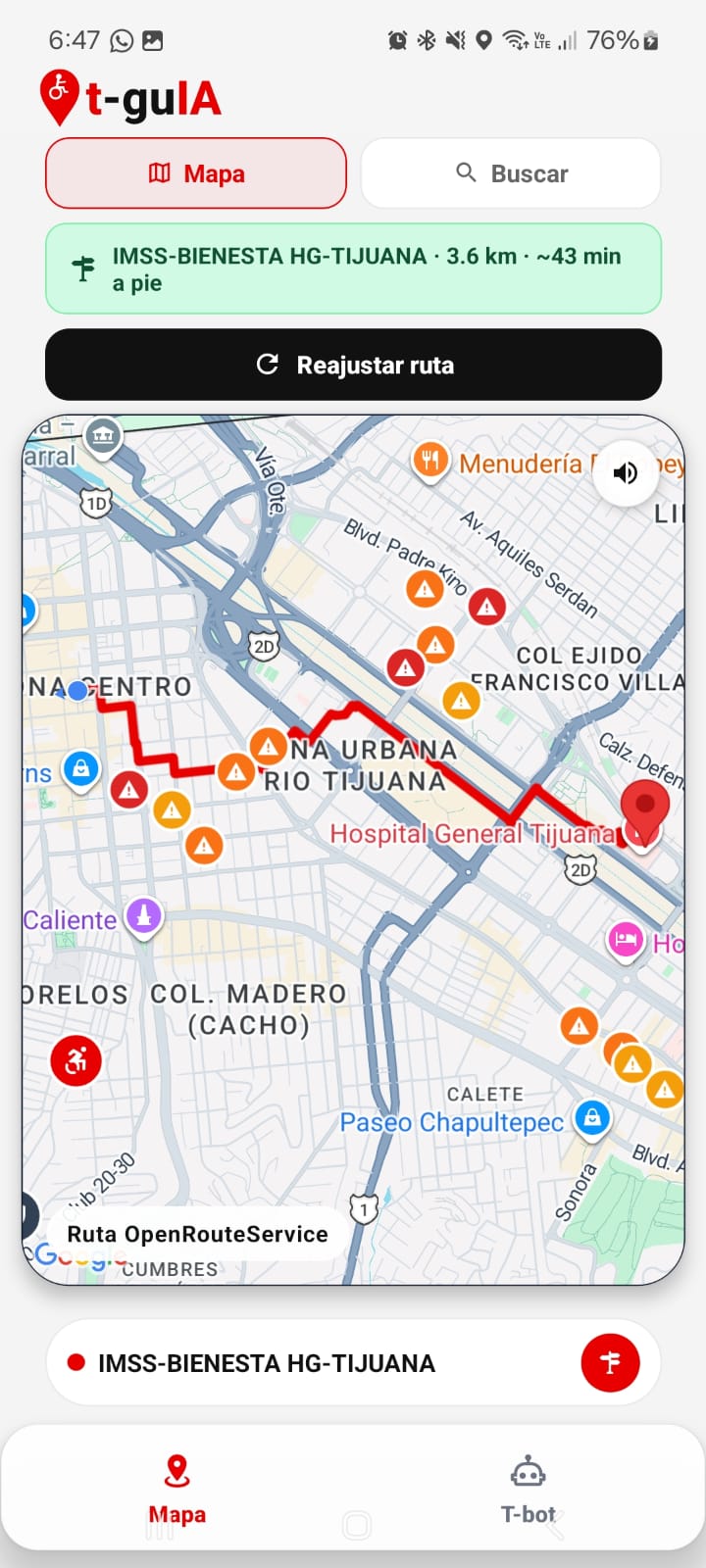
T-guIA is a real-time accessible routing ecosystem that combines artificial intelligence, geospatial technologies, and community participation to empower individuals with reduced mobility.
Key Features
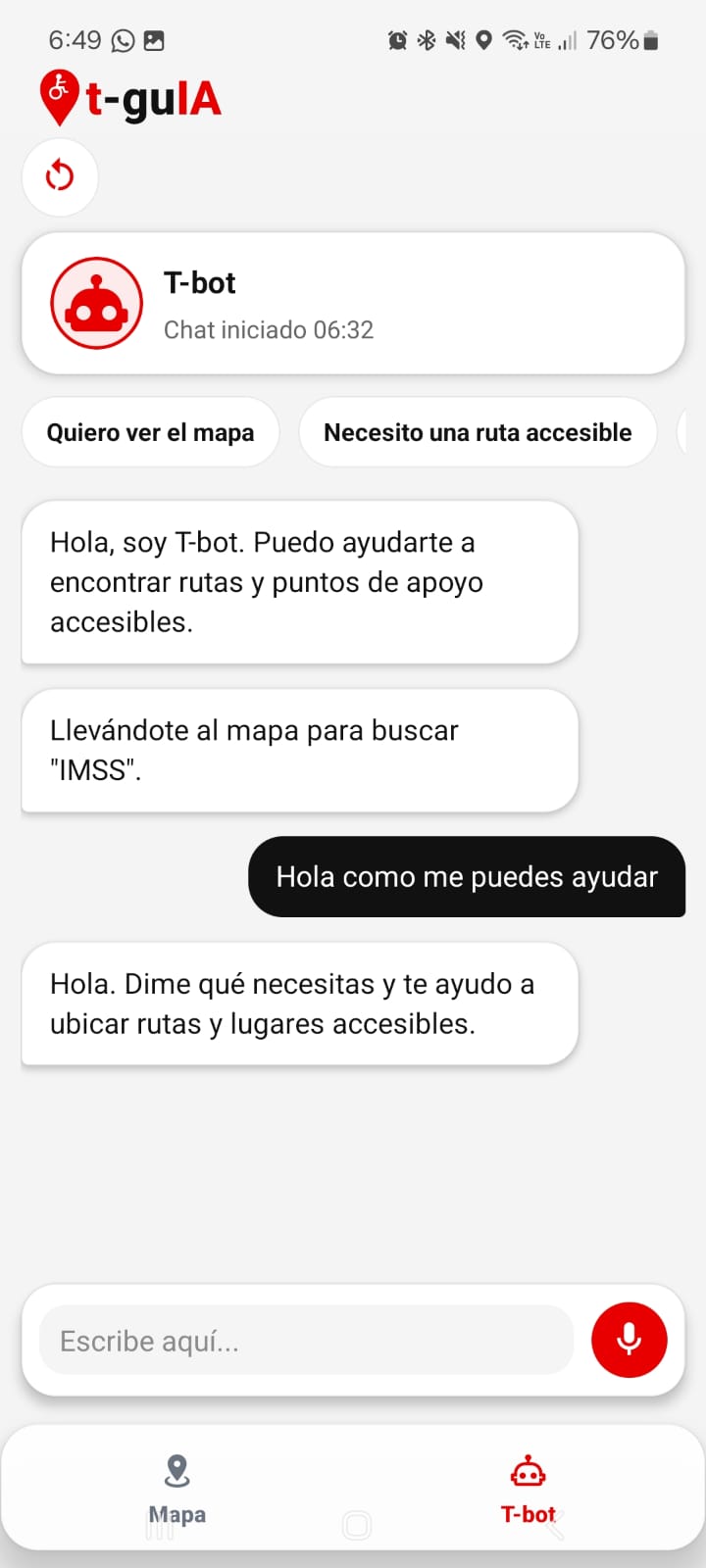
T-Bot (AI Chatbot & Voice Interface)
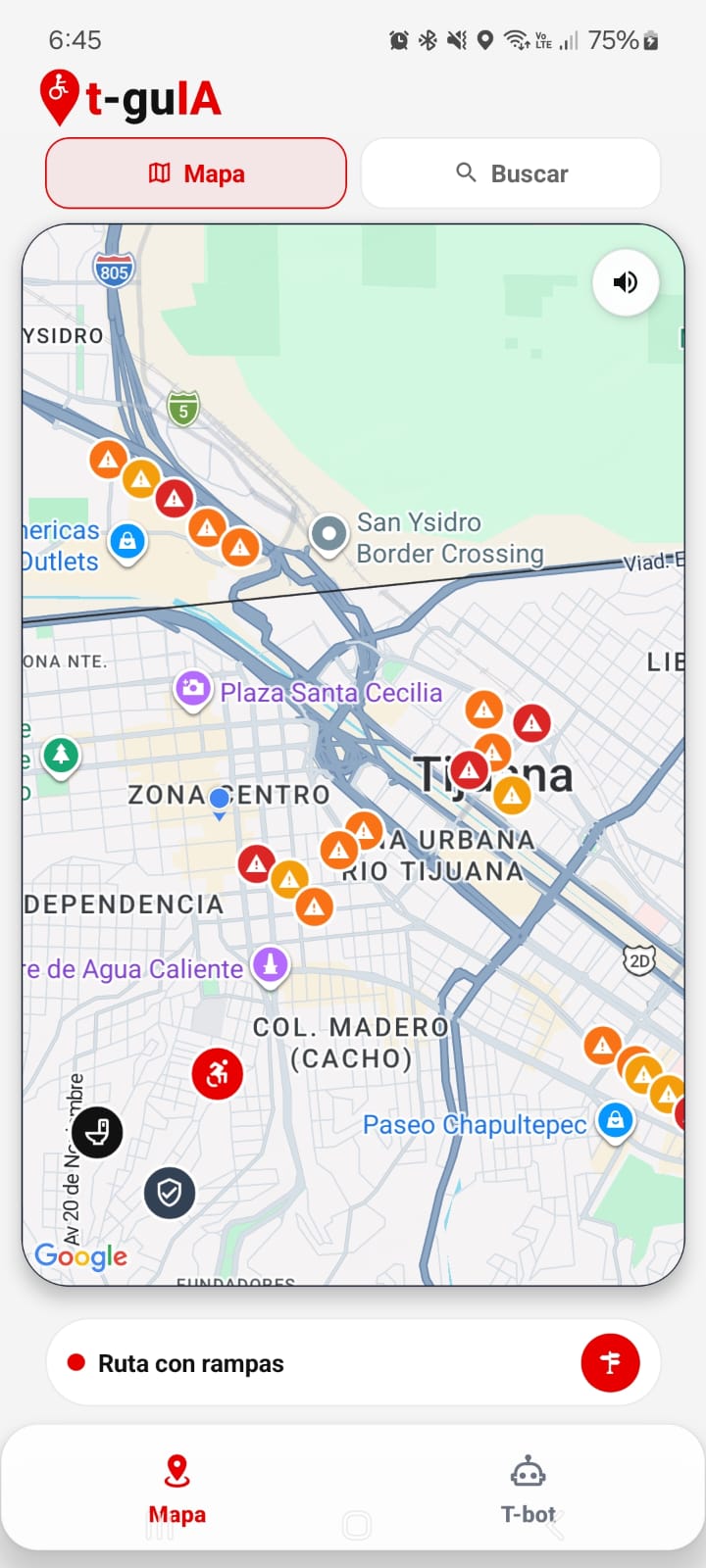
Users can interact naturally through voice commands or text to search destinations, obtain accessible routes, and locate support points without requiring manual typing.
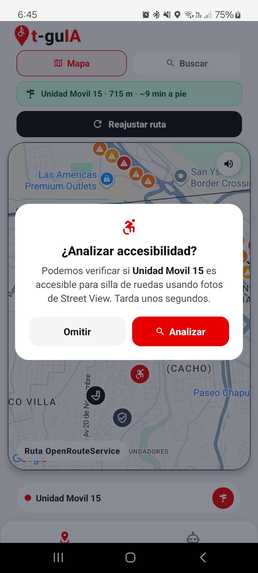
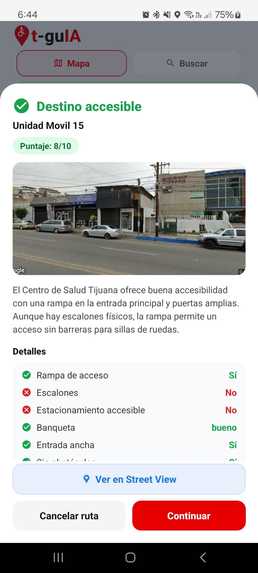
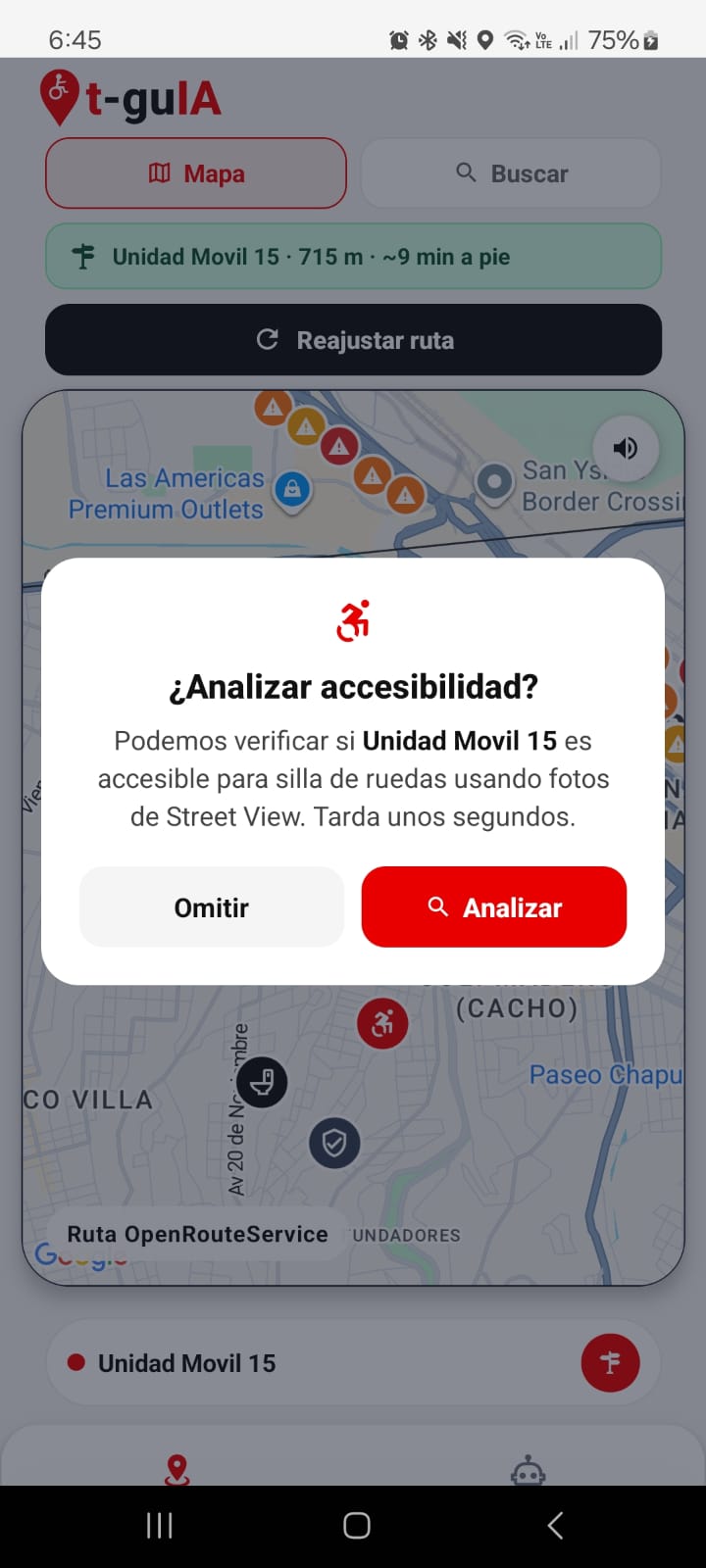
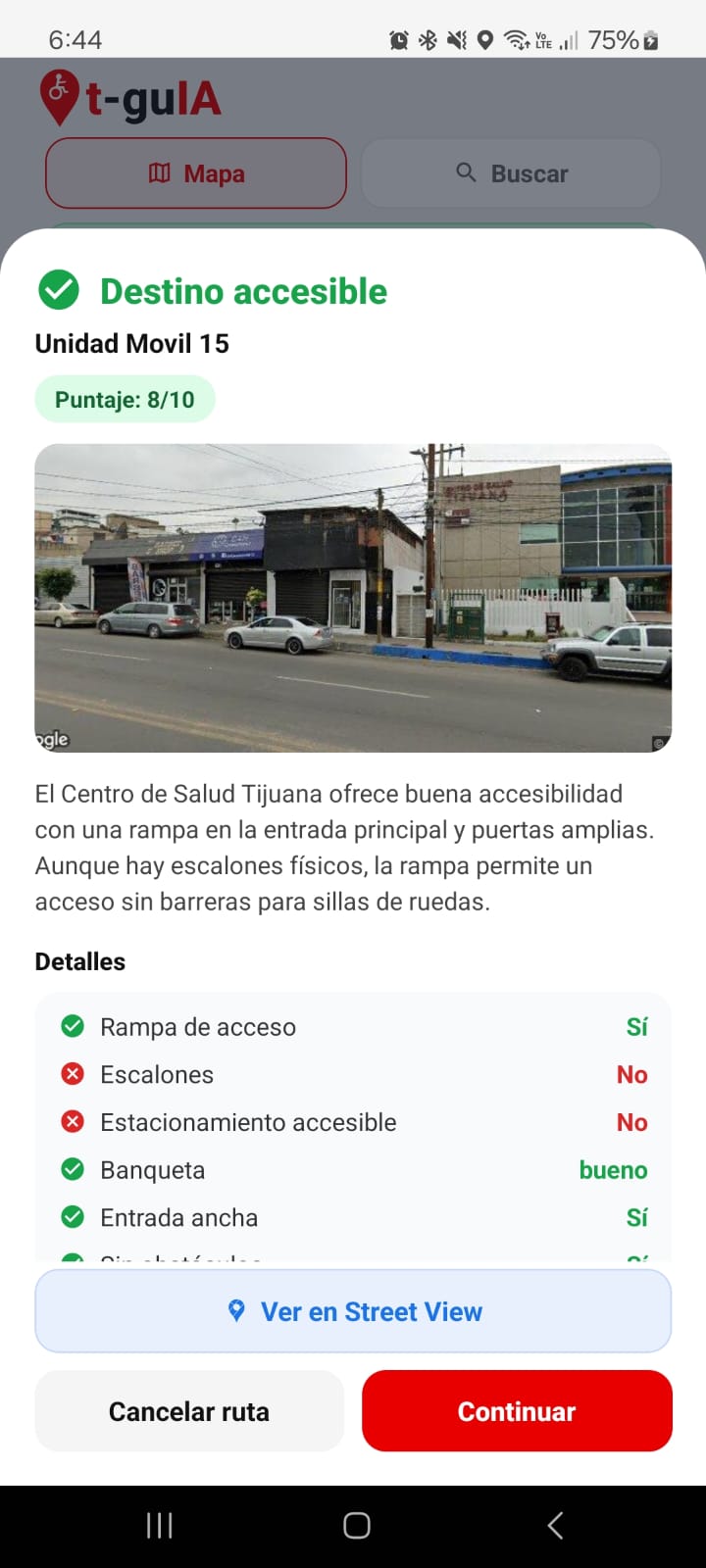
Destination Accessibility Analysis
Before beginning a journey, the platform leverages Gemini AI and Google Street View imagery to evaluate destination accessibility. Features such as ramps, accessible parking spaces, and wide entrances are analyzed to generate an accessibility score (e.g., 8/10).
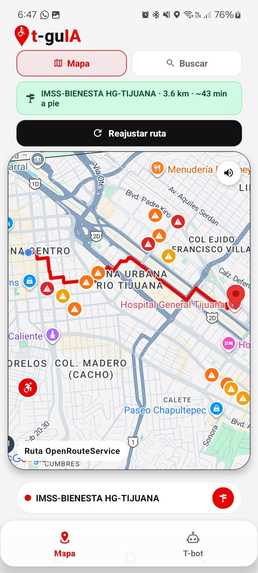
Dynamic Accessible Routing
Using OpenRouteService (ORS), routes are generated while actively avoiding reported obstacles such as broken sidewalks, stairs, or inaccessible pathways.
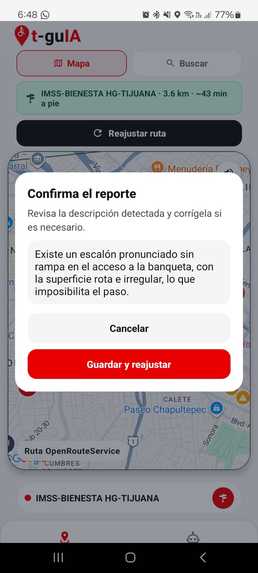
Community Barrier Reporting
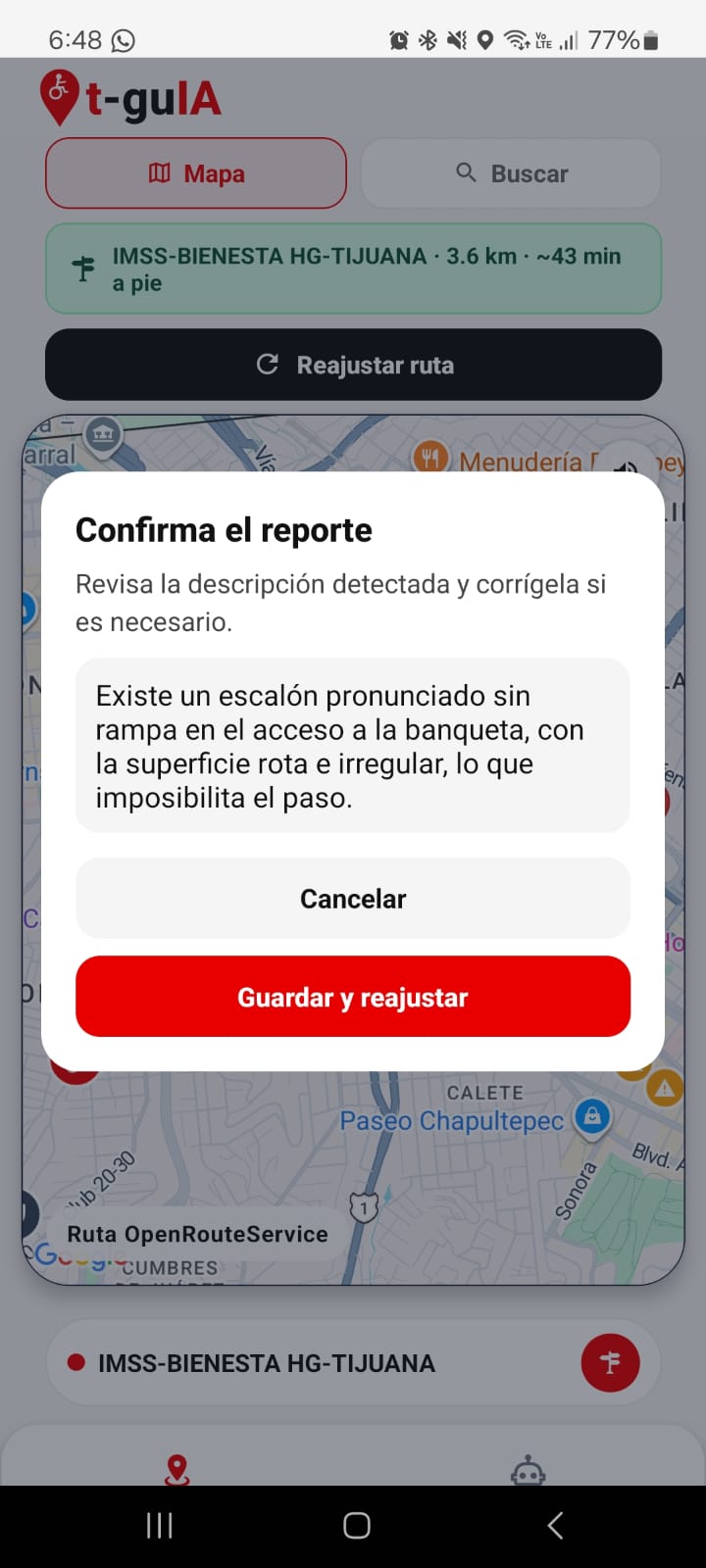
Users can upload photographs of urban barriers. Gemini 2.5 Flash processes these images in real time, automatically generating descriptions and severity classifications that update the accessibility map.
Audio Navigation
Hands-free navigation provides voice-guided directions, allowing wheelchair users and individuals using mobility aids to maintain attention on their surroundings.
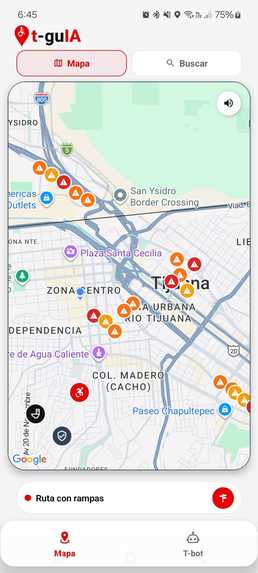
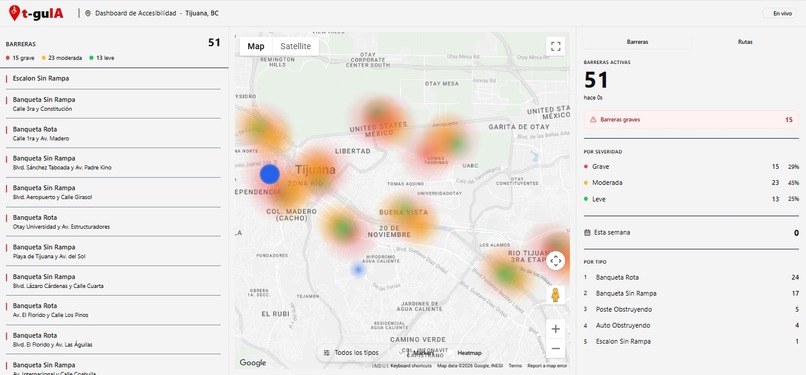
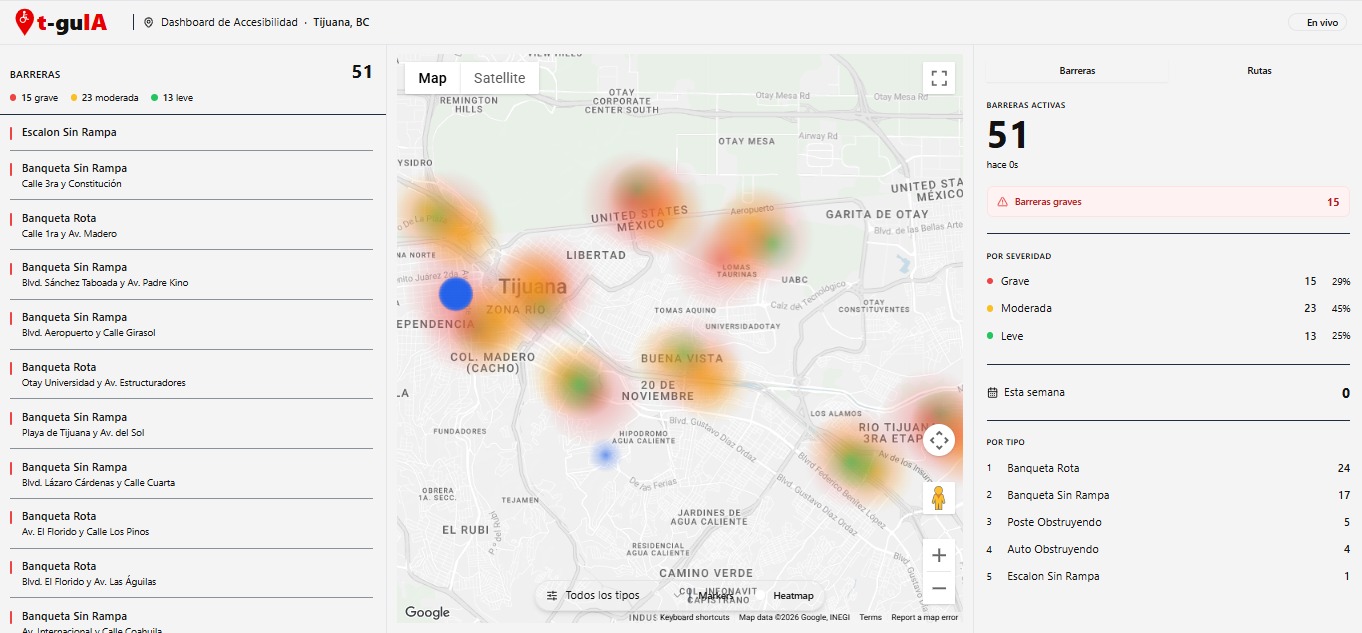
Accessibility Dashboard
A live heatmap visualizes active barriers across the city, providing valuable insights for both citizens and decision-makers.
Technical Architecture
Frontend
- React Native
- Expo
- TypeScript
- Expo Router (file-based navigation)
AI Layer
- Google Vertex AI
- Gemini 2.5 Flash
- Natural language understanding for T-Bot
- Multimodal image analysis
- Automated barrier classification and severity assessment
Mapping & Routing
- Google Places API for destination search
- OpenRouteService (ORS) for route generation
- Dynamic avoidance polygons to reroute users around reported barriers
Backend & Infrastructure
- Google Cloud Run
- PostgreSQL + PostGIS
- Google Cloud Storage
- RESTful APIs
How It Works
When a user reports an obstacle:
- The user uploads a photo.
- Gemini AI analyzes the image.
- The obstacle is classified by type and severity.
- A geographic avoidance zone is generated.
- The routing engine updates available routes.
- Future users are automatically redirected through safer paths.
This creates a living accessibility network where a single report can improve mobility for hundreds of people.
Challenges
One of the primary technical challenges was integrating multimodal artificial intelligence with geospatial routing systems in real time.
The system must transform a user-submitted image of an obstacle into actionable geographic intelligence. Gemini AI first identifies and describes the barrier, then classifies its severity and generates a corresponding geographic avoidance zone. This information is immediately incorporated into the routing engine so future users can avoid unsafe paths.
Additionally, maintaining a continuously evolving spatial database required careful optimization of PostGIS queries and synchronization mechanisms to ensure that the accessibility map remains accurate and responsive.
Impact
We are particularly proud of creating a fully integrated ecosystem where a single community contribution can positively impact hundreds of users.
The implementation of Destination Accessibility Analysis represents a significant advancement in urban accessibility. By enabling AI to evaluate a location before a user arrives, T-guIA reduces uncertainty and empowers individuals to travel more independently and confidently.
Action → Method → Impact
| Action | Method | Impact |
|---|---|---|
| Navigate safely through the city | AI-powered accessible routing | Increased mobility and independence |
| Report urban barriers | Multimodal AI classification | Real-time community-driven updates |
| Evaluate destinations before travel | Street View + Gemini analysis | Reduced uncertainty and safer planning |
| Visualize accessibility issues | Accessibility Dashboard | Better decision-making for citizens and authorities |
Innovation
T-guIA bridges the gap between Artificial Intelligence, Geographic Information Systems (GIS), and Accessibility Technology.
At its core, the platform continuously optimizes mobility by transforming community-generated data into routing intelligence.
The routing process can be summarized as:
$$ \text{Accessible Route} =
\text{Optimal Path}
\text{Reported Barriers} + \text{Accessibility Constraints} $$
This simple concept enables safer and more personalized navigation experiences for users with diverse mobility needs.
Future Work
Our long-term vision is to expand the accessibility database to cover every neighborhood in Tijuana.
Planned Improvements
- Improve accessibility scoring using localized urban datasets.
- Increase community participation in barrier reporting.
- Integrate additional municipal and transportation data sources.
- Partner with local governments and public institutions.
- Use the Accessibility Dashboard as a planning tool for infrastructure improvements.
Vision
Our mission is simple:
Transform every “impossible” journey into a safe, accessible, and independent experience.
By combining AI, community collaboration, and geospatial intelligence, T-guIA aims to return the city to those who need it most.
Built With
- cloud-run
- cloud-sql
- expo.io
- gemini
- google-directions
- google-maps
- google-places
- google-streetview
- google-vision
- next-js
- postgresql
- react-native
- typescript
- vertex

Log in or sign up for Devpost to join the conversation.