-
-
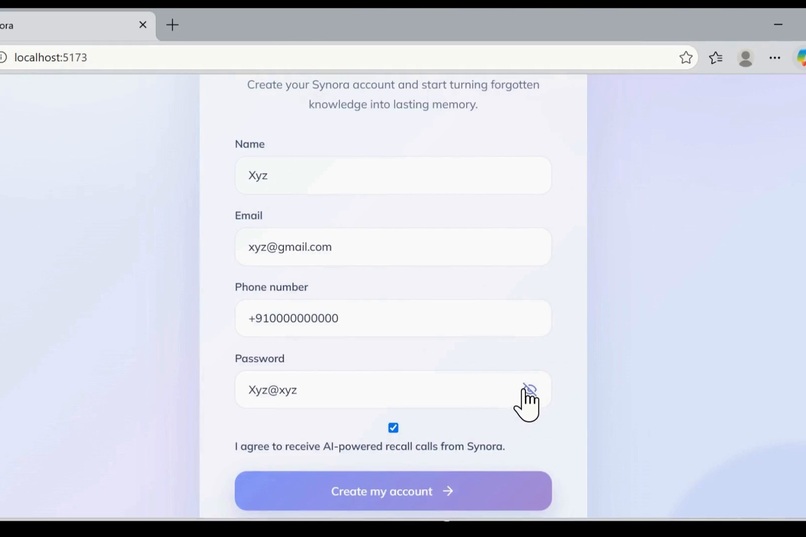
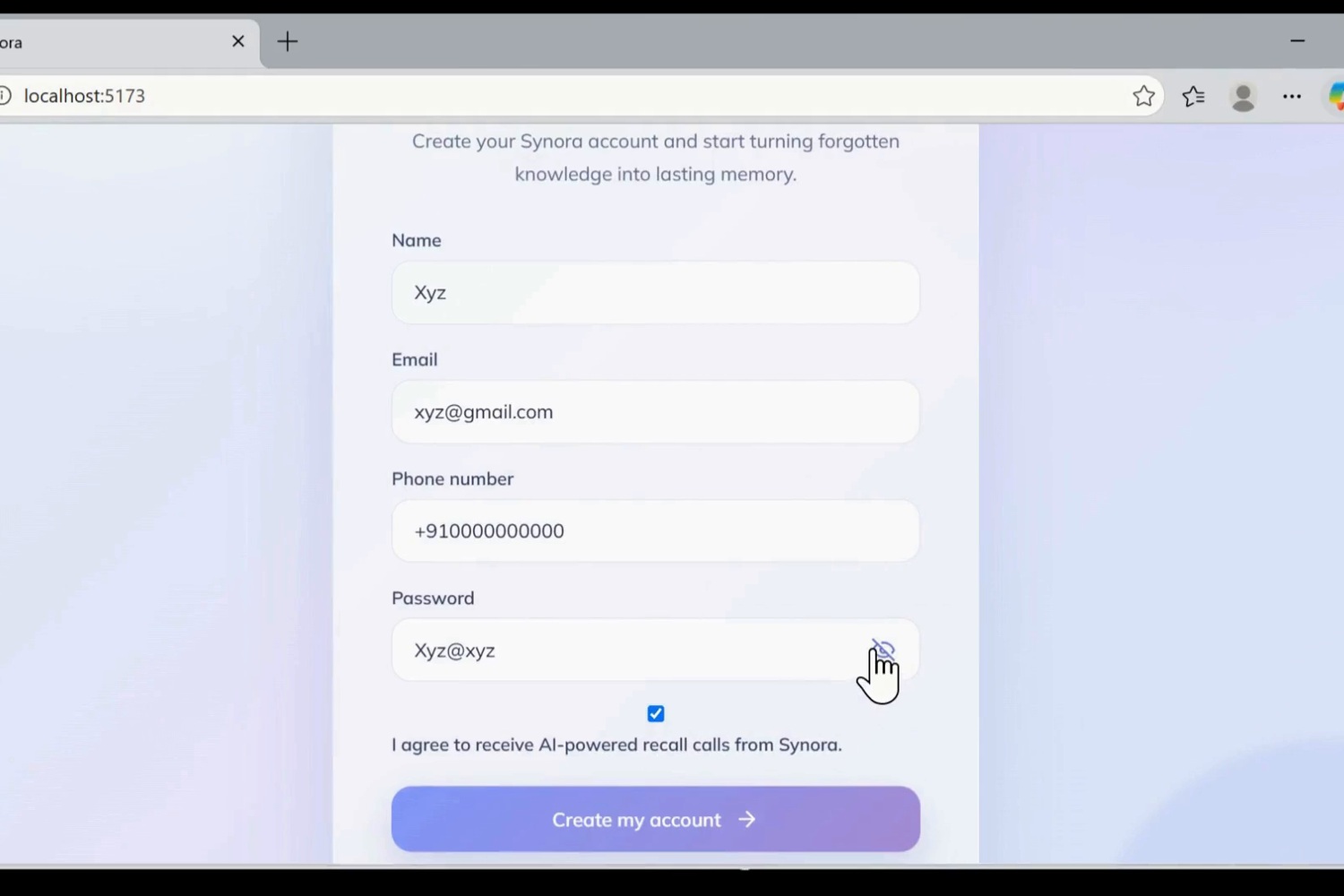
Singup
-
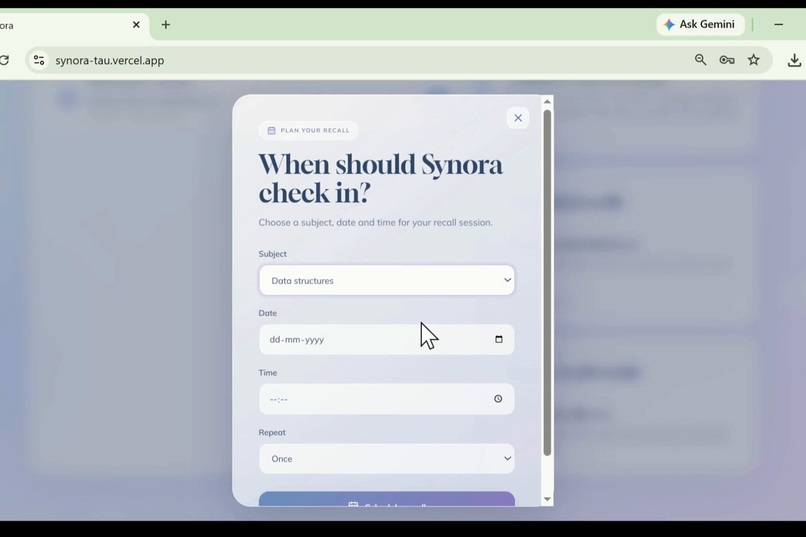
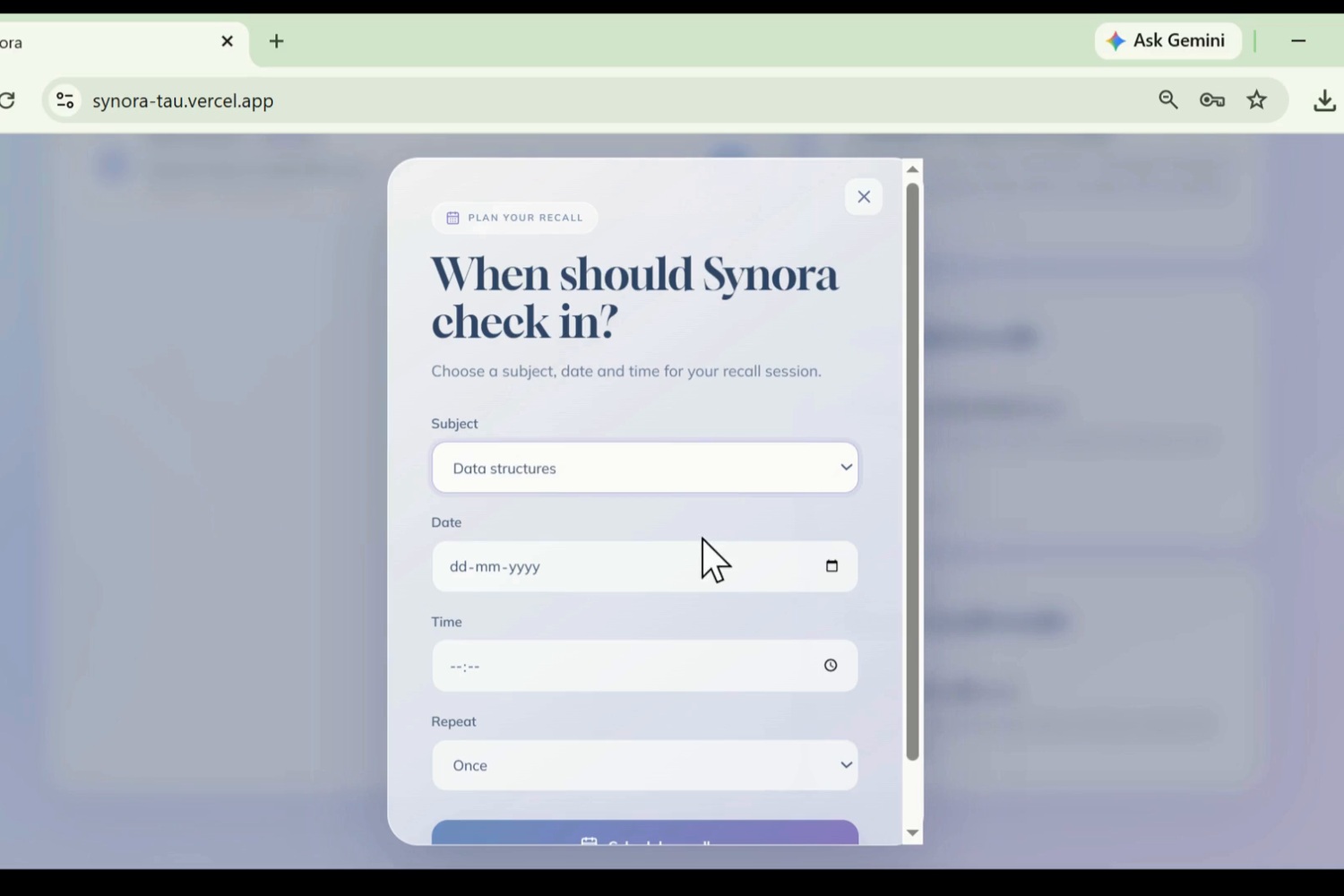
Scheduling a call
-
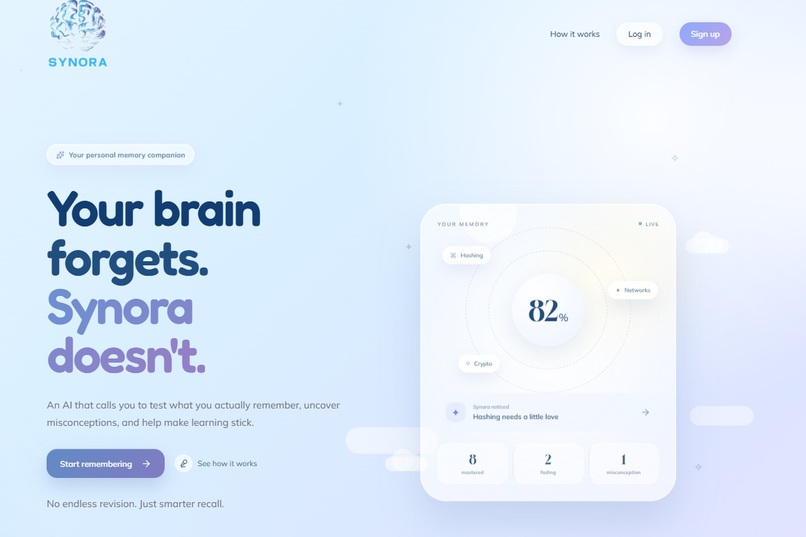
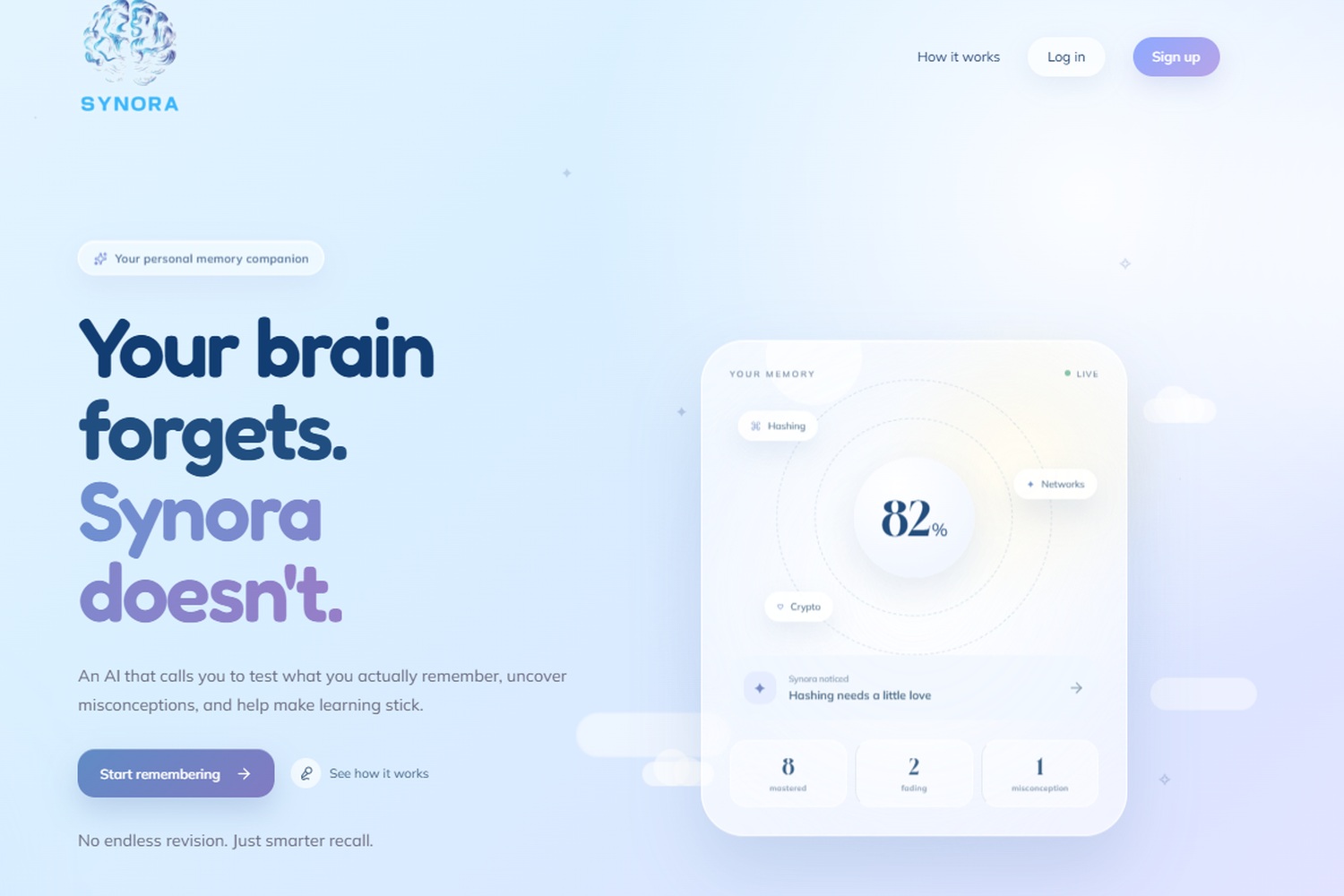
Landing page
-
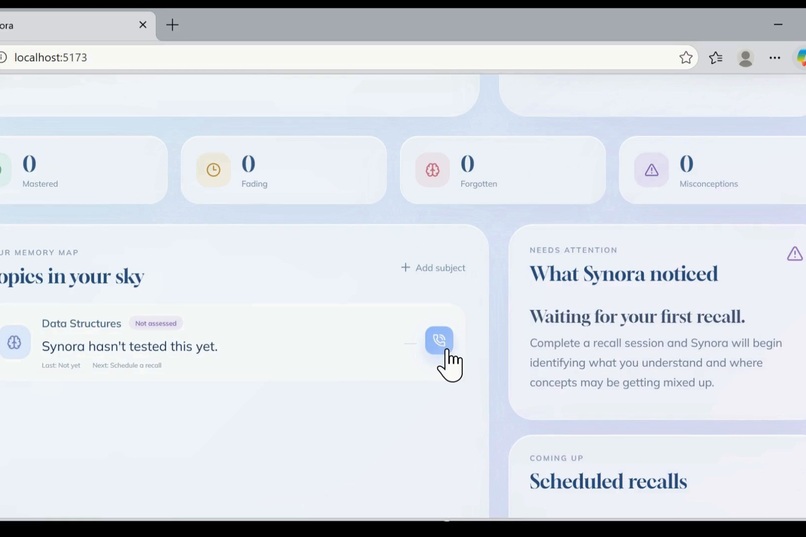
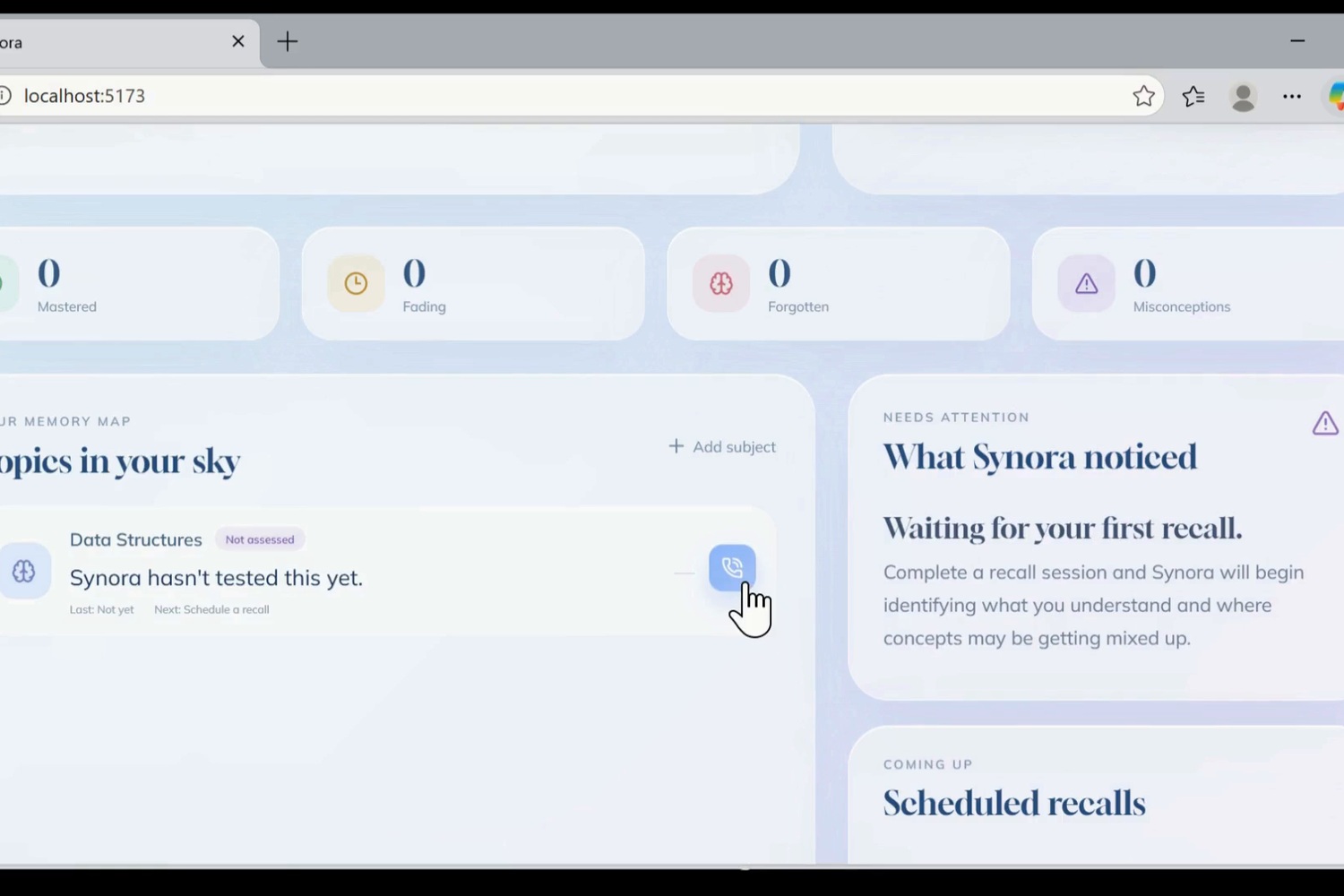
click for a call
-
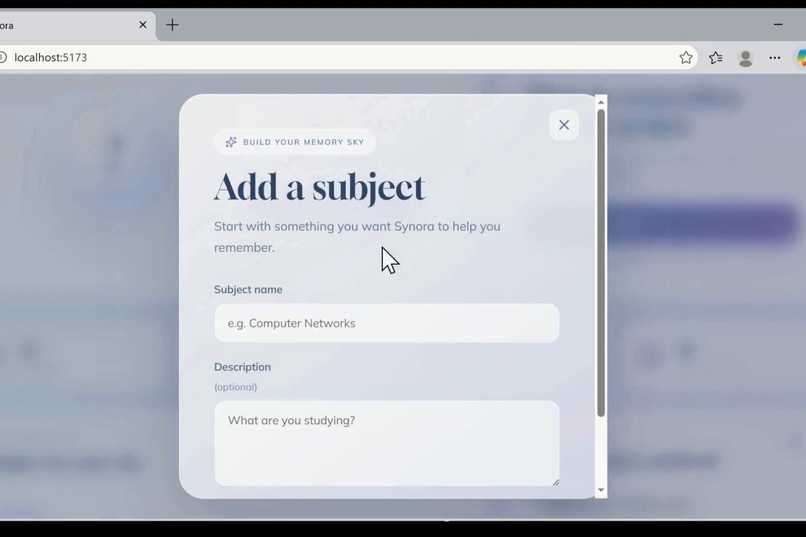
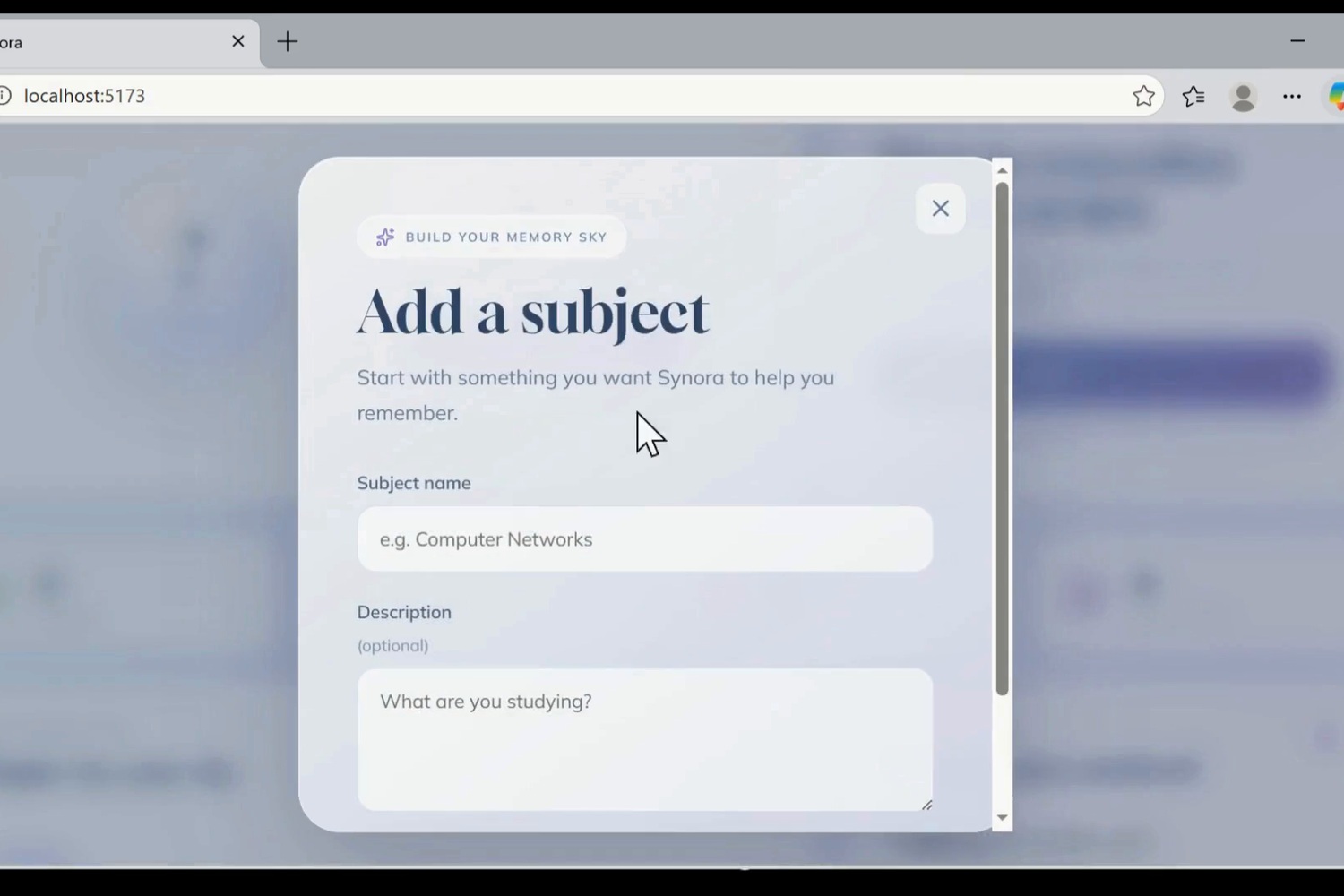
Add a subject
-
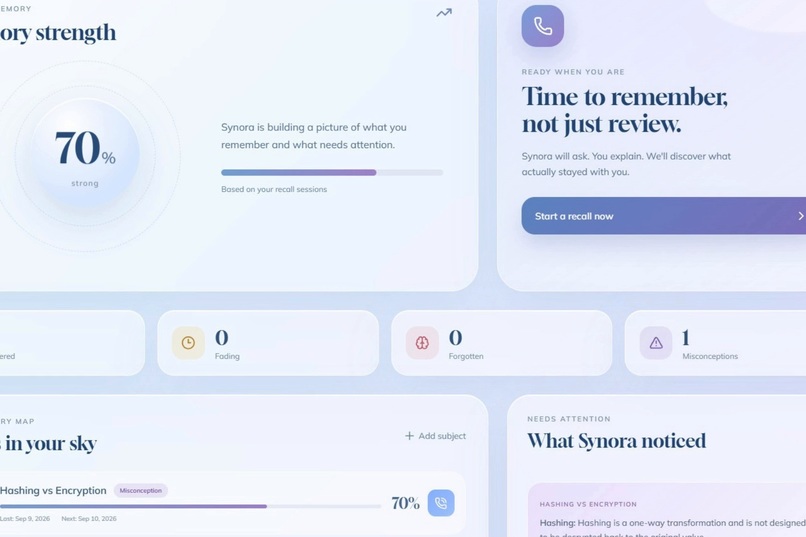
Dashboard
-
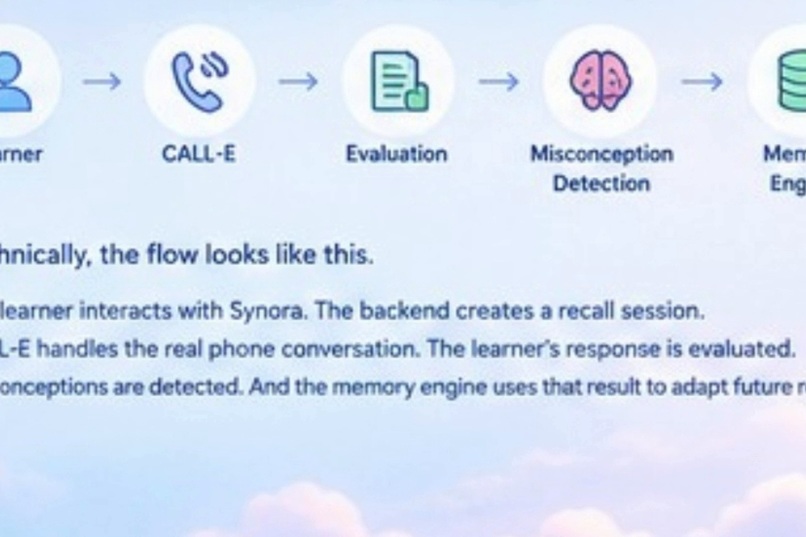
how it works
Inspiration
We noticed a simple problem: learning something doesn't always mean remembering or truly understanding it.
This happens to everyone — students, developers, professionals, creators, and anyone learning something new.
We can read an article, watch a video, or study a topic and feel like we understand it. But when someone asks us to explain it later, we sometimes realize that we've forgotten important parts or misunderstood the concept.
Most learning tools focus on giving people more information, notes, or traditional quizzes. We wanted to build something different.
Instead of asking only “Did you get the answer right?”, we wanted to ask:
“What do you actually understand, and where is your mental model wrong?”
That idea became Synora.
Your brain forgets. Synora doesn't.
What Synora Does
Synora is a learning companion built around active recall and conversational learning.
Users can learn anything they want — programming, mathematics, business, science, history, or even a personal skill. Instead of simply reading more content or answering multiple-choice questions, users are encouraged to explain what they remember in their own words.
The important part is what happens next.
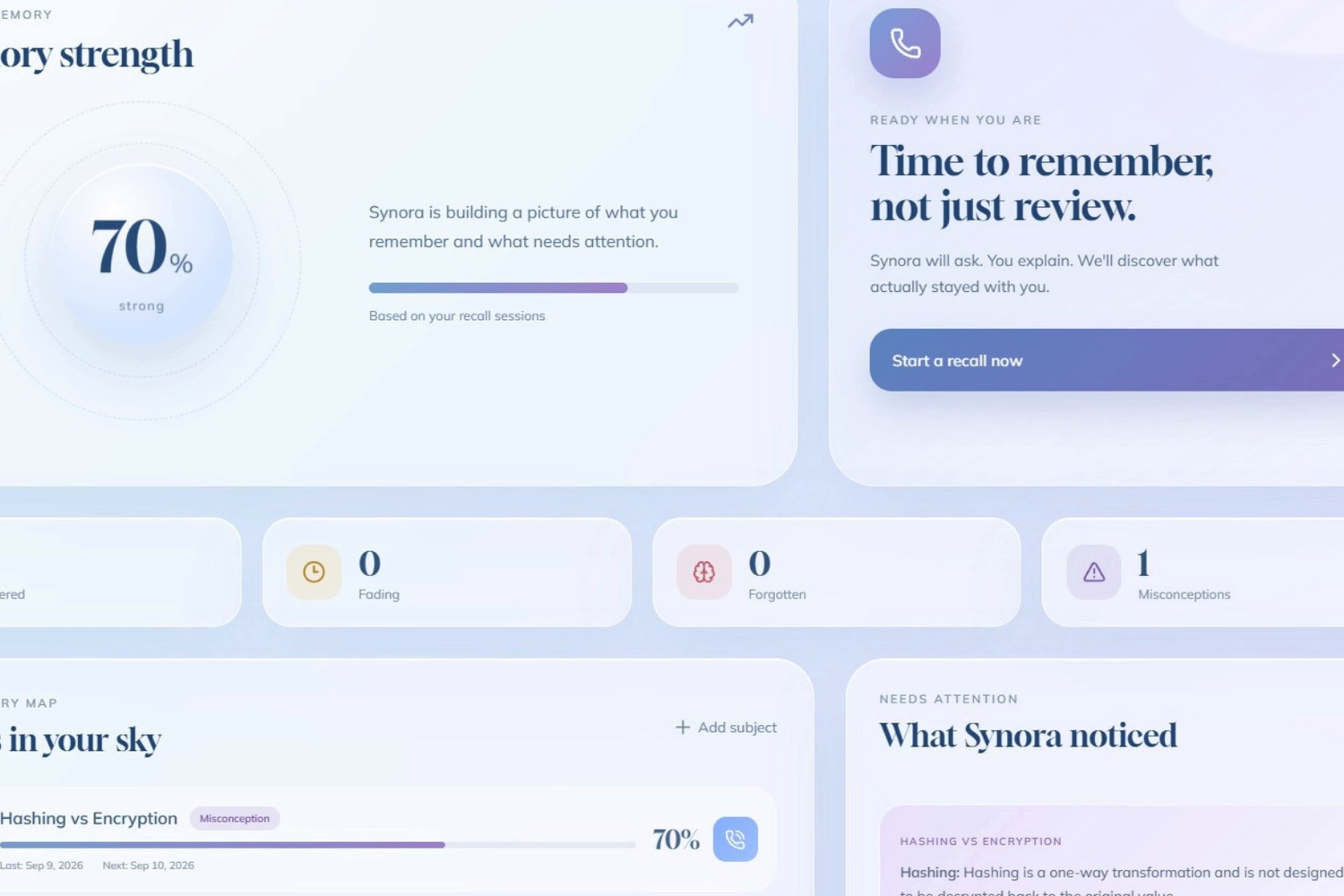
Synora is designed to look beyond whether an answer is simply right or wrong. It evaluates the learner's explanation to identify knowledge gaps, fading recall, forgotten concepts, and misconceptions.
For example, imagine someone says:
“Hashing encrypts data so it can be decrypted later.”
A traditional quiz might simply mark this as incorrect.
Synora can identify the deeper issue: the learner is confusing hashing with encryption.
That distinction matters because forgetting something and misunderstanding something are not the same problem.
We designed four memory states:
- 🟢 Mastered — strong understanding
- 🟡 Fading — the learner remembers it, but recall is weakening
- 🔴 Forgotten — the learner can no longer reliably recall it
- 🟣 Misconception — the learner has an incorrect mental model
These states form the foundation of Synora's personal memory map.
Our goal is to help learners see not just what they studied, but what they actually know, what they are forgetting, and what they may be misunderstanding.
How We Built It
We built Synora as a web application using a simple architecture that we could develop and iterate on quickly.
Frontend
We used React + TypeScript + Vite to build the user interface, including the landing page, signup, login, dashboard, and learning experience.
Backend
We built the backend with Node.js + Express.
It handles authentication, API requests, learning-session logic, and communication between the frontend and application services.
Database
We use SQLite to store user accounts and application data.
Passwords are securely hashed using bcrypt rather than being stored as plain text.
Learning & Evaluation
The core idea of Synora is to evaluate how a learner explains a concept, rather than relying only on right/wrong answers.
The evaluation system is designed to identify knowledge gaps and misconceptions and map them to Synora's four memory states.
We also designed the architecture so that the evaluation layer can evolve toward more advanced AI-powered analysis.
Conversational Recall
Synora is designed around conversational recall rather than traditional quiz-based learning.
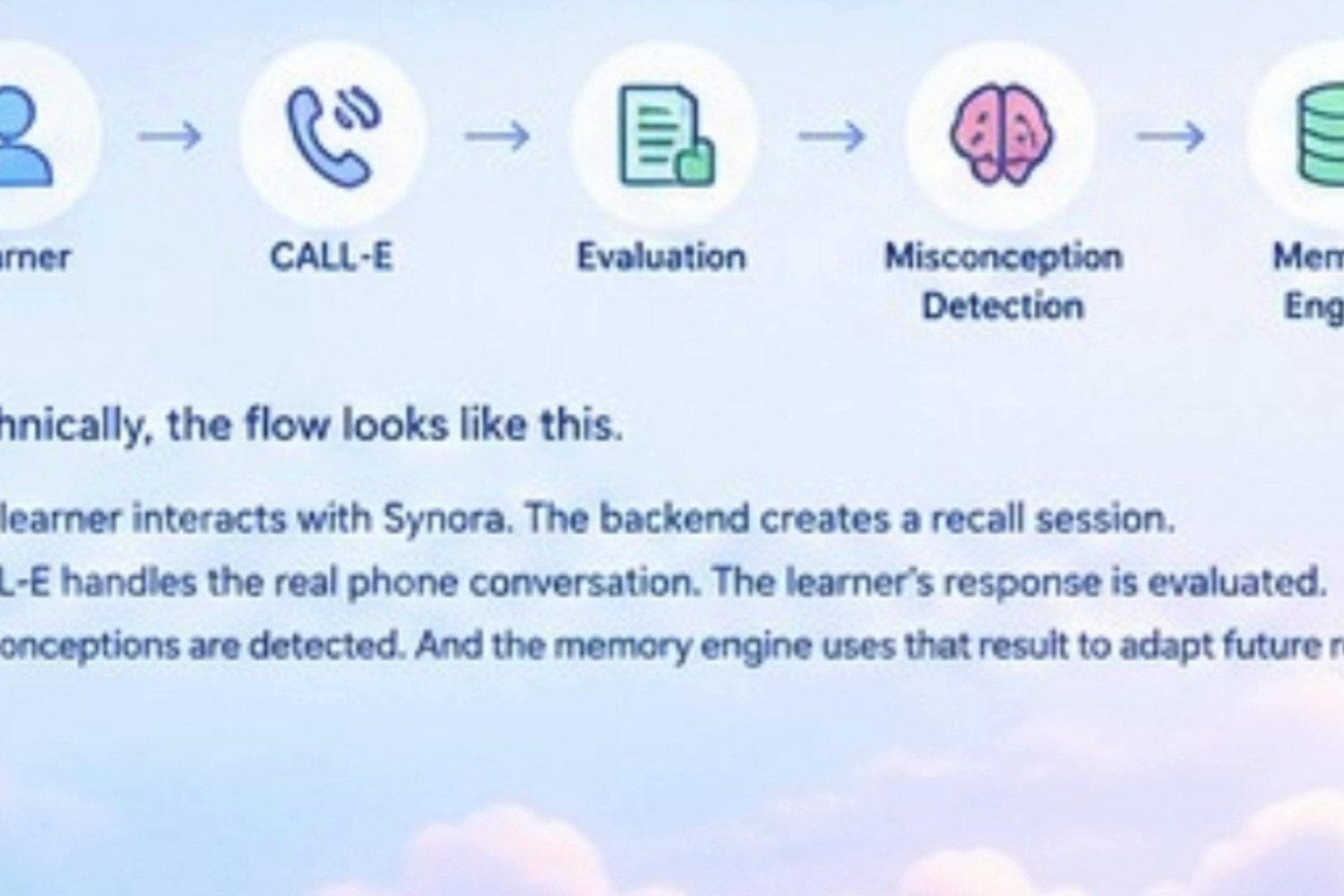
The project is also designed to support voice-based learning through the CALL-E phone-call agent ecosystem, allowing recall to become a natural conversation rather than another screen-based quiz.
Visual Design
We deliberately avoided the look of a traditional education dashboard.
Synora uses a sky and cloud-inspired interface with pastel blue and lavender gradients, glassmorphism, soft animations, rounded elements, and custom typography.
Our design idea was:
A little sky where your memories live.
We wanted the experience to feel calm, personal, and inviting rather than clinical or overwhelming.
Challenges We Ran Into
One of our biggest challenges was turning an idea into a working product while connecting multiple parts of the system.
We had to work through frontend development, backend APIs, authentication, database integration, application logic, and debugging.
Sometimes a small change in one part of the application caused an unexpected problem somewhere else.
One of the biggest lessons was learning to debug systematically instead of changing multiple things at once.
We learned to isolate the problem, test individual components, understand what was actually failing, and then make the smallest change necessary.
Building the project also forced us to think carefully about what should be implemented first. It was tempting to build every feature we imagined, but we learned that getting the core experience working was more important.
What We Learned
We learned that having an idea and building a product are two very different things.
We learned to start small, build the core experience first, and then gradually add more advanced features.
We also learned that debugging isn't a sign that the project is failing. Debugging is part of building software.
But our biggest learning was about the learning problem itself.
A wrong answer doesn't always mean the same thing.
Someone might have simply forgotten a fact.
Someone else might confidently hold an incorrect mental model.
Those two learners need different kinds of help.
That is why we became interested in misconception detection as an important part of Synora. Instead of simply telling learners that they are wrong, we want to help them understand why their understanding is incomplete or incorrect.
Most importantly, we learned that AI can be much more useful when it helps people understand their own gaps in knowledge, rather than simply giving them more information.
What's Next
We want to make Synora increasingly adaptive to each learner.
Our next steps include:
- More advanced misconception detection
- A visual, interactive memory map
- Adaptive review and spaced repetition
- Personalized learning paths
- Learning and memory analytics
- More natural conversational recall sessions
- Improved voice-based learning interactions
- Support for different subjects, skills, and learning goals
Our long-term vision is for Synora to become a learning companion that doesn't just remember what you studied, but understands what you actually know, what you're forgetting, and where your understanding is wrong.
Built With
- active
- ai
- artificial
- call-e
- css
- edtech
- express.js
- html
- intelligence
- javascript
- language
- learning
- machine
- natural
- node.js
- processing
- react
- recall
- sqlite
- typescript
- vite
- voice


Log in or sign up for Devpost to join the conversation.