-
-
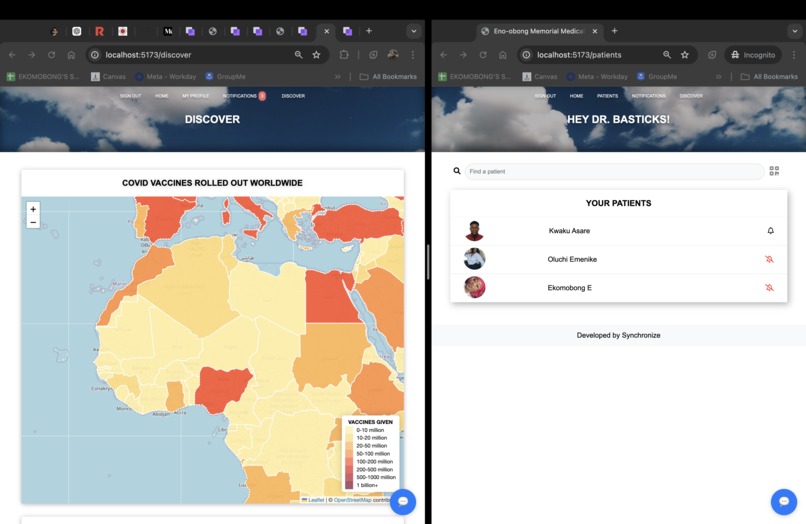
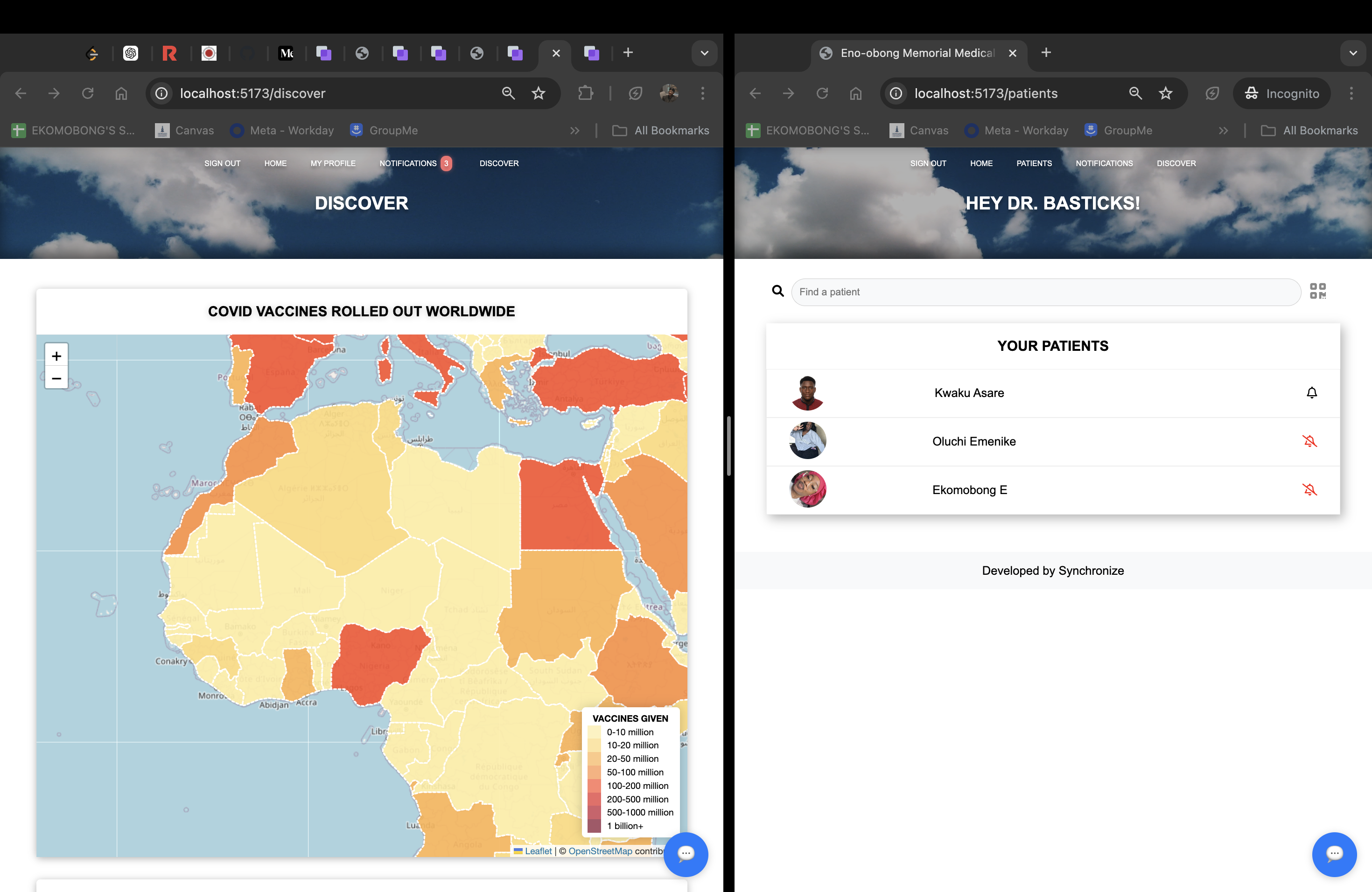
Discover Page, Patient List
-
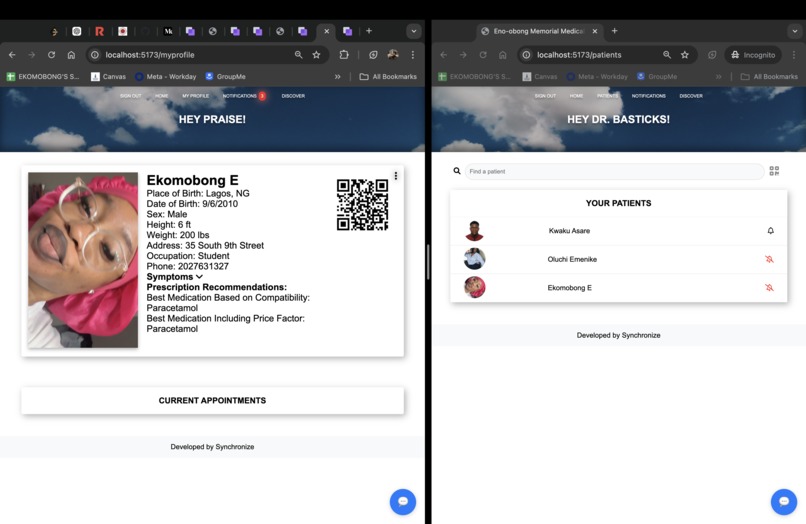
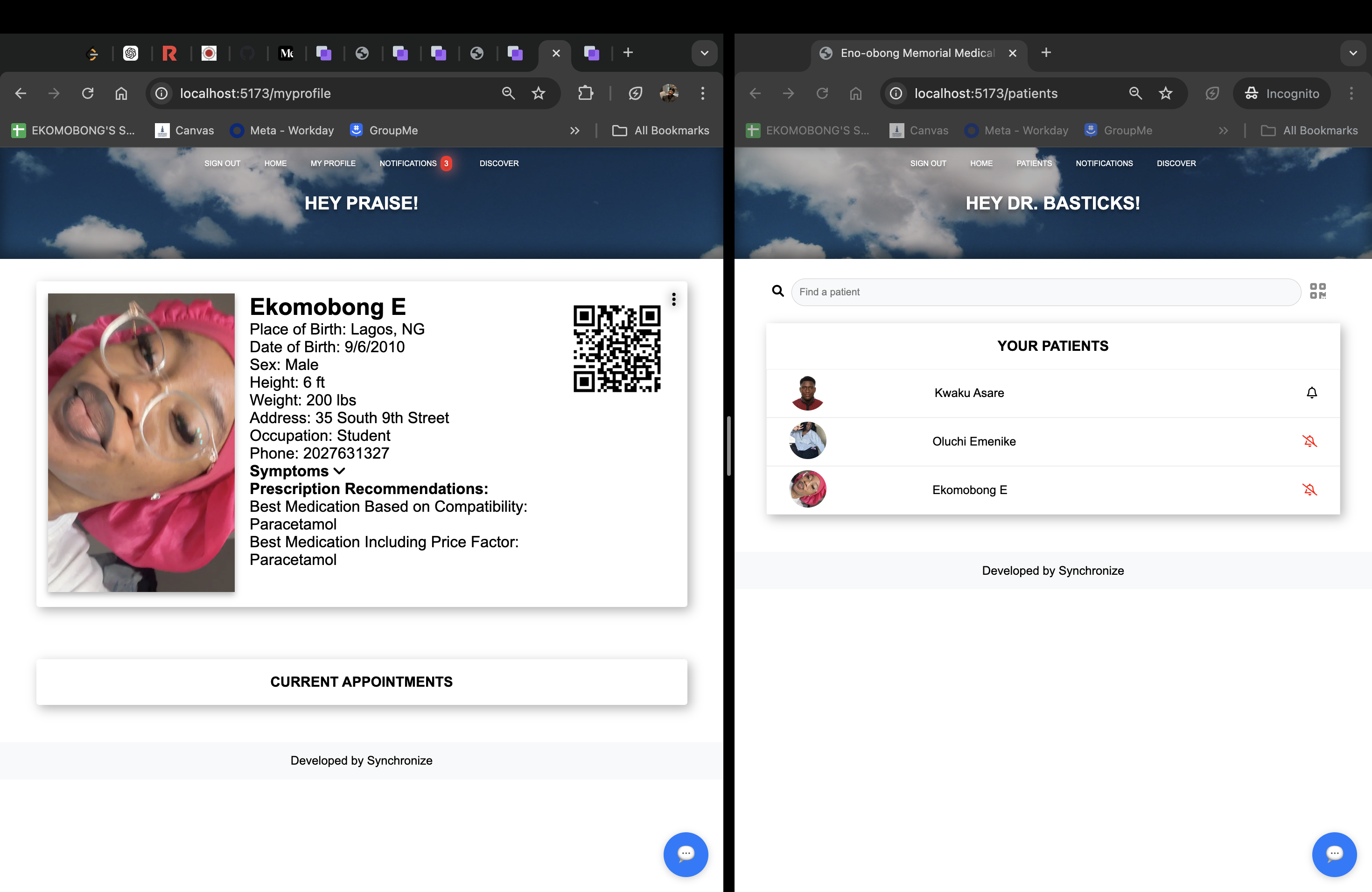
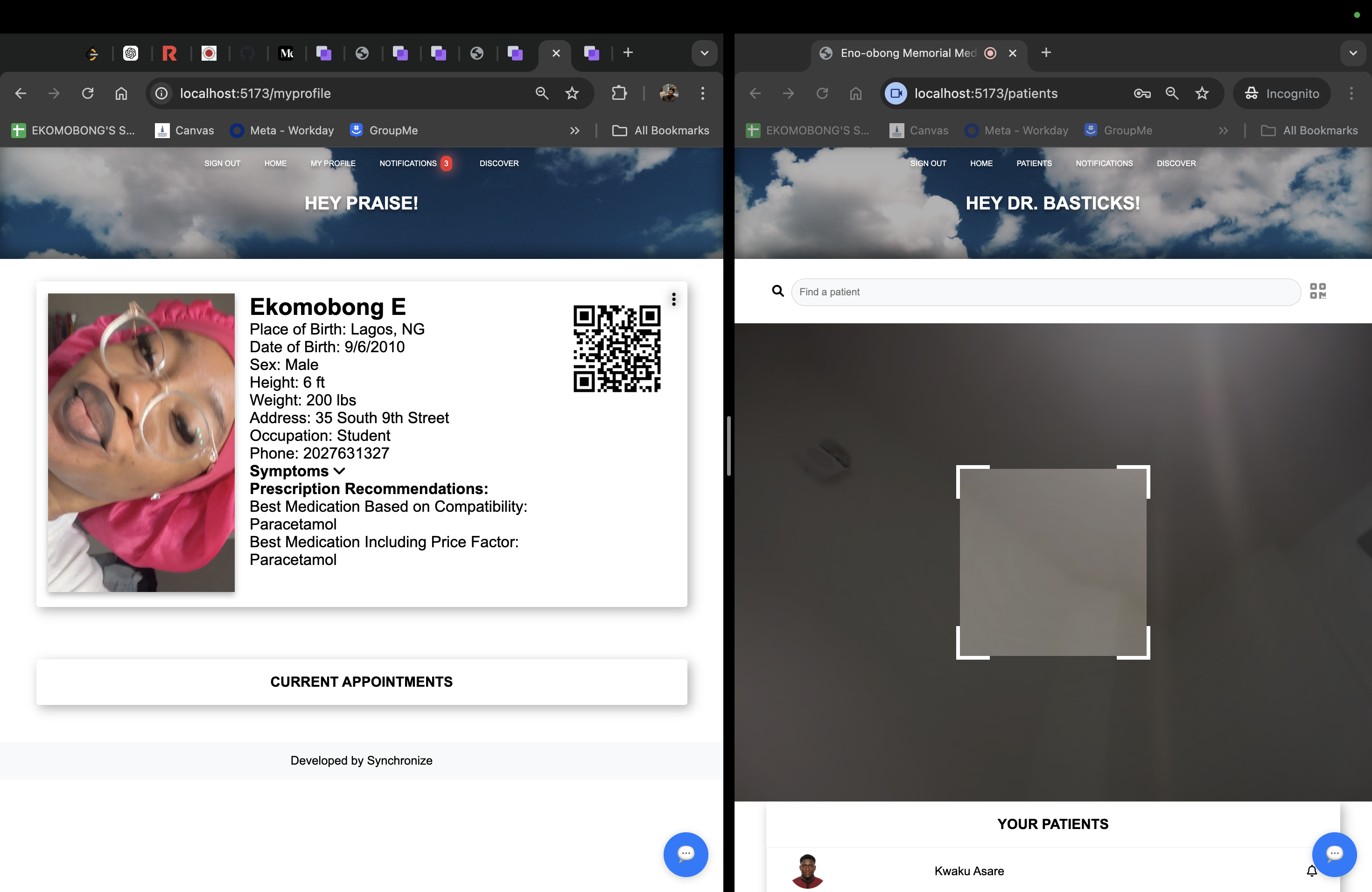
Patient Account - Left, Physician Account - Right
-
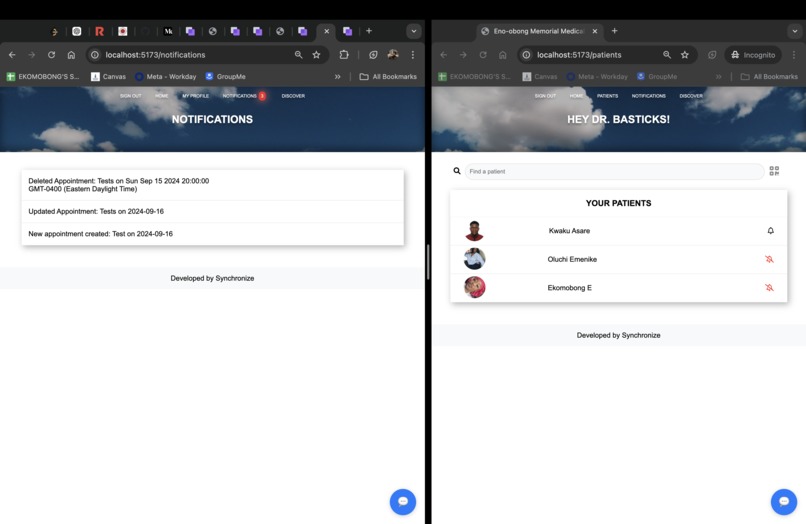
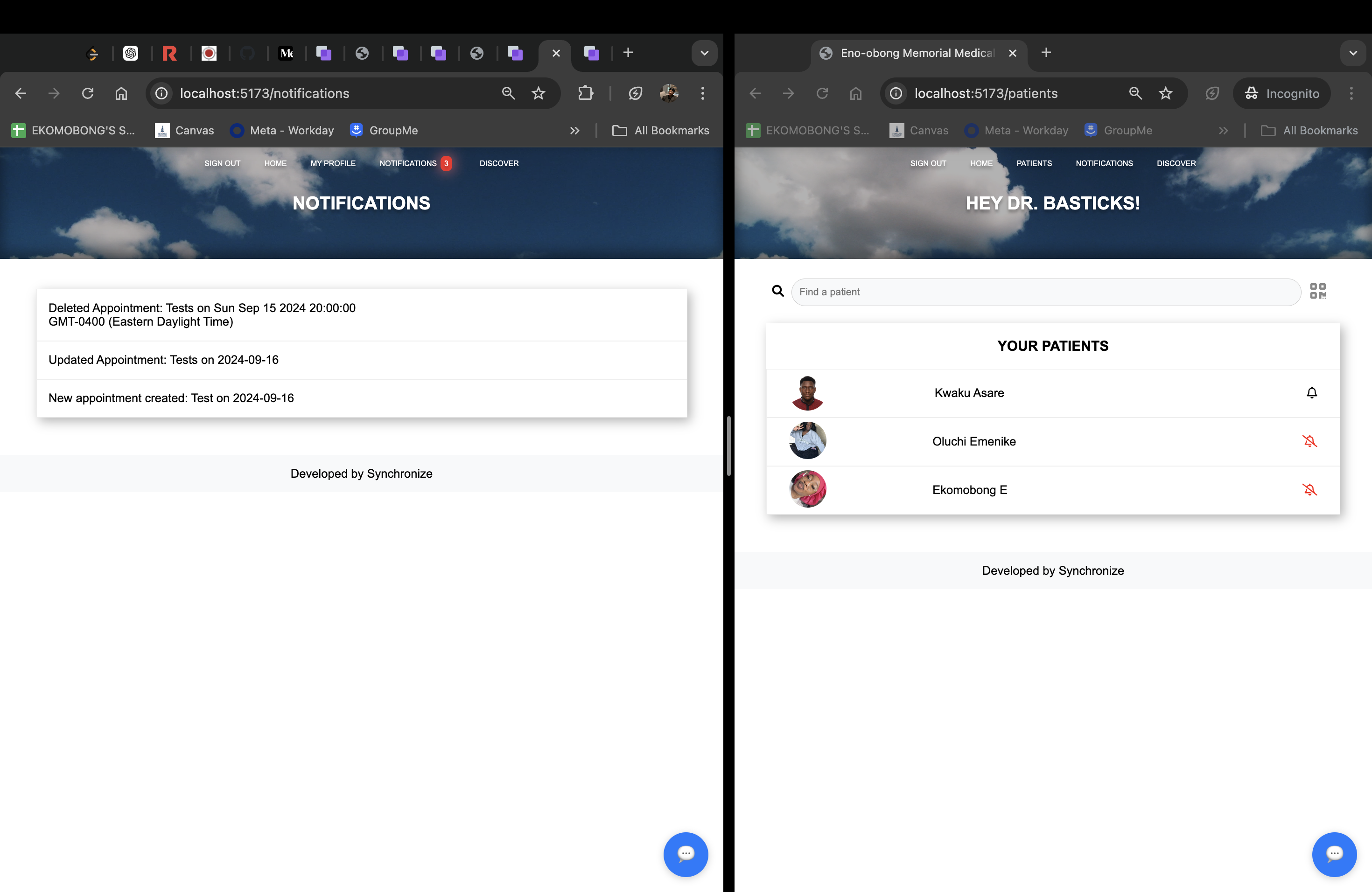
Notification page, Patient list
-
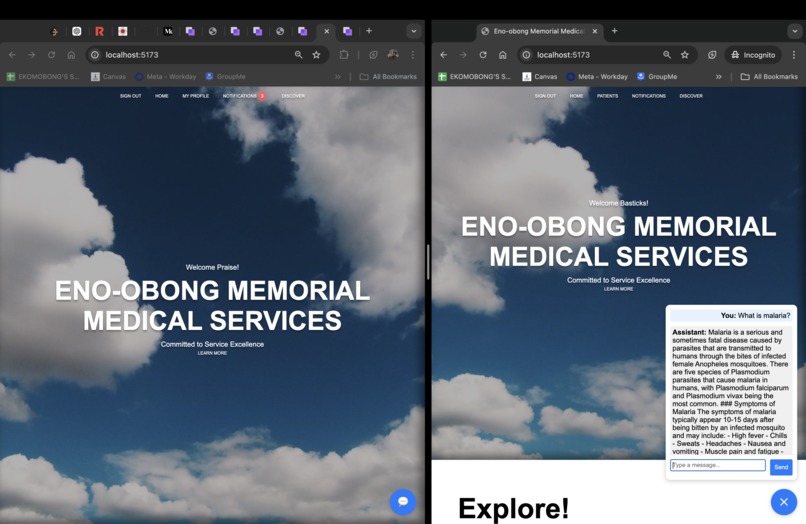
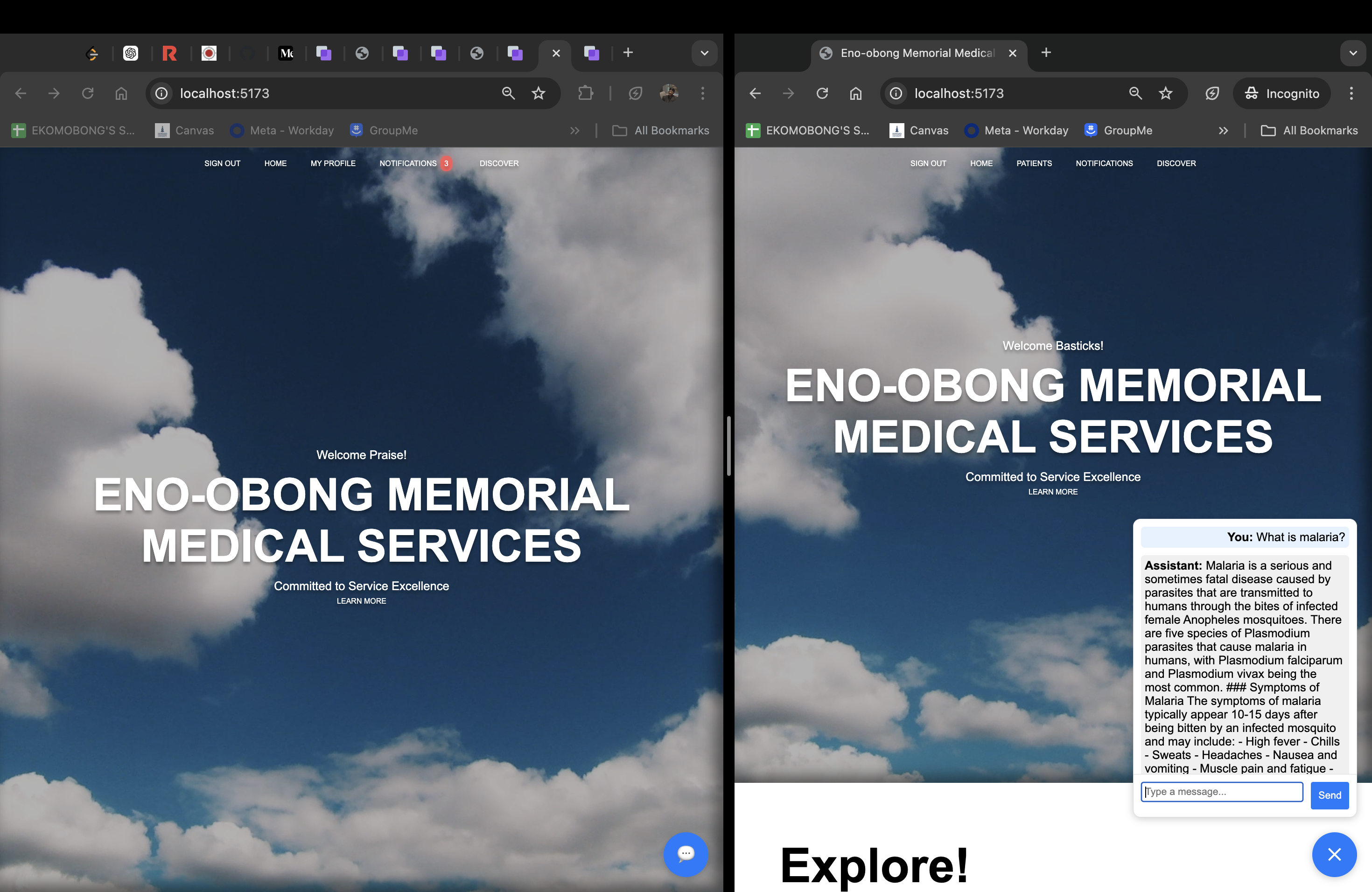
Landing Pages
-
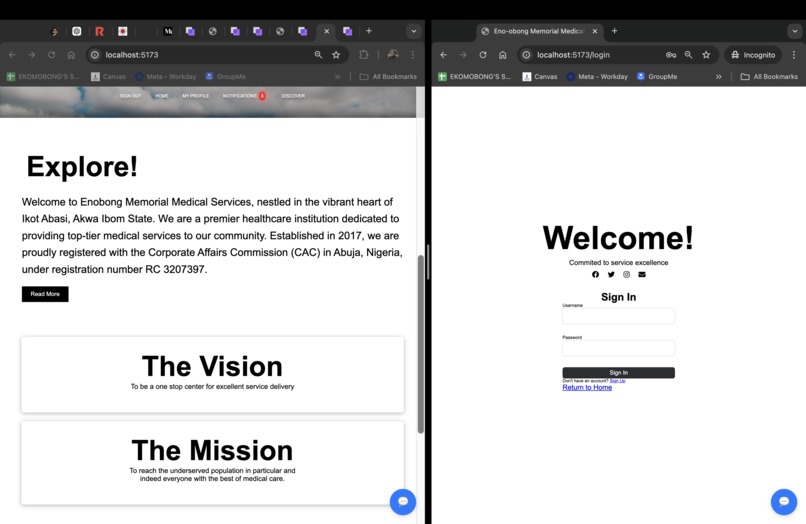
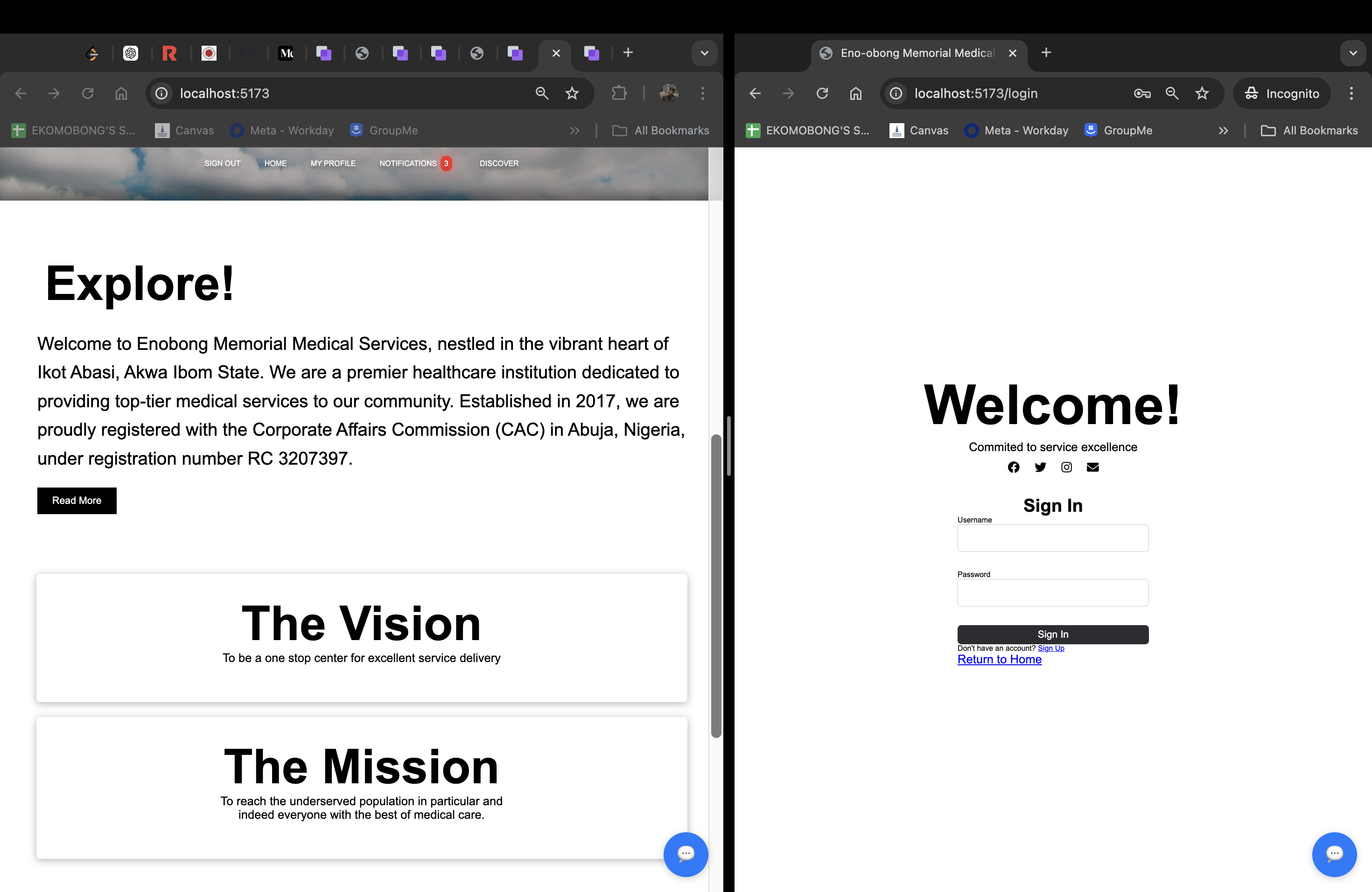
Landing Page, Sign In page
-
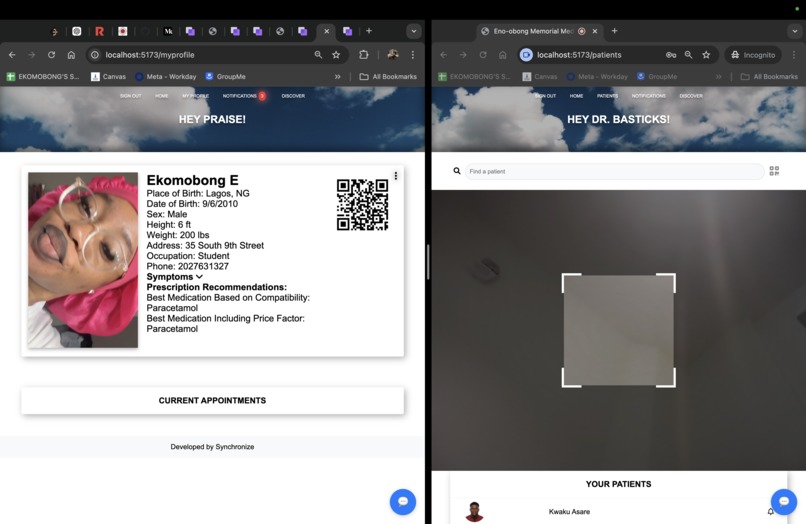
QR Code scanner and QR code to identify patients
Synchronize: A Healthcare Revolution for EnoObong Memorial Medical Services
Inspiration
This project was inspired by Ekomobong's father's clinic, EnoObong Memorial Medical Services in Nigeria. Observing the challenges faced by both patients and healthcare professionals, especially in rural areas, motivated us to develop a solution that would streamline operations, making healthcare more efficient and accessible. Synchronize is our way of contributing to the clinic’s mission of providing better healthcare to the local community.
What It Does
Synchronize is a comprehensive platform that enhances the patient-physician experience by managing:
Health Records: Secure and organized storage of patient medical histories. Appointments: Simplified scheduling for both patients and doctors. Notifications: Real-time alerts using websockets for appointment updates and important health reminders. COVID-19 Resources: A global map showcasing vaccine distribution using the OpenDisease API. Prescription Recommendations: A custom-built system that suggests medications based on patient symptoms, age, and sex. AI Chatbot: A health diagnosis tool powered by OpenAI to assist patients with general medical inquiries.
How We Built It
We developed the project using a combination of modern web technologies:
Frontend: React.js for an interactive and responsive user interface. Backend: Node.js with Express for managing server-side logic. Database: AWS with Prisma ORM for scalable storage and retrieval of patient and physician data. Websockets: Implemented for real-time notifications to ensure that both patients and physicians receive updates immediately. COVID-19 Data: OpenDisease API integration for displaying global vaccine distribution on an interactive map. Prescription Algorithm: Built from scratch, using a weighted scoring system to provide medication recommendations based on symptoms, accessibility, and patient age all in Javascript
Challenges We Ran Into
Notifications Using Websockets: Implementing live notifications for real-time updates was difficult, especially ensuring messages reached users when they were offline. We designed a fallback mechanism for offline users while refining the notification logic for age groups and appointment urgency. OpenAPI Key Access: Strange as it seems, acquiring the OpenDisease API key posed unexpected hurdles. After multiple attempts and debugging, we finally integrated it successfully for our COVID-19 section. Prescription Algorithm Optimization: Balancing the complexity of the prescription system while maintaining efficiency was challenging. We implemented a 3-level caching system to reduce unnecessary recalculations and improved overall performance.
Accomplishments That We're Proud Of
AWS Database: Successfully migrating the database to AWS, ensuring better scalability and accessibility for the app. Real-Time Notifications: Getting the websockets system to function seamlessly for live notifications was a major milestone. Deployment of the Website: Synchronize is fully deployed and operational, accessible from anywhere. COVID-19 Map: Visualizing global vaccine rollout on an interactive map added a critical public health component. AI Chatbot: Integrating OpenAI’s chatbot for health diagnosis provided an innovative way for patients to get initial medical insights.
What We Learned
Building Synchronize taught us:
Resilience in Problem-Solving: Especially when tackling live notifications and dealing with API integration challenges. The Importance of Scalability: Deploying the database on AWS was key to ensuring the app could handle an increasing number of users. Data Security: Protecting sensitive medical information through secure authentication and encryption was crucial for patient trust and compliance.
What's Next for Synchronize?
Refining the Prescription Algorithm: Replacing the current custom algorithm with more medically proven resources to ensure even more accurate recommendations. Improving User Authentication: Strengthening the security of patient and physician login systems. Enhanced UI: Adding features like dark mode to improve the user interface and overall user experience. Integrating More Medical Resources & Expanding physician use: Tapping into more validated databases to make the application even more robust for a greater scale of medical professionals.
Built With
- amazon-web-services
- css3
- express.js
- html5
- javascript
- node.js
- open-ai-api
- open-disease-api
- openstreetmap
- prisma
- python
- react
- websockets

Log in or sign up for Devpost to join the conversation.