💡 Inspiration
Most drone swarms today rely on a central command center. If that center fails, the entire mission fails. I wanted to build a swarm that doesn't need a "brain" — a system where every drone is its own decision-maker.
Inspired by ant colonies, bird flocks, and military drone coordination, I built a decentralized swarm intelligence system from scratch — starting with zero Python knowledge.
🧠 What It Does
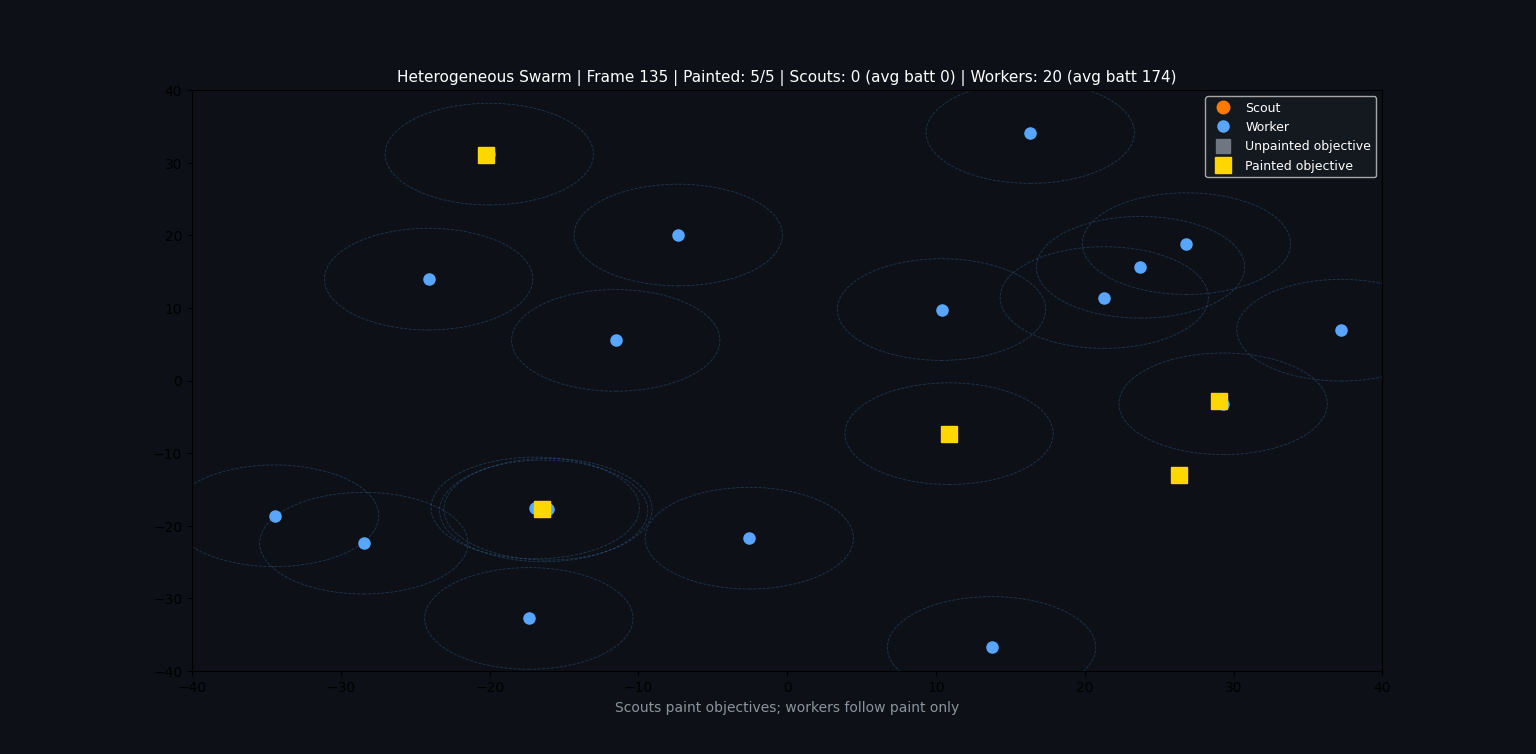
30+ autonomous drones coordinate without any central controller.
Each drone:
- Senses nearby neighbors (local information only)
- Allocates tasks using CBBA (Consensus-Based Bundle Algorithm)
- Communicates using TDMA (Time-Division Multiple Access) — realistic radio discipline
- Self-heals when drones fail (automatic task reallocation)
The system simulates:
- ✅ CBBA task allocation with consensus
- ✅ TDMA radio communication (drones take turns speaking)
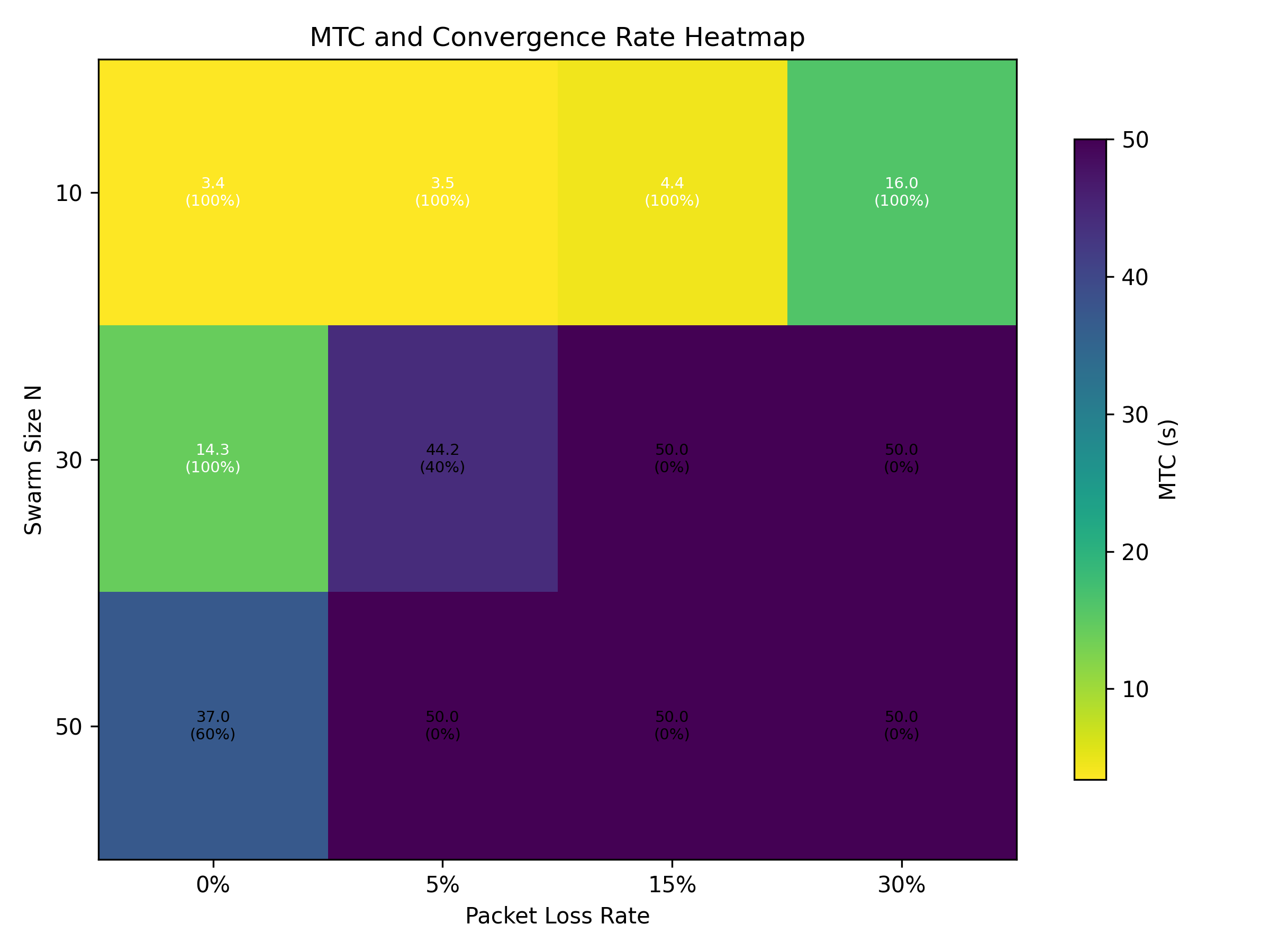
- ✅ Packet loss simulation (0–100%)
- ✅ Ghost drone fault tolerance (reallocates tasks in under 50 frames)
- ✅ A/B testing UI to compare "perfect comms" vs. "realistic radio"
🔧 How I Built It
Stack:
- Python 3.11+ (core simulation)
- Streamlit (interactive dashboard)
- Matplotlib + Plotly (visualization)
- Docker (containerization)
- Pytest (17-unit tests, all passing)
Key Algorithms Implemented:
- CBBA — Consensus-Based Bundle Algorithm for task allocation
- TDMA — Time-Division Multiple Access for realistic communication
- D-TDMA — Dynamic TDMA (drones near threats get 2× airtime)
- Reynolds Rules — Cohesion, Separation, Alignment
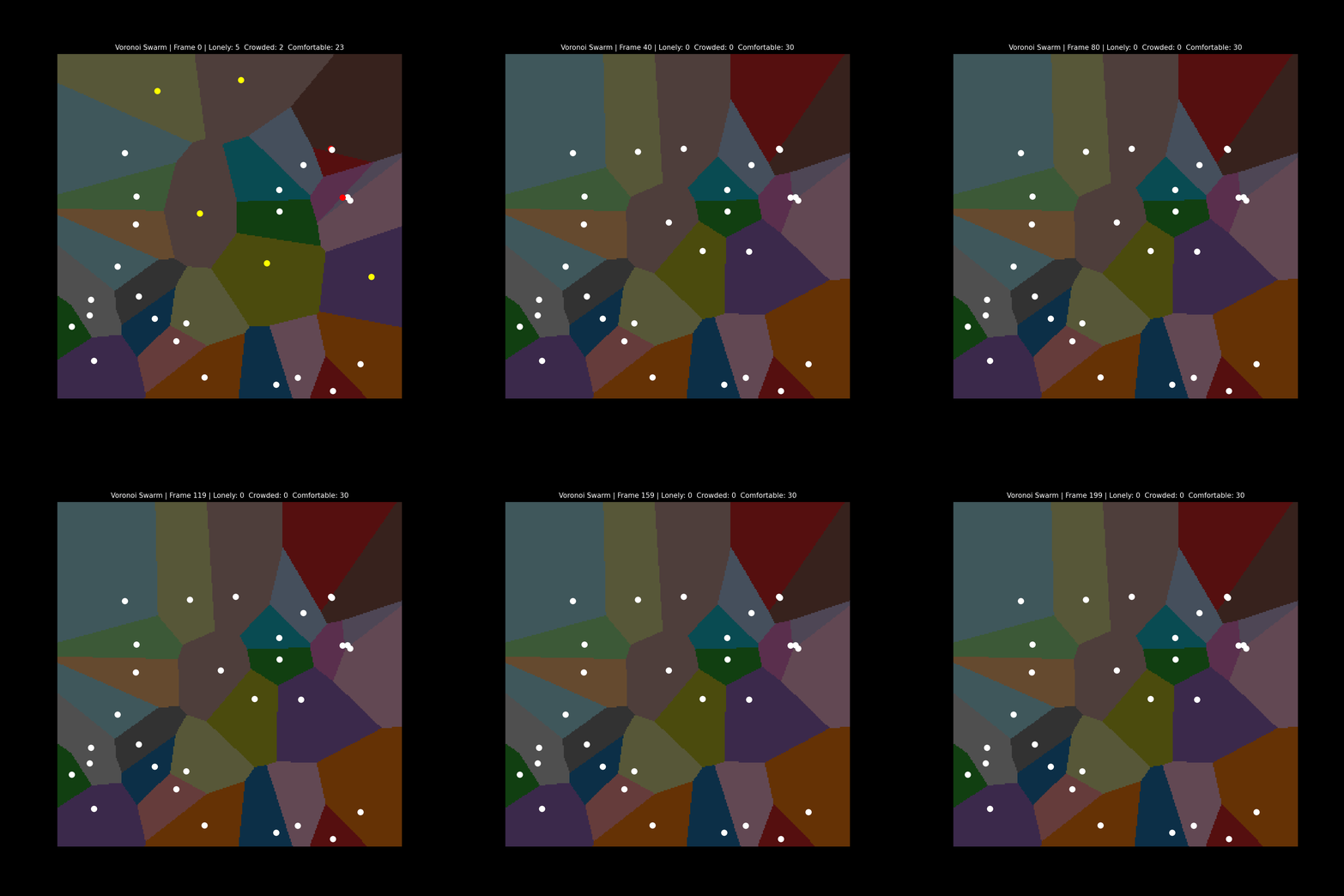
- Voronoi Partitioning — Zero-overlap coverage
Total Code: 3,640 lines, 17 tests, 100% passing.
🚧 Challenges Faced
1. Simulating Realistic Communication Most swarm papers assume "magic telepathy" — drones know everything instantly. I had to build a TDMA scheduler that forces drones to take turns speaking, just like real radio.
2. Fault Tolerance Making the swarm self-heal was hard. When a drone goes silent, other drones must detect it, purge its bids, and reallocate its tasks — all without a central controller.
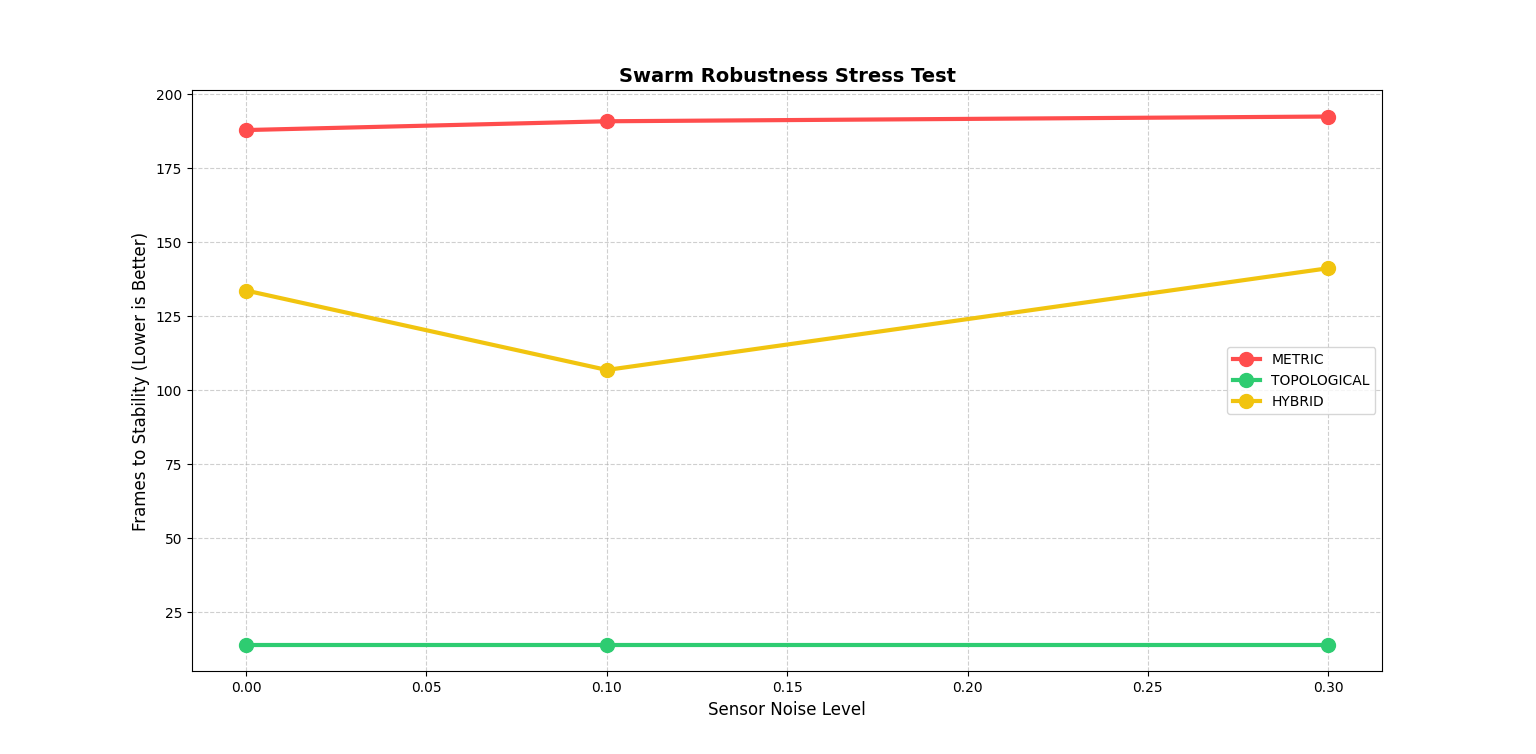
3. A/B Testing I built a toggle in the Streamlit UI so users can compare "perfect communication" (20–30 frames to consensus) vs. "realistic radio" (100–200+ frames). The performance drop is stark — but it's physically real.
4. Learning from Zero I started this project with no Python knowledge. Every line of code was a learning experience.
🏆 Accomplishments I'm Proud Of
- ✅ 3,640 lines of production-grade Python
- ✅ 17/17 unit tests passing
- ✅ CBBA + TDMA + D-TDMA + Ghost Drone Fault Tolerance
- ✅ Live Streamlit dashboard with A/B testing
- ✅ Dockerized deployment
- ✅ IEEE ICRA 2027 paper draft in progress
📚 What I Learned
- Multi-agent systems are hard — but decentralized systems are resilient
- Communication is the bottleneck, not compute
- Realistic simulation > magical assumptions
- Testing is non-negotiable (17 tests saved me countless bugs)
- Building in public accelerates learning
🚀 What's Next
- ROS2 Integration — Port the algorithm to ROS2 for real drone deployment
- HPM Resilience — Model High-Power Microwave attacks and swarm survival
- Hardware Validation — Deploy on physical drones (Crazyflie/TurtleBot)
- IEEE ICRA Submission — Full paper with formal proofs and benchmarks

Log in or sign up for Devpost to join the conversation.