-
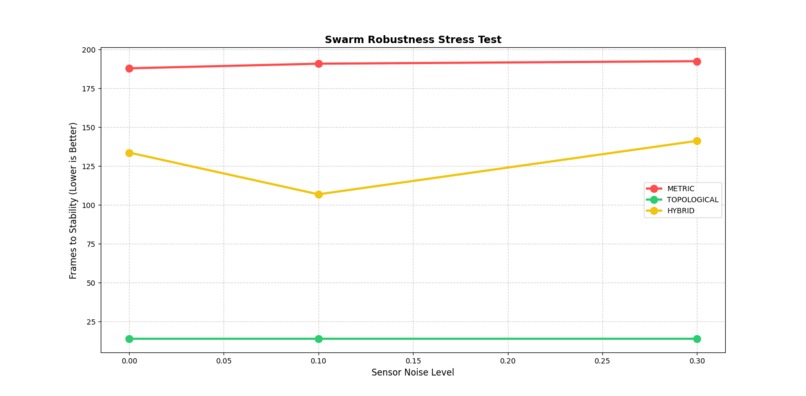
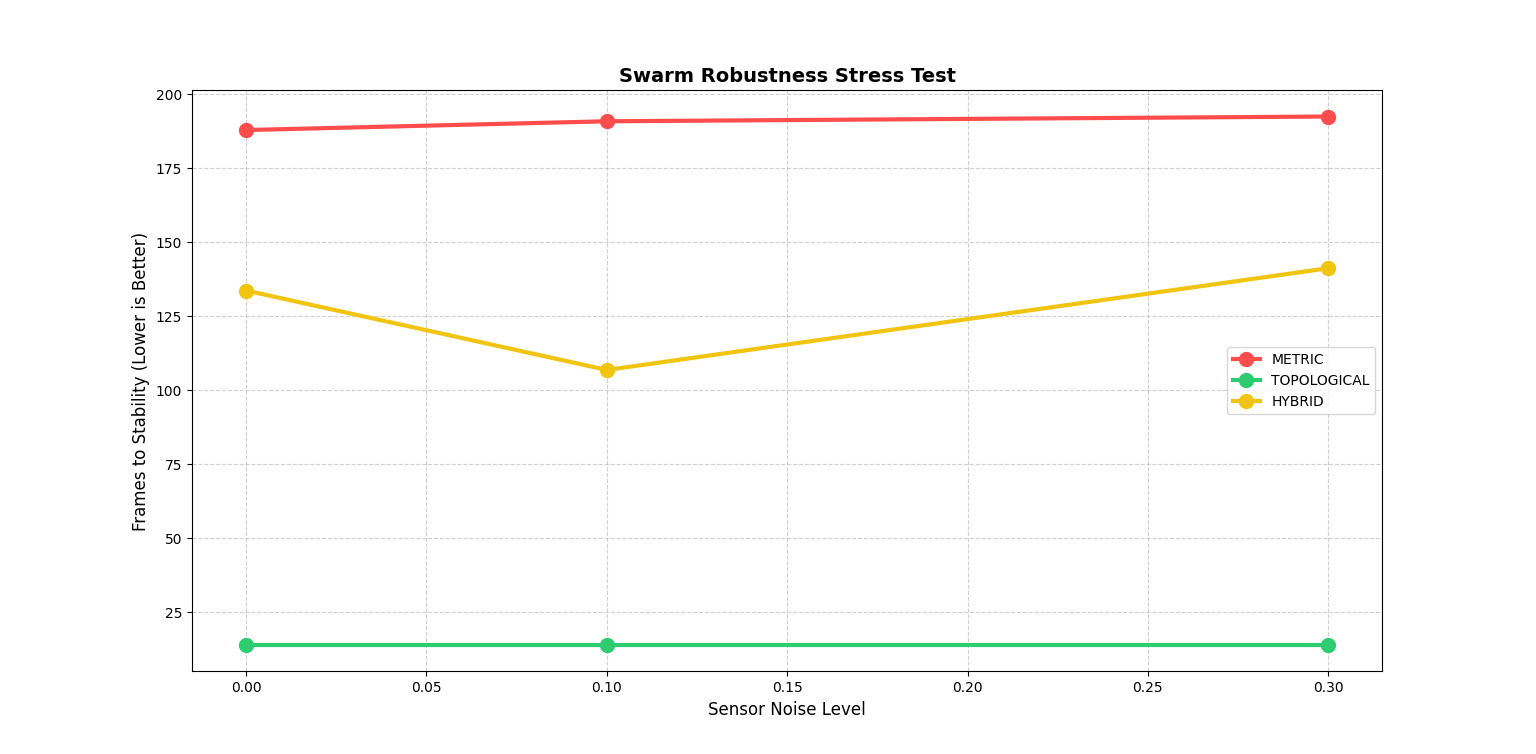
Robustness Stress Test
-
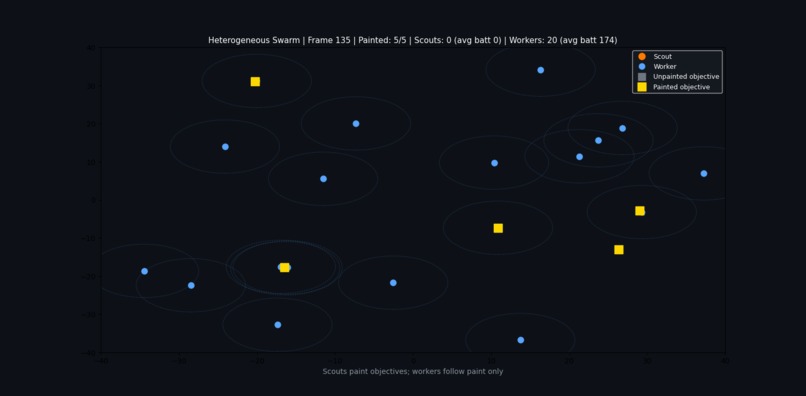
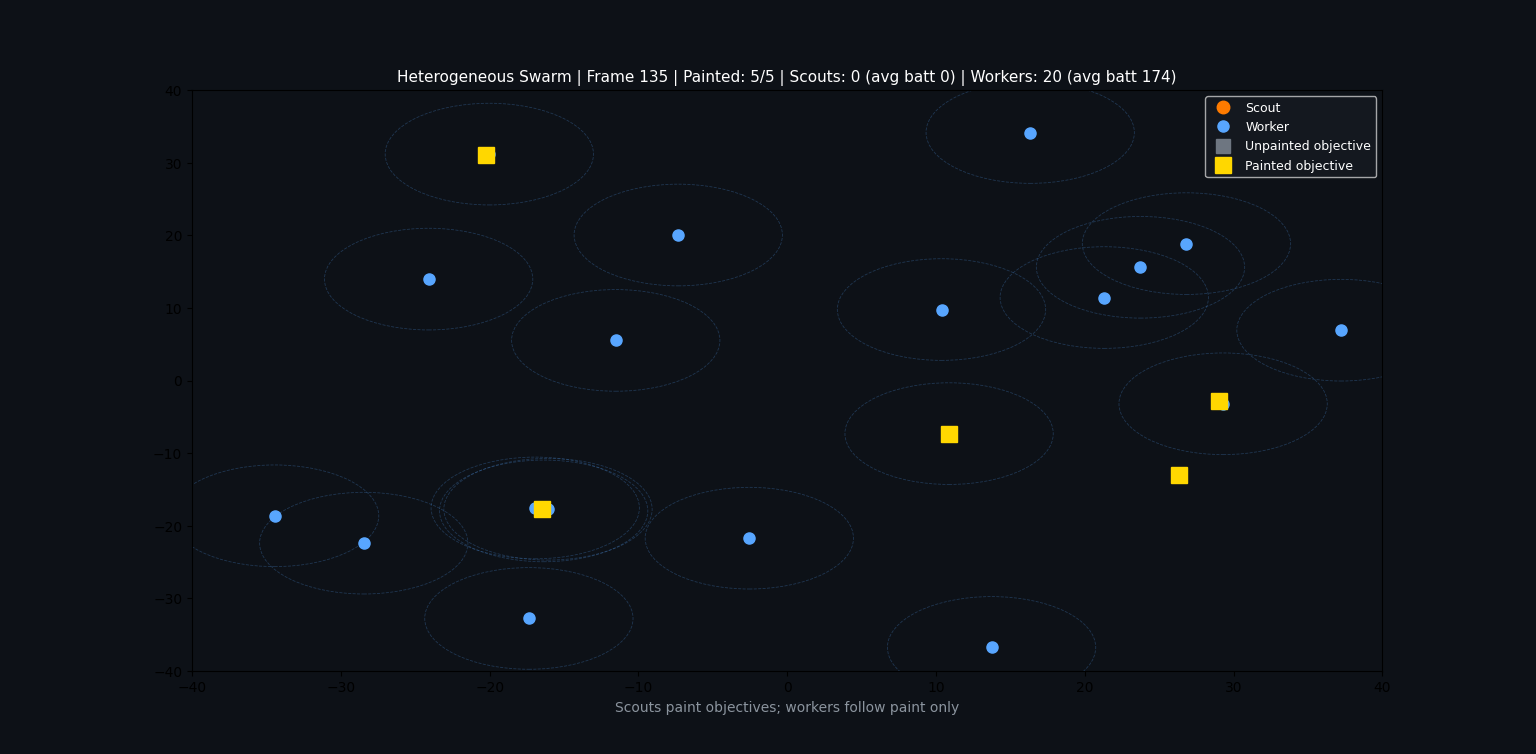
Inspiration
Traditional multi-robot systems rely on fragile, centralized networks that completely fail if the main server goes offline. I wanted to build a truly autonomous, decentralized swarm robotics framework that can coordinate tasks, partition space, and maintain communication structure completely peer-to-peer without any single point of failure.
What it does
This is an advanced decentralized Swarm Robotics Simulation and Fleet Management system. It enables a heterogeneous swarm of autonomous agents to handle complex coordination tasks. The system utilizes decentralized consensus algorithms for task assignment, geometric space partitioning for optimal area coverage, and dynamic self-healing mechanisms to guarantee network operation even when multiple robots are destroyed.
How we built it
- Decentralized Task Allocation: Implemented the Consensus-Based Bundle Algorithm (CBBA) in Python to allow robots to bid on and agree upon tasks locally without a central authority.
- Area Coverage: Integrated Voronoi Tessellation to geometrically partition space, ensuring agents maximize sensor coverage and avoid collision overlaps.
- Swarm Behavior: Utilized Social Anchor Models (SAM) to manage heterogeneous, decentralized agent behaviors across the fleet.
- Topological Resilience: Developed algorithms to analyze network graph connectivity, ensuring the remaining swarm dynamically restructures itself if specific nodes drop out.
- Data Logging: Built a telemetry pipeline that exports high-fidelity simulation coordinates and state machine steps directly into structured CSV formats for analysis.
Challenges we faced
The biggest challenge was resolving synchronization conflicts in CBBA when multiple independent agents tried to claim the exact same task simultaneously. Overcoming this required strict algorithmic constraints to ensure rapid, conflict-free local consensus without sacrificing processing speed.
Accomplishments that we're proud of
Successfully simulating true decentralized coordination. The swarm successfully dynamically self-heals in real-time when random agents drop out, proving the system is topologically resilient.
What we learned
I gained deep practical insights into multi-agent task allocation dynamics, graph theory for network resilience, and how to optimize computational overhead for distributed geometric algorithms like Voronoi partitioning.
What's next for swarm-robotics
The next step is to port this core Python algorithmic logic onto physical, microcontroller-driven hardware platforms (like ESP32 or Raspberry Pi Pico) to test the decentralized swarm behavior in real-world environments.

Log in or sign up for Devpost to join the conversation.