Inspiration
I was inspired to build this project after seeing the enormous amount of food wasted daily while many people struggle with hunger. Surplus food from restaurants, stores, and homes often goes unused. I wanted to create a solution that could connect donors with recipients efficiently and reduce food waste in a practical way.
What it does
The Sustainable Food System Mapper is a web application that:
- Connects food donors (e.g., bakeries, supermarkets) with recipients (e.g., shelters, food banks)
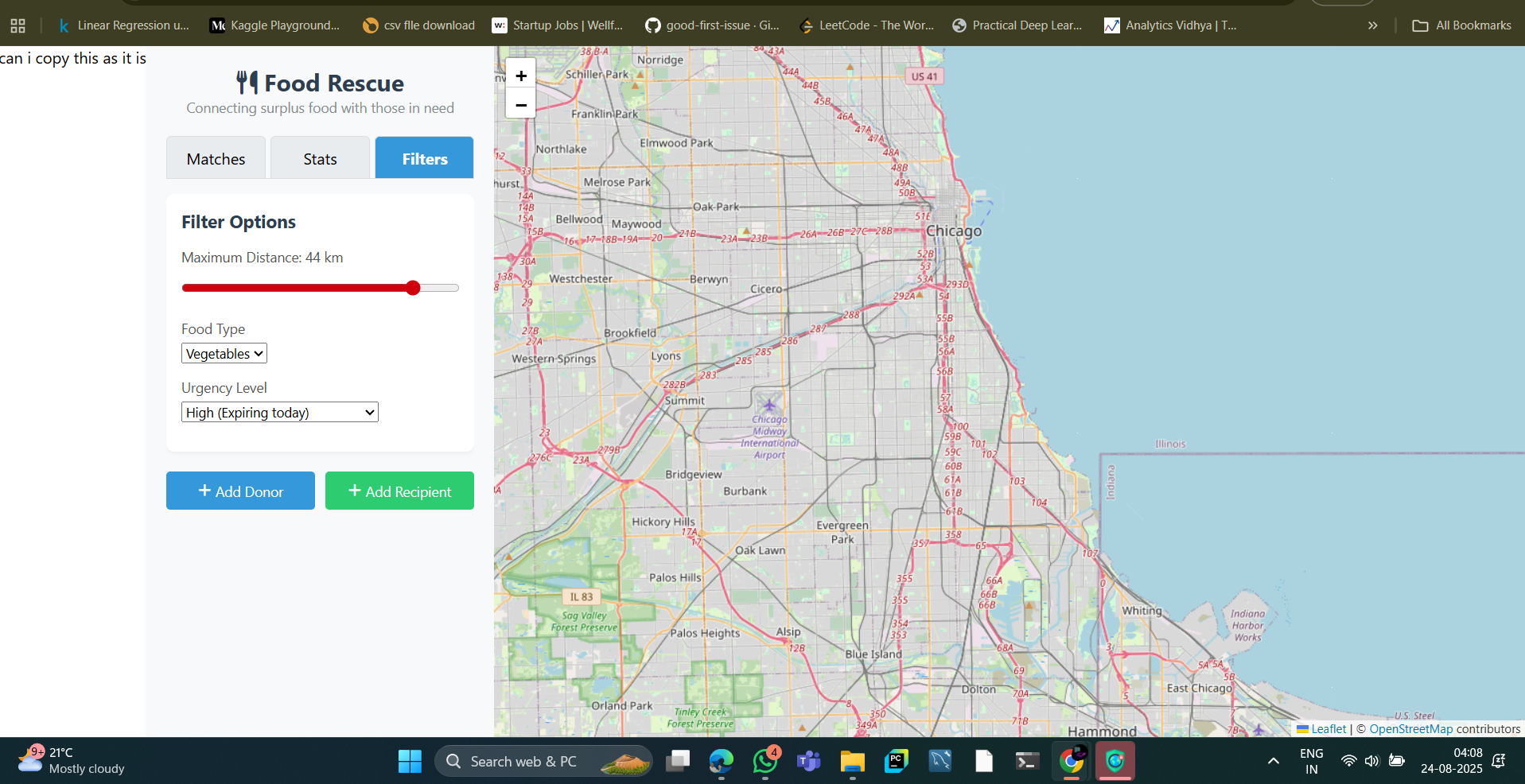
- Provides an interactive map to visualize donor and recipient locations
- Uses a matching algorithm to prioritize nearest and most suitable connections
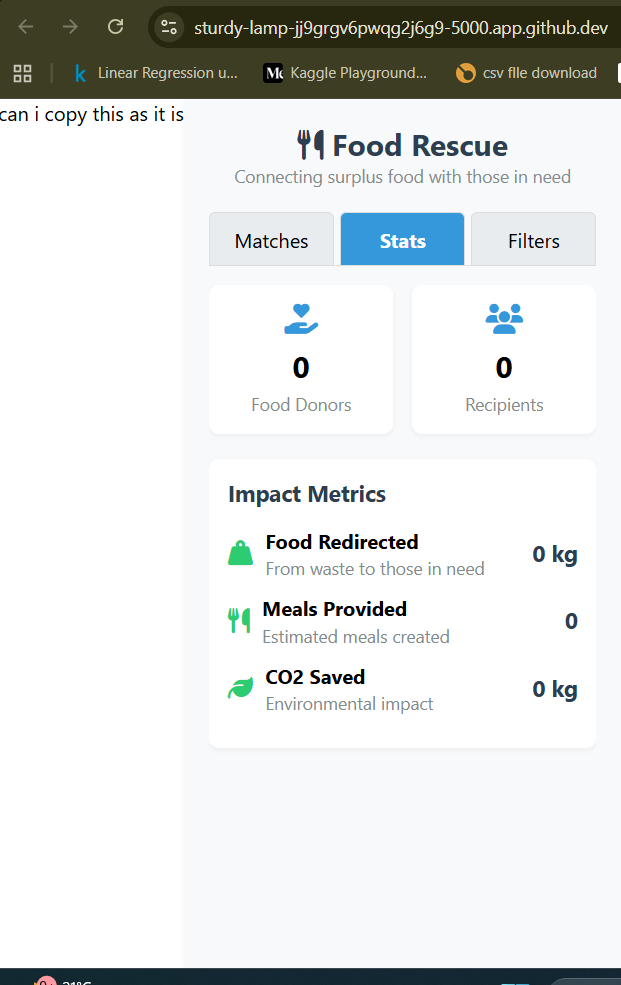
- Tracks impact metrics, such as meals provided, food weight saved, and CO₂ reduction
How we built it
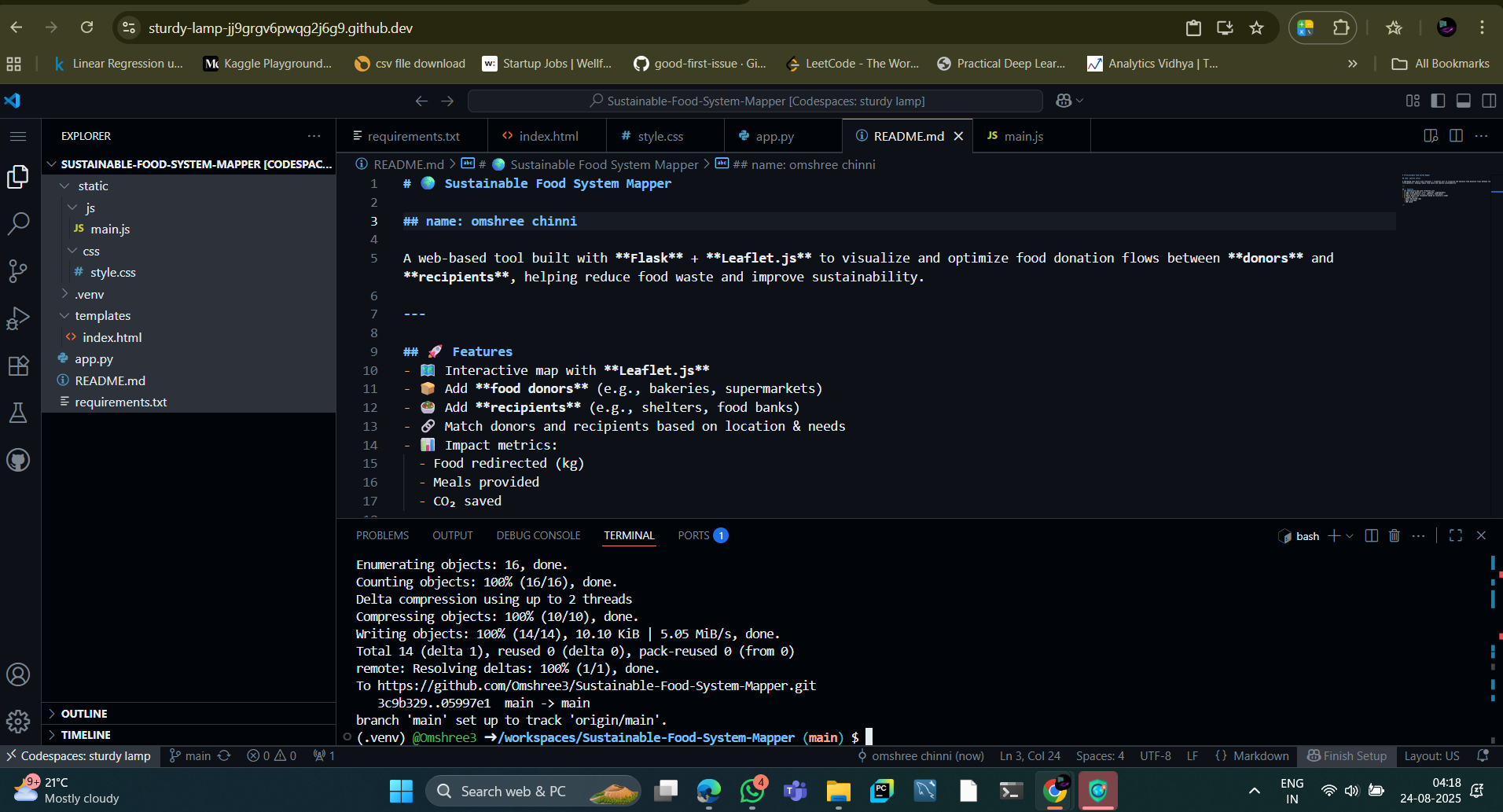
- Backend: Flask handles donor/recipient registration, database storage, and matching logic
- Frontend: HTML, CSS, JavaScript for forms, dashboards, and interactive maps
- Maps: Leaflet.js with OpenStreetMap to display locations
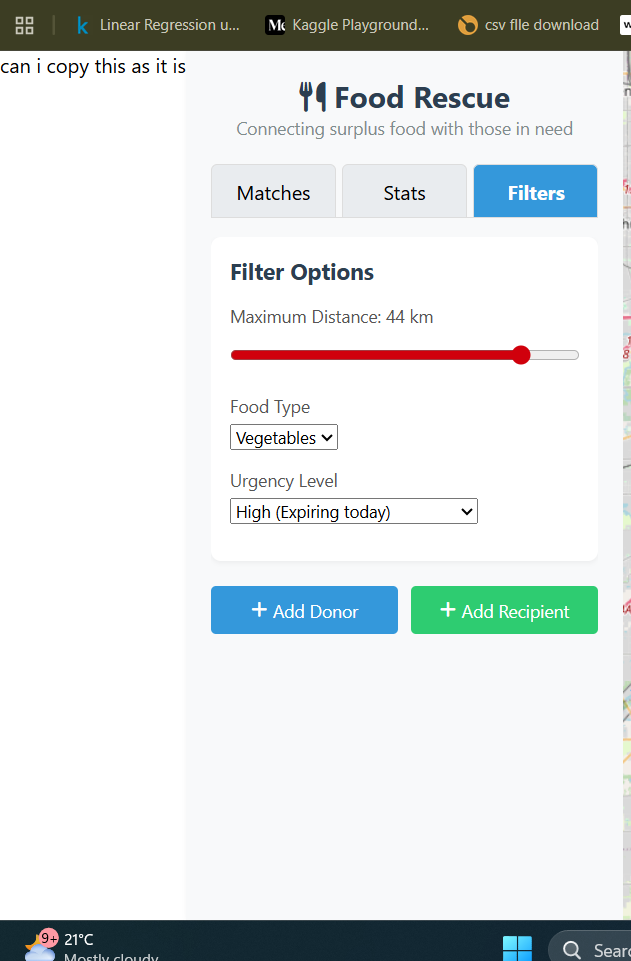
- Matching Algorithm: Considers distance, food type, and urgency: [ \text{Score} = \frac{1}{\text{Distance}} \times \text{Urgency Factor} \times \text{Food Type Compatibility} ]
- Impact Tracking: Automatically calculates total meals provided, food saved, and CO₂ reduction
Challenges we ran into
- Designing a matching algorithm that balances distance, food type, and urgency
- Making the platform user-friendly for all skill levels
- Calculating impact metrics accurately and visually
- Planning for scalability to handle multiple communities
Accomplishments that we're proud of
- Successfully built a working platform that connects donors and recipients
- Integrated a dynamic map for real-time visualization
- Developed impact dashboards to track meals, food saved, and CO₂ reduction
- Designed a solution scalable for city-wide or regional use
- Learned to combine technical skills with social impact
What we learned
- Full-stack development using Flask, HTML/CSS/JavaScript
- Interactive mapping with Leaflet.js and OpenStreetMap
- Algorithm design for practical real-world matching
- UI/UX design principles for accessibility and ease of use
- How technology can create tangible social impact
What's next for Sustainable Food System Mapper
- Expand to serve multiple cities or regions
- Integrate notifications for urgent donations and requests
- Include analytics dashboards for communities to optimize redistribution
- Connect with local food banks, donation platforms, and government programs
- Improve matching algorithm with machine learning for better efficiency


Log in or sign up for Devpost to join the conversation.