-
-
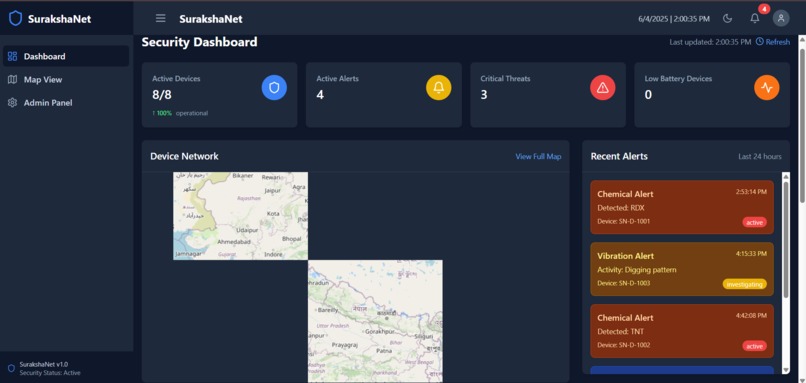
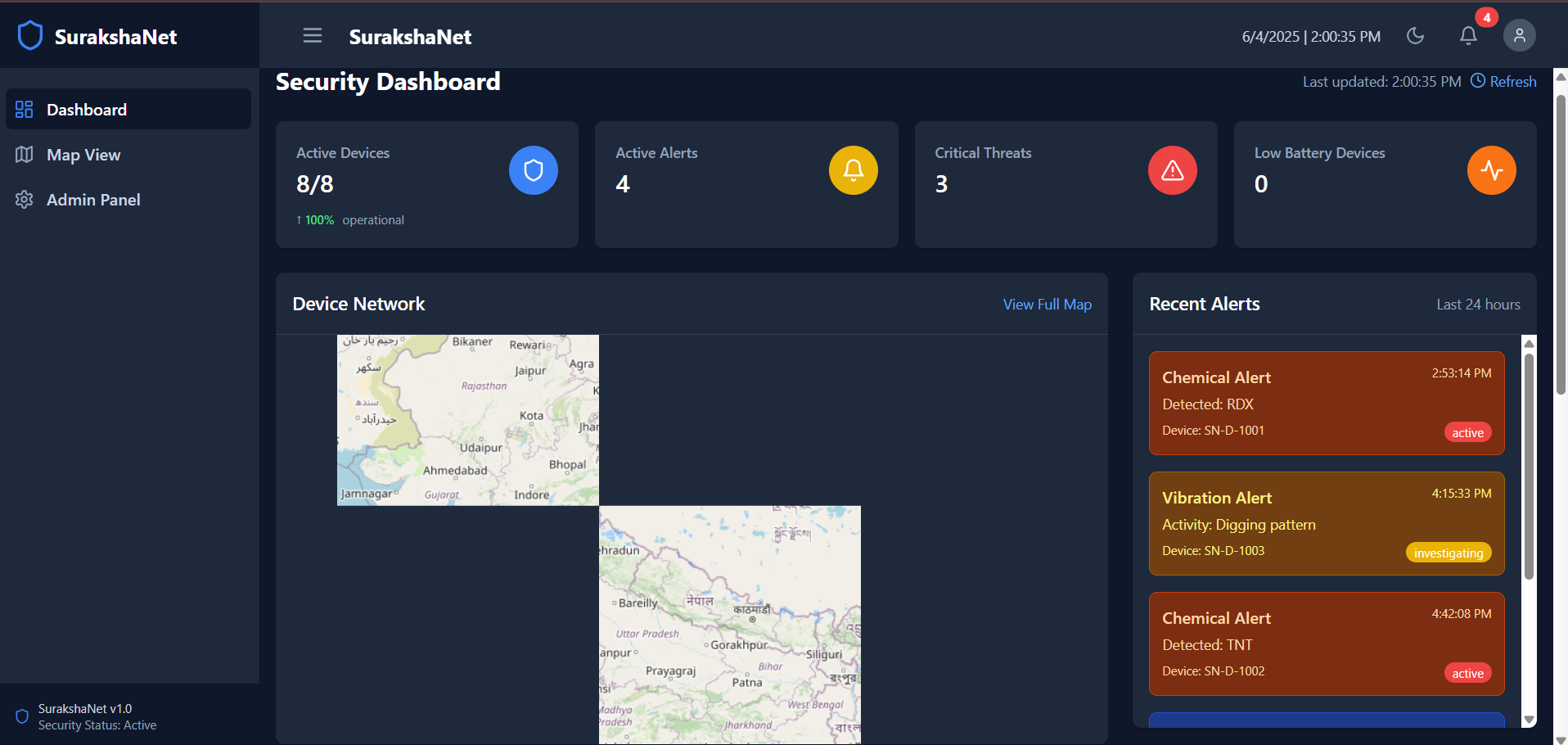
SurakshaNet Dashboard
-
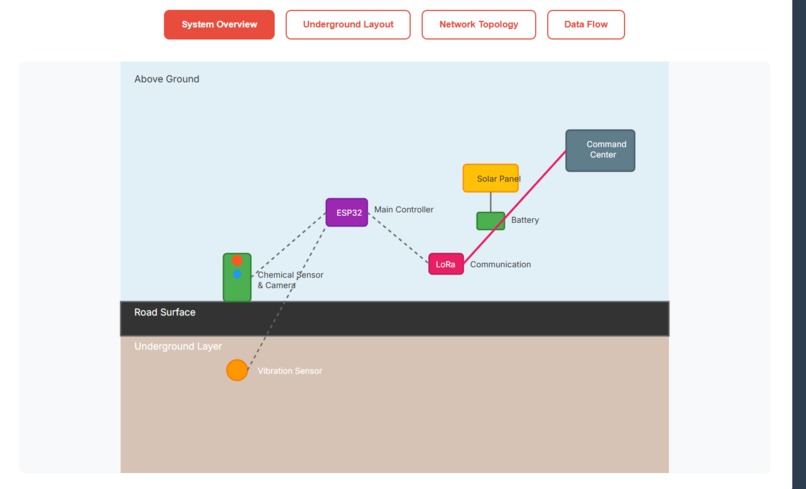
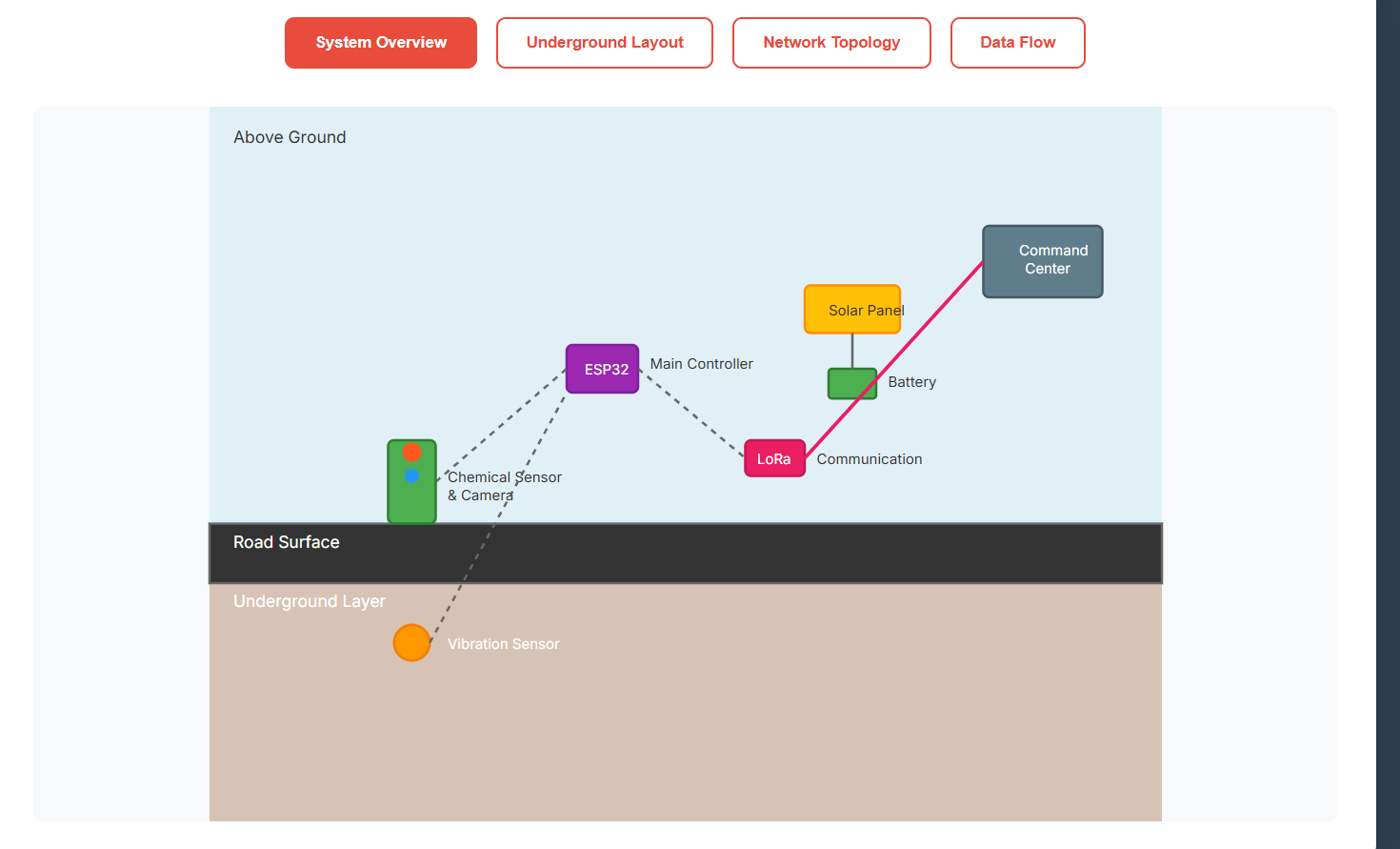
System Overview
-
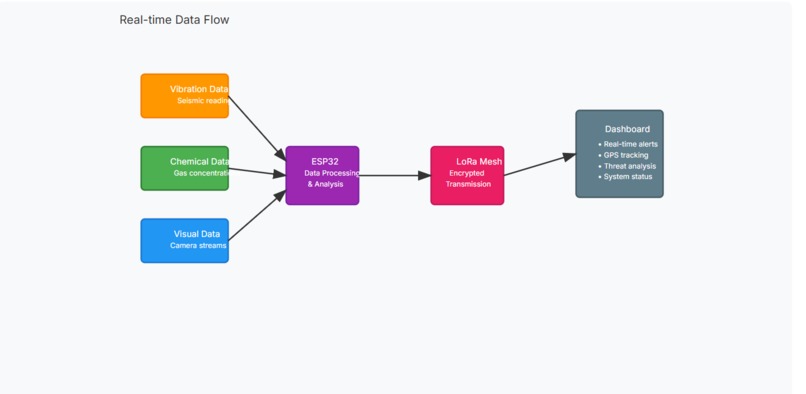
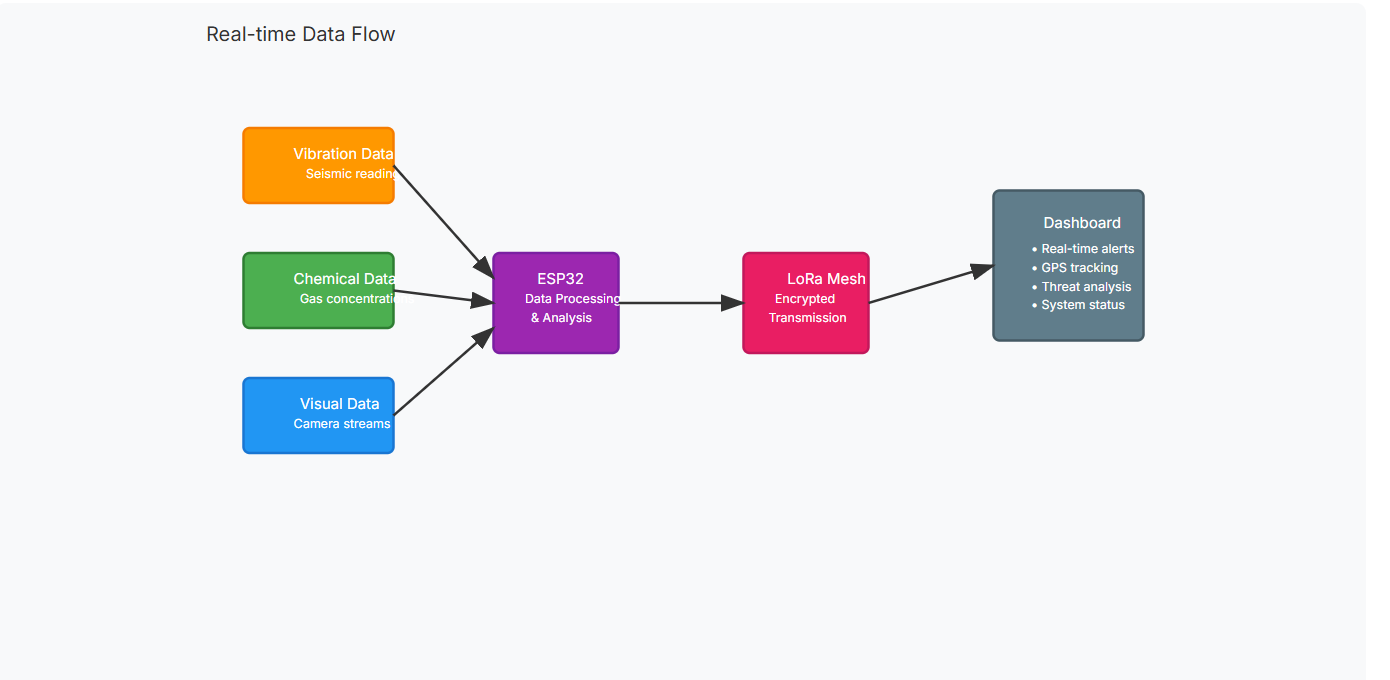
Data Flow
-
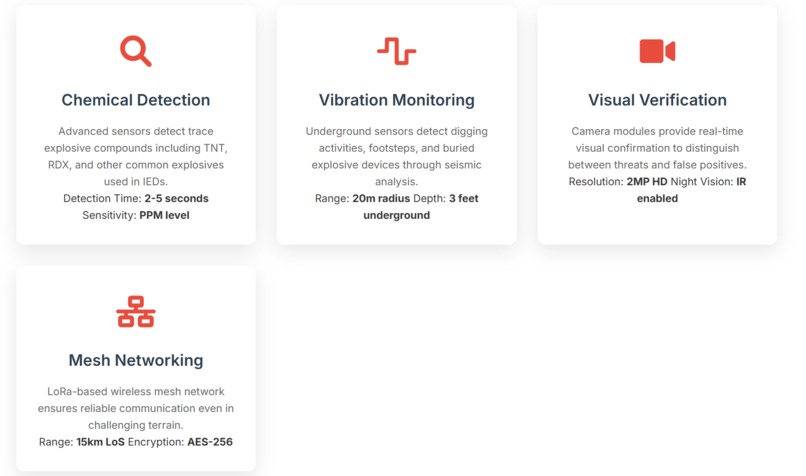
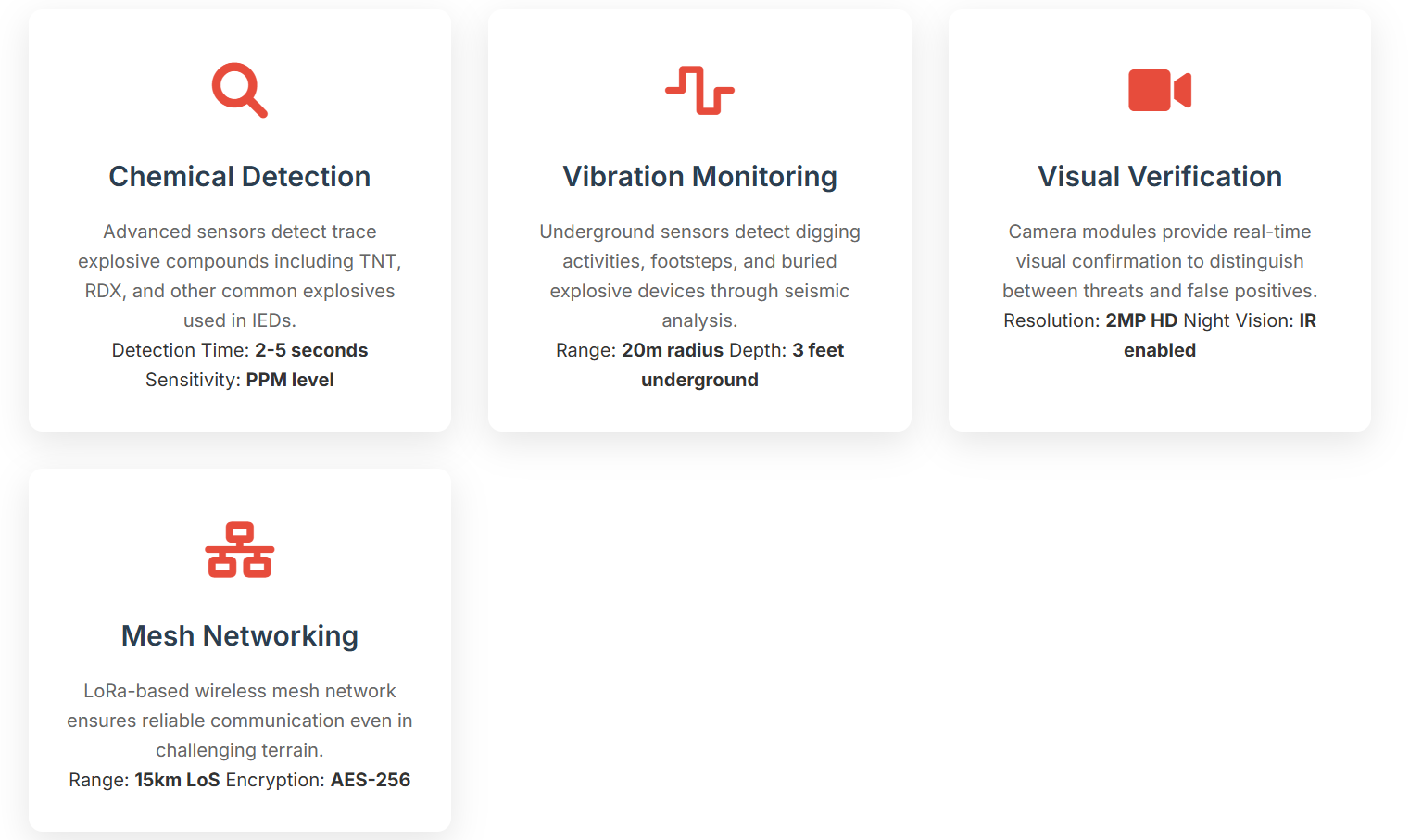
System Capabilities
SurakshaNet
Inspiration
SurakshaNet was inspired by real incidents like the Pulwama and Pahalgam terror attacks, where brave Indian soldiers lost their lives due to hidden explosives and poor early warning systems. These tragedies moved me deeply. As a proud Indian and a NDA aspirant, I wanted to create something meaningful that could save lives. Being a tech enthusiast, I believed I could use IoT and sensors to make a difference.
What I Learned
How chemical and vibration sensors can detect hidden threats
Basics of LoRa-based mesh networks and secure communication
Importance of fail-safe design in critical military systems
How to visualize real-time alerts in a central dashboard
Working with AI cameras for object detection (animal vs intruder)
How cost, scalability, and portability play a big role in real defense tech
How I Built It
Researched sensor modules (MQ sensors for chemicals, piezo for vibration)
Studied ESP32 microcontrollers and LoRa communication
Designed a simple prototype using Arduino and NodeMCU
Started building a web dashboard using HTML, CSS, JS, and planning to host it via Vercel
Used AI-generated visuals and wireframes to explain deployment design
Developed a pitch video using RunwayML with detailed scene-by-scene visuals
Design Layout
Underground part: Vibration sensor to detect soil/motion disturbances
Pole-mounted module: Camera + chemical sensor for above-ground threats
Solar or battery powered for remote field use
Devices talk to each other via mesh and send alerts to command center
Challenges Faced
Choosing the right combination of sensors and ensuring accuracy
Making the system resistant to false alarms (like animals, wind, etc.)
Learning how to visualize network transmission in real-time
Communication gaps in technical writing and UI/UX structuring
Balancing cost-efficiency with technical reliability

Log in or sign up for Devpost to join the conversation.