-
-
WorkFlow_Sufra
-
TeachStack_Sufra
Inspiration:
Target Users: Low-income citizens worldwide who struggle to afford regular meals, and hotels/restaurants that often have surplus food after service hours. NGOs & community organisations can also use the platform to track and redistribute excess meals.
Pain Points:
- Hotels, weddings, and celebrations generate large quantities of edible food that are often discarded daily before even reaching the plate, due to the absence of an efficient redistribution system.
- There’s no transparent, real-time link between food surplus and those who need it most.
- Daily Wage Earning people often skip meals due to high food prices and limited access to affordable, hygienic options.
Importance/ Urgency: With rising living costs and a growing population of daily wage earners, connecting food surplus to demand is both a social and environmental necessity. This solution promotes zero food waste, ensures access to meals at a lower price, and supports the world's sustainability goals under the UN Sustainable Development Goal. Implementing it now creates immediate humanitarian impact while fostering long-term food security and corporate social responsibility.
What it does:
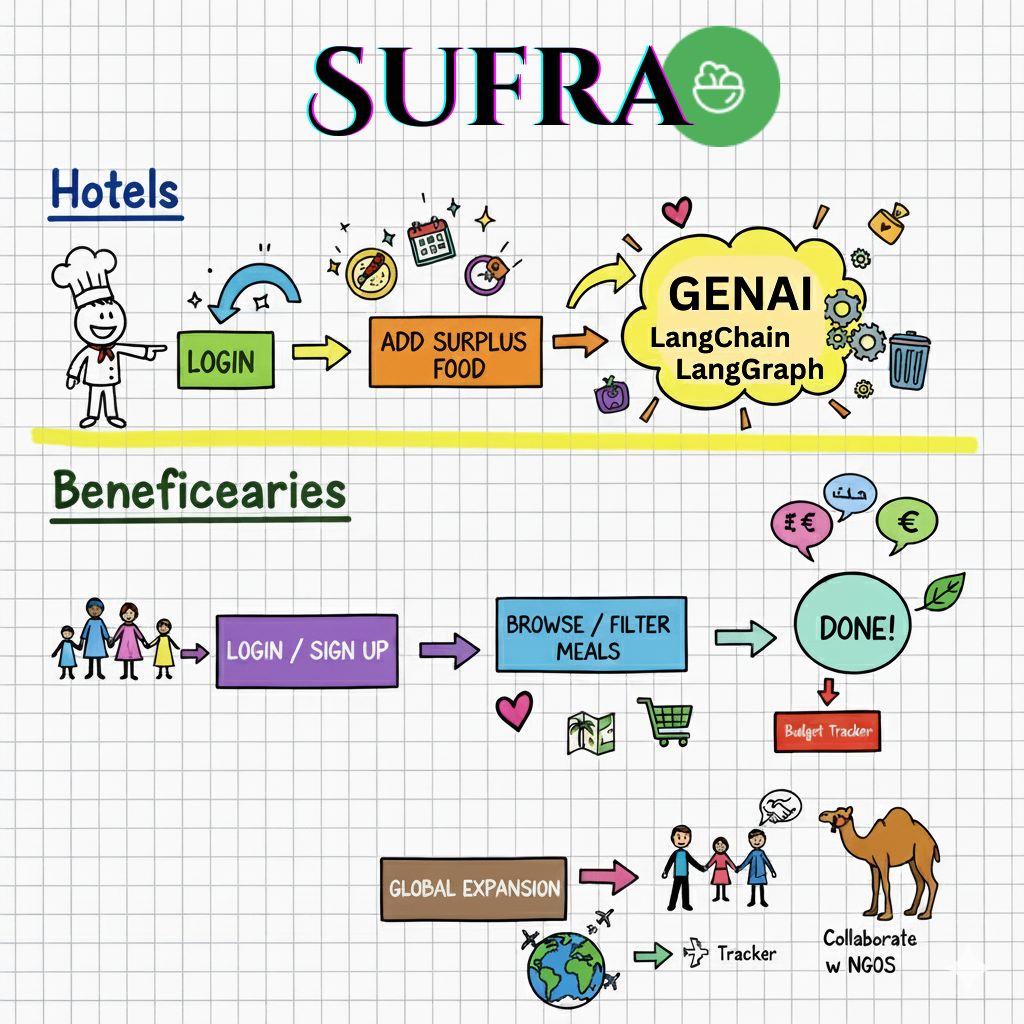
Sufra is an intelligent AI platform that bridges hotels with surplus food, willing to sell it at lower prices and people seeking affordable meals. Using GENAI (LangChain, LangGraph) reasoning and geolocation, it recommends nearby food options that complement the individual's budget while helping hotels minimise wastage.
How we built it:
User Flow
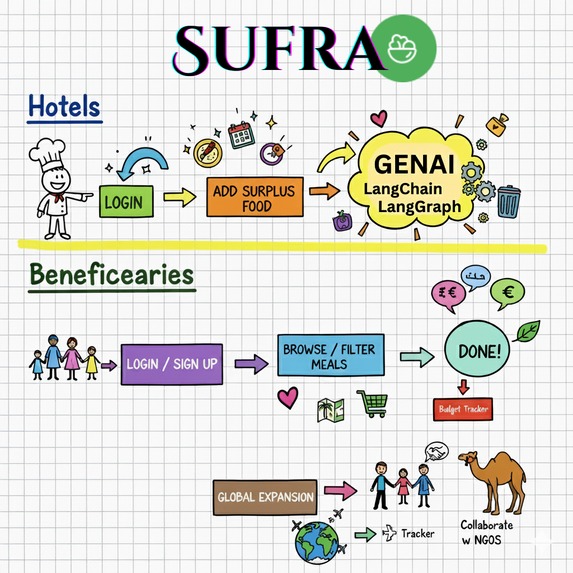
Step 1: Hotels/restaurants upload surplus food details with price, quantity, and location.
Step 2: Data is stored in a real-time database.
Step 3: Users enter budget and preferences; Sufra fetches live GPS location.
Step 4: The Sufra filters results based on distance and price calculations.
Step 5: AI ranks and gives personalised recommendations.
Step 6: Users book food and receive a QR code for pickup.
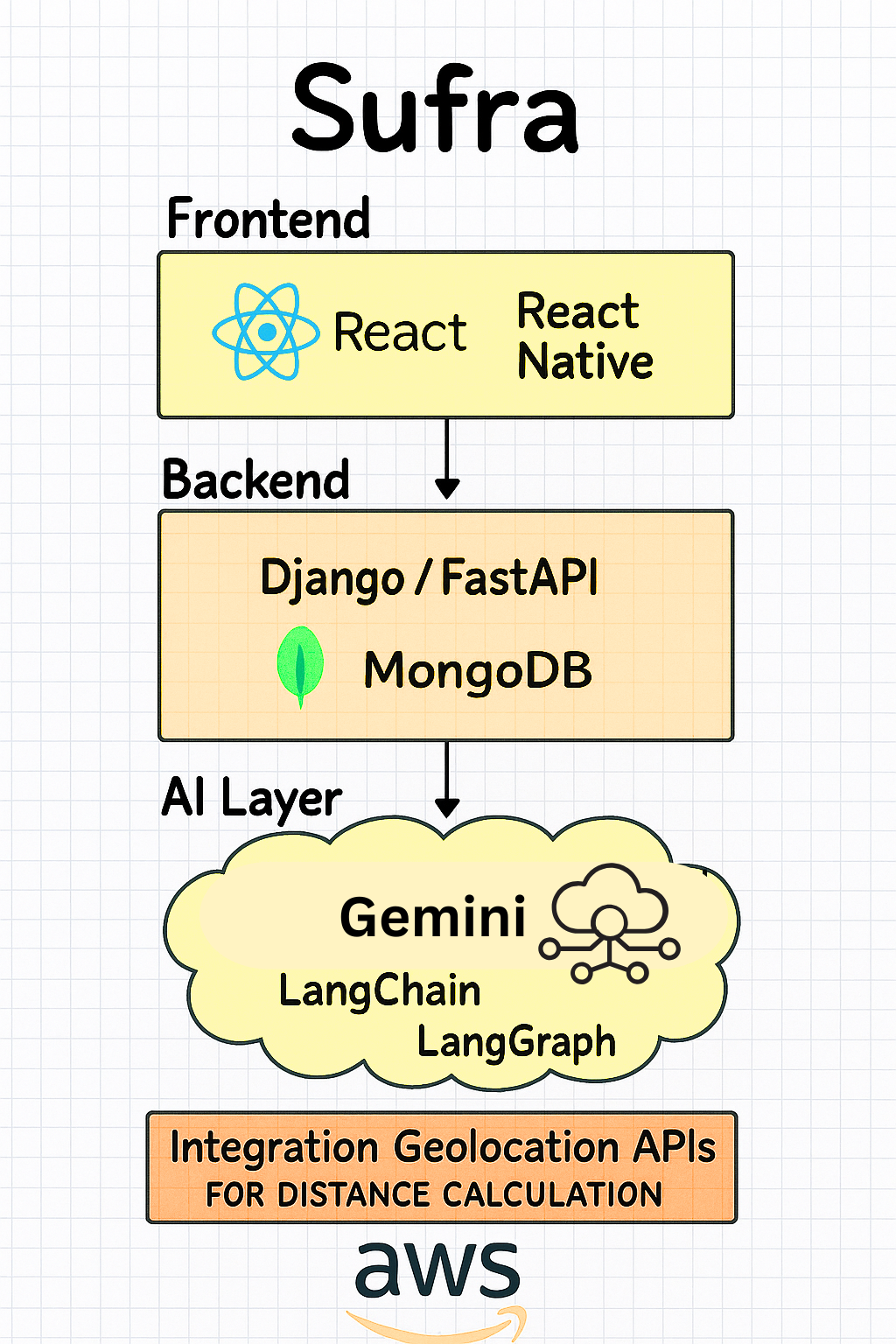
Tech Stack
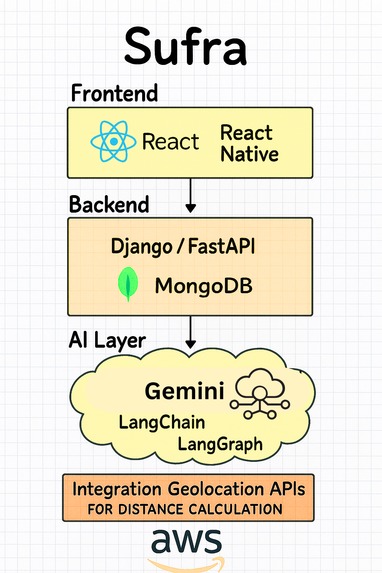
- Frontend: React & React Native
- Backend : FastAPI + Django + MongoDB
- AI Layer: Gemini (Hugging Face) + LangChain + LangGraph
- APIs: GMaps/Geolocation
- Deployment: AWS
Challenges we ran into:
- Integrating real-time GPS-based food listings with minimal delay and accurate distance filtering.
- Managing AI reasoning flows (LangChain + LangGraph) for multilingual and context-aware recommendations.
Accomplishments that we're proud of:
- Built a fully functional AI-powered MVP connecting surplus food providers to affordable meal seekers.
- Designed a dual AI support system — for both users and hotels — enhancing trust and efficiency.
- Developed an intuitive, cross-platform UI/UX that turns a social cause into a sustainable tech solution.
What we learned:
- How to use Generative AI practically for reasoning, personalisation, and human-like interaction.
- The value of collaboration and rapid problem-solving in a fast-paced hackathon setting.
- That technology becomes truly powerful when it’s used to solve real, human problems.
What's next for Sufra:
Our next step is to expand Sufra into a self-sustaining AI ecosystem:
For hotels, AI will manage technical support — handling dashboard errors, API bugs, forecasting queries, and even scheduling onboarding training sessions.
For users, AI will power live chat assistance, refund automation, and self-service help — ensuring transparency and trust.
We also plan to add multilingual access, NGO partnerships, and rating systems to make food redistribution more inclusive and reliable.


Log in or sign up for Devpost to join the conversation.