-
-
-
-
-
-
-
-
-
-
-
-
-
Mobile view
-
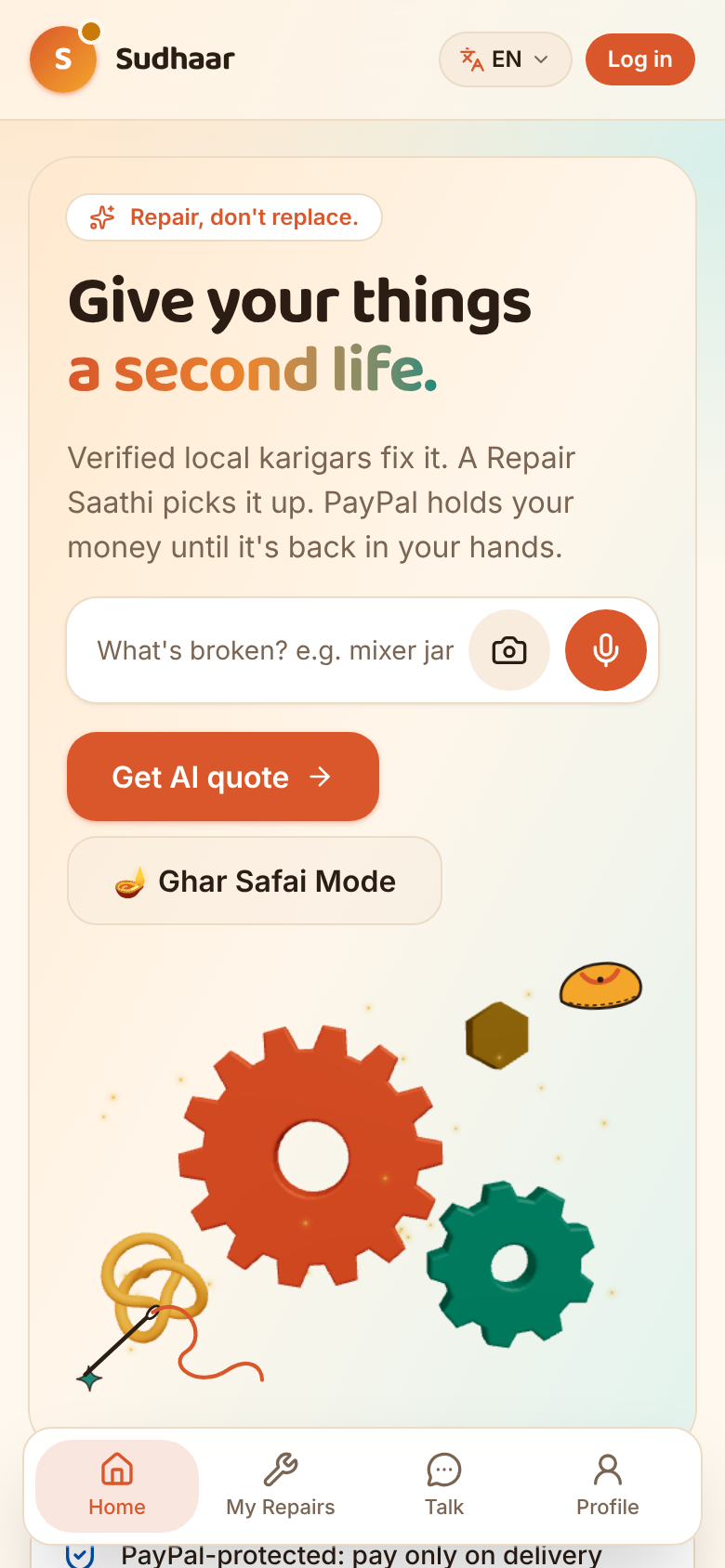
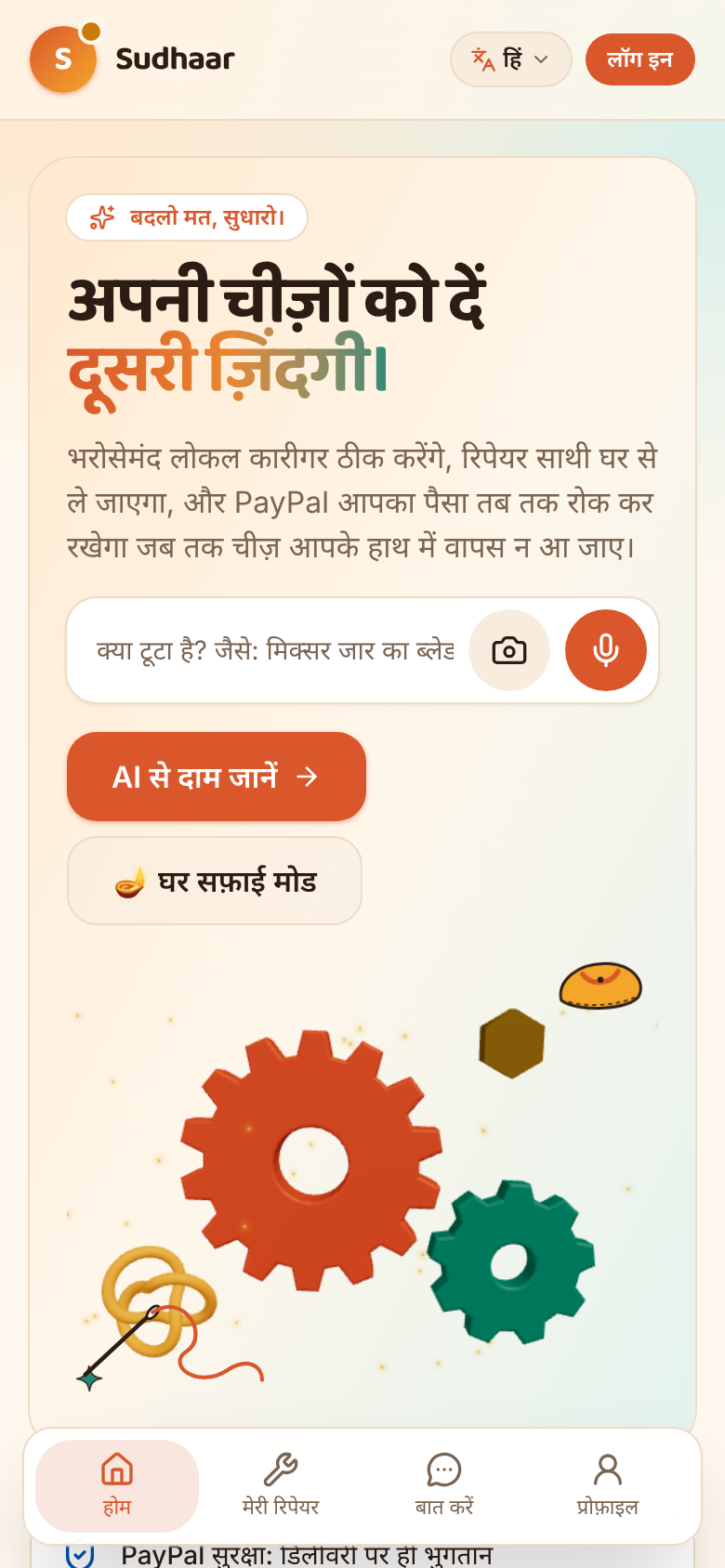
Inspiration
This Diwali, Meenakshi's mother was sorting old things at home that only needed a small repair, and even in a city she couldn't find anyone to fix them. The karigars (cobblers, tailors, mixer and fan repairers) are right there in our neighbourhood, but nobody can find them online, nobody comes home to collect the items, and nobody knows what a fair price is. So people buy new and throw the old one away. Meanwhile the world generated a record 62 million tonnes of e-waste in 2022, and only 22.3% was properly recycled. We wanted repairing to be easier than replacing.
What it does
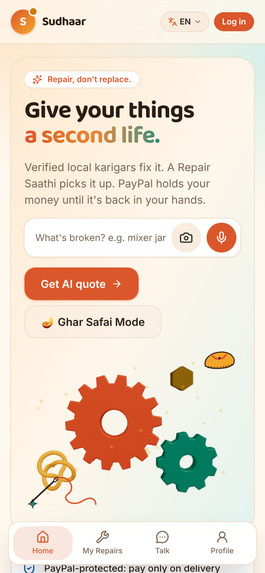
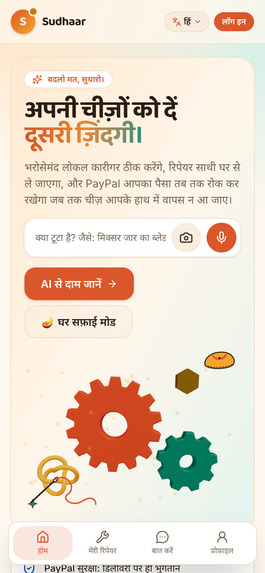
Sudhaar ("Repair, don't replace") is a doorstep repair marketplace for local karigars, built on PayPal + AI.
- AI Snap & Quote: snap a photo of something broken. Gemini identifies the item and the damage and estimates the repair cost against the price of buying new, shown on a Fix-or-Replace meter.
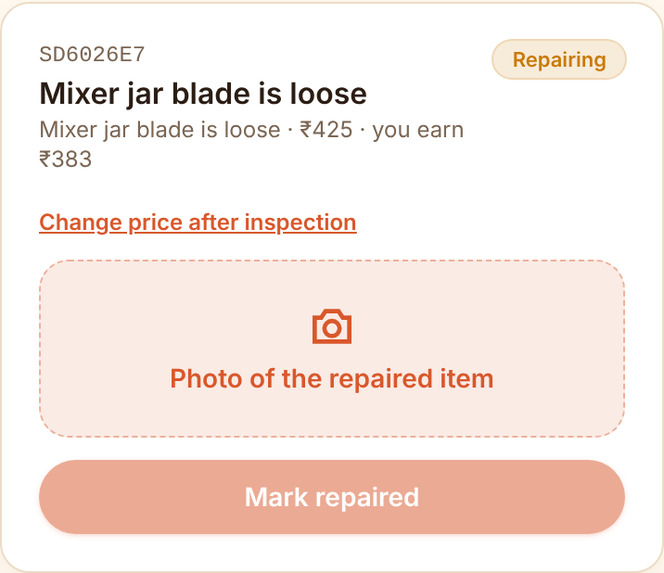
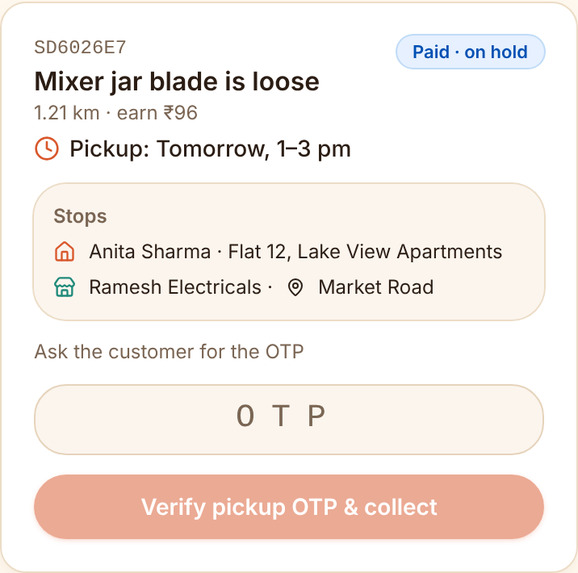
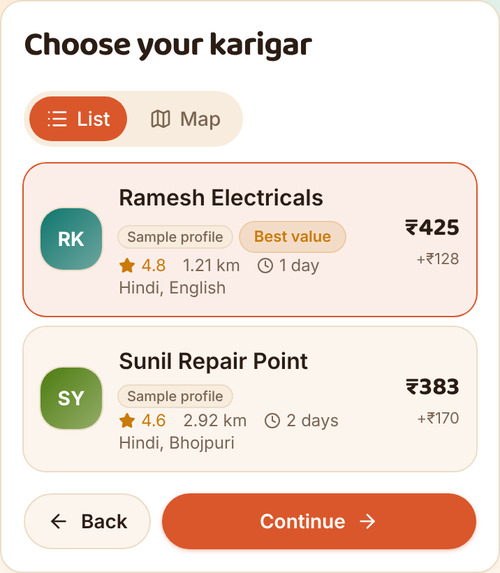
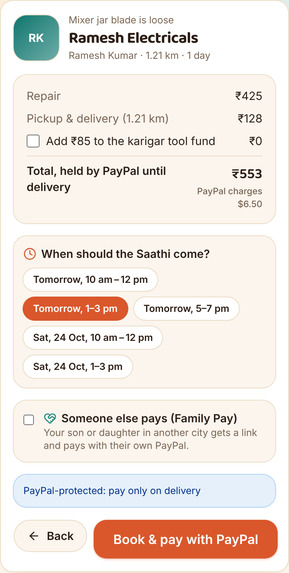
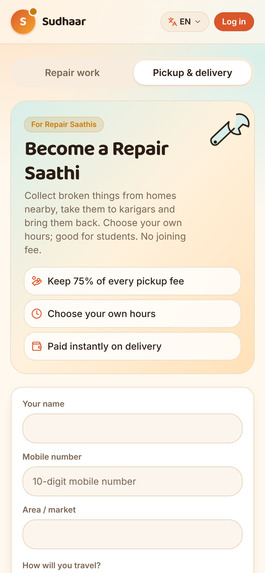
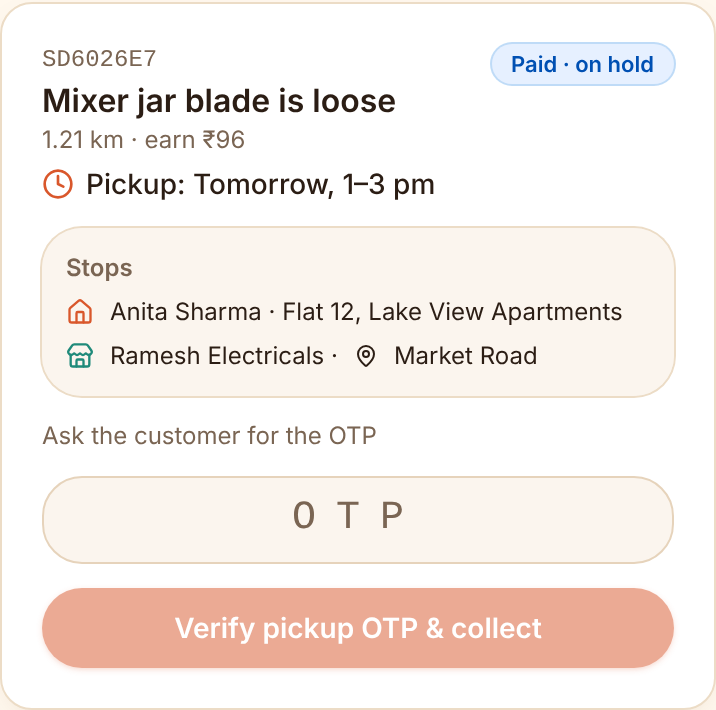
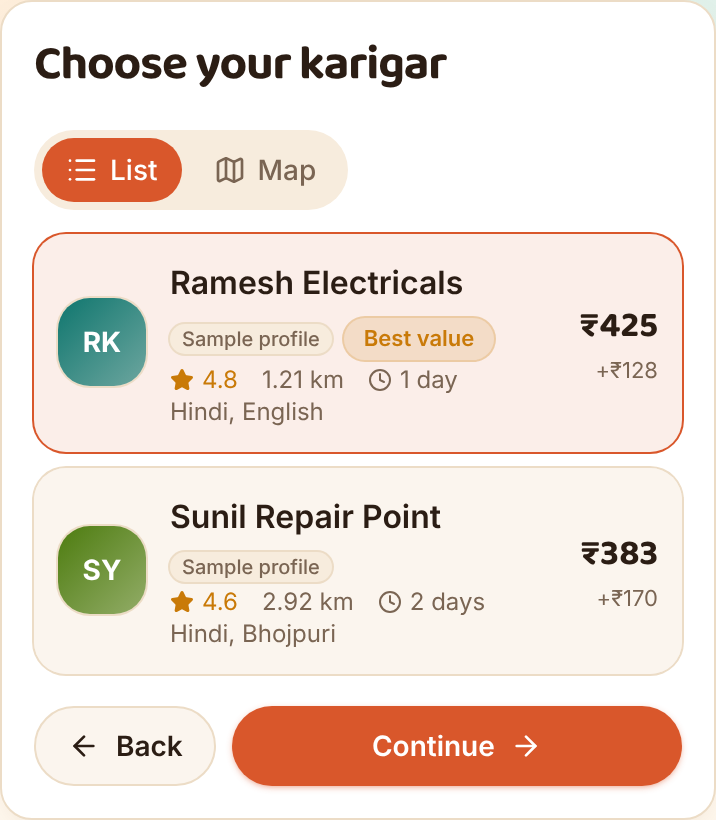
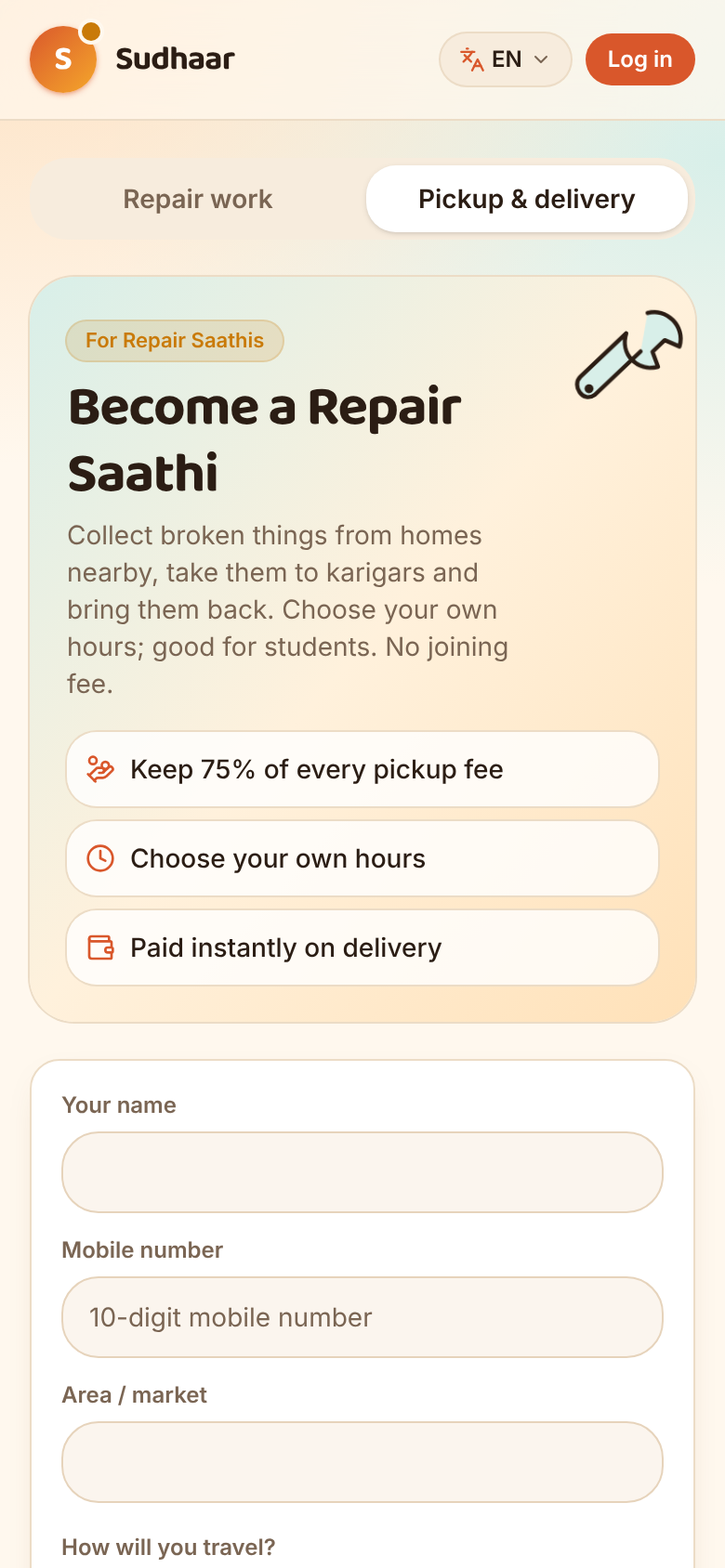
- Verified karigars are compared by price, rating, distance and ready time. A Repair Saathi picks the item up and delivers it back.
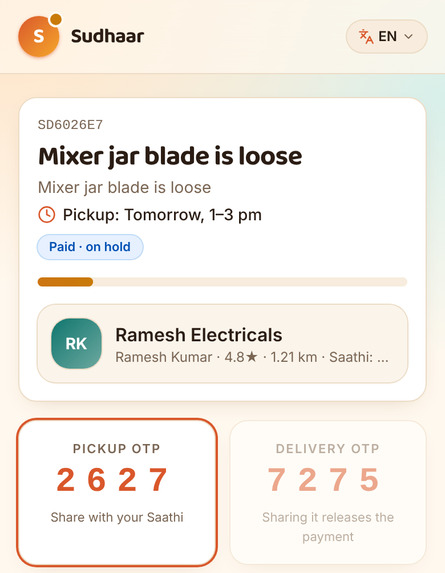
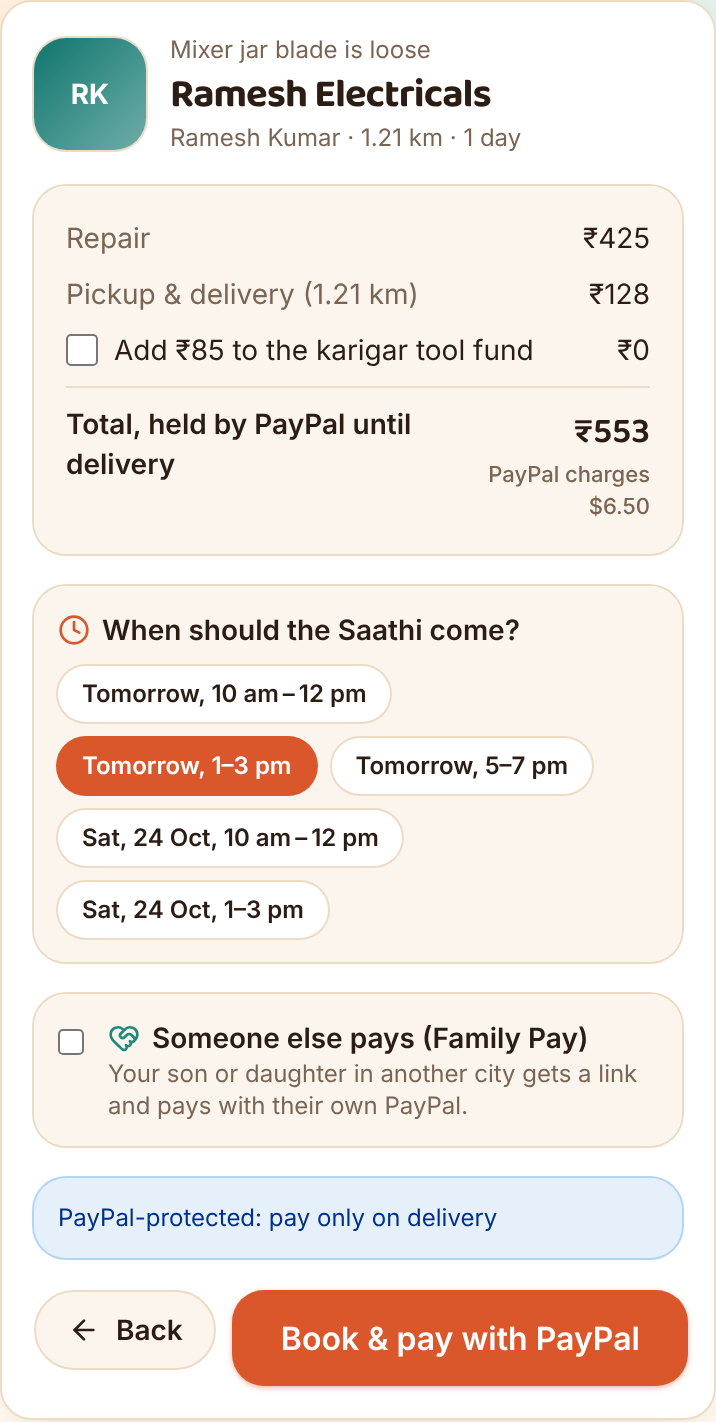
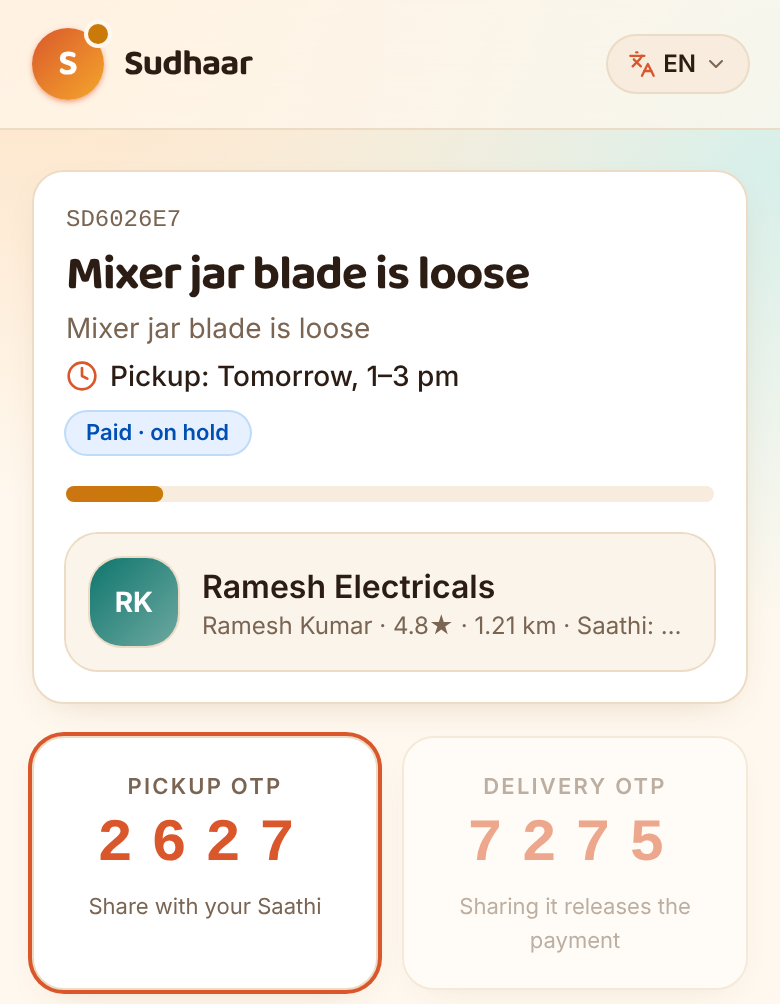
- PayPal holds the money, it doesn't take it: the payment is authorized at booking and only captured after the delivery OTP. Then PayPal Payouts pays the karigar 90% of the repair and the Saathi 75% of the pickup fee, and PayPal Invoicing issues a paid digital bill.
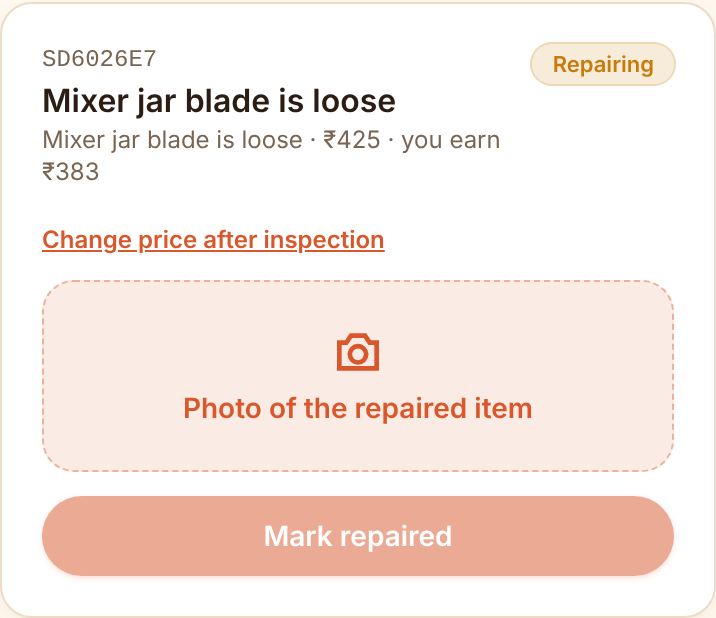
- AI photo check: before/after photos are compared before any capture. If the AI rejects the photo or is unavailable, the money stays held and a person reviews it.
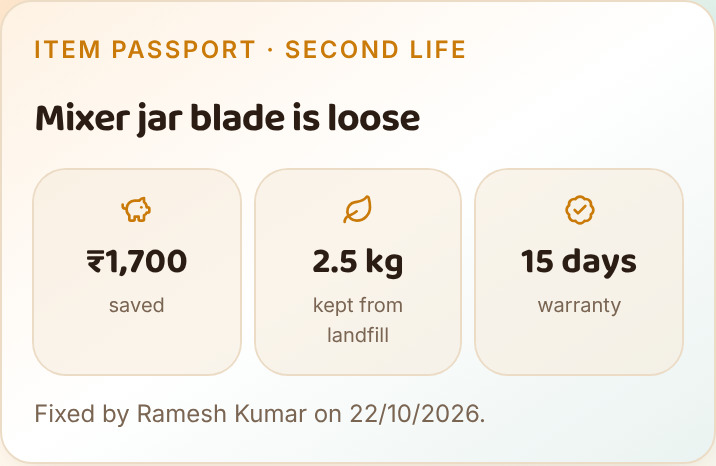
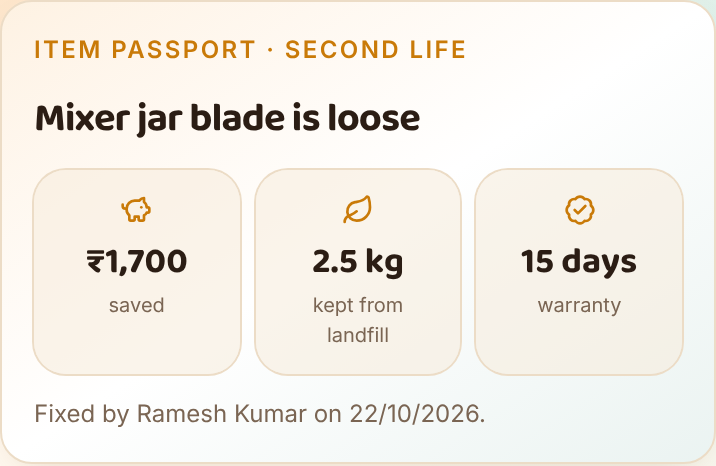
- Resolve Hub: a full claims desk with a 15-day warranty, SLA deadlines, photo evidence, a three-way conversation, and PayPal refunds that a person always approves.
- Repair Agent: a Gemini function-calling agent ("get my mixer fixed under ₹400 by Friday") that quotes, books, tracks and files claims, using the PayPal Agent Toolkit. It can never move money on its own.
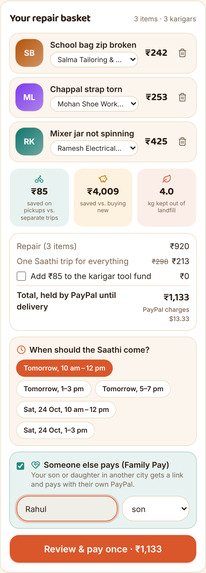
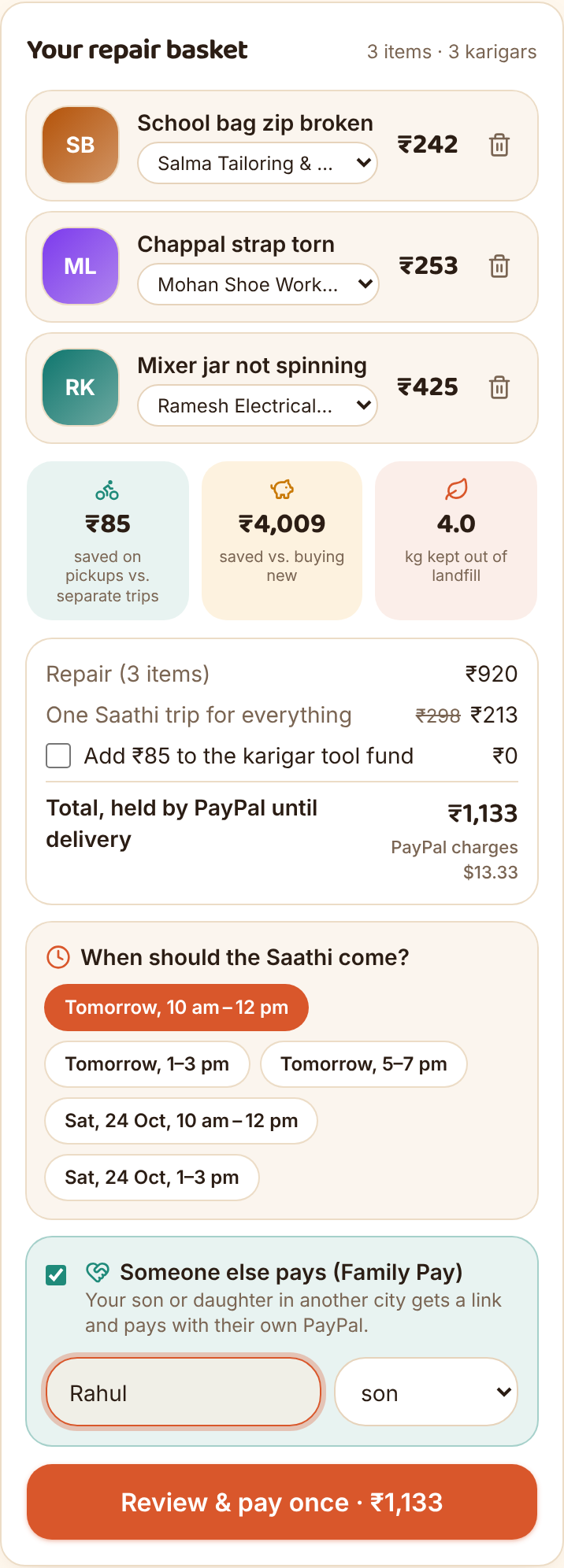
- Ghar Safai Mode: snap every broken thing in the house. One Saathi trip and one PayPal payment, split by Payouts to every karigar.
- Family Pay: a parent books (even by voice), and a son or daughter in another city approves the PayPal payment from a shared link.
- Sudhaar Care: a PayPal Subscriptions plan for free pickups and a 30-day warranty.
- Fair price changes: if a karigar finds more damage, the customer approves the new price, and only the difference is held as a second PayPal authorization.
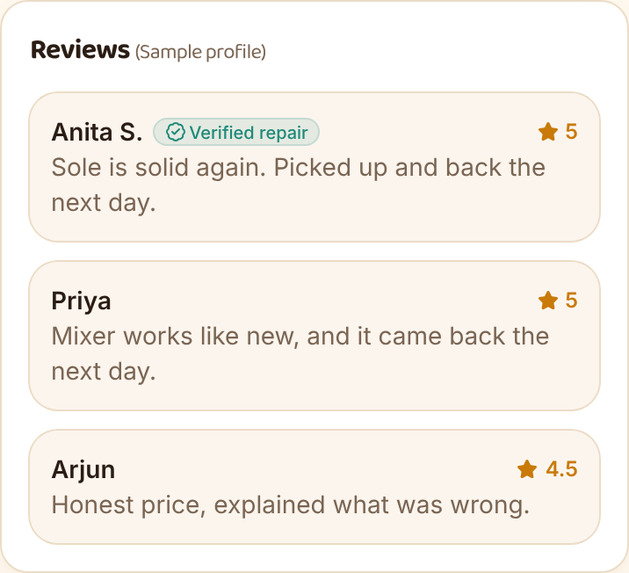
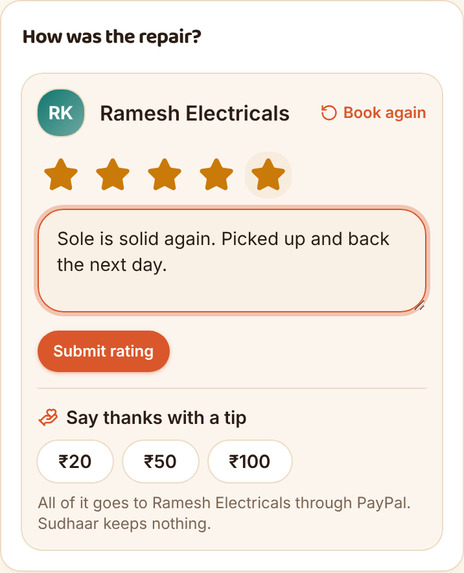
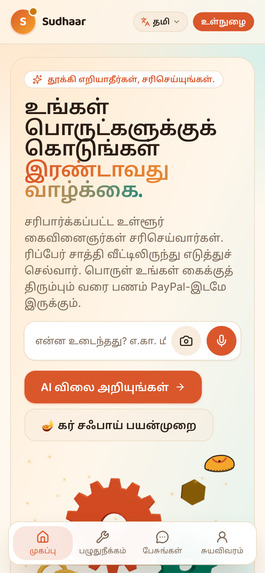
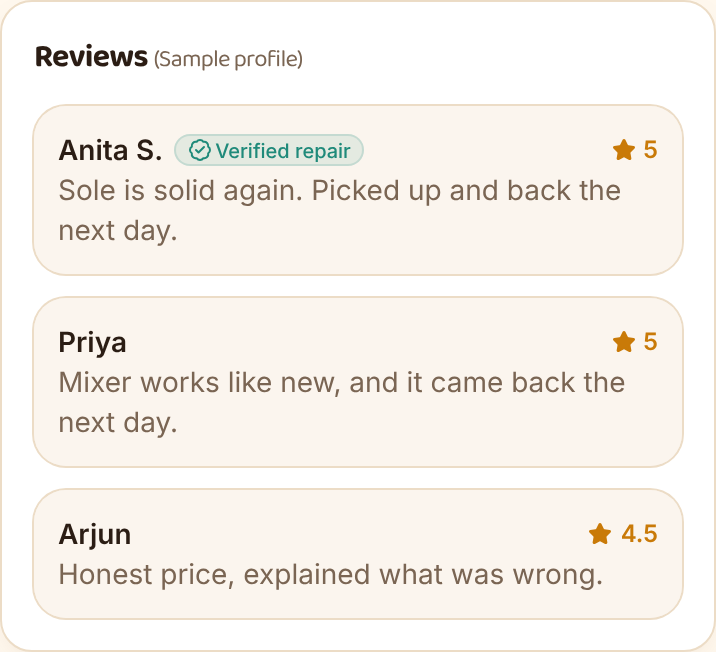
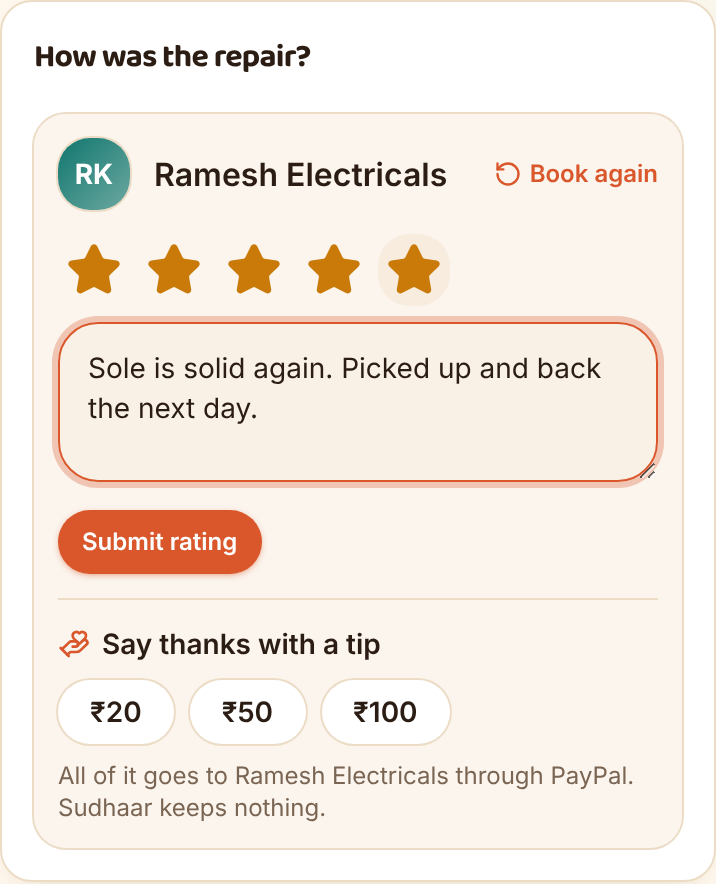
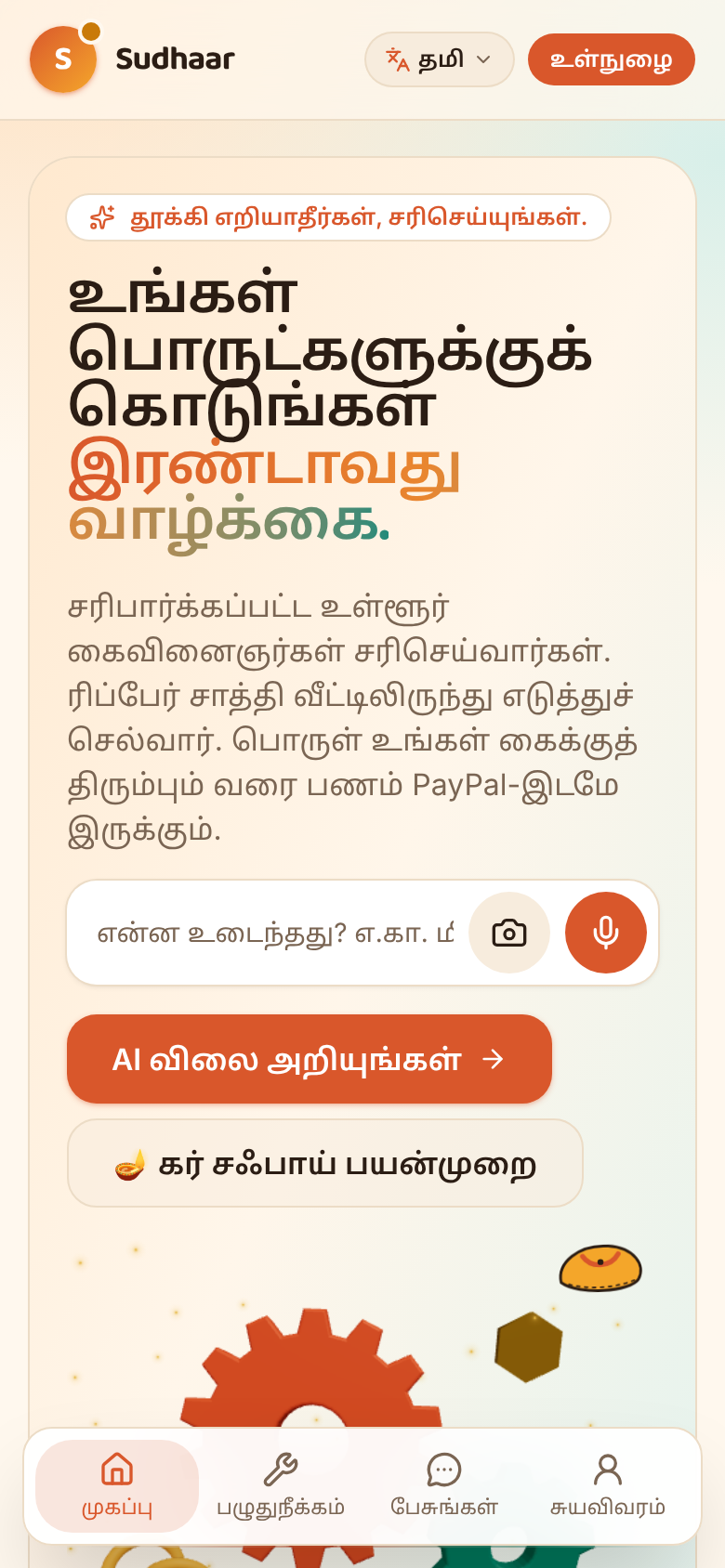
- Also: 8 Indian languages with voice input and spoken replies, live Saathi tracking with ETA, coupons, ratings and tips, an installable offline-ready app, and a Repair Trust Receipt where every step turns green only when its evidence (PayPal id, OTP, photo review) exists.
How we built it
- Next.js + TypeScript for one website serving four roles (customer, karigar, Saathi, admin), with role checks on every API.
- PayPal (sandbox): JS SDK v6 checkout, Orders v2 (
AUTHORIZEandCAPTURE), Payments v2 capture/void/refund, Payouts v1 with status reconciliation, Invoicing v2, Catalog Products + Billing Plans + Subscriptions, verified webhooks, and the PayPal Agent Toolkit. - Google Gemini (
@google/genai) with JSON-schema structured outputs and function calling for vision quotes, completion checks, complaint review, the Repair Agent and text-to-speech. - AG Grid for the admin console, Leaflet/OpenStreetMap for maps, three.js for the hero scene, Upstash Redis for persistence, Render for deployment, a Postman collection for the full API flow, and a Bolna voice agent for a Hindi phone line.
Unit economics for one mixer repair: the customer pays ₹468 (₹383 repair + ₹85 pickup):
$$ \underbrace{0.9 \times 383}{\text{karigar} \approx ₹345} + \underbrace{0.75 \times 85}{\text{Saathi} \approx ₹64} + \underbrace{0.1 \times 383 + 0.25 \times 85}_{\text{Sudhaar} \approx ₹59} = ₹468 $$
Challenges we ran into
- Making the money flow safe: authorize at booking, capture only after the delivery OTP, payouts only after capture, and voids on cancellation. Price increases had to become a second authorization, and refunds had to be split across both captures.
- Never letting AI release money by mistake: we designed it so an AI error, a timeout or low confidence keeps the payment held and sends the job to a human reviewer. When Gemini was overloaded, we switched to a lighter model so demos never hang.
- PayPal in India: PayPal no longer supports domestic payments inside India, so we use the sandbox (USD) with rupee prices in the UI. Our launch plan is UPI for local orders and PayPal for cross-border Family Pay.
- Security details: OTPs are never spoken on a call (caller ID can be faked), partners never see OTPs, webhooks are signature-verified and processed once, and the agent's PayPal tools only look up the customer's own orders.
- Authorization honor periods (about 3 days) for long repairs, and proving an internal repair from a photo. Both still need a human in the loop.
- Translating the whole app into 8 languages, each with its own script and font, plus voice input and output.
Accomplishments that we're proud of
- A complete, working end-to-end PayPal flow in the sandbox: authorize → capture → multi-party payouts → paid invoice → refunds, plus subscriptions and webhooks.
- Ghar Safai Mode: one payment split by Payouts across several karigars and a Saathi.
- A Repair Trust Receipt with no false greens: every step shows its real evidence.
- An agent that does real commerce but can't spend money on its own, enforced in code.
- Designing for the people who repair the most: elders, families in different cities, and karigars who don't type. That meant 8 languages, voice, Family Pay and a phone line.
- Karigars keep 90% of the repair charge and get paid right after delivery.
What we learned
- Holding funds (authorize/capture) is a powerful trust tool for marketplaces where an item leaves someone's home.
- AI is great at estimating and reviewing, but decisions about refunds and someone's livelihood should stay with a person.
- The person who needs a repair and the person who pays are often different people in different cities, so payment UX has to support that.
- Building for real users means designing for weak networks, many languages and people without smartphones from day one.
- A lot about PayPal's APIs: Orders, Payouts, Invoicing, Subscriptions, webhooks and the Agent Toolkit, and how they fit together.
What's next for SUDHAAR
- Pilot: one neighbourhood with about 20 karigars, SMS OTP verification, Postgres and cloud photo storage, real shop locations, and WhatsApp/SMS updates.
- One city: "Repair Points" at kirana shops, smarter combined Saathi routes, DigiLocker ID checks, transit insurance, and voice-first partner apps.
- More cities and countries: bulk Ghar Safai drives for housing societies and offices, UPI for domestic Indian payments, PayPal for cross-border Family Pay, and PayPal multiparty onboarding in markets where PayPal works domestically.
- Automating reauthorization for long repairs and adding a PayPal reconciliation job for production.
Built With
- ag-grid
- gemini-api
- next.js
- node.js
- openstreetmap
- paypal-agent-toolkit
- paypal-javascript-sdk
- paypal-payouts
- paypal-rest-api
- paypal-subscriptions
- react
- react-three-fiber
- render
- typescript
- upstash-redis

