Somia - dream without end
Description
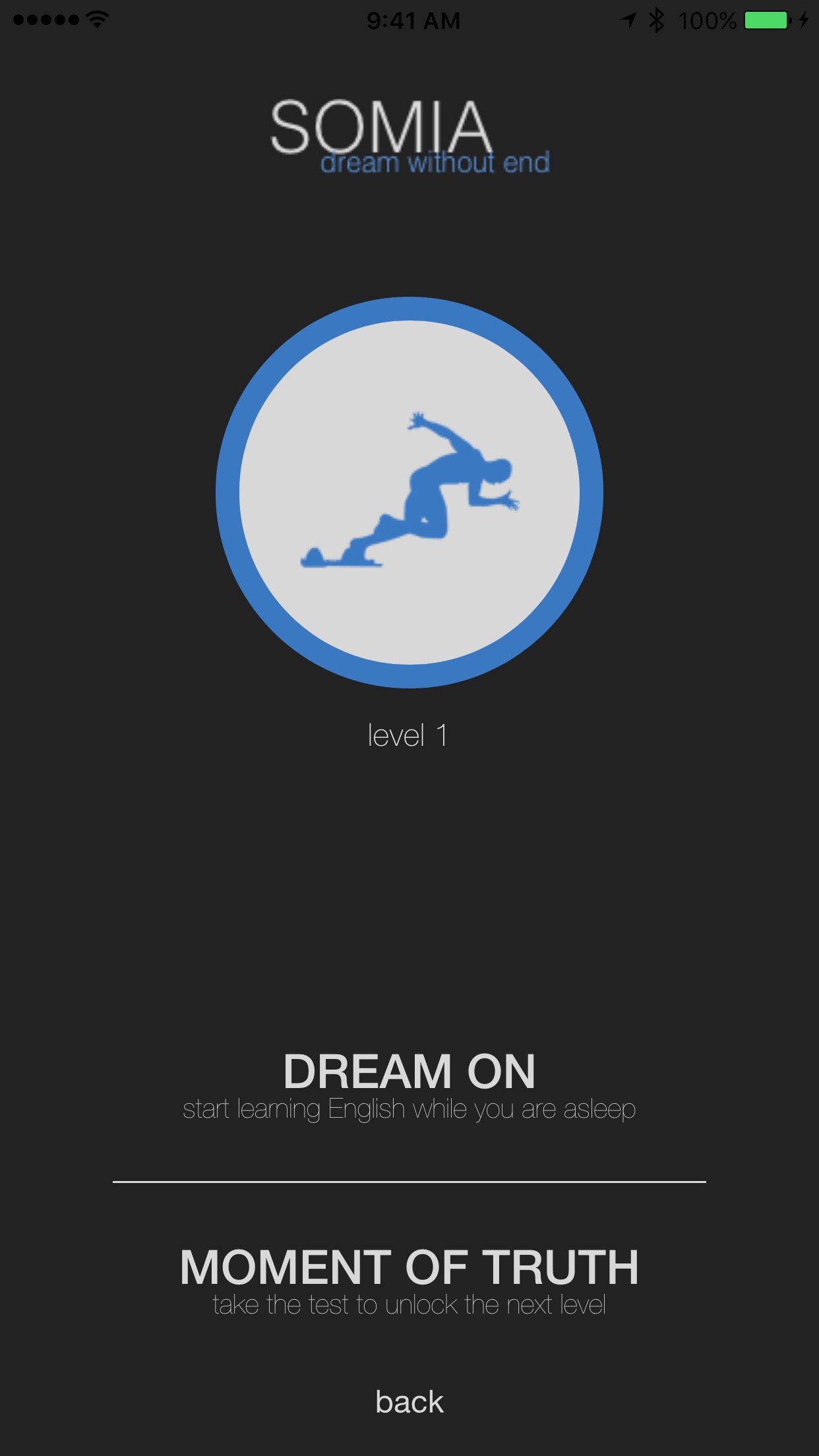
A language learning app that helps user learn vocabulary during their sleep. Require sleep tracker gadget.
Origin of the name
The name came from latin word 'somnia', removing the character n to express dream without n (end).
As a name, Somia is believed to makes the owner a quick thinker, both philosophical and creative.
Color Scheme
The application use 2 main color: Black as the background, and Blue as the highlight.
In a dream, Black symbolizes the unknown, the unconscious while Blue represents truth, wisdom, eternity, devotion.
Black and Blue also have the same initial B. It's cooler that way!
The Inspiration
The sleeping child outplays the adult's capacity to convert implicit into explicit knowledge. Researches showed that as a child, we learn things subconsciously even during sleep.
A good night's sleep triggers changes in the brain that help to improve memory. ref
Study Shows How Sleep Improves Memory shows that A good night's sleep triggers changes in the brain that help to improve memory, according to a new study led by researchers at Beth Israel Deaconess Medical Center (BIDMC).
Rule: From a famous experiment in subconscious learning. Only play audio of foreign words you’ve already heard, and set the audio to run for the first two to three hours of sleep. When you wake, give yourself a quiz to test your recall.
The design
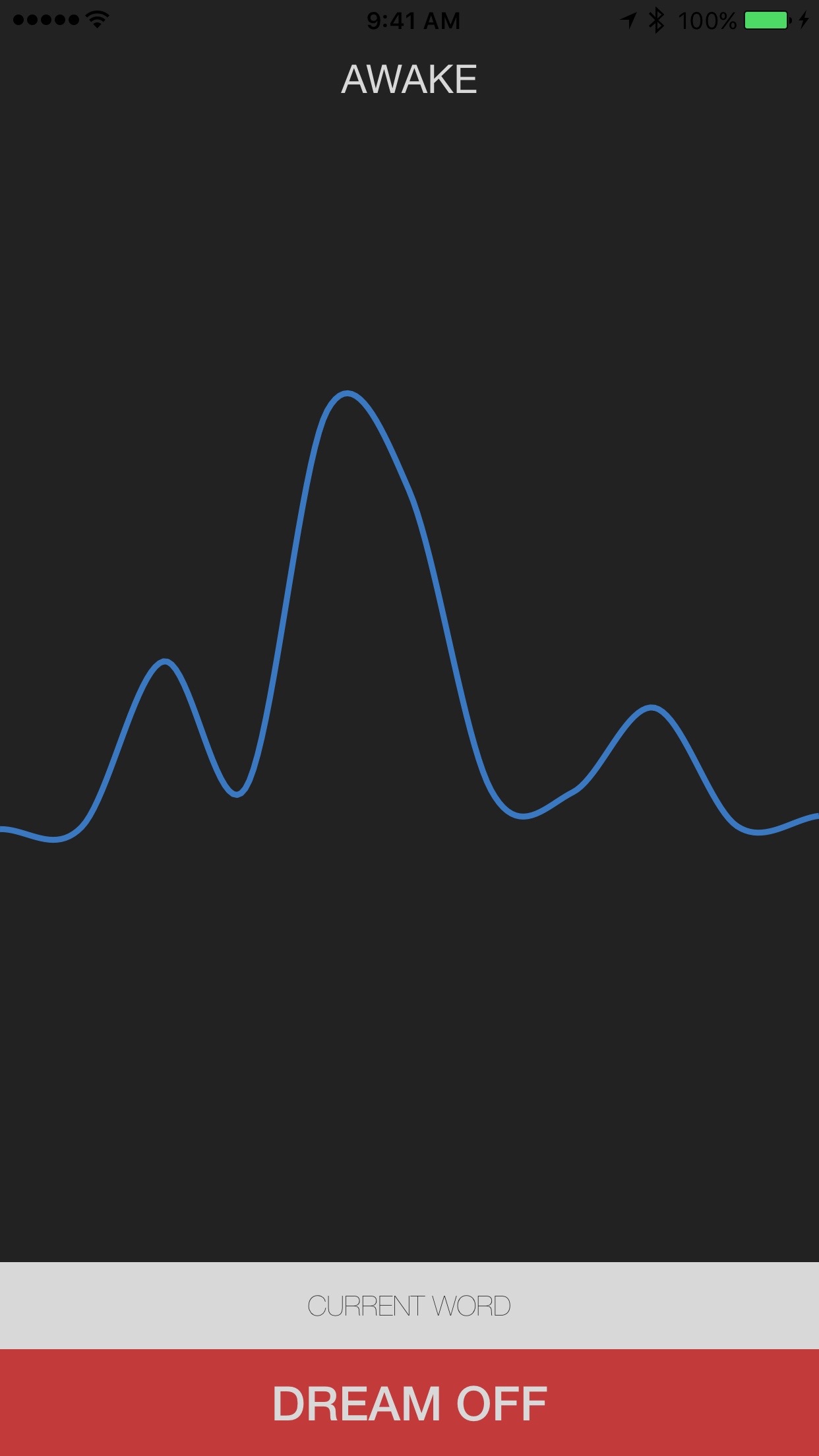
- Sleep tracking – detect sleeping status
- Music therapy – good for sleep music
- Vocabulary audio – reinforce knowledge • Quiz – check progress
- Quiz – check progress
- Audio sync with brain wave (theta wave)
- There are 3s gap between sounds
- App check continuously for 10 min stable period
Sleep Tracking Technology
We track the user's sleep status by 3 steps:
- User body/muscle movements are recorded via accelerometer sensor of smartphone/smart-wearable.
- Data are sampled down using the mean of maximum and minimum points and recorded as discrete time series.
- Statistically analyzed in comparison with provided collected samples to decide if user is sleeping.
The samples are collected during the Edtech Hackathon 2016.
Final notes
We have some origami flowers at our table available for giving away~
Built With
- apache
- browserify
- gulp.js
- javascript
- jquery
- node.js


Log in or sign up for Devpost to join the conversation.