Project Story
Inspiration
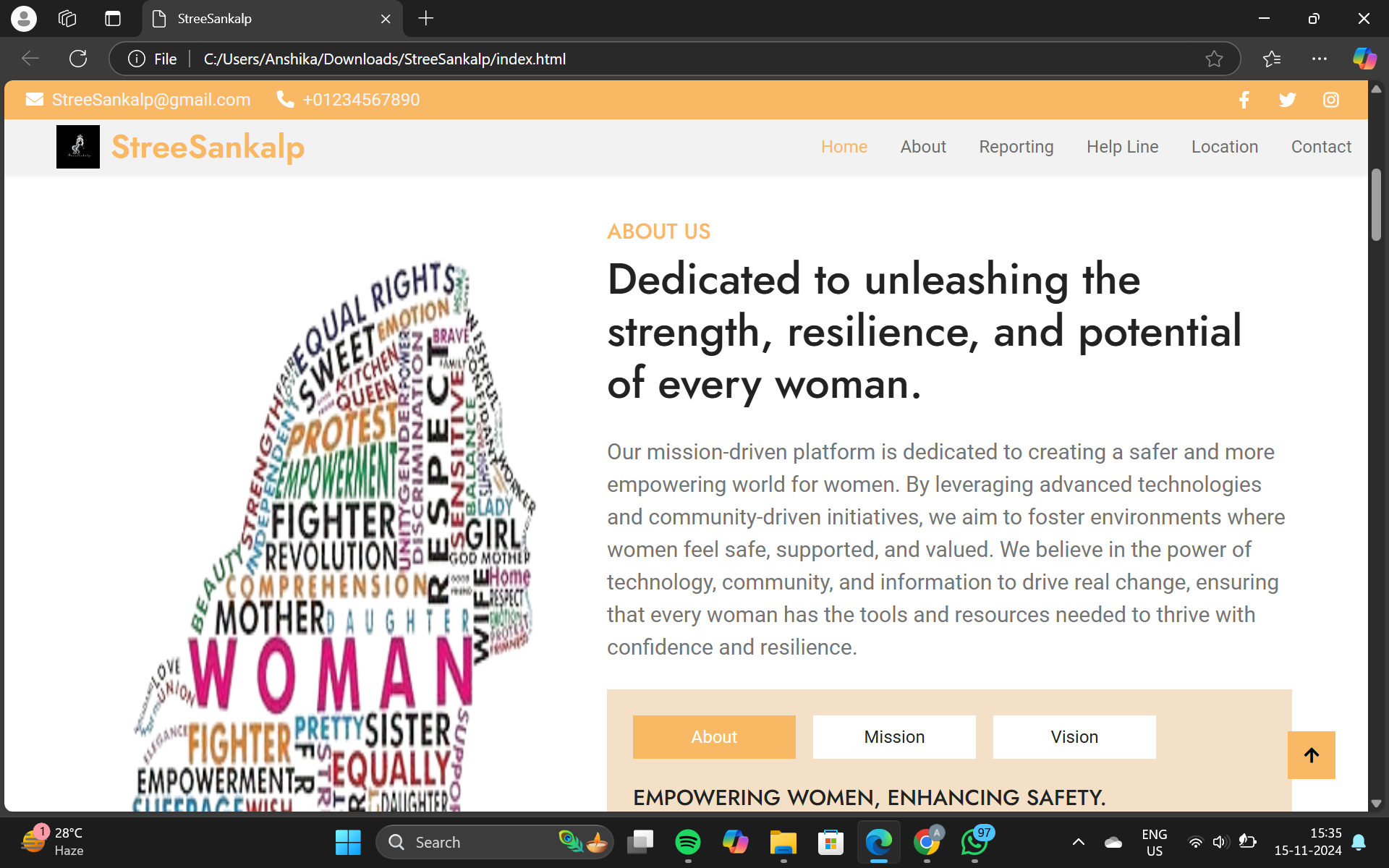
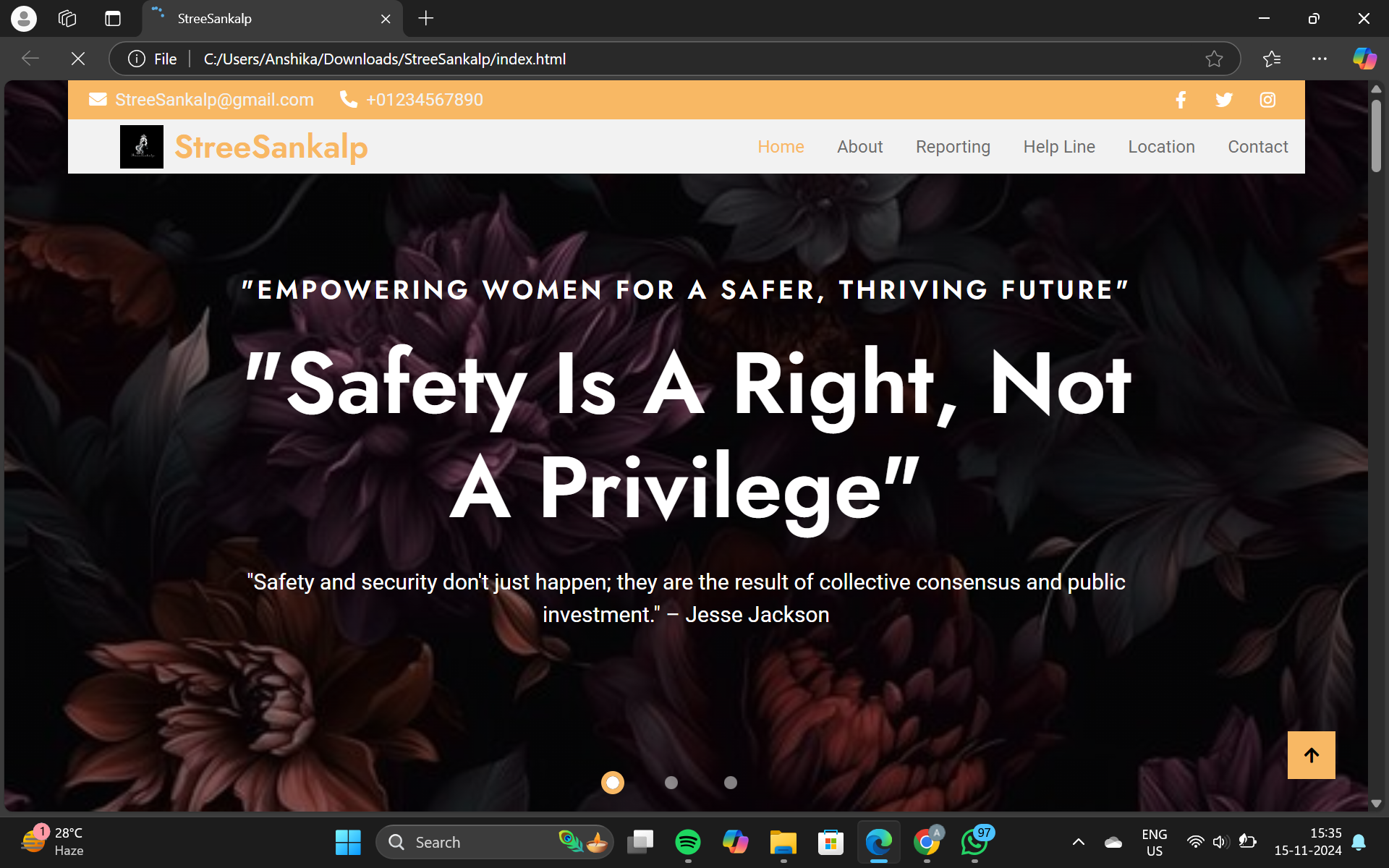
StreeSankalp was born from the idea of creating a safe, reliable space for survivors of sexual abuse, gender-based violence, domestic abuse and child marriage. The inspiration behind the project comes from the challenges survivors face when seeking help. Often, they are not aware of the resources available to them, or the process of finding help can be overwhelming and intimidating. This project aims to simplify access to crucial services by offering immediate support through an easy-to-navigate platform, ensuring that survivors feel supported and understood at every stage of their journey to recovery.
The motivation behind StreeSankalp was driven by a desire to create a platform where survivors would never feel alone, enabling them to get the help they need without fear or hesitation.
What it does
StreeSankalp is a comprehensive website designed to assist survivors of trauma by offering resources, guidance, and emotional support. Key features of the platform include:
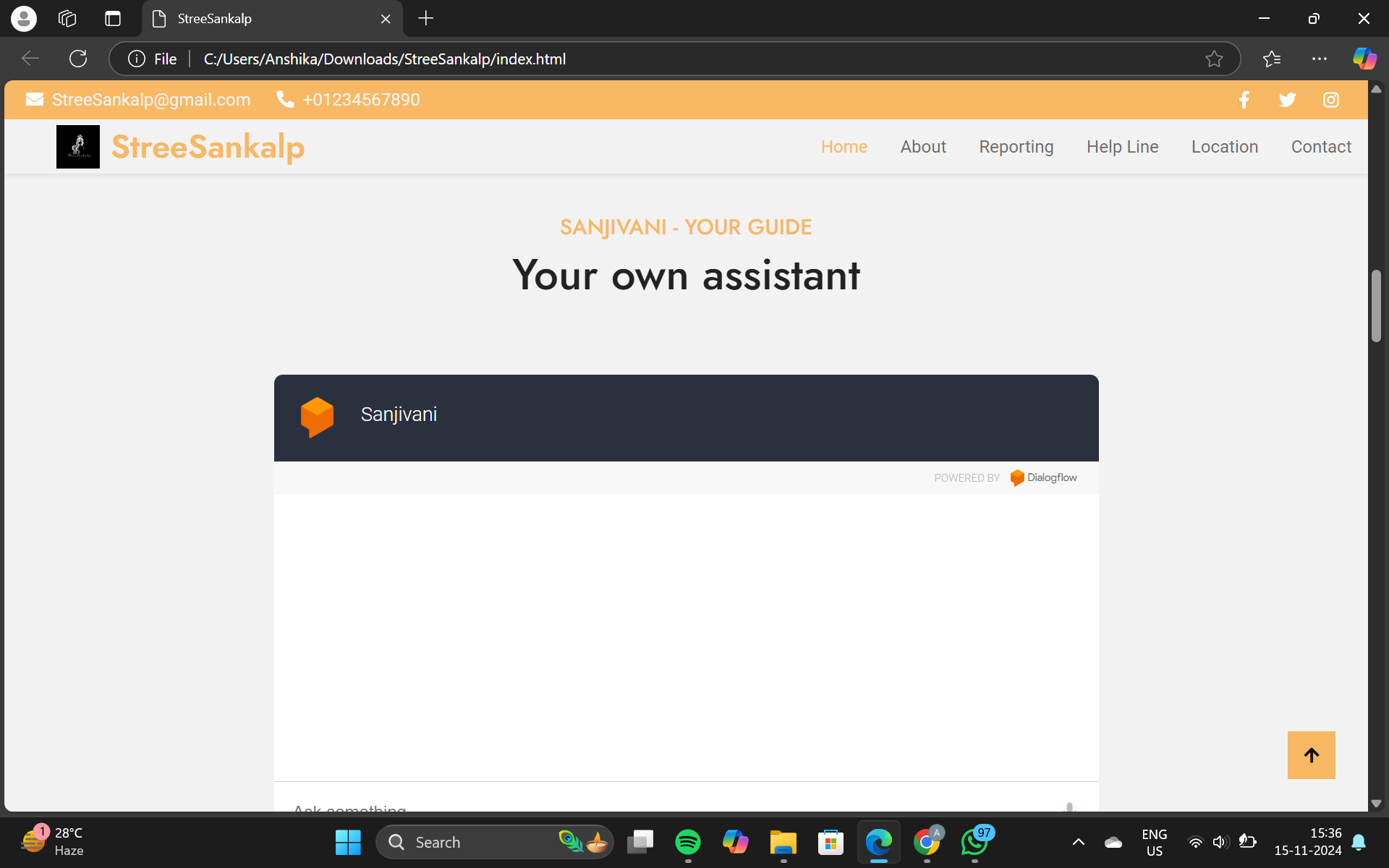
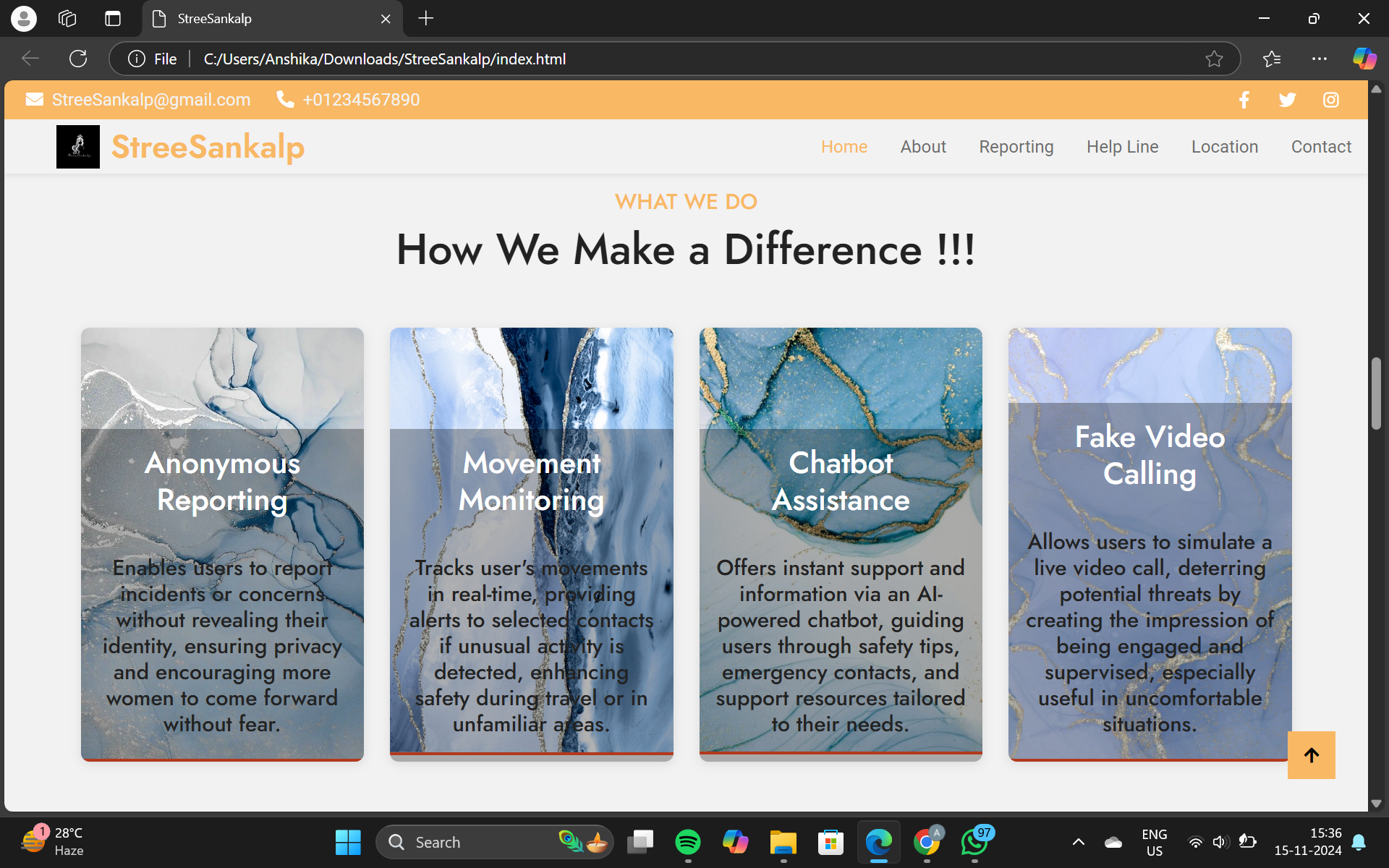
- AI Chatbot (Dialogflow): Provides real-time, personalized support to guide survivors through available services, such as legal aid, medical support, and mental health resources.
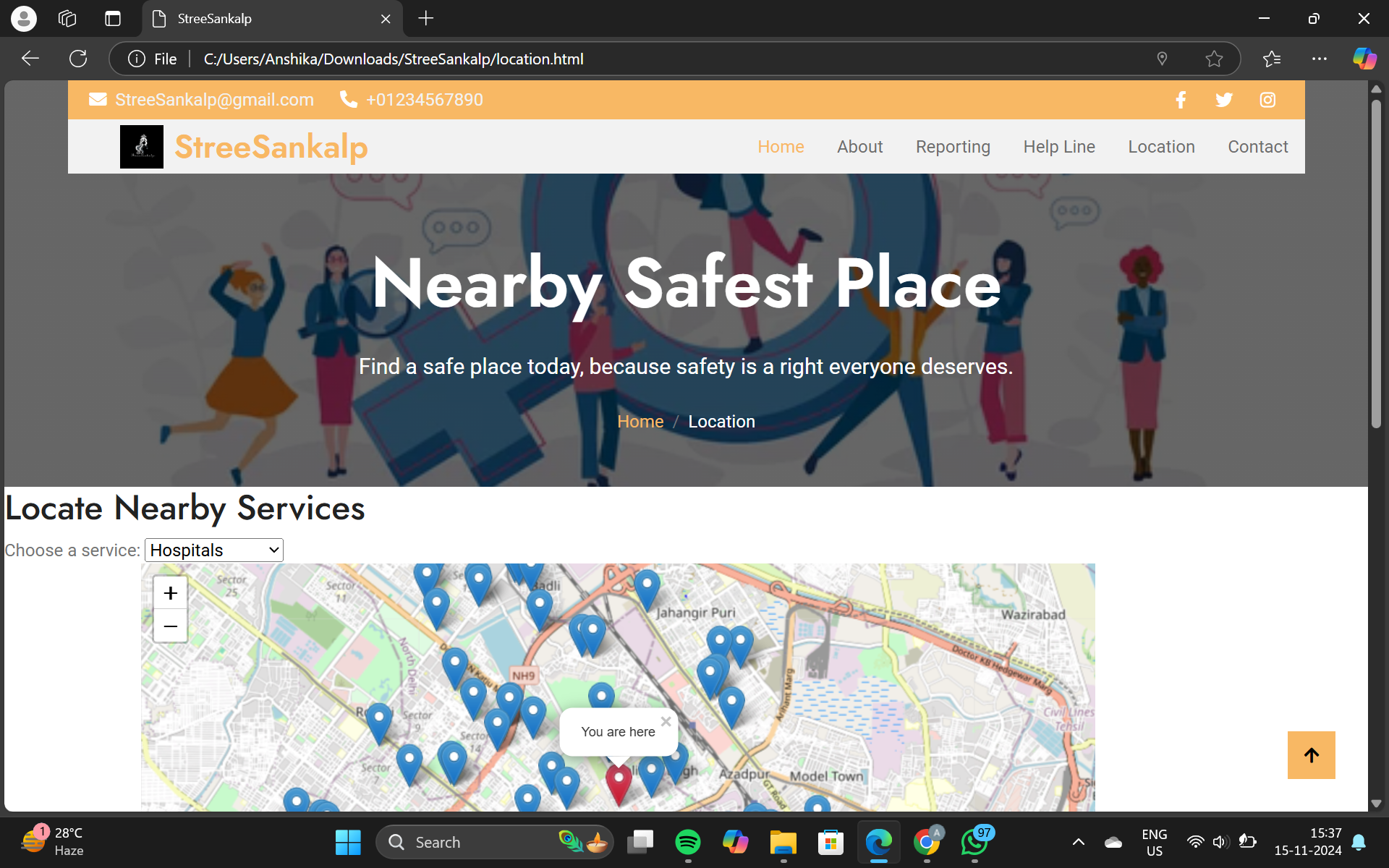
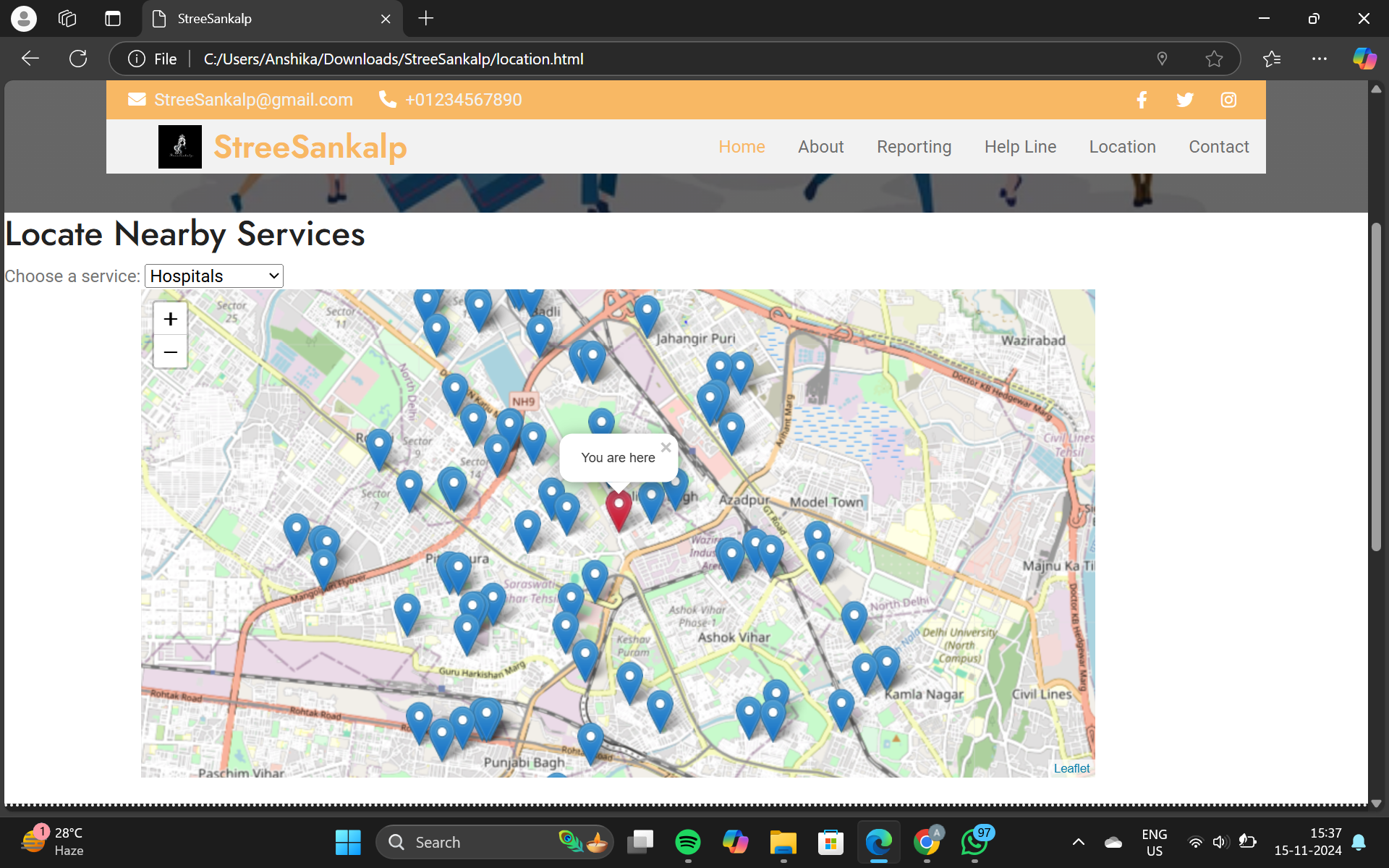
- Interactive Mapping (OpenStreetMap API & Google Maps API): Users can locate nearby services such as shelters, hospitals, and NGOs that specialize in supporting survivors of violence and abuse.
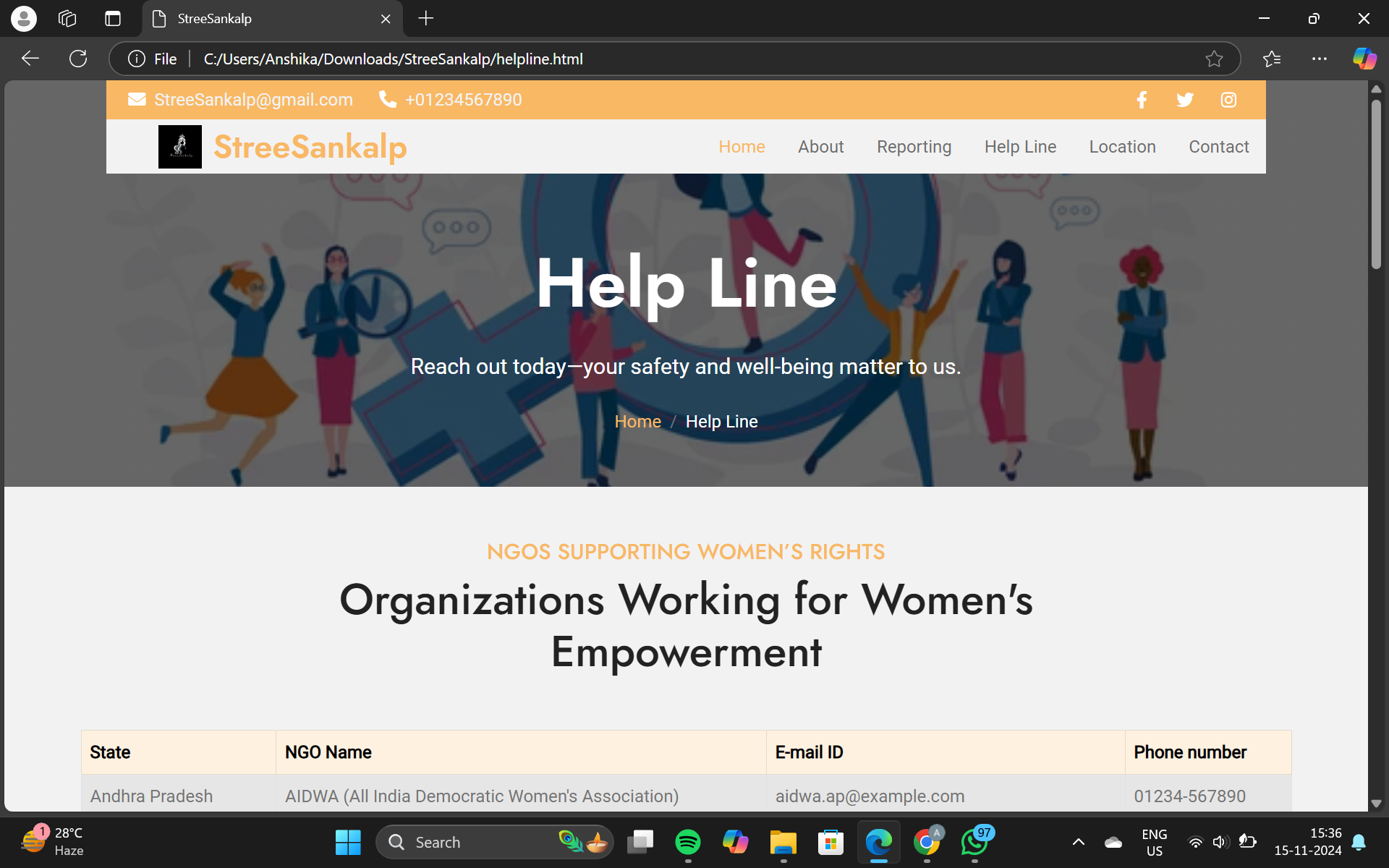
- NGO and Support Listings: A regularly updated directory of local and international NGOs and support services to help survivors find appropriate help.
- Anonymous Browsing & Secure Authentication: Ensures user privacy and security, allowing survivors to use the platform without revealing their identity.
How we built it
We developed StreeSankalp as a website, focusing on accessibility and ease of use. Here’s a breakdown of the technologies and platforms used:
- Cloud Console: Utilized for backend services, including user authentication, data management, and hosting, ensuring scalability and security for the platform.
- HTML5: For structuring the website and providing semantic content to make it accessible to a wider audience.
- CSS3: For styling, ensuring the platform’s design is simple, clear, and responsive across all devices.
- JavaScript: To enable dynamic functionality on the website, such as real-time responses from the AI chatbot and interactive mapping features.
- OpenStreetMap API: Integrated to allow users to access geographic data, helping them locate essential services like shelters and clinics.
- Google Maps API: Provided real-time location tracking to guide users to services nearby.
Challenges we ran into
During the development of StreeSankalp, several challenges arose that required creative problem-solving:
- Designing for Sensitivity: Designing a platform for survivors of trauma required a thoughtful, user-centered approach. Ensuring that the website remained functional while providing a comforting, non-overwhelming interface was a delicate balance.
- Privacy and Security: Since the platform deals with sensitive user data, maintaining user privacy and ensuring data protection was paramount. Implementing secure, anonymous browsing and safe authentication methods was crucial.
- Service Integration: Integrating real-time services such as Google Maps for precise location tracking and ensuring that the directory of support services remained up-to-date presented logistical and technical challenges.
- Scaling the Platform: Anticipating the growth of the platform and ensuring it could handle increased traffic and data storage required careful backend planning.
Accomplishments that we're proud of
We are particularly proud of the following accomplishments:
- Creating a Supportive, Non-Judgmental Platform: StreeSankalp offers survivors a space where they can seek help without fear of stigma or discrimination. The platform is designed to empower users by providing them with the resources and tools they need to take control of their journey.
- AI Chatbot Integration: Successfully integrating the Dialogflow chatbot to provide immediate, empathetic responses to users in distress. This AI tool has allowed us to offer 24/7 support without delays, making it a vital feature for those in urgent need.
- Interactive Mapping: The OpenStreetMap and Google Maps API integration to show real-time locations of services and resources has enhanced the usability of the platform, providing survivors with precise, accessible information at the click of a button.
- Partnerships with NGOs: Establishing connections with local and international NGOs to list their services on the platform, ensuring survivors have access to trusted resources.
What we learned
Developing StreeSankalp has been an incredibly educational experience. Some key takeaways include:
- The Importance of Empathy in Design: Designing for a sensitive user base taught us the importance of empathizing with the user journey and designing with a trauma-informed approach.
- Complexity of Data Security: Ensuring privacy and security for users handling sensitive information requires comprehensive planning and regular updates to adhere to the best practices in data protection.
- Integration Challenges: Integrating various technologies, like APIs and real-time data services, required a deep understanding of how these tools could work together seamlessly while maintaining performance and security.
- Collaboration with Mental Health Professionals: Collaborating with experts in mental health and legal services was crucial in making sure that the platform met the actual needs of survivors and was aligned with best practices in trauma care.
What's next for StreeSankalp
The journey of StreeSankalp doesn’t end here. Several exciting developments are planned for the future:
- Fake Video Call Feature: A feature that allows users to simulate an incoming video call to safely escape potentially dangerous situations. This feature aims to provide an added layer of security for users at risk.
- Expanded Service Listings: We plan to expand the list of services available on the platform, including more comprehensive support in different regions. This will ensure that StreeSankalp remains accessible to survivors across the globe.
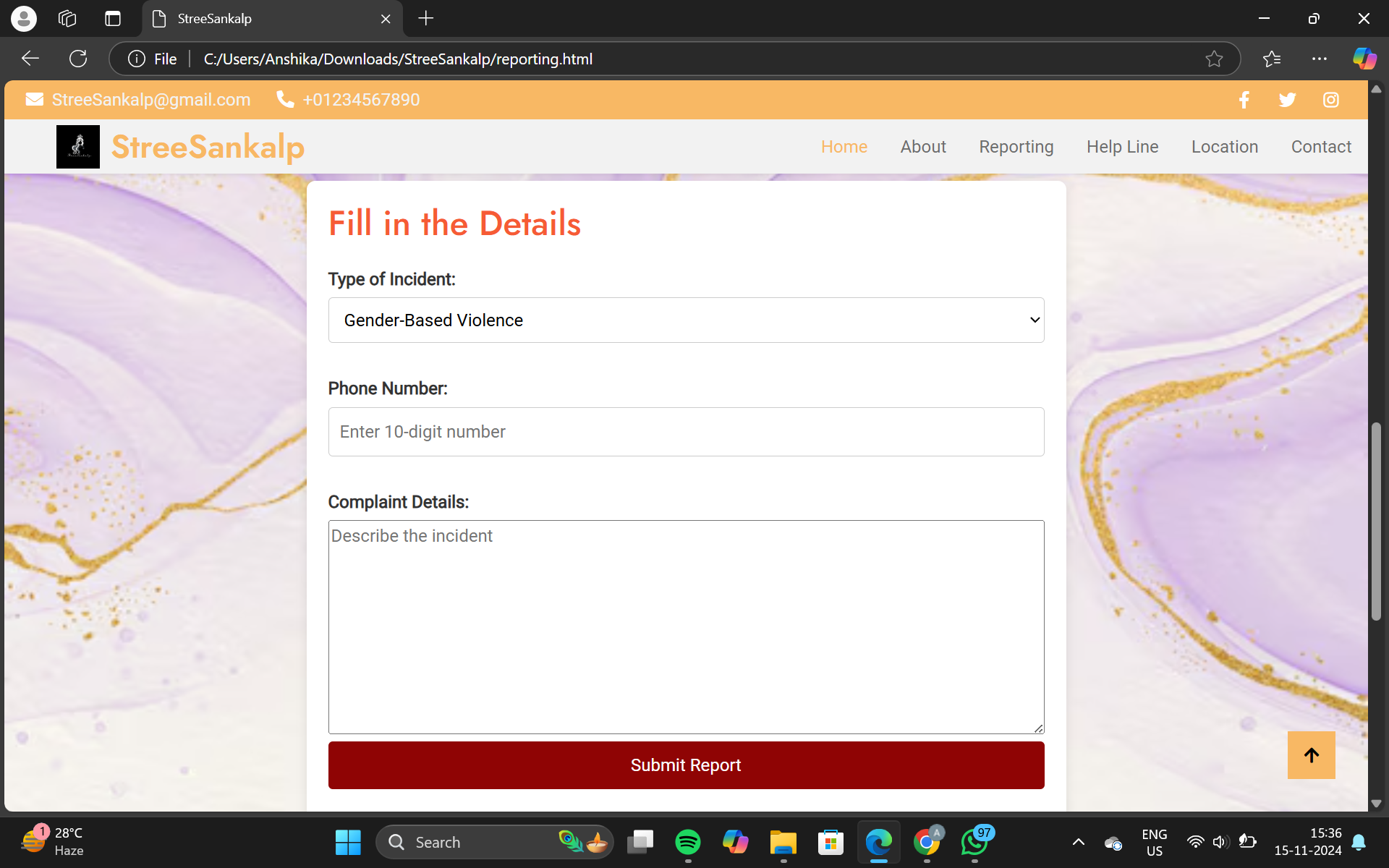
- Case Reporting and Tracking: Adding a case reporting feature where users can anonymously report incidents and track the progress of their cases through the legal system. This will provide survivors with a sense of empowerment and transparency.
- Psychotherapist Listings: As part of expanding mental health support, we aim to list qualified therapists and counselors, making it easier for survivors to find specialized care.
- Community Building (User Forums): Introducing moderated community forums to create a safe space for survivors to connect, share experiences, and offer support to one another. This feature will encourage solidarity and community healing.
Built With
- HTML5 – For structuring the website’s content.
- CSS3 – For styling and ensuring responsive design.
- JavaScript – For interactive elements and dynamic content.
- Cloud Console – For backend services such as user authentication, database management, and hosting.
- OpenStreetMap API – For providing location-based services and mapping.
- Google Maps API – For real-time location tracking and navigation.
- Dialogflow – For integrating the AI chatbot to guide users.
Built With
- console
- css3
- dialogflow
- html5
- javascript
- openstreetmap

Log in or sign up for Devpost to join the conversation.