Inspiration
We noticed a gap between how connected people are online and how often they actually see each other in real life.
From our research, daily in-person interaction has significantly declined, even though communication tools have increased.
We were inspired by the simplicity of early social apps like Snapchat and Houseparty, where interaction felt spontaneous and low-pressure.
We wanted to bring that feeling back in a modern, intentional way.
What it does
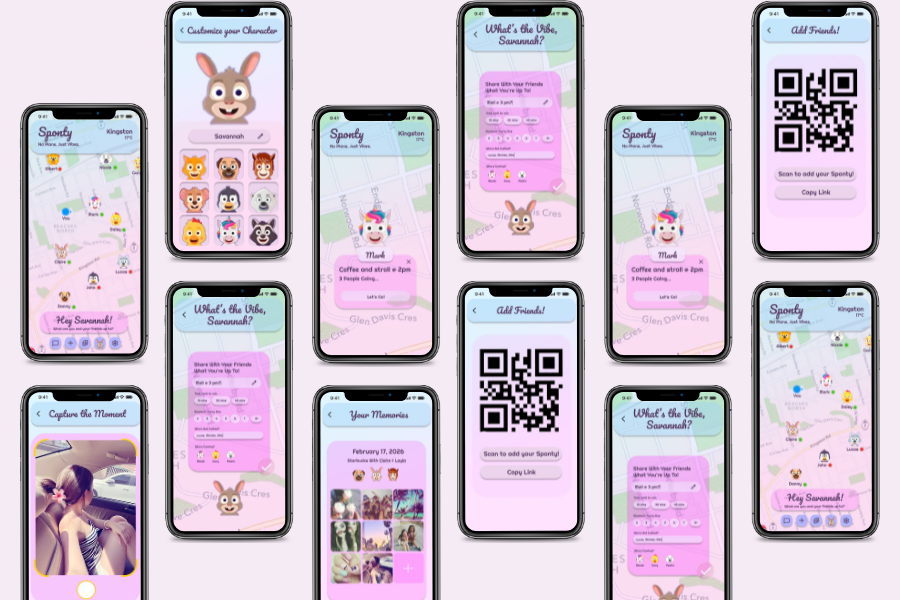
Sponty is an app that helps users turn free time into real-life plans instantly. Instead of texting “anyone down?” and waiting, users post what they want to do, like grabbing coffee or going for a walk, and nearby friends can join with one tap.
It removes friction from planning and focuses on fast, casual, real-world interaction
How we built it
We started by identifying key user pain points through research and a small survey. From there, we mapped out core user flows: posting, discovering, and joining.
We designed low-fidelity wireframes, then iterated into a higher-fidelity prototype using Framer.
Throughout the process, we prioritized simplicity, speed, and safety — ensuring the app feels intuitive and easy to use.
Challenges we ran into
One major challenge was balancing spontaneity with safety. Real-time location sharing introduces privacy concerns, so we had to carefully design features like approximate location and consent-based access.
Another challenge was reducing friction without oversimplifying the experience — making sure the app feels fast, but still clear and controlled
Accomplishments that we're proud of
We created a solution that directly addresses real user behavior and pain points.
Our design is cohesive, intuitive, and aligned with our concept of low-pressure interaction. We also successfully integrated safety features without compromising usability. Most importantly, we turned a common frustration into a clear, actionable solution.
What we learned
We learned that good design is not about adding features, but removing friction. Understanding user psychology, especially hesitation and decision-making, was critical.
We also learned how important it is to validate ideas with research and iterate based on real user needs.
What's next for Sponty
Next, we would test the product in a real environment, such as a university campus, to validate engagement.
We would also refine features based on user feedback and explore ways to scale the platform while maintaining safety and simplicity.
Long-term, Sponty could expand into different communities and contexts where spontaneous connection is valuable.
Built With
- adobe-illustrator
- figma
- framer
- photoshop

Log in or sign up for Devpost to join the conversation.