-
-
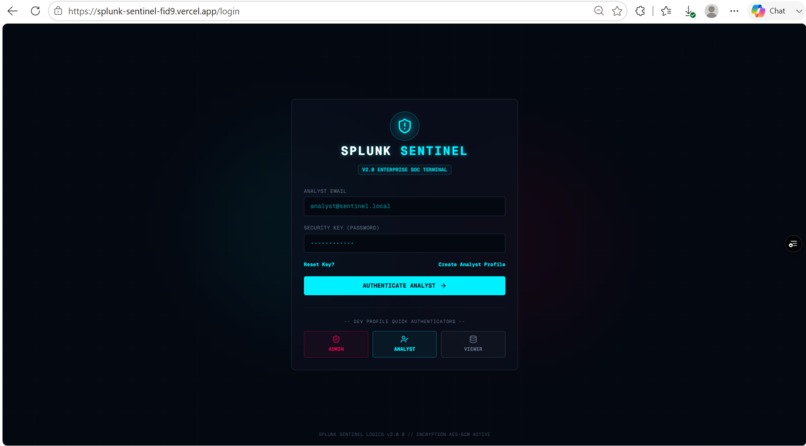
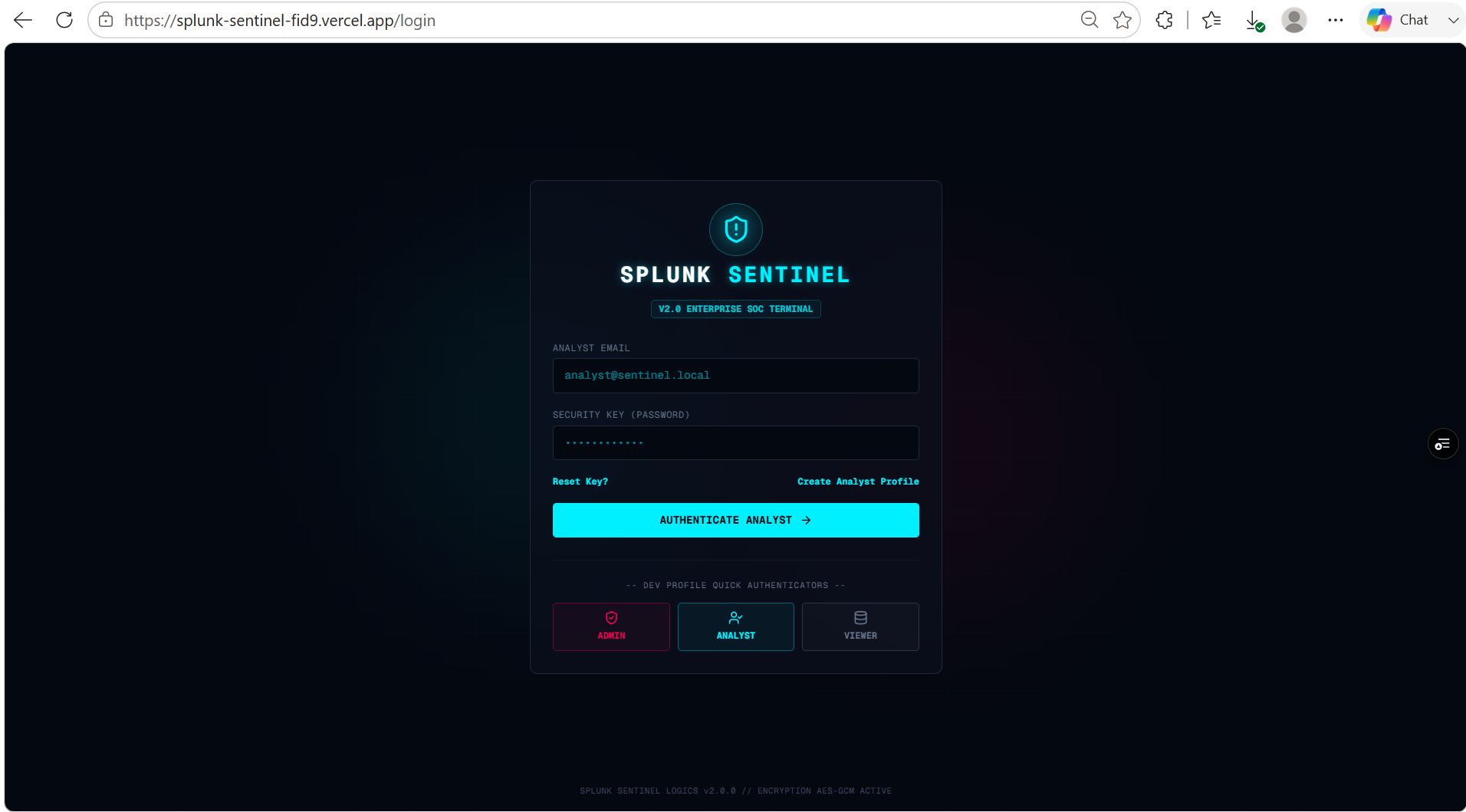
Secure analyst authentication portal with role-based access control for SOC operations.
-
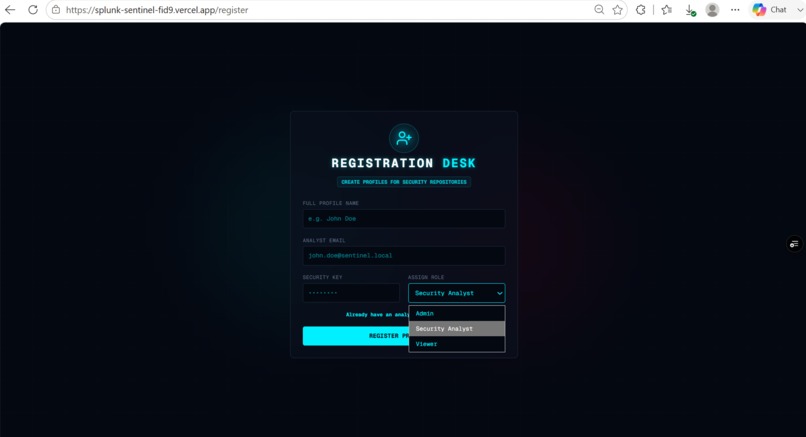
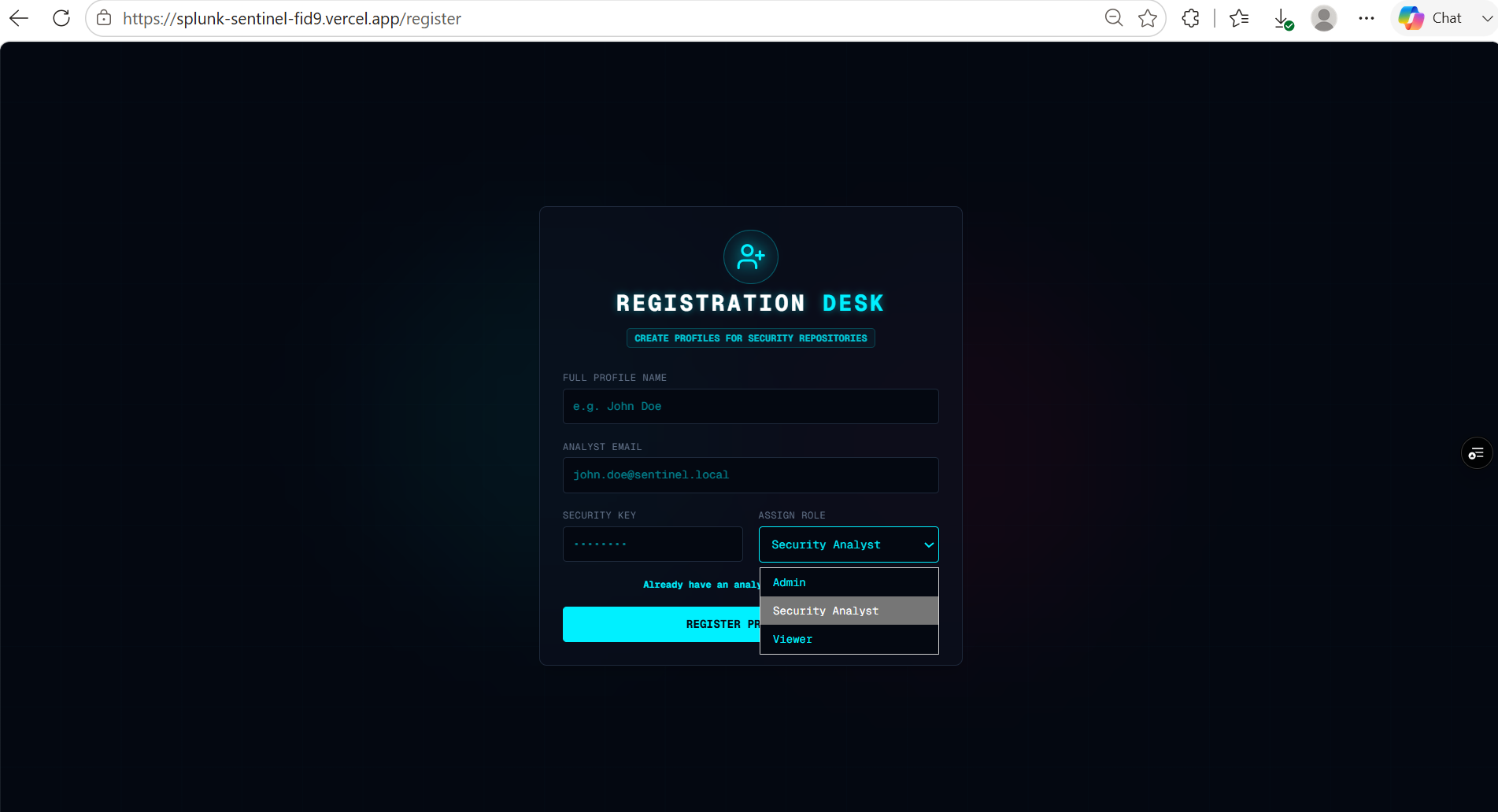
Create and manage analyst profiles with secure credentials and enterprise access controls.
-
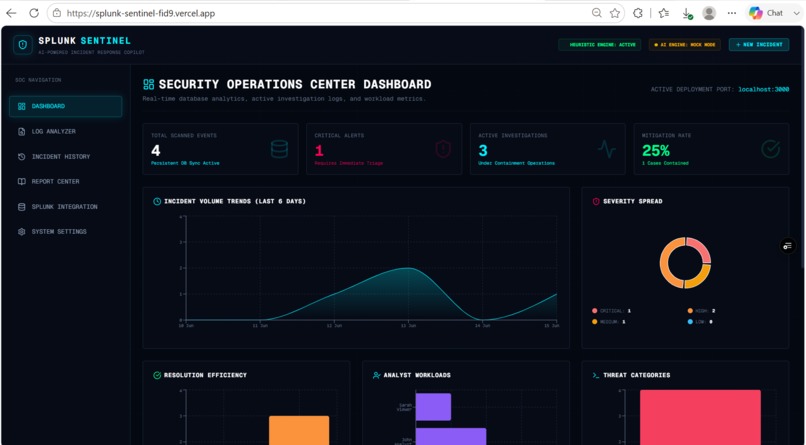
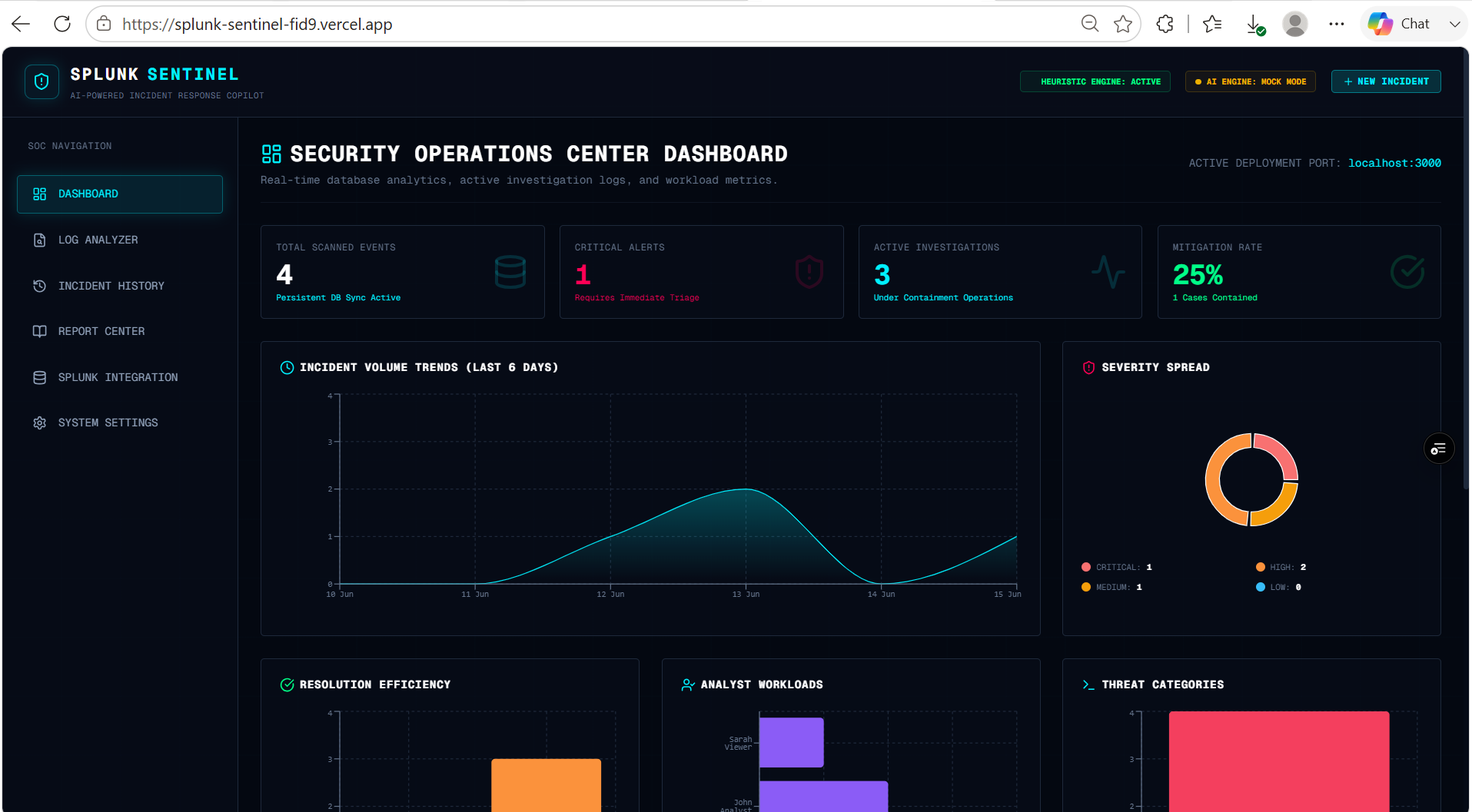
Real-time security operations dashboard displaying active threats, investigations, and incident metrics.
-
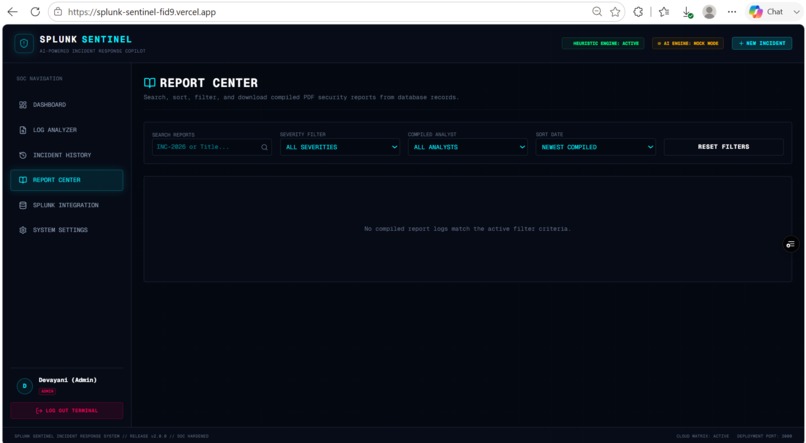
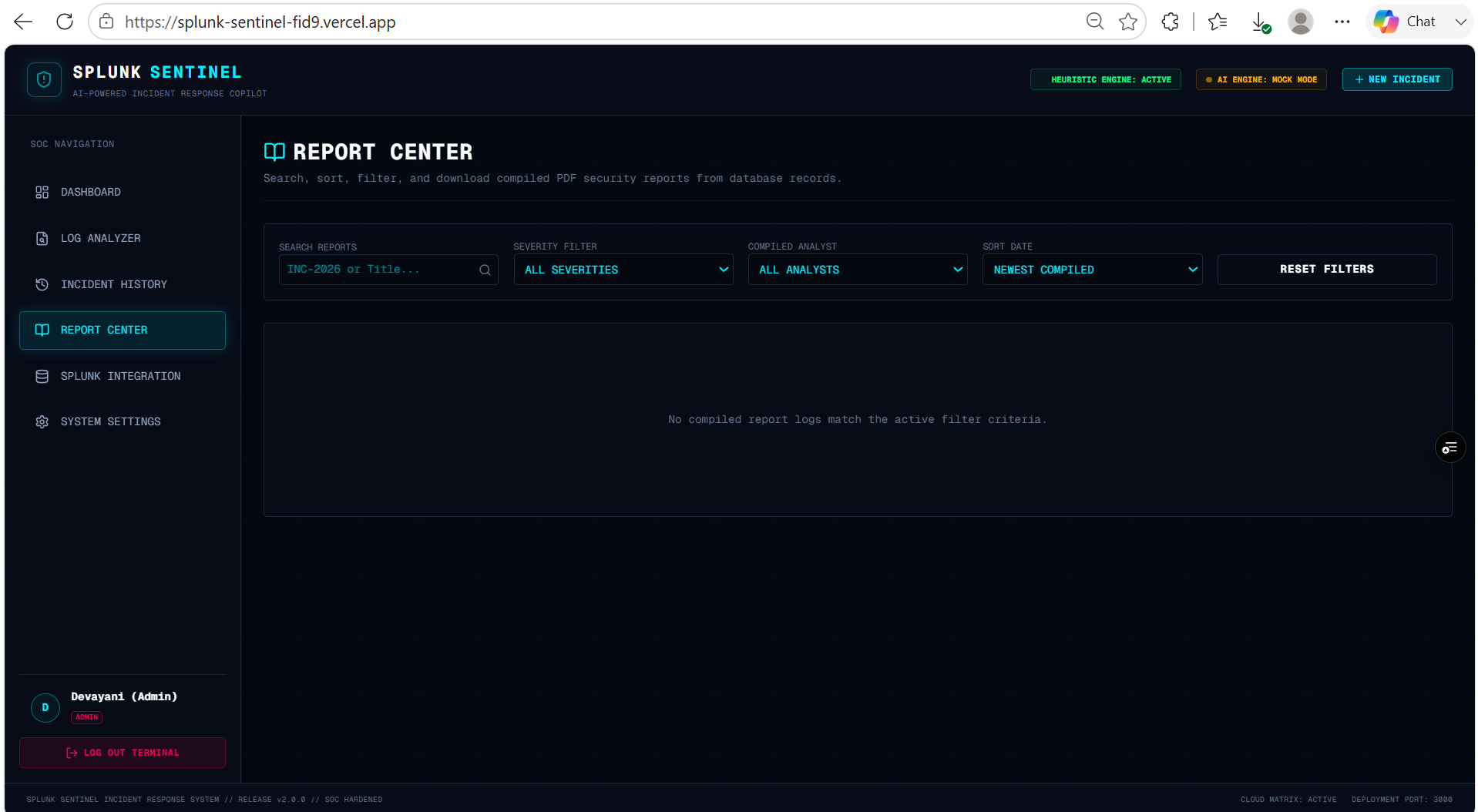
Centralized report management system for forensic investigations and incident documentation.
-
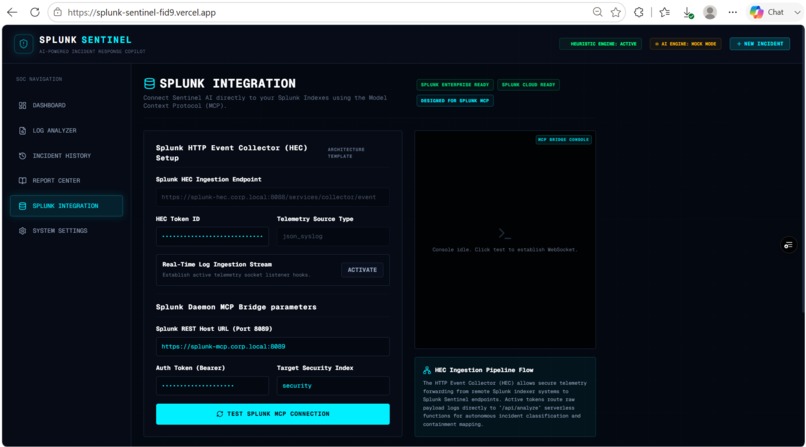
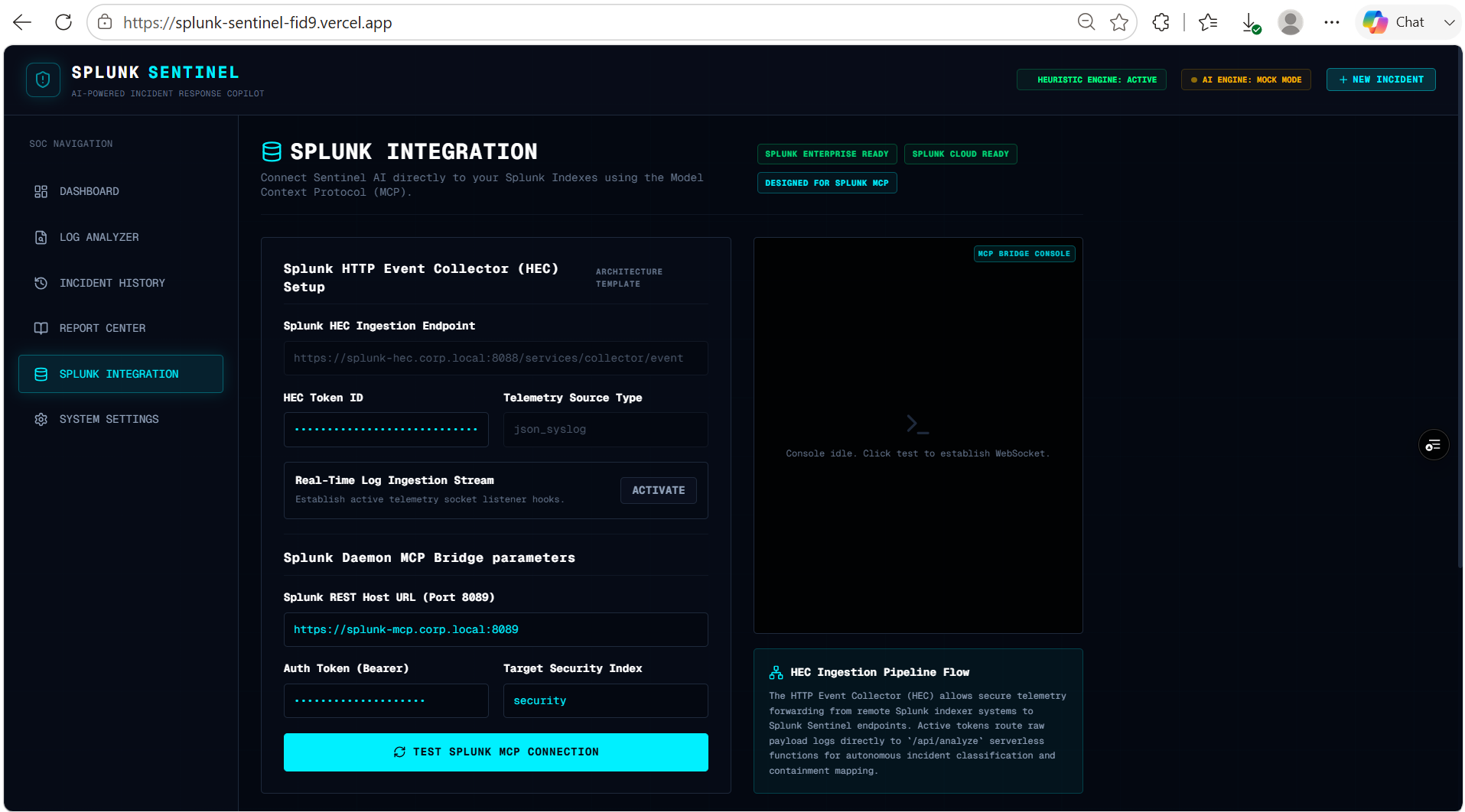
Splunk Enterprise and Splunk Cloud integration workspace with HEC and MCP connectivity support. 6. AI Configuration Console
-
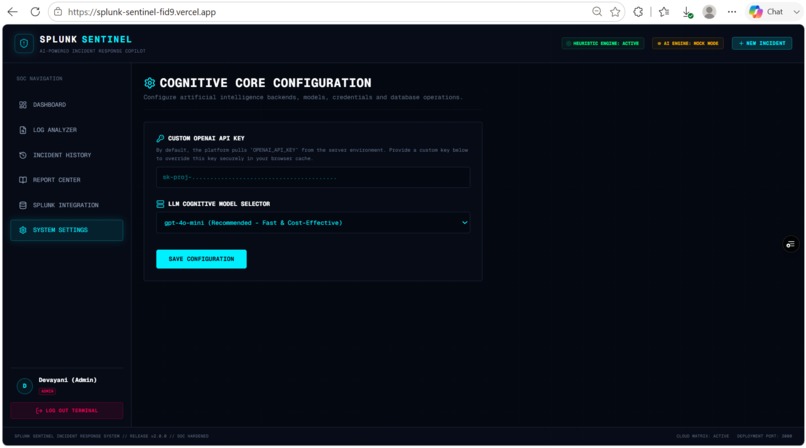
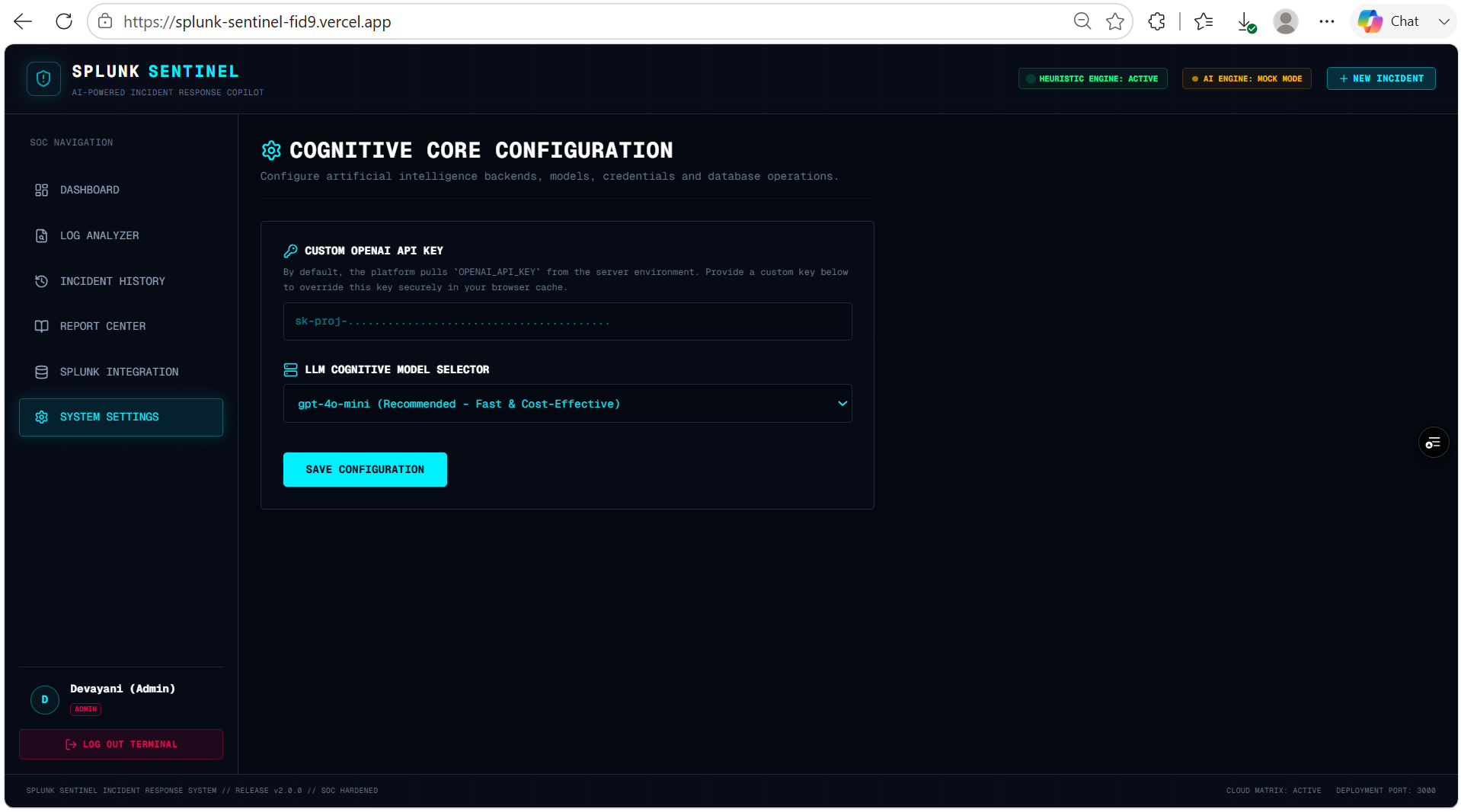
Configure AI models, API credentials, and cognitive analysis settings for Sentinel operations.
-
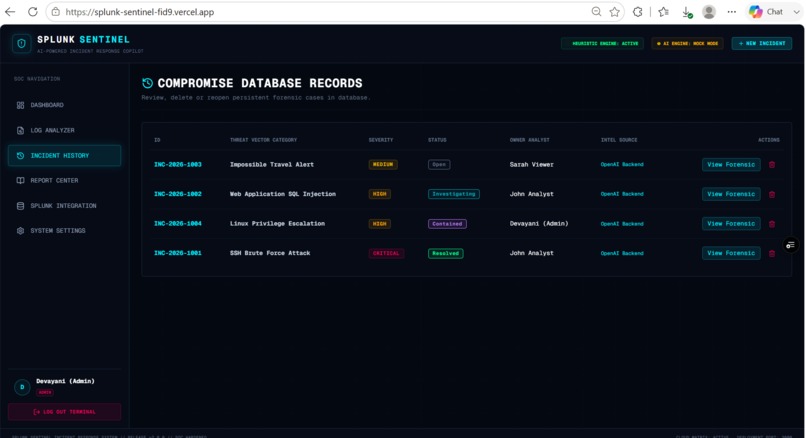
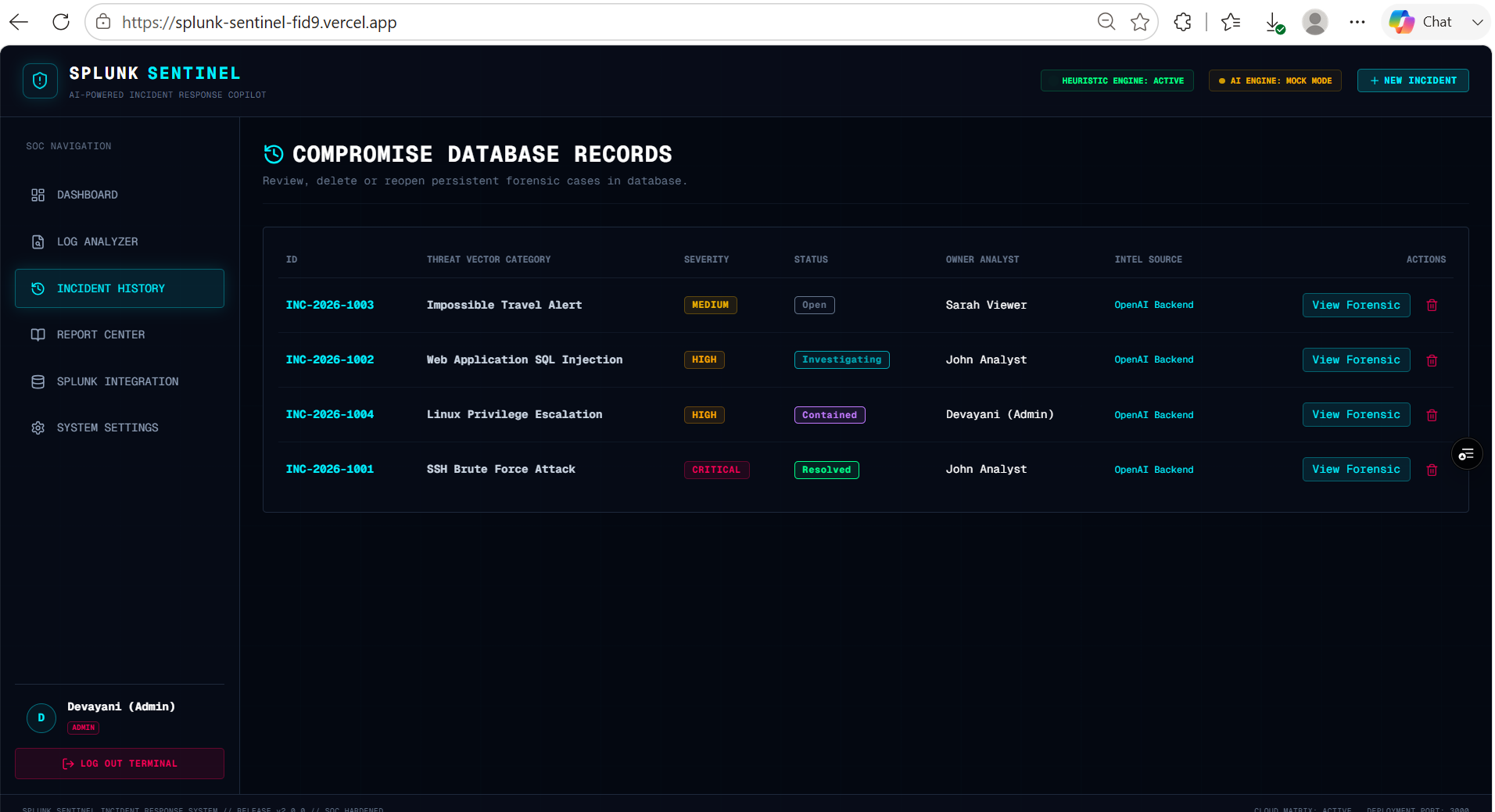
Comprehensive incident tracking system with severity classification and investigation workflows.
-
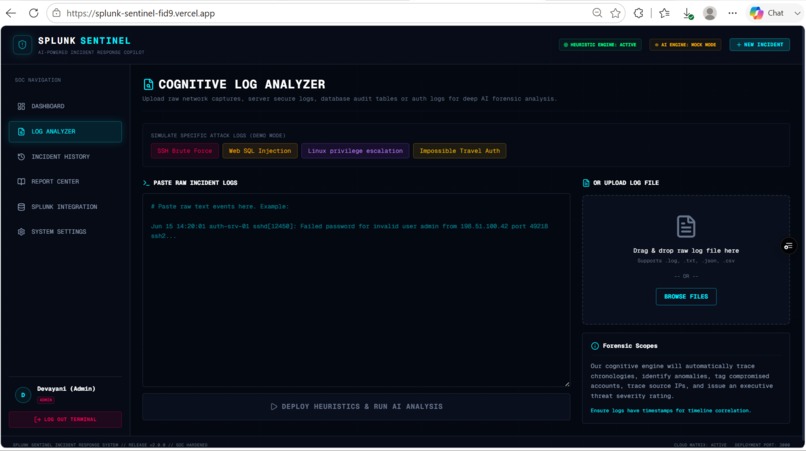
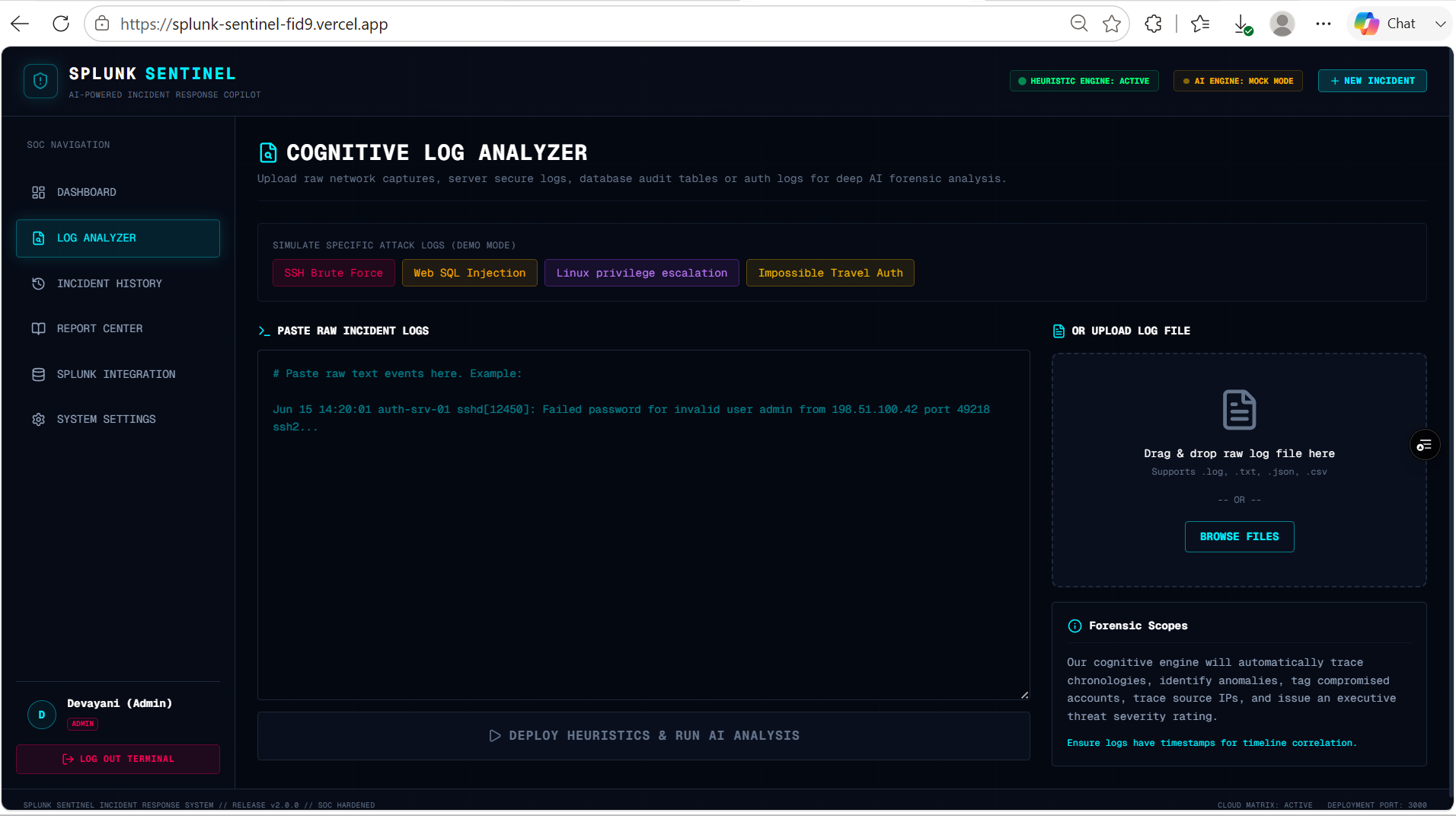
AI-powered forensic analysis engine that transforms raw security logs into actionable intelligence.
-
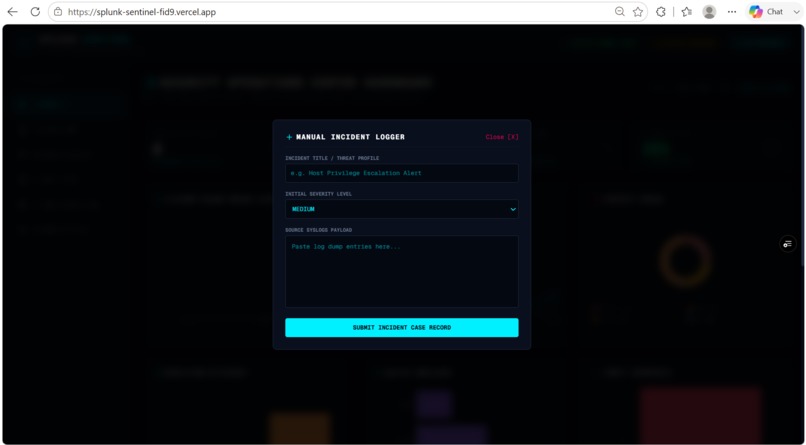
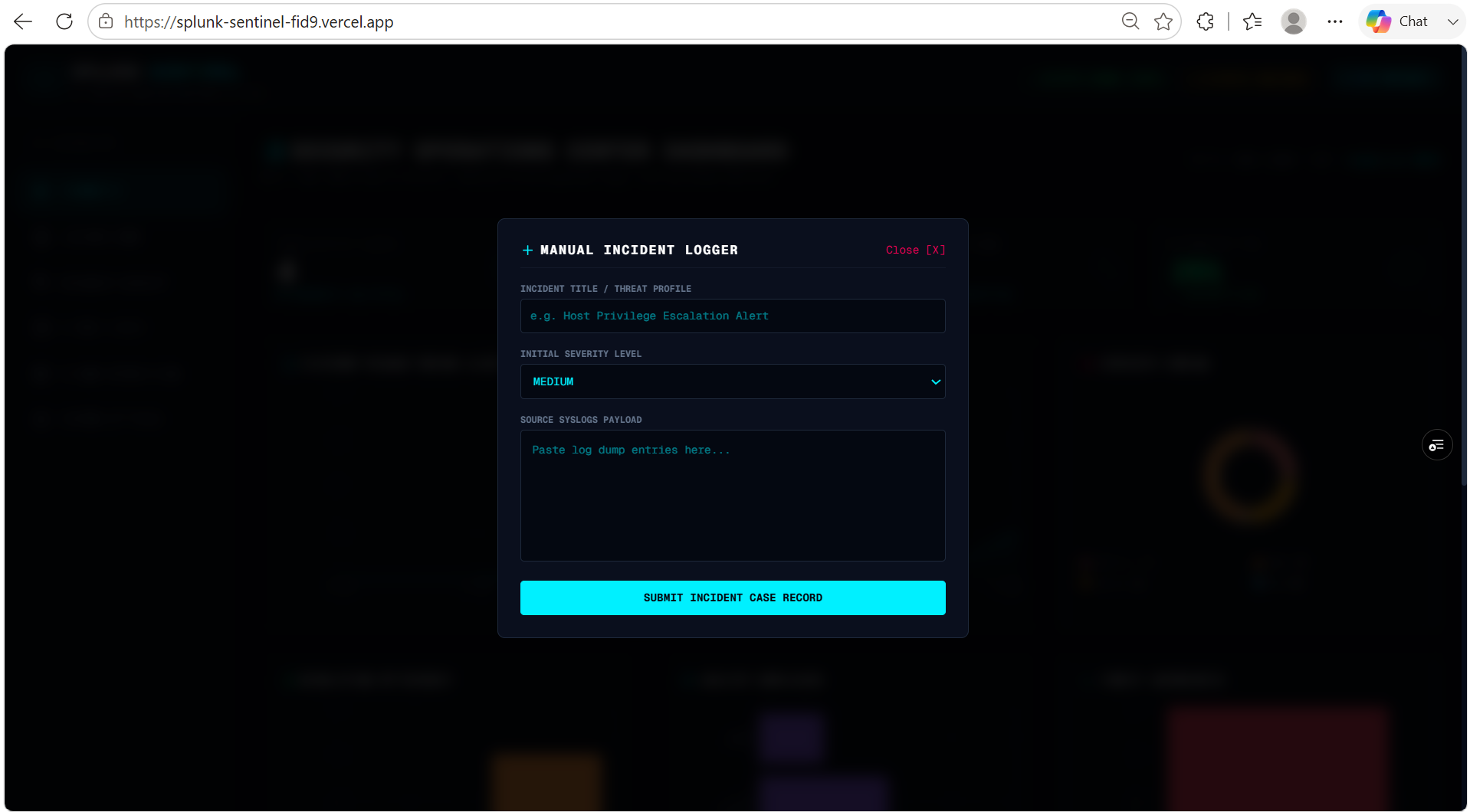
Security analysts can manually create and classify incidents, enabling rapid investigation of emerging threats.
-
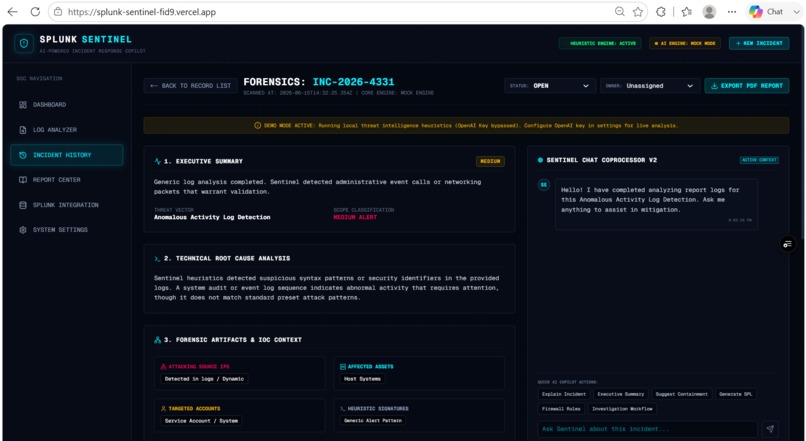
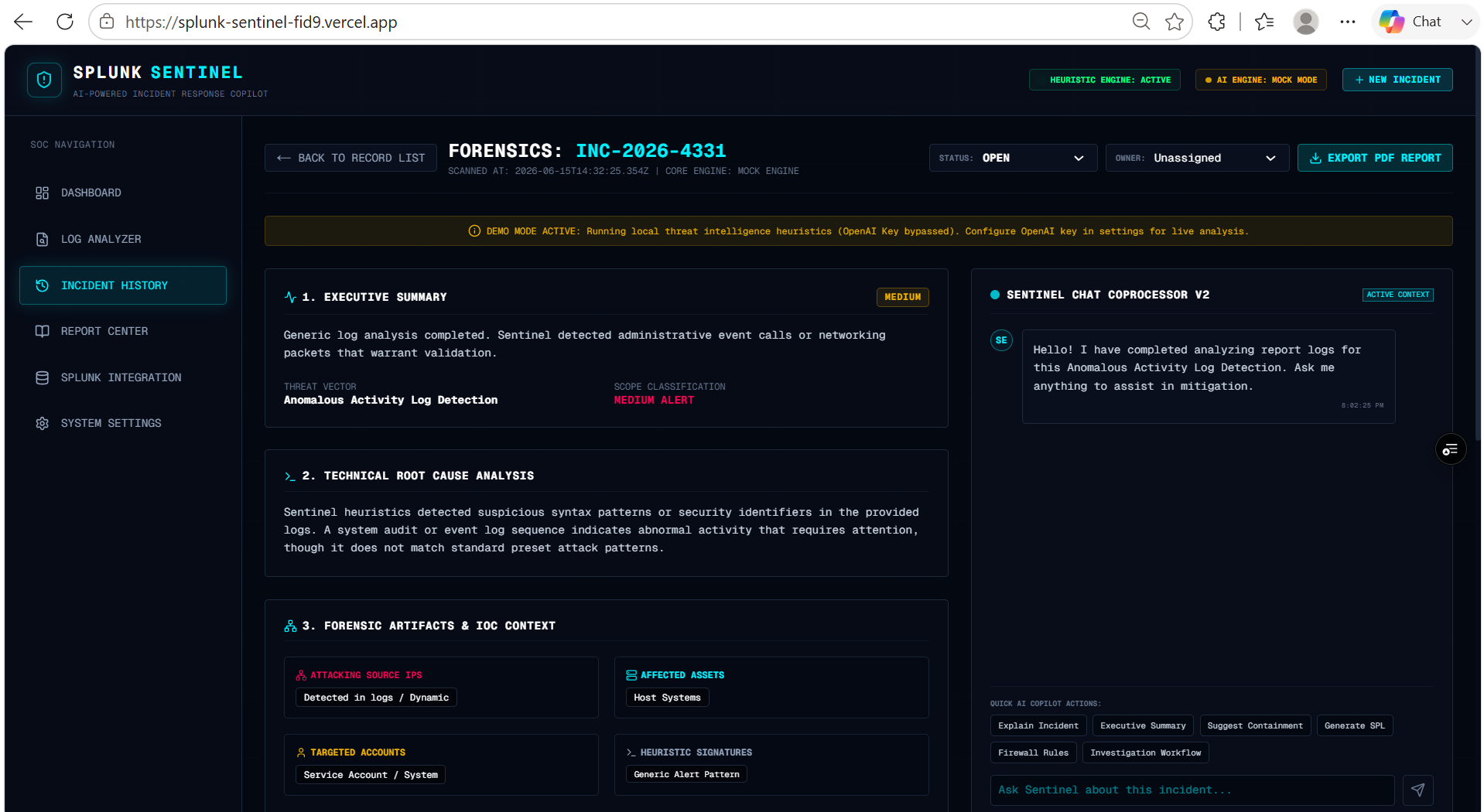
Comprehensive forensic dashboard combining AI analysis, threat classification, IOC identification, and Sentinel Coprocessor assistance.
-
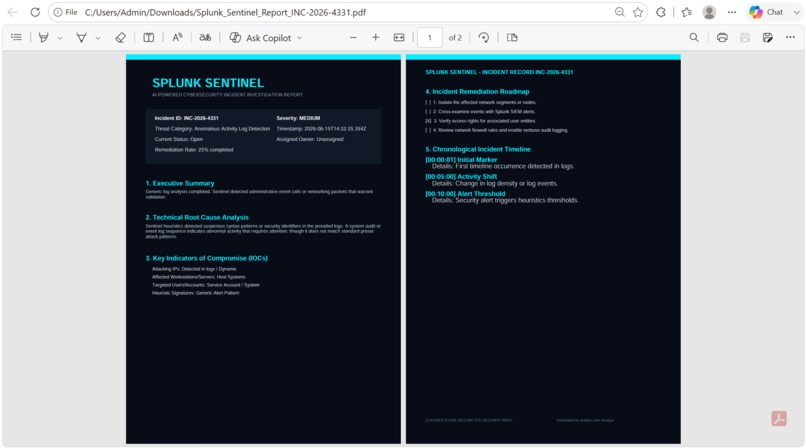
Comprehensive forensic dashboard combining AI analysis, threat classification, IOC identification, and Sentinel Coprocessor assistance.
Inspiration
Security analysts are overwhelmed by the volume of alerts generated every day. Critical incidents often require manual investigation, correlation, reporting, and remediation planning, which consumes valuable response time. We wanted to explore how AI-powered agentic workflows could help security teams move from detection to action faster. Splunk Sentinel was inspired by the vision of an intelligent SOC coprocessor that can assist analysts throughout the entire incident response lifecycle.
What it does
Splunk Sentinel is an AI-powered Security Operations Center (SOC) platform designed to accelerate incident investigation and response.
The platform enables analysts to:
- Analyze raw security logs and telemetry
- Detect suspicious activity and threat patterns
- Generate forensic investigation reports
- Track incidents through their lifecycle
- Create and manage incident records
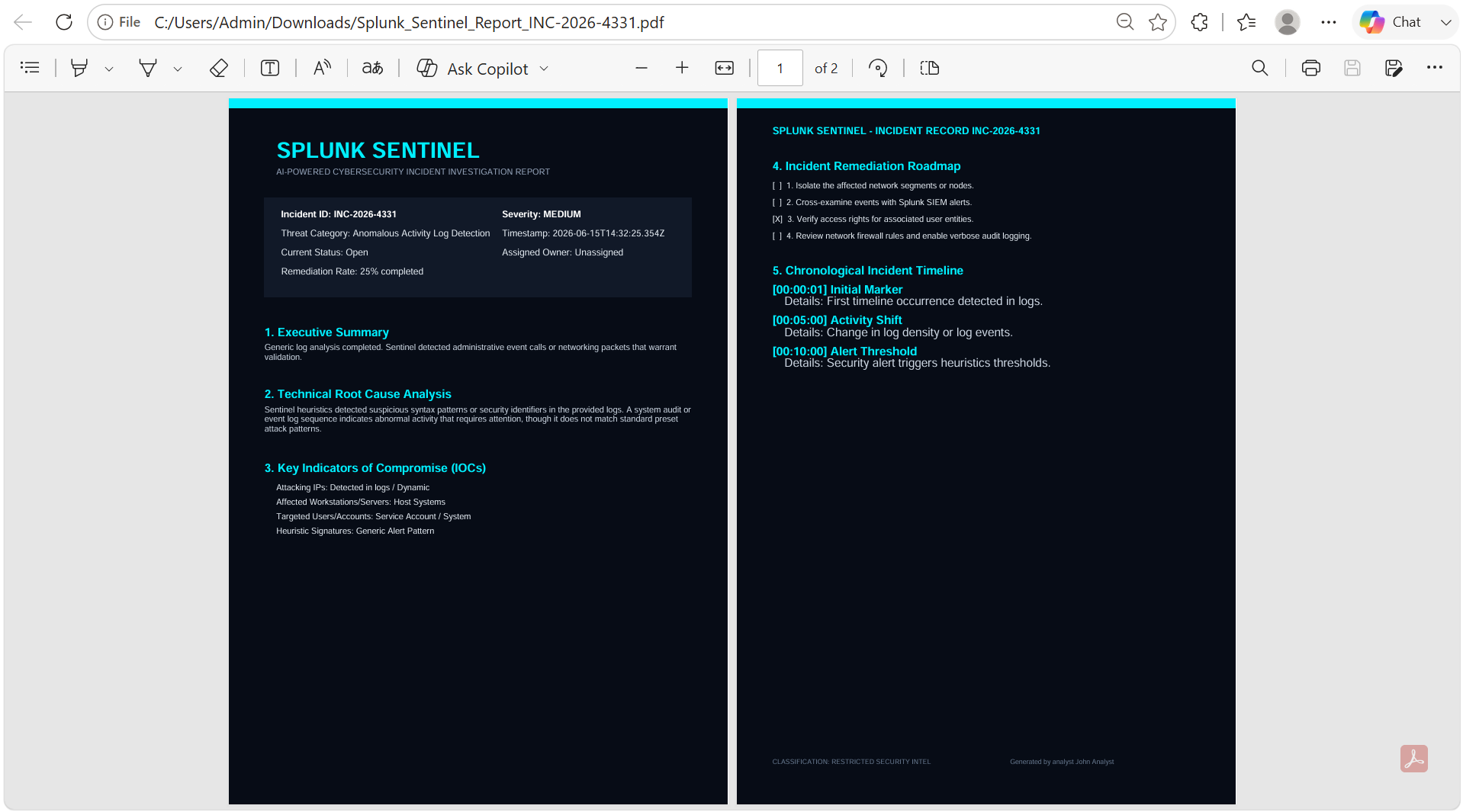
- Export professional PDF investigation reports
- Receive AI-assisted remediation recommendations
- Manage security reports and investigations
- Demonstrate Splunk Enterprise and Splunk Cloud integration workflows
- Configure AI-powered incident analysis workflows
The Sentinel Coprocessor provides natural-language explanations of security events and helps analysts understand why incidents occurred and what actions should be taken next.
How we built it
Splunk Sentinel was built using modern web technologies and AI-powered workflows.
Core components include:
- Next.js frontend architecture
- Interactive SOC dashboard
- Authentication and role-based analyst management
- Incident tracking and forensic record management
- AI-powered threat analysis engine
- Manual incident creation workflows
- Report generation and PDF export system
- Splunk Integration workspace
- MCP integration roadmap and telemetry ingestion architecture
- OpenAI-powered security coprocessor concepts
The platform was designed to simulate how real-world security teams interact with SIEM data, AI analysis systems, and remediation workflows.
Challenges we ran into
One of the biggest challenges was designing a system that felt like a realistic SOC platform rather than a simple dashboard.
We needed to balance usability with technical depth while creating multiple interconnected workflows including authentication, incident tracking, reporting, AI analysis, and Splunk integration concepts.
Another challenge was structuring the AI investigation flow so that security events could be transformed into meaningful analyst recommendations, forensic summaries, and remediation guidance.
Accomplishments that we're proud of
- Built a complete SOC-style platform experience
- Developed an AI-powered incident response coprocessor
- Created a forensic investigation workflow
- Implemented incident history and lifecycle management
- Added role-based authentication and analyst access controls
- Built manual incident creation and management workflows
- Developed automated PDF forensic report generation
- Built a report center for investigation management
- Designed a professional cybersecurity-focused user interface
- Demonstrated Splunk Enterprise, Splunk Cloud, HEC, and MCP integration concepts
- Produced architecture documentation and deployment-ready infrastructure
What we learned
Through this project we gained a deeper understanding of:
- Security Operations Center workflows
- Incident response processes
- SIEM data pipelines
- Splunk integration concepts
- AI-assisted cybersecurity operations
- Threat analysis and forensic reporting
- Enterprise application architecture
- Secure authentication and access control
We also learned how agentic AI systems can augment analysts rather than replace them, helping security teams make faster and more informed decisions.
What's next for Splunk Sentinel
Future development plans include:
- Real-time Splunk Enterprise integration
- Live HEC telemetry ingestion
- MCP-based communication with Splunk services
- Autonomous threat hunting agents
- SOAR playbook execution
- AI-powered alert prioritization
- Advanced threat intelligence correlation
- Multi-tenant enterprise deployment support
- Collaborative analyst workspaces
- Automated containment and remediation workflows
Our vision is to evolve Splunk Sentinel into a fully agentic security operations platform that helps organizations detect, investigate, and respond to threats faster and more effectively.
Built With
- architecture
- javascript
- jspdf
- local-storage
- lucide-react
- mcp
- next.js-15
- openai-api
- splunk
- tailwind-css
- vercel


Log in or sign up for Devpost to join the conversation.