-
-
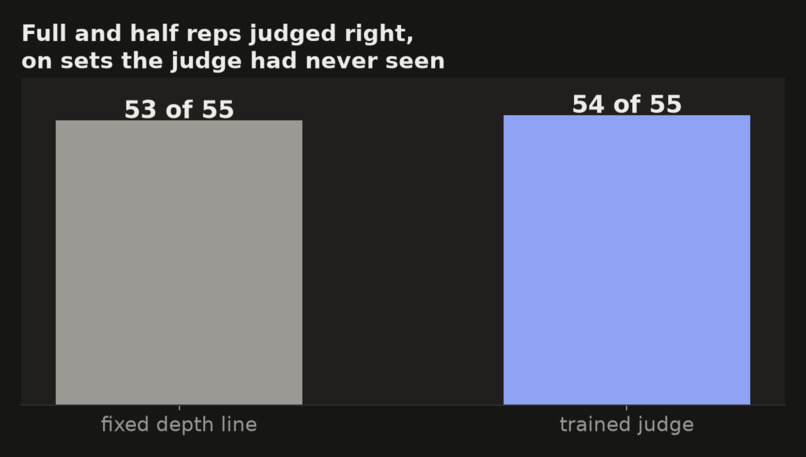
accuracy of categorisation
-
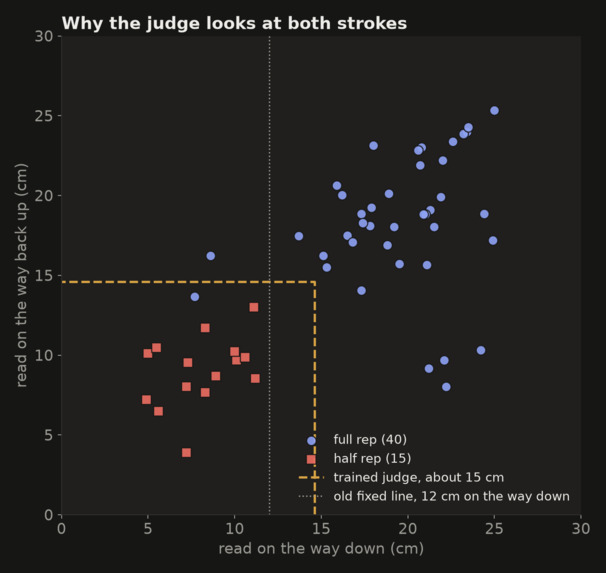
push-up categorisation
-
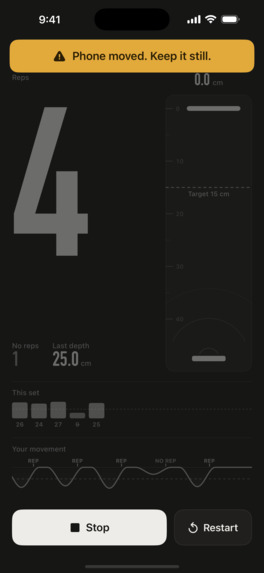
Phone movement detection
-

Half rep detection
-
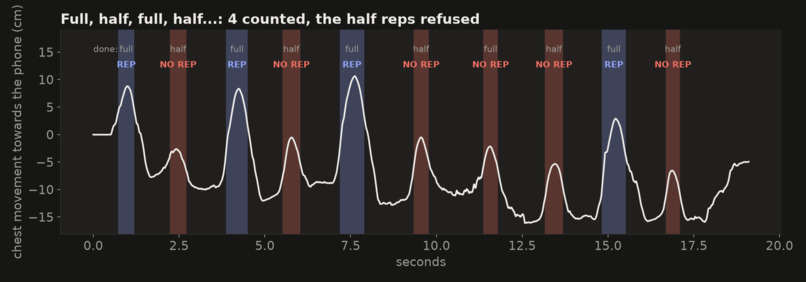
rep/non-rep categorisation
-
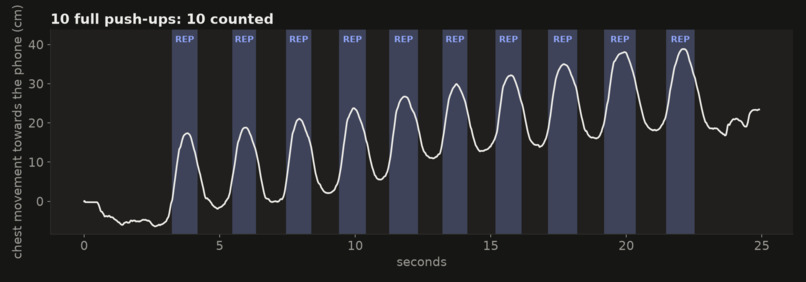
stroke counter
-
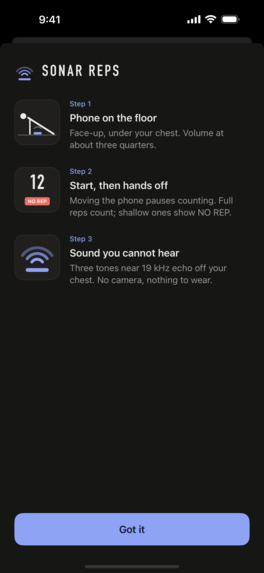
How the app works
-
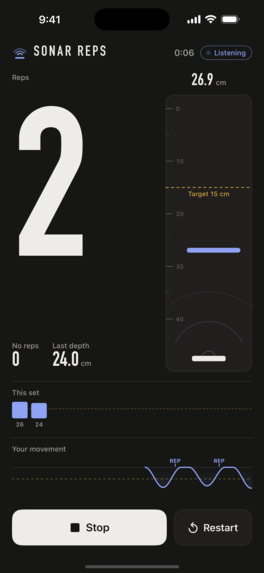
whilst working
-
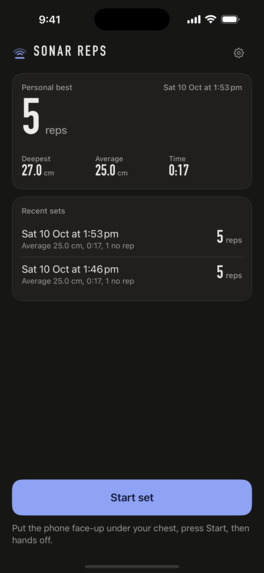
App Home
-
Statistics

Inspiration
The inspiration for Sonar Reps came from our own struggles with staying consistent and making progress with exercise. Balancing fitness with university, work, and social lives can be exhausting, and tracking progress shouldn't make it harder.
We wanted to build something that could help us stay motivated while making fitness tracking more accessible. We also wanted to explore how everyday technology could solve a real-world problem in an unexpected way.
What it does
Sonar Reps turns an ordinary smartphone into a push-up tracker using near-ultrasonic sound and AI.
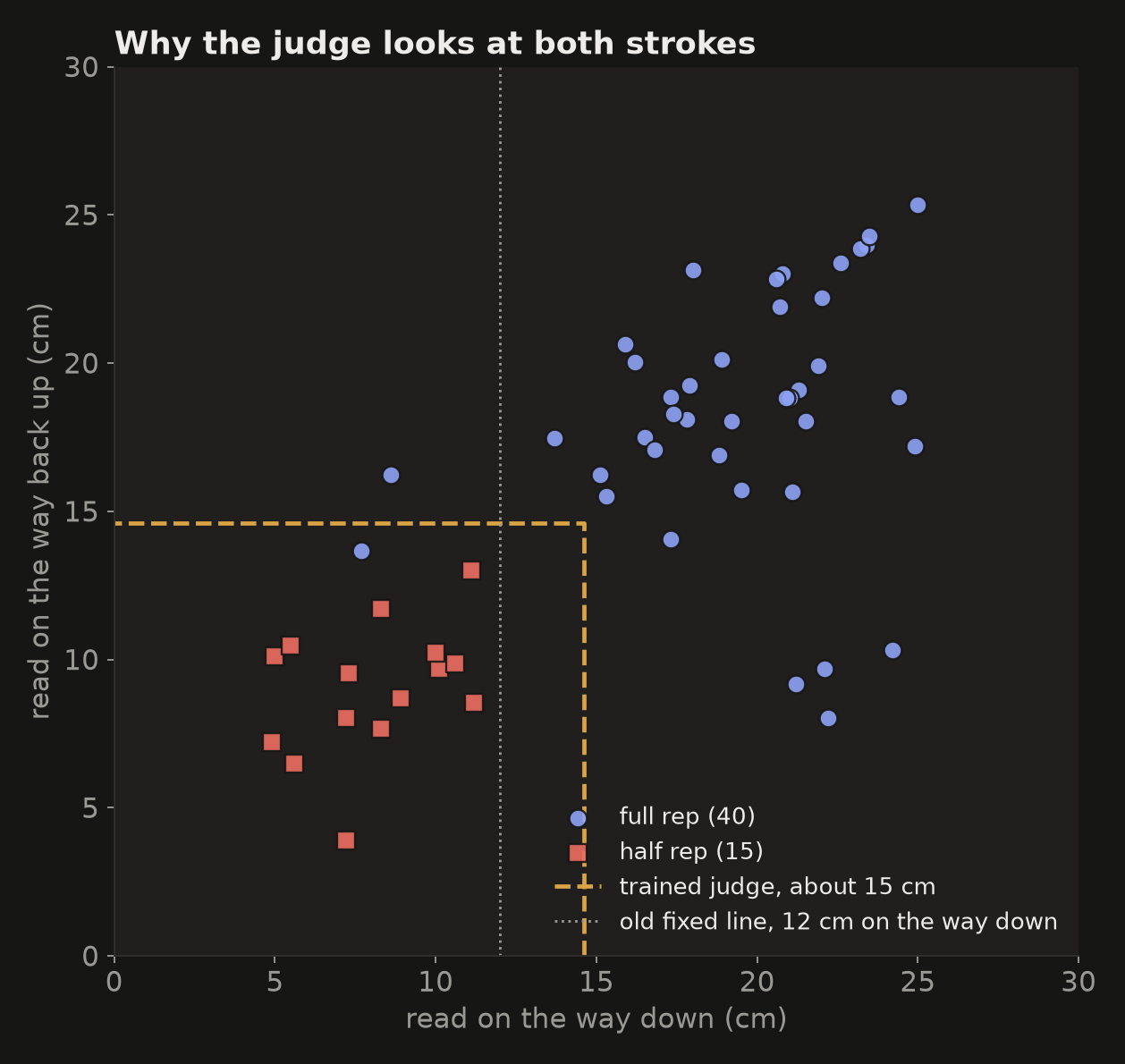
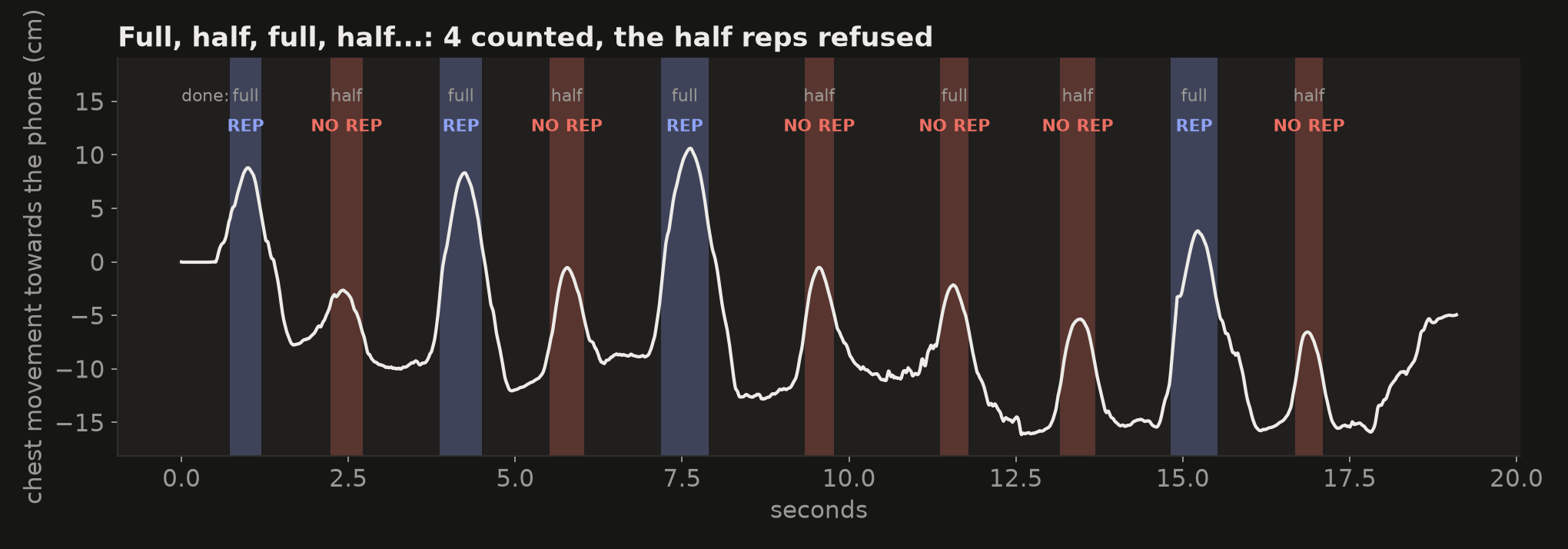
It analyses echoes bouncing off the user's body to detect movement, then uses a trained model to distinguish full push-ups from incomplete repetitions.
Our native iPhone app provides:
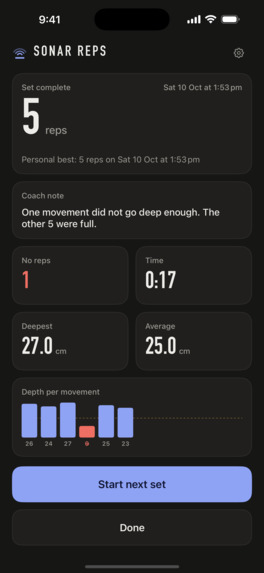
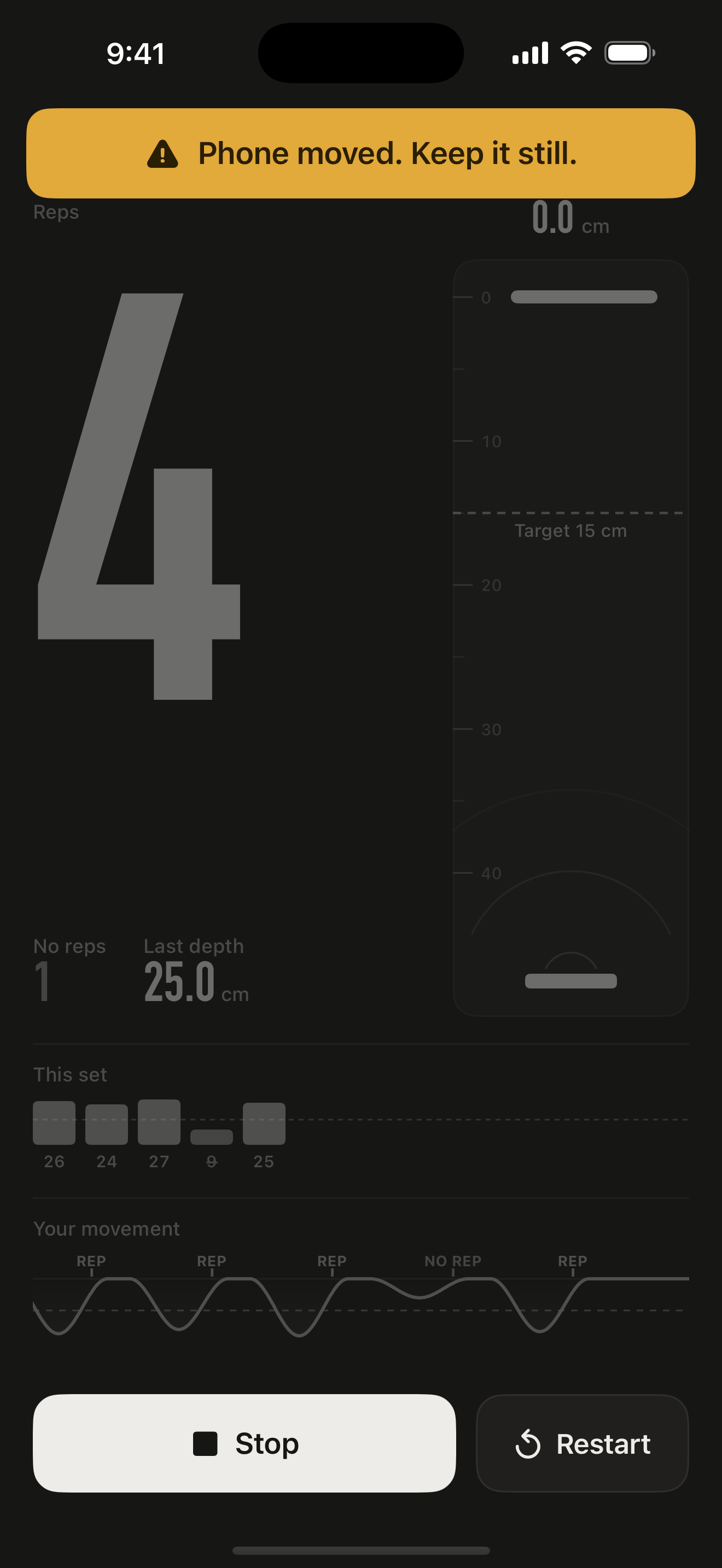
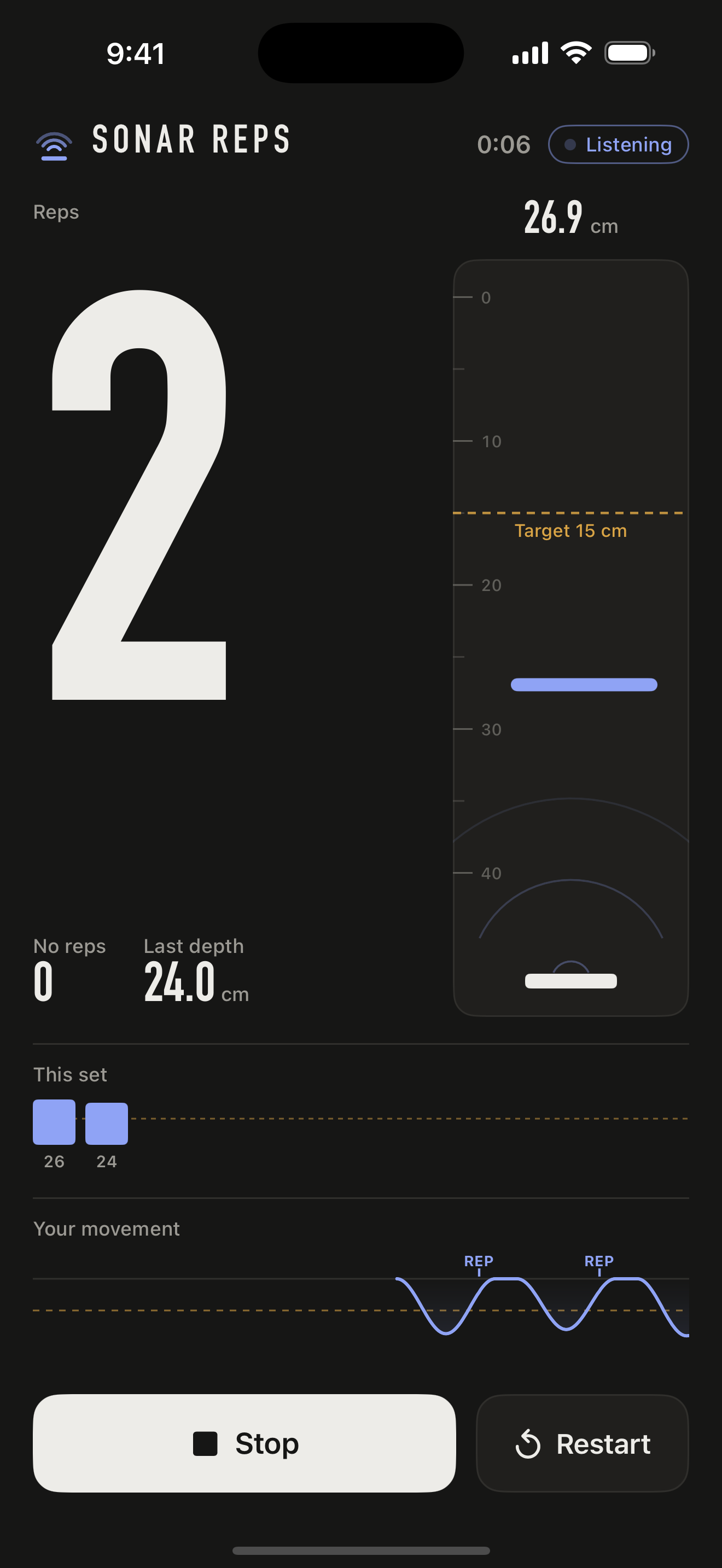
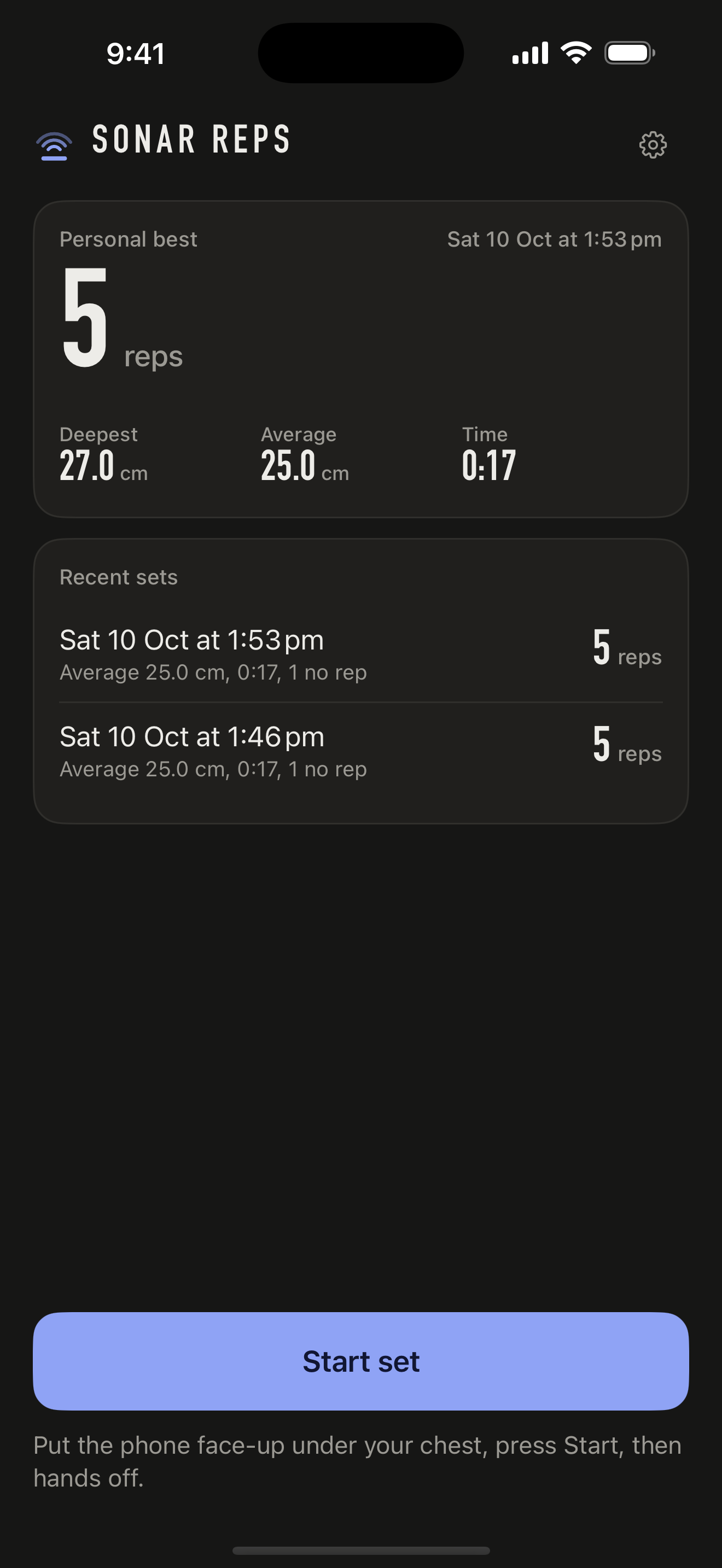
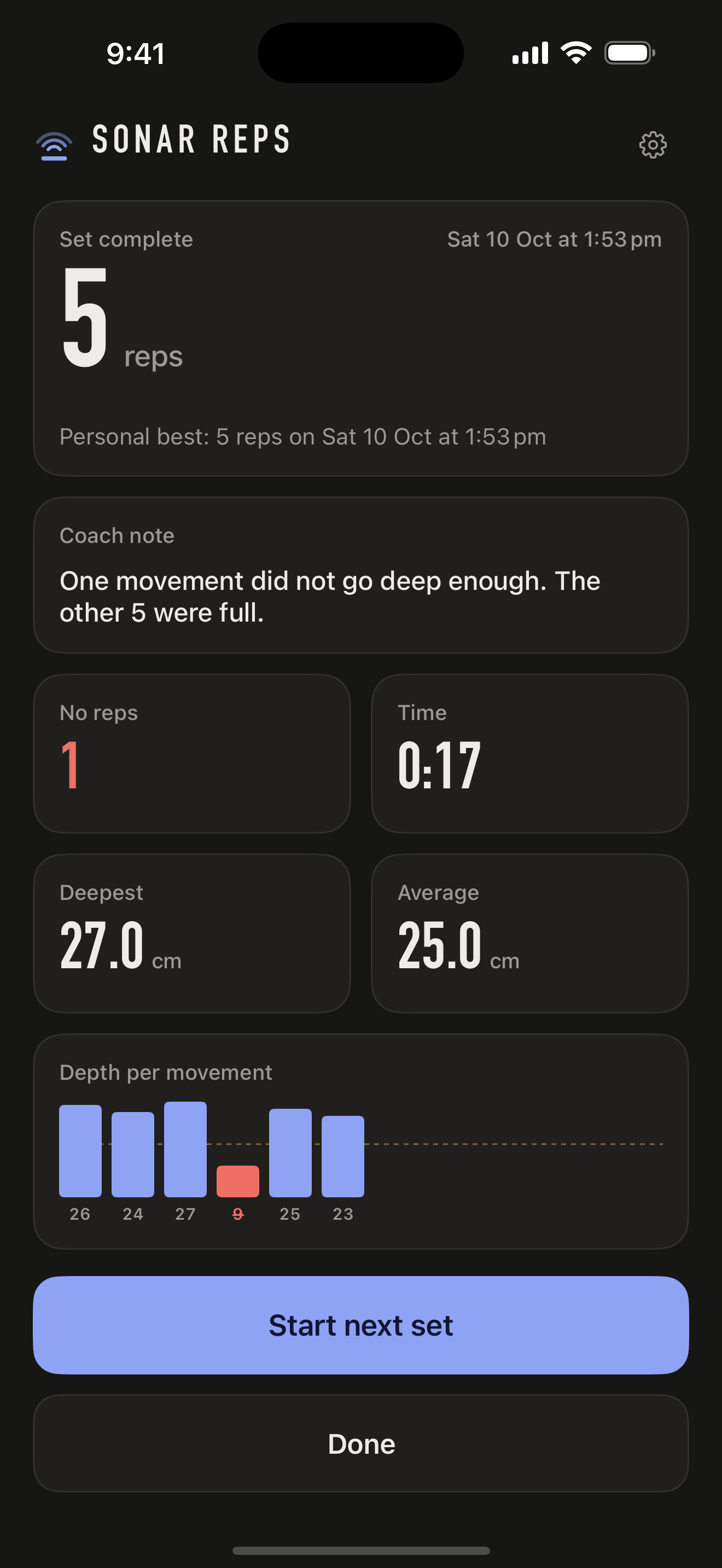
- Real-time rep counting to track workout progress.
- Movement depth feedback to help users monitor their technique.
- Personal bests to encourage progress and consistency.
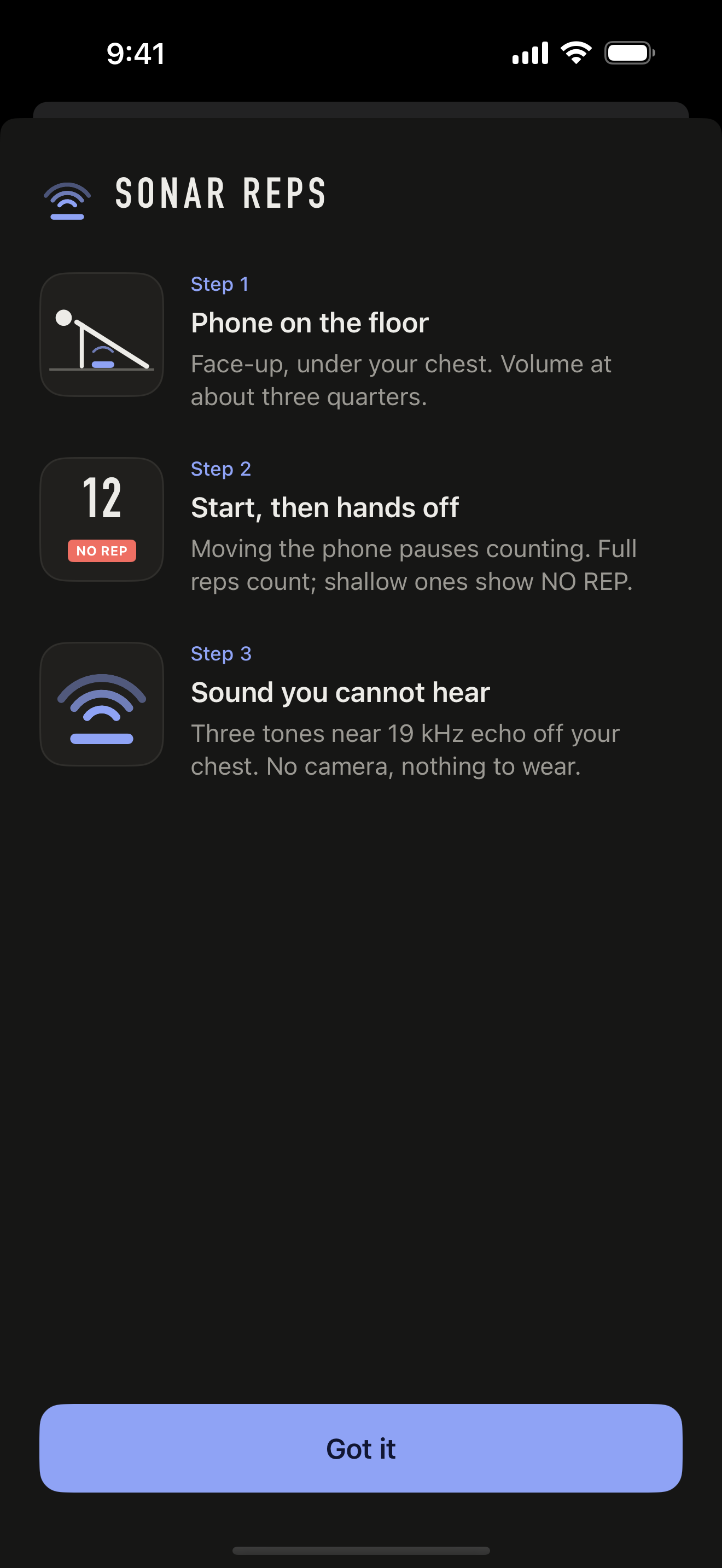
- Privacy-focused tracking without recording images or requiring wearable devices.
How we built it
We combined acoustic sensing with machine learning to detect and classify push-up movements.
- Acoustic sensing: The smartphone plays near-ultrasonic tones through its speaker and analyses the returning echoes.
- AI classification: We trained a model to distinguish full push-ups from incomplete repetitions.
- iOS development: We built a native iPhone app to display rep counts, movement depth, personal bests, and real-time feedback.
- System integration: We connected the sensing, classification, and user interface components into a working prototype.
Challenges we ran into
One of our biggest challenges was reliably distinguishing full push-ups from incomplete repetitions using sound alone. Small differences in movement, positioning, and returning echoes made accurate classification difficult.
We also had to bring together acoustic signal processing, machine learning, and a native iPhone interface within the limited time available at a hackathon.
Getting these separate components to work together as a functioning prototype required experimentation, debugging, and collaboration.
Accomplishments that we're proud of
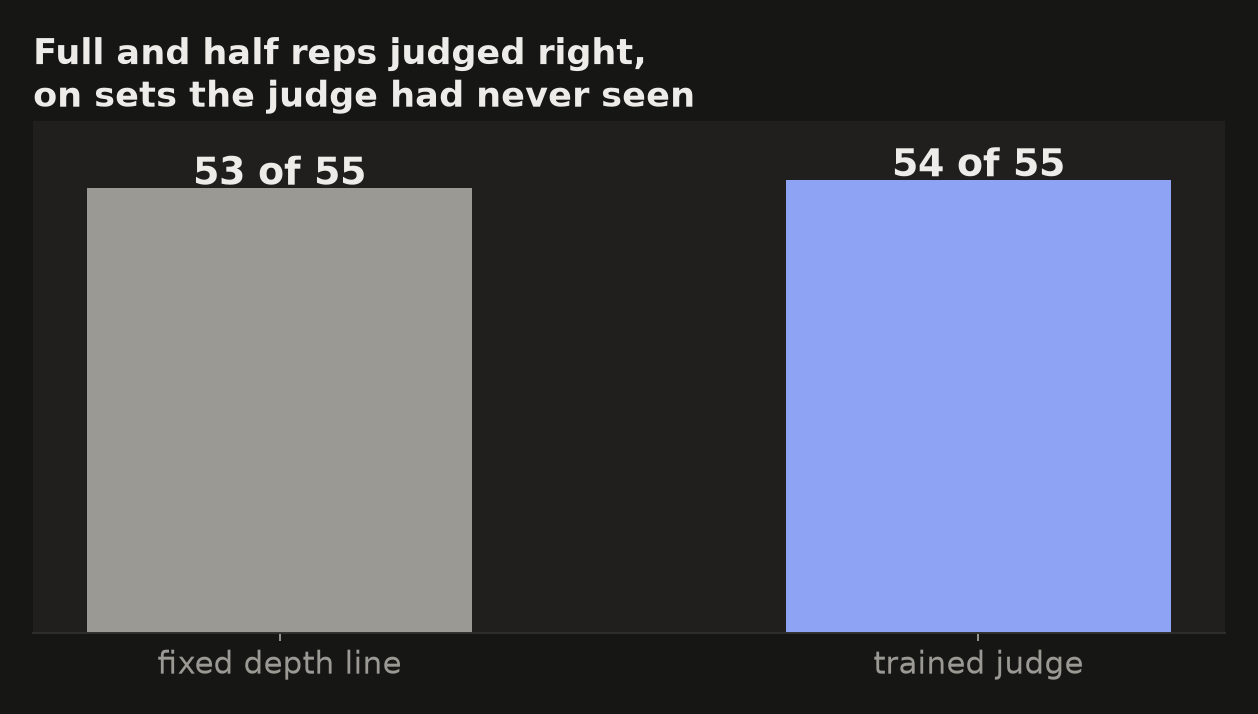
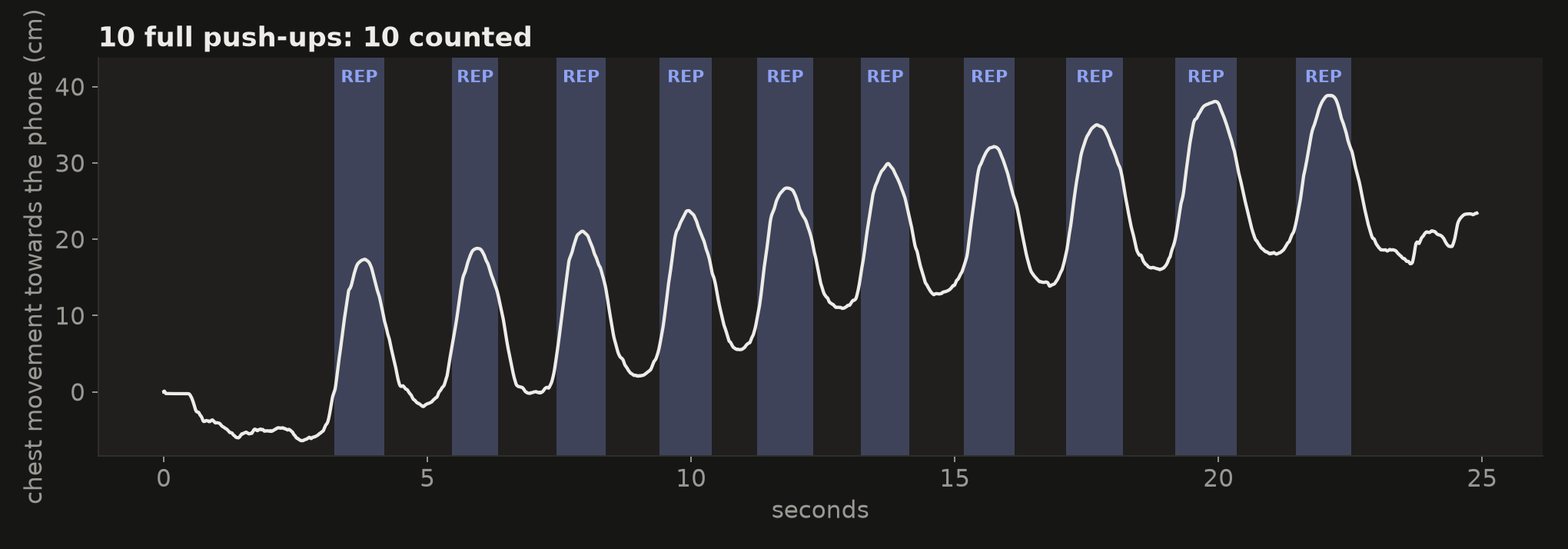
We are proud to have developed a working prototype that achieved 39 out of 40 full push-ups counted correctly, while also correctly rejecting all 15 half reps in our tests.
We also built a native iPhone app featuring live rep counts, movement depth, personal bests, and real-time feedback.
Most importantly, we demonstrated that a smartphone can track exercise using sound rather than a camera or wearable device, opening up possibilities for more accessible and privacy-conscious fitness technology.
What we learned
We learned how acoustic sensing and machine learning can be combined to solve practical problems, as well as how to integrate an AI model with a mobile application.
Throughout the hackathon, we gained experience in:
- Processing acoustic signals and interpreting real-world movement data.
- Training and evaluating machine learning models.
- Integrating different technologies into a functioning application.
- Collaborating effectively and prioritising tasks under time constraints.
We also learned that a promising prototype is only the beginning. Reliability, usability, and real-time performance are essential when turning an experimental idea into something people can use every day.
What's next for Sonar Reps
Our next goal is to move all processing directly onto the smartphone, removing the need for a connected laptop.
We also want to:
- Improve accuracy across different users and environments, by gathering extra training data
- Distinguish other movements from push-ups to reduce false counts.
- Expand exercise support to track additional workouts and exercises.
- Add more quality of life features such as automatically creating full fledged workouts based on the users metrics
Ultimately, we want Sonar Reps to make fitness tracking more accessible, affordable, and private, proving that sometimes the most innovative solutions come from rethinking the technology we already have.
Built With
- avfoundation
- coremotion
- css
- html
- ios
- javascript
- macos
- matplotlib
- network
- numpy
- python
- scipy
- sounddevice
- soundfile
- sse
- swift
- swiftui
- xcodegen

Log in or sign up for Devpost to join the conversation.