Inspiration- Moving to a new city, or even visiting one, usually starts with the same generic lists: the top 10 neighborhoods, the most-reviewed restaurants. They tell you what's popular, not what's you. Someone who loves late-night jazz, vinyl shops and ramen will feel very differently in Greenwich Village than in Midtown, even though both are "New York." We wanted the first few days somewhere new to feel like landing somewhere familiar, guided by your taste instead of by the crowd
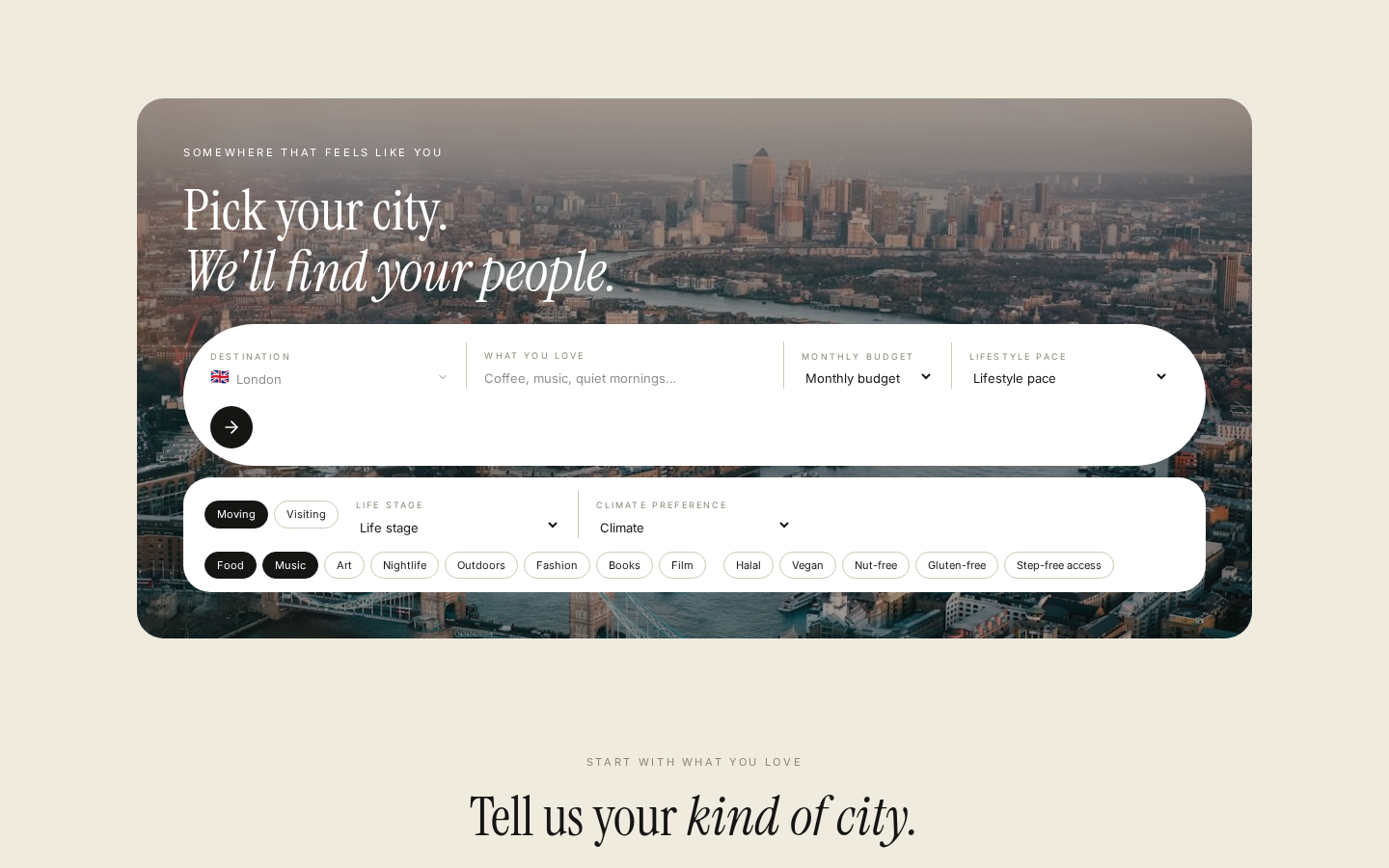
What it does- Soft Landing is a voice-first relocation and trip agent for any city. Pick a destination, then say or type what you love, or tap taste chips (music, food, art, nightlife, vibe). The agent then:
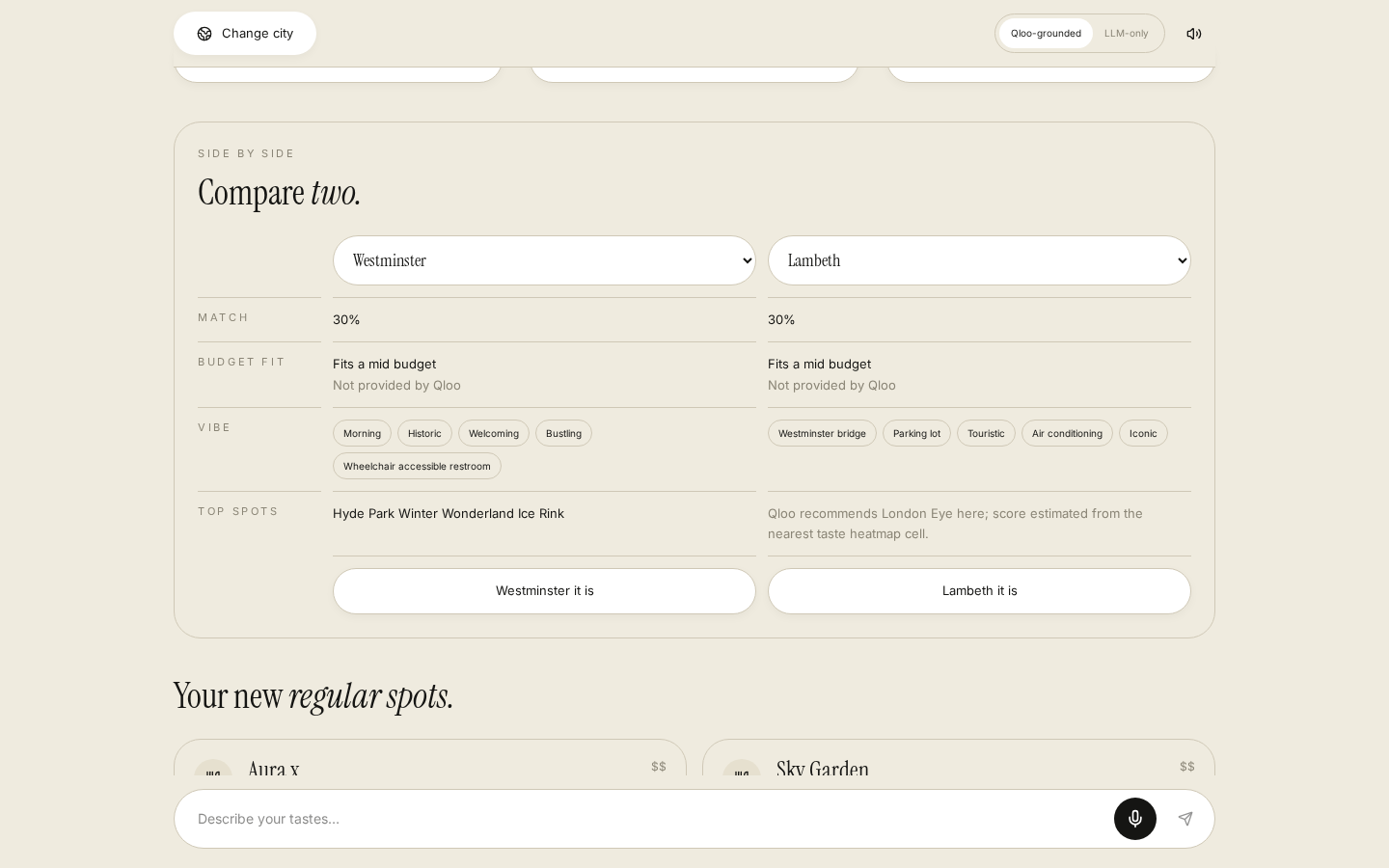
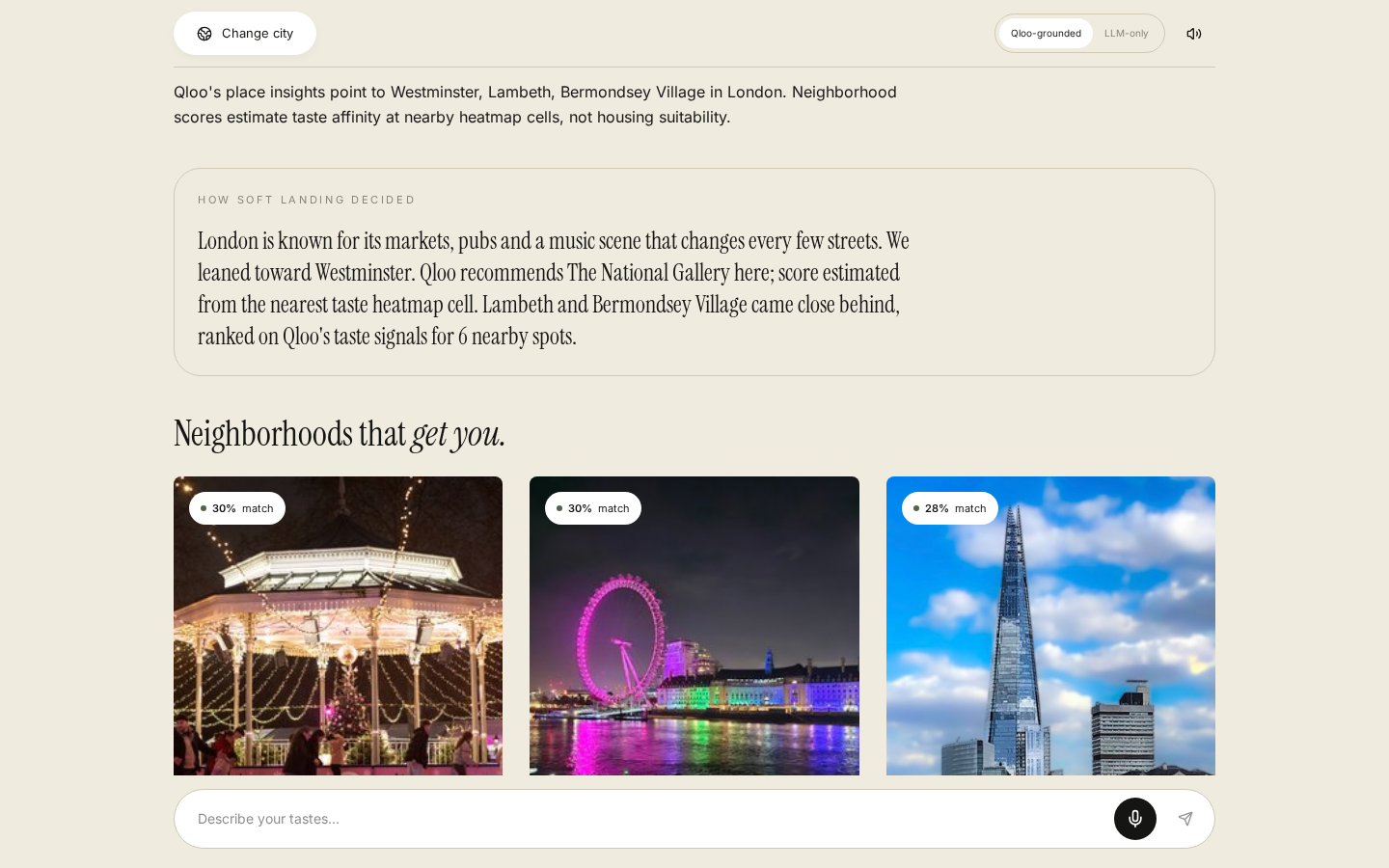
• Matches you with neighborhoods and places that fit your taste, each with a short reason it was picked. • Filters and ranks by budget, pace and needs (halal, vegan, nut-free, gluten-free, step-free). • Shows results on a map with photo pins and directions, and compares neighborhoods side by side. • Lets you lock in a pick and share it as a card. • Explains its steps in a plain-language "How Soft Landing decided" panel. • Reads results aloud when you start by voice or turn read-aloud on. What makes it Qloo-powered Every search makes live calls to the Qloo Taste AI API. The agent turns your interests into Qloo entities and tags, pulls place insights for the city, and uses Qloo's neighborhood heatmap to find where your taste clusters. Match scores come from Qloo affinity and heatmap signals. Google Gemini turns those signals into readable explanations. An LLM-only mode (Gemini alone) is included so judges can compare it against the Qloo-grounded results.
How we built it- React, TypeScript, TanStack Start, Tailwind CSS, Supabase, Qloo Taste AI API, Google Gemini, OpenStreetMap, Web Speech API, hosted on Vercel.
Challenges we ran into- Photos that actually match. Early versions showed duplicate or wrong-place images. We built strict matching so each spot gets its own correct photo, or an honest generic card instead of a misleading one.
• Any city, not just a few. Supporting cities worldwide meant handling gaps in coverage gracefully: suggesting similar supported cities or clearly labelled fallbacks instead of inventing results. • Explaining decisions like a human. Turning affinity scores and heatmap data into readable prose took a lot of prompt and formatting iteration. • Speed. Several API calls per search meant results could feel slow, so we added a staged loader that tells you what's happening
Accomplishments that we're proud of- A working, public, any-city agent powered by live Qloo data.
• The side-by-side Qloo vs. LLM-only comparison, which makes the value of taste data visible. • The lock-in pick card with our original traveler mascot: a small, delightful "you've landed" moment. • Transparent reasoning in every result, with no black-box recommendations.
What we learned- Taste data changes recommendations from "popular" to "personal," and users notice immediately.
• Transparency builds trust: people want to know why a neighborhood was picked. • Small details (correct photos, the neighborhood name on the button, a friendly mascot) matter as much as the ranking itself
What's next for Soft landing- Accounts to save picks, trips and moving checklists across devices.
• Deeper "first 30 days" plans for movers and multi-day itineraries for visitors. • Group mode: blend several people's tastes to pick a neighborhood everyone loves. • Live events and seasonal recommendations layered on top of Qloo insights. • More accessibility and dietary filters, and more languages for voice
Built With
- google-gemini
- openstreetmap
- qloo-taste-ai-api
- react
- supabase
- tailwind-css
- tanstack-start
- typescript
- vercel
- web-speech-api

Log in or sign up for Devpost to join the conversation.