Inspiration
The idea for 🐌 Snail's Pace came halfway through the Hackathon, in response to a 🐌 bug that we had been struggling with during our initial project. Initially, we aimed to create an AR navigation app that centered around deploying AR beacons at the user's destination. However, we were unable to get our virtual beacon to stay in place; rather, it persistently followed the user's movements. Combining this with a shelved earlier idea we had for gamifying exercise, 🐌 Snail's Pace was born -- a game where you're constantly being followed around by a vaguely malicious 🐌 snail.
What it does
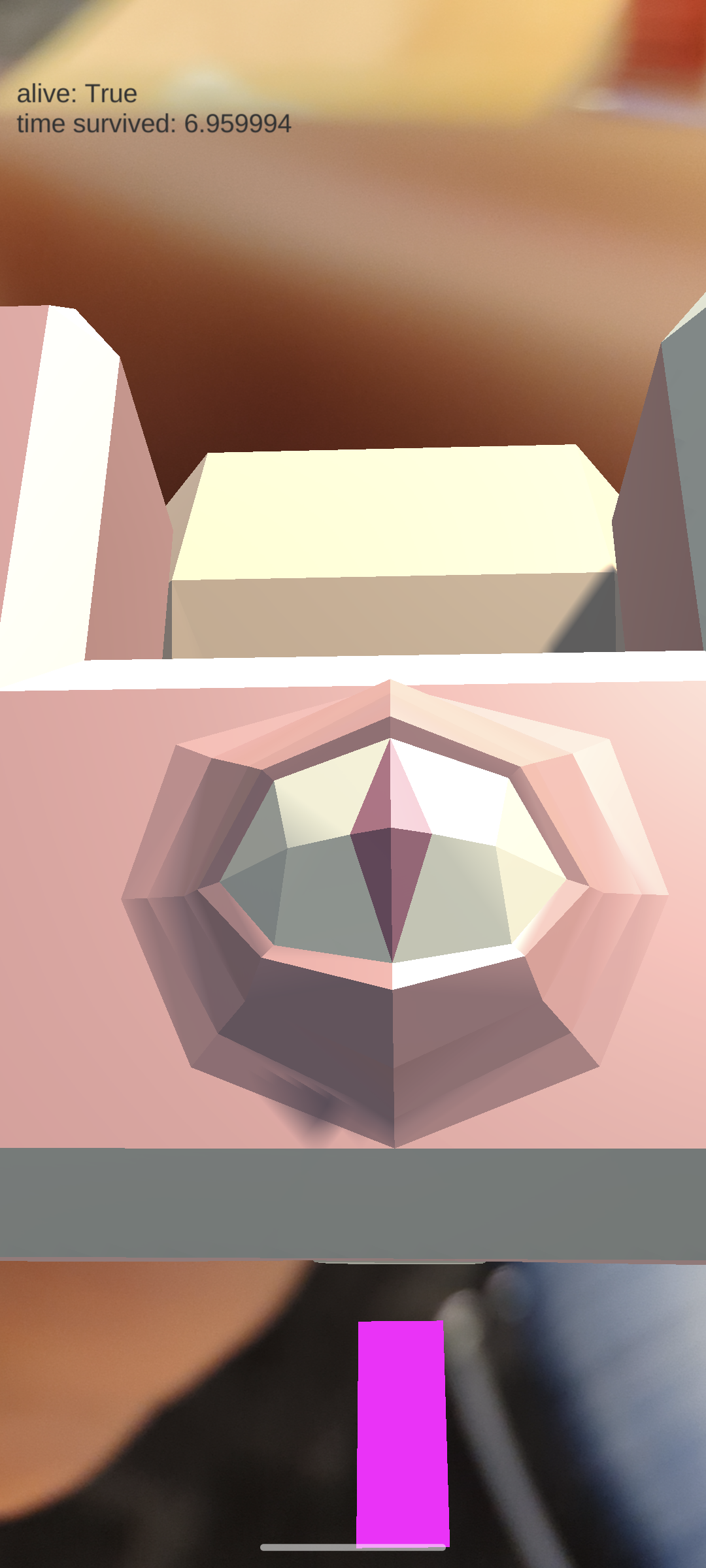
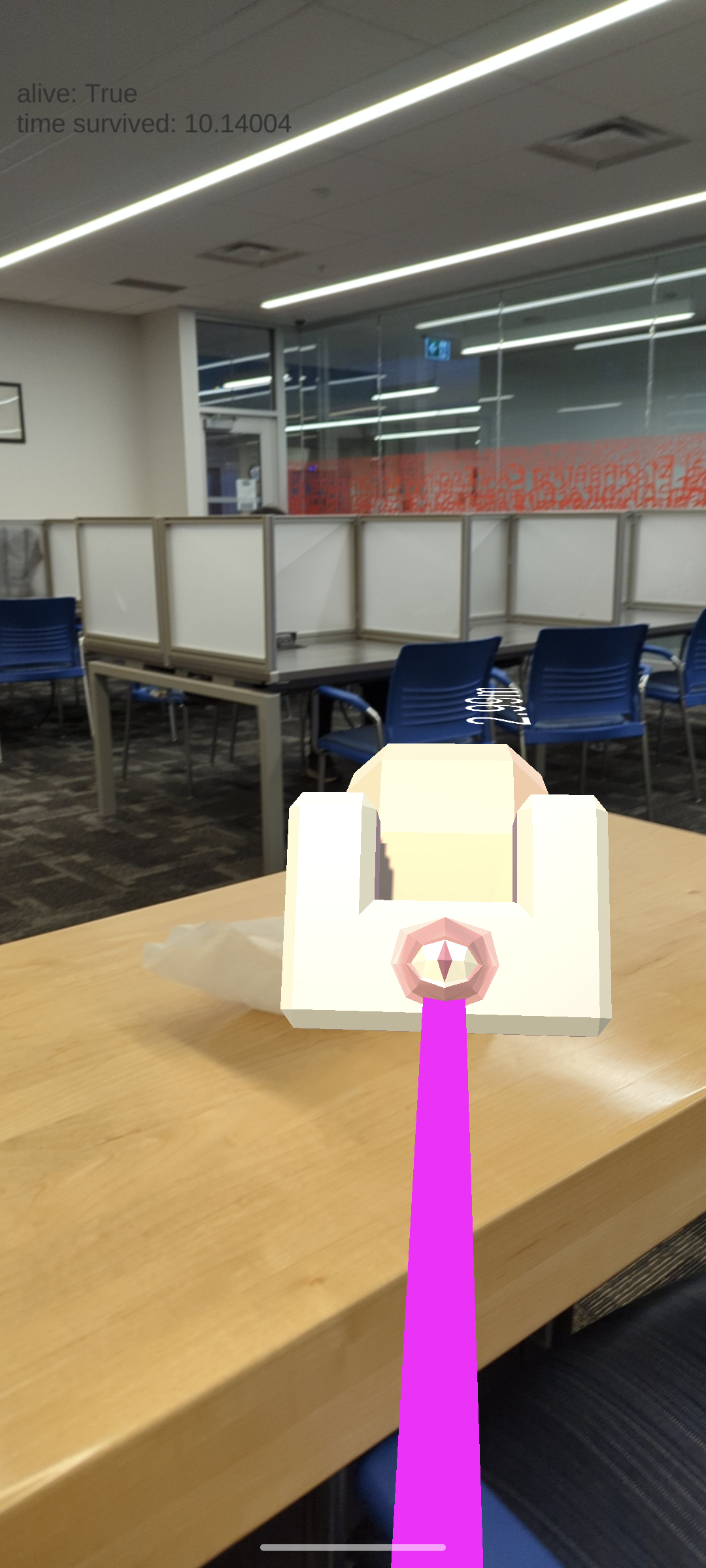
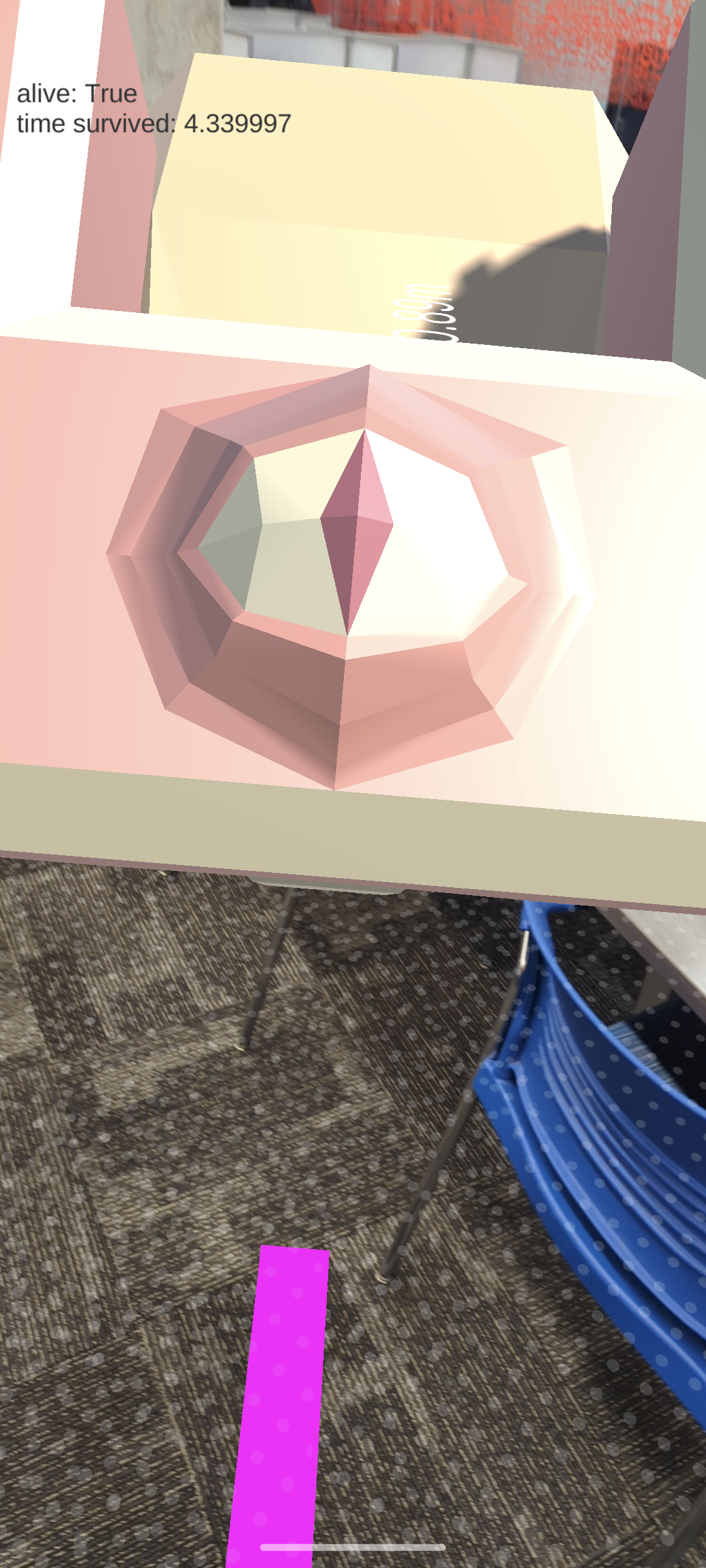
🐌 Snail's Pace is an AR game that randomly generates a 3D 🐌 snail onto the users surroundings using their built-in camera. The 🐌 snail will slowly get closer, unabated by blocks and obstacles, and your goal is to avoid it at all costs! You gain points for avoiding it for longer periods of time, so make sure you stay as far away as possible! 🐌 Snail's Pace is more than just a fun game; it also encourages physical activity and promotes active lifestyles, in a similar way to other apps like Run, Zombies! Although the 🐌 snail is too slow to catch up to you while you're moving, watch out! It'll easily tag you if you're just lazing about! 🐌 Snail's Pace encourages you to keep moving and stay healthy.
How it was built
We created 🐌 Snail's Pace using the Unity development environment in conjunction with Unity's AR Foundations toolkit. We chose Unity Game Engine for its 3D capabilities and its aforementioned builtin AR development toolkit. Using the Unity editor, we created GameObjects and AR components, using C# scripting to add programmable functionality and logic to our game. For the bulk of the spawning and tracking aspects, we used the Unity AR+GPS Location, a third-party plugin designed for GPS integration. GitHub served as our platform for collaborative coding efforts and version control.
Challenges
🐌 Snail's Pace's journey was fraught with challenges. In the beginning, becoming familiar with C# and Unity posed an early challenge, as most of the team was not familiar with either technology. Our first choice of framework, Google's ARCore Geospatial API, was curtailed due to the reliance of Google's deprecated Unity APIs. This prompted us to shift to AR+GPS and revert to an older version of AR Foundation, a decision that notably improved our project's viability. A surprisingly difficult issue was the implementation of snail pursuit. Using AR+GPS to track the snail in real time proved difficult due to the inaccuracies in GPS tracking. We ended up completely rewriting the pursuit system with Unity's in-game world coordinates instead, which finally achieved the effect we needed.
Achievements
We're quite proud of the fully integrated systems we ended up putting up in place for 🐌 Snail's Pace, especially considering how little time we had after pivoting quite late into the second day of the hackathon. 🐌 Snail's Pace also ended up being really fun to design, make, and play! We were really happy with how the gameplay turned out, with the 🐌 snail being a legitimately thrilling threat despite the silly basis.
What we learned
We learned a lot working on 🐌 Snail's Pace! We're now much stronger at C# and Unity, for sure. We also learned a good deal about Google APIs and how to utilize them (with a focus on ARCore). We also learned how to utilize GitHub with Unity, something that's been rather difficult in the past. Of course, we also learned a ton about AR in general, from AR Cameras to Lighting to Geospatial events and more!
What's next?
Like the land 🐌 snail Cepaea nemoralis, 🐌 Snail's Pace's future is diverse and bright! We're hoping to expand the number and type of "pursuers" we support, and add an in-game rewards system to facilitate the earning of those followers. We also hope to add leaderboard features, allowing those with impossibly high 🐌 snail evasion scores to brag like the champions they are! An exciting future prospect involves making the 🐌 snail tracking work without the app open, keeping those even out of game on their toes! Keep an eye(stalk) out for more from us in the world of moving molluscs!


Log in or sign up for Devpost to join the conversation.