-
-
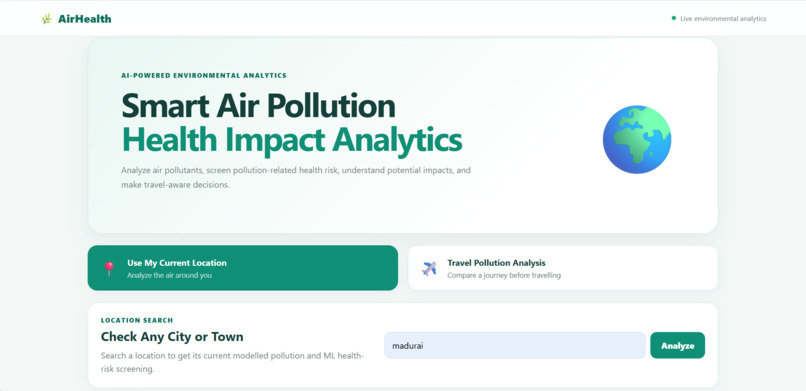
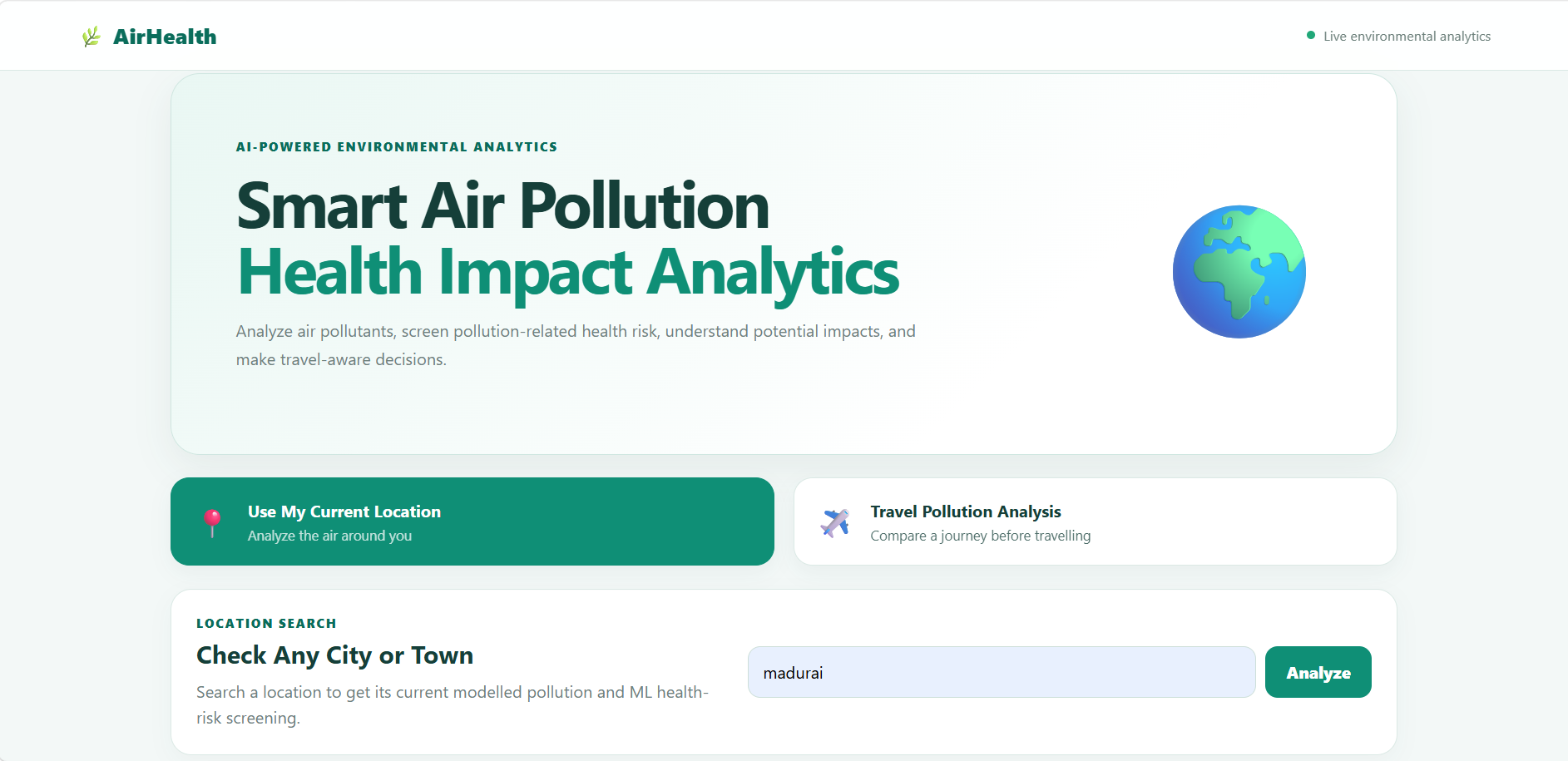
#HOME PAGE
-
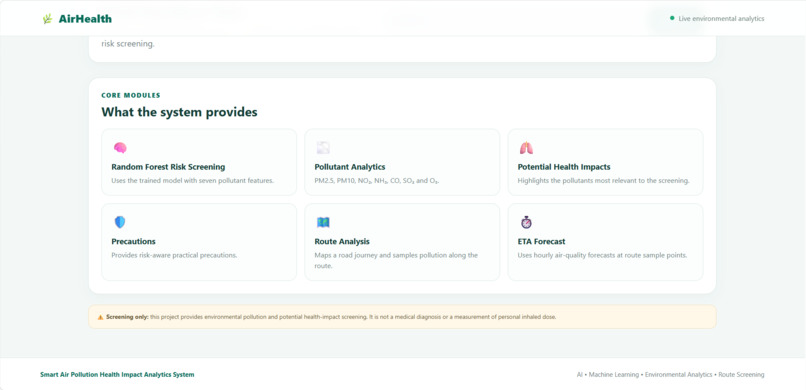
#ESSENTIAL GOING TO SHOW
-
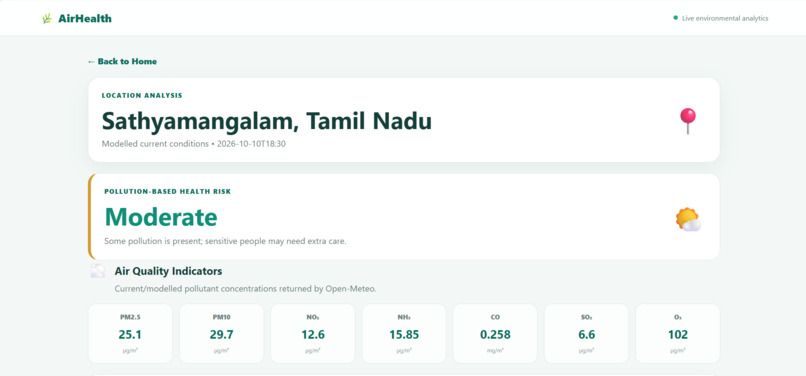
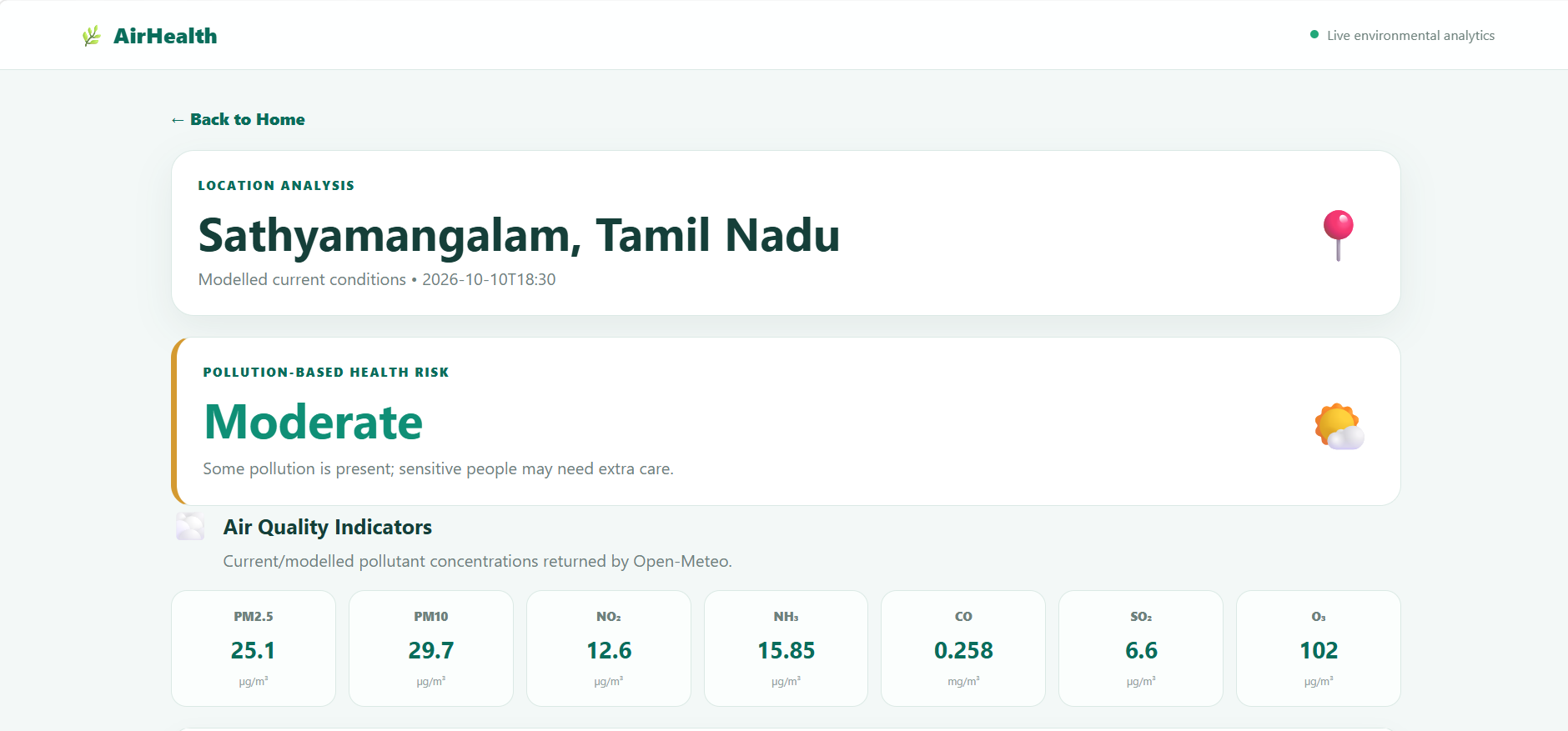
#CURRENT LOCATION POLLUTION ANALYSIS
-
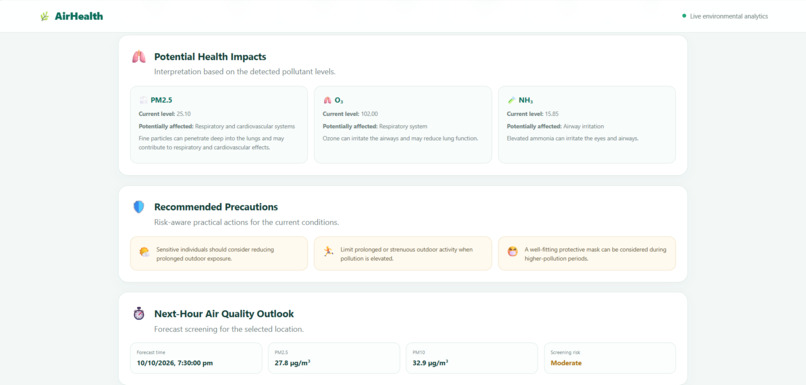
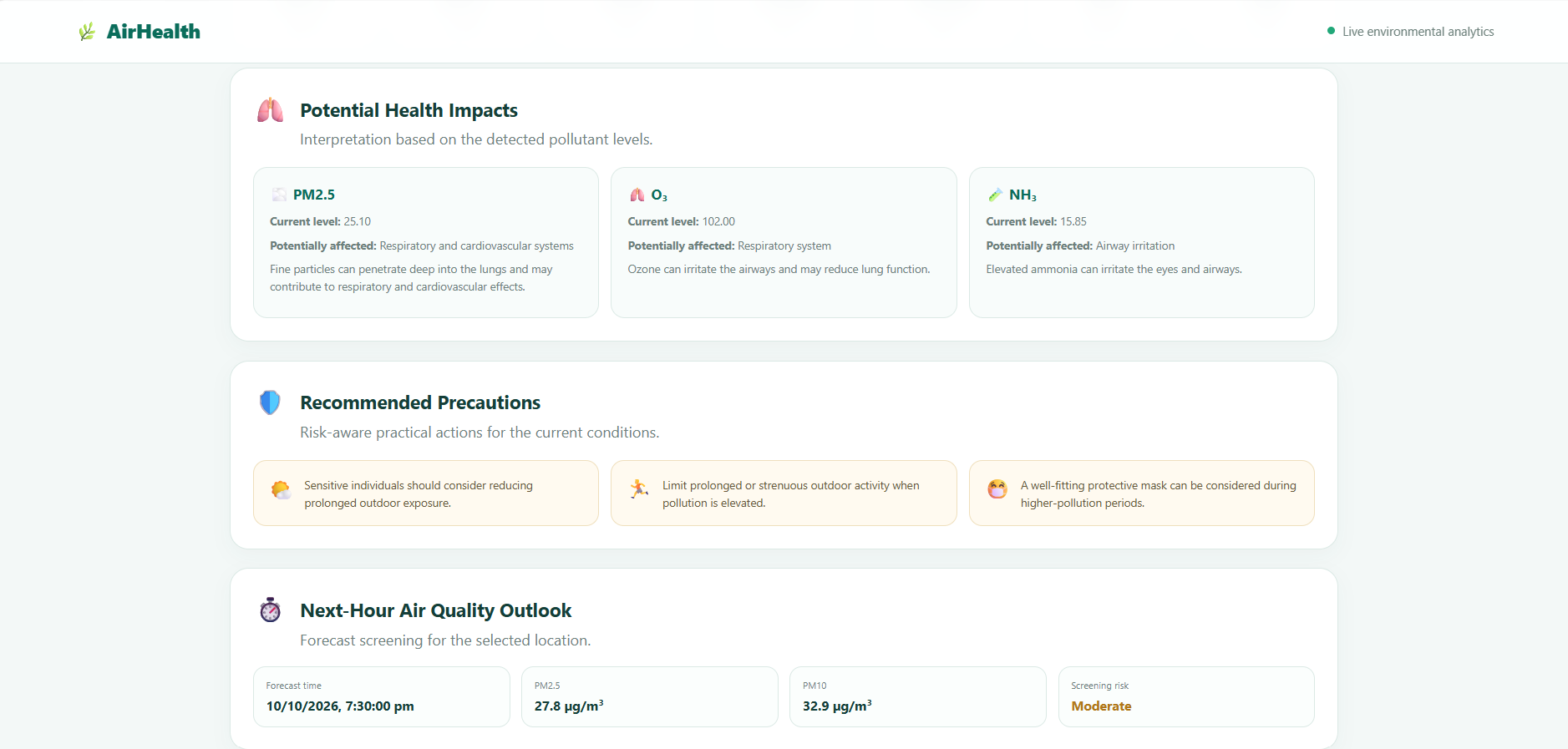
#CURRENT LOCATION HEALTH IMPACTS AND PRECAUTION
-
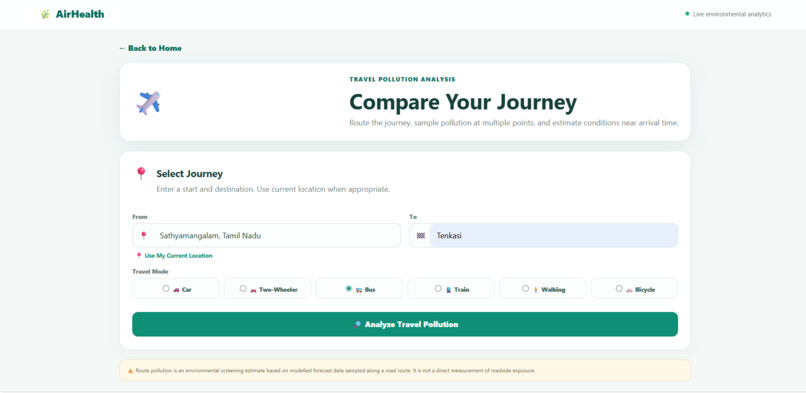
#TRAVEL LOCATION POLLUTION ANLAYSIS
-
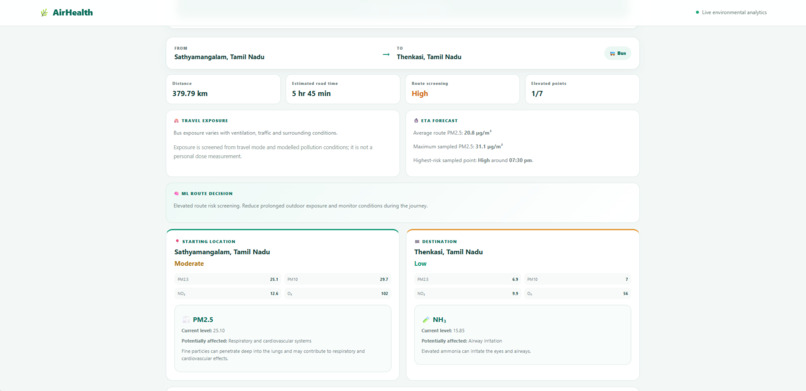
#COMPARISION OF BOTH LOCATION
-
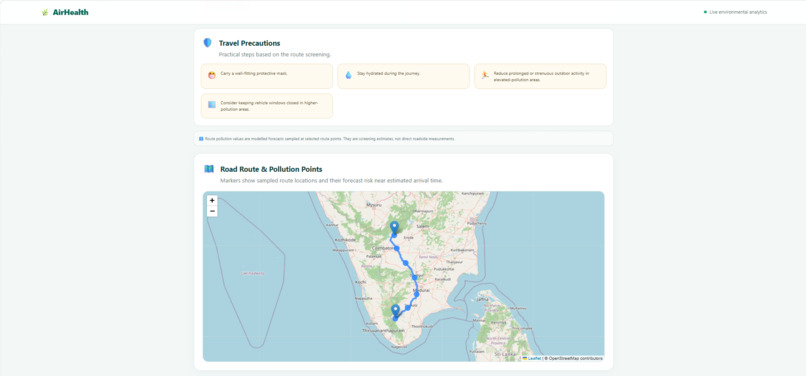
#ROUTE MAP IN TRAVEL POLLUTION ANALYSIS
-
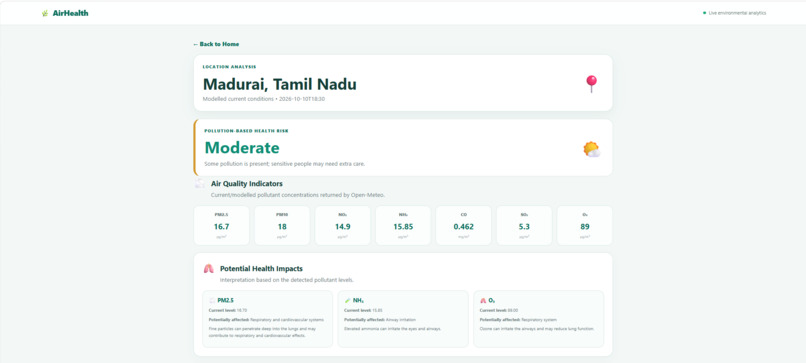
#SPECIFIC LOCATION POLLUTION ANALYSIS
Inspiration
Air pollution is a common problem, but people usually see only pollution values and may not understand what they mean for their health. This inspired us to build the Smart Air Pollution Health Impact Analytics System.
We wanted to create a system that uses AI and real-world air-quality data to help users understand pollution-based health risks in a simple way.
What it does
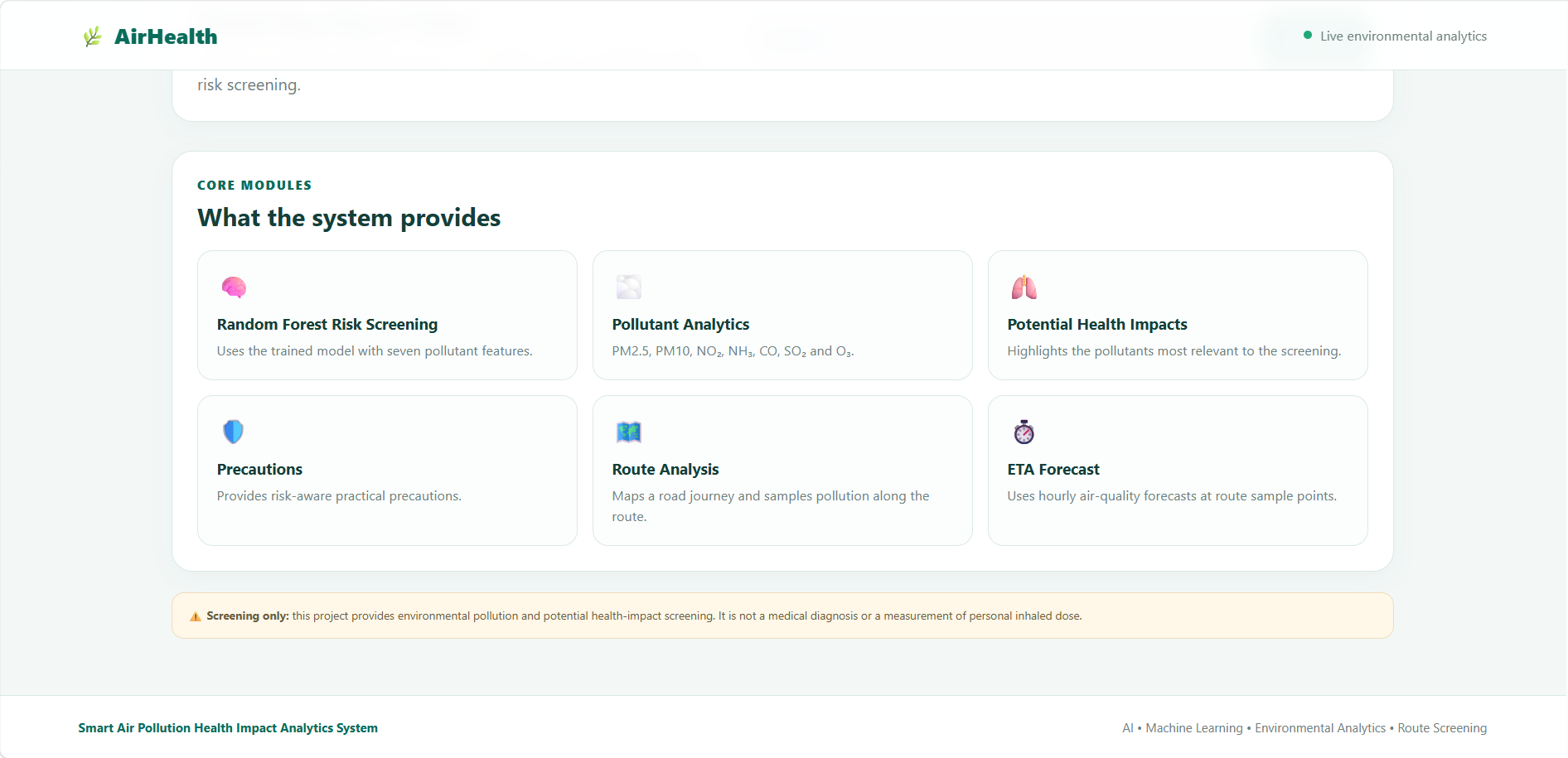
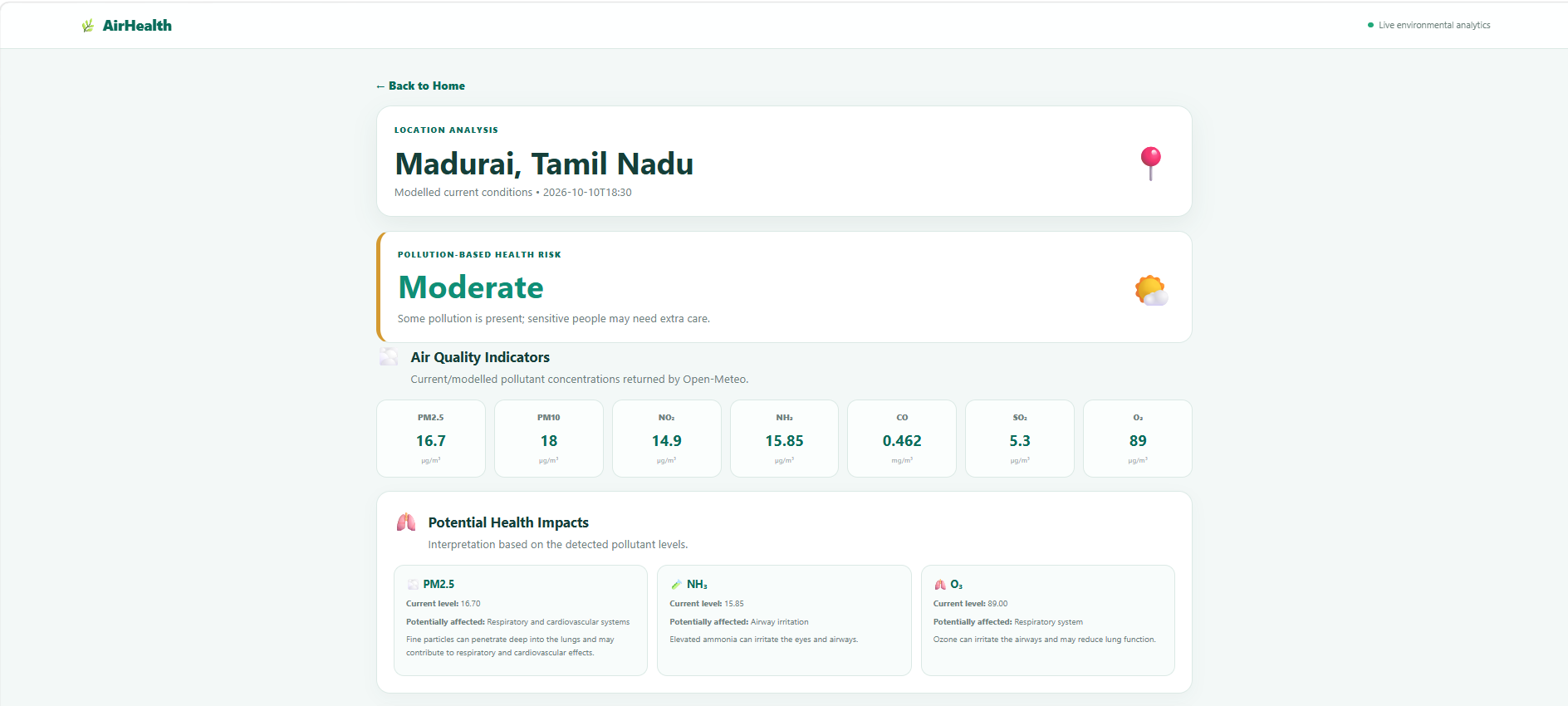
ur project analyzes important air pollutants such as PM2.5, PM10, NO2, NH3, CO, SO2 and O3.
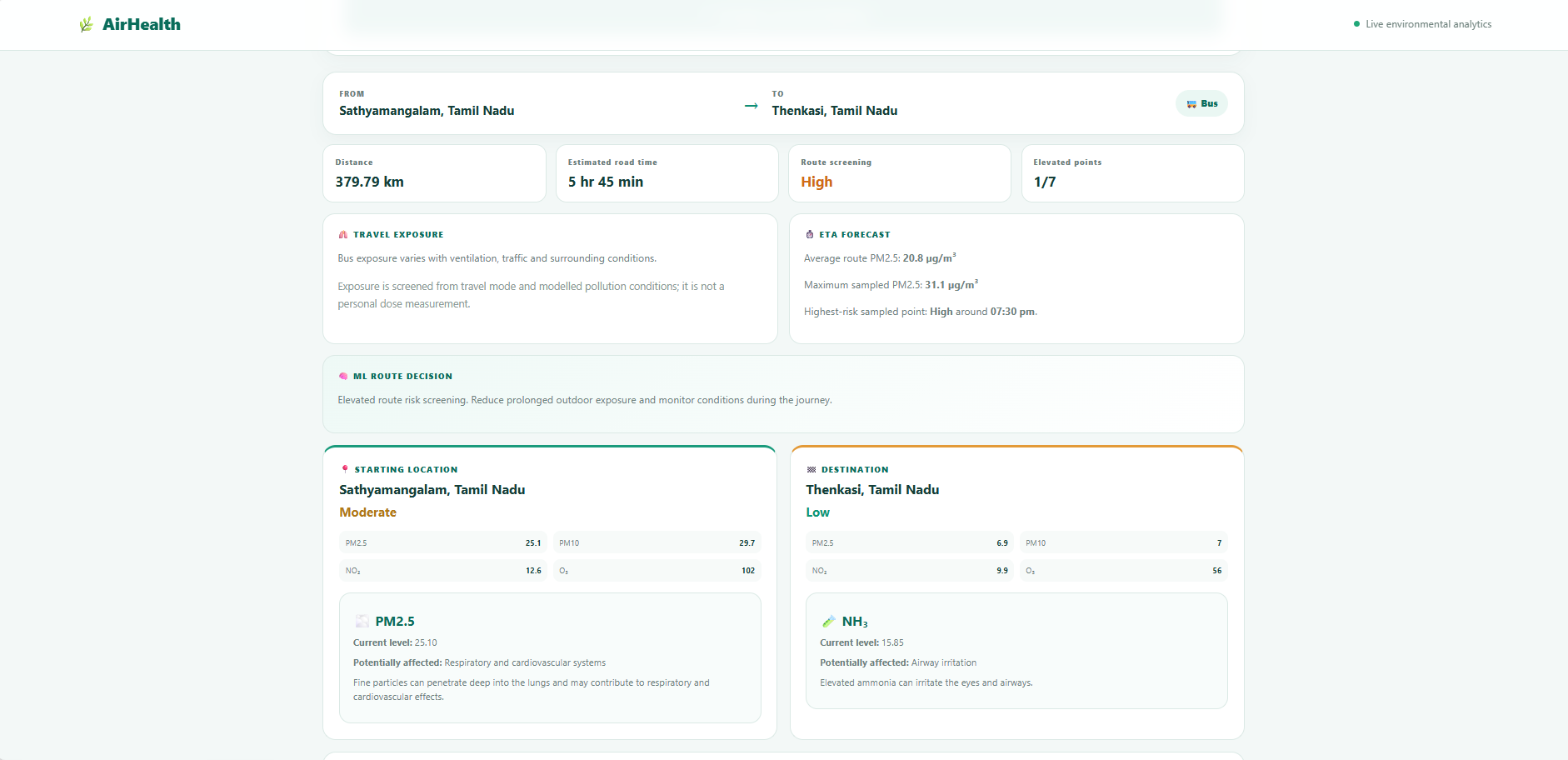
Using a Random Forest machine-learning model, the system performs pollution-based health-risk screening and classifies the risk as Low, Moderate, High, or Very High.
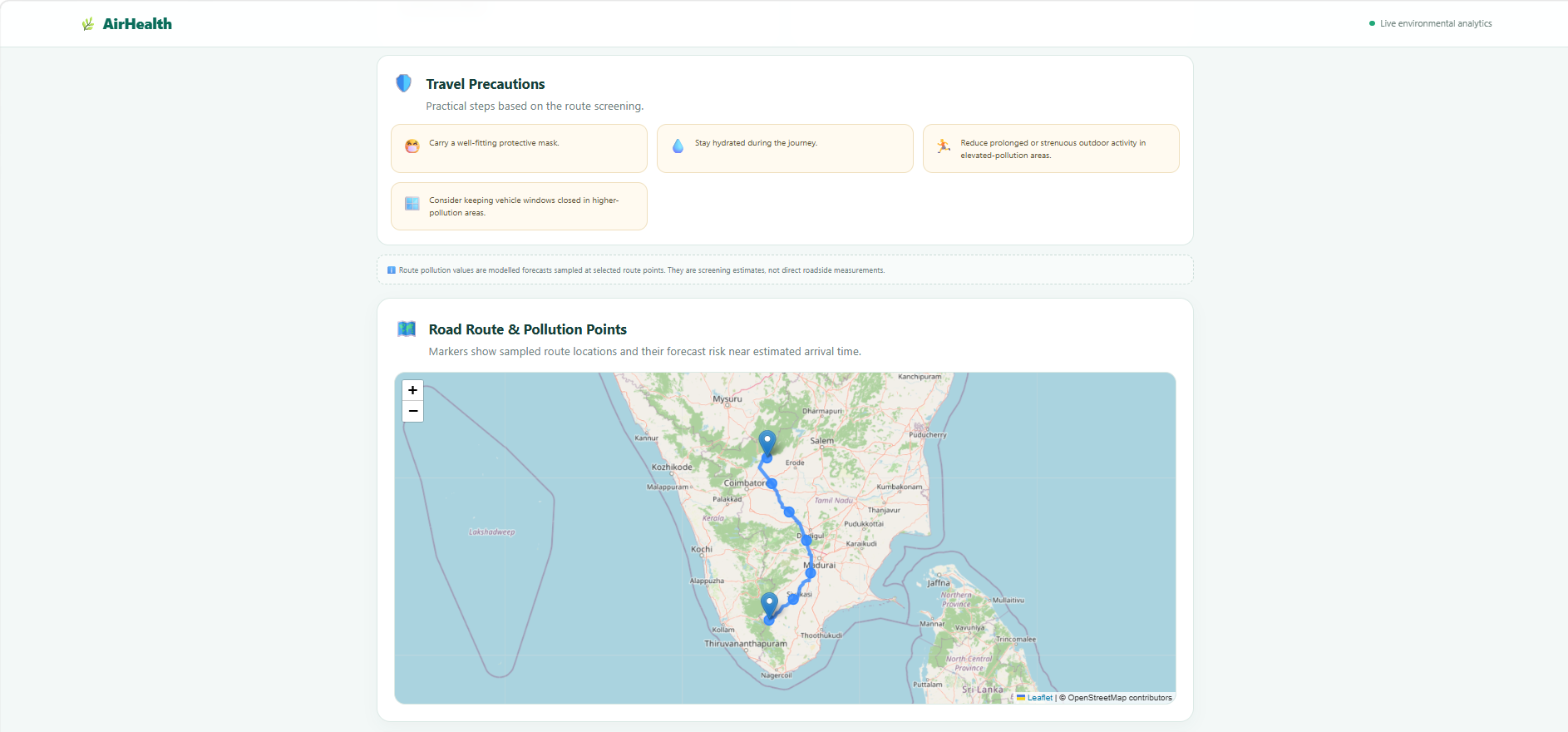
The system also shows potential health impacts and precautions based on the pollution condition.
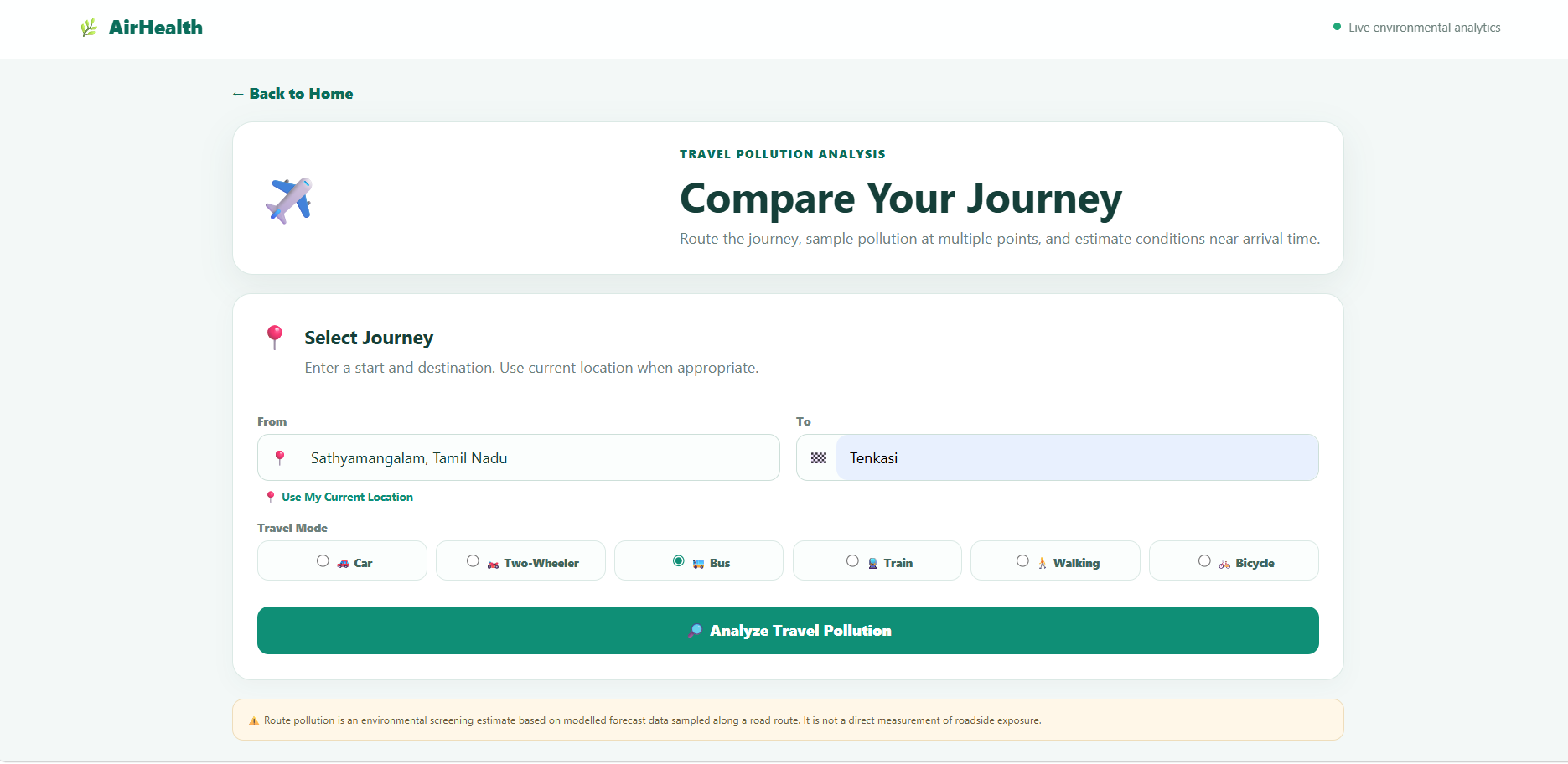
Users can search for different locations and check their air-quality conditions. We also added a travel analysis feature that allows users to select a starting location and destination and understand the pollution and risk conditions along the route.
How we built it
We built the project using Python, Pandas, NumPy, Scikit-learn, Flask, HTML, CSS and JavaScript.
First, we prepared and processed the air-quality data and selected important pollutants as features. We then trained a Random Forest model for pollution-based health-risk screening.
We connected the trained model with a Flask web application. For location-based air-quality information, we integrated air-quality and location APIs. The frontend was developed using HTML, CSS and JavaScript, with maps and charts to make the results easier to understand.
Finally, we deployed the complete application online so that it can be accessed through a web browser.
Challenges we ran into
One of the main challenges was connecting the machine-learning model with real-time/modelled air-quality data from APIs.
We also faced challenges with missing pollution values, location searching, route analysis and making sure that the data sent to the machine-learning model was in the correct format.
Another challenge was deploying the project successfully with all the required Python libraries and dependencies.
We solved these problems through testing, debugging and improving each part of the system step by step.
Accomplishments that we're proud of
We are proud that we were able to build a complete working AI/ML-based web application instead of only training a machine-learning model.
Our system combines machine learning, air-quality analysis, location search, health-risk screening, health impacts, precautions and travel route analysis in one platform.
We are also proud that we successfully deployed the project online, making it accessible through a live web link.
What we learned
Through this project, I learned how to work with real-world data and build an AI/ML model using Python and Scikit-learn.
We also learned how to connect a trained machine-learning model with a Flask web application, work with APIs, handle location and route data, create a user-friendly dashboard and deploy a project online.
Most importantly, we learned that building a useful AI project is not only about creating a model. We also need to make the results easy for users to understand and apply in real situations.
What's next for Smart Air Pollution Health Impact Analytics System
In the future, we would like to improve the system with more accurate and detailed location-based pollution data, better route-specific analysis and more personalized recommendations.
We also plan to improve the AI/ML capabilities of the system and explore additional ways to provide early alerts when unusual pollution conditions are detected.
Our goal is to make the system more practical, accurate and useful for people who want to understand their exposure to air pollution.
Built With
- analysis
- analytics
- api
- artificial
- chart.js
- css
- flask
- gps
- html
- intelligence
- javascript
- leaflet.js
- learning
- machine
- numpy
- open-meteo
- pandas
- python
- random
- rest
- risk
- scikit-learn
- visualization


Log in or sign up for Devpost to join the conversation.