-
-
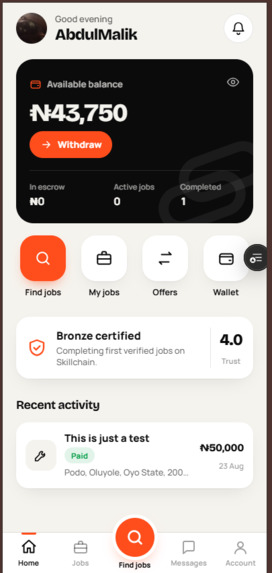
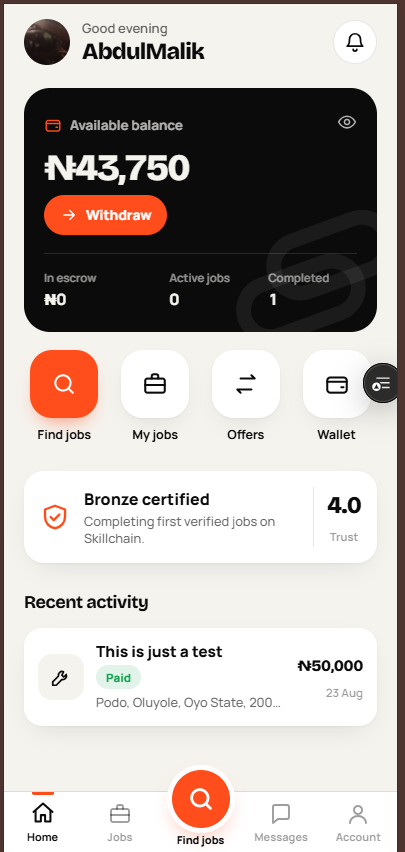
Artisan dashboard
-
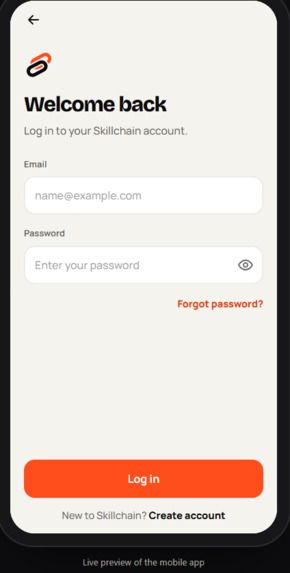
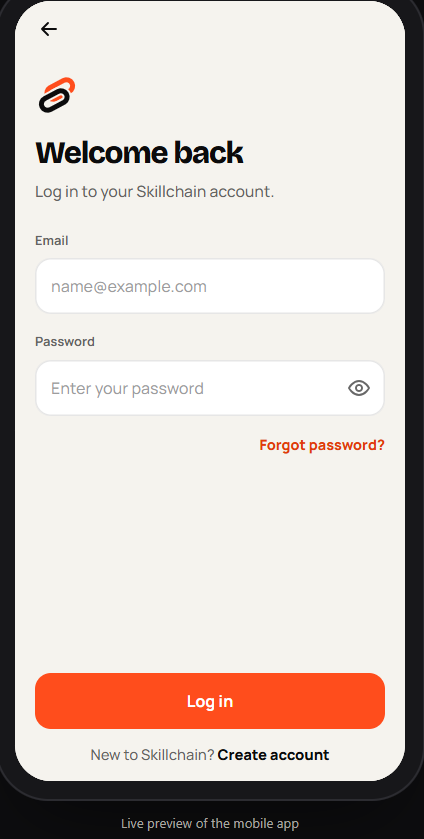
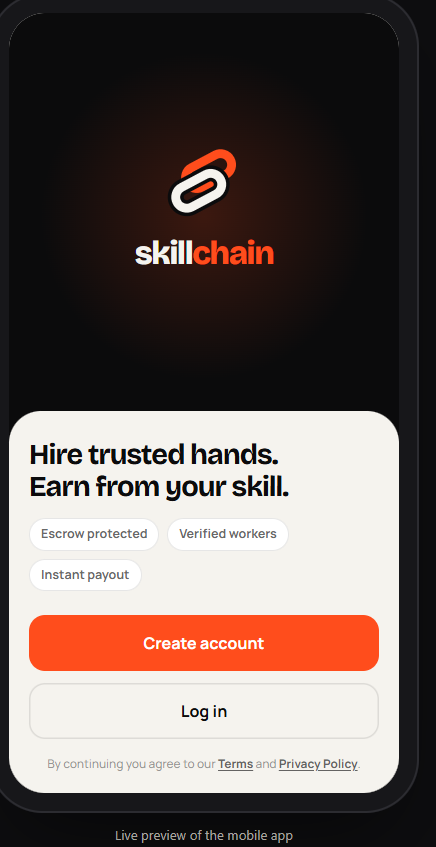
login page
-
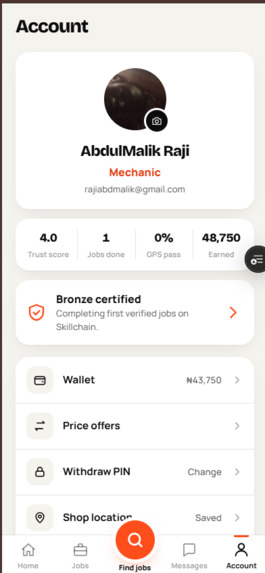
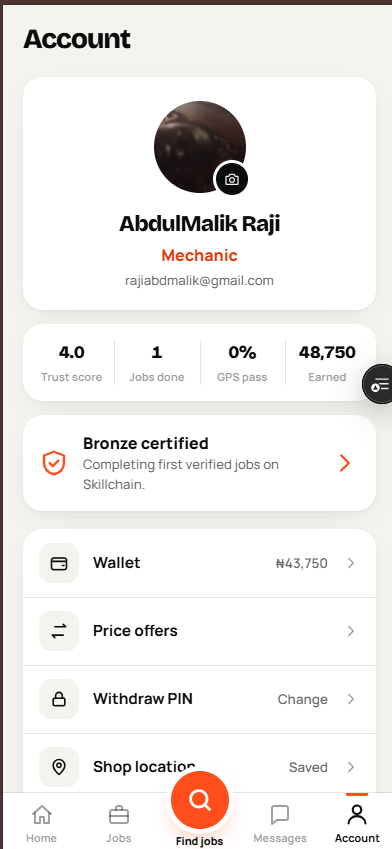
artisan profile
-
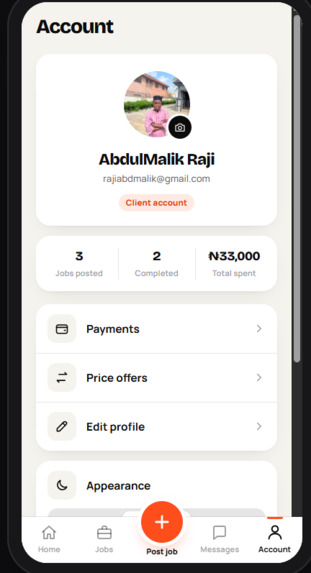
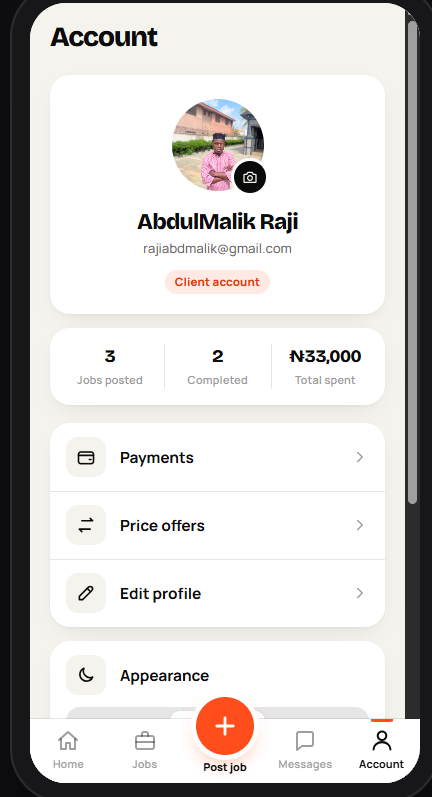
client profile
-
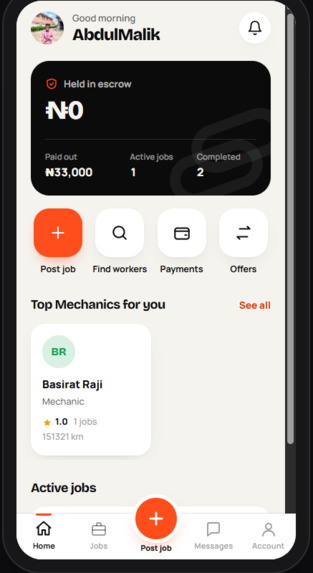
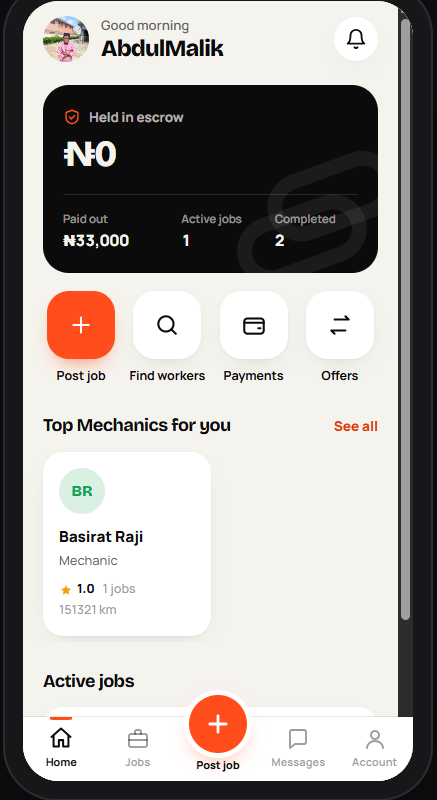
client dashboard
-
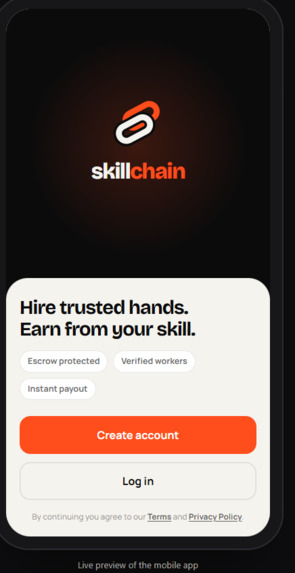
home page
-
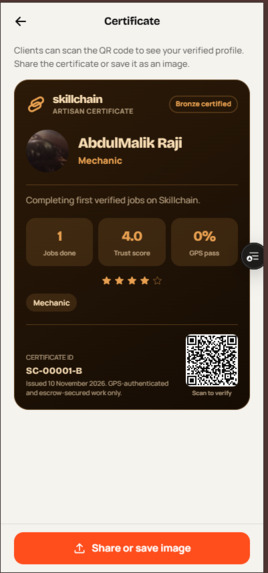
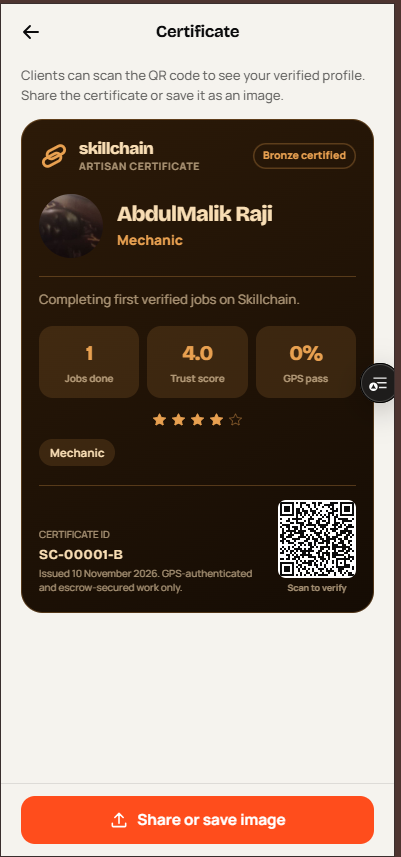
artisan certificate
Inspiration
I was an electrician, and a good one. I gave it up because nobody believed me. A client had no way to know whether I was skilled or just talking, and I had no way to prove it. Skill that can't be proven doesn't earn trust, and without trust there is no steady work, no fair price and, later, no loan.
Millions of artisans in Nigeria are in the same position: mechanics, electricians, plumbers, tailors. Clients are just as stuck, handing over cash and hoping. Skillchain is the proof I wish I'd had.
What it does
- Proof of work: to finish a job, the artisan checks in at the site and records a short video. Location is checked and kept as evidence.
- Escrow: the client pays first and the money is held safely. It is released only when the client approves, so artisans know they will be paid and clients know the work is done.
- A certificate earned, not claimed: every artisan gets a Bronze, Silver or Gold certificate built from completed verified jobs and client ratings and reviews, with their GPS pass rate shown. A QR code lets anyone verify it.
- Fair disputes: clients can request up to two fixes. If they still disagree, both sides add evidence and an admin decides.
- Wallet and bank payouts, job alerts for nearby artisans, and push notifications.
The moment it comes to life
An artisan finishes a repair, stands at the site and records a ten-second video. The client's money is already in escrow, the client reviews the proof on his own phone, and one tap on Approve sends the payment to her wallet and then her bank. No haggling and no "I'll pay you tomorrow."
A choice we made
We treat GPS as evidence, not a gate. A hard block would shut out honest artisans whenever a signal is weak. Workers can always submit, the client sees how far off the location was, and a human decides if it becomes a dispute.
What changed after our first test
- Our first location check on a laptop was 212 metres off, so we added a "use this location anyway" option that tells the client.
- A job with a flagged location couldn't be paid, so flagged jobs are now payable by the client's approval only.
- Our first withdrawal failed because the payment provider's auto-payout was switched on, so we switched it off.
- The back button looped between home and login, so we rebuilt how the app handles navigation.
- Clients couldn't open an artisan's certificate, so we built the full Bronze, Silver and Gold view.
What we built during the event, and what existed before
Before the event we had [one honest line: for example, a basic prototype with sign-up, a client dashboard and an early backend]. During the event we built: the artisan app (jobs, wallet, withdrawals, PIN), GPS and video proof of work, the certificate and QR verification, escrow and payouts on the Squad API, secure login and money handling, fix requests and two-sided disputes, an admin console, push notifications and job alerts, and the Android app.
Challenges we ran into
- Money has to be exact. An early version recorded failed payouts as paid. We moved to exact decimals, a wallet ledger and retry-safe withdrawals.
- Never trust the app. The first version trusted a user ID sent by the phone. We replaced it with signed login tokens, rate limits and checks on every request.
- Disputes are a design problem. We needed rules that are fair to both sides, with time limits, evidence from both and an admin decision.
What we learned
- In a marketplace, trust matters more than features.
- Payments are mostly about handling failures: timeouts, duplicates and refunds.
- Building for weak networks and low-end phones changes every decision.
What's next
- Going live with real payments once our payment provider finishes business verification.
- Talking to lenders about treating the certificate as evidence of reliable work and income. We haven't done this yet, and we want it to be the first real use of a Skillchain certificate.
- Pidgin, Yoruba and Hausa support, identity verification for artisans, and a Play Store release.
The moment it comes to life
An artisan finishes a repair, stands at the site, and records a ten-second video. Her location is checked, the client's money is already waiting in escrow, and the client reviews the proof on his own phone. One tap on Approve, and the money lands in her wallet and then her bank account. No haggling, no "I'll pay you tomorrow."
A choice we made
We treat GPS as evidence, not a gate. A hard block would stop honest artisans whenever a signal is weak. So workers can always submit, the client sees how far off the location was, and a human decides if there's a dispute. We also put money in escrow before work begins, because trust has to come first for either side to take a risk.
What changed after our first test
- Our first location check on a laptop was 212 metres off, so we added a "use this location anyway" option that tells the client.
- A job with a flagged location could not be paid, so we made flagged jobs payable only by the client's approval, never automatically.
- Our first withdrawal failed because the payment provider's auto-payout was switched on, so we switched it off.
- Phones' back buttons looped between home and login, so we rebuilt how the app handles navigation.
- Clients couldn't see an artisan's certificate, so we built a proper Bronze, Silver and Gold view.
Built With
- android
- apscheduler
- capacitor
- cloudinary
- css3
- firebase-cloud-messaging
- flask
- geolocation-api
- github-actions
- gunicorn
- html5
- javascript
- leaflet.js
- mediarecorder-api
- mysql
- openstreetmap
- python
- render
- resend
- rest
- squad-api
- tidb-cloud
- vercel

