
Inspiration
Our initial inspiration came from graph theory problems like the Traveling Salesman Problem and the Min-Max k Rural Chinese Postman Problem. We wanted to apply optimization techniques on how people travel to reduce power usage and effective recharging times. That way, we can help reduce car ownership rates and work towards a more sustainable future, whilst at the same time combating the issue of long recharge times plaguing electric vehicles.
What it does
The core idea is to let SIXT Rent and SIXT Share clients reduce their bill by dynamically picking up SIXT Ride users on their way. We believe that this would reduce the effective amount of cars traversing the streets, as no dedicated SIXT Ride drivers would need to be dispatched. This allows the rest of the electric or hybrid fleet to recharge fully without the worry of leaving clients waiting.
- BlablaCar on Steroids -
How we built it
Backend:
- NodeJS Server that receives Start Location and Destination from SIXT Rent/Share user (DRIVER) and SIXT Ride user (RIDER)
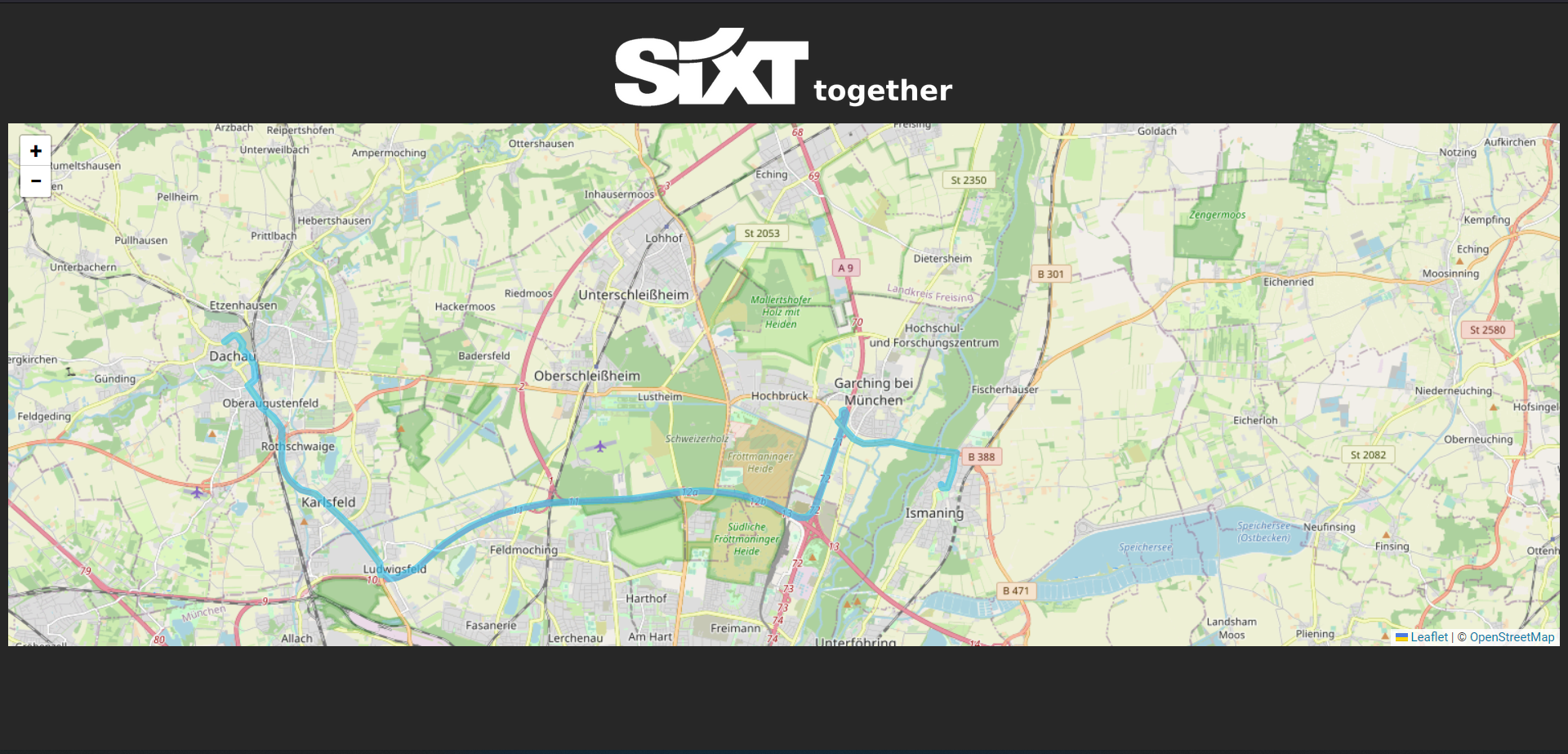
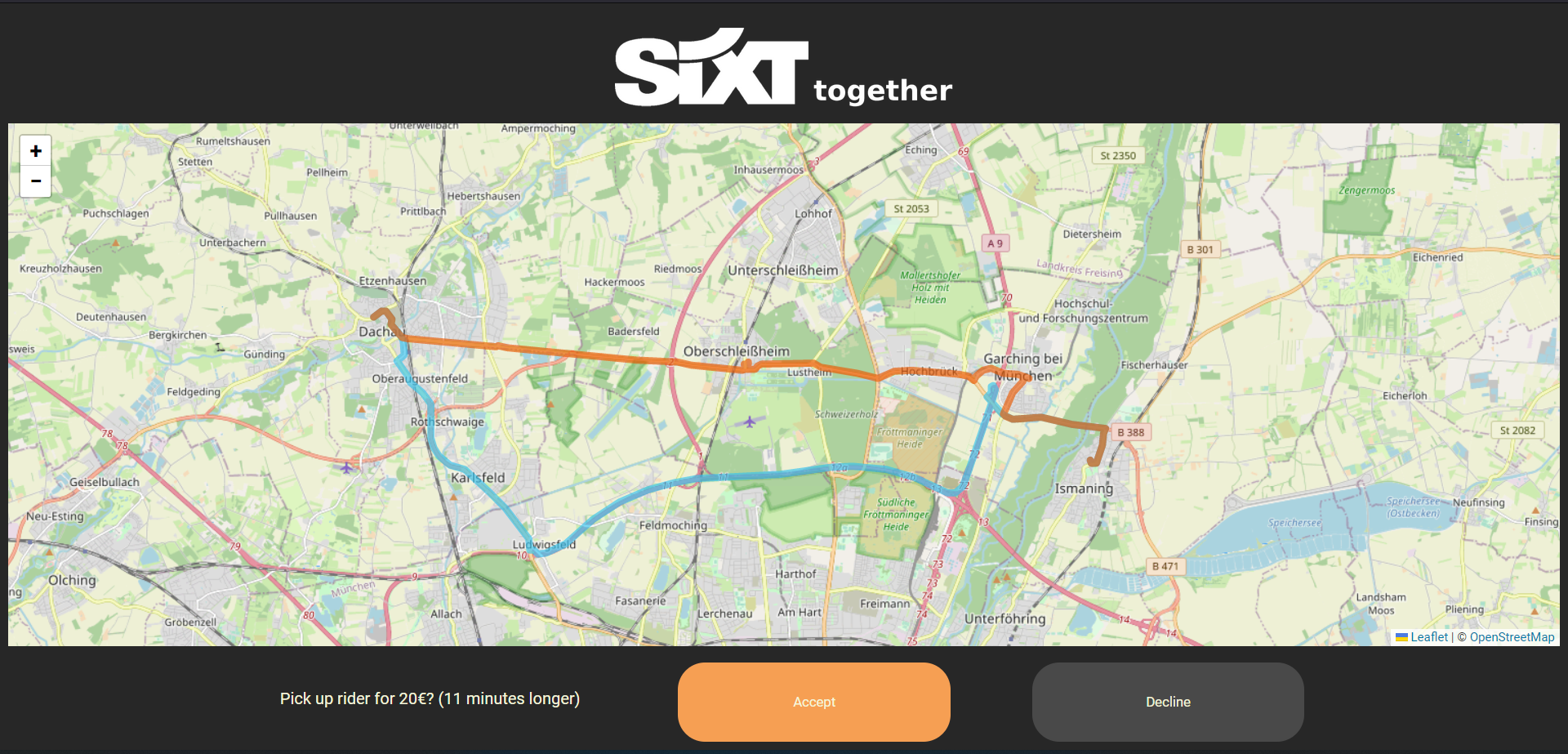
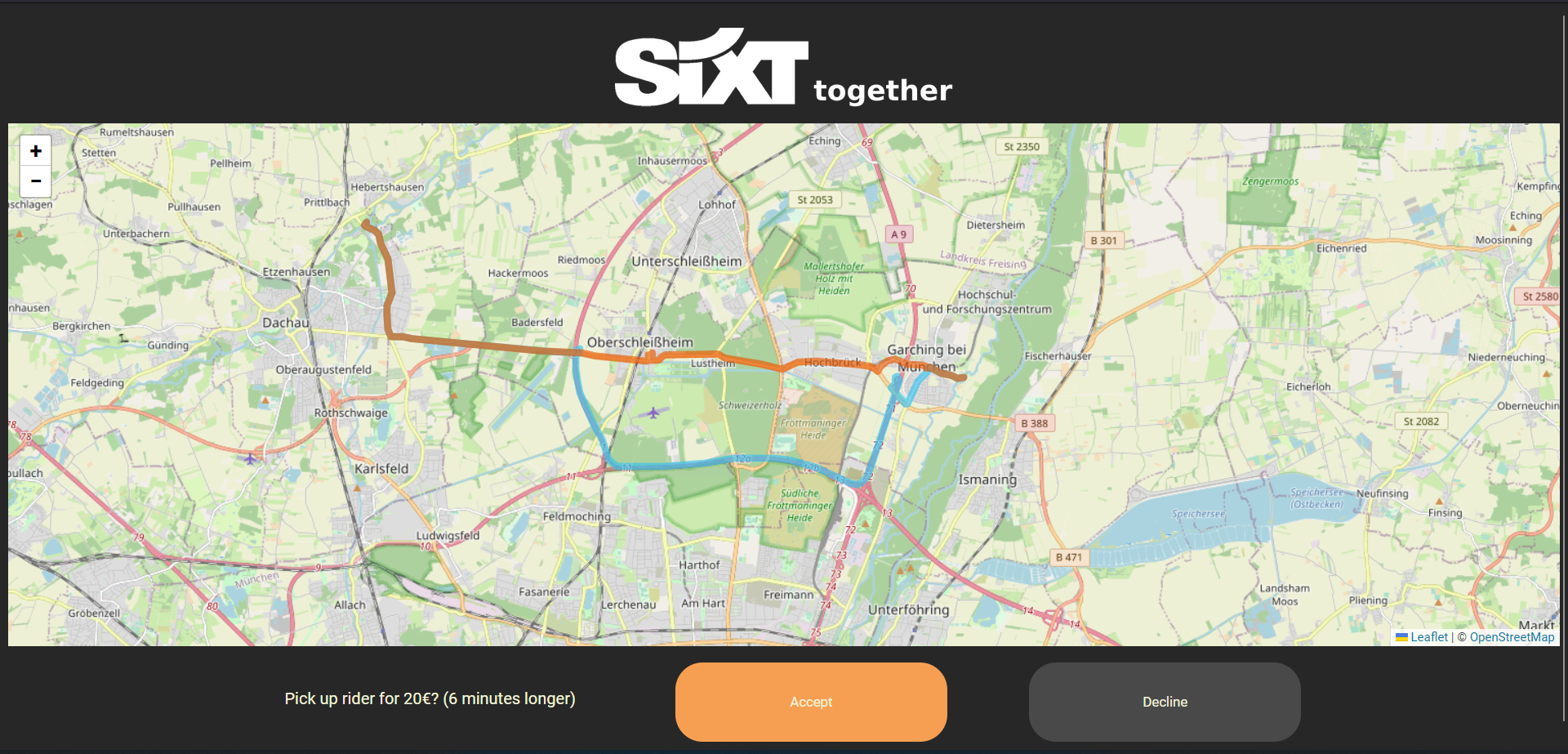
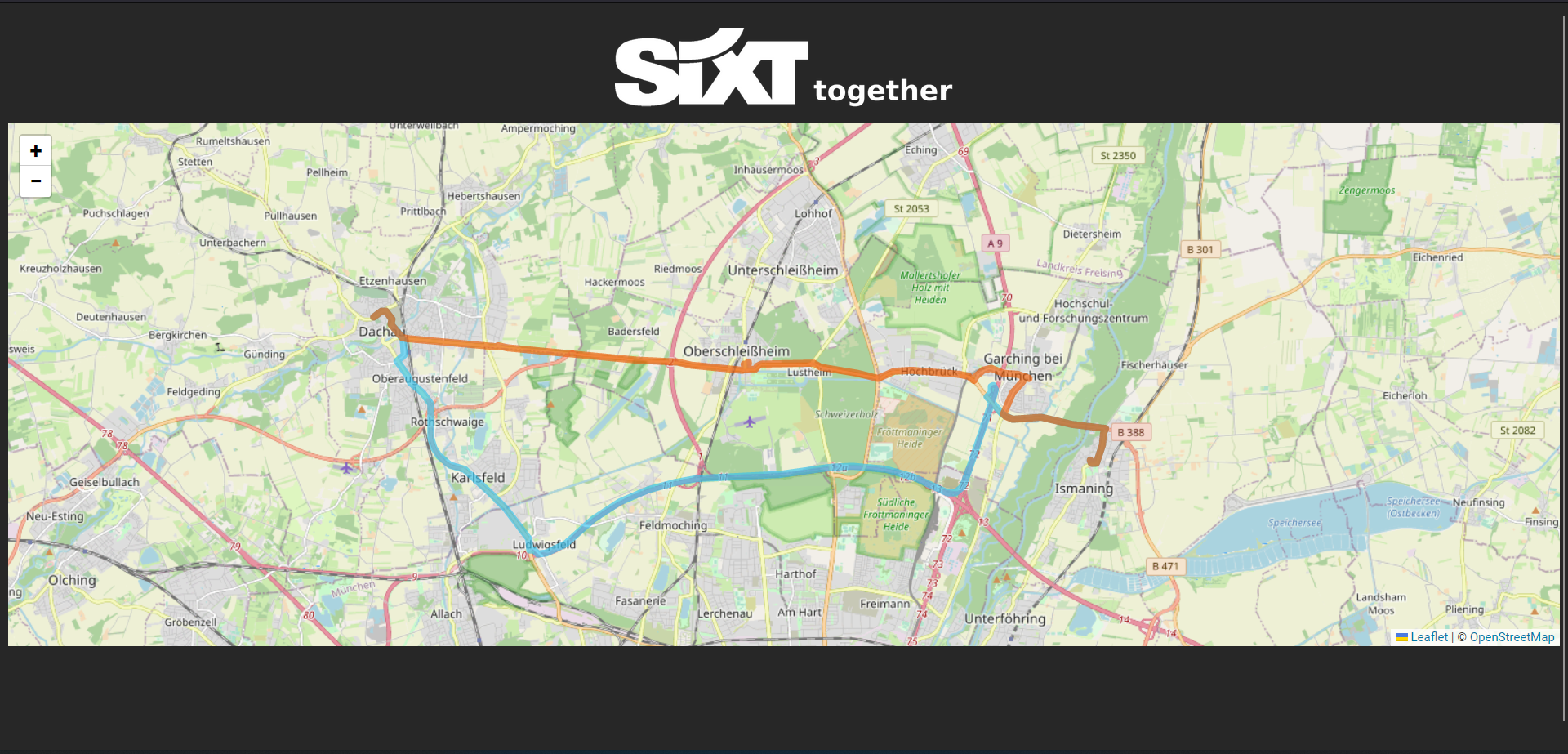
- Matches DRIVER and RIDER and sends them the calculated routes
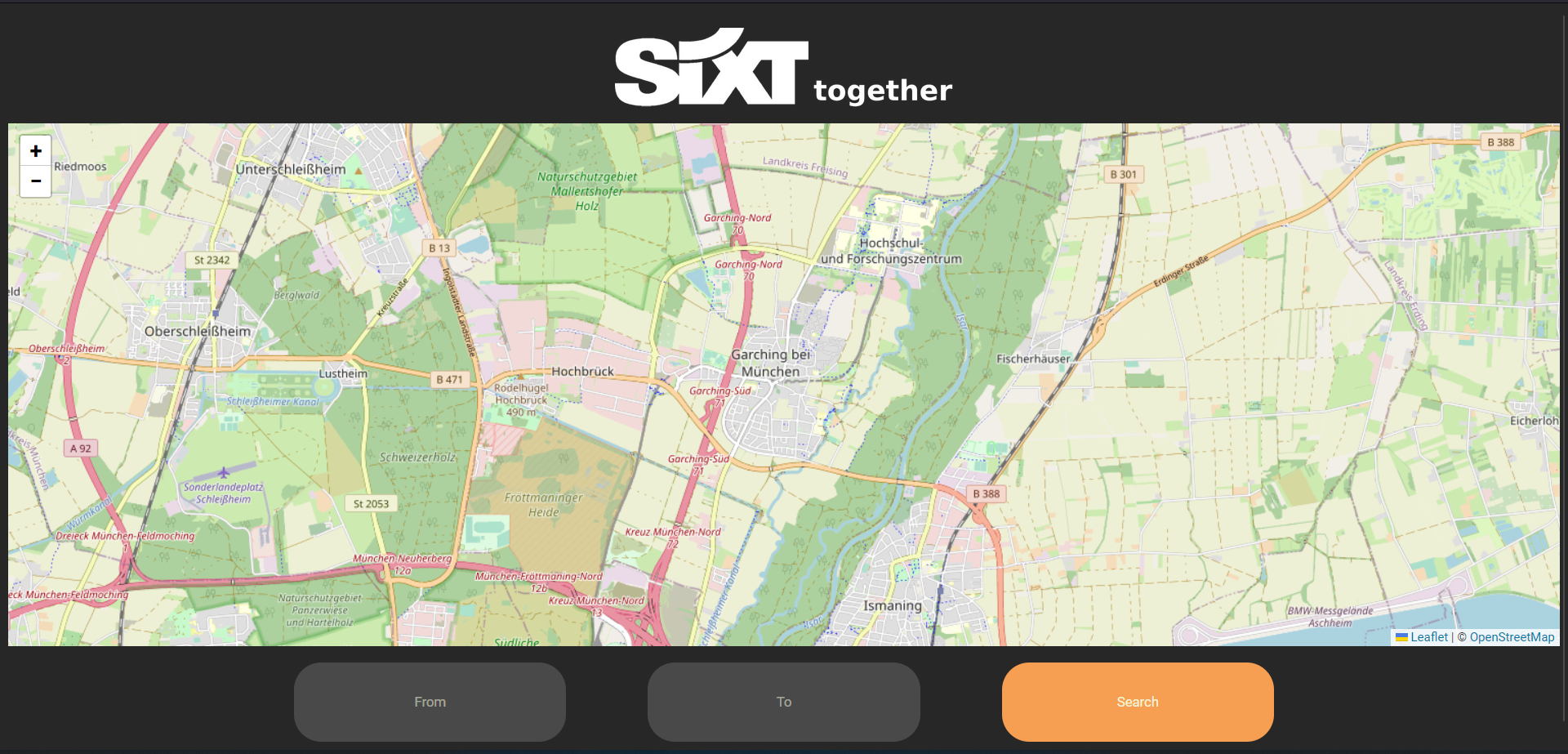
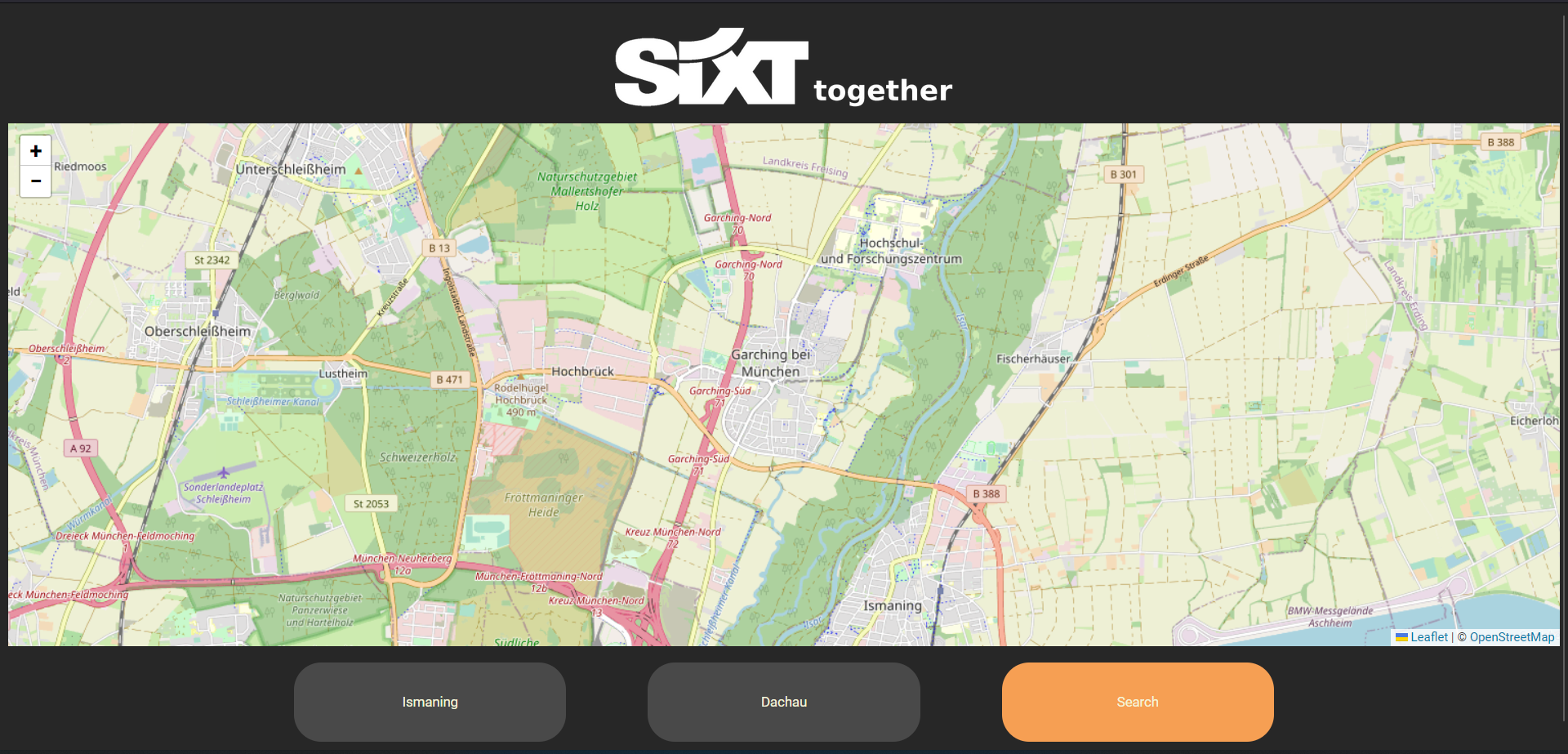
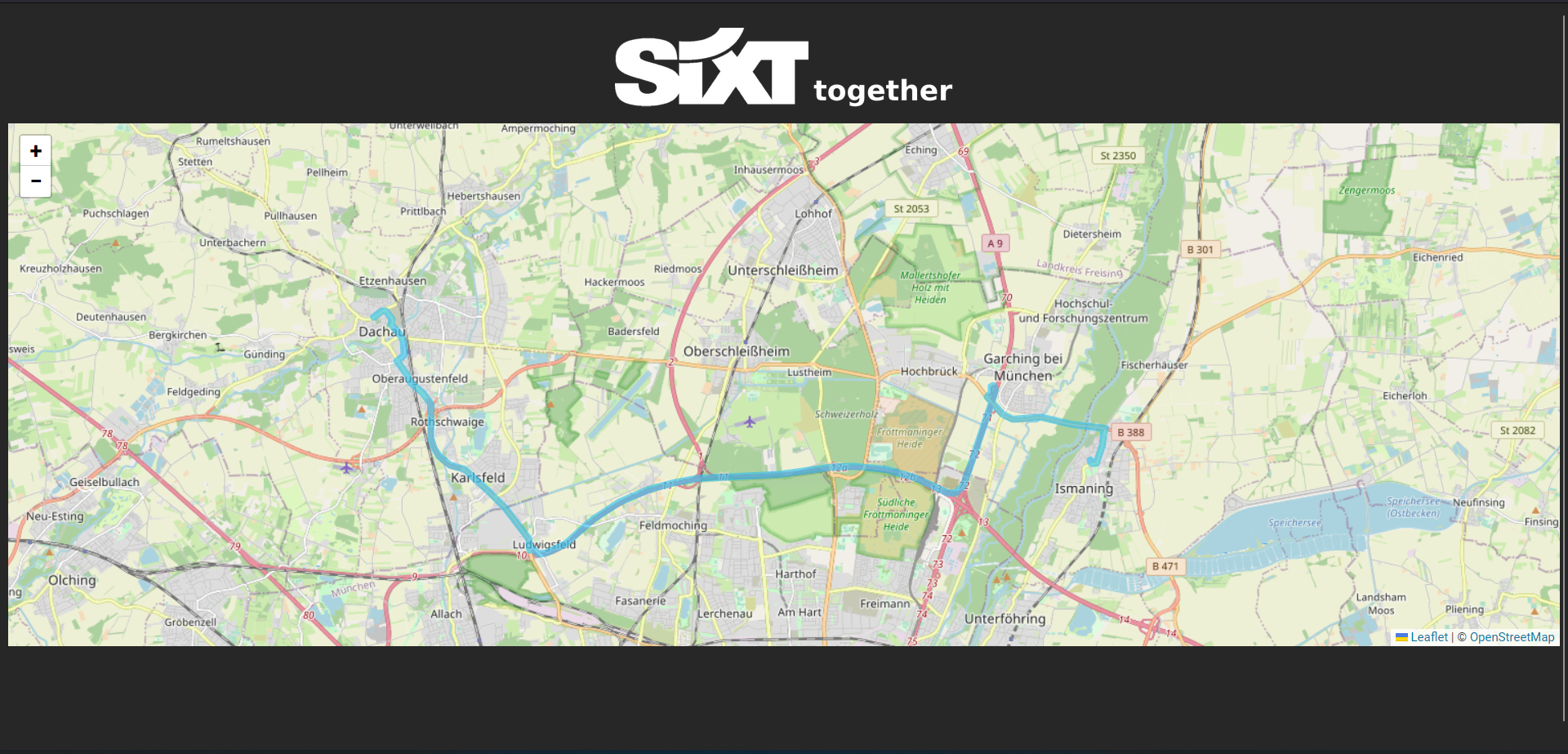
Frontend DRIVER: This webserver meant to be ran locally serves as a concept for a possible car dashboard inside the SIXT electric fleet. The buttons would be integrated into the steering wheel for distractionless interaction. Demo Video: https://cloud.erikkiessig.de/index.php/s/gJ2iebo9CbrbYJA
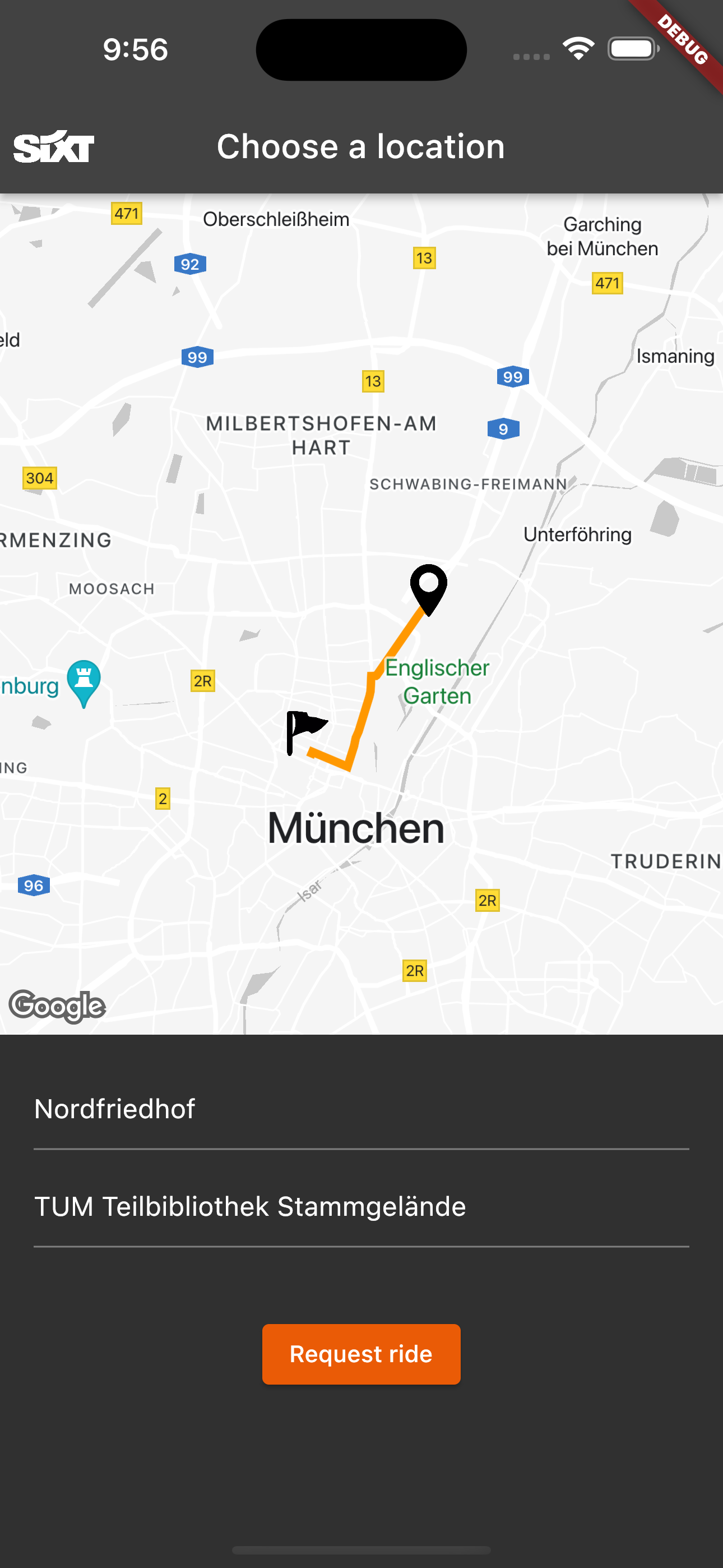
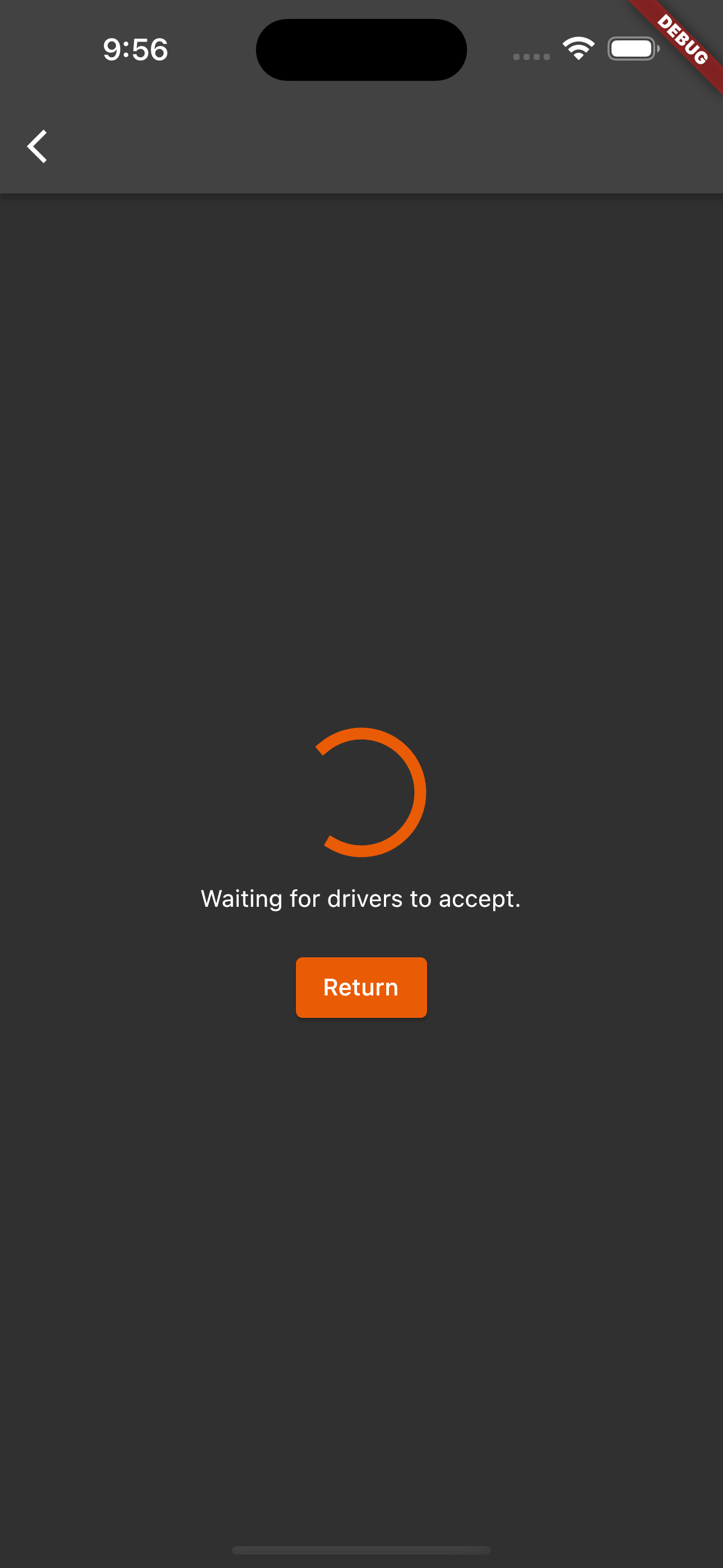
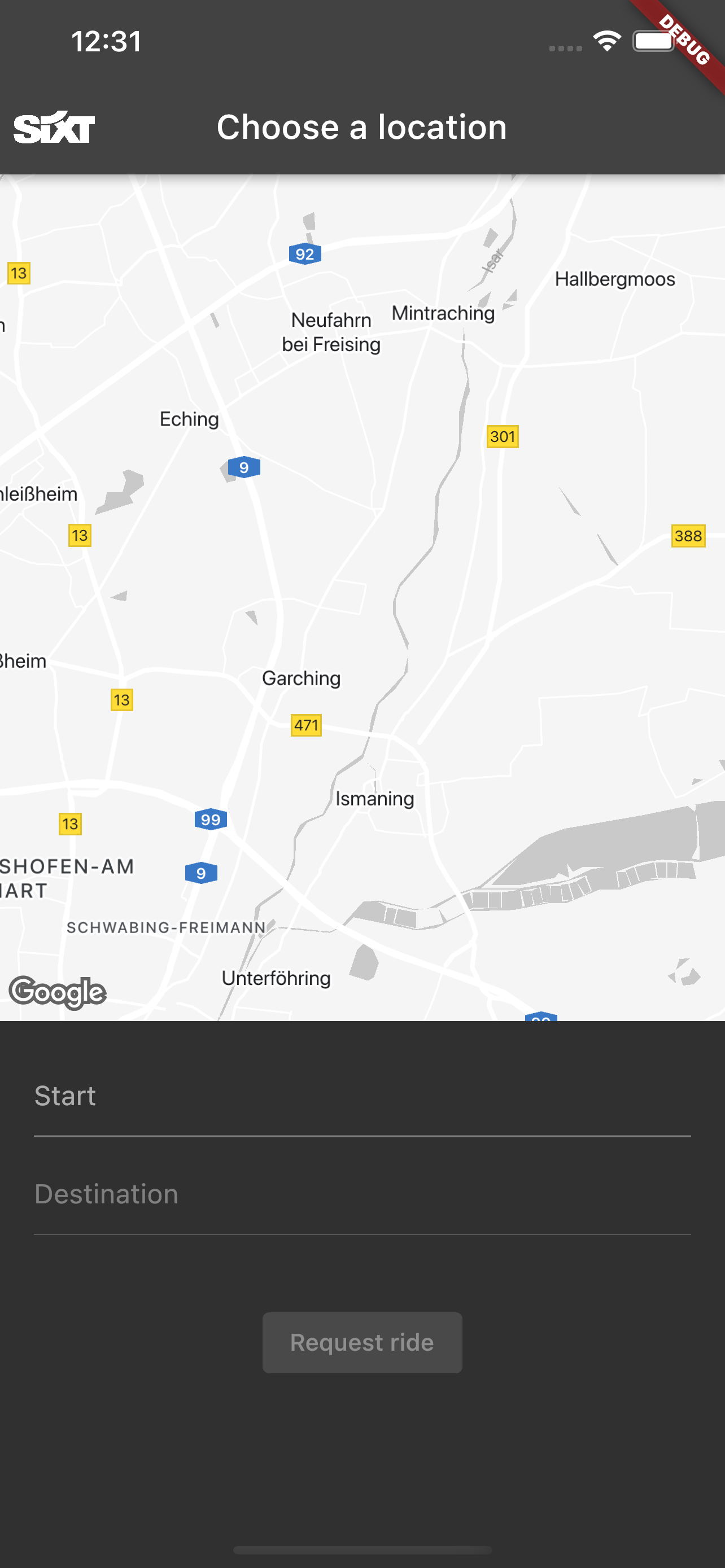
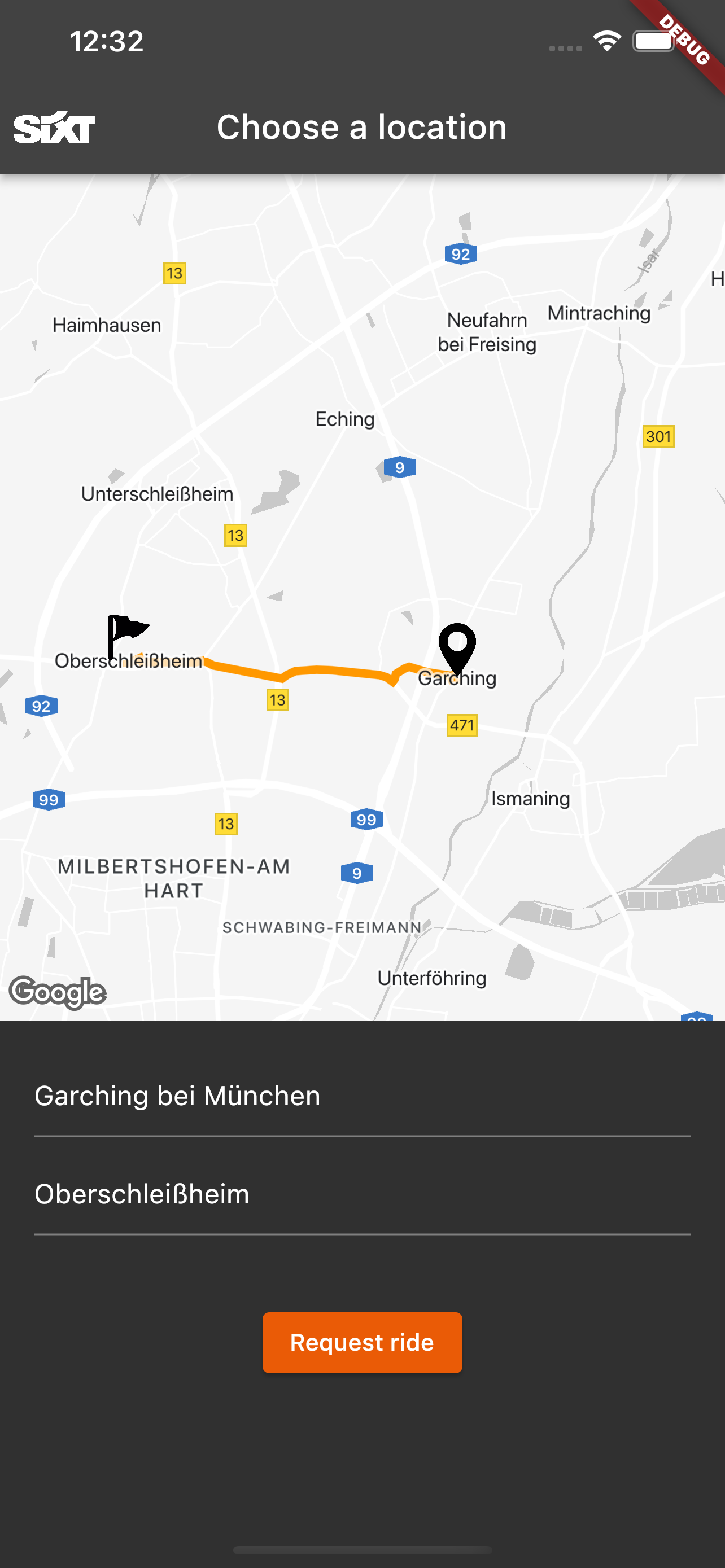
Frontend RIDER: App rider books his SIXT ride. Demo Video: https://cloud.erikkiessig.de/index.php/s/47FnAG7fsKcEoge
Challenges we ran into
Connecting the different systems together proved challenging at times.
Accomplishments that we're proud of
We're proud of the live communication between the server, the driver, and the rider. We're also very glad with the maps integrations we've built.
What we learned
- How the GeoJSON standard works
- Further experience with parallel systems and the challenges they pose
What's next for SIXT together
- Utilizing Minimal Weight Edmond's Blossom Algorithm to efficiently assign riders to potental drivers
- Calculating and displaying the driver's arrival time on the rider's phone application
- Fleshing out the driver's dashboard with common navigation elements like a clock, ETA, verbal directions, or a comprehensible zoomed-in view of e.g. the upcoming intersections

Log in or sign up for Devpost to join the conversation.