-
-
Shleep brings your dreams to life.
-
-
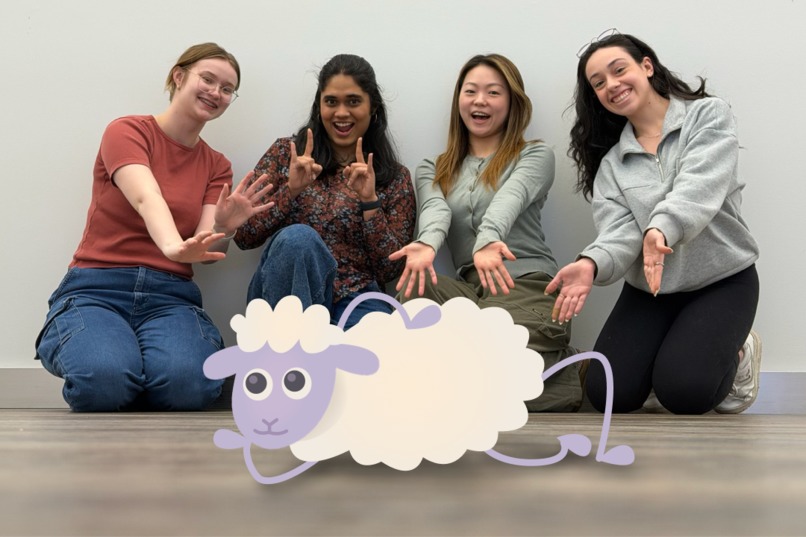
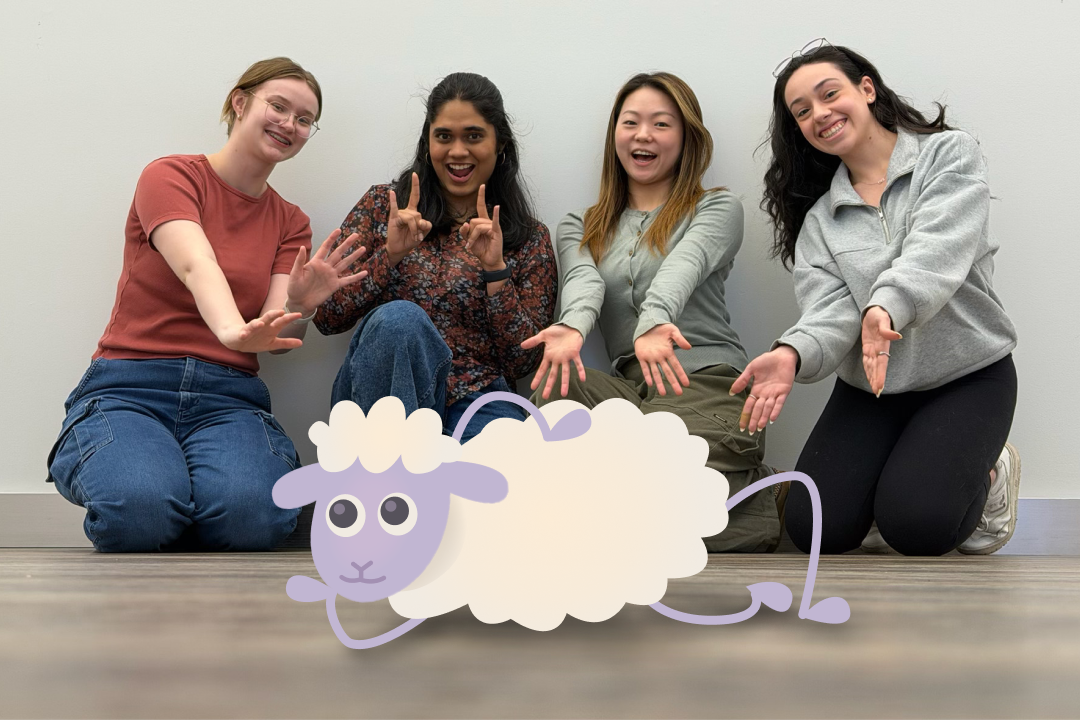
Meet the Team! (Left to Right) Sabrina, Shivalika, Suji and Rebecca + Shleepy the Sheep
Inspiration
We were inspired by the fascination of the subconscious mind containing information that many times feels inaccessible to us in our waking states. Dreams can tell us a lot more about ourselves than we think. Based on some research being done in the field of HCI, where Japanese researchers used fMRI scans and machine learning to identify specific objects people were dreaming about by matching their brain activity to patterns recorded while they were awake, we thought to ourselves, "wouldn't it be interesting if in the future a physical touchpoint such as an earpiece could actually collect brain wave data and translate the data into insights that help people better understand their subconscious mind. This area of opportunity would help people to gain a deeper understanding of things they may have previously never thought about or things that were buried so deeply in their subconscious allowing them to action small changes in their everyday lives to live in way that helps them be the best versions of themselves.
What it does
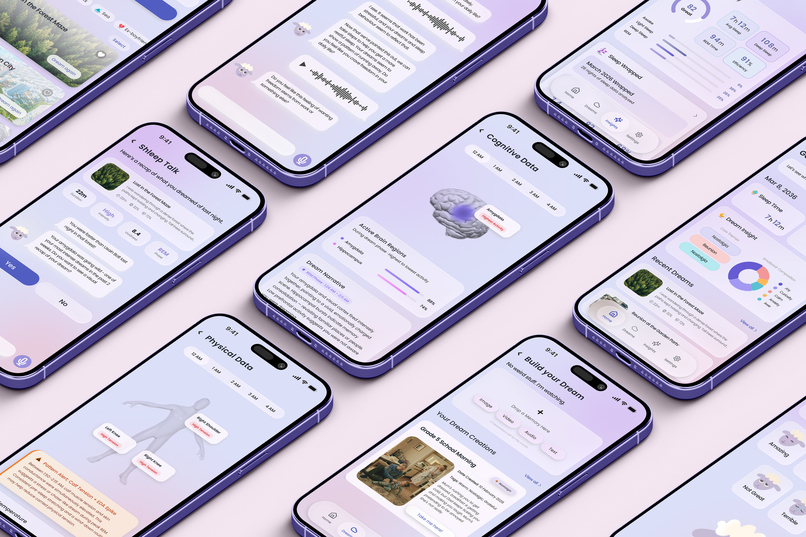
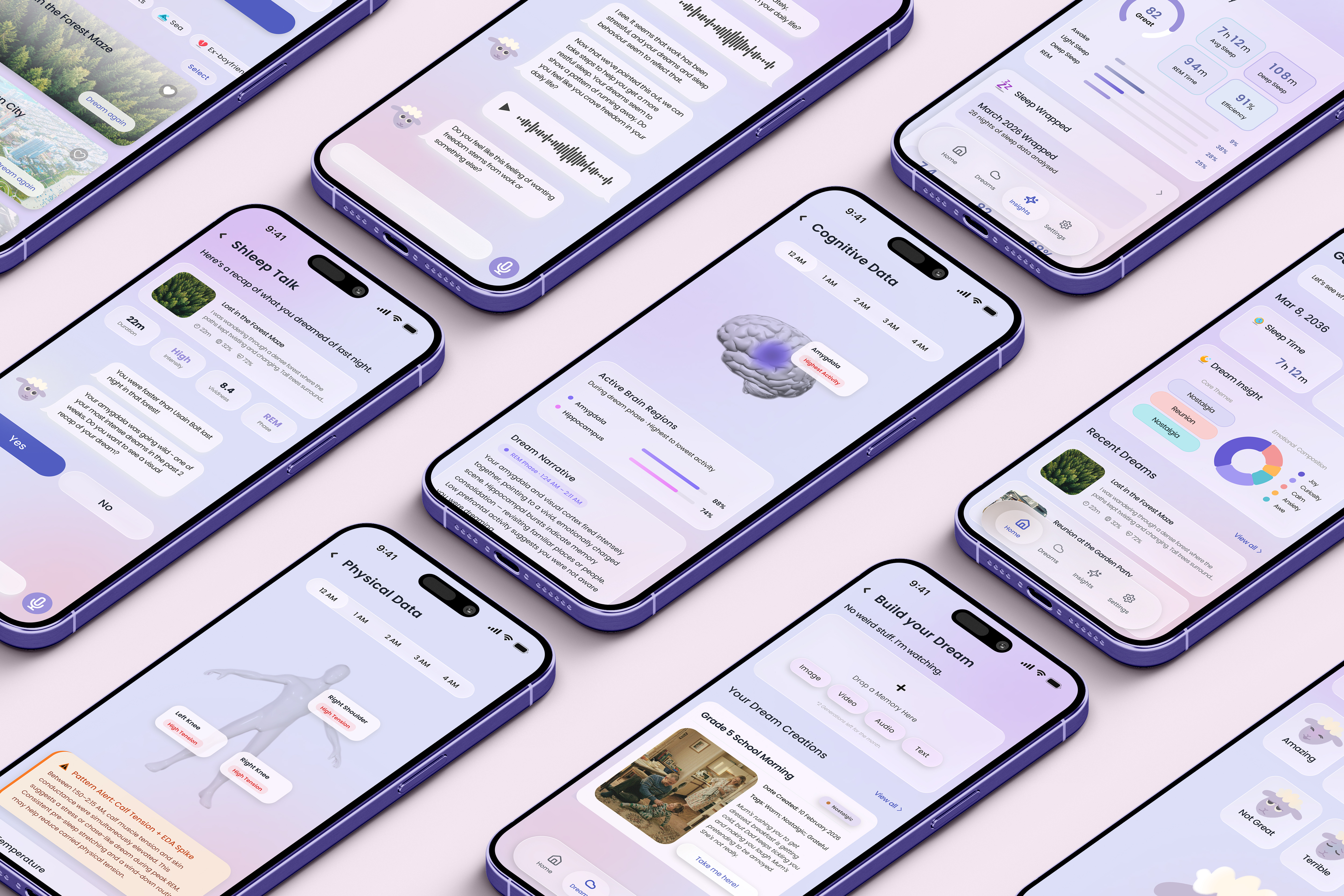
The app connects via bluetooth to two physical touch points a "Shleep Neural Earpiece" and a "Shleep Mattress Topper" to collect physical and cognitive data that helps users better understand what happens when they sleep and dream.
The Shleep Neural Earpiece collects data by going far enough into the inner ear to detect vibrations from brain waves that then get amplified by AI and go through a process of de-noising to output data that allows for the AI engine to recreate a visual recap of the user's dream and provides insight into other data such as what brain regions were active while dreaming and what this brain activity means in the context of the dream. The earpiece is small enough that it will not disturb the user while they sleep and will not fall out during sleep even for the most aggressive tossers and turners.
The Shleep Mattress Topper collects data via an intricate array of sensors embedded in the fabric that detect micro vibrations from the user while they sleep and dream that get amplified and translated into insights by the app's AI engine to help user's understand how their physical bodies respond while dreaming and if there are any patterns of excessive muscle tension in the body, how temperature fluctuates throughout their sleep and dreams, as well as other physical insights about heart rate and breathing. These insights are coupled with cognitive insights to help users understand how their bodies respond in their most relaxed state to what is going on at a subconscious level.
App Functions
Shleep Talk
The app contains an AI chat called Shleep Talk which uses patterns detected in dream and sleep data and brings it up to the user to chat about to help them understand if there are underlying feelings or concerns that they may have that they are not aware of in their waking moments but that recur and consistently come up in their subconscious world.
Dream Archive
The Dream Archive allows users to view dreams that they previously had and see visual recaps of the dreams to be able to re-live dreams of loved ones that have passed or good memories or of profound insight (or even those dreams where we get amazing ideas but forget them once we wake up).
Build Your Dream
The Build Your Dream function allows users to drop photos, audio, video, or text descriptions of dreams that they want to have (e.g. creating a dream of meeting with a loved one that has passed, creating a dream to help them overcome a fear). We put implemented a constraint of only being able to generate 2 of these dreams per month so as not to become dependent on this feature and alter natural processes. We also implemented a hard line where the app will not generate dreams with harmful or inappropriate content. The way that this function will translate into the user's dream life is via the Shleep Neural Earpiece, where the earpiece will reverse engineer the process of data collection from the user and instead emit vibrations that can be translated into visual imagery perceived by the user in their dreams. We disclaim that these generations may not be completely accurate but that they will have a high enough degree of accuracy that the dream will not stray away from the original idea. There will be in dream prompts that come up to give the user the choice to stop the dream or to change direction in order to provide the user with agency over this experience.
How we built it
We built the app primarily using Figma and Claude Code. We created our prototype and style guide first, asking Claude Code to help with idea generation for layouts and card design. Our mascot, Shleepy the Sheep was designed by us in Illustrator to add a fun touch to the overall branding of the product (because data doesn't have to be boring and monotone, we wanted it to be accessible and engaging so that people truly want to learn more about themselves and their subconscious, something that can typically be quite daunting to many).
Challenges we ran into
When building two of our use case screens that visualize cognitive and physical data we attempted (with no coding experience whatsoever!) to vibe code and host an interactive 3D brain model and anatomical model that would be able to be spun around when the user taps and drags the screen. We also wanted the model to be interactive with the toggle above that shows different hours of the night to see which brain regions were active. However, as much as we tried, we were unable to integrate our working model that we vibe coded into Figma. BUT, we were still determined to include these features since they were two of the major features relevant to our idea. So, we put our heads together and used our problem solving skills to come up with an alternative solutions. We did a frame by frame render of each model, imported these frames into After Effects and created an .mp4 that we embedded into our prototype to be able to demonstrate what this feature of the app can do.
Accomplishments that we're proud of
We are incredibly proud of how well we worked as a team to quickly problem solve and create an app for two speculative touch points in such a short period of time. We are also so proud of ourselves for challenging ourselves to learn skillsets that we had never previously used and for doing so in our first ever hackathon!
What we learned
We learned how to leverage Claude Code to create faster workflows in creating visual arrangements and in leveraging our current designs and making them better. We also learned more about GitHub, creating animations in Figma, and how to integrate interactive elements into our designs!
What's next for Shleep?
We believe that Shleep has the potential to help people understand themselves in a way that was only possible through going to sleep clinics or by someone else mentioning their sleep habits to them. We also believe that Shleep has the potential to help individuals with PTSD and trauma that is talk-therapy/therapy resistant (under heavy supervision of a clinician of course) to remove the barrier to care (e.g. allowing of a less daunting way to learn about navigate complex trauma diagnoses) and to give clinicians and patients alike insights and data into what is really going on inside.
Built With
- adobe-illustrator
- aftereffects
- c4d
- claude
- figma
- gemini
- github


Log in or sign up for Devpost to join the conversation.