Inspiration
We don't just work together. We go out together, and somewhere along the way we always end up playing something. A card game, a silly challenge, whatever is on the table. Those nights became some of our favorite moments, and we wanted to make them even more unique.
So we built the game we wanted to play with each other, with one goal: connect people more. We wanted something digital that never loses the essence of traditional games: sitting around a table, looking at each other, laughing, arguing, and trying to convince everyone that your card goes first.
That shaped every decision. SHIFT is an app, but the screen is never the point. The talking is the game, and the phone is just the deck. Every design call came down to one question: does this help the table talk, or does it compete with it? No chat, no voice, no countdown timers, no remote play. Just people, in a room, together.
What it does
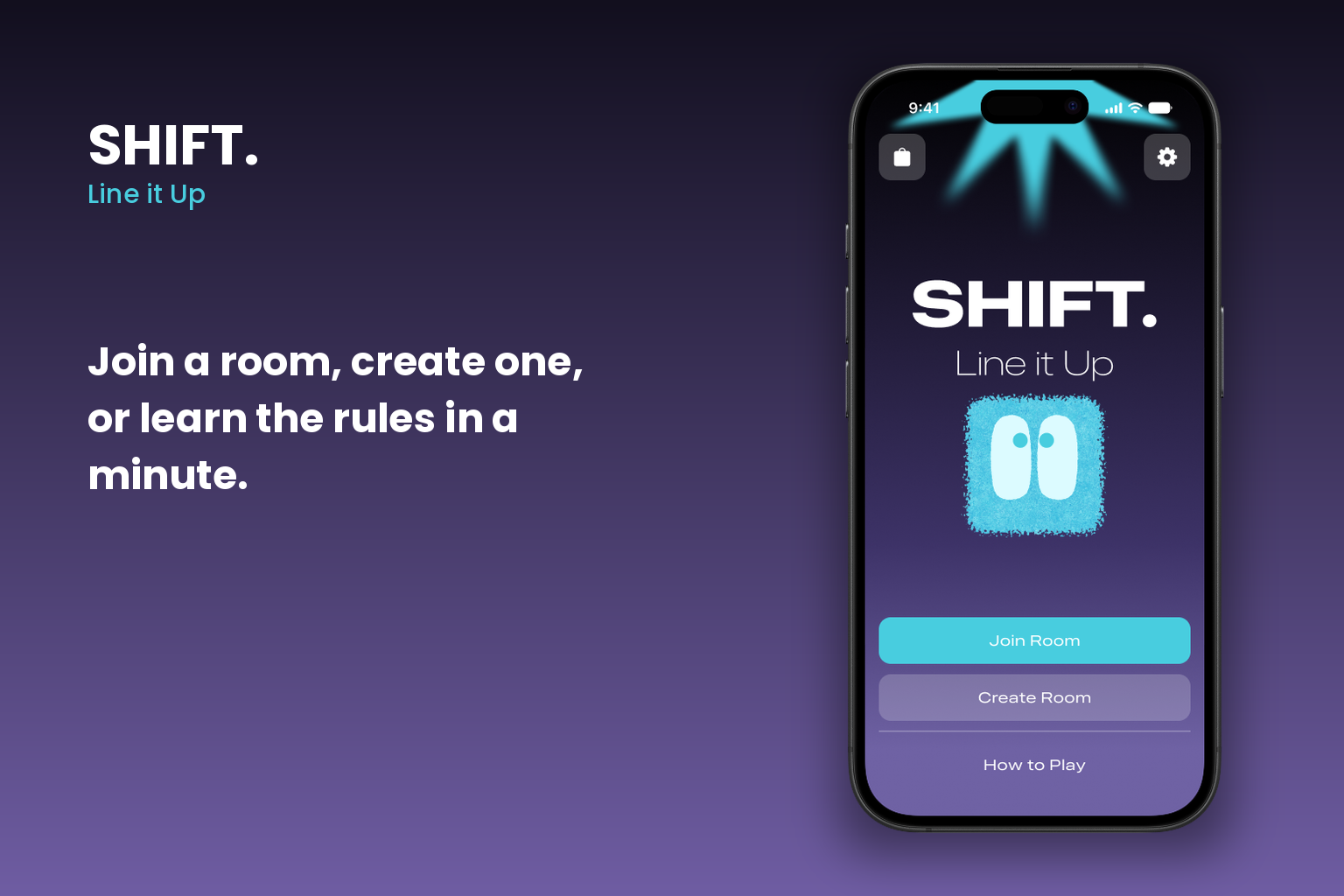
SHIFT ("Line it Up") is a cooperative party game for 3 to 8 people in the same room. It is live on the App Store: https://apps.apple.com/us/app/shift-line-it-up/id6810001678
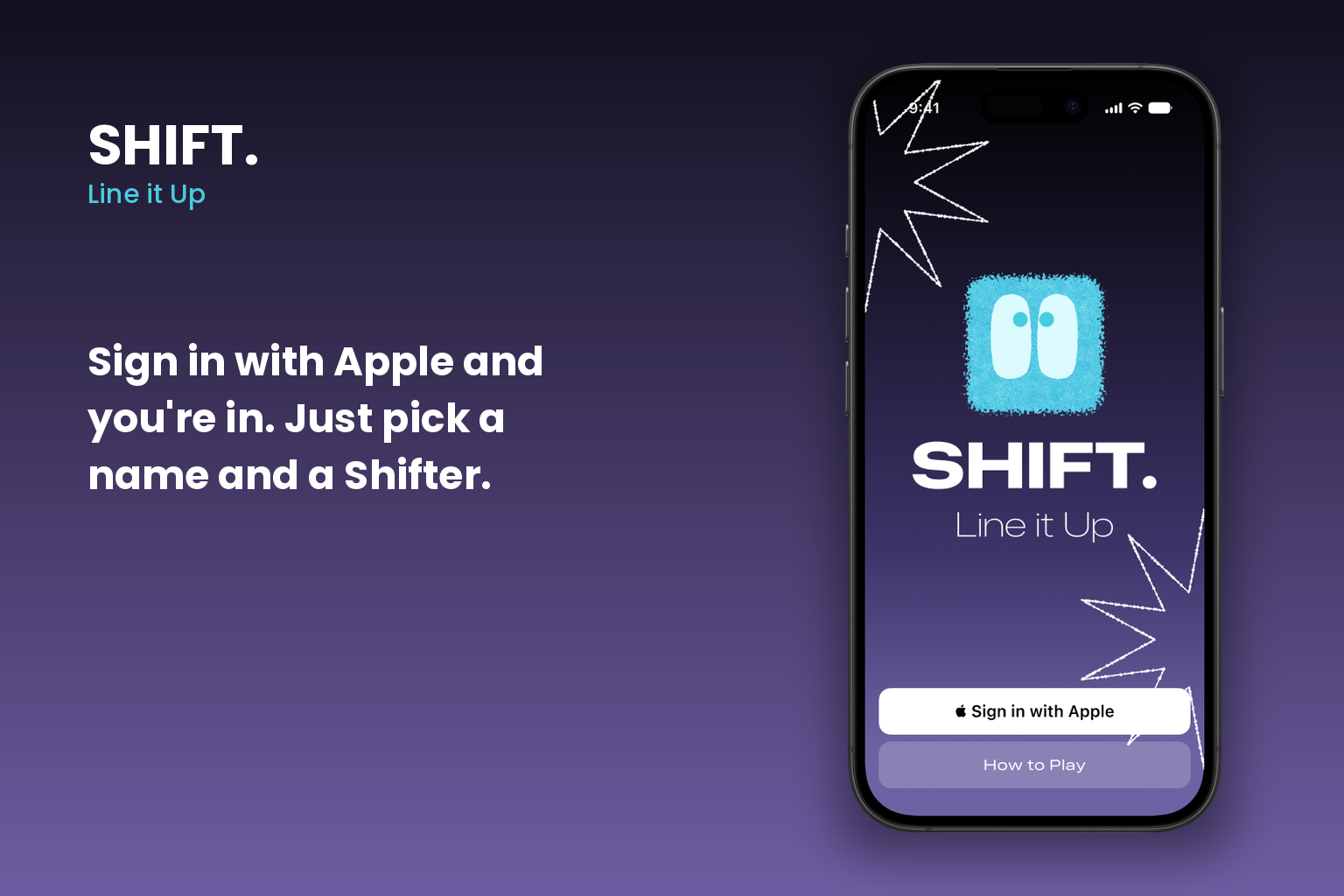
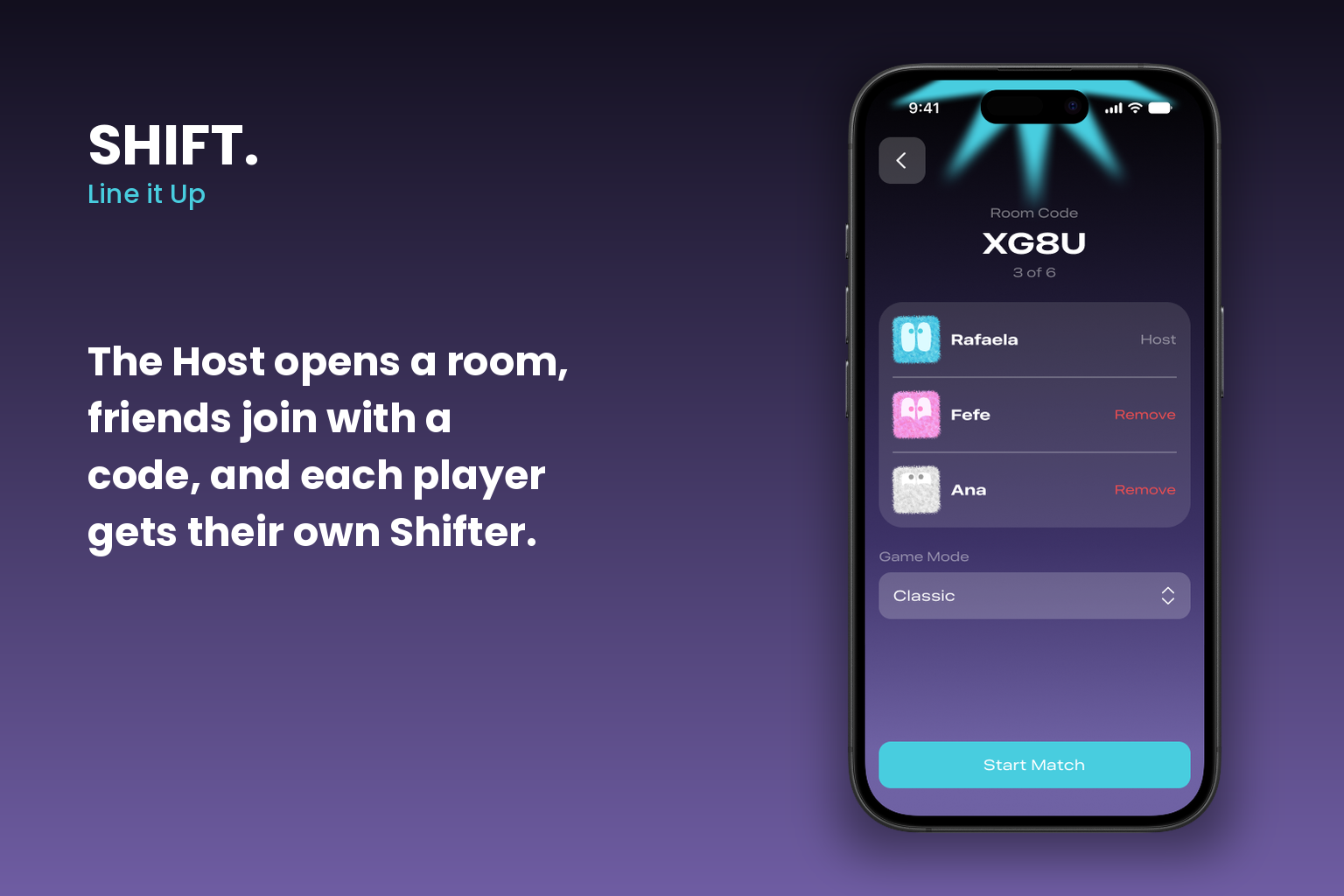
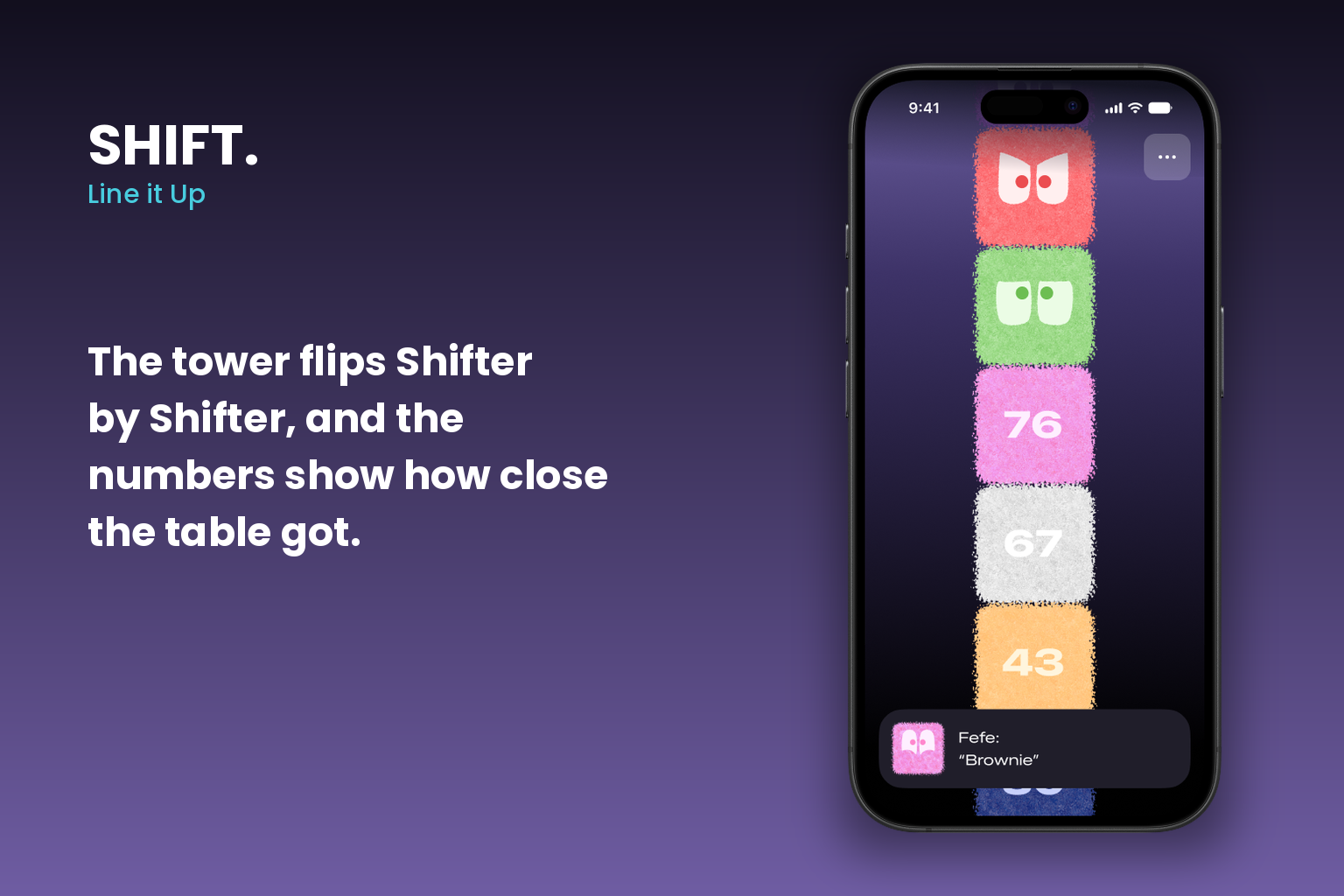
At the center of SHIFT are the Shifters: a cast of little creatures that represent each player around the table. Instead of flipping cards like in a physical game, your Shifter carries your secret and brings it to life throughout the round. Each one gives players their own presence at the table and helps give SHIFT its playful personality.
Here’s how a Classic round works:
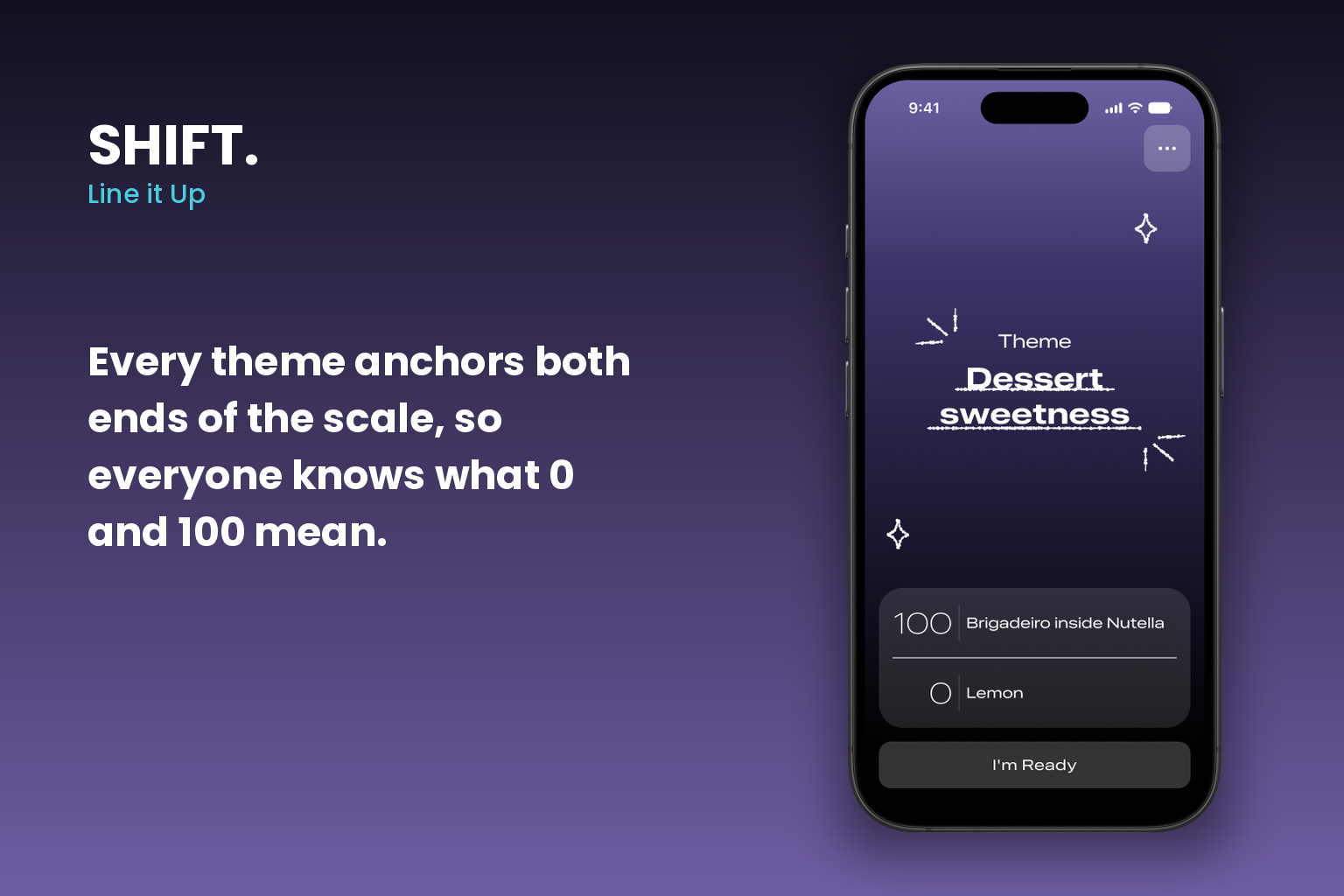
A theme sets a scale between two extremes, like “spiciness of food: from plain white rice to pure Carolina Reaper.”
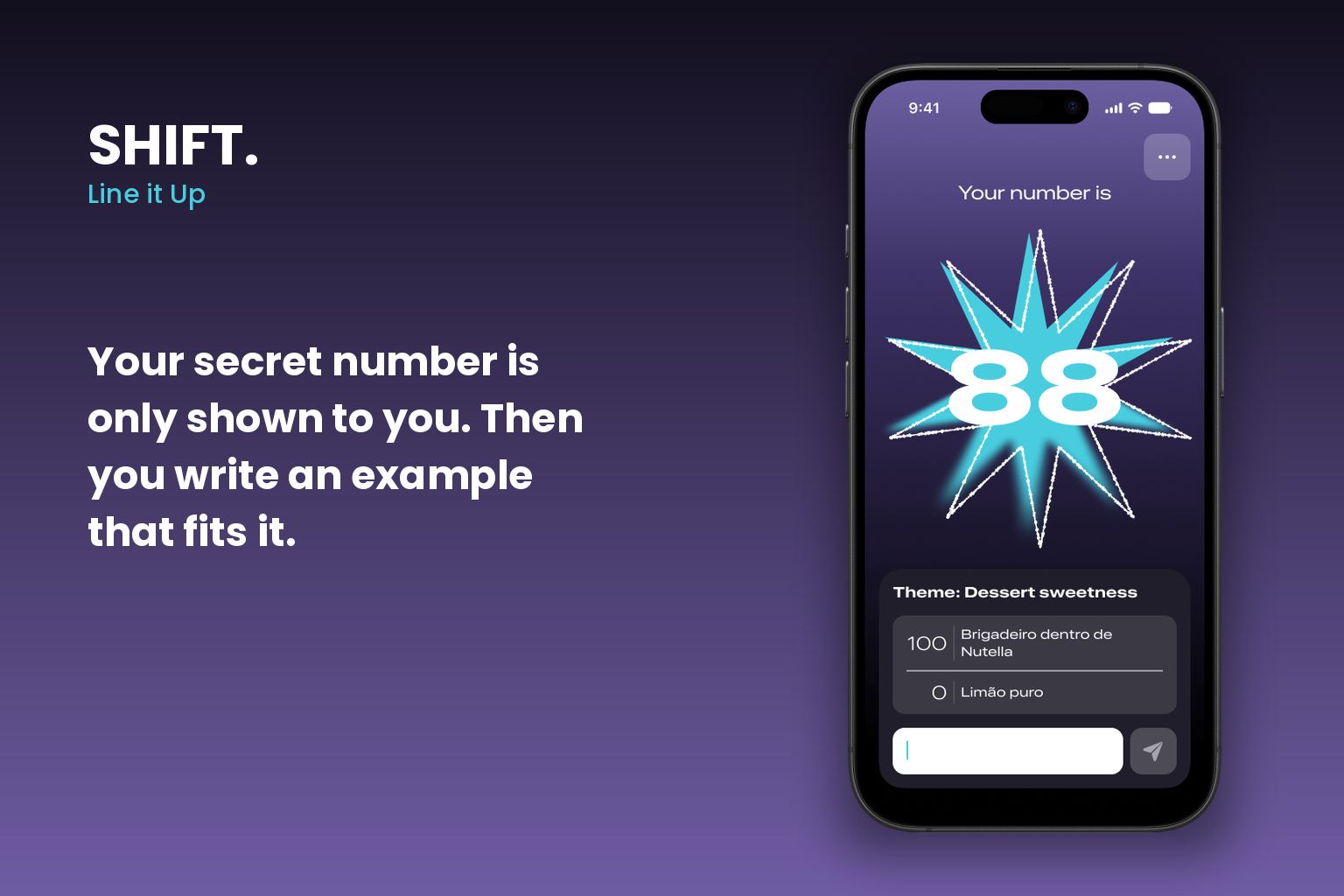
Each player’s Shifter receives a secret number from 1 to 100. Only you can peek at it by pressing and holding your Shifter.
You write an example that you think belongs at that point on the scale. Then the secrets disappear and the conversation begins.
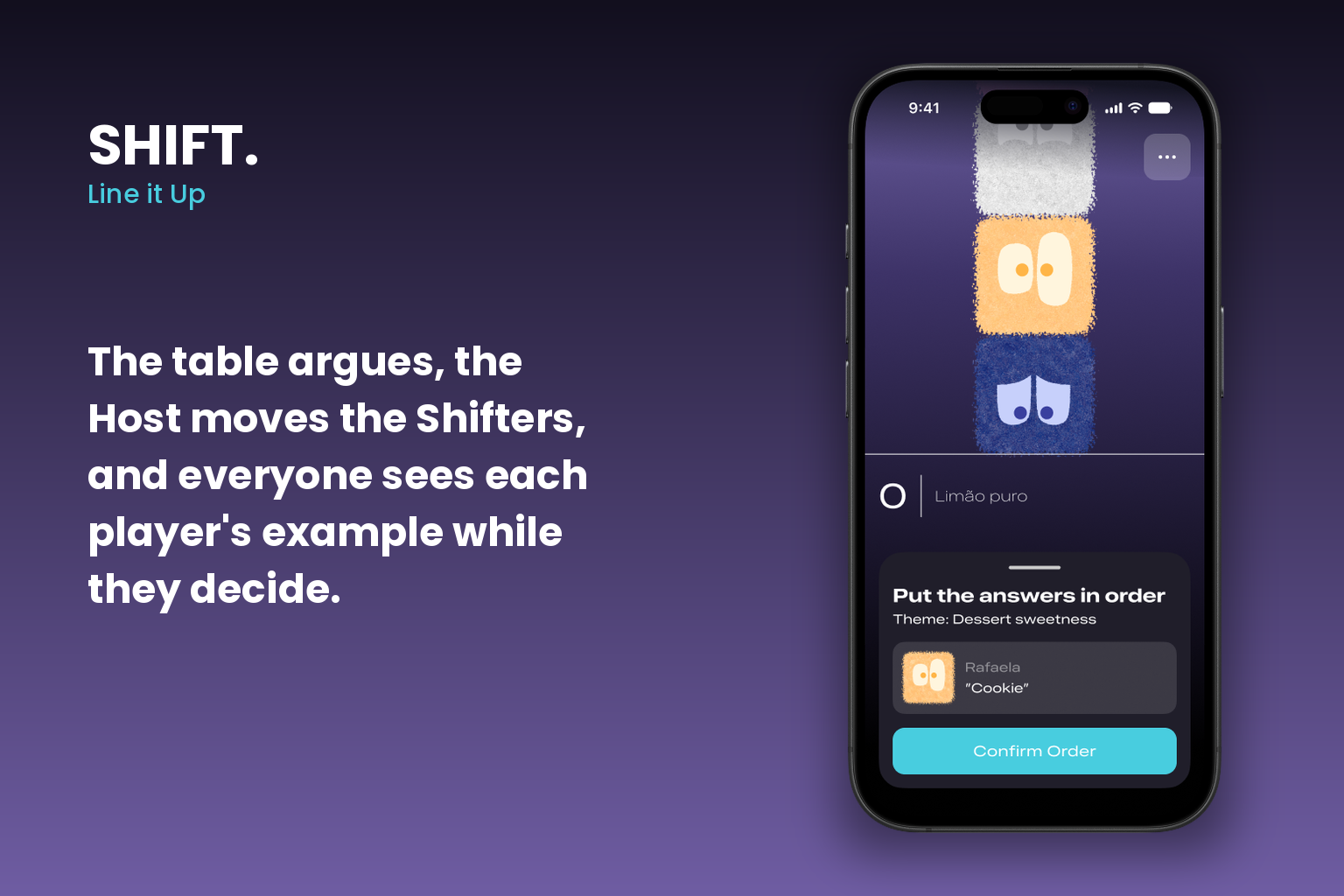
Together, the group tries to line up everyone’s Shifters in the right order. Only the Host can move them, but everyone has to agree before the lineup is locked in.
Then comes the reveal: the Shifters show their numbers one by one, turning the lineup into either a tiny moment of collective genius… or complete chaos.
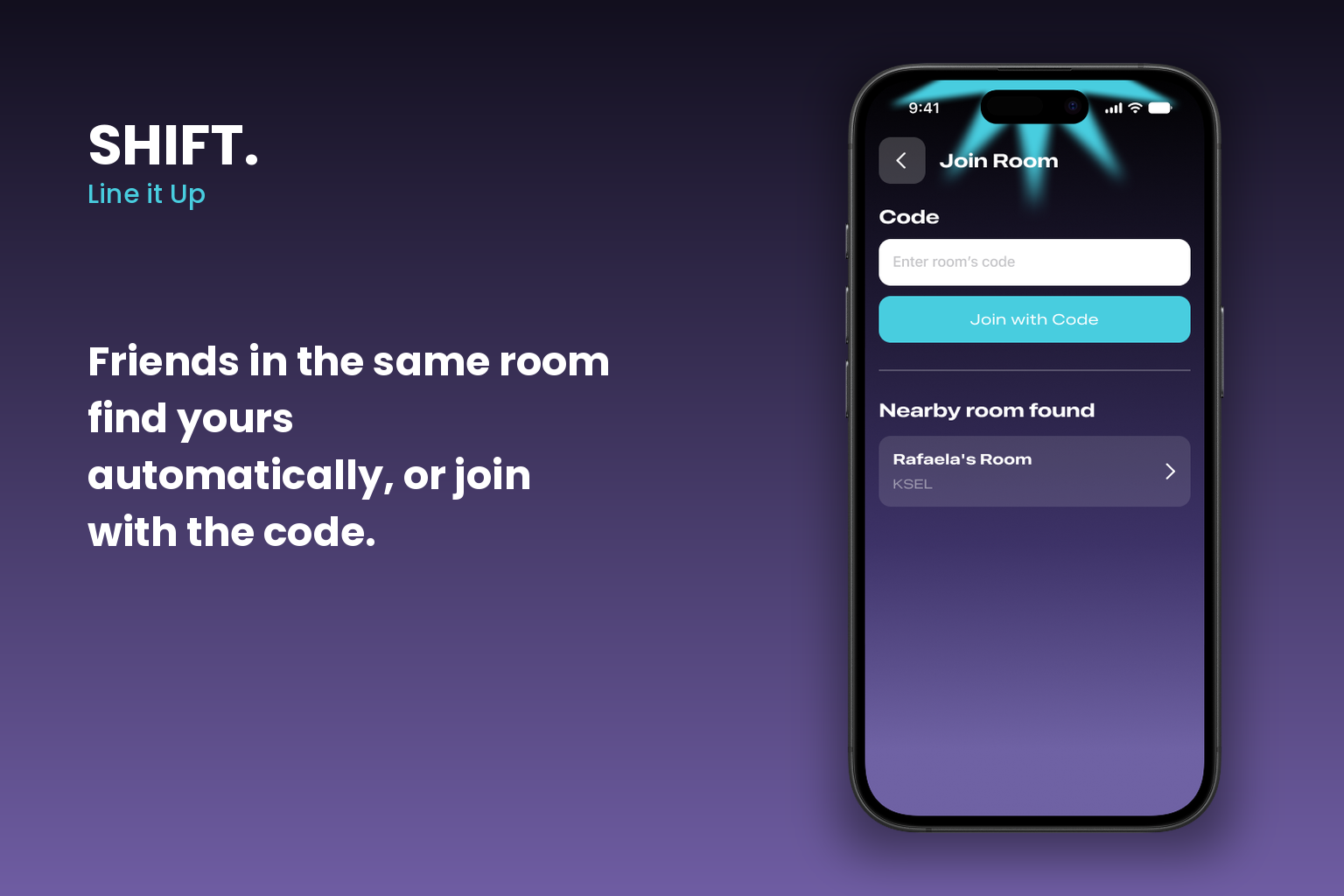
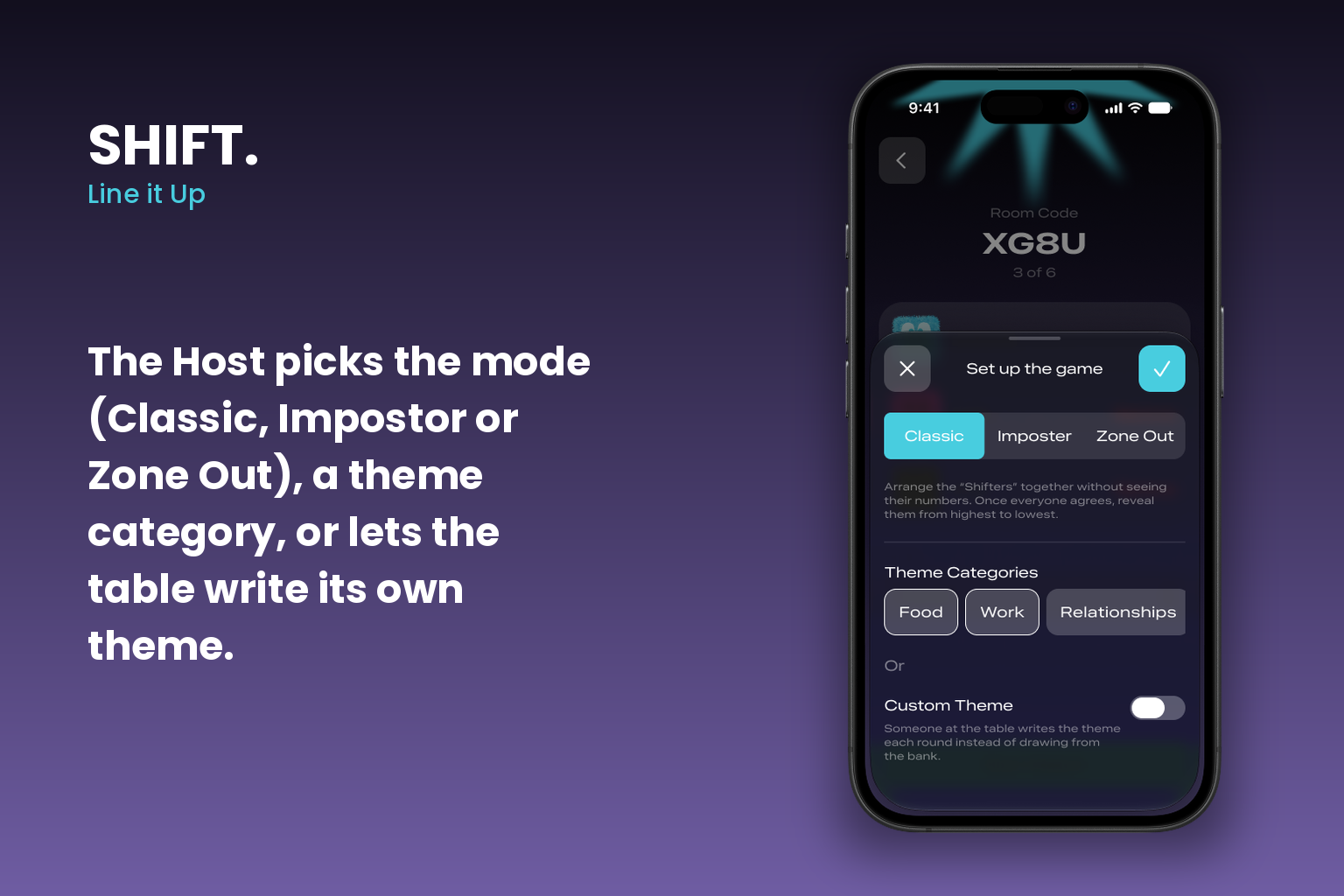
SHIFT has three game modes built around that same idea of reading the room. Classic challenges the group to build the right lineup, with an optional bonus for guessing another player’s exact number. Impostor secretly gives one player a different theme, and the group has to figure out who doesn't belong. In Zone Out, exact numbers disappear and players receive secret zones instead. Zones can repeat, making the conversation much less predictable.
The whole game is available in English and Portuguese.
How we built it
We are four friends. Rafaela designed the game, and Bernardo, Fernanda and Vicenzo built it as a native iPhone app.
The first big decision was to have no server at all. The phones in the room talk directly to each other, and the Host's phone acts as the referee: it deals the secrets, runs the reveal and keeps the result, and each player only ever receives their own secret. That is the right trade for a game played among friends. RevenueCat handles all purchases, and it is the only outside service we use.
Monetization: who invites, pays
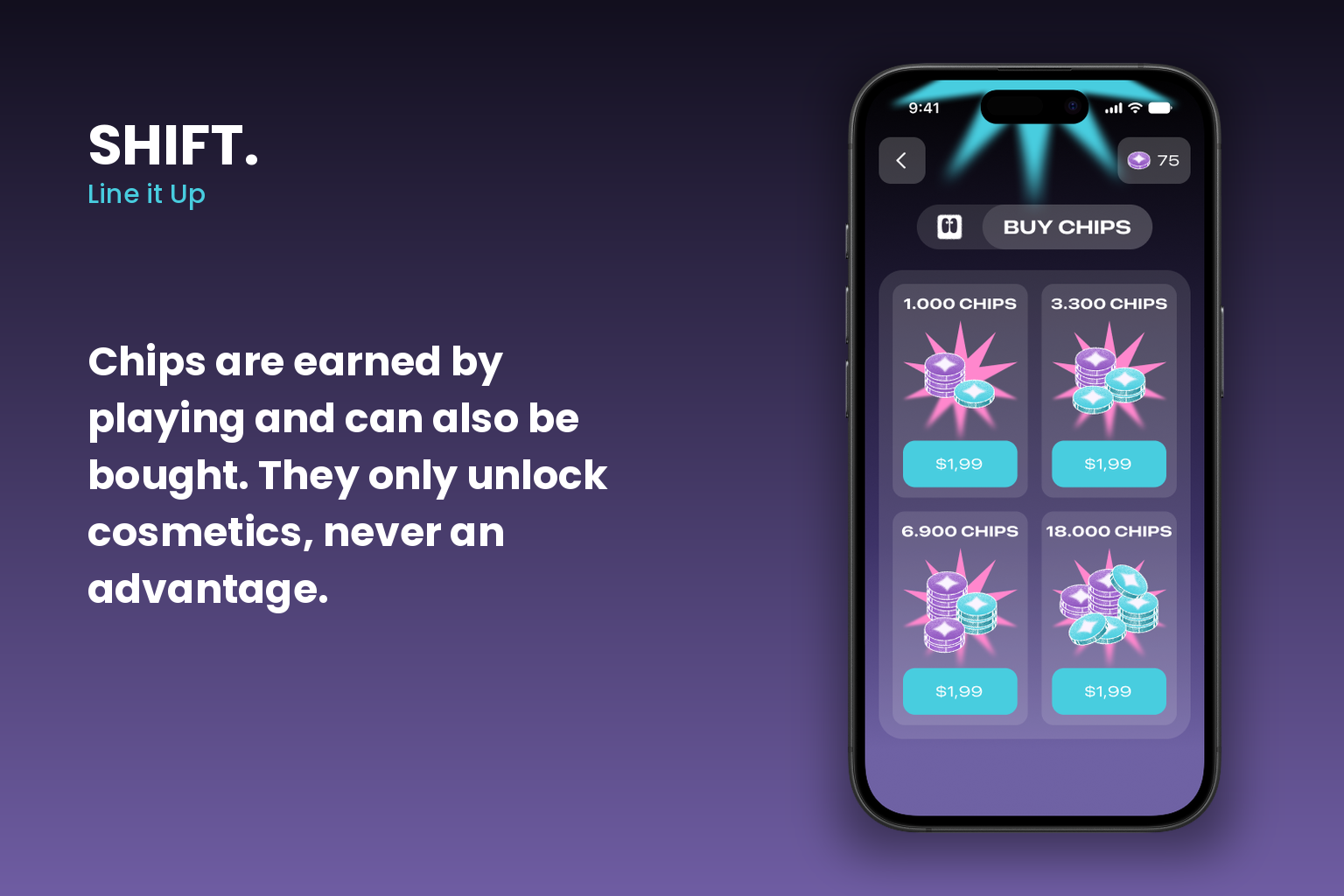
Premium access belongs to the Host and applies to the whole table. If the Host owns a mode, everyone in the room plays it, so a guest never sees a paywall during a match. A free room holds 6 players, and a one-time upgrade reaches 8, offered only at the moment someone gets left out. Locked content is shown with a lock instead of hidden, and skins are cosmetic only. Each card on the table wears its owner's skin, so a purchase is something the whole table sees.
Playtesting
While we were building, we played with about 10 friends. Watching real people play changed how a match works: what information each person sees and when, and the rules behind the table.
Challenges we ran into
- A dropped connection is not someone leaving. A phone locking, going into a pocket or stepping out of range looks like "player left" to the system, and we were ending matches after two-second blips. Now the game waits 20 seconds and tells the table whose seat it is holding.
- Dragging a card fought with scrolling. The tower of cards is a scrolling screen, and a normal drag always lost to the scroll. We borrowed the iPhone Home Screen trick: press and hold briefly, and the card lifts and wobbles into your finger.
- A rule applied one step too wide. We decided that music plays only on the Host's phone, so eight phones never play the same song out of sync. It also silenced the menu completely, where nobody is the Host. The rule only belongs to the table.
- A wrong diagnosis. We thought all eight mascots had mismatched colors and were about to redraw every face. Measuring them properly showed seven of eight were fine. The real bug was a mislabeled file.
- 12 players became 8. The wireless technology we use caps a room at 8 devices. We cut the number instead of faking it.
What we learned
- A constraint is a design tool. "In person" removed chat, voice, timers and servers, and gave us the product.
- Measure before you fix. Our worst bug was a wrong diagnosis, not wrong code.
- Playing with real people finds what plans can't: eight phones playing music, a screen that locks mid-match.
What's next
Larger rooms and remote play, and more playtests to keep tuning Impostor mode.

Log in or sign up for Devpost to join the conversation.