-
-
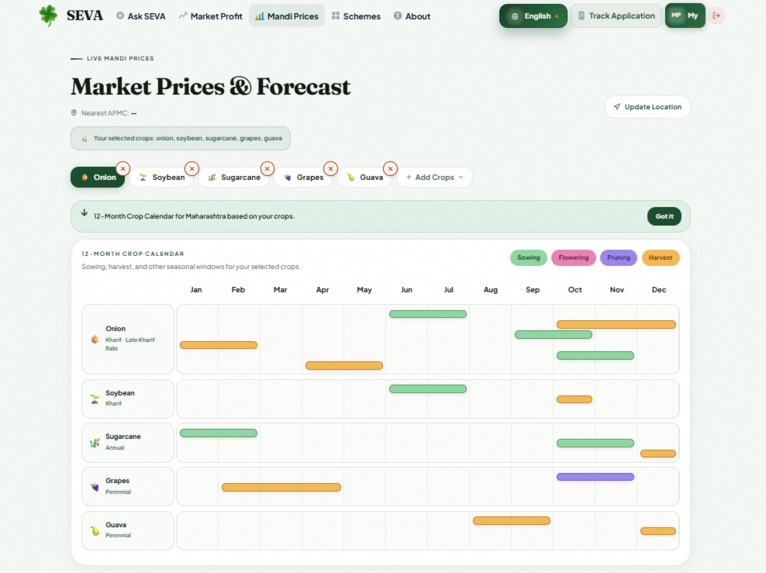
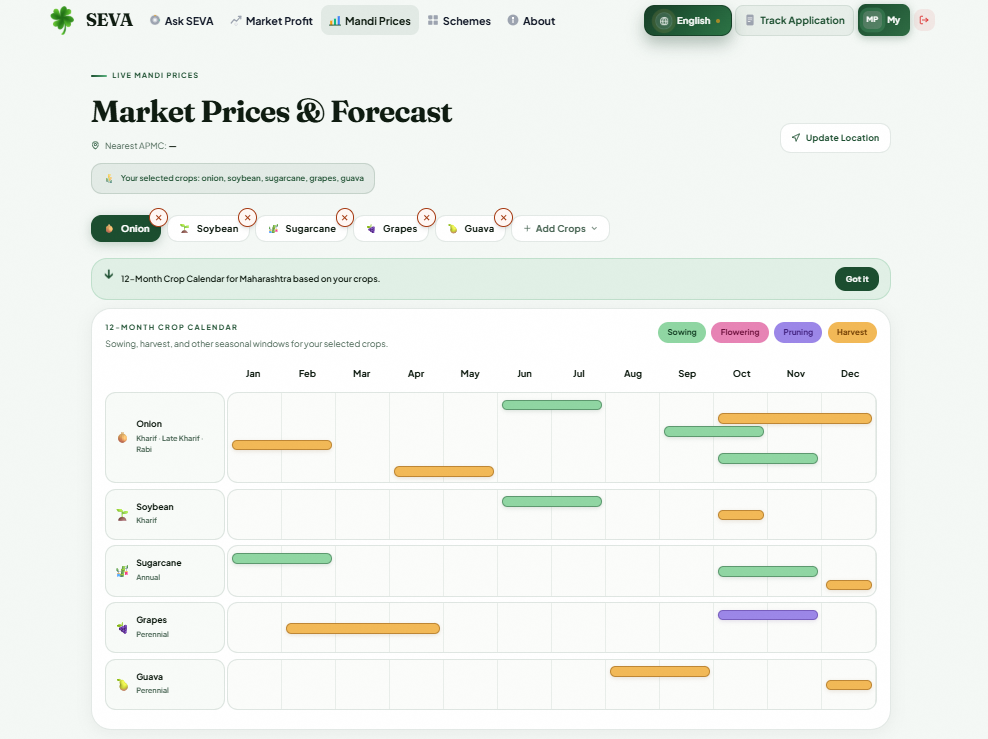
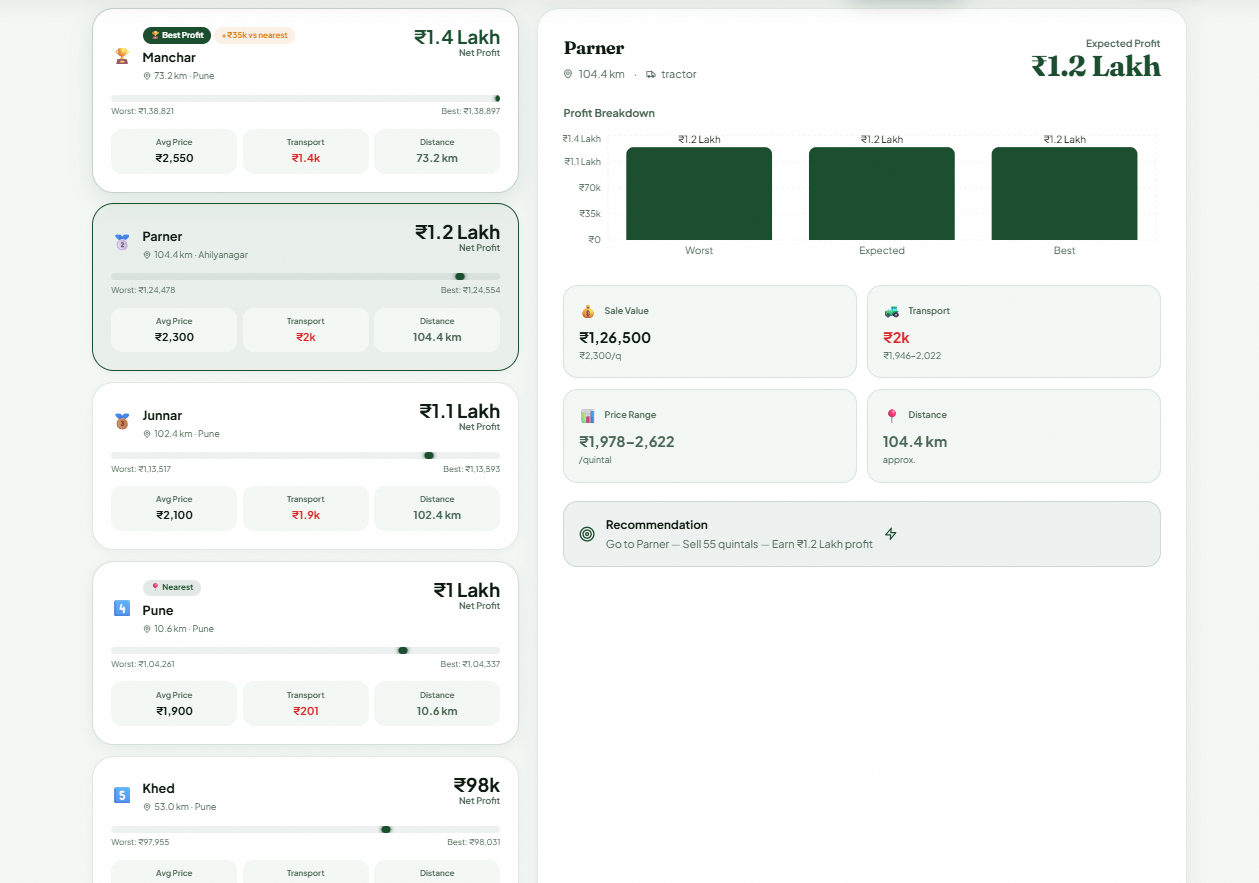
Market Crop Prices
-
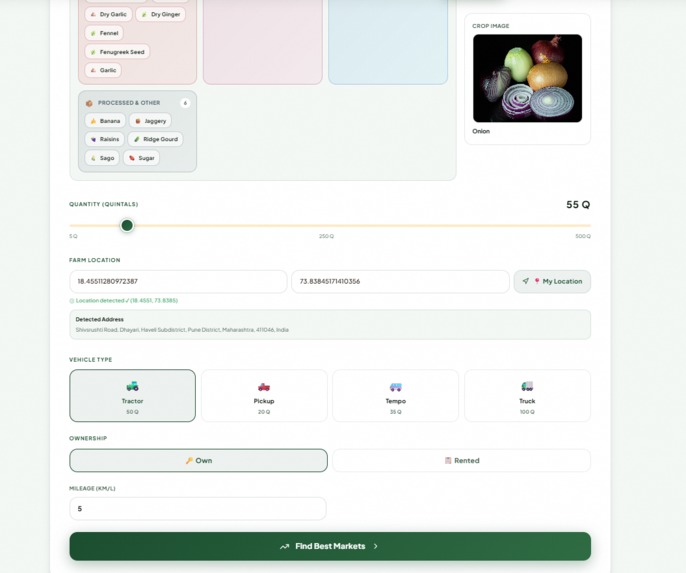
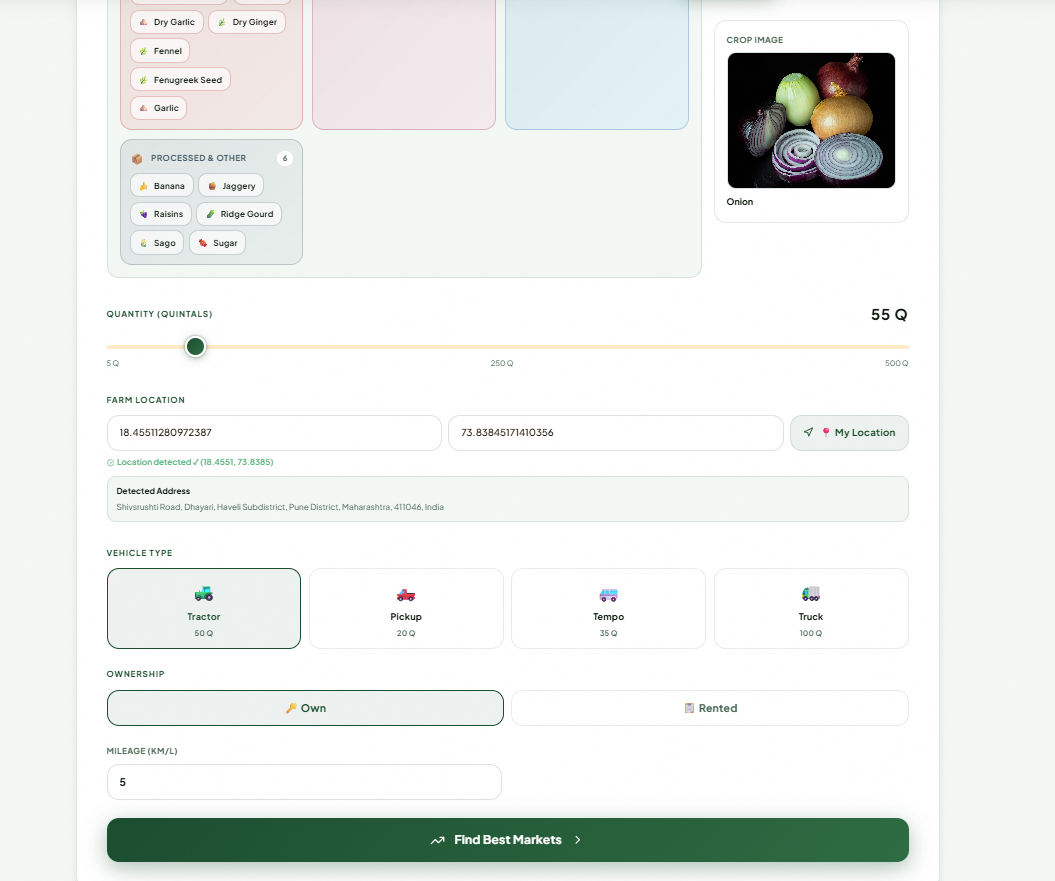
Calculation of total selling cost considering the travel cost as well according to the medium of transport
-
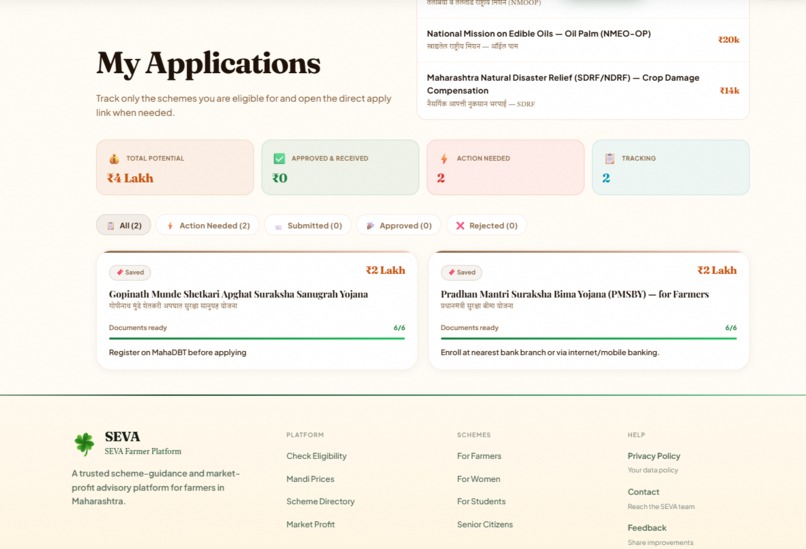
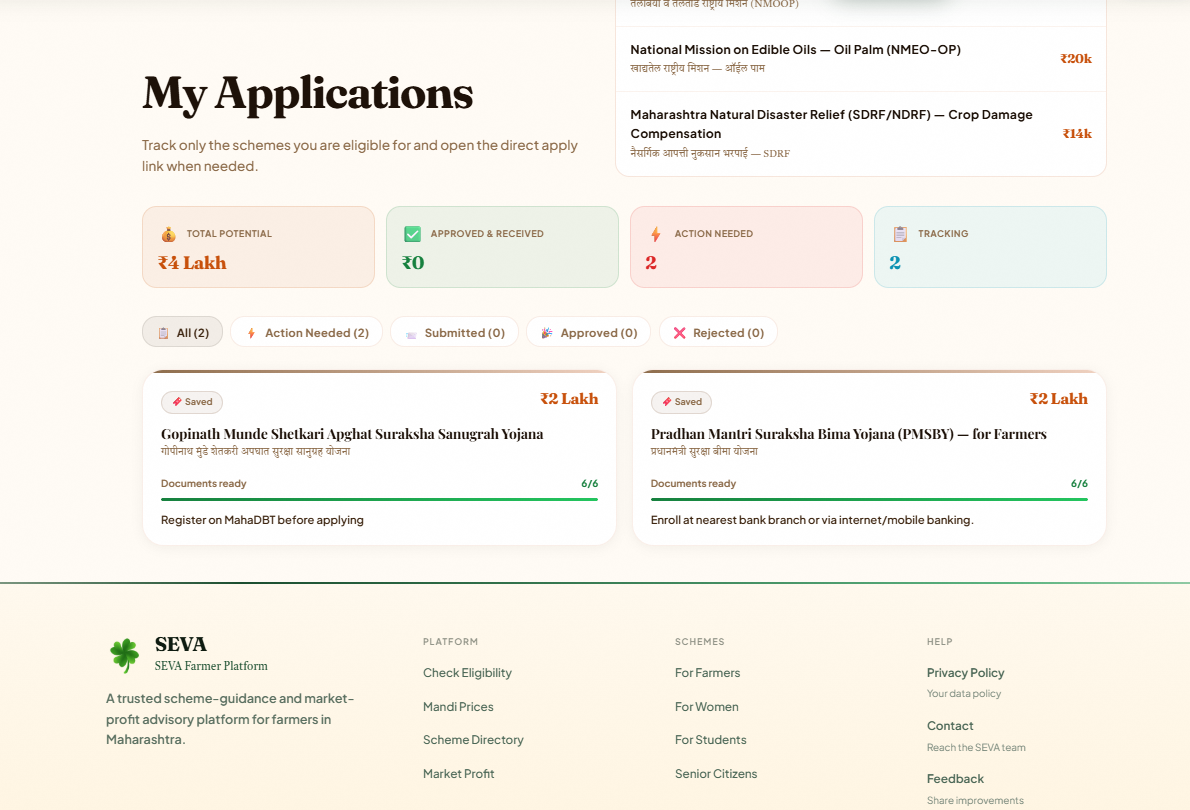
Tracking of the application to the applied schemes in order to track the deadlines
-
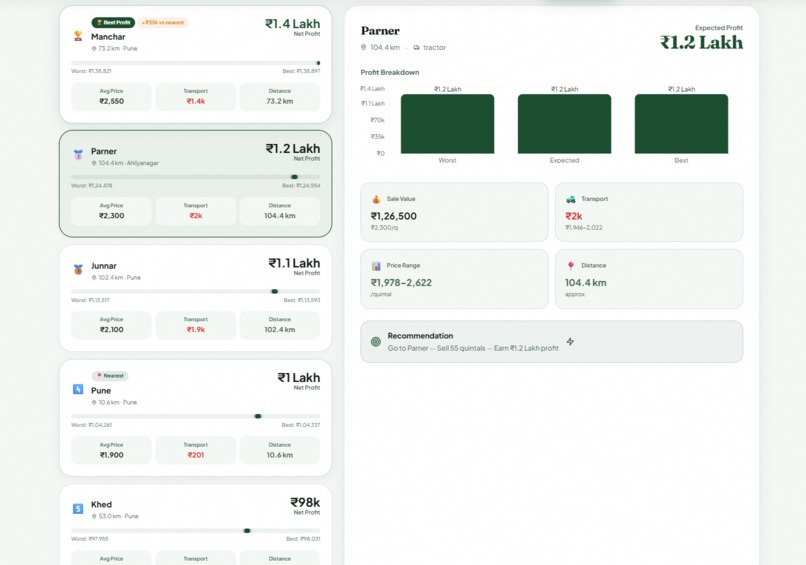
Total Cost Estimation considering all the factors
-
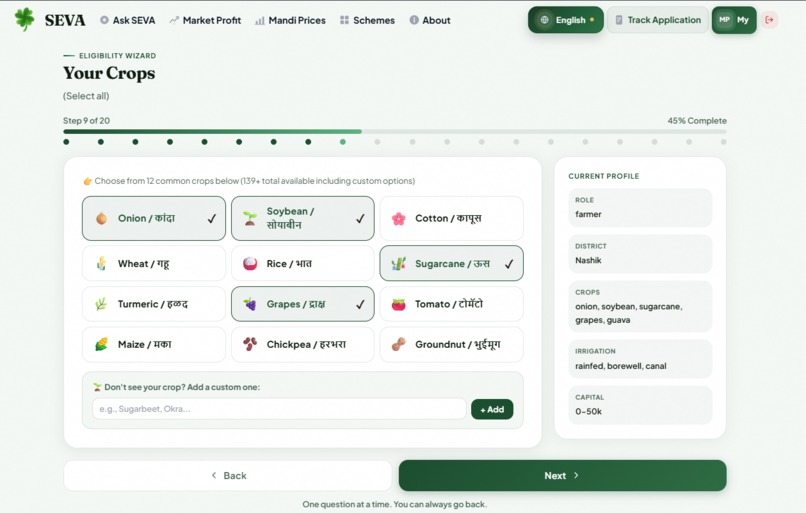
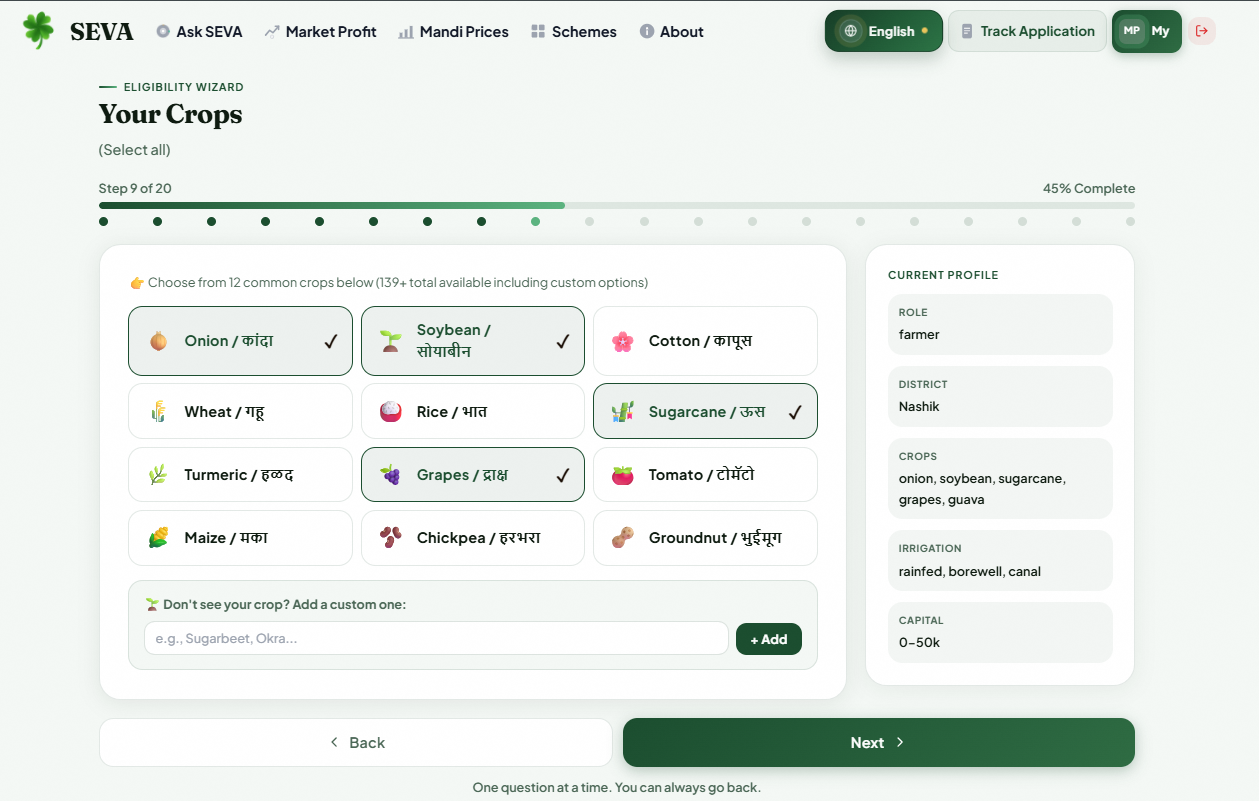
Taking the input from the user about the type of crops
-
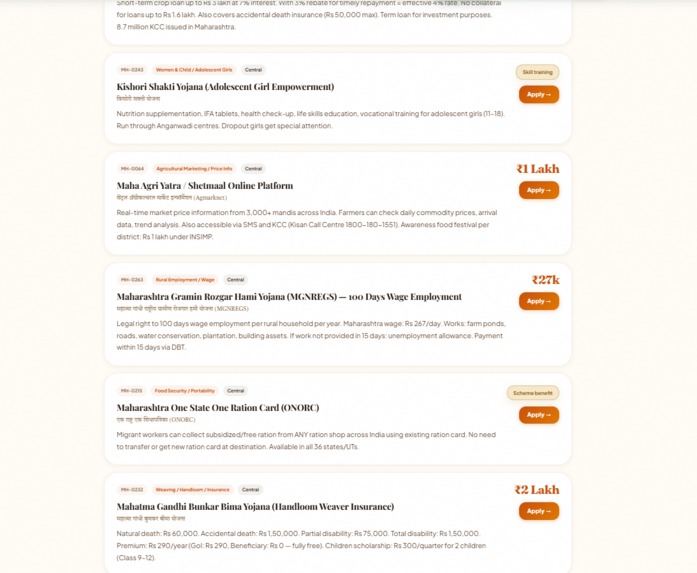
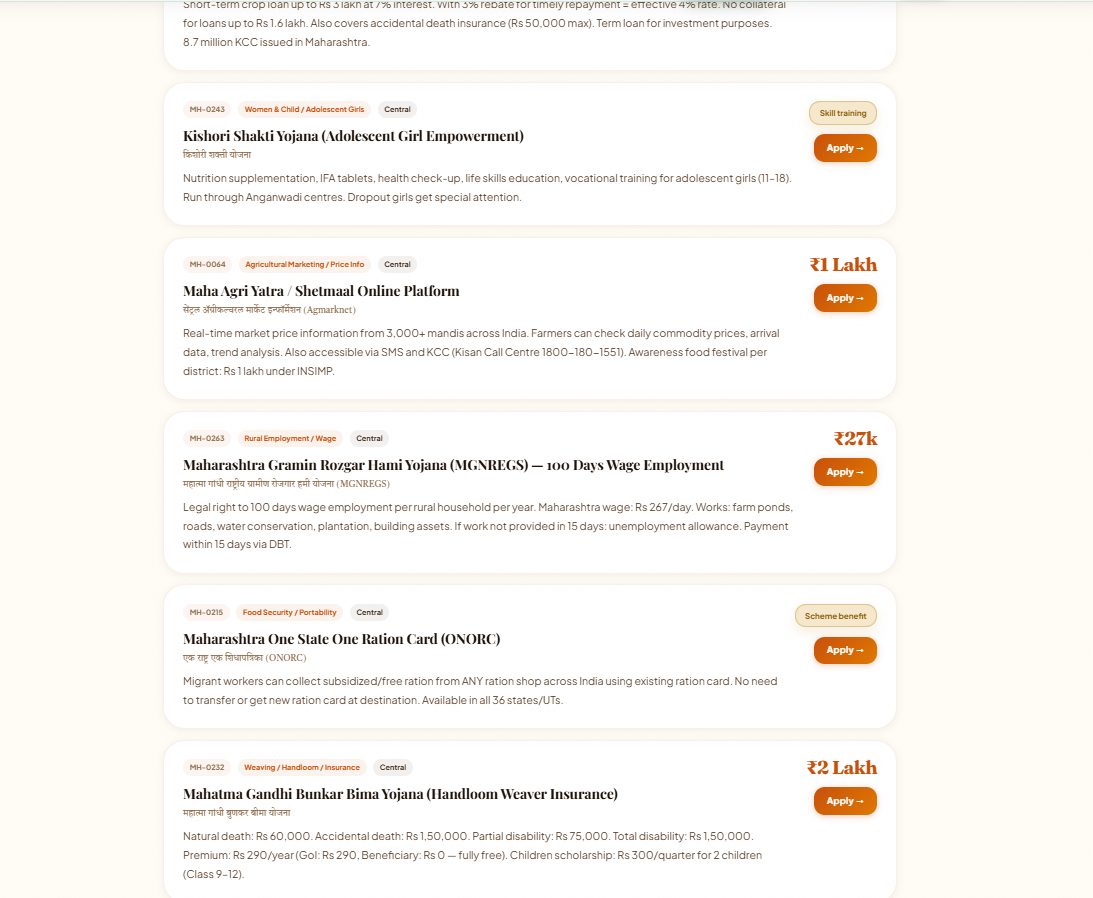
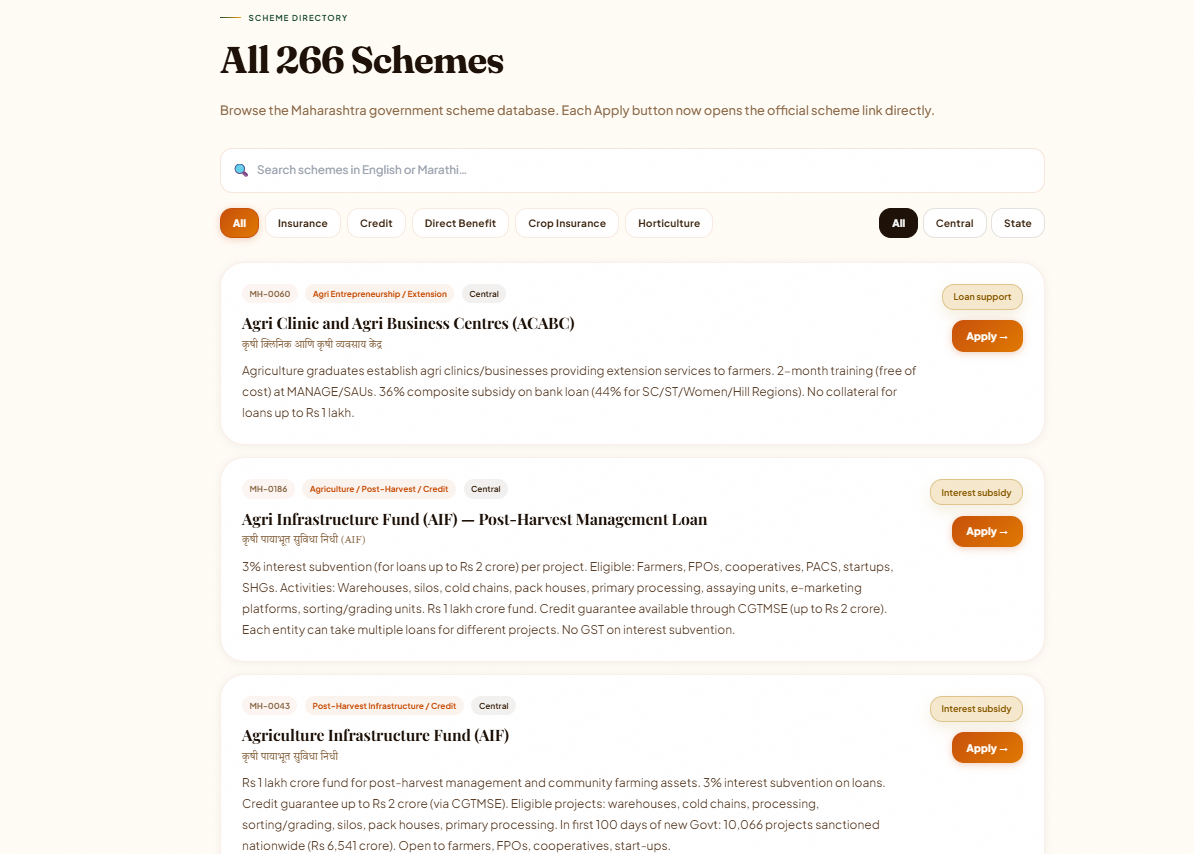
List of all the 266 schemes estimated on the website
-
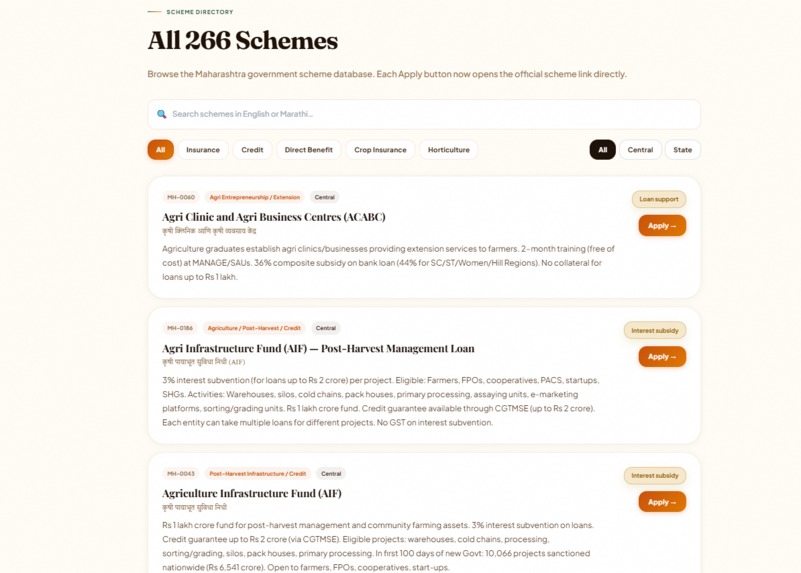
List of all the 266 schemes estimated on the website
-
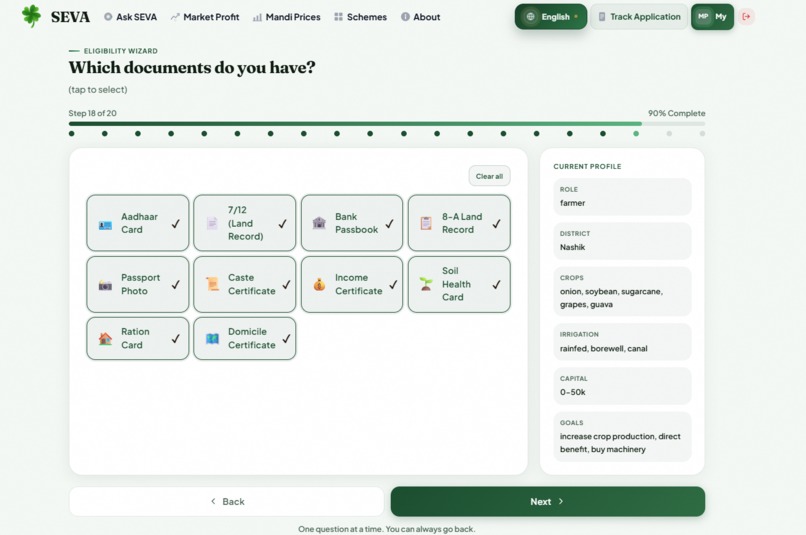
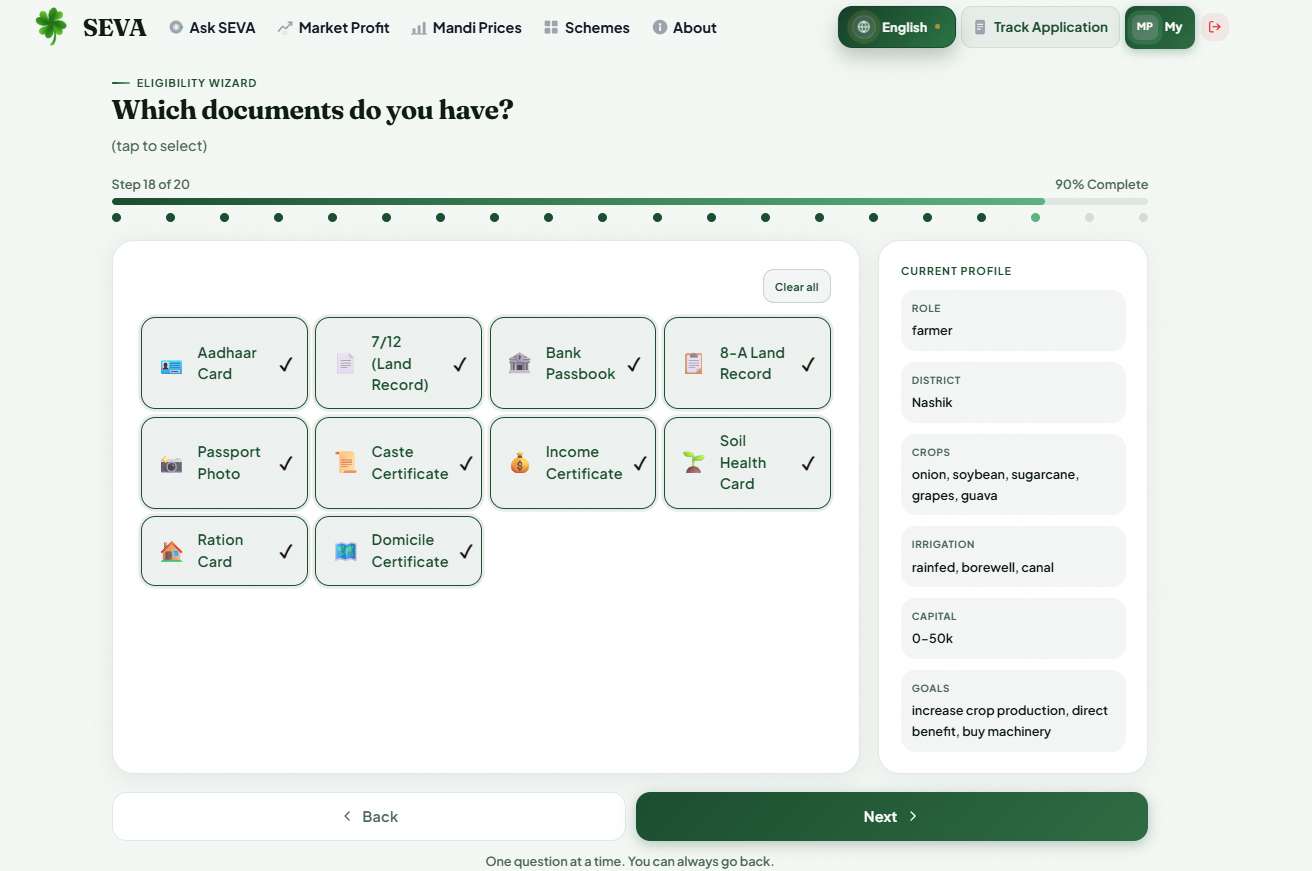
Verifying the availability of documents of the user for enhancing the eligibitlity
-
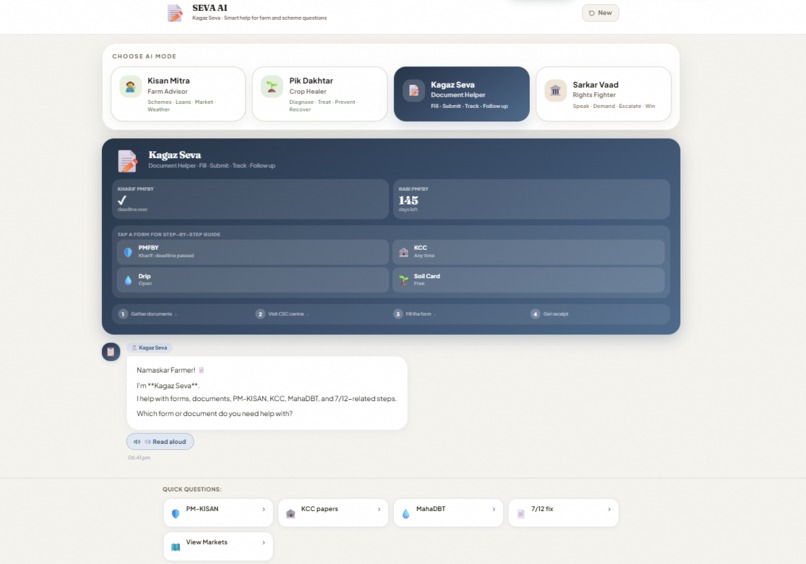
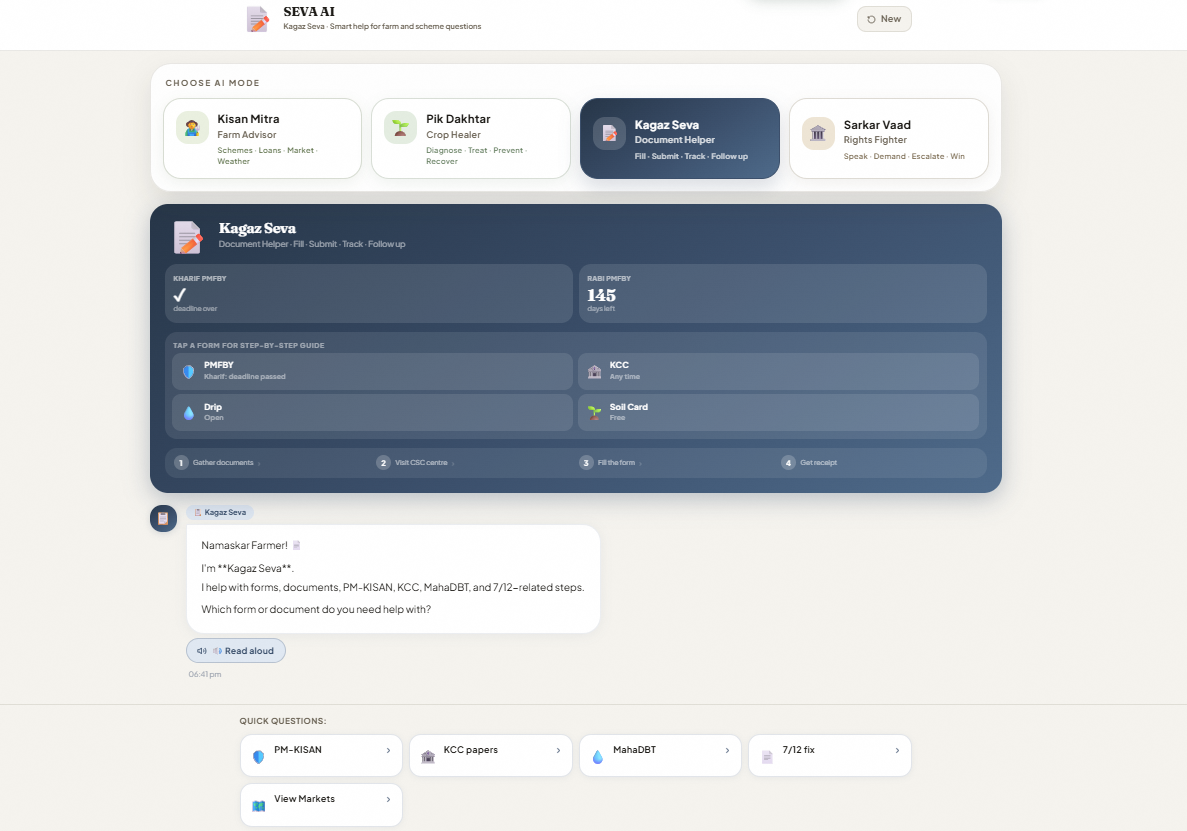
AI for handling Document related issues and tasks
-
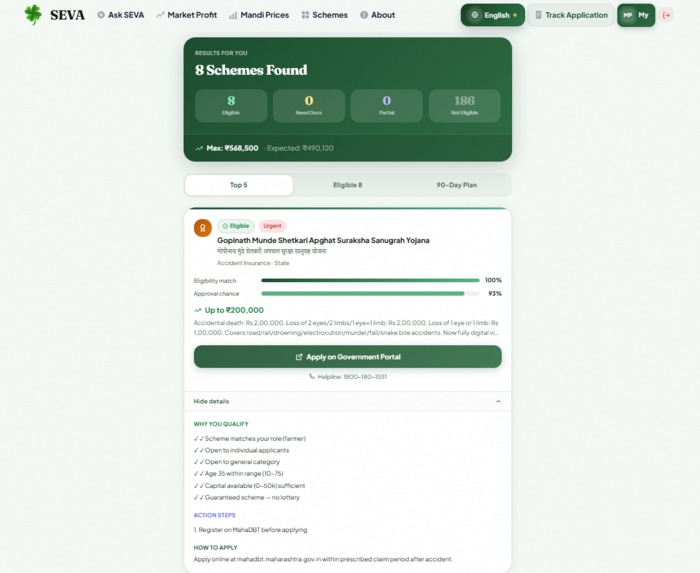
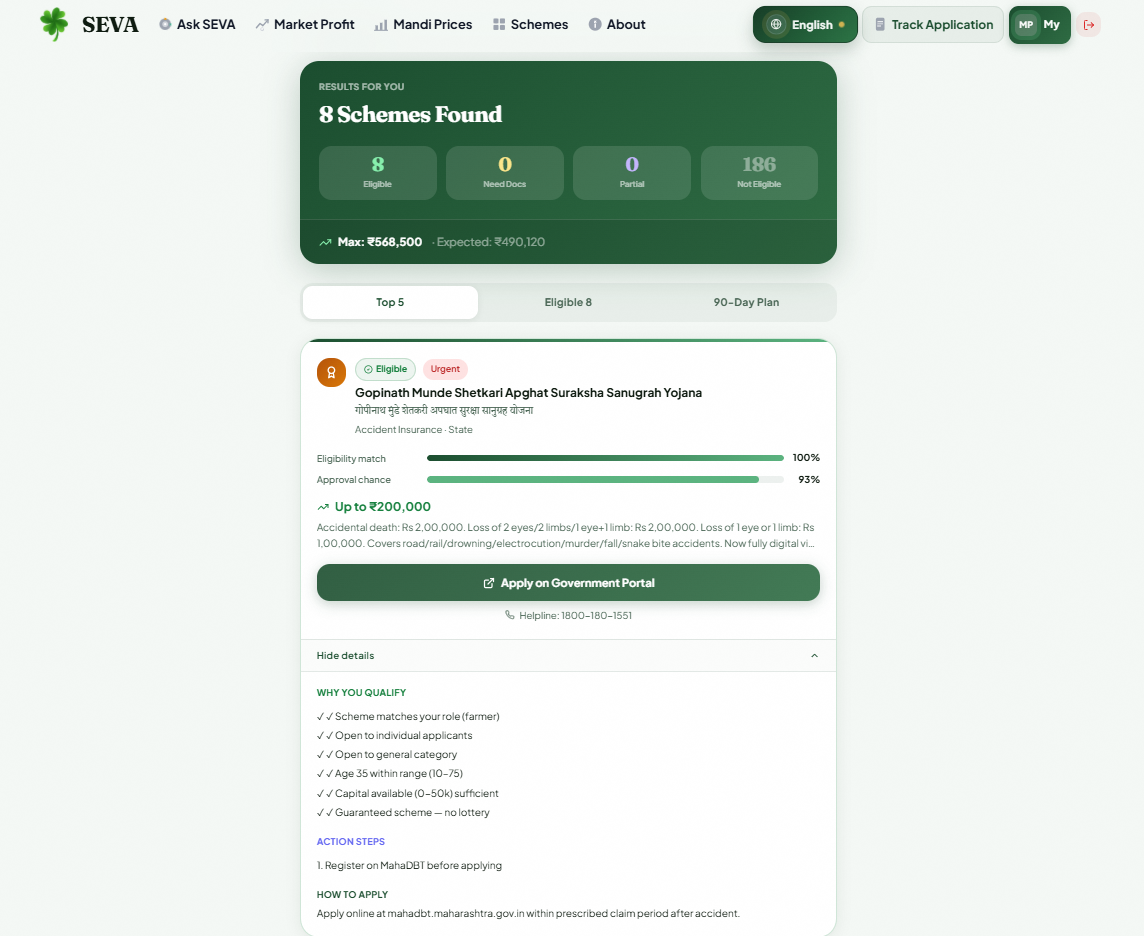
Stating total eligible schemes according to the user's profile constructed via wizard . User can directly apply to the schemes via the link
-
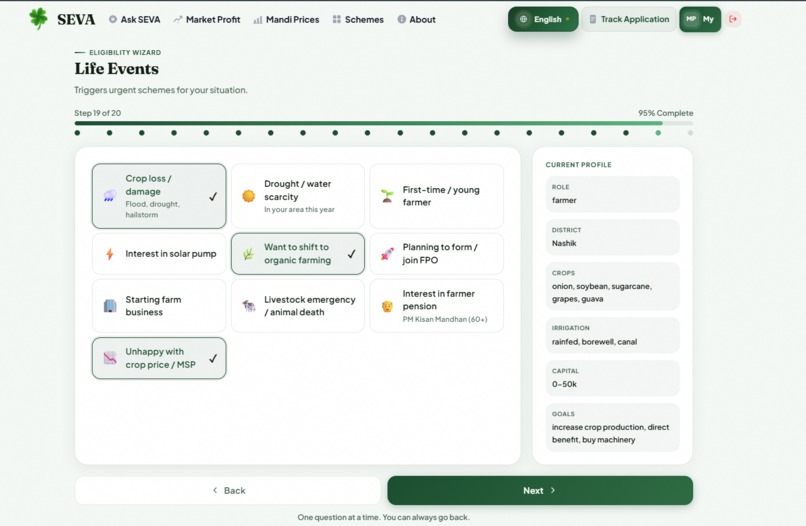
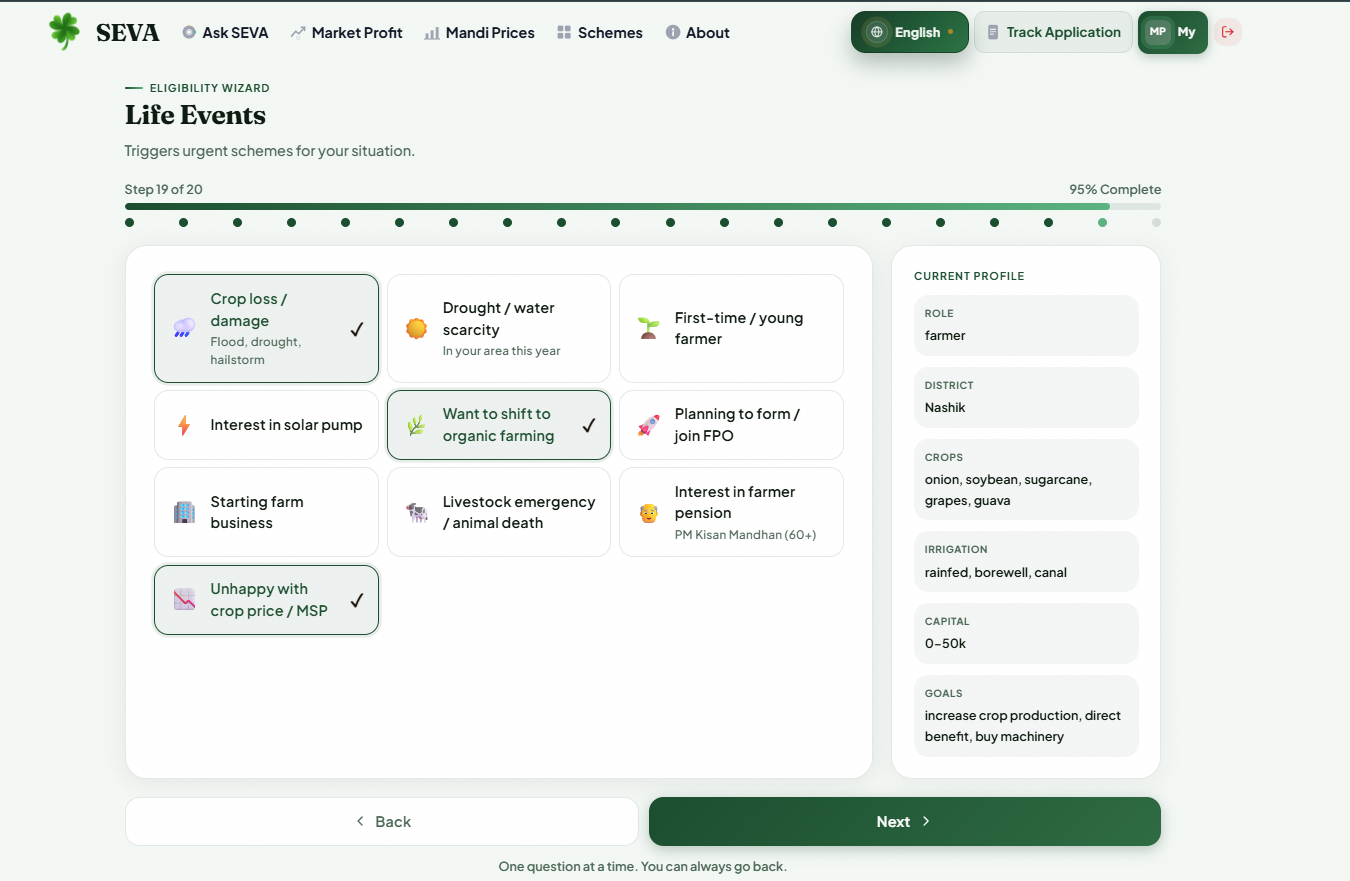
Filtering of schemes based on the life events
-
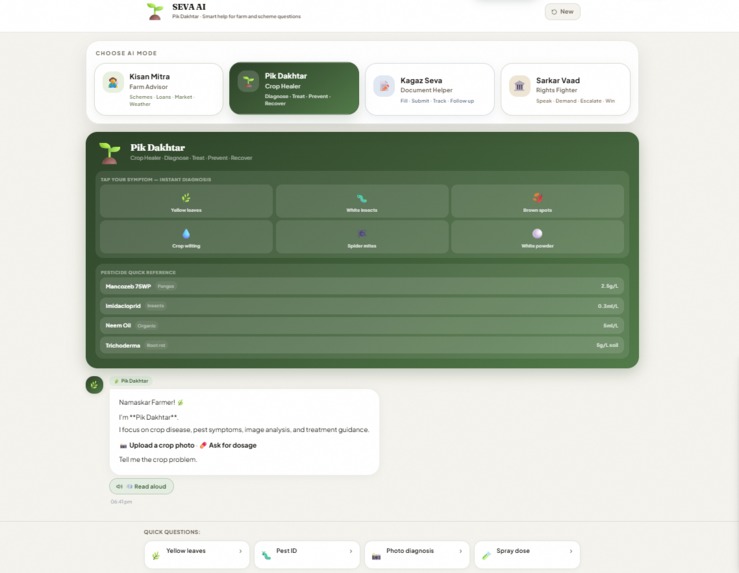
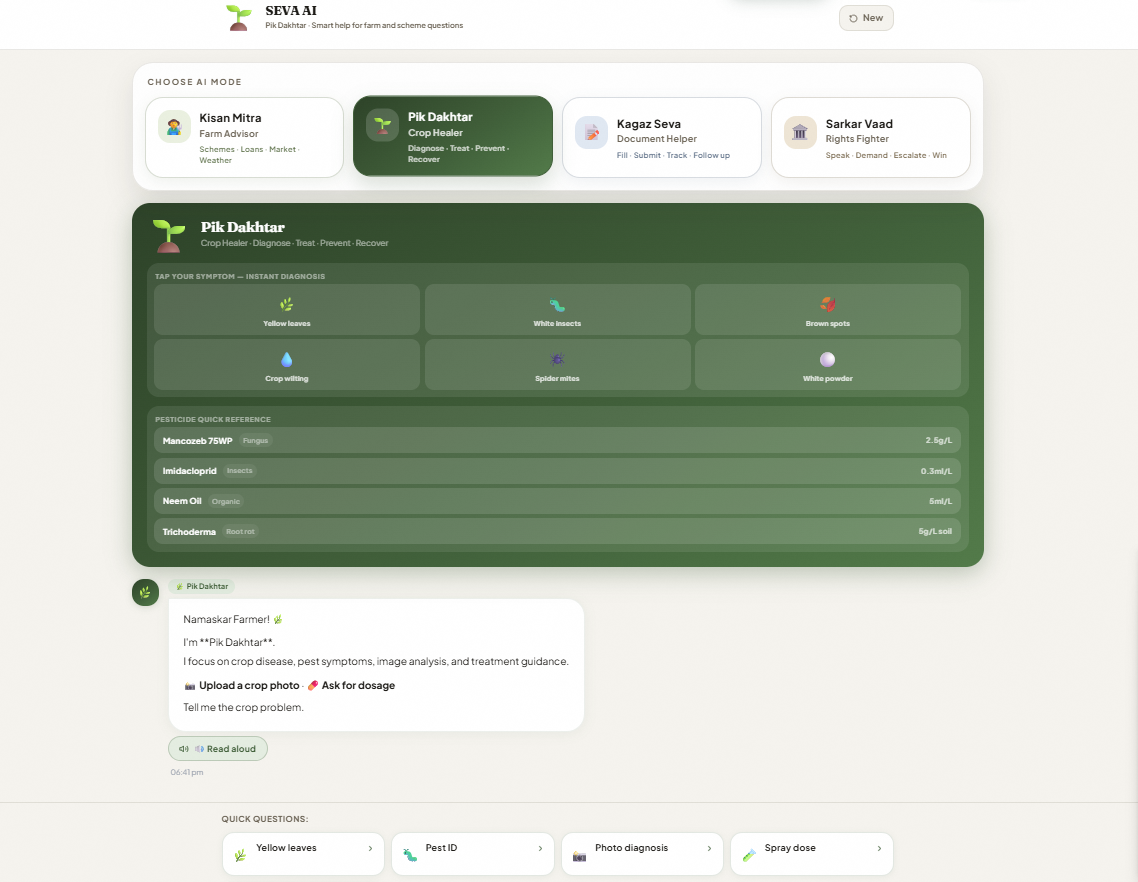
AI for handling applied scheme related issues and tasks , considering the AI assistant is aware about user's profile
SEVA: Smart Eligibility and Value Advisor
Inspiration
Farmers in my own village faced this, and so did I. Government schemes are scattered across dozens of portals in different formats, so most farmers never know what they qualify for. On the market side, farmers had no way to predict where prices were heading, so they were always reacting instead of planning. SEVA was built to solve both.
What it does
Scheme matching runs on a rule based eligibility engine that checks a farmer's land, crop, and income against real government criteria, so they only see schemes that genuinely apply, not a generic list.
Market advisor calculates actual net profit at each nearby APMC, factoring in distance, vehicle type, and rental cost, not just listed price.
ML powered forecasting uses a trained time series model on historical APMC price data to predict price movement over the next 14 days, giving farmers a real sell or hold recommendation.
SEVA AI Assistant is an LLM powered conversational layer that explains every scheme, market, and forecast recommendation in Marathi, Hindi, or English, using the farmer's own profile as context.
Privacy first. Farmer data is used only to generate that farmer's own recommendations, never shared, with no ads or commissions anywhere.
Built for India, starting with Maharashtra. The architecture is state agnostic, designed to expand from Maharashtra to multiple states across India, with the long term goal of covering farmers across the entire country by plugging in each state's scheme and APMC data and retraining the forecasting model accordingly. The same architecture can also be adapted for agricultural markets and government support systems in other countries, making SEVA potentially usable beyond India.
Web first, mobile next. SEVA is currently being implemented as a web platform to make the core services accessible and validate the system. In the next phase, we plan to convert SEVA into a dedicated mobile app to make it more accessible and convenient for farmers in rural areas.
How we built it
We fetched scheme data from government websites across domains, extracted eligibility criteria and validity periods, and validated them through rule based logic, kept deterministic so decisions stay fully explainable.
For markets, we sourced APMC data, built a distance algorithm from the farmer's location, and trained a time series forecasting model on historical prices to generate the 14 day trend. This combines with travel cost to rank markets by net profit, not just price.
The SEVA AI Assistant runs on an LLM API, prompted with the farmer's profile to keep answers grounded and relevant.
Deployed on Vercel and Render, monitored with UptimeRobot. Built with React, TypeScript, Zustand, FastAPI, PostgreSQL, Redis, Docker, and Leaflet.
Challenges we ran into
- Collecting accurate scheme and APMC data with enough historical depth to train a reliable model
- Choosing and tuning the right time series approach for volatile, seasonal crop prices
- Prompting the AI assistant to stay grounded in the farmer's real profile
- Filtering schemes precisely to each farmer, not generically
- Keeping performance smooth on low bandwidth rural connections
Accomplishments that we're proud of
- Training a working time series model for genuine 14 day sell or hold recommendations
- A rule based eligibility engine matching real scheme criteria to real farmer profiles
- Net profit calculation accounting for distance, vehicle type, and rental cost
- Trilingual from day one, not an afterthought
- State agnostic architecture, not limited to Maharashtra
- Private by design, no ads, no commissions
What we learned
The hardest part of applying ML here was the data, not the model. We also learned where ML genuinely helps, forecasting, and where it shouldn't be used, eligibility, which needs to stay rule based and explainable. Trust has to be designed in from the start, and built to scale beyond one state from day one.
What's next for SEVA: Smart Eligibility and Value Advisor
- Improve the forecasting model with more data and features like weather and arrival patterns
- Expand from Maharashtra to multiple Indian states, with the long term goal of covering farmers across the entire country
- Adapt the platform to different regional languages, crops, markets, and government schemes across India
- Explore international expansion by adapting the architecture to agricultural markets and support systems in other countries
- Widen crop coverage
- Add OCR for document verification, WhatsApp access, voice navigation, and offline mode
- Convert the existing web platform into a dedicated mobile app for easier rural accessibility
- Explore a village cooperative and FPO dashboard
Built With
- api
- docker
- fastapi
- github
- leaflet.js
- llms
- nginx
- openstreetmap
- postgresql
- react
- redis
- render
- tailwind
- typescript
- vercel


Log in or sign up for Devpost to join the conversation.