Inspiration
In many rural areas, illness doesn't announce itself with a diagnosis — it shows up as a pattern. One person gets a cold and can't sleep. Days later they can't walk or speak. Eventually they lose control of basic bodily functions and, in the worst cases, don't wake up. By the time anyone connects the dots across multiple households, the outbreak has already spread — and because many families bury their dead quickly without a postmortem, the most important data point of all, cause of death, is often lost forever.
We built Sentinel because we realized the barrier isn't a lack of willingness to report illness — it's that existing health-tech assumes literacy, smartphone comfort, and internet access that don't reflect how rural communities actually communicate. People already send voice notes on messaging apps every day. We wanted a system that meets them there, instead of asking them to learn something new.
What it does
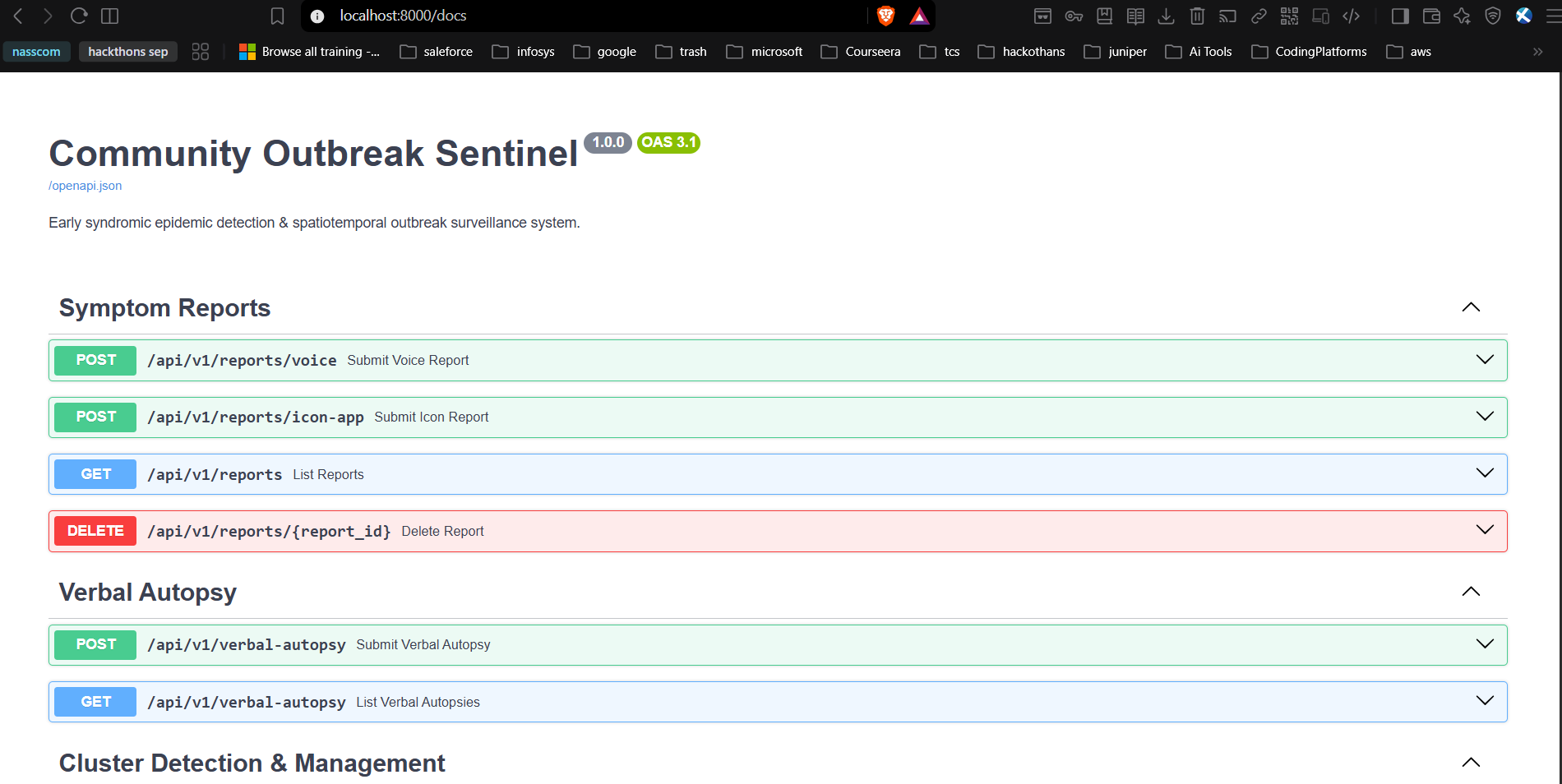
Sentinel is a three-part early-warning system for rural disease outbreaks:
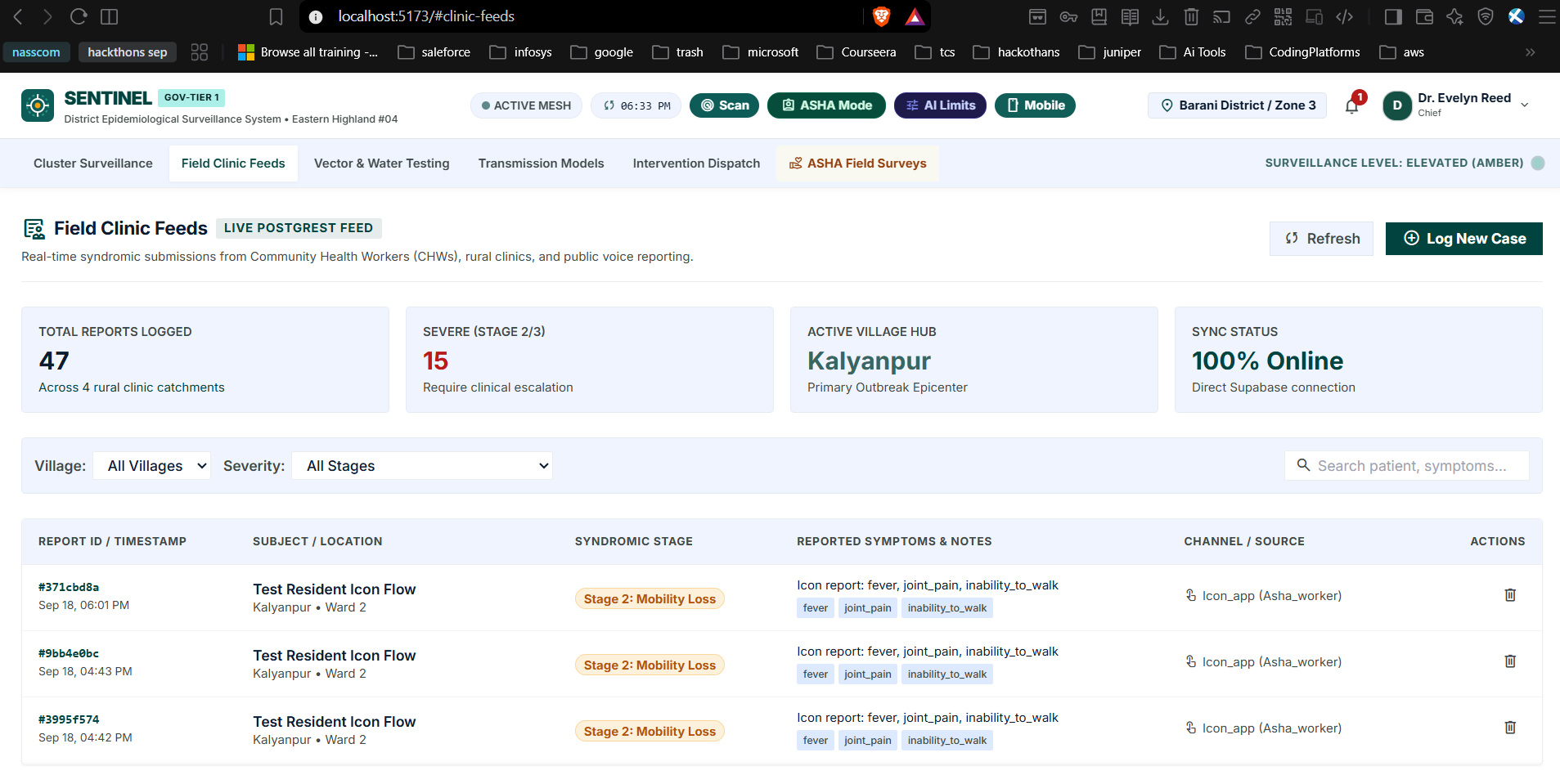
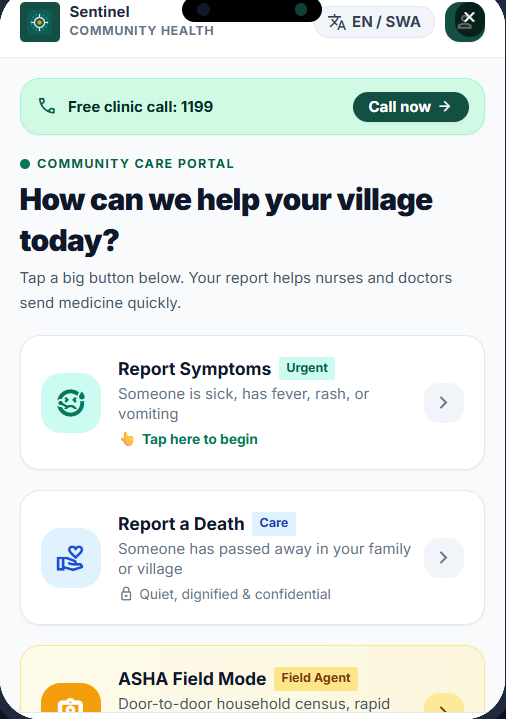
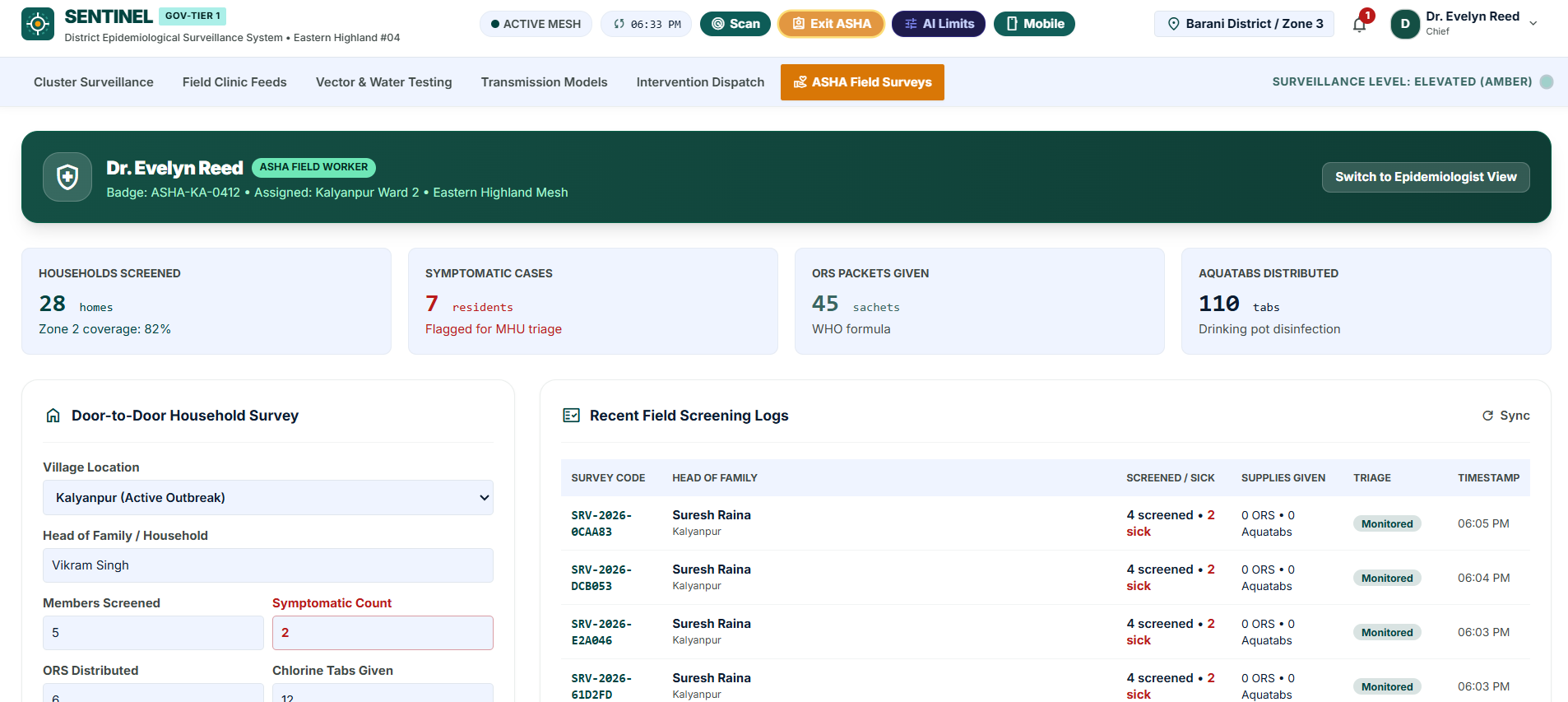
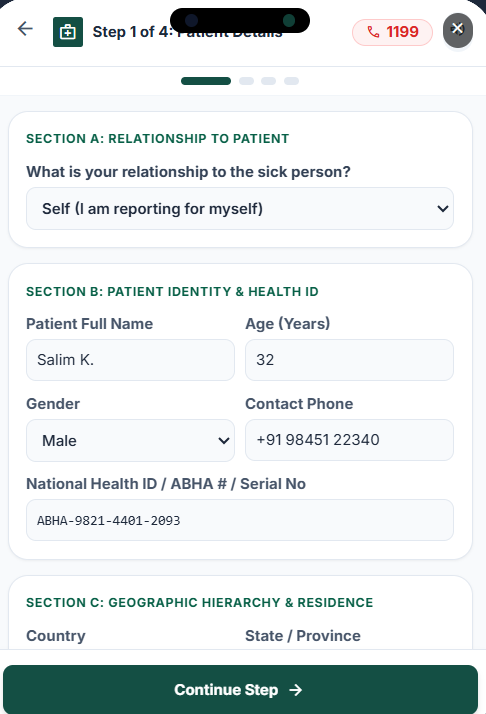
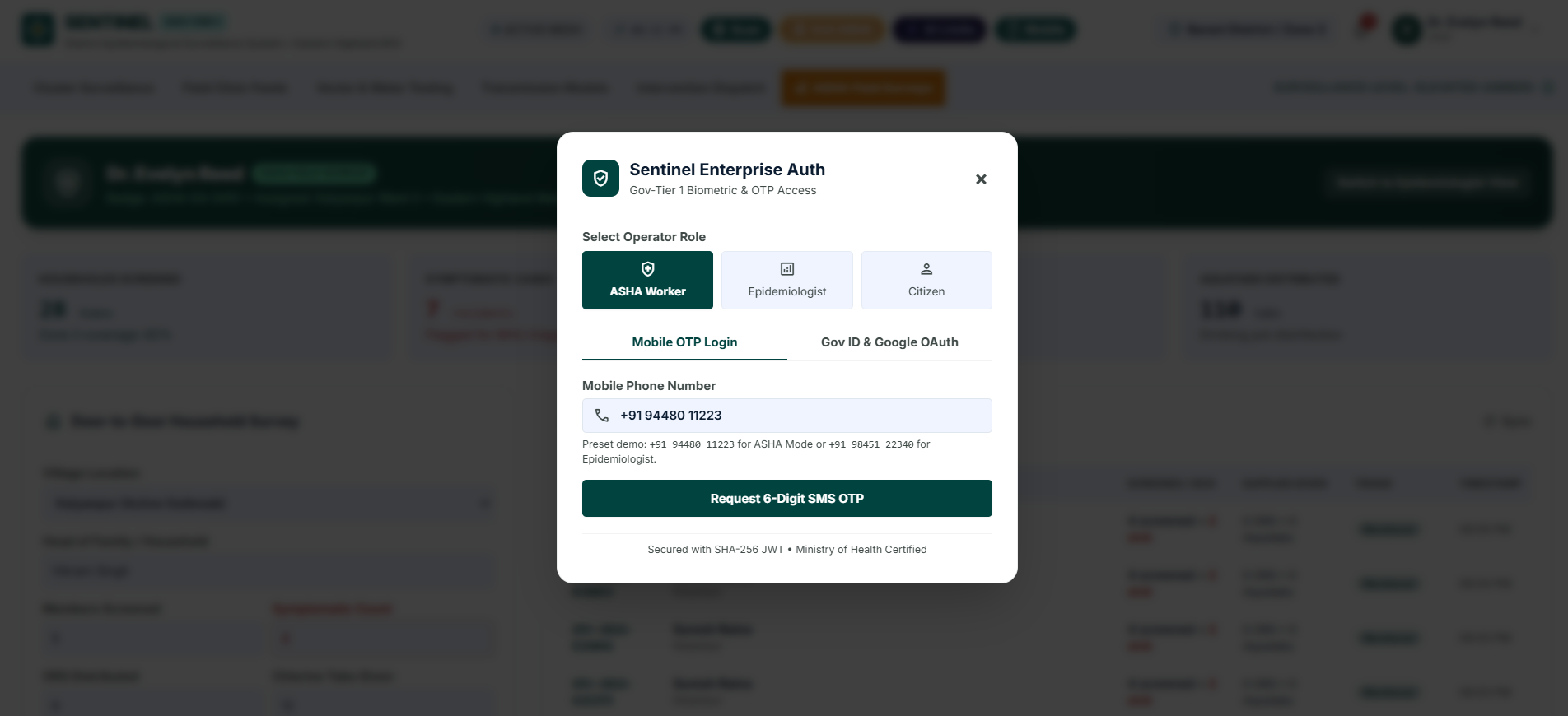
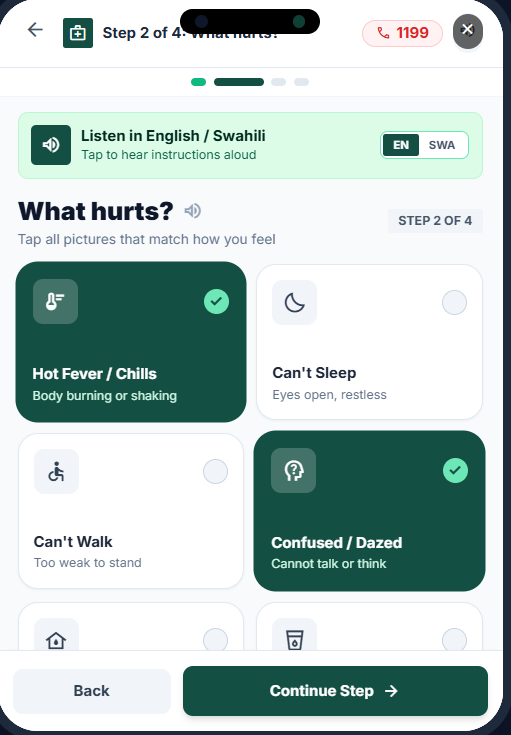
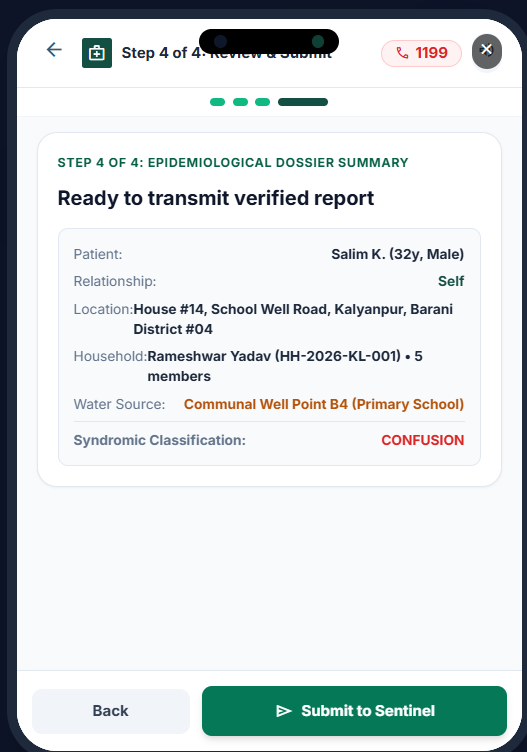
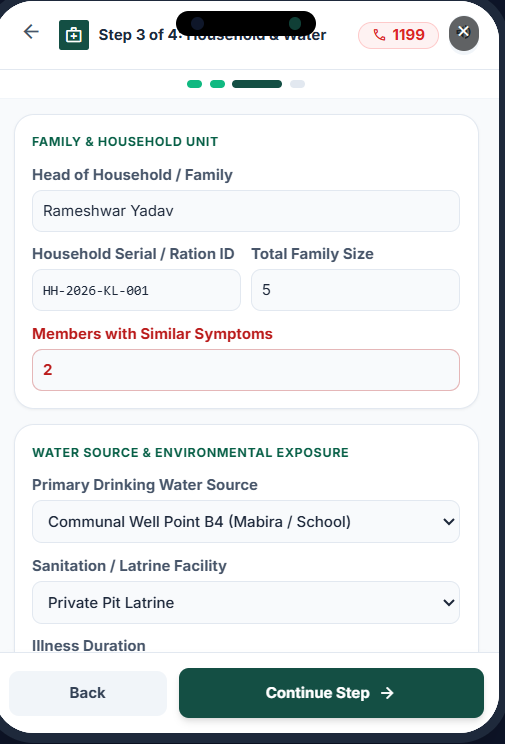
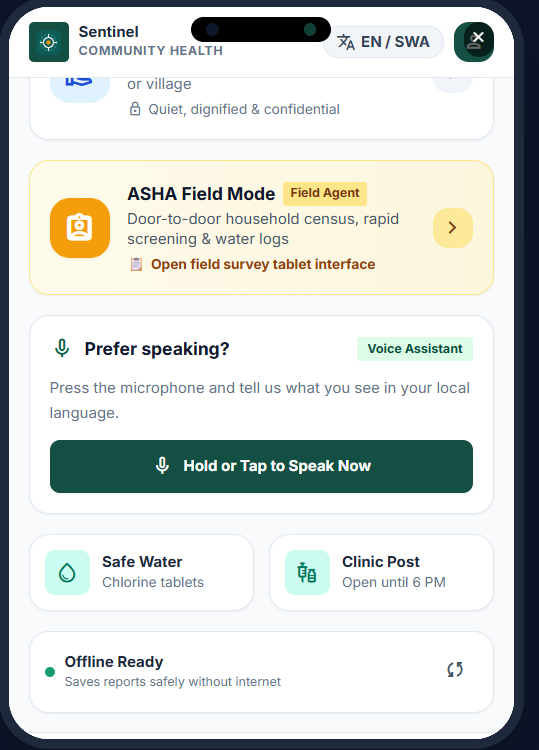
- Symptom Reporting — Villagers or ASHA (community health) workers report symptoms via a Telegram bot (voice note or text) or a simple icon-based mobile app — no reading or typing required.
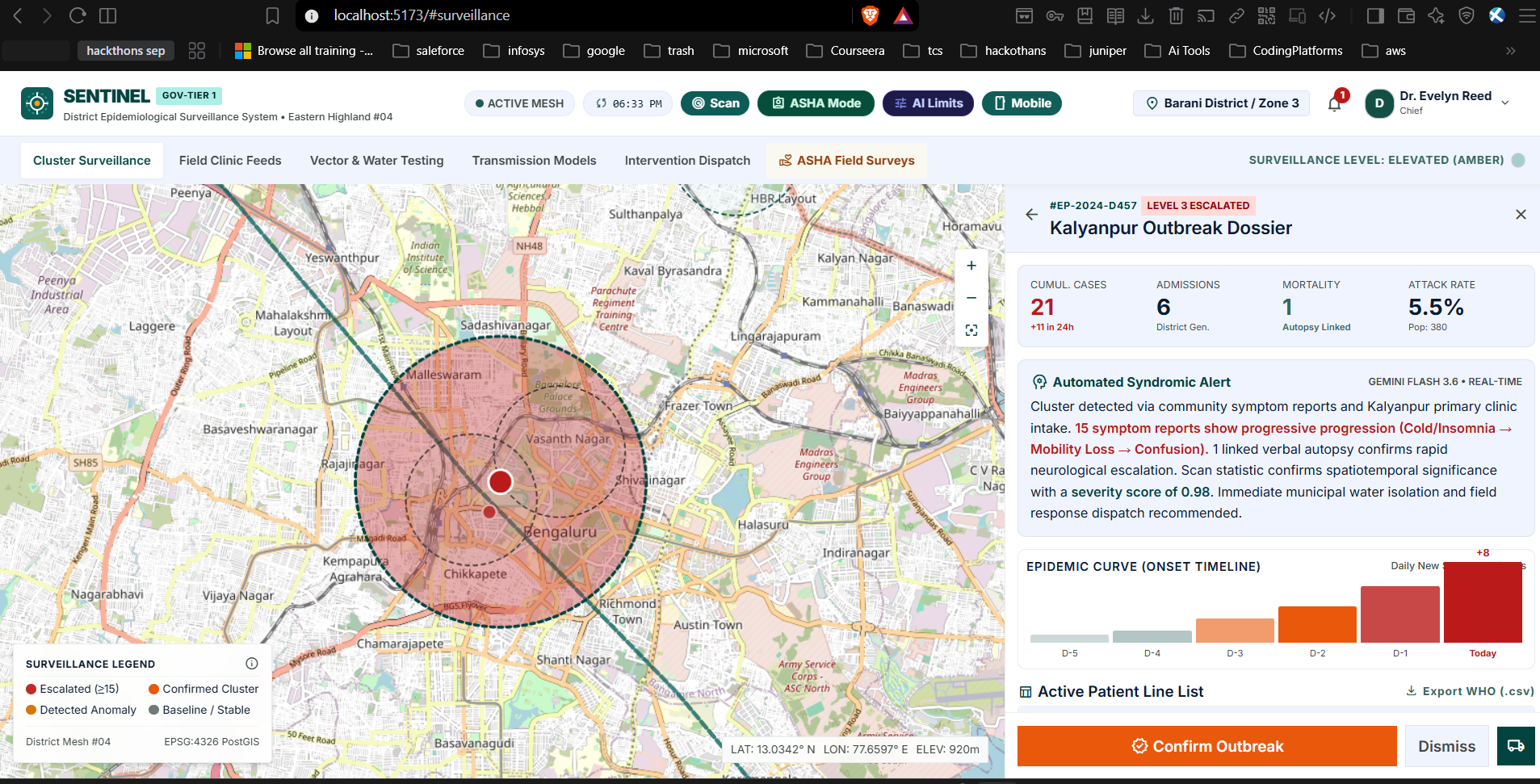
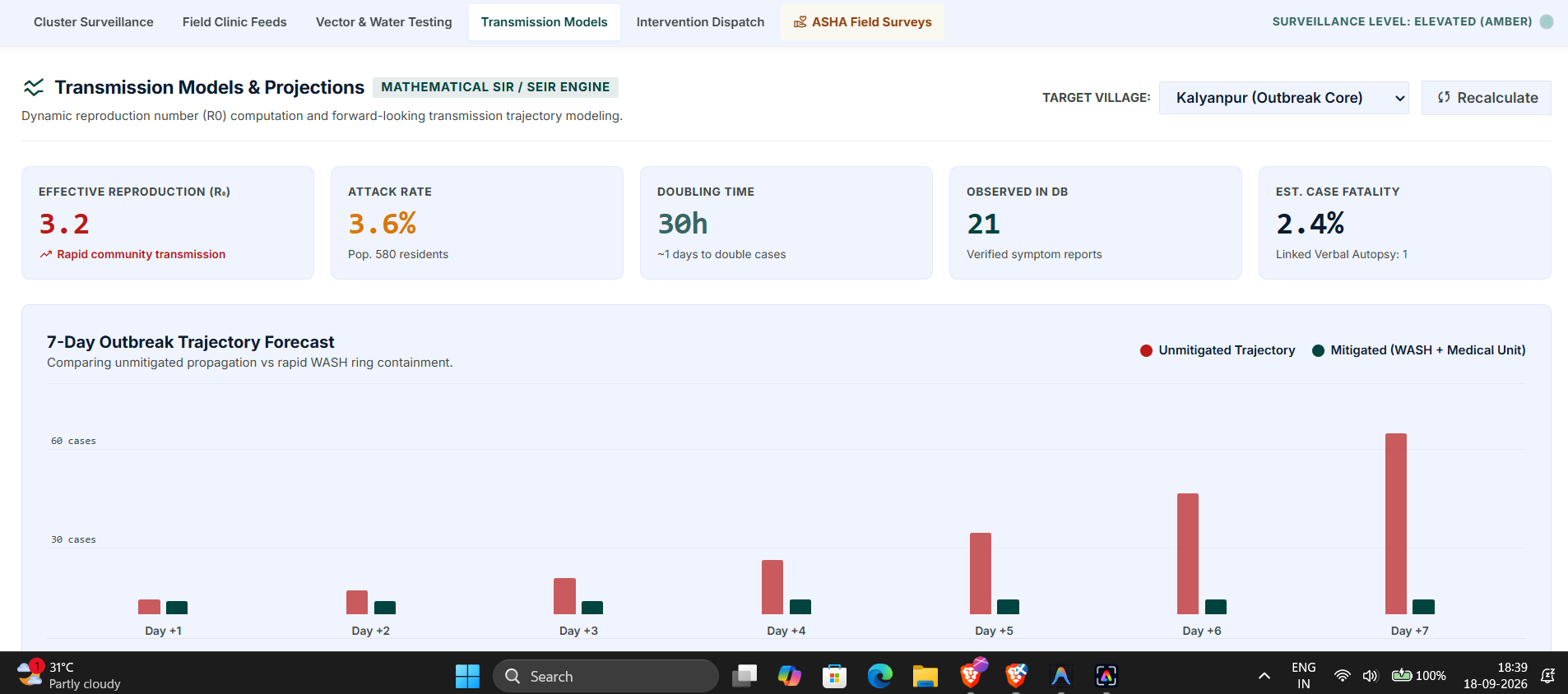
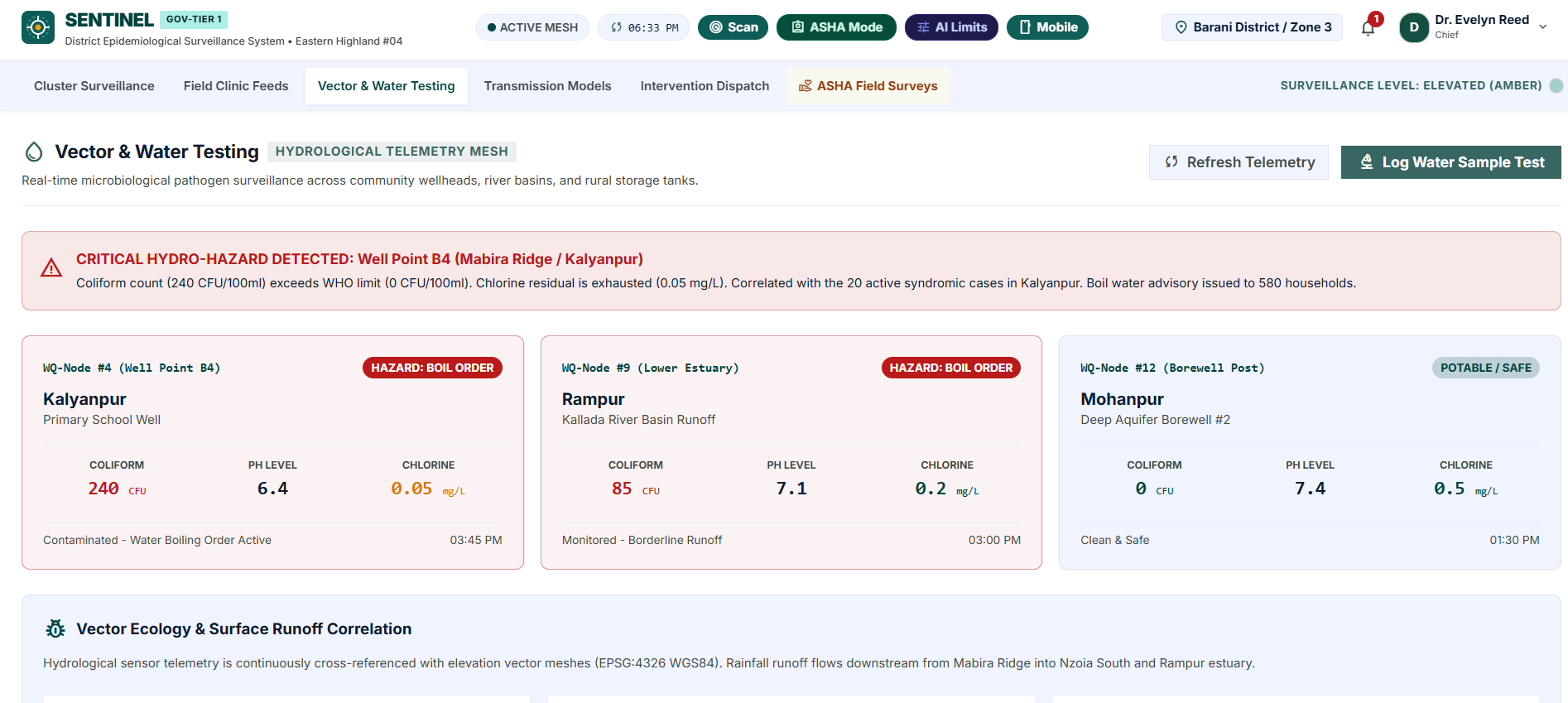
- Cluster Detection Engine — A spatiotemporal analysis (based on the same family of methods used in real epidemiological surveillance tools) watches for multiple people in the same area showing the same symptom progression — not just isolated symptoms — and flags it as a likely outbreak signal.
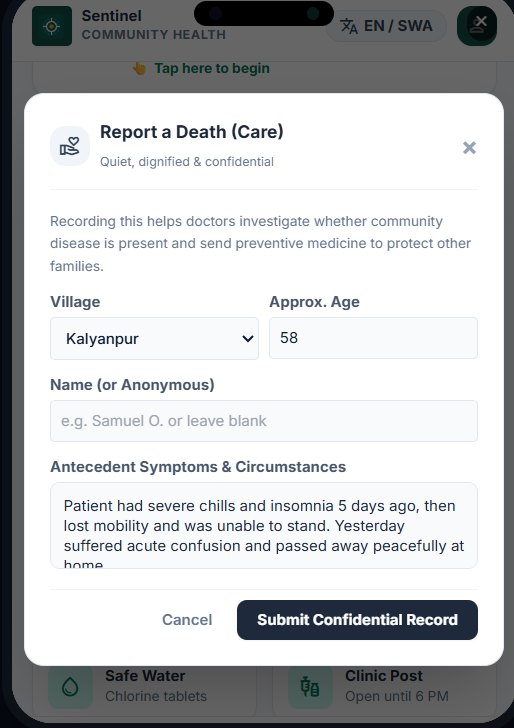
- Verbal Autopsy Module — When a death occurs without a formal postmortem, a WHO-standard structured voice interview captures the illness history from family members, so the death still contributes to outbreak data instead of disappearing without a trace.
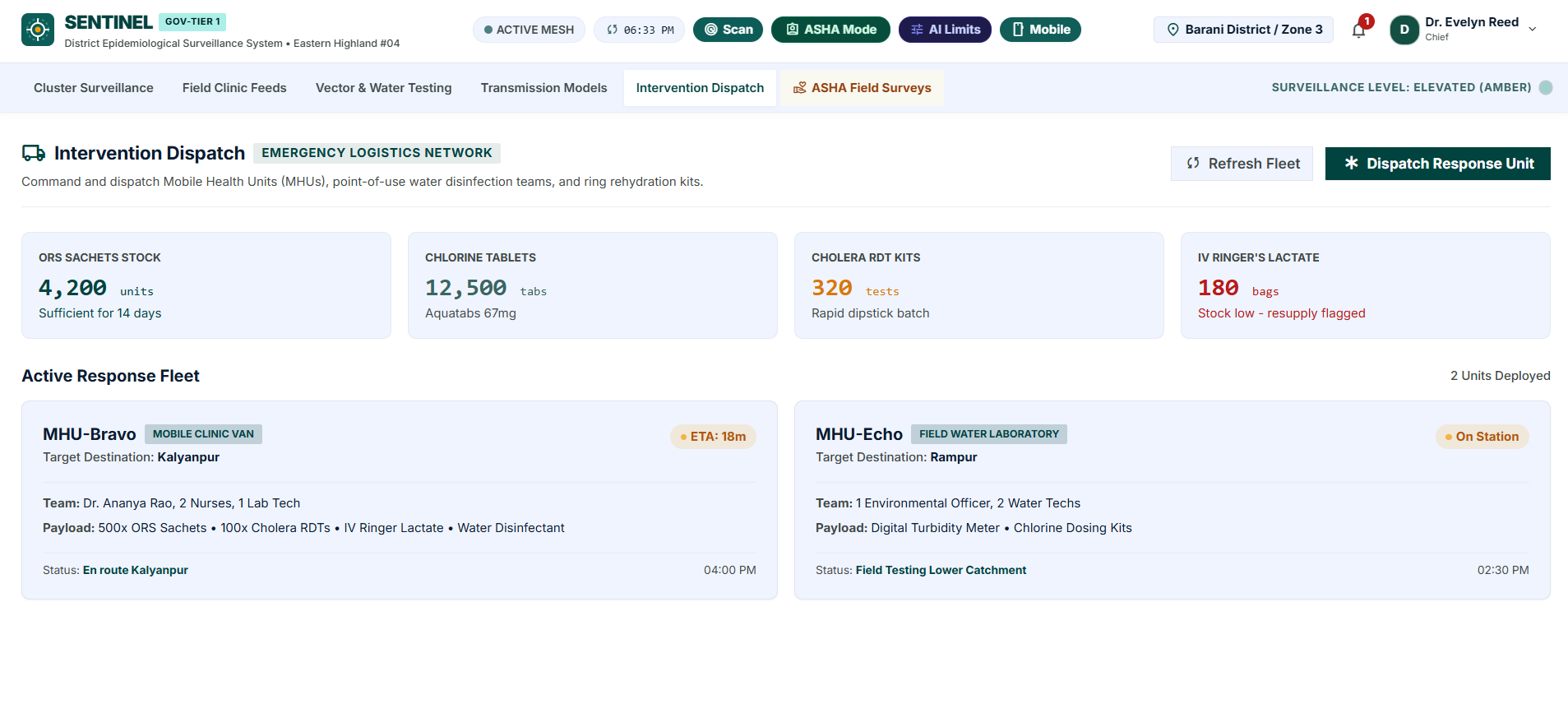
When a cluster is detected, the system automatically alerts the nearest Primary Health Centre and district health office — turning scattered, unconnected cases into an early, actionable signal.
How we built it
- Reporting layer: A Telegram bot for voice-note and text-based intake, paired with a lightweight icon-based mobile app (Flutter) for households with basic smartphones.
- Speech & language layer: Vosk (offline speech-to-text) and Bhashini (Government of India's open multilingual speech AI) transcribe local-language voice notes.
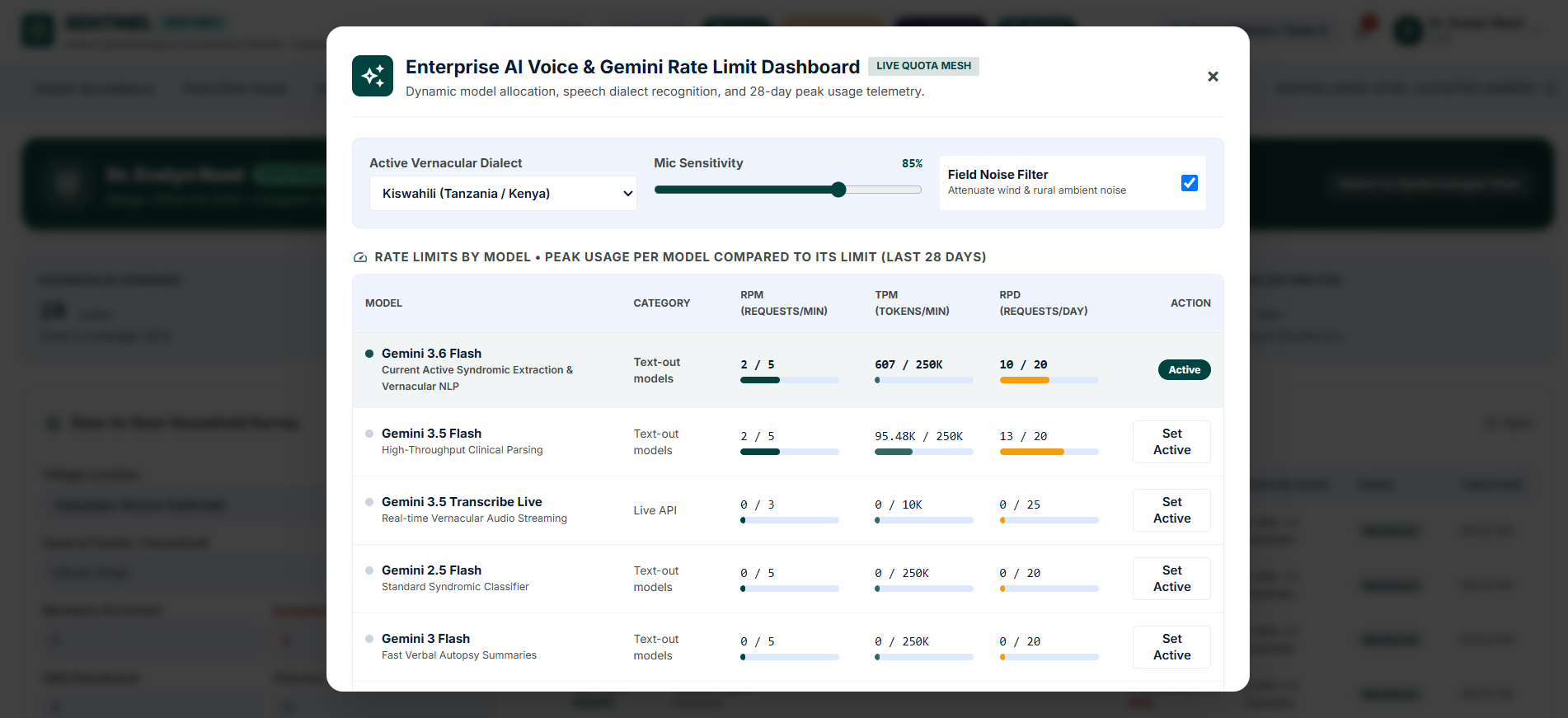
- Intelligence layer: Gemini API structures raw transcriptions into symptom records, summarizes verbal autopsy interviews into the WHO standard format, and translates reports for health officials.
- Cluster detection: A custom Python implementation of spatiotemporal scan statistics, run against symptom-stage progression data stored in Supabase (Postgres + PostGIS).
- Alerts: Telegram and email notify ASHA workers and district health offices the moment a cluster crosses threshold.
- Everything runs on free-tier infrastructure — Supabase, Upstash Redis, Render/Vercel, Telegram Bot API — so the system has zero recurring cost, which matters enormously for real-world deployment in low-resource regions.
Challenges we ran into
- Designing symptom capture for people with little to no reading ability, without making the app feel childish or stigmatizing.
- Balancing privacy (minimal personal data) with the need for accurate spatial/temporal clustering.
- Making sure the verbal autopsy flow felt respectful and low-burden for grieving families, not clinical or invasive.
- Choosing a data threshold sensitive enough to catch real clusters early, without flooding health workers with false alerts.
- Choosing Telegram over WhatsApp for our prototype to avoid business-verification delays, while designing the architecture so migrating to WhatsApp (which has much higher rural adoption in India) is a straightforward channel swap, not a rebuild.
What we learned
- Verbal autopsy is a real, validated WHO method already used in exactly the situations we were trying to solve for — we didn't need to invent a new approach, just make it accessible via voice.
- Meeting people on messaging tools they already use removes more adoption friction than building a new standalone app ever could.
- A genuinely zero-cost architecture is achievable today using free-tier cloud services and India-specific public infrastructure like Bhashini — cost doesn't have to be a barrier to building for underserved communities.
What's next for Sentinel
- Migrate the messaging layer from Telegram to WhatsApp Business Cloud API for production, given WhatsApp's much higher penetration in rural India.
- Pilot in a single district alongside a small cohort of ASHA workers to validate the reporting flow and threshold tuning with real (anonymized) data.
- Integrate with India's Integrated Disease Surveillance Programme (IDSP) so verified clusters feed directly into existing government surveillance infrastructure.
- Expand language coverage using Bhashini's growing set of supported Indian languages.
Built With
- bhashini
- epidemiology
- fastapi
- flutter
- gemini-api
- leaflet-js
- machine-learning
- natural-language-processing
- ngrok
- openstreetmap
- postgis
- postgresql
- public-health
- python
- react
- redis
- render
- spatiotemporal-analysis
- supabase
- telegram-bot-api
- upstash
- vercel
- vosk
- who-verbal-autopsy

Log in or sign up for Devpost to join the conversation.