-
-
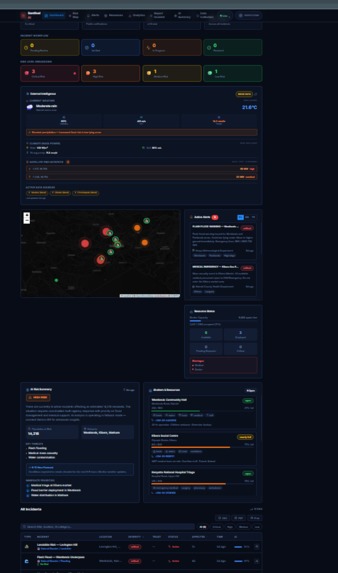
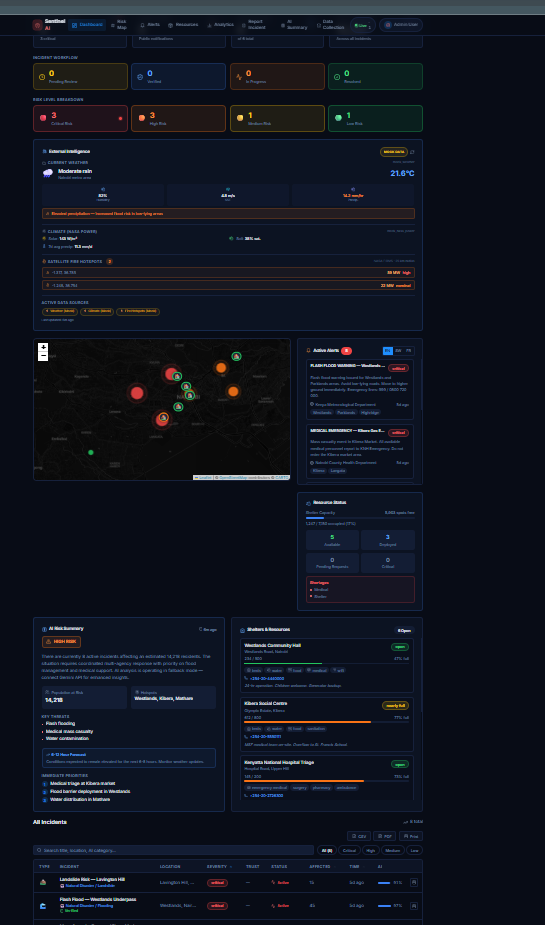
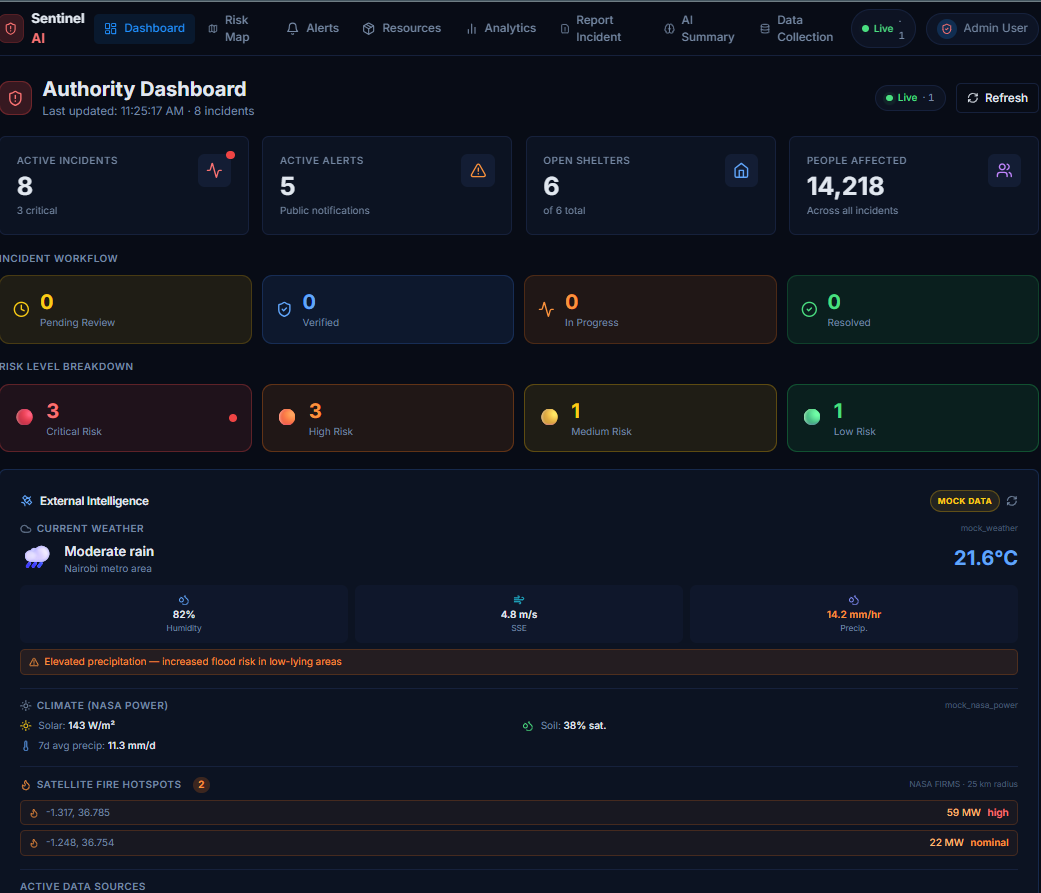
Authority Dashboard with real-time incidents, alerts, weather intelligence, and emergency response overview.
-
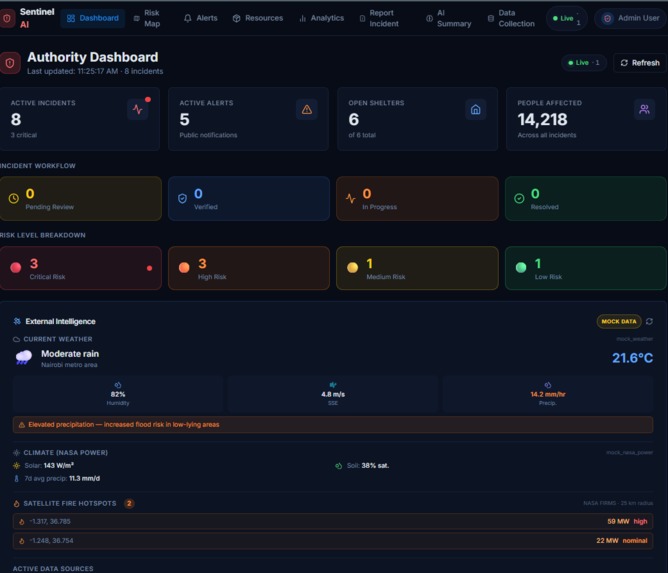
Command dashboard for monitoring incidents, alerts, risk levels, and emergency operations.
-
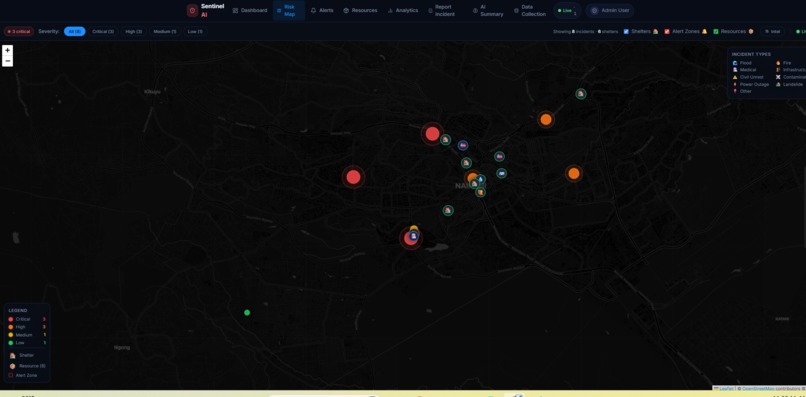
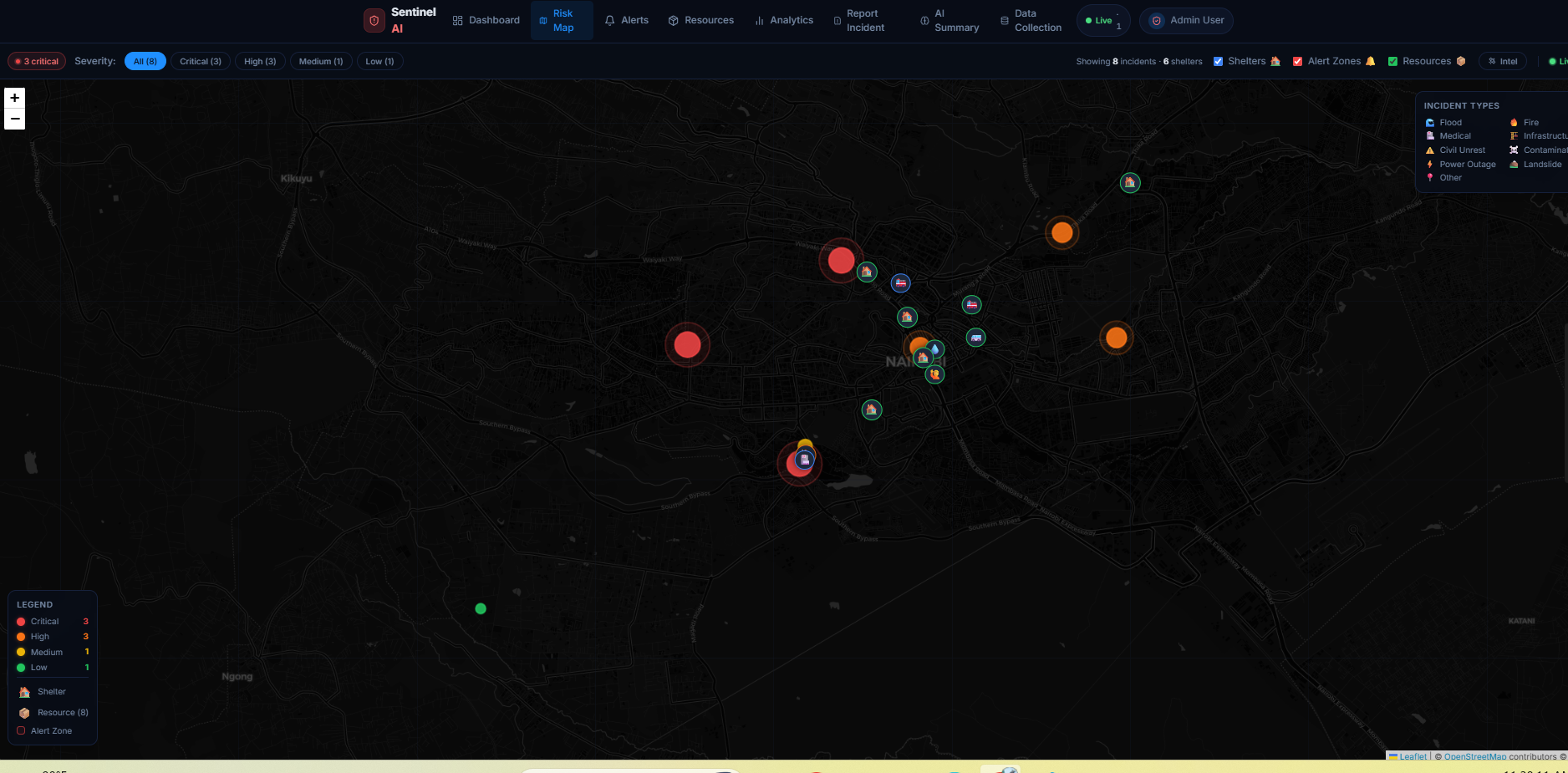
Interactive live risk map showing disaster hotspots, shelters, and emergency resources.
-
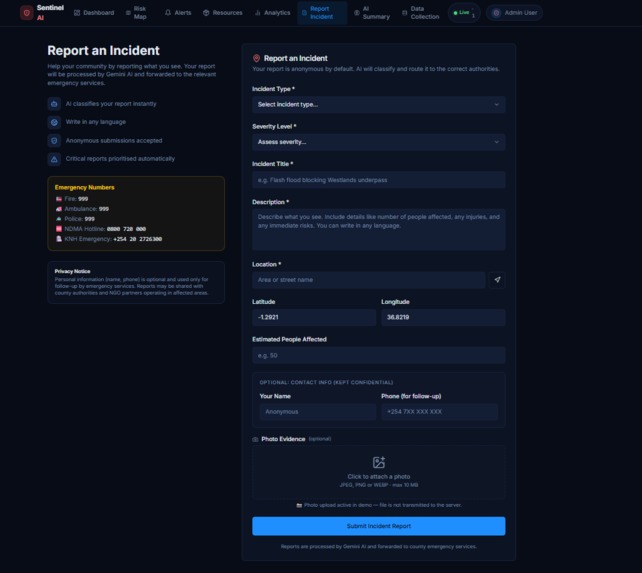
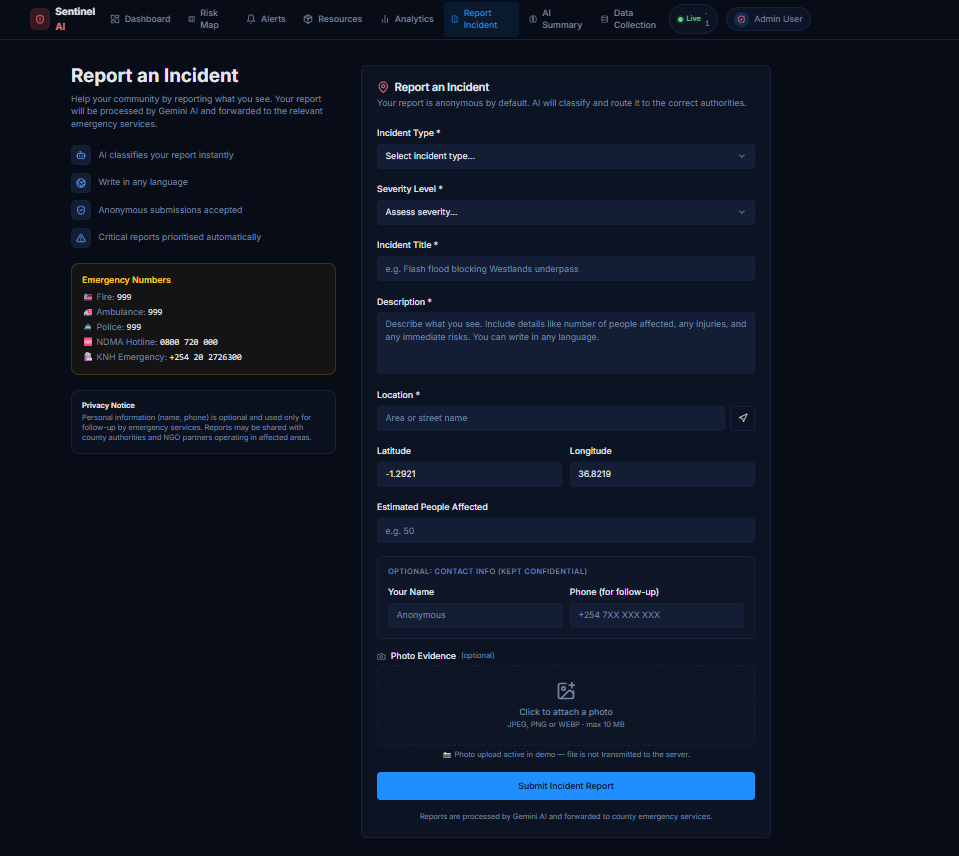
AI-powered incident reporting form with location, severity, and evidence submission.
-
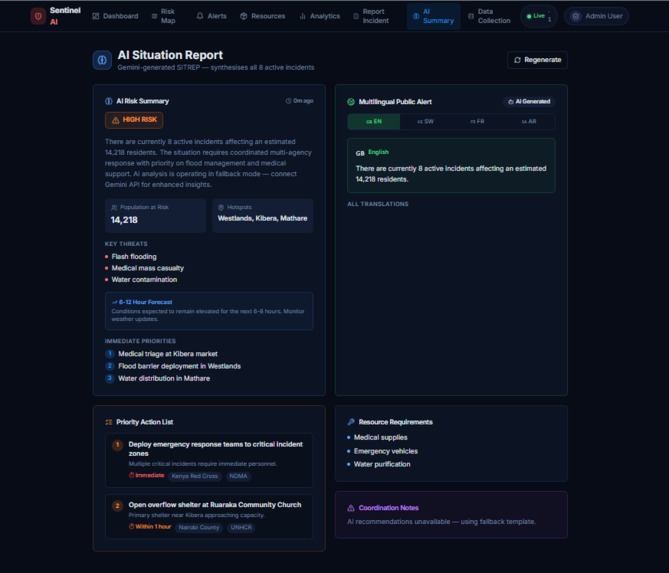
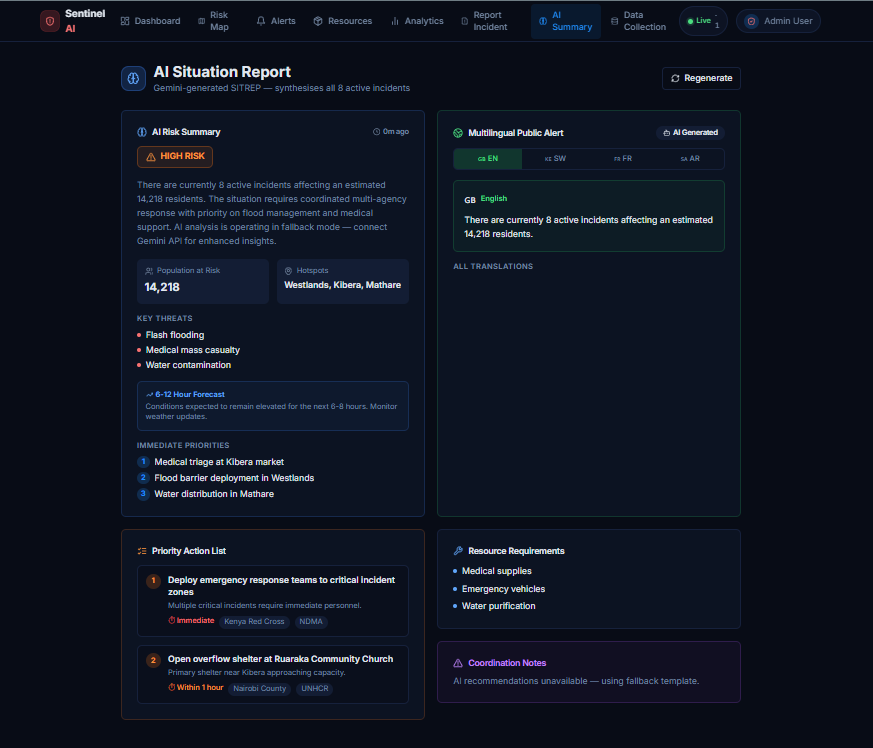
AI-generated Situation Report (SITREP) with multilingual public alerts and response priorities.
-
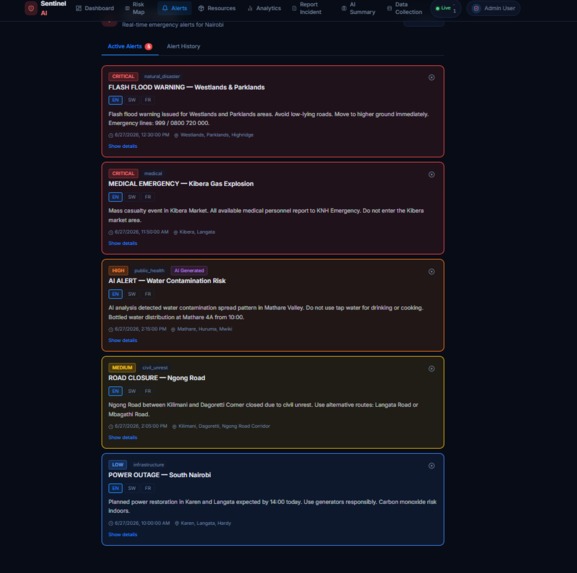
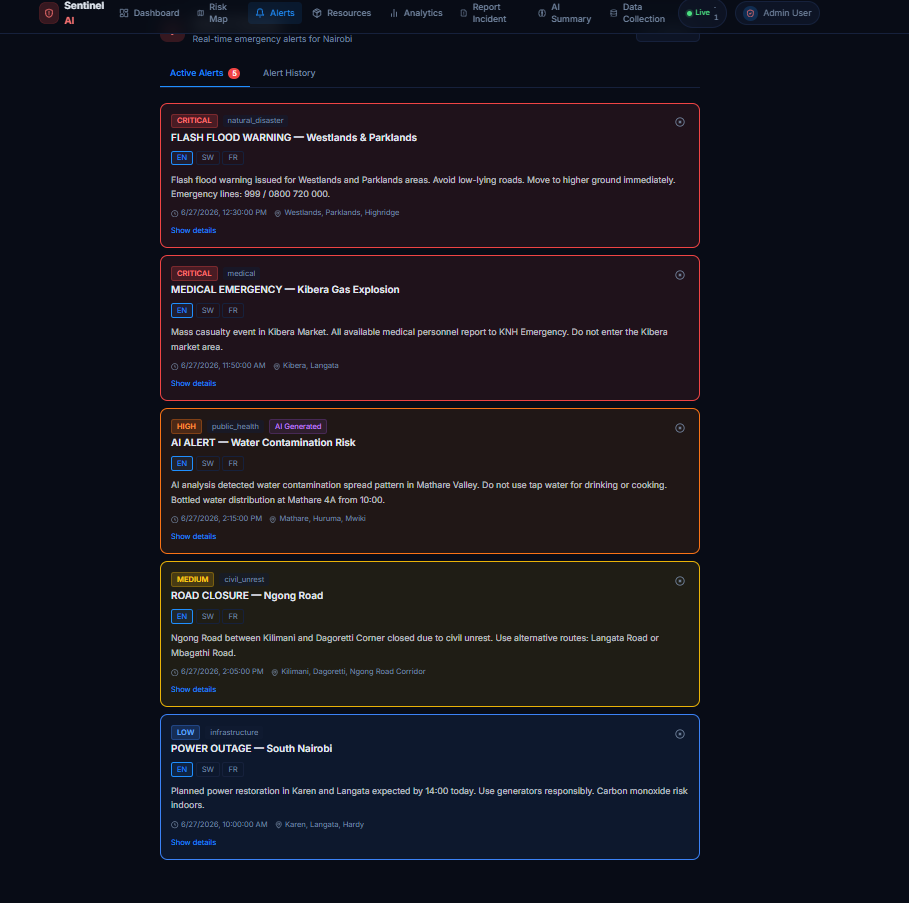
Real-time emergency alert center with multilingual public notifications.
-
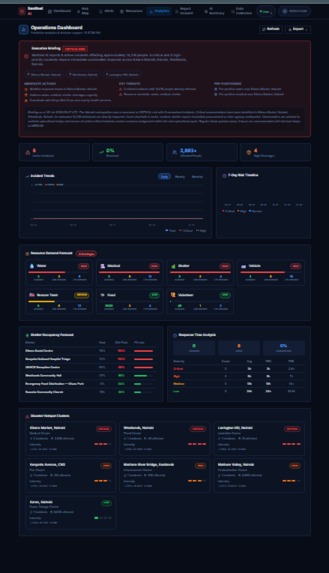
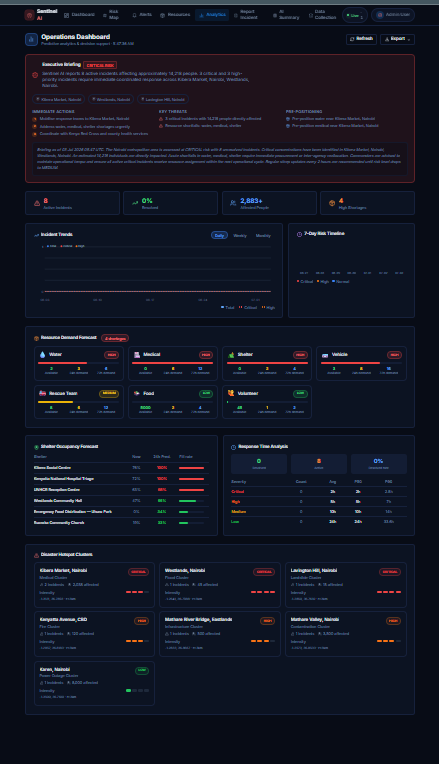
Operational analytics dashboard for disaster trends, resource demand, and decision support.
Inspiration
What it does
How we built it
Challenges we ran into
Accomplishments that we're proud of
What we learned
Sentinel AI Community ActionGrid
Inspiration
Communities often experience delays in reporting disasters, sharing reliable information, and coordinating emergency resources. Existing systems are fragmented and difficult for citizens and authorities to use together.
Sentinel AI was created to bridge that gap by providing a single AI-powered emergency management platform that connects citizens, emergency responders, and decision makers in real time.
Our goal is simple:
Turn community reports into rapid emergency action.
What it does
Sentinel AI enables communities and authorities to respond faster during emergencies through:
- Real-time incident reporting
- Live risk mapping
- AI-powered incident classification
- Multilingual emergency alerts
- Resource and shelter coordination
- AI-generated Situation Reports (SITREP)
- Operational analytics dashboard
The platform transforms raw community reports into actionable intelligence for emergency response teams.
How we built it
Frontend
- Next.js 15
- React
- TypeScript
- Tailwind CSS
Backend
- FastAPI
- Python
- JWT Authentication
AI
- Google Gemini
- OpenAI-ready architecture
Infrastructure
- Vercel
- Render
- GitHub
Mapping
- Leaflet
- OpenStreetMap
Challenges we ran into
- Designing a secure authentication flow between Next.js and FastAPI.
- Deploying frontend and backend across different cloud providers.
- Managing real-time disaster data efficiently.
- Building responsive dashboards for emergency operations.
- Creating an architecture that works without expensive infrastructure.
Accomplishments
✅ AI-powered emergency platform
✅ Live interactive risk map
✅ Real-time incident reporting
✅ Resource coordination dashboard
✅ AI Situation Reports (SITREP)
✅ Multilingual public alerts
✅ Production deployment
What we learned
Building emergency response software requires balancing speed, usability, security, and reliability.
We also learned how AI can enhance—not replace—human decision-making during disaster response.
What's next
- Satellite and weather API integration
- SMS and WhatsApp emergency alerts
- Predictive disaster forecasting
- Mobile application
- Offline reporting mode
- Multi-country deployment across the IGAD region ## What's next for Sentinel AI Community ActionGrid
Built With
- fastapi
- google-gemini-ai
- jwt
- leaflet.js
- next.js
- openai
- openstreetmap
- python
- react
- render
- tailwind-css
- typescript
- vercel

Log in or sign up for Devpost to join the conversation.