🛡️ Sentinel AI — Multi-Agent Urban Disaster & Infrastructure Intelligence Platform
Inspiration
Every year, floods, cyclones, urban fires, and infrastructure failures affect millions of people across India. During disasters, one of the biggest problems is not the absence of resources — it is the absence of coordination.
Fire departments, police, municipal authorities, hospitals, NGOs, and volunteers often work in isolated systems with delayed communication. Citizens struggle to report emergencies quickly, responders lose valuable time manually coordinating rescue efforts, and critical alerts fail to reach the right people at the right time.
We wanted to build a platform that acts like an intelligent nervous system for smart cities — capable of autonomously detecting incidents, prioritizing emergencies, coordinating departments, dispatching volunteers, and providing real-time city-wide disaster intelligence.
That vision became Sentinel AI.
🚨 What It Does
Sentinel AI is an AI-powered multi-agent urban disaster response and infrastructure intelligence platform built for smart cities.
The platform combines:
- AI-driven incident detection
- Smart geo-fenced alerts
- Autonomous volunteer dispatch
- Real-time climate intelligence
- Urban digital twin analytics
- Multi-department coordination
- Community resilience systems
into one unified platform.
Citizens can report hazards through:
- Progressive Web App (PWA)
- AI-powered offline calling agent
- One-tap SOS emergency system
The system then validates reports using a custom 3-Parameter AI Verification Engine:
- Heatmap similarity analysis
- Climate/weather alignment
- User credibility scoring
High-confidence incidents are automatically approved and routed into the response pipeline.
🧠 Multi-Agent AI System
Sentinel AI uses specialized AI agents working together:
- 🔍 Detection Agent — validates and analyzes incidents
- 📋 Prioritization Agent — ranks severity and urgency
- 🚁 Dispatch Agent — matches volunteers within 10km radius
- 📡 Alert Agent — sends geo-fenced multilingual alerts
- 📊 Analytics Agent — powers climate dashboards and simulations
- 🤝 Coordination Agent — enables inter-department collaboration
This transforms disaster response from reactive workflows into autonomous coordinated operations.
🛰️ Key Features
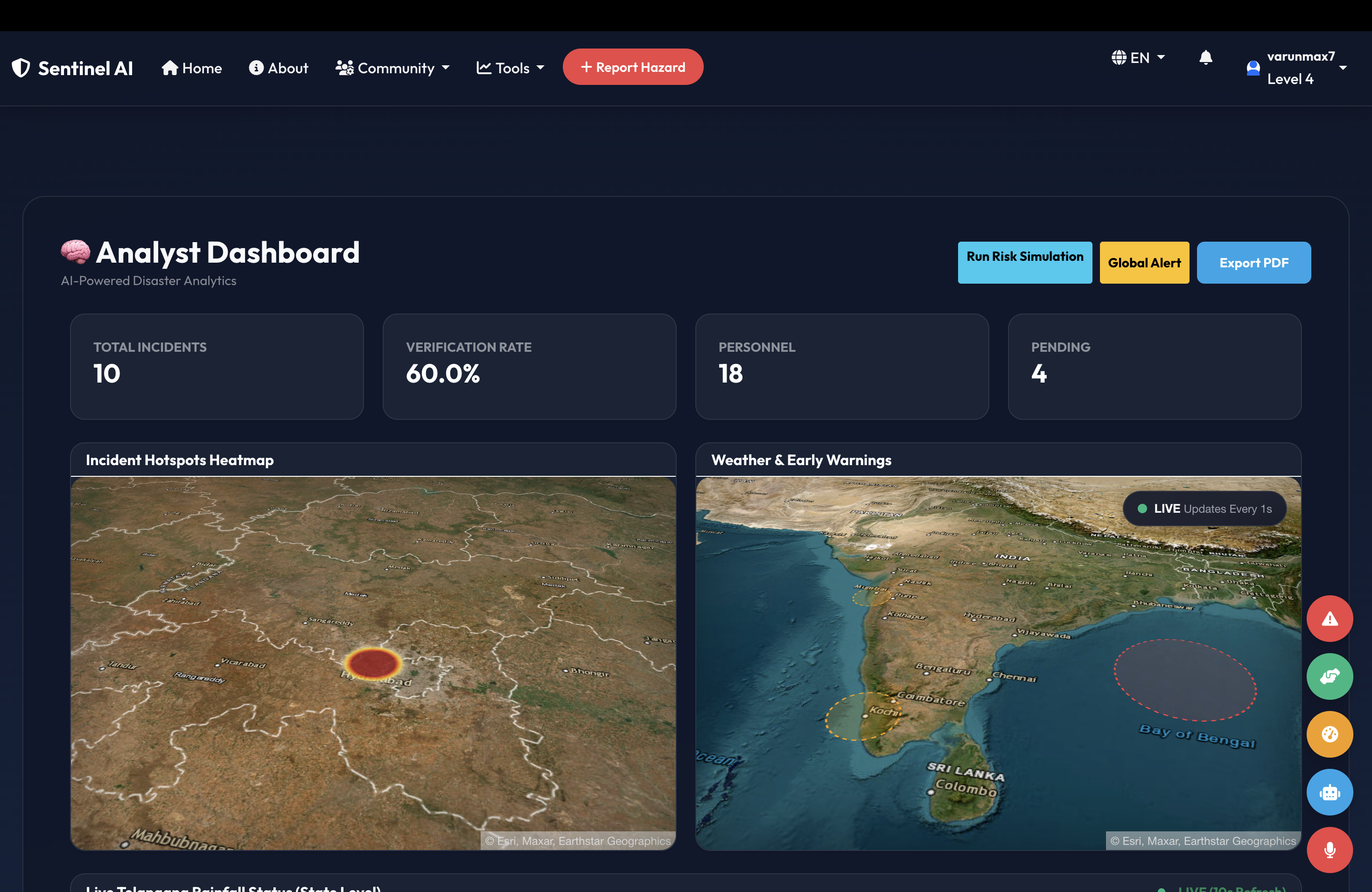
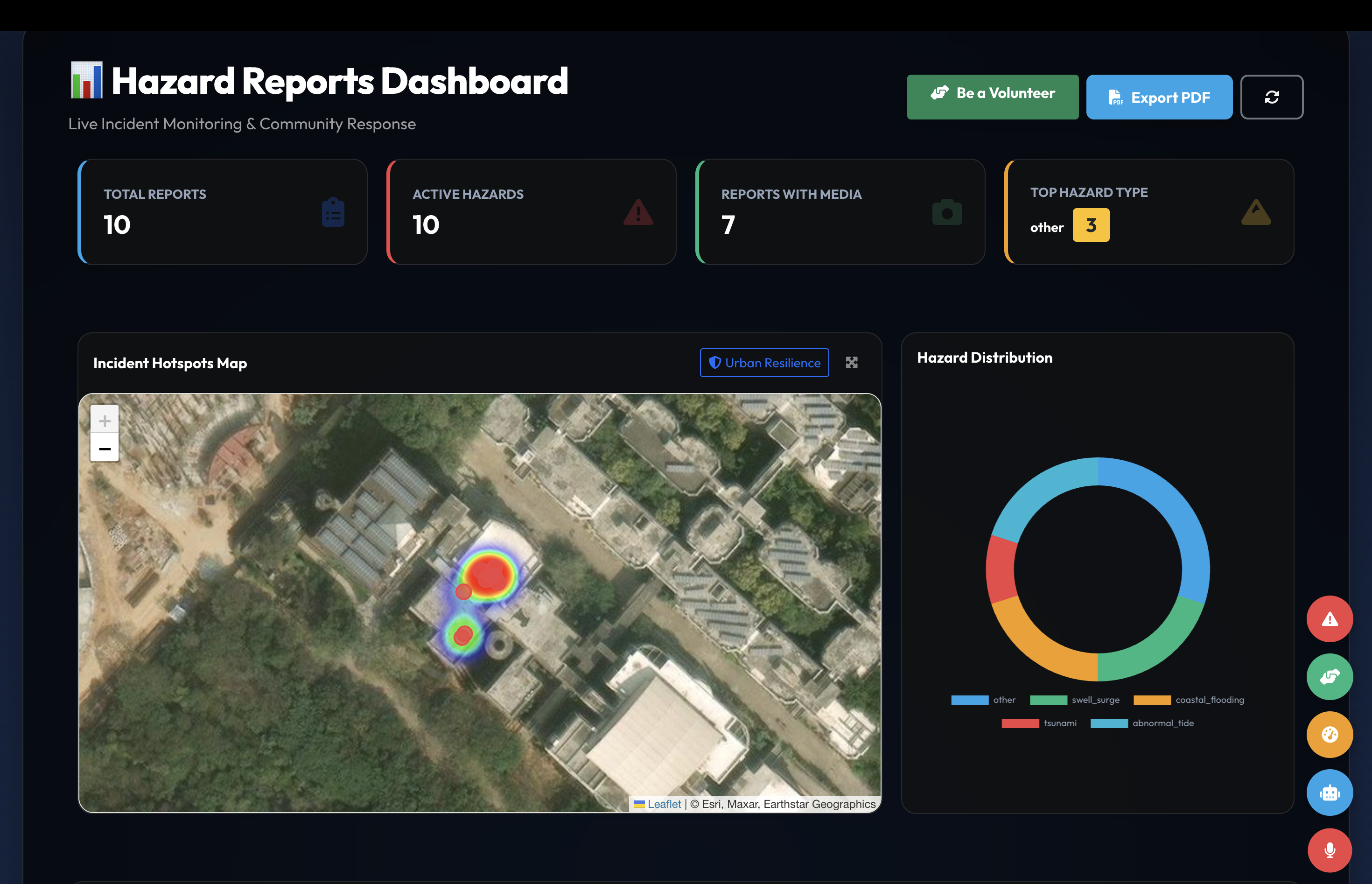
🌍 Real-Time Digital Twin Dashboard
- Live satellite overlays
- RainViewer radar integration
- Open-Meteo climate intelligence
- Telangana rainfall map integration (TGDPS)
- Infrastructure risk simulation
- Urban Resilience Index (URI)
🚨 Smart Geo-Fenced Alerts
Users only receive alerts relevant to their location, reducing panic and alert fatigue.
🤝 Uber-Style Volunteer Dispatch
Nearby volunteers receive WhatsApp rescue assignments and can accept missions directly from chat.
💬 Omni-Channel Reporting
Supports online reporting, offline AI calling, WhatsApp integration, and emergency SOS workflows.
🌿 Community Resilience Hub
Citizens can join environmental initiatives, disaster volunteering, and eco-activities while earning points and certifications.
⚙️ How We Built It
We built Sentinel AI using a full-stack architecture powered by Flask and SQLite/PostgreSQL.
Backend
- Python
- Flask
- Flask-SQLAlchemy
- Flask-Login
- APScheduler
- Twilio WhatsApp API
- TextBlob + NLTK
Frontend
- Bootstrap 5
- Leaflet.js
- Chart.js
- Glassmorphism UI
- Progressive Web App (PWA)
APIs & Integrations
- Open-Meteo
- RainViewer
- TGDPS rainfall maps
- OpenStreetMap/Nominatim
- Firebase Cloud Messaging
- Twilio WhatsApp
The platform currently contains:
- 118+ API routes
- 23 database models
- 50+ responsive templates
- 6 multilingual support layers
- Multiple autonomous AI agents
🧩 Challenges We Faced
One of the biggest challenges was coordinating multiple independent systems into one seamless workflow.
Some major technical challenges included:
- Designing a scalable multi-agent architecture
- Implementing geo-fenced alert logic
- Real-time volunteer dispatch tracking
- Building multilingual dynamic interfaces
- Integrating live weather and satellite data
- Managing offline-first PWA behaviour
- Creating accurate AI-based report verification
We also focused heavily on user experience to ensure the platform remained accessible during emergency situations.
📚 What We Learned
Through this project, we learned:
- Large-scale Flask architecture design
- Real-time disaster response workflows
- Geospatial analysis and mapping systems
- AI-assisted decision pipelines
- Multi-agent coordination concepts
- Disaster-tech infrastructure challenges
- Human-centered emergency UX design
Most importantly, we learned how technology can directly improve response time, coordination, and community resilience during disasters.
🚀 Future Scope
In the future, we plan to expand Sentinel AI with:
- IoT sensor integrations
- Drone-based damage assessment
- Predictive flood modeling
- AI-powered evacuation planning
- Government deployment pilots
- Cross-state disaster intelligence sharing
- Advanced digital twin simulations
❤️ Conclusion
Sentinel AI is more than a disaster app.
It is an intelligent urban coordination platform designed to help cities respond faster, coordinate smarter, and build resilient communities.
In disasters, minutes save lives.
Sentinel AI turns hours into seconds.
Built With
- apscheduler
- bootstrap-5
- chart.js
- firebase
- flask
- flask-sqlalchemy
- gunicorn
- leaflet.js
- nltk
- open-meteo-api
- openstreetmap
- postgresql
- pwa
- python
- rainviewer
- sqlite
- textblob
- twilio

Log in or sign up for Devpost to join the conversation.