Inspiration: Beyond the Physical Ramp
Diversity is being invited to the Great Hall; Inclusivity is ensuring the Great Hall doesn't drive you out. In a world built for "Muggles," neurodivergent individuals representing nearly 20% of the population face invisible "sensory minefields" that traditional accessibility ignores.
A flickering light or chaotic noise isn't just a nuisance; it is a Dementor’s Kiss that forces individuals with Autism, ADHD, or SPD to self-exclude from education and community spaces. We built Sensus Revelio because true Neuro-Inclusion requires us to fix the environment, not the person. We believe accessibility doesn't stop at a wheelchair ramp it extends to the very air and light we inhabit.
What it does: A Tool for Neuro-Equity
Sensus Revelio is a Full-Stack Sensory Intelligence System designed to democratize access to public spaces:
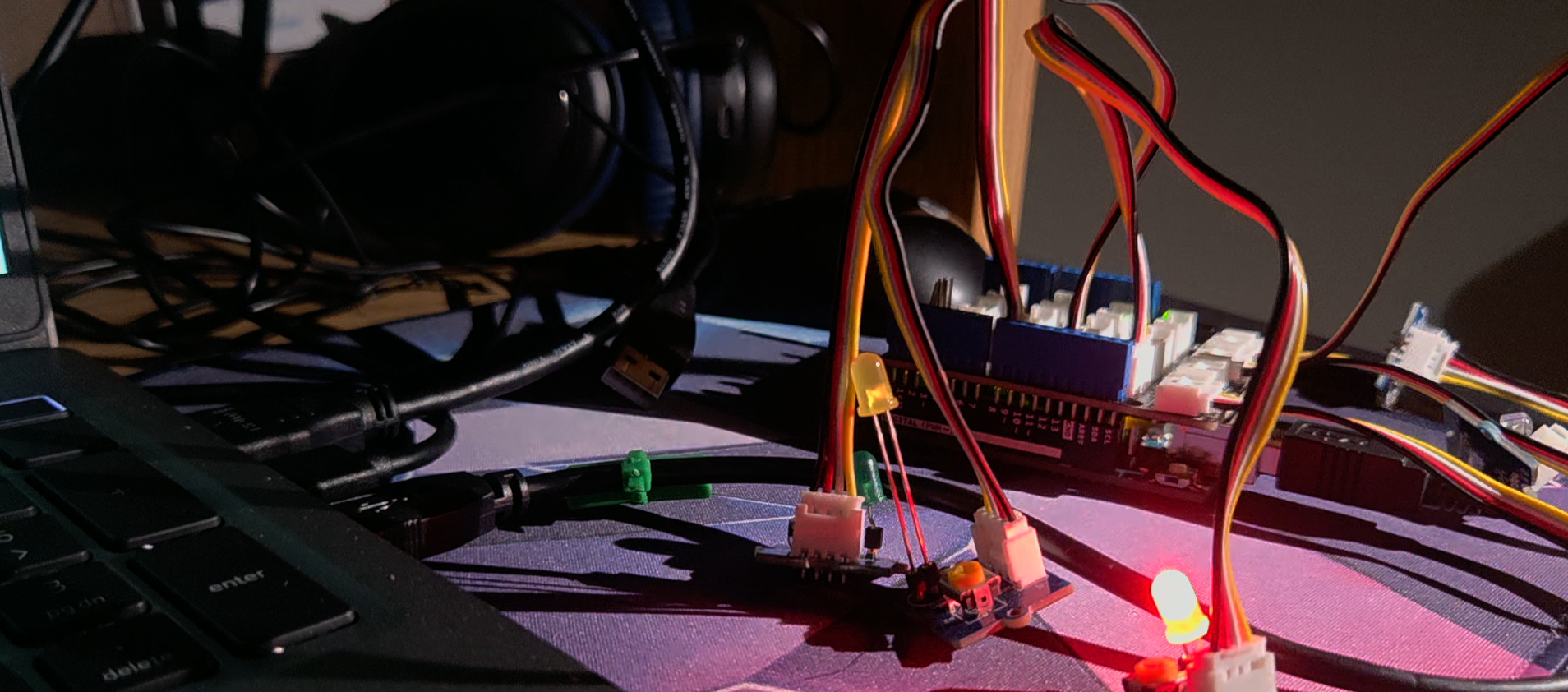
- The Hardware: A discreet, privacy-first Arduino "Wand" monitors real-time environmental stress factors (acoustic and luminosity levels).
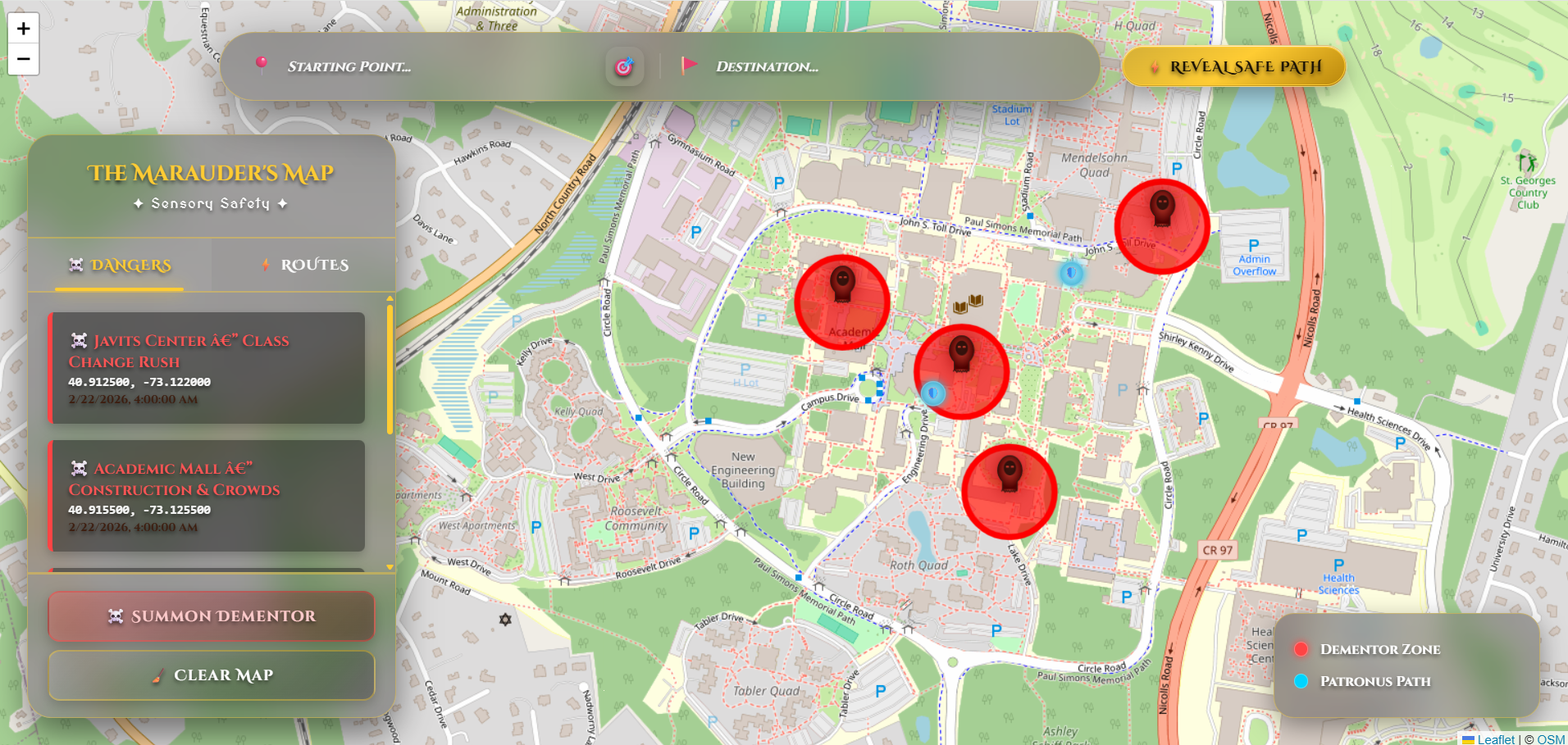
- The Logic: Using a Social Model of Disability framework, it identifies "Dementor Zones" (high-stimulation areas) that create barriers to participation.
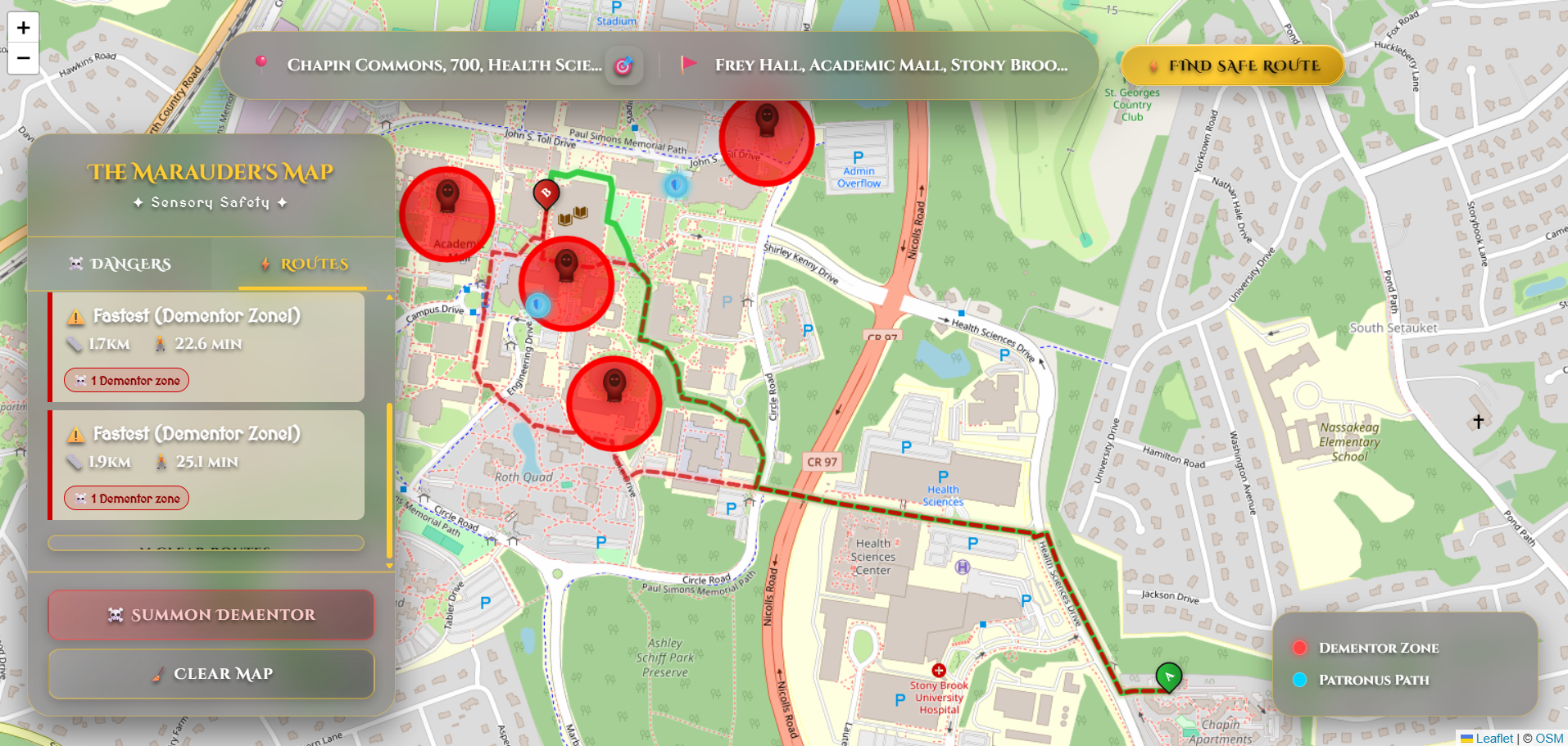
- The Map: A premium, glassmorphic dashboard that uses Google Maps APIs to empower users with "Patronus Protected" (quiet) routes, ensuring they can occupy campus spaces with autonomy and dignity.
🛠️ How we built it: Engineering for Inclusion
We built a seamless bridge between hardware and software to advocate for a more inclusive physical world.
1. The Physical Core (Hardware)
We engineered a sensory-detection node using an Arduino UNO designed for Subtle Inclusion.
- Dual-Sensor Array: High-gain acoustic transducers and LDR photo-resistors capture the triggers that "Muggles" often overlook.
- Privacy-by-Design: Our hardware processes raw intensity data only—no audio is recorded and no faces are tracked—ensuring user safety and privacy.
- Tri-State Feedback: A non-intrusive LED system (Green/Yellow/Red) provides instant feedback without the stigma of loud alarms or "special" equipment.
2. The Logic Bridge (Backend)
When an environmental barrier is detected, the hardware communicates via a low-latency UART Serial Bridge to a Python 3.10 backend.
- Equitable Data Logging: We developed a Spatial Filtering Algorithm (Haversine Formula) to map unique "exclusion zones" without redundant data, creating a clean record of environmental hostility across campus.
3. The Enchanted Interface (UX for Cognitive Ease)
The UI is a bespoke Glassmorphic masterpiece designed specifically to reduce cognitive load—a critical factor for neuro-inclusive design.
- Intelligent Routing: Leveraging Google Directions & Places APIs, we calculate the "Path of Least Resistance," providing an equitable navigation experience that honors the user's sensory needs.
- Empathetic Aesthetics: Using high-contrast gold gradients and parchment themes, we ensure maximum legibility for users who may struggle with standard, cluttered interfaces.
🚀 Challenges we ran into: The Ethics of Mapping
Our biggest hurdle was Environmental Accuracy. We didn't want to over-report "Danger," as that could lead to unnecessary isolation. We implemented a calibrated thresholding logic that accounts for ambient noise floors, ensuring that the map only flags zones that truly act as barriers to inclusivity.
🏅 Accomplishments that we're proud of
As a Stony Brook student, I am proud of creating a tool that moves the needle on Neuro-Inclusion. Successfully fusing hardware interrupts with Google Cloud APIs to solve a social justice issue equity of space was our most meaningful achievement.
🎓 What we learned: The Power of Design Thinking
- The Social Model of Disability: We learned that the environment, not the individual, is what needs "fixing."
- Dignity in Design: Technical choices, like using subtle light signals instead of buzzers, are essential for creating tools that include rather than stigmatize.
- Inclusive Tech-Stacks: We learned how to leverage Geospatial Optimization and Sensor Fusion as tools for social advocacy.
🔮 What's next for Sensus Revelio
We envision a Crowdsourced Mesh Network of sensory guardians. By empowering an entire community to map "Dementor Zones," we can turn any hostile environment into a "Great Hall" where every mind, regardless of its profile, feels safe to belong.
Mischief Managed. Inclusivity Achieved.
Built With
- arduino
- arduinouno
- c++
- css
- flask
- google-maps-directions-api
- groveshield
- html
- leaflet.js
- lightsensor
- openstreetmap
- polyline
- pyserial
- python
- requests
- soundsensor

Log in or sign up for Devpost to join the conversation.