Inspiration
Birdwatching is one of the most accessible ways for people to reconnect with nature, but beginners often struggle with a simple question: “What bird am I looking at?” Identification usually requires combining appearance, sound, location, season, behavior, and field experience.
SeeBird started from this idea: what if an AI assistant could feel like a patient field researcher beside you, helping you observe, identify, listen, and learn in a more immersive way?
What it does
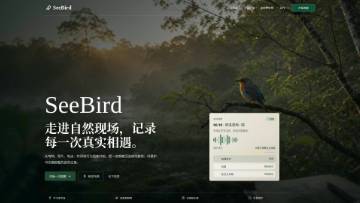
SeeBird is an AI-powered immersive birdwatching and nature observation platform.
The current prototype provides:
- An immersive field-lab web experience for bird observation
- A realistic map-based observation workspace
- Bird species cards with appearance, habitat, behavior, and sound information
- A visual identification assistant based on field traits
- Bird call playback and media evidence views
- Observation records, confidence status, privacy-aware location handling, and review workflow
- A long-term product direction toward AR/VR nature exploration
The project begins with birds, but the broader vision is a “See Nature” platform: SeeBird, SeeFish, SeeFlower, SeeTree, and eventually SeeWorld.
How we built it
We built the project as a front-end and back-end separated product prototype.
The web app is built with React, TypeScript, Vite, Three.js, and map-based field UI components. The product is deployed on Vercel and designed as a responsive web experience first, with future expansion to mobile apps, mini programs, and spatial computing devices such as Apple Vision Pro.
The AI direction is designed around multimodal identification:
- Vision-based recognition from bird photos
- Audio-based recognition from bird calls
- Natural-language field assistant powered by large language models
- Retrieval-augmented bird knowledge base
- Location, habitat, season, and behavior as contextual signals
Challenges we faced
The biggest challenge was not just making another database of birds, but designing an experience that feels like real observation in nature.
We had to balance:
- Scientific credibility and beginner-friendly guidance
- Immersive visual design and practical field workflow
- Public map sharing and privacy protection for sensitive species
- A focused birdwatching MVP and a much larger nature-observation vision
Accomplishments that we're proud of
We are proud that SeeBird already feels like a real product direction rather than just a demo screen.
The prototype includes an immersive homepage, a field observation workspace, real-map interaction, species detail cards, bird sound playback, identification workflow, observation records, and review states. It also establishes a scalable vision from birdwatching to a broader AI-native nature platform.
What we learned
We learned that nature observation is naturally multimodal. A bird is rarely identified by one signal alone. Appearance, sound, geography, behavior, season, and user confidence all matter.
We also learned that AI products in education and nature should not only answer questions quickly. They should slow people down, help them observe better, and make the real world feel richer.
What's next for SeeBird
Next, we plan to add deeper OpenAI-powered features:
- Photo-based bird identification
- Bird call audio analysis
- Conversational field researcher assistant
- Personal life list and observation memory
- Community review and expert verification
- AR field guide mode
- VR / Apple Vision Pro immersive birdwatching scenes
- Expansion from SeeBird to SeeFish, SeeFlower, SeeTree, and SeeWorld
Built With
- ai-agents
- ar/vr
- audio-ai
- css
- fastapi
- geospatial
- gpt-4o
- node.js
- openai-api
- openstreetmap
- postgresql
- product
- rag
- react
- supabase
- three.js
- typescript
- vercel
- vision-ai
- vite
- webxr


Log in or sign up for Devpost to join the conversation.