-
-
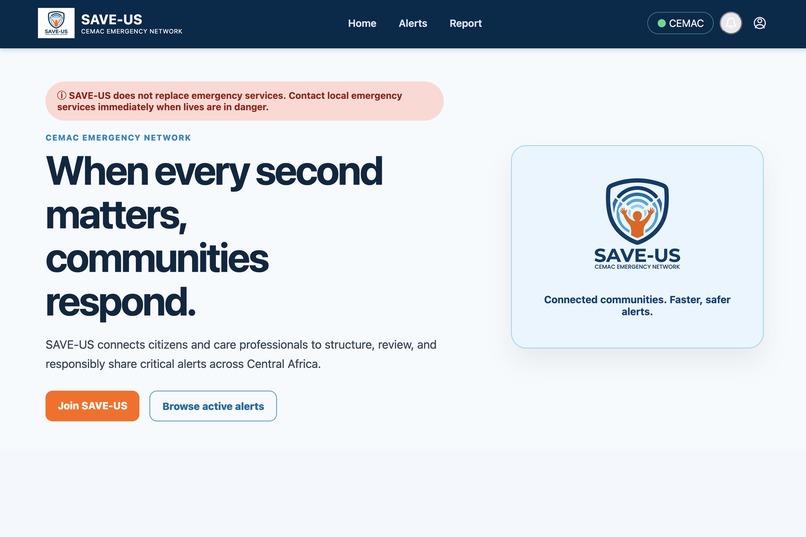
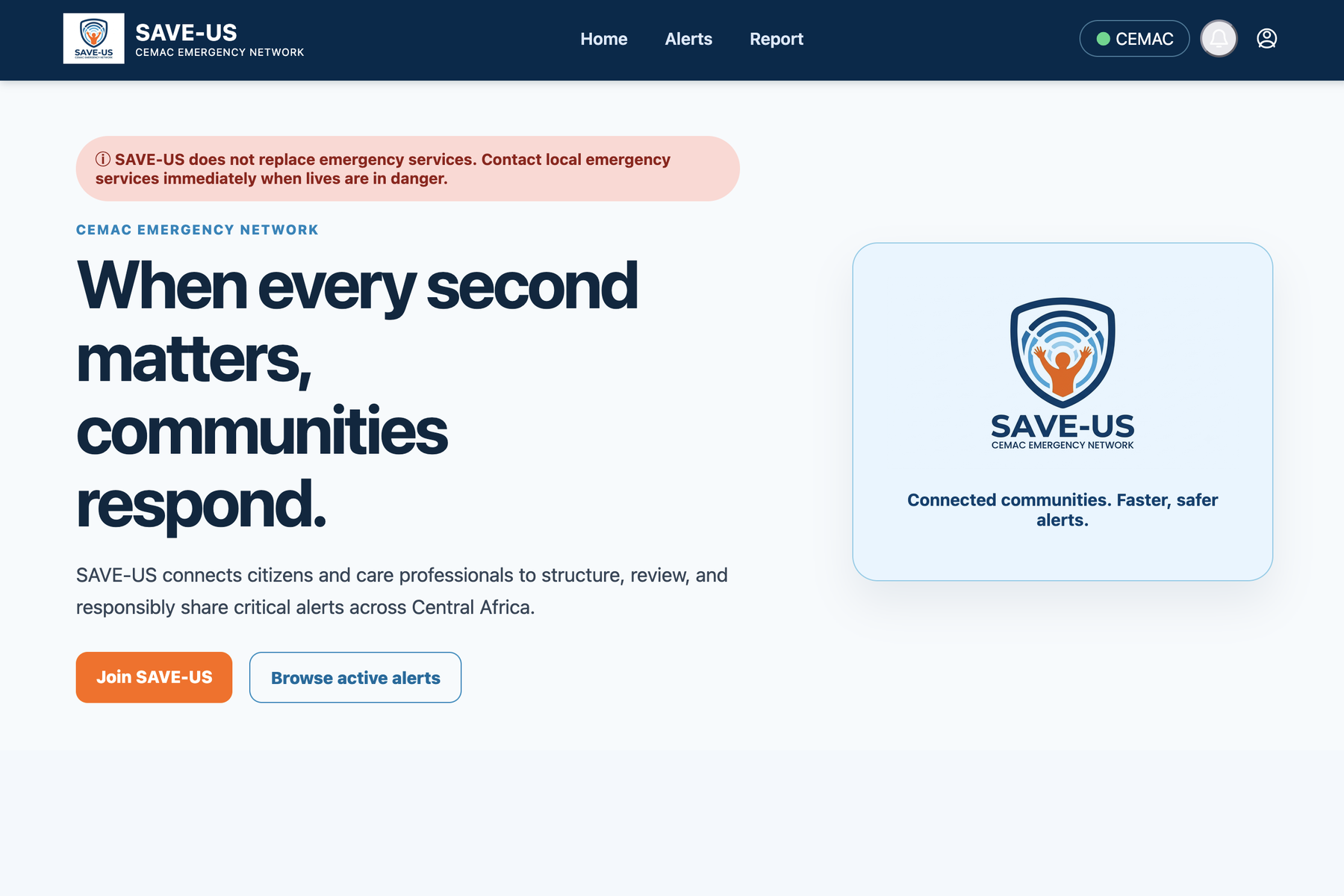
landing-page
-
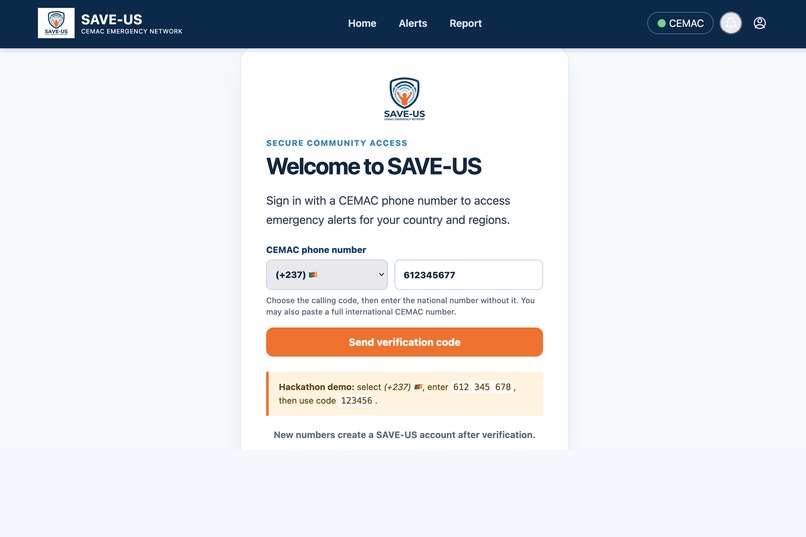
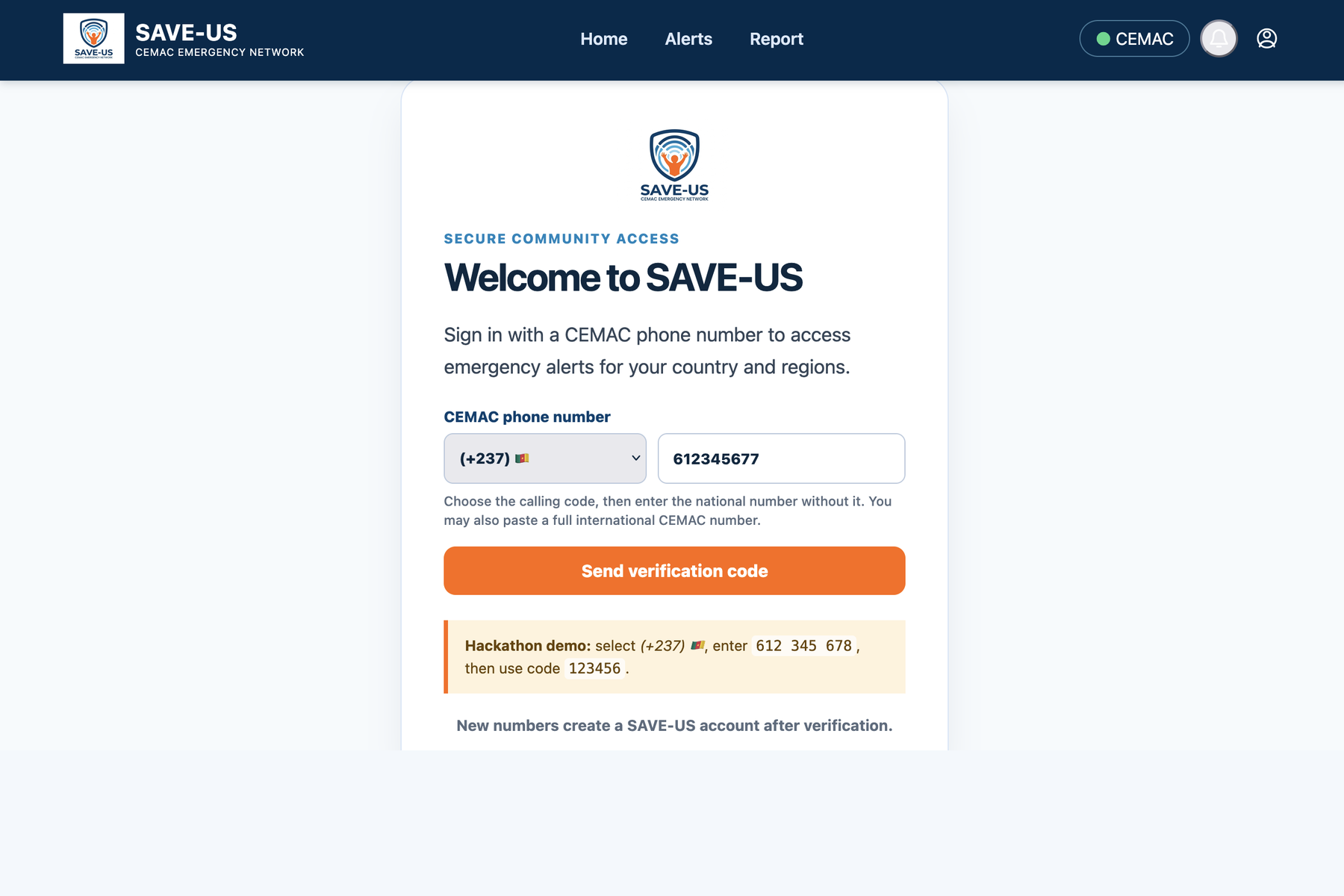
sign-in
-
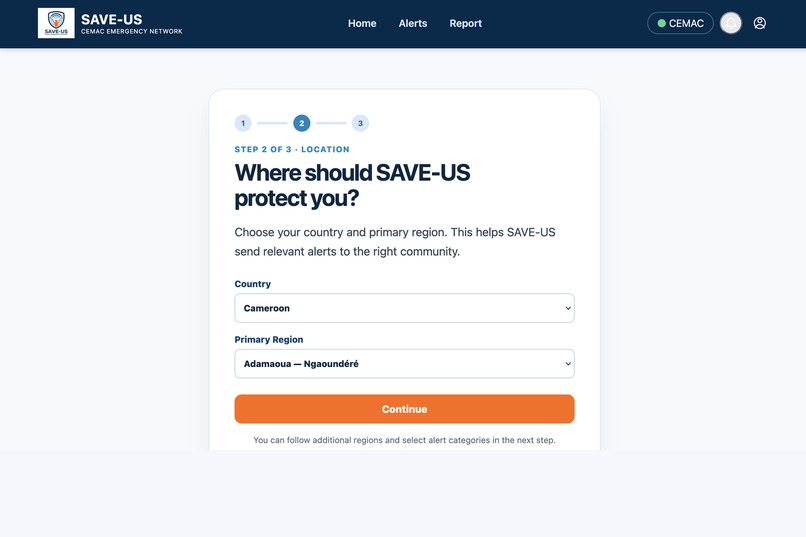
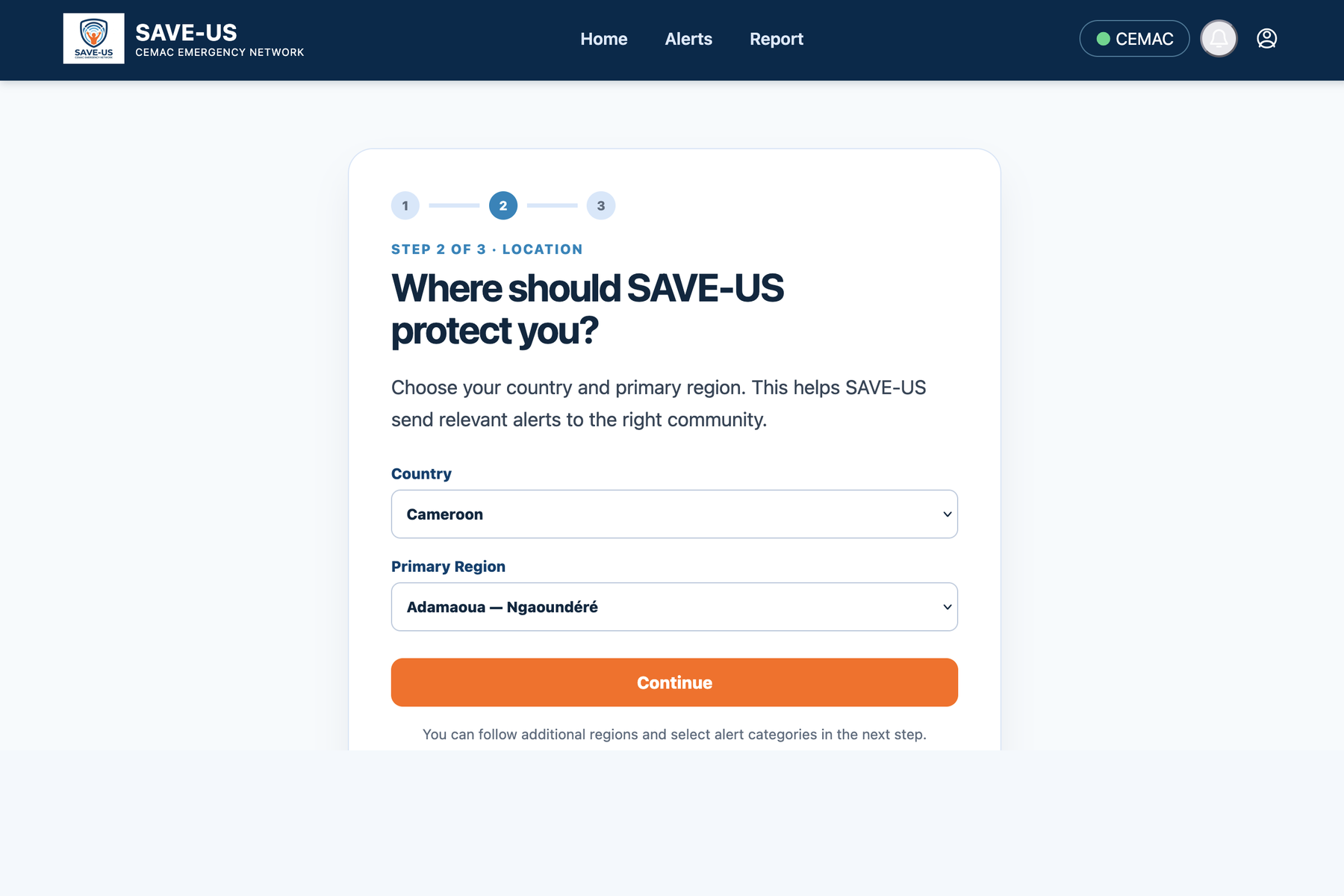
onboarding location
-
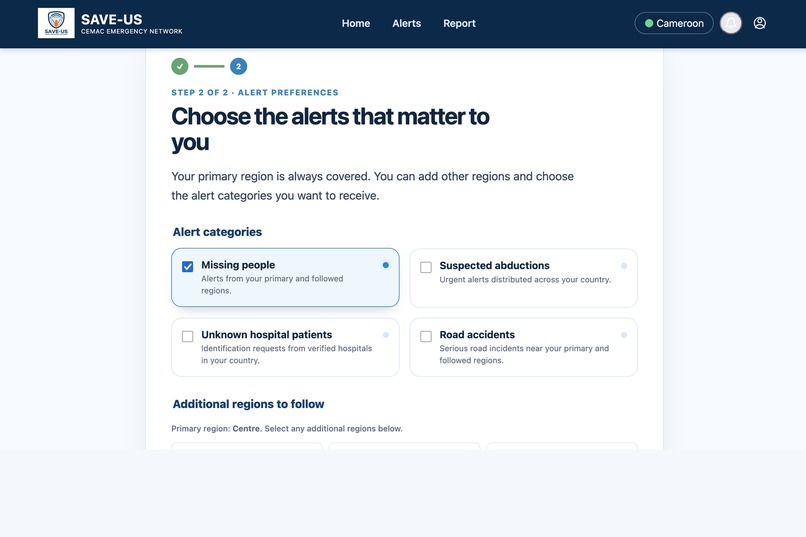
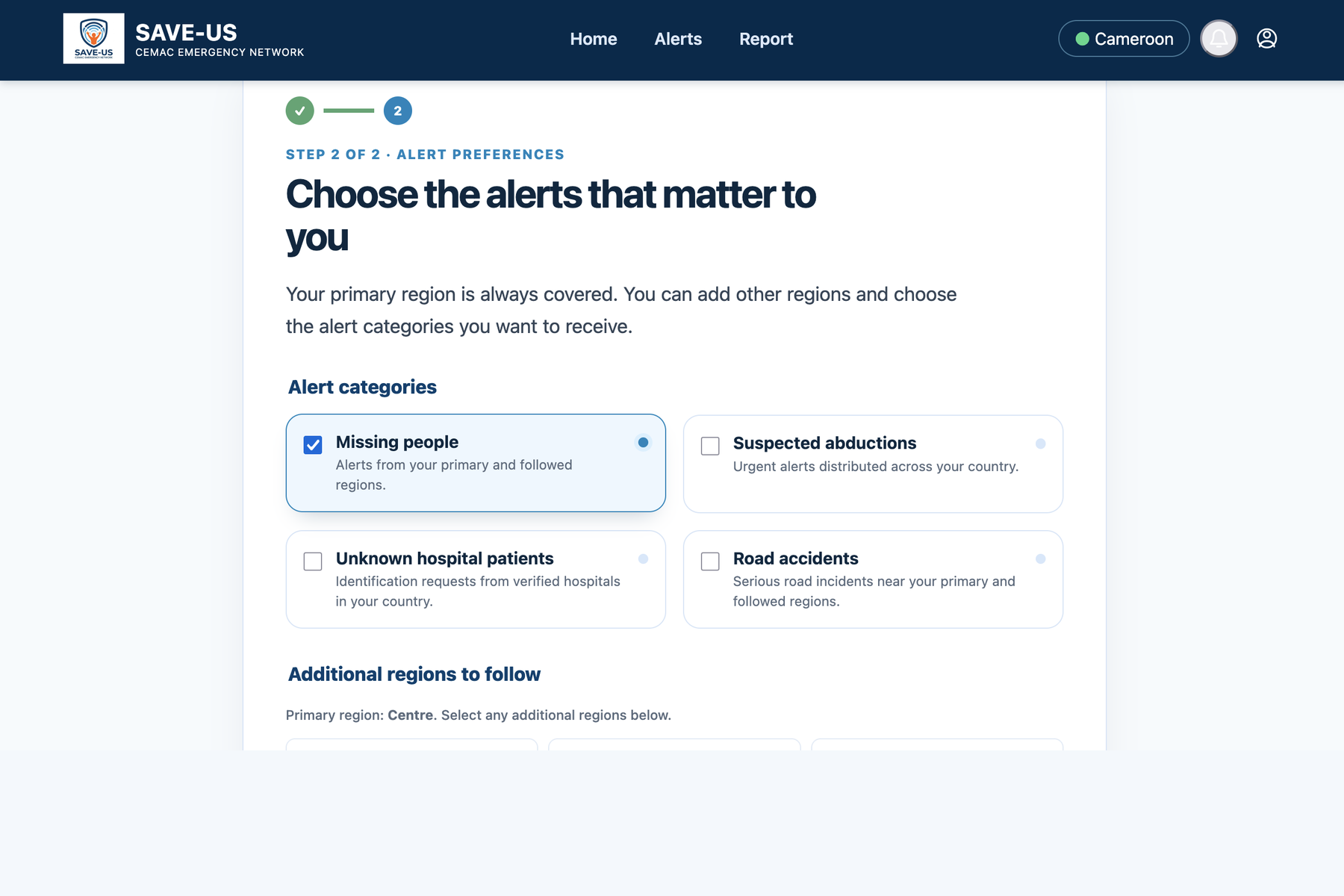
alert preference
-
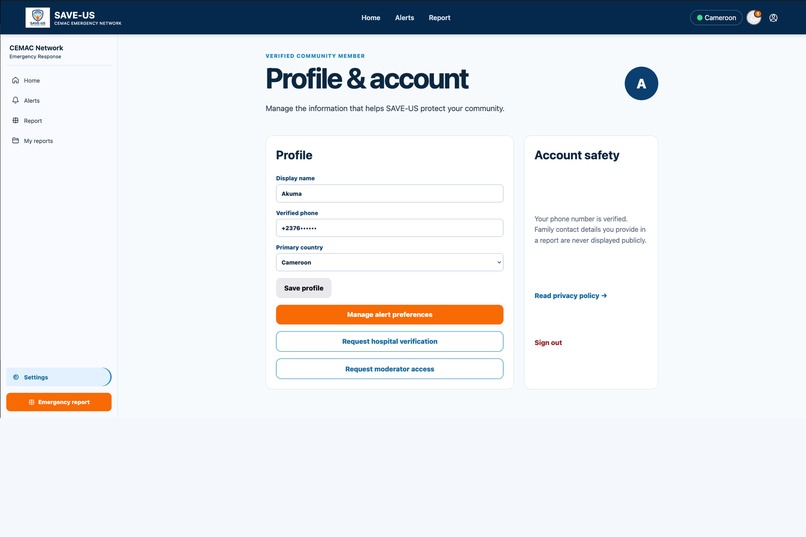
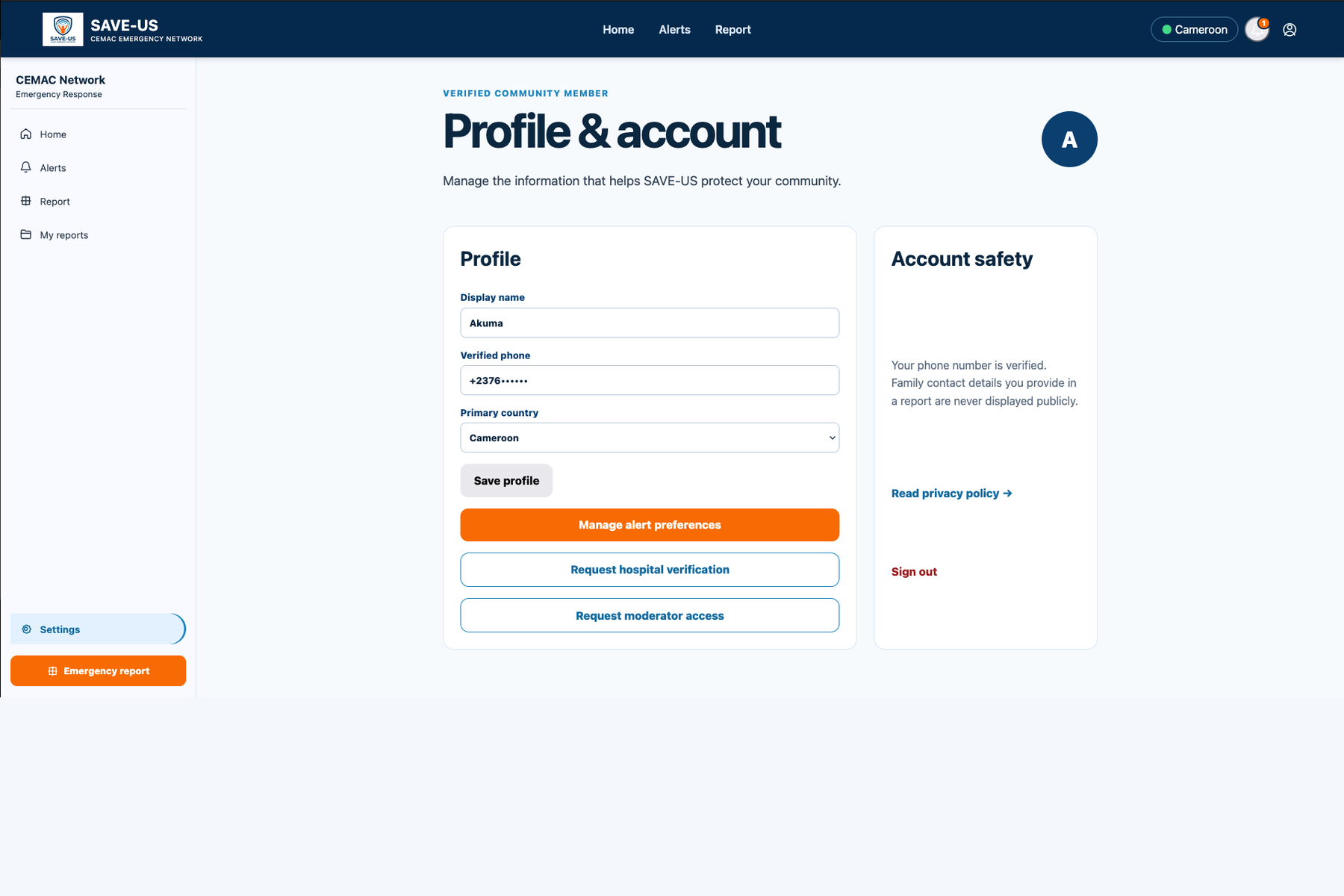
profile account
-
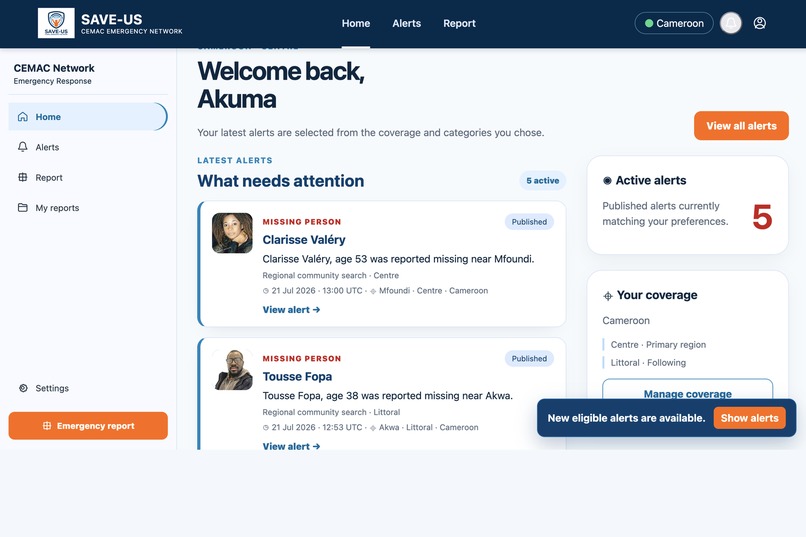
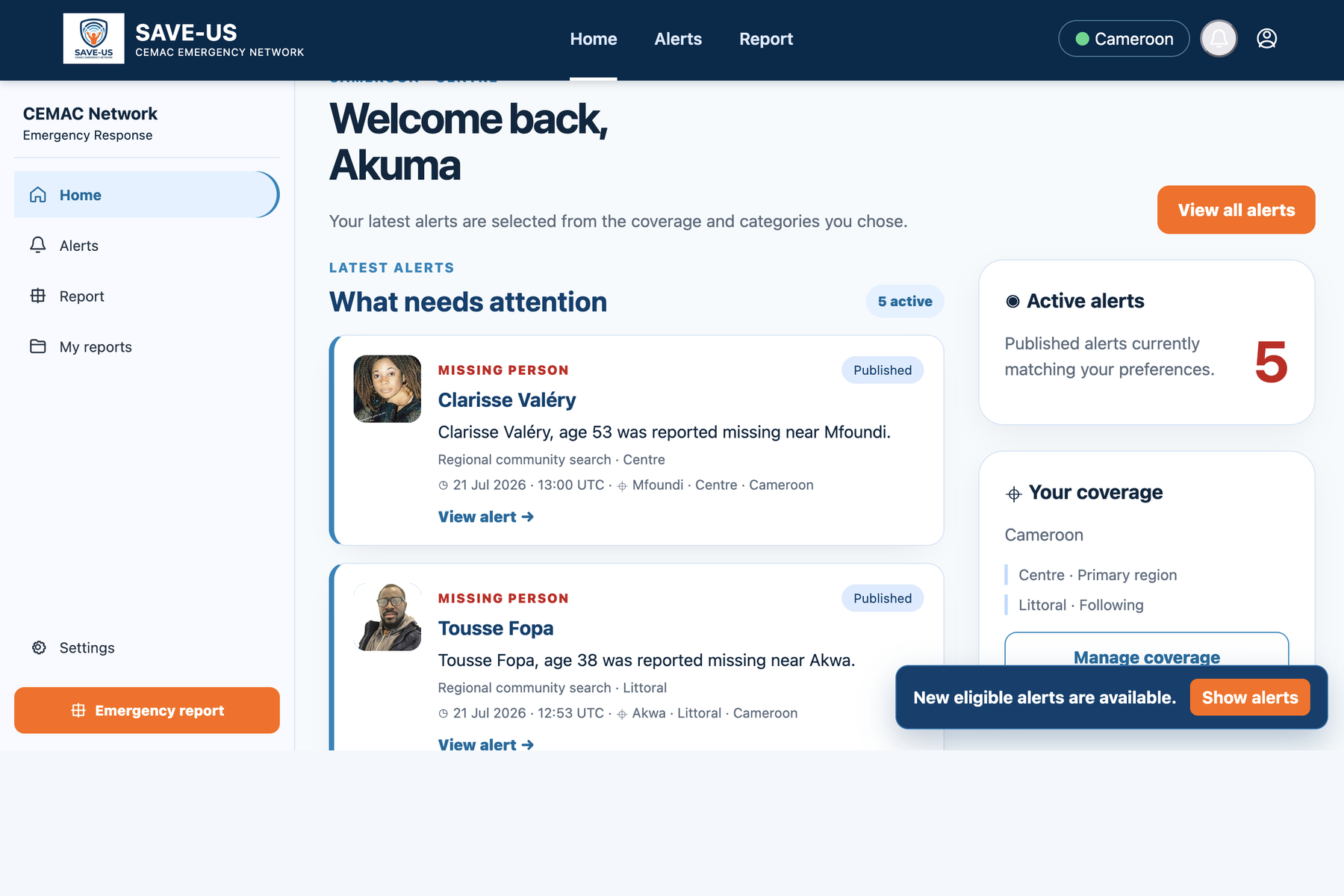
home dashboard
-
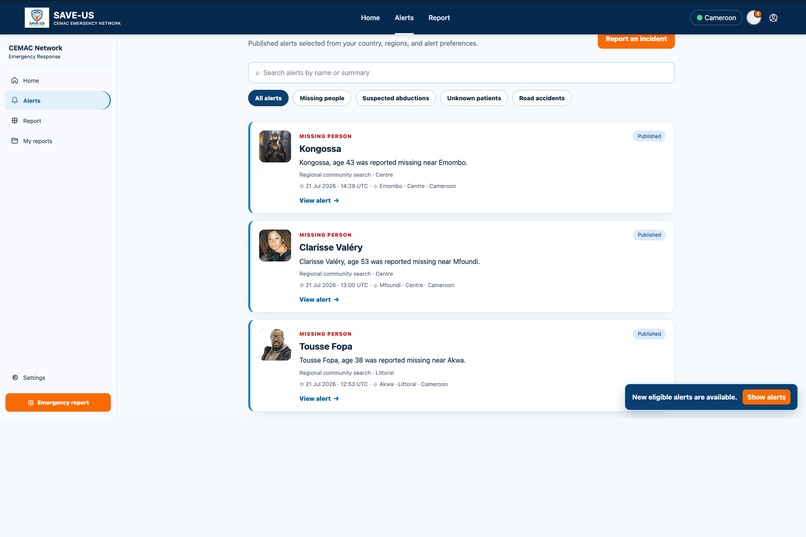
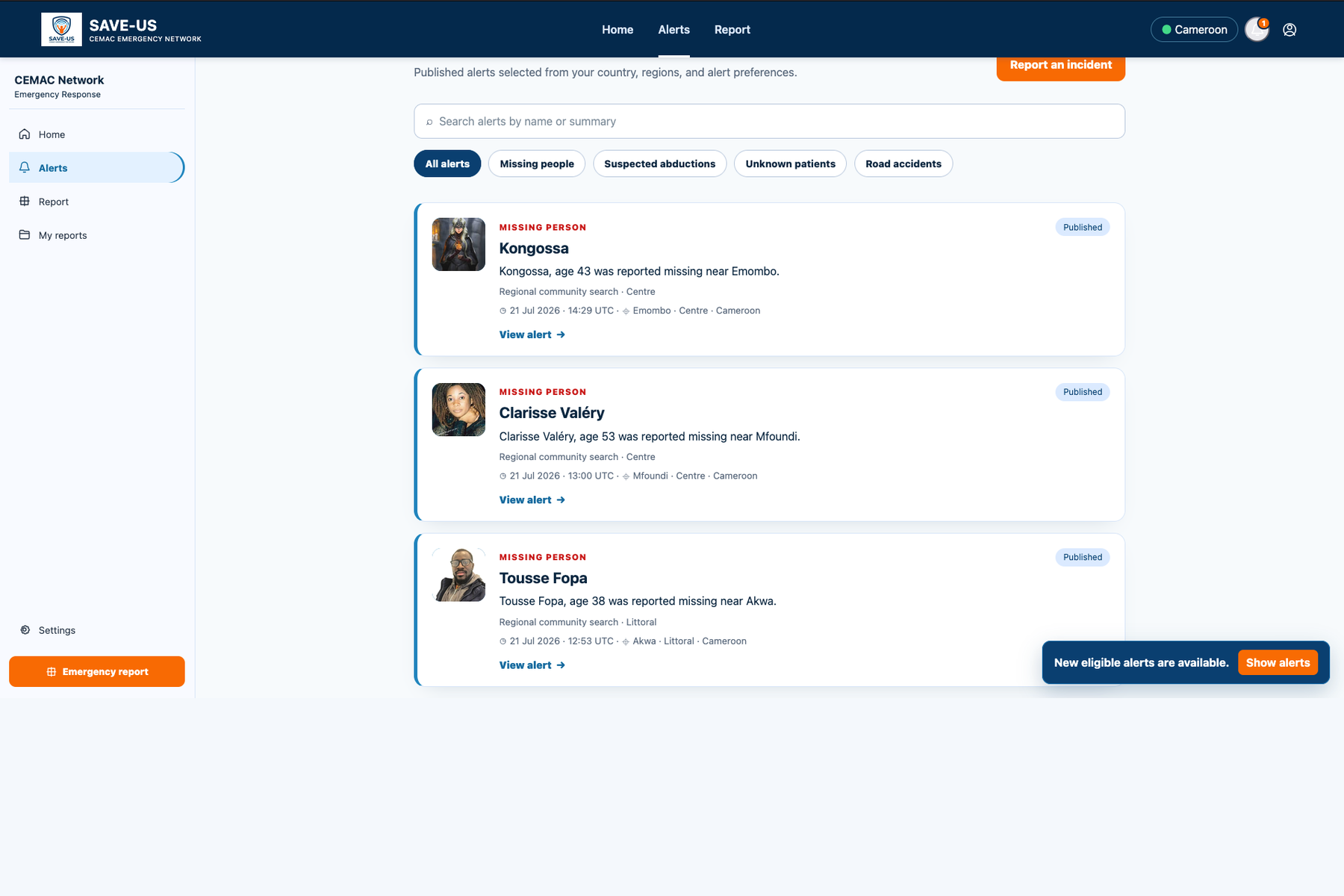
alert feed
-
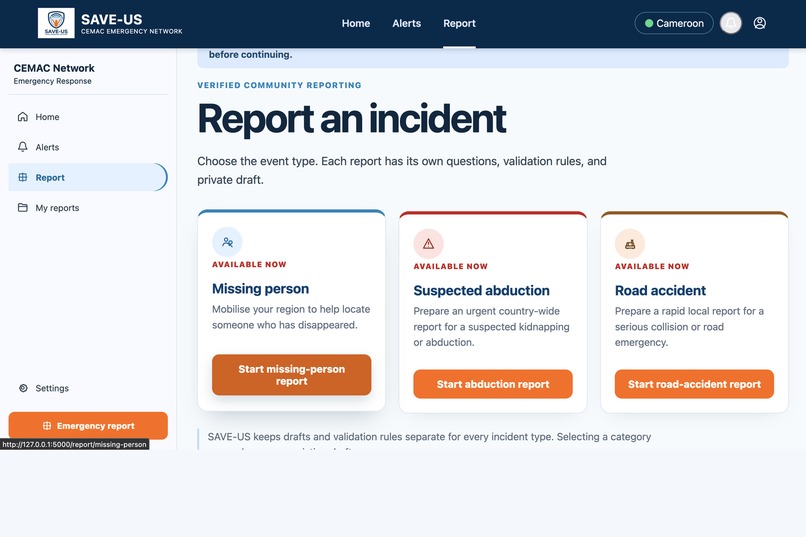
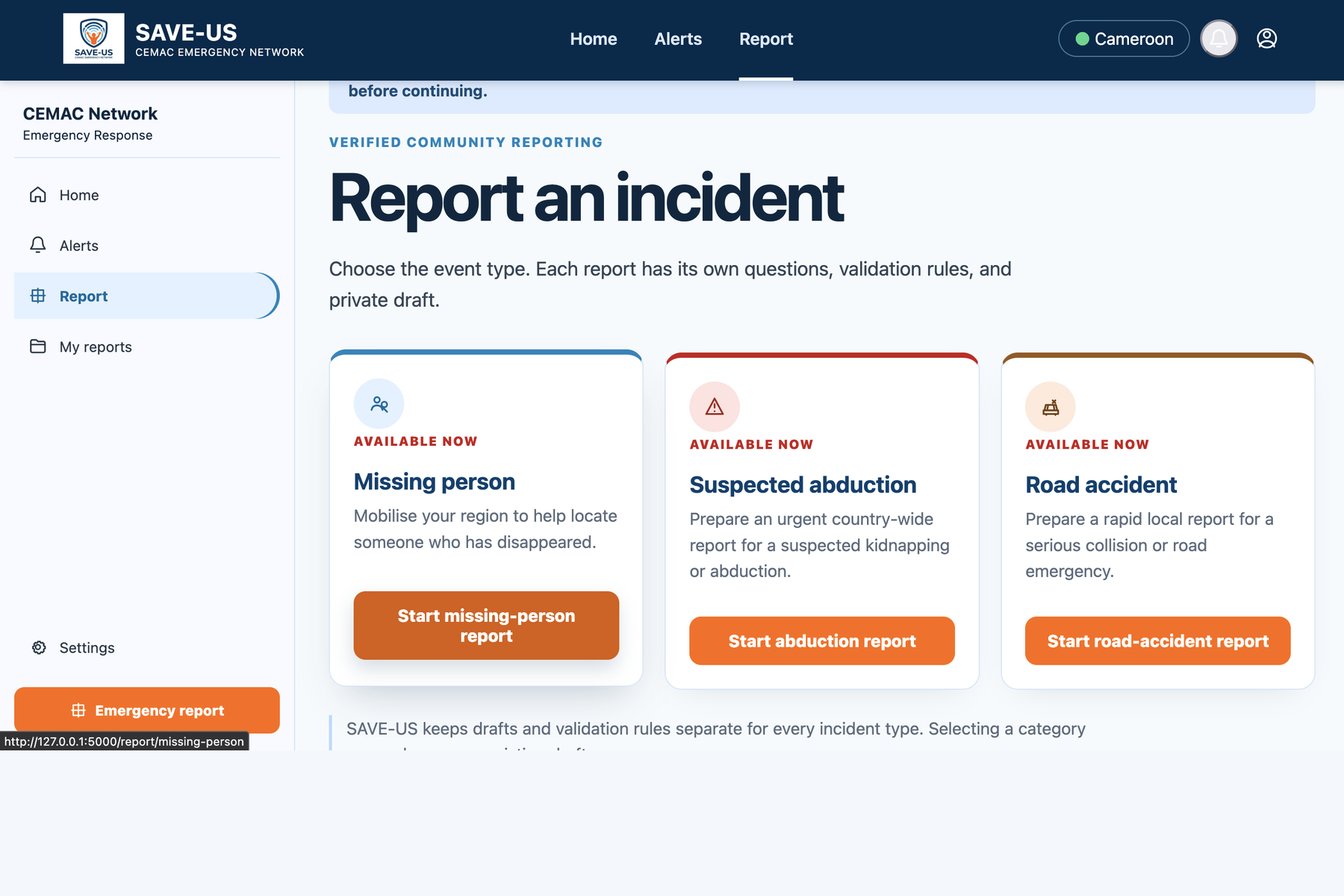
incident type
-
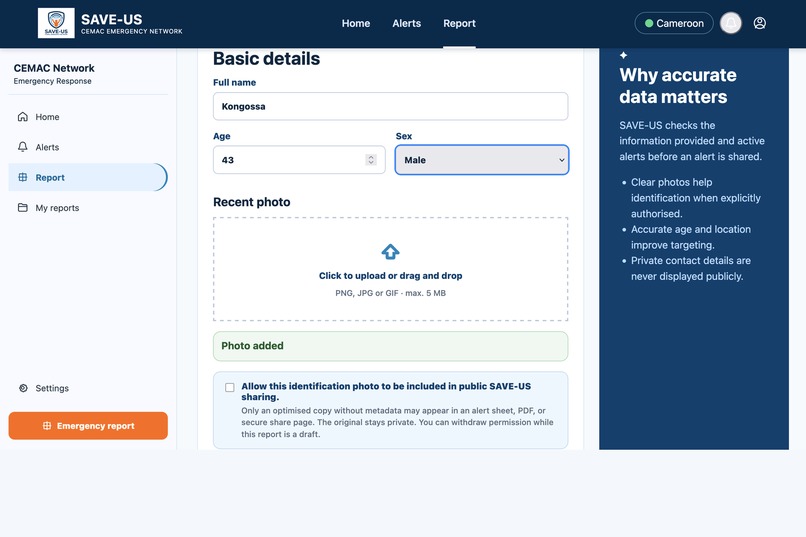
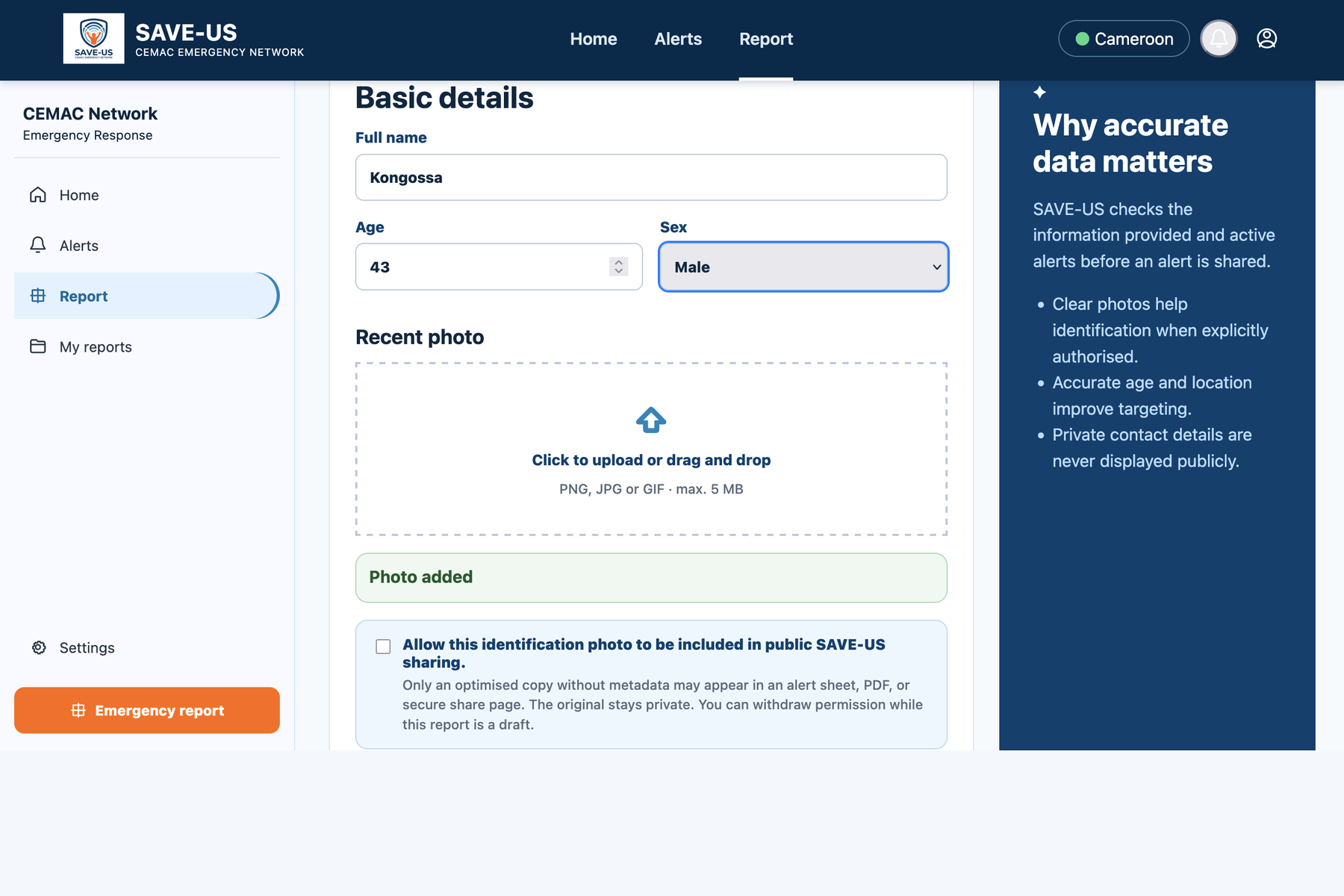
photo consent
-
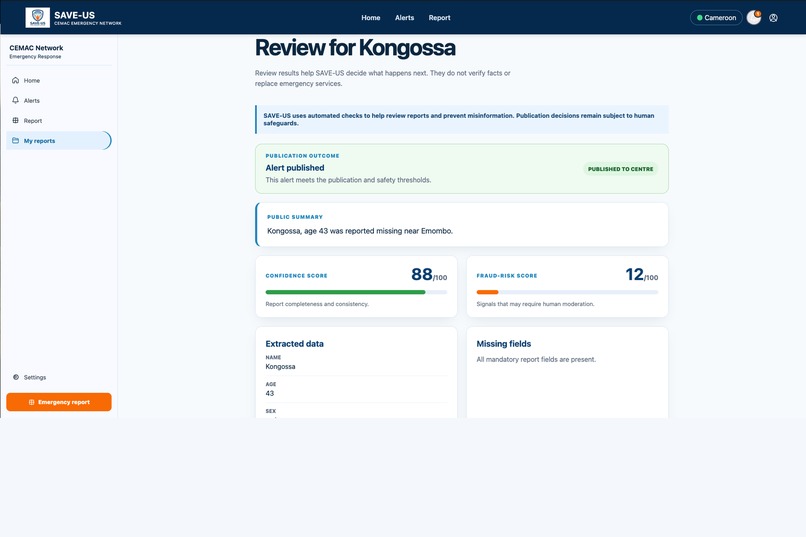
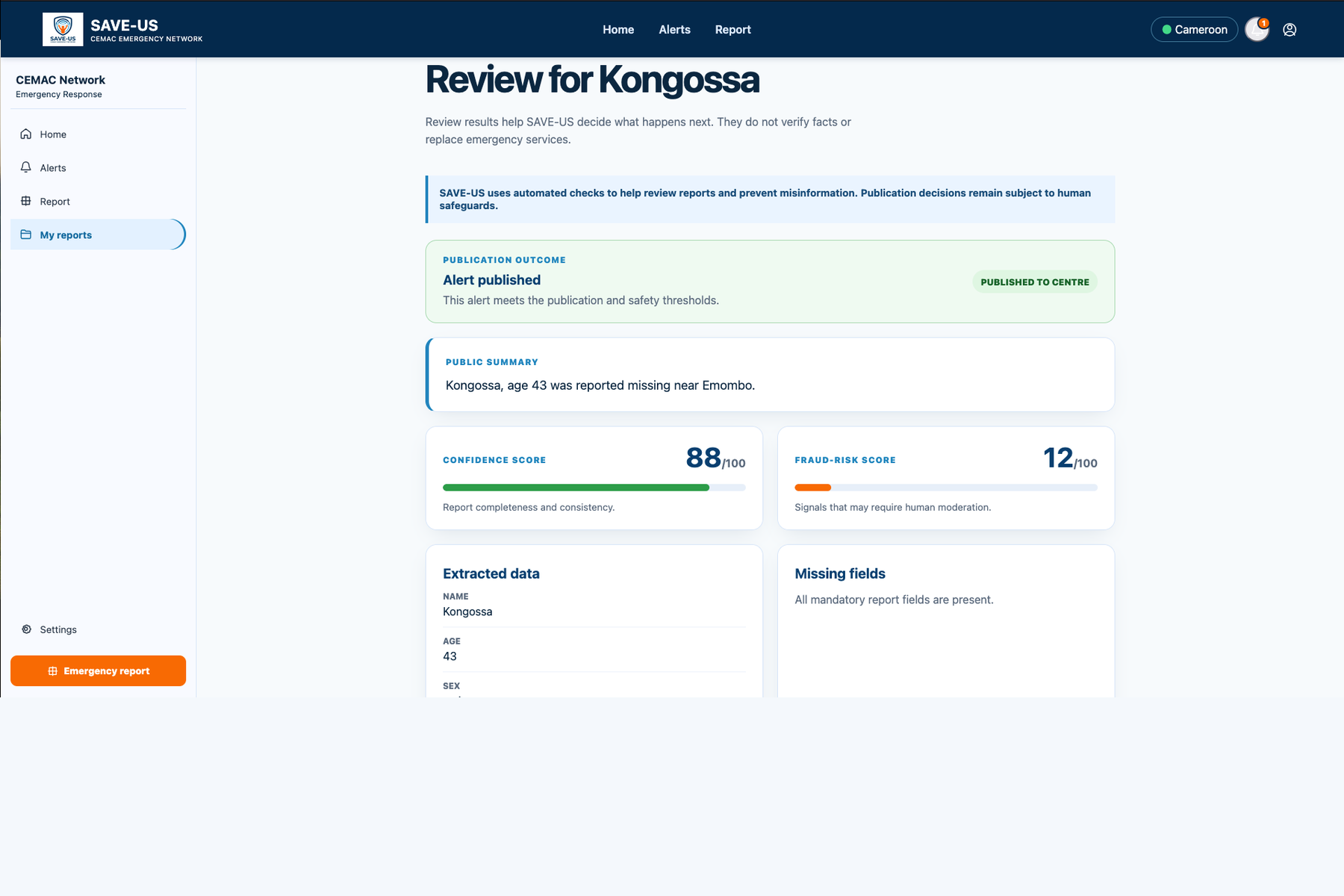
AI review
-
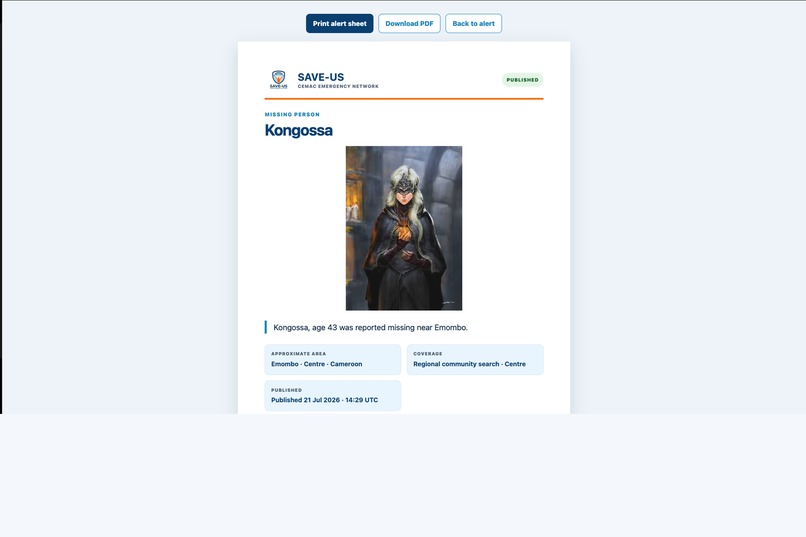
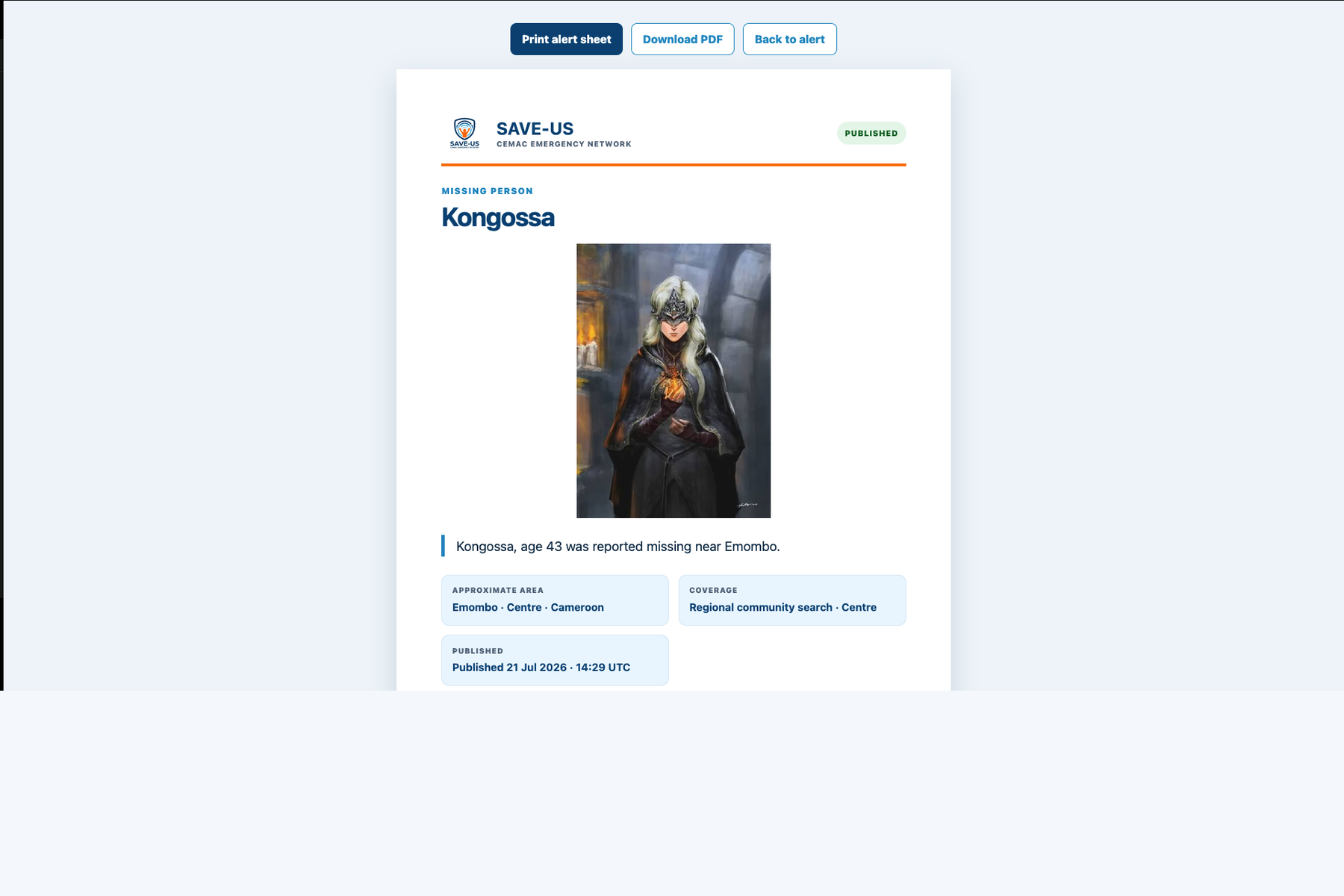
printable alert sheet
-
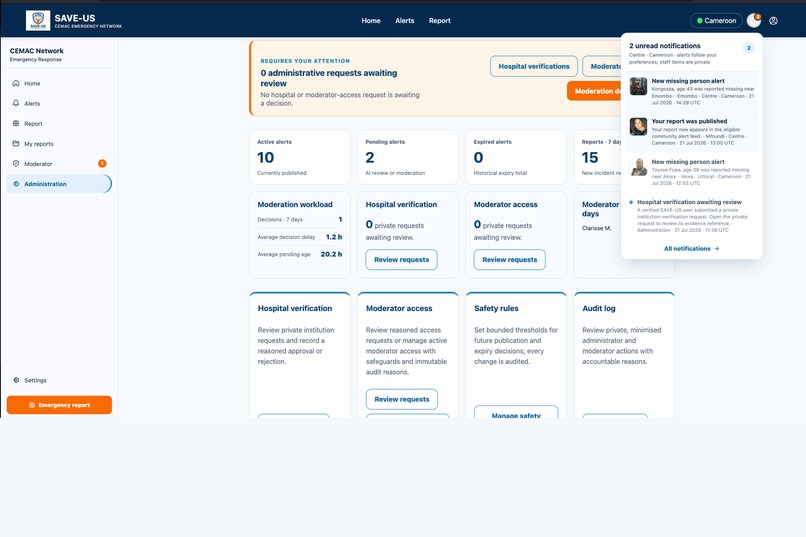
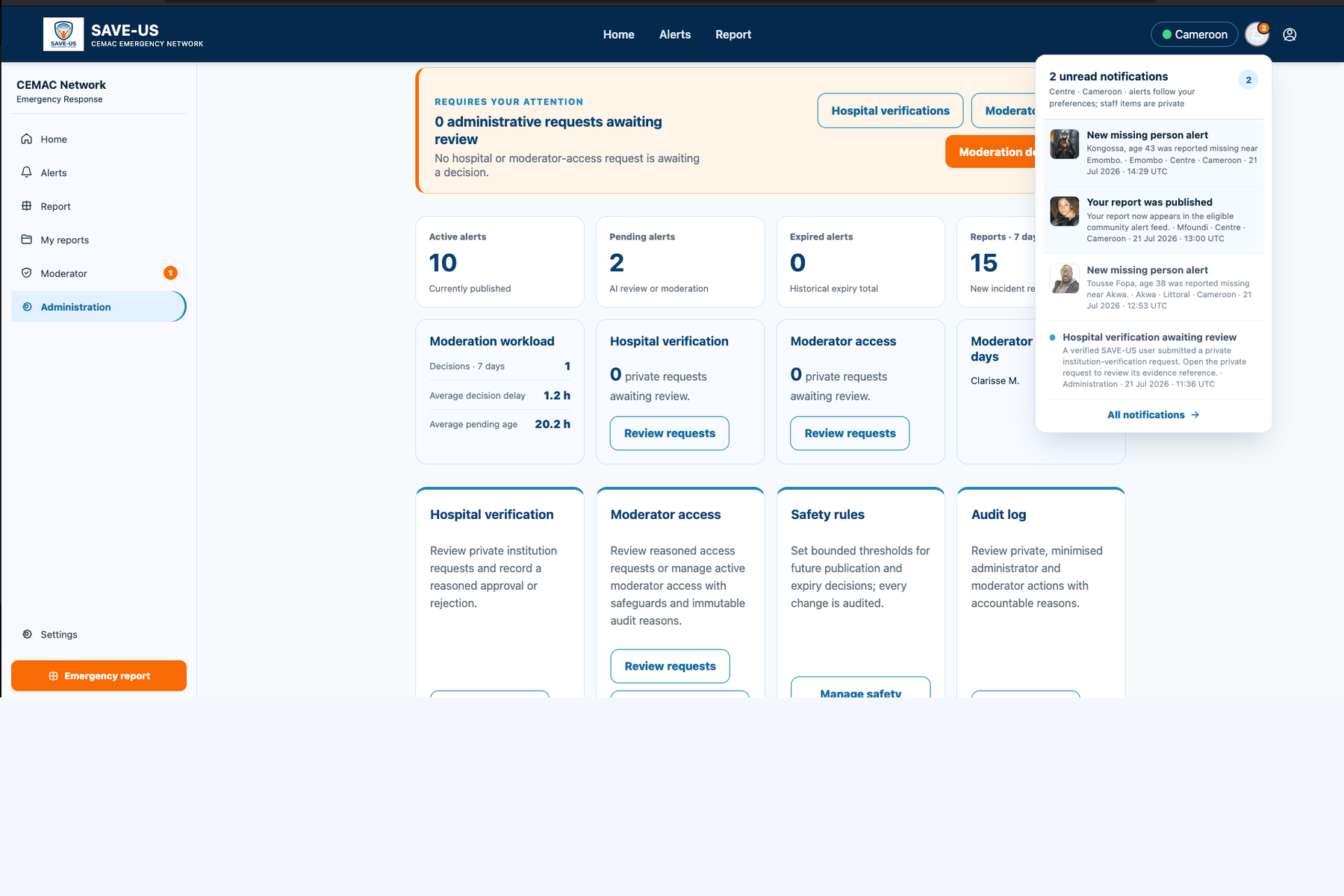
admin workspace
Inspiration
SAVE-US began with a personal experience. One evening in Cameroon, my younger sister did not return home. My family shared her photo on WhatsApp and Facebook, hoping that someone would see it. She returned three days later after a runaway situation, but the experience exposed a painful gap: people close to where she was staying had no idea that a family was looking for her.
Social networks depend on algorithms, personal circles, timing, and luck. They do not reliably deliver an emergency alert to the people who are most likely to help.
The same problem exists on dangerous roads. When a serious collision or blocked road is reported too late, approaching drivers may face the danger without warning. SAVE-US was inspired by the belief that timely, relevant information can help communities protect one another.
What it does
SAVE-US is a safety-first community emergency platform for the CEMAC region.
The MVP supports three operational reporting journeys:
- Missing persons;
- Suspected abductions;
- Serious road accidents.
Users choose their country, primary region, followed regions, and alert categories. Missing-person and road-accident alerts are targeted by country, region, and preferences. Suspected-abduction alerts can reach eligible subscribers throughout the affected country.
The platform also provides structured review, human moderation, private media storage, administration tools, notifications, printable alert sheets, PDFs, and secure sharing links.
How we built it
SAVE-US was built as an individual project using Flask, SQLite, SQLAlchemy, Alembic migrations, Jinja templates, protected local media storage, and a responsive SAVE-US design system.
The application includes a server-side OpenAI Responses API integration designed for GPT-5.6. It produces and validates structured reviews containing a safe public summary, extracted information, missing fields, possible duplicates, confidence, fraud-risk scores, and publication reasons.
Codex and GPT-5.6 accelerated implementation, visual integration, testing, documentation, and iterative safety improvements.
Challenges we ran into
The main challenge was balancing speed with trust.
Emergency information must reach people quickly, but uncontrolled sharing can expose private contacts, precise locations, sensitive images, or misinformation. I had to design a workflow that supports rapid reporting without treating every report as verified fact.
A second challenge was API availability. Although the OpenAI Responses API integration is configured, available development API quota was exhausted. I therefore built a deterministic fallback so the MVP remains demonstrable and functional when an AI request cannot be completed.
Accomplishments that we're proud of
- Country- and region-based CEMAC alert targeting;
- Three distinct reporting workflows with drafts and server-side validation;
- Structured AI review and deterministic fallback;
- Human moderation and restricted administrator workflows;
- Protected media and private contacts by default;
- Printable A4 alert sheets and server-generated PDFs;
- Opaque, revocable, expiring sharing links;
- Explicitly authorised, metadata-free photo derivatives for missing-person and abduction sharing;
- Road-accident media excluded from external sharing by default;
- Automated end-to-end safety tests.
What we learned
I learned that a useful emergency platform is not only about sending alerts faster. It is about deciding what should be shared, with whom, for how long, and under which safeguards.
I also learned that a well-scoped MVP is stronger than an incomplete attempt to solve every problem. The unknown-hospital-patient workflow remains part of the vision, but it is deliberately deferred rather than presented as complete.
What's next for SAVEUS
The next major step is the verified-hospital workflow for unknown patients, including restricted reporting, review, country-wide distribution, expiry, and renewal.
Other planned improvements include multilingual support, production-grade messaging, responsible partnerships with emergency services and hospitals, and carefully governed mobile delivery.
The long-term vision includes a symbolic 104 XAF annual civic contribution to help sustain the platform. This payment model is not implemented in the MVP.
SAVE-US is built around one principle: communities should not have to rely on luck when a loved one disappears or when danger appears on the road.
Built With
- alembic
- api.ai
- codex
- css
- flask
- gps
- gpt-5.6
- html
- javascript
- jinja
- pillow
- pypdf
- python
- reportlab
- rest-api
- sqlalchemy
- sqlite
- whatsapp-sharing


Log in or sign up for Devpost to join the conversation.