Inspiration
We started with a simple but frustrating observation: people know they feel things, but they rarely understand them because they don’t have the time to. Stress builds invisibly, anxiety lingers after a tense conversation, and a morning can start the day on a good note. Therapy can be expensive and not for everyone. Mood tracker apps tend to only capture what you consciously are able to report, not what your body is actually doing.
We were inspired by the idea of two powerful bodies of science being brought together: neurofeedback research and cognitive behavioral therapy (CBT). Clinicians have known for decades that brainwaves are a real-time readout of emotional state. We want to bring this science outside the expenses of a medical clinic.
The word Satori comes from Zen Buddhist tradition and it means a moment of sudden, clear understanding. That's exactly what we strive to provide. We don’t want a tool that just gives you numbers and data but one that creates moments of self-clarity and reflection.
What It Does
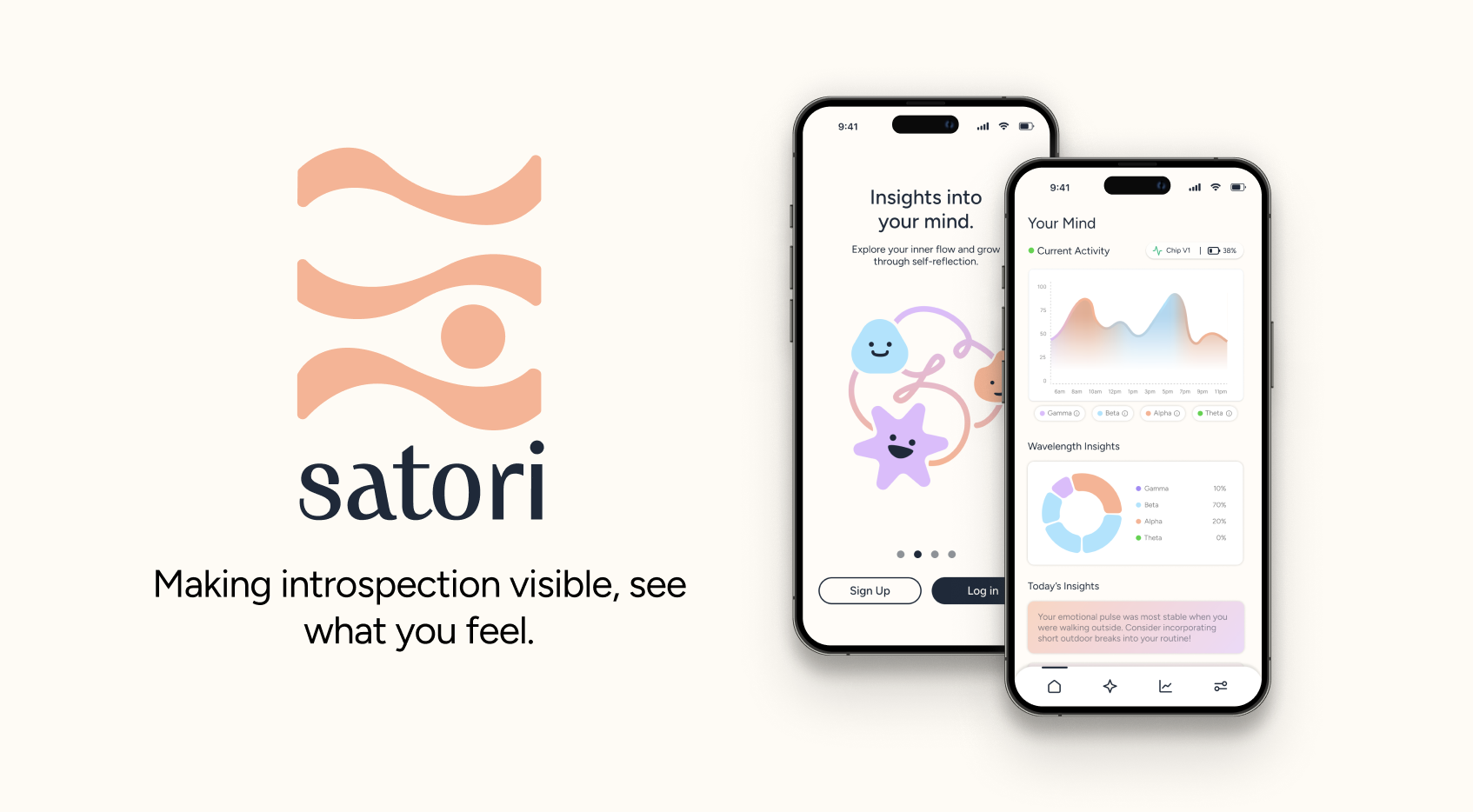
Satori makes introspection visible.
It pairs a lightweight wearable called the The Satori Clip, a neural sensing chip embedded in a fashionable hair clip with an intuitive mobile app that tracks your brainwave activity in real time across four key frequencies:
- Gamma (30–100 Hz) — high focus, cognitive intensity
- Alpha (8–12 Hz) — calm, relaxed alertness
- Theta (4–8 Hz) — reflection, emotional processing
- Beta (13–30 Hz) — stress, anxiety, overthinking
Throughout the day, users drop quick notes when experiencing certain emotions. Satori cross-references those notes with live brainwave data and delivers a daily summary. Over time, daily stories become weekly patterns, and weekly patterns become self-knowledge that can provide you with solutions to regulate your emotions and improve as a human being.
The brainwave state at any moment can be understood as a weighted distribution:
How We Built It
We built Satori as a speculative design project grounded in neuroscience and UX research.
- Research: We mapped the existing landscape of mood trackers, neurofeedback tools, and CBT frameworks to identify introspective emotions for the user
- User Flow: We designed a full user flow covering onboarding, daily tracking, note-taking, data visualization, weekly insights, and privacy controls
- Visual Design: We built screens in Figma following a consistent design system using cream backgrounds, gradients, cohesive typography, and organic brainwave visualizations
- Prototyping: We used Figma Make and components to enhance our app's features, including the daily wave graph, weekly view, and AI-generated summaries
Challenges We Ran Into
Making data feel human. Raw brainwave percentages can be boring and numeric therefore not creating a visual interest for the user. The biggest design challenge was translating objective neuroscience into language that feels intuitive without being reductive.
Designing for emotional vulnerability. Satori touches on emotional and vulnerable moments for a human being. Users are sharing their internal emotional states, often during their most difficult or personal moments. Every design decision had to be made with real care and consideration of the user's privacy.
Making our app unique Every early iteration of Satori focused on making Satori more than just the average mood tracker. We focused on measuring what the user reportsand incorporating it with the science of their brainwaves.
Accomplishments That We're Proud Of
- Designed a wearable clip called The Satori Clip that makes EEG technology feel wearable and accessible
- Built a unique visual language for brainwave data
- Incorporated Figma Make to help bring our ideas to life
- Created a design system that scales consistently from onboarding through daily use to long-term pattern recognition
What We Learned
Finally, we deepened our understanding of interoception, the body's internal sense of its own physiological state, and why it may be one of the most important and underdesigned when it comes to human emotions and mental health.
What's Next for Satori
- Hardware development: Partnering with EEG sensor manufacturers to prototype The Satori Clip as a real and wearable device
- Clinical validation: Working with neuroscientists and CBT practitioners to further improve our frequency-to-emotion mapping model
- Integration with care: Building a therapist-facing dashboard so Satori data can inform and enhance real clinical sessions and work with real people
- Longitudinal studies: Tracking the long-term effects of using Satori
Built With
- adobe-illustrator
- figma
- figmamake


Log in or sign up for Devpost to join the conversation.