-
-
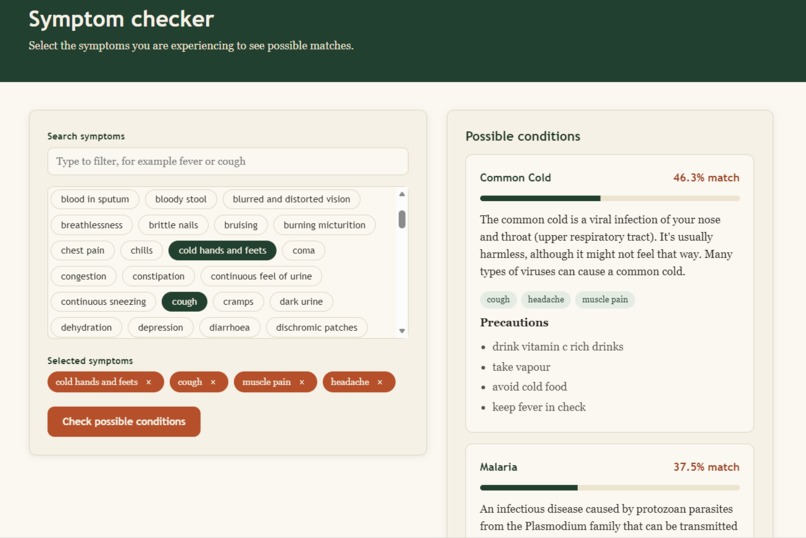
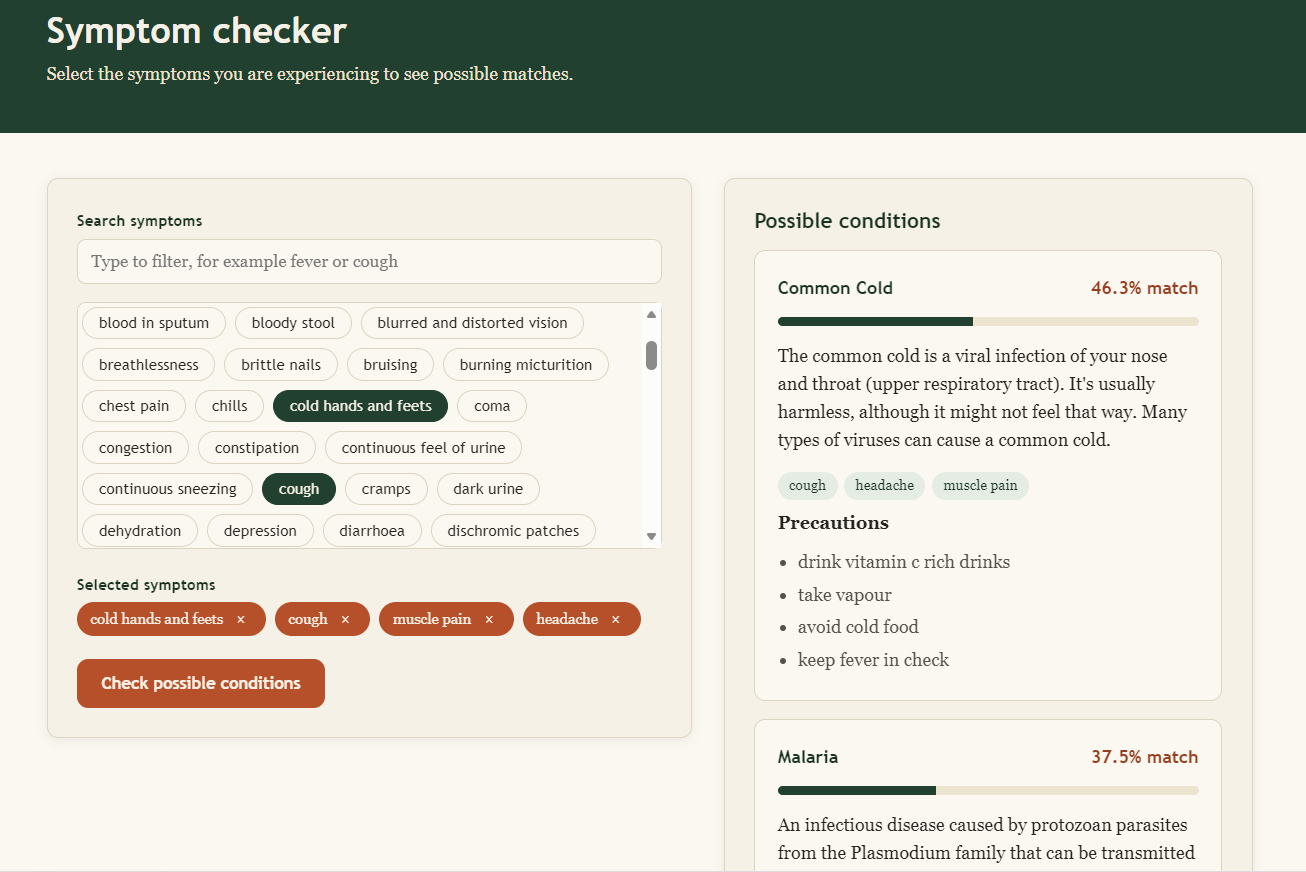
Describe your symptoms and receive possible conditions with matching suggestions and precautions.
-
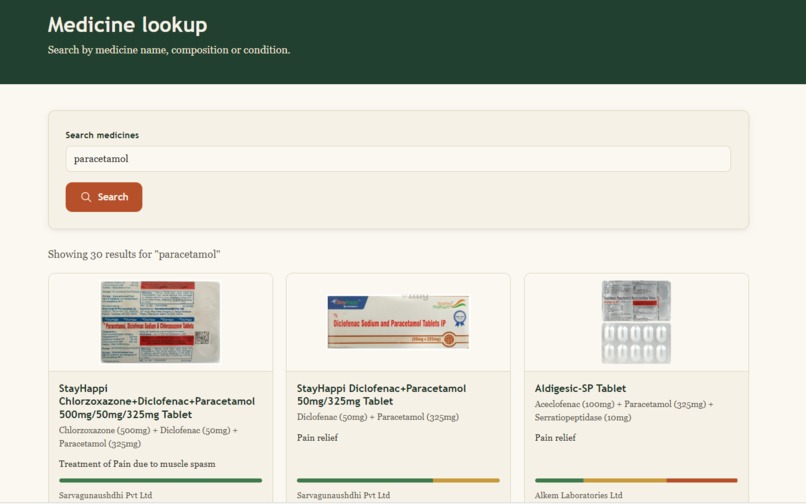
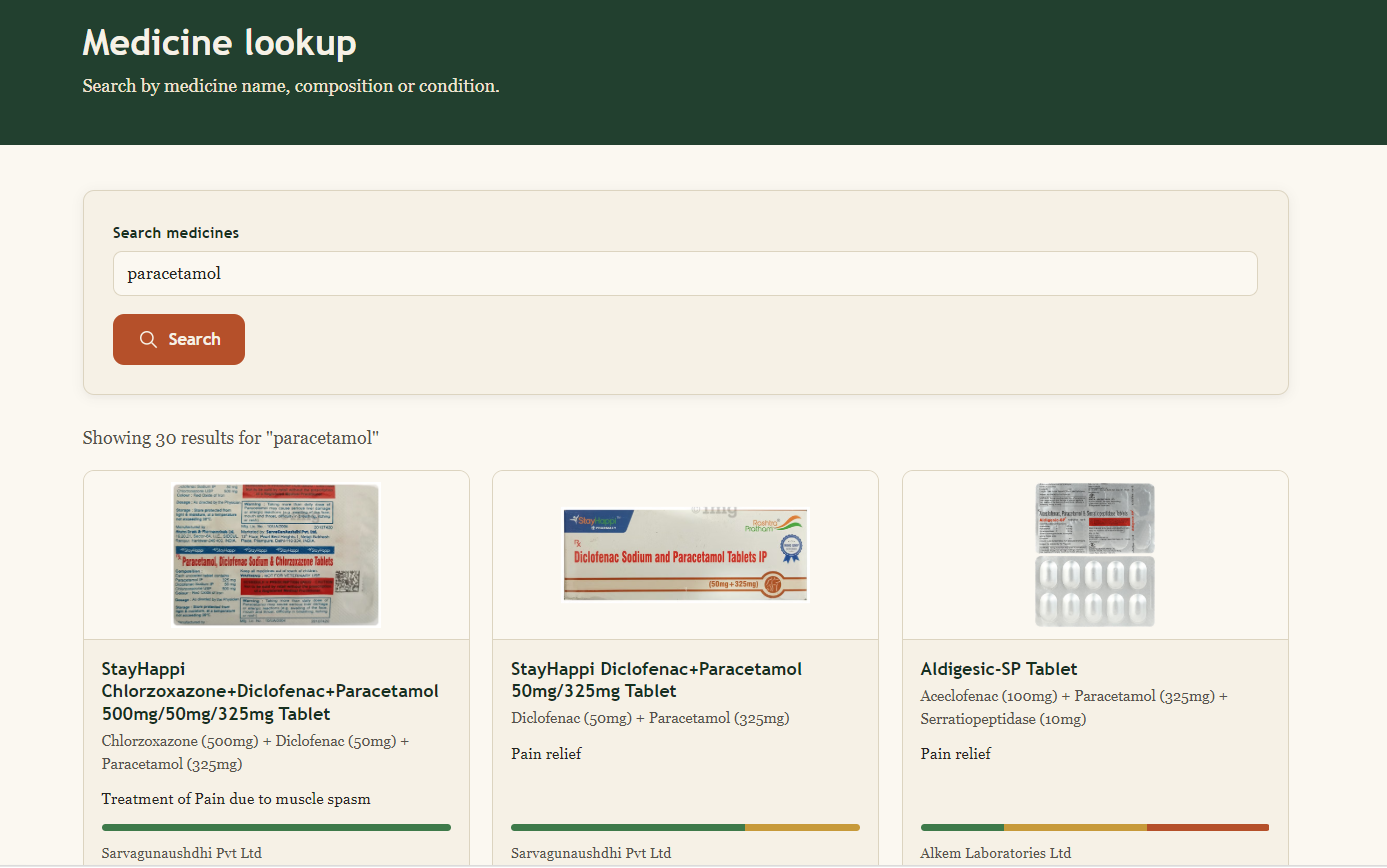
Search over 11,000 medicines by name or composition to view uses, side effects, manufacturers, and user reviews.
-
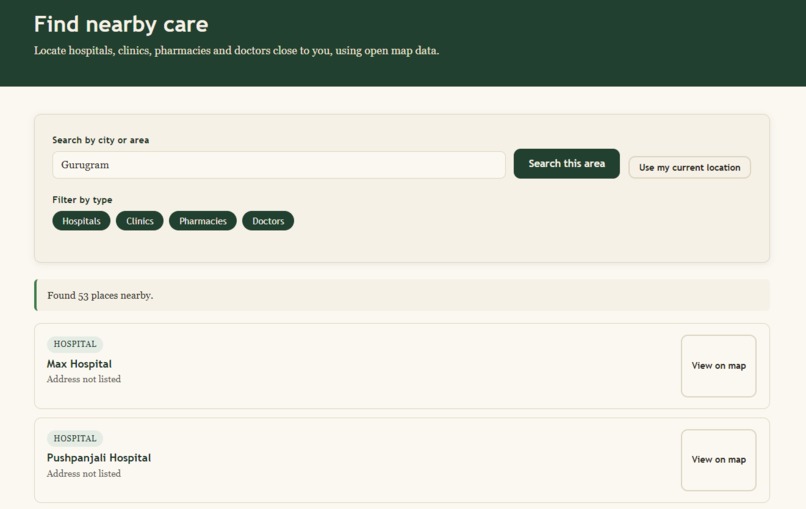
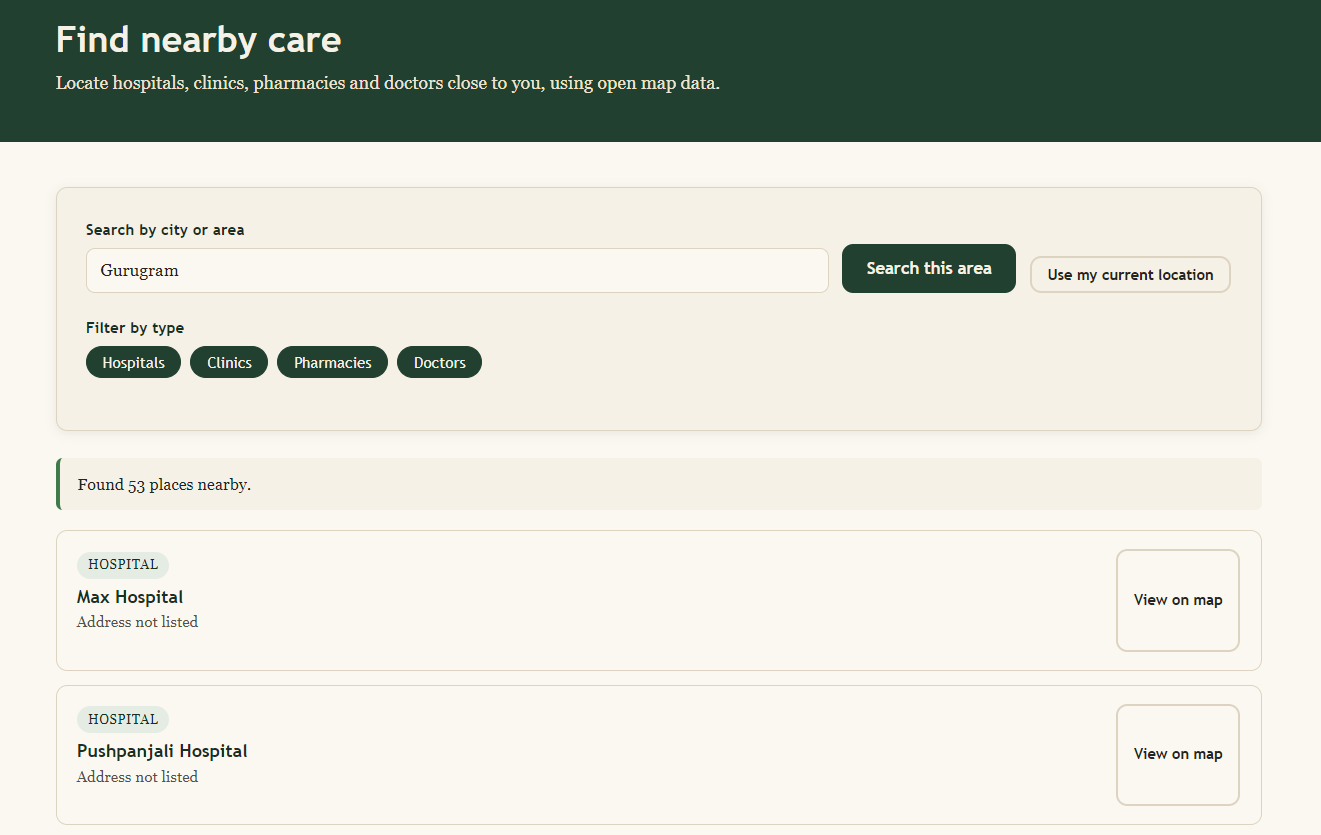
Locate hospitals, clinics, pharmacies, and doctors near any location using live map data.
-
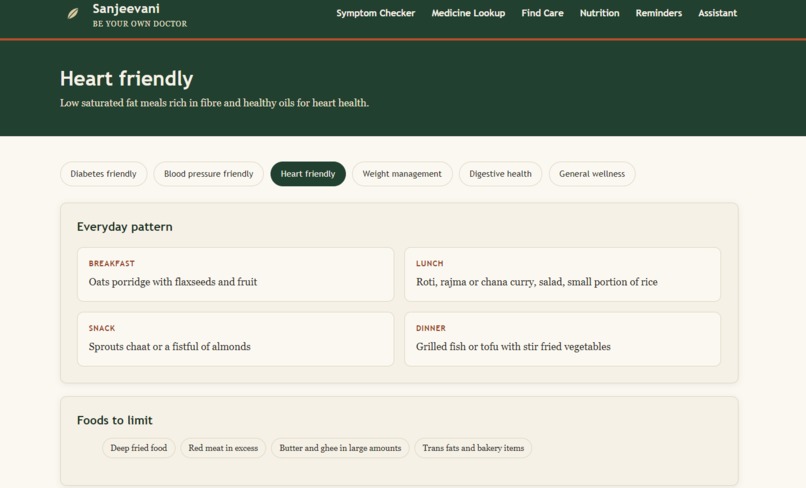
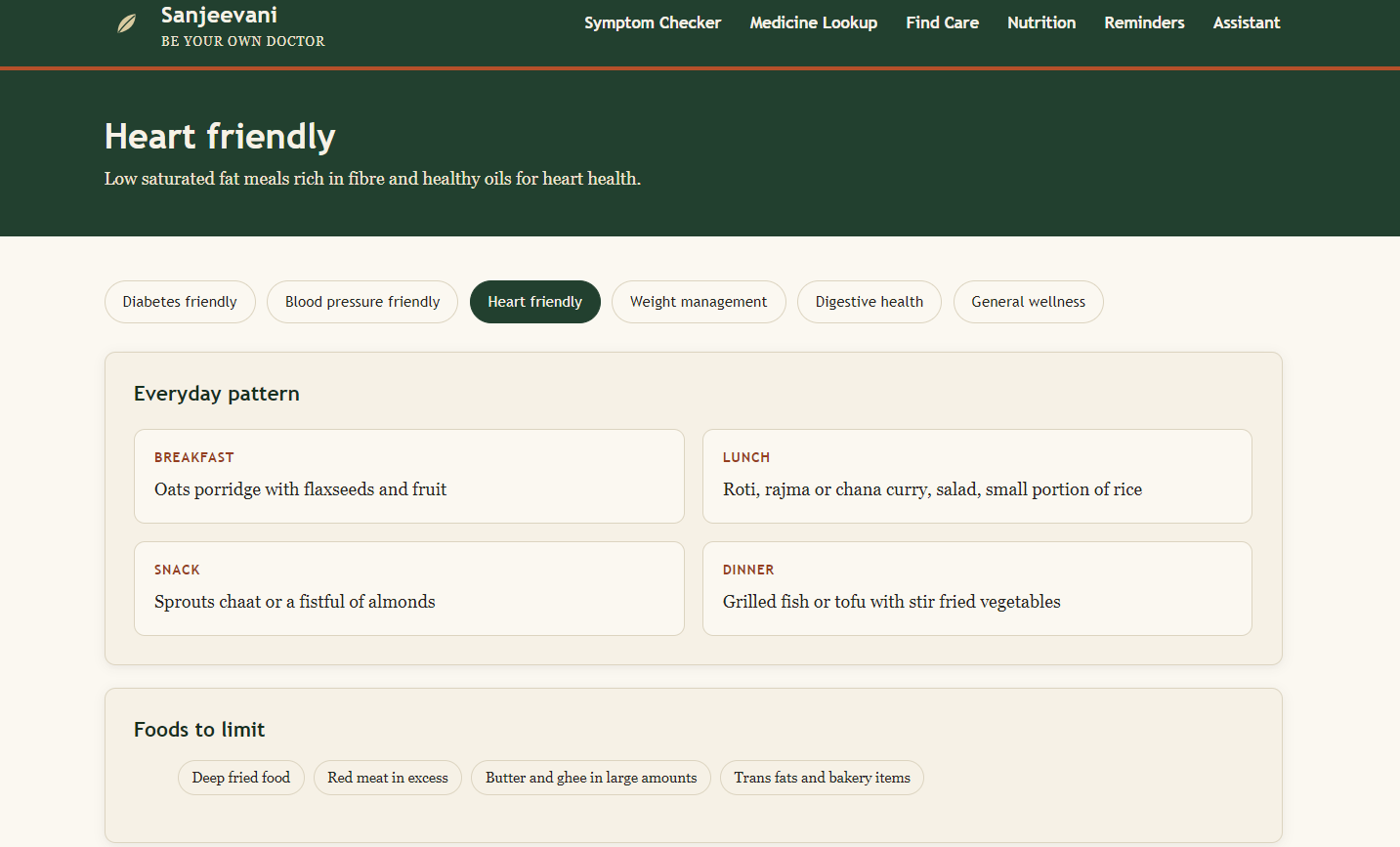
Explore condition-based nutrition plans with simple diet recommendations for heart health, diabetes, hypertension, and more.
-
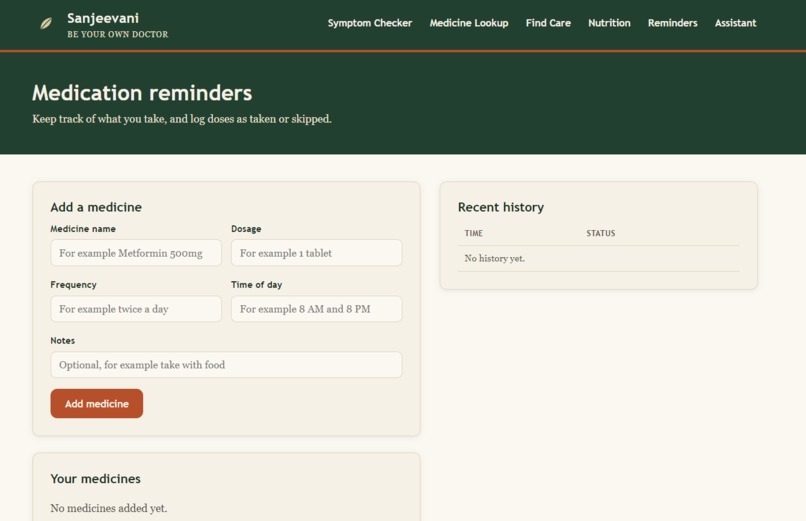
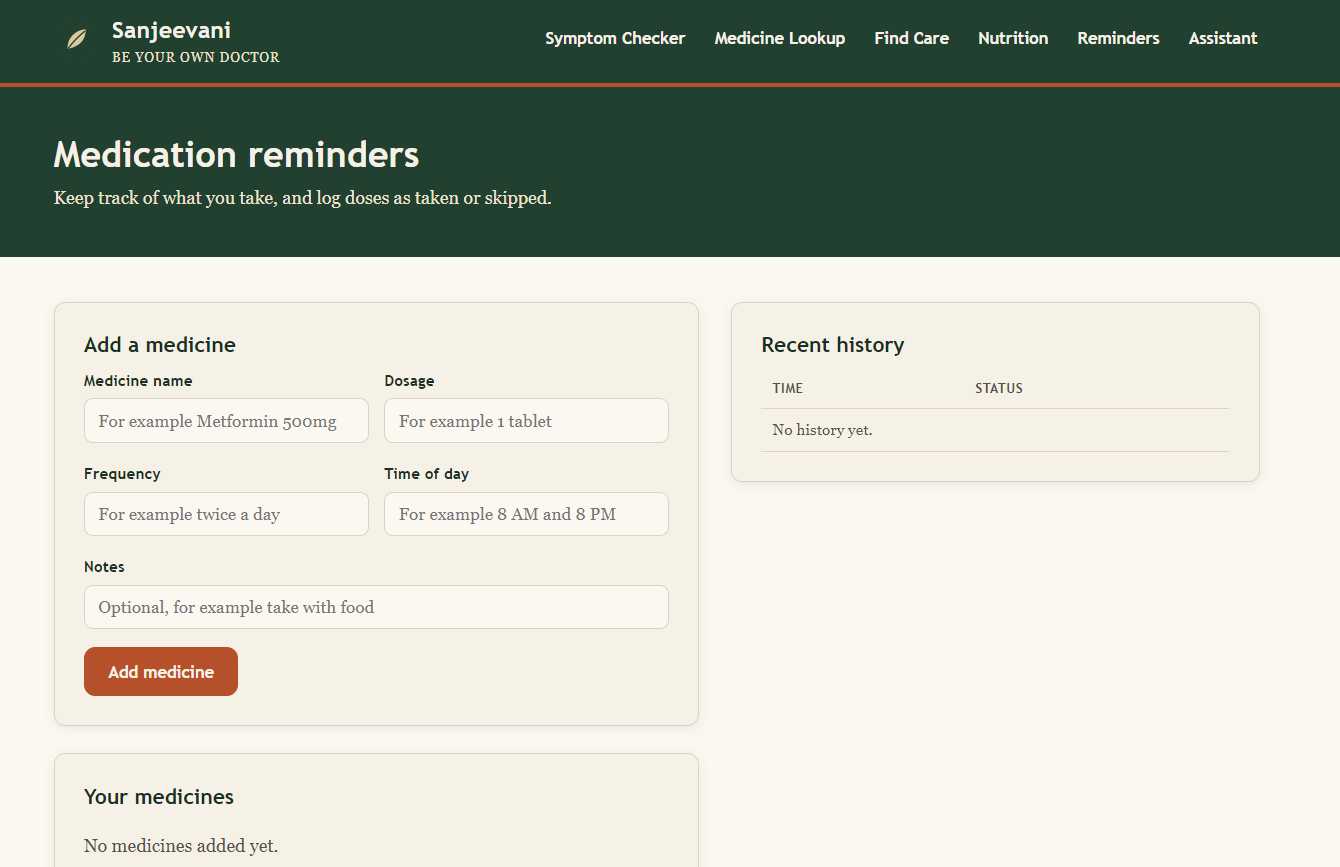
Track your medicines, manage daily doses, and review your medication history in one place.
-
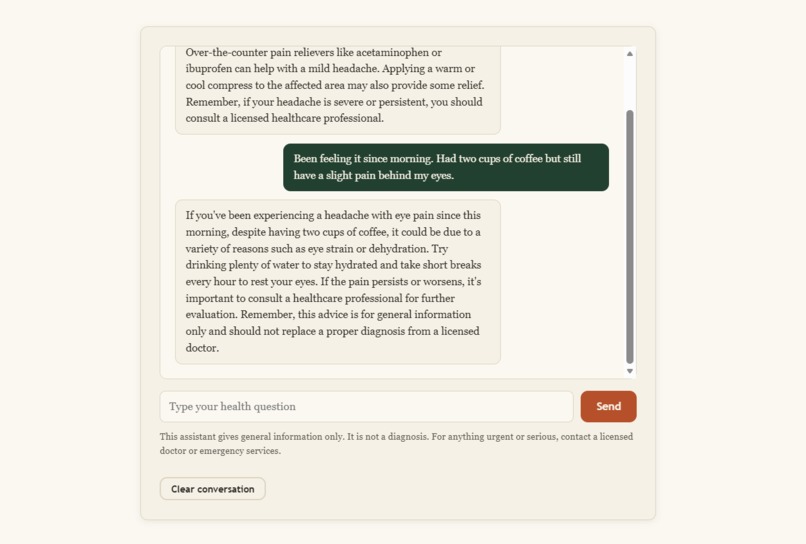
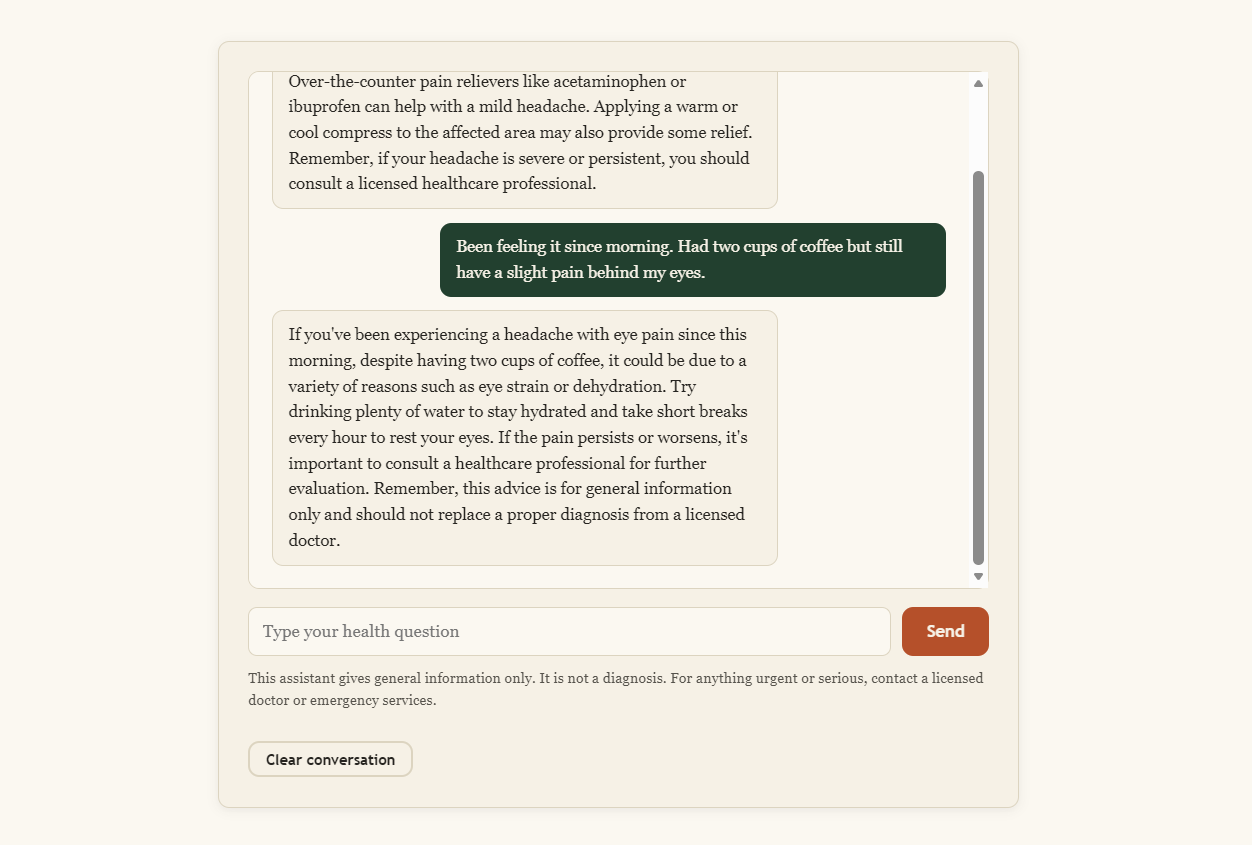
Ask health questions in plain English and get real-time AI-powered guidance for general health information.
Inspiration
Finding trustworthy health information online is surprisingly difficult. A simple search often returns articles that are either too technical, filled with advertisements, or focused on selling products instead of helping people.
I wanted to build a single place where someone could quickly look up medicines, understand common symptoms, find nearby healthcare facilities, manage daily medications, and ask general health questions without jumping across multiple websites.
That idea became Sanjeevani, a personal health companion designed to make reliable health information easier to access.
What it does
Sanjeevani brings together several healthcare tools into one web application.
Users can:
- Check possible conditions based on symptoms
- Search more than 11,000 medicines by name or composition
- View medicine uses, side effects, manufacturers, and user reviews
- Find nearby hospitals, pharmacies, clinics, and doctors using live map data
- Get simple nutrition guidance for common health conditions
- Set medication reminders and track daily doses
- Chat with an AI health assistant for quick, general health guidance
Instead of opening five different websites, everything is available in one place.
How we built it
The project was built as a full-stack Flask application.
The backend manages medicine data, symptom analysis, reminder management, AI integration, and map services. The frontend focuses on keeping the interface clean and easy to use, even for people who are not familiar with medical terminology.
Some of the main components include:
- Flask for the backend
- SQLite for structured data storage
- Jinja templates for server-side rendering
- HTML, CSS and JavaScript for the frontend
- OpenStreetMap data for nearby healthcare resources
- AI integration for the health assistant
- A medicine database containing over 11,000 medicines
The application is organized into independent modules so each feature can evolve without affecting the others.
Challenges we ran into
The biggest challenge was bringing several healthcare tools together while keeping the experience simple.
Some of the problems included:
- Cleaning and organizing a large medicine database
- Making medicine search fast and accurate
- Designing a symptom checker that produces meaningful matches
- Keeping the interface clean despite having many features
- Integrating AI responses without overwhelming users
- Managing multiple Flask routes and keeping the project structure maintainable
Finding the right balance between functionality and simplicity took the most time.
Accomplishments that we're proud of
Some highlights of the project include:
- A searchable database of more than 11,000 medicines
- Six integrated healthcare tools in a single application
- A clean and modern interface designed for everyday users
- AI-powered health assistance
- Nearby healthcare resource finder using live map data
- Medication reminder system
- Responsive design that works well across devices
What we learned
Building Sanjeevani taught us that healthcare applications require much more than good UI.
We learned how to organize large datasets, structure a Flask project for scalability, integrate multiple services into one application, and design interfaces that simplify complex medical information without making the experience confusing.
We also gained experience in balancing performance, usability, and maintainability as the project grew.
What's next for Sanjeevani
The project still has plenty of room to grow.
Some planned improvements:
- User authentication and cloud sync
- OCR-based prescription scanning
- Drug interaction checker
- Voice-based health assistant
- Regional language support
- Better AI-powered symptom analysis
- Personalized health insights
- Mobile application


Log in or sign up for Devpost to join the conversation.