-
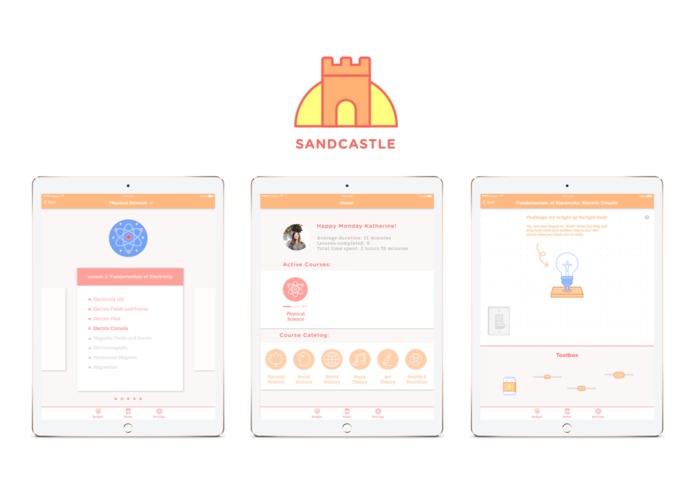
Design Proofs
-
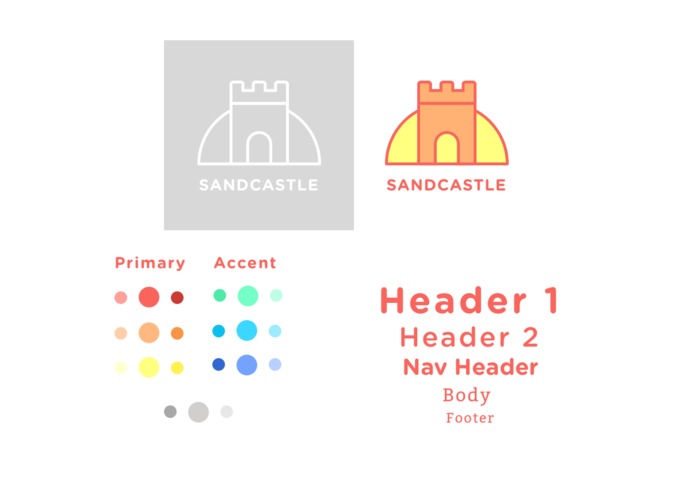
Visual Guidelines
-
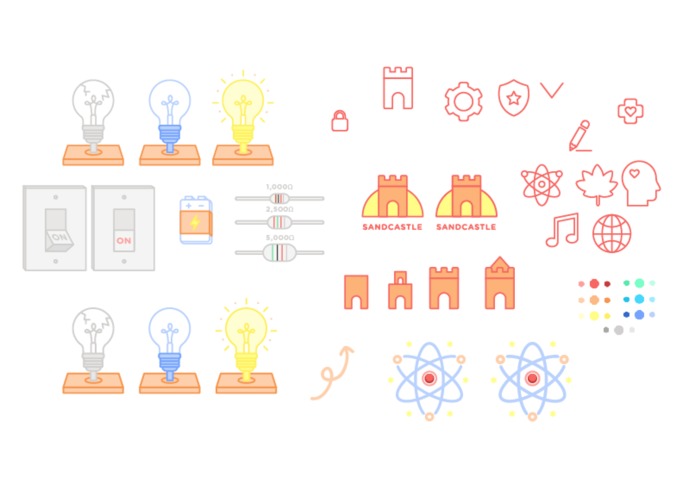
UI Assets
Inspiration
We hoped to innovate upon the passiveness of the traditional textbook-learning style. It began by being inspired by toys for kids that help stimulate problem-solving (think [link]http://www.marblesthebrainstore.com[link]), and evolved into an entire gamified learning curriculum on an iPad.
We chose to focus on a concept in electrical engineering because that subject is typically treated as an unexciting and secondary topic compared to other subjects, such as computer science. In addition, the electrical engineering field involves applying difficult textbook concepts to actual, physical problems – a challenge that many students face as there is a disconnect to simply learning by reading and learning by doing.
What it does
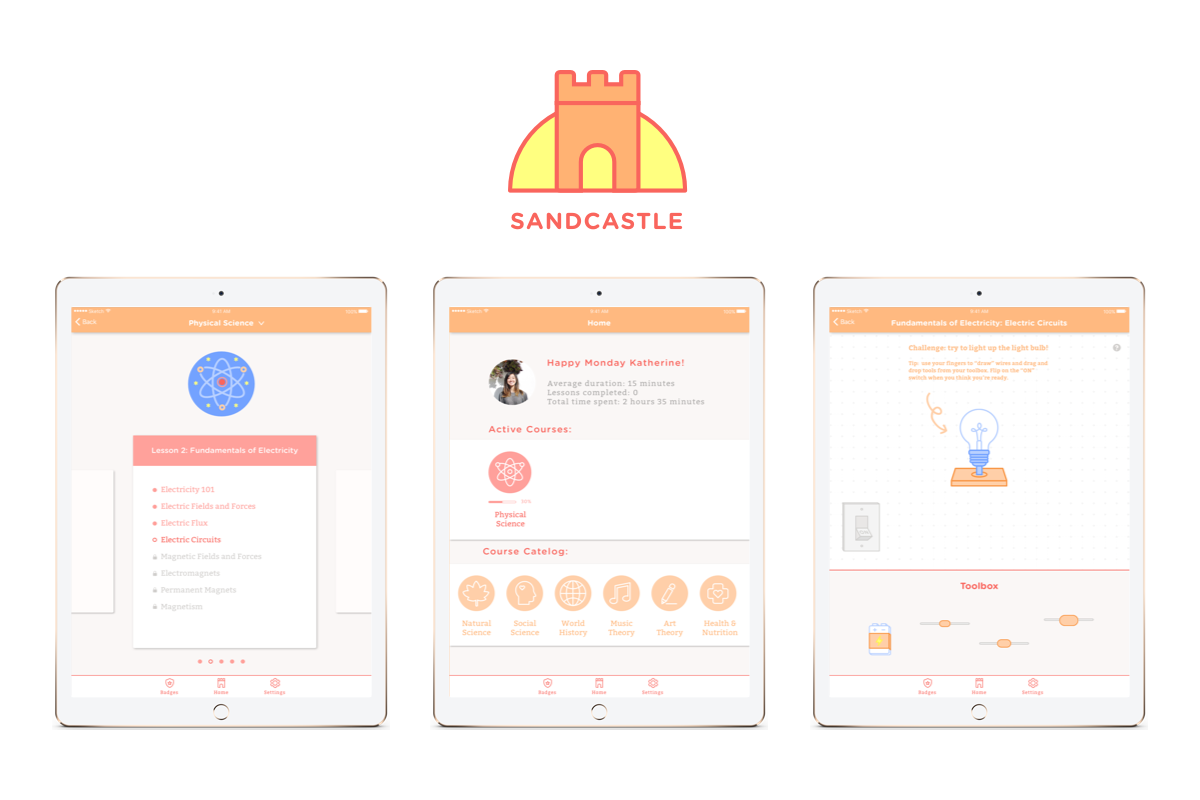
Sandcastle allows users to create their own curriculum at their own pace. After entering basic profile information, Sandcastle then gives the learner a catalog of courses to choose from. Each module within a course will then kick off with a relevant game application.
At first, we actually hoped to target children (ages ~6-12), but then realized that this would actually be useful for people of all ages at all stages of their learning career. By giving the user the power to create their own curriculum, we hoped to enable people's learning potential by treating it as a sandbox-style personalized game.
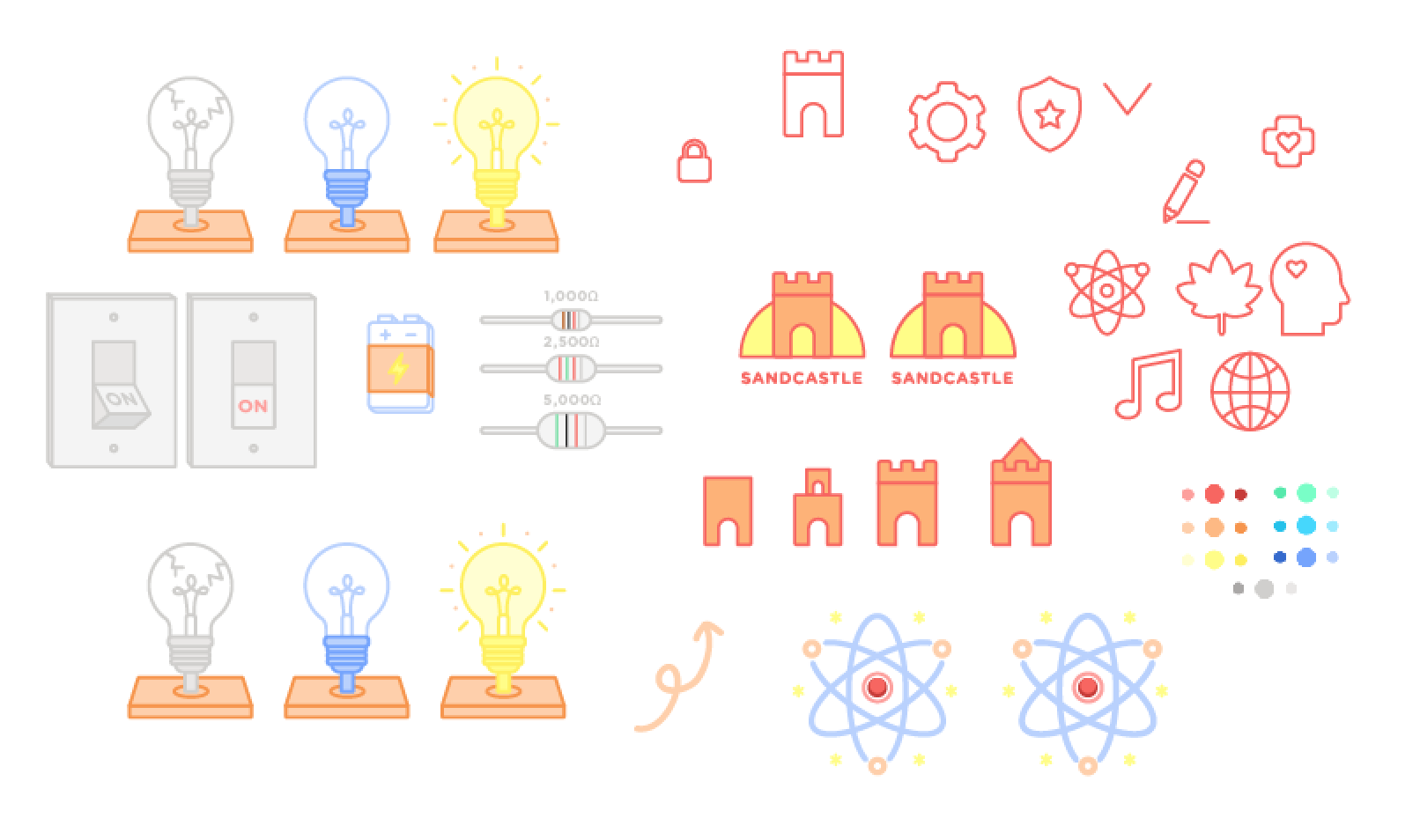
In the case of the "Electric Circuits" topic, the learner is given the challenge to wire up a light bulb to light it up. The bulb will either do nothing, burst, or light up depending on the success of the learner.
How we built it
Design: we began by first researching some common learning problems in academia and narrowing pain points to start developing actionable solutions. Then, we looked into and played with successful digital learning apps, such as Duolingo and Headspace, to learn from and utilize their strengths. Wireframing and user-flows were done by hand; illustrations and iconography were created in Adobe Illustrator; the UI mocks were designed in Sketch; the prototype was built on Invision; the Demo was developed in Xcode.
Development: we wanted to design the solution to be scalable and flexible, so we spent much of our time trying to design mathematical models that would allow us to automatically calculate the results of a circuit. By representing each electronic component as a node in a graph, we can design a system of equations using both of Kirchhoff's laws on voltage and current, and use linear algebra to find the current for each wire. The idea is that each lesson will build off of previous knowledge of certain components. The easiest way is to hard code and check whether the player had used the right components. However, by designing these mathematical models, we believe we can build the experience to feel more like a live experiment than a lesson plan.
Challenges we ran into
Developing the mathematical models was difficult. We spent over a day researching different ways to tackle the solution, and had to design the algorithms on paper before we could implement the solution on code. We also had to implement this using Swift, working with SpriteKit's framework. We went through several iterations of designing the data structures to fit within the model of the framework while staying flexible for us to design and execute our algorithms.
Accomplishments that we're proud of
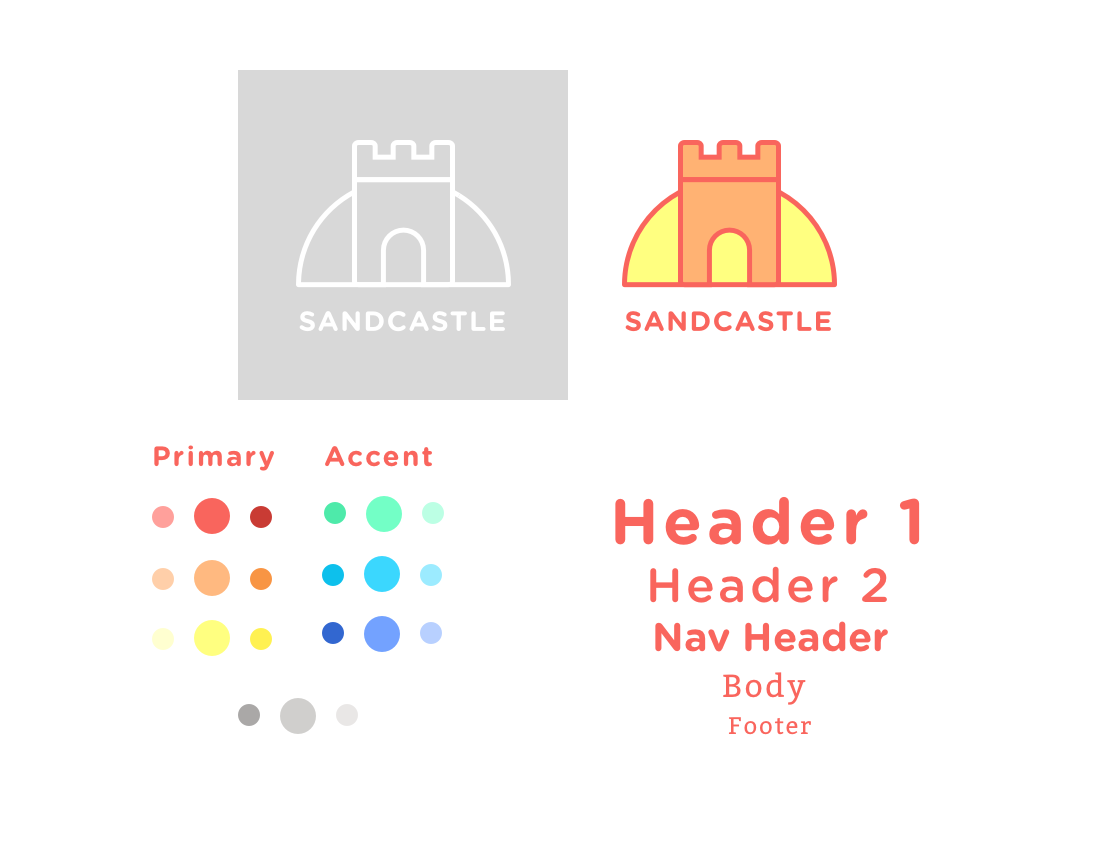
• We have a unified visual system that is friendly and warm. • All the icons and illustrations were made by hand. • Figuring out a reliable mathematical model to determine the current and voltage drop for each wire and electronic component, regardless of how it is wired. Parallel and series connections are algorithmically accounted for.
What we learned
People have such a diverse learning style that larger, impersonal learning environments, like a classroom of 40+ kids, make learning difficult. Creating an application that would feel catered and specific to an individual also became a challenge, but we hoped that using a self-paced, fun, and safe game would reinforce difficult concepts and build up the learning confidence of the user, which would help set them up for success in school.
What's next for Sandcastle
Build build build! We are hoping to complete the entire electrical engineering course (so far, it is only for electric circuits) and use that as a case study to see how people do.
Built With
- adobe-illustrator
- invision
- ios
- sketch

Log in or sign up for Devpost to join the conversation.