-
-
Loading Page
-
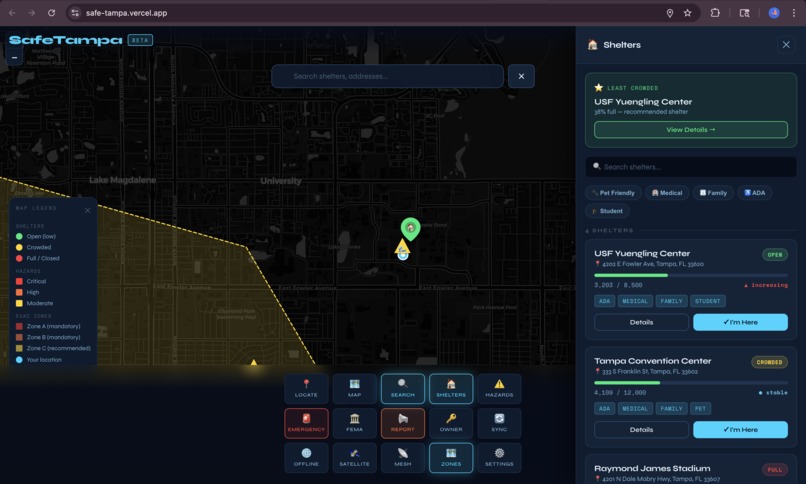
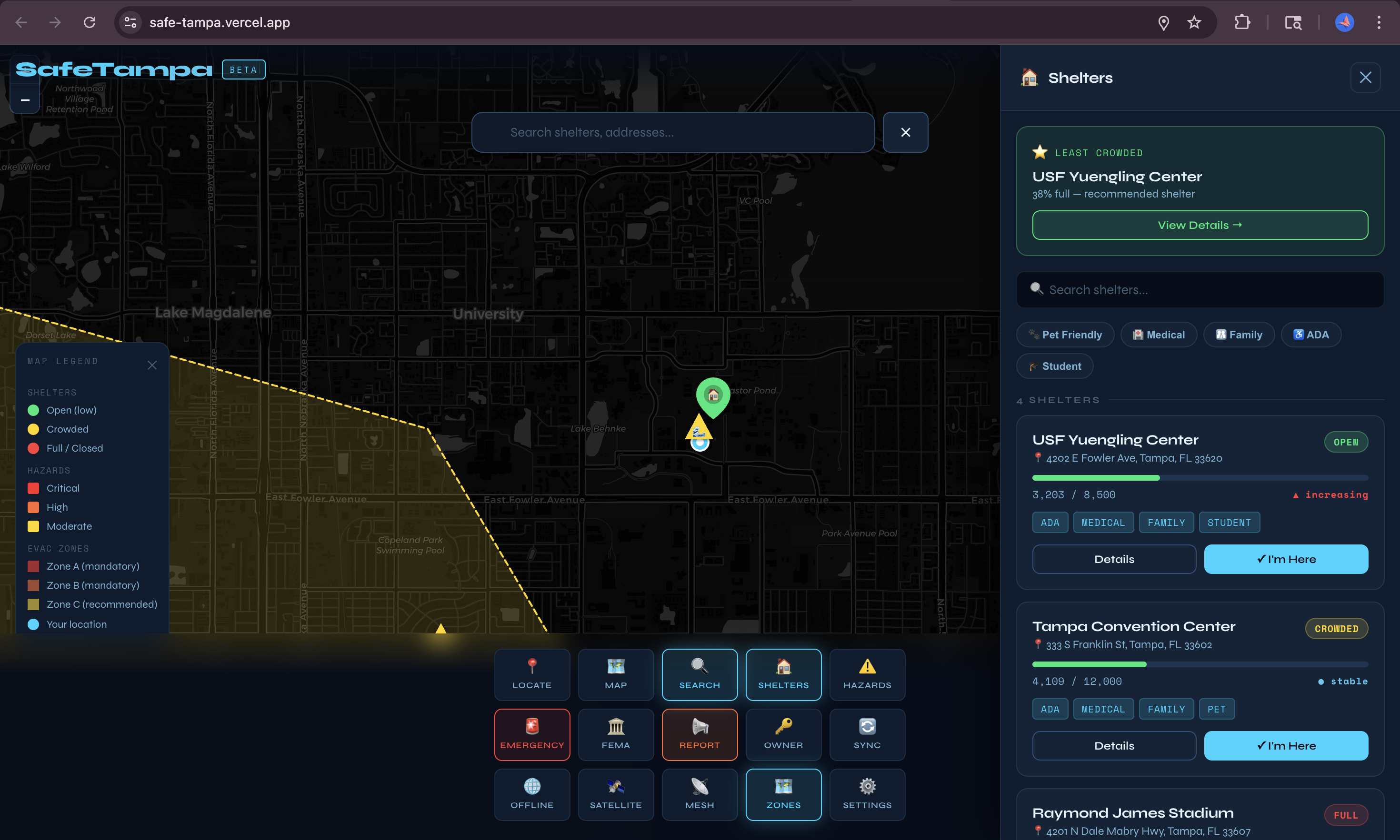
Shelters and Search Bar
-
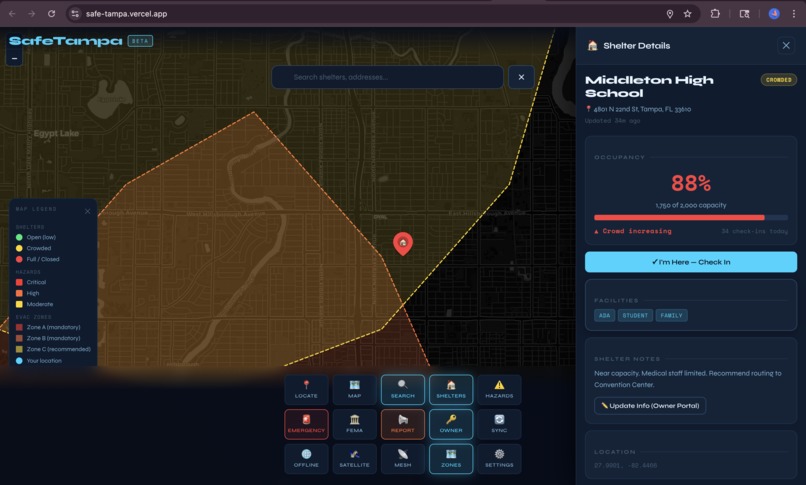
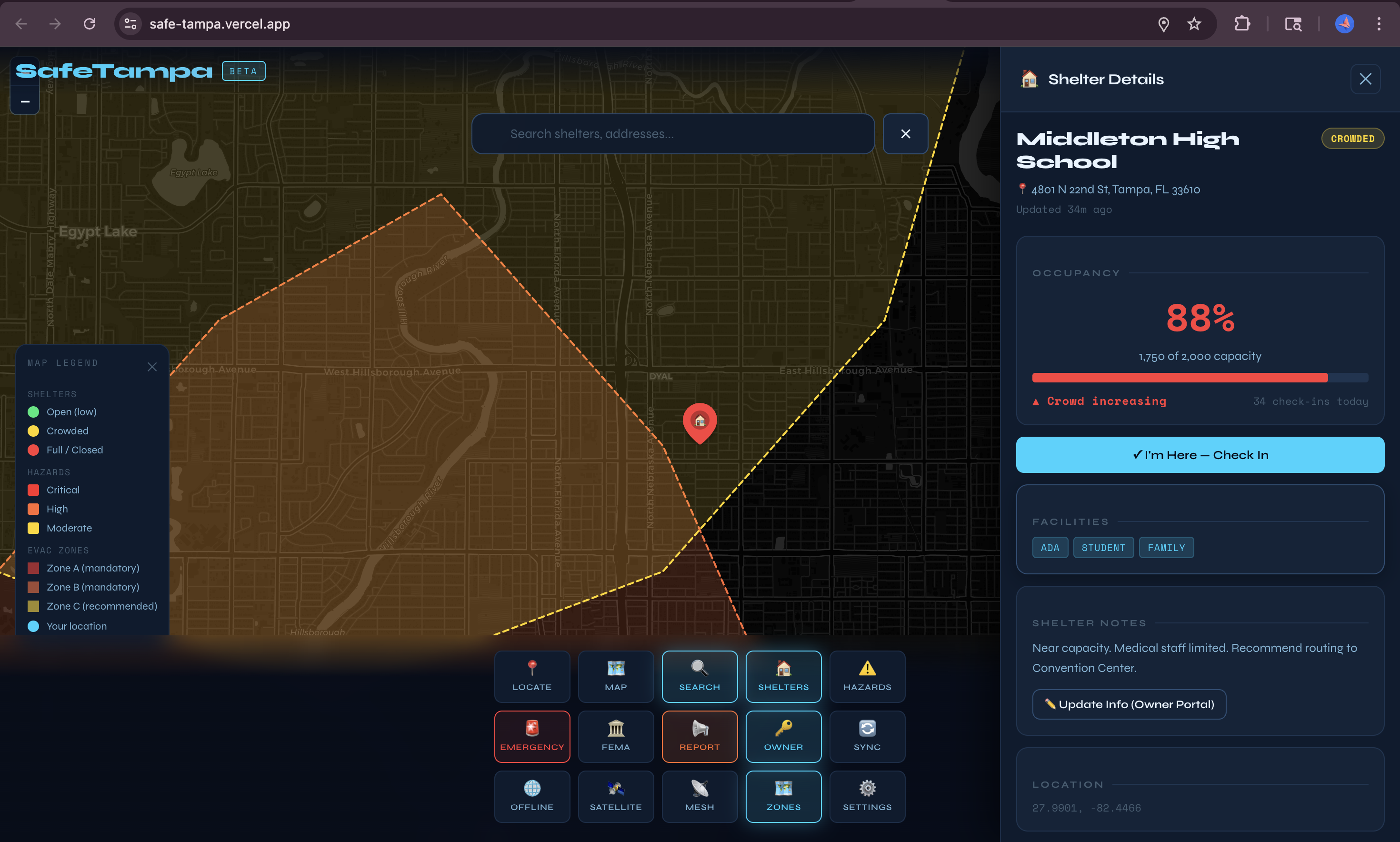
Shelter Details and Logging Option for Owners
-
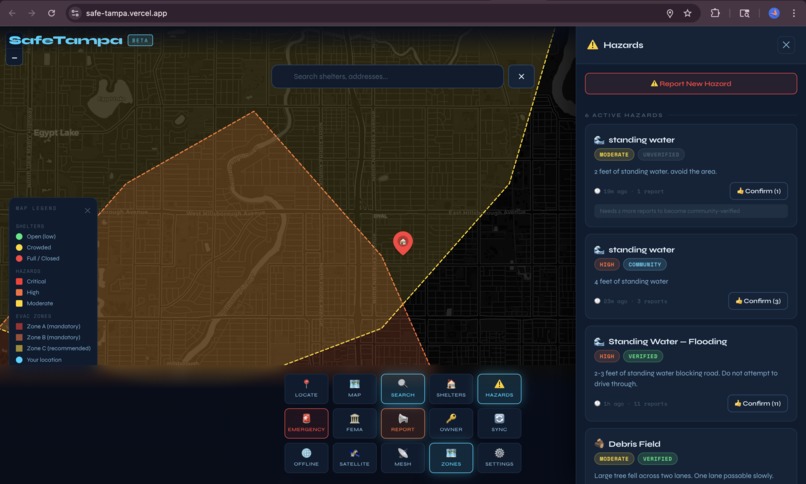
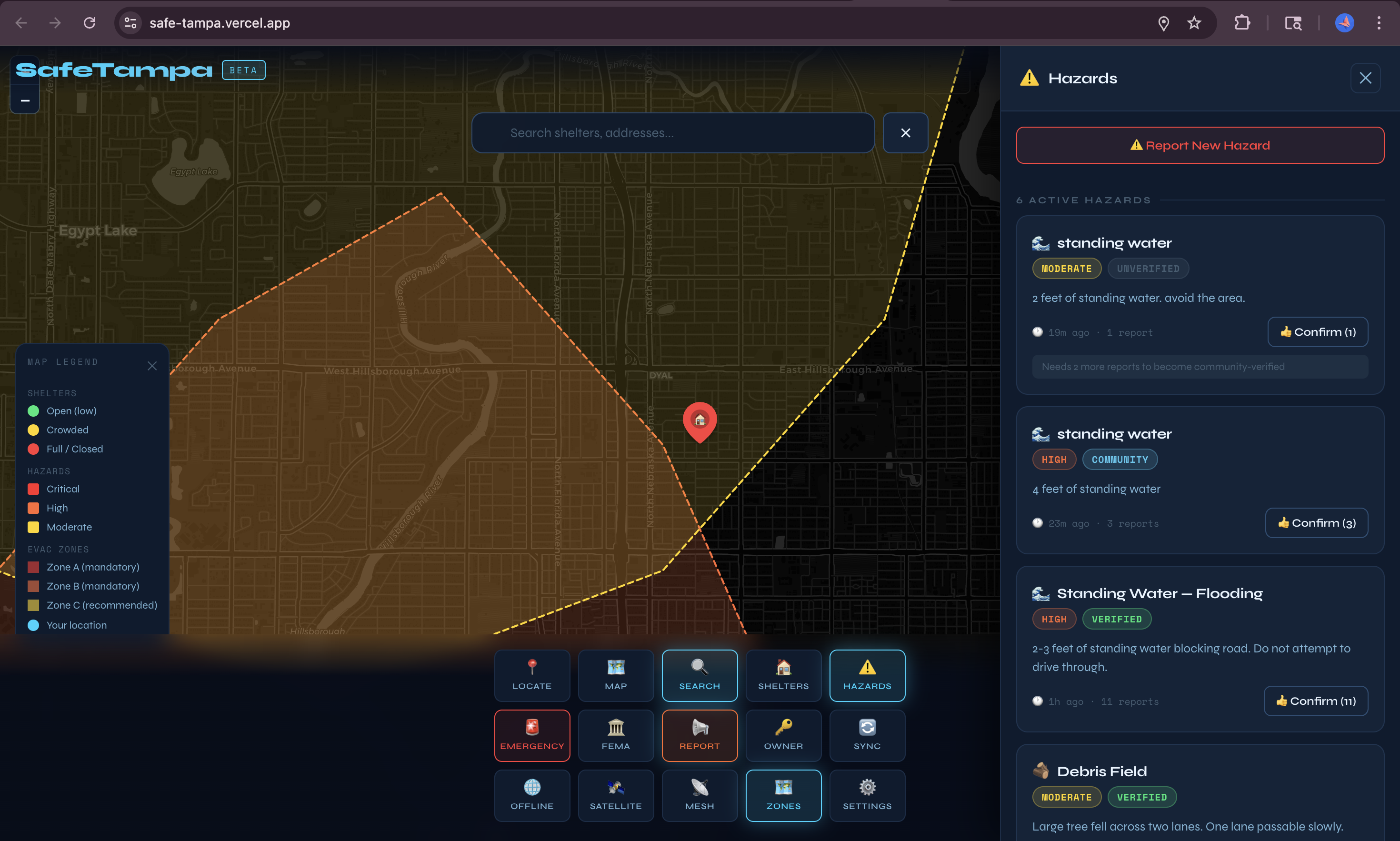
Hazards Reporting and Option to Report Hazard
-
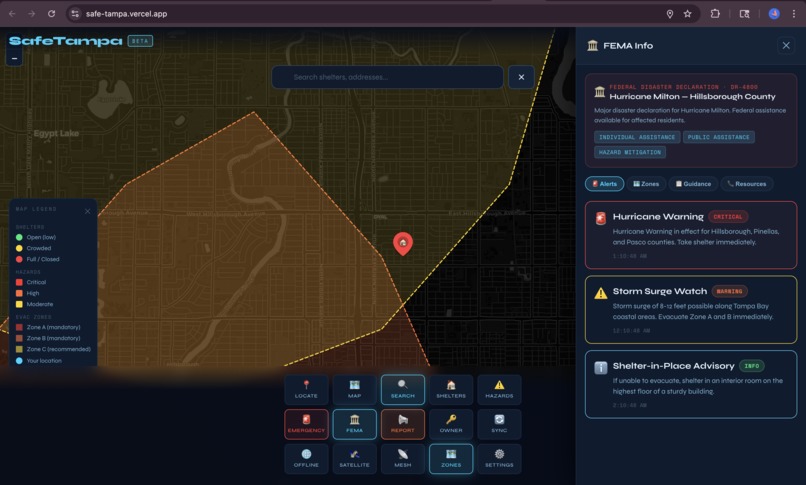
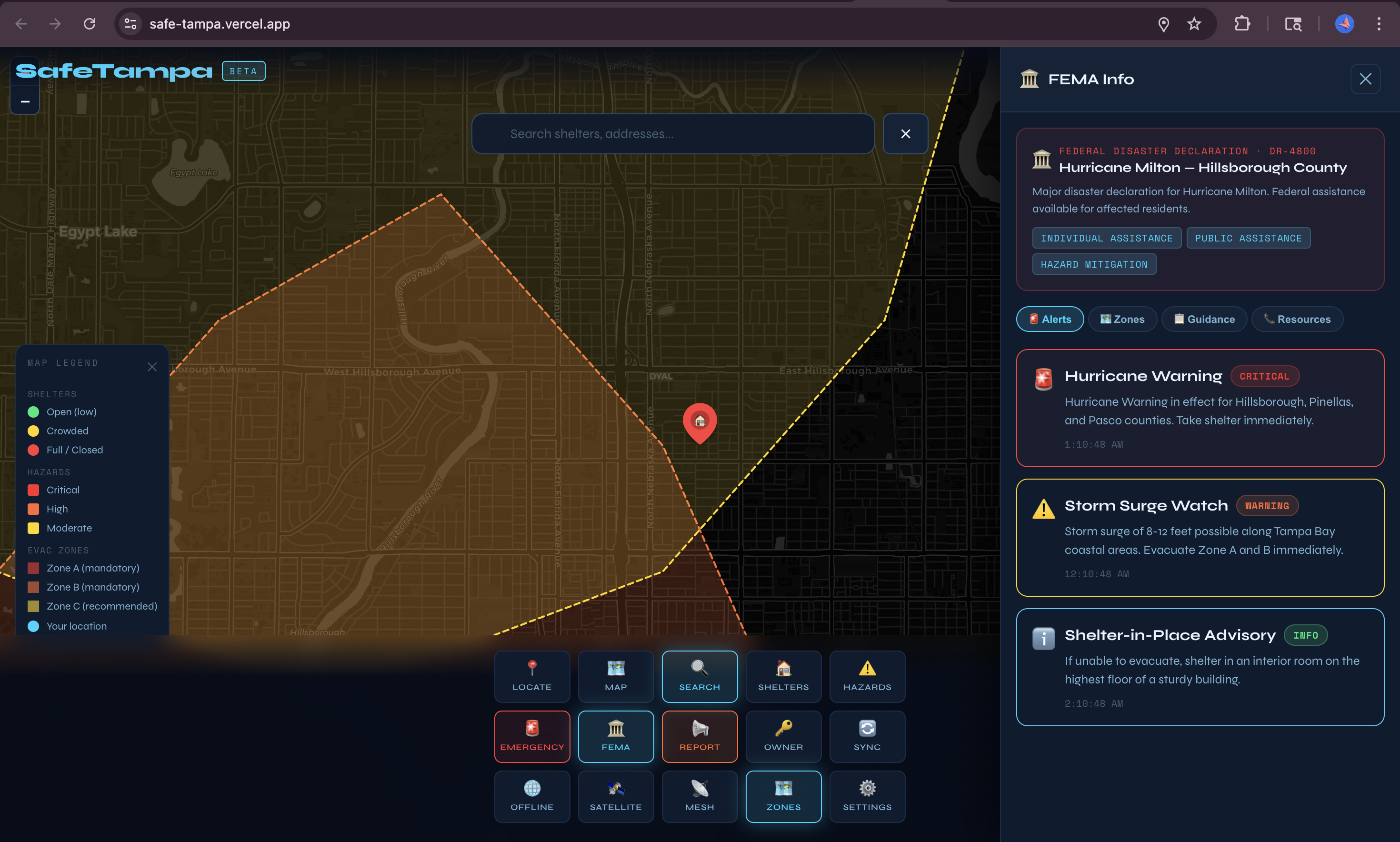
FEMA Info
-
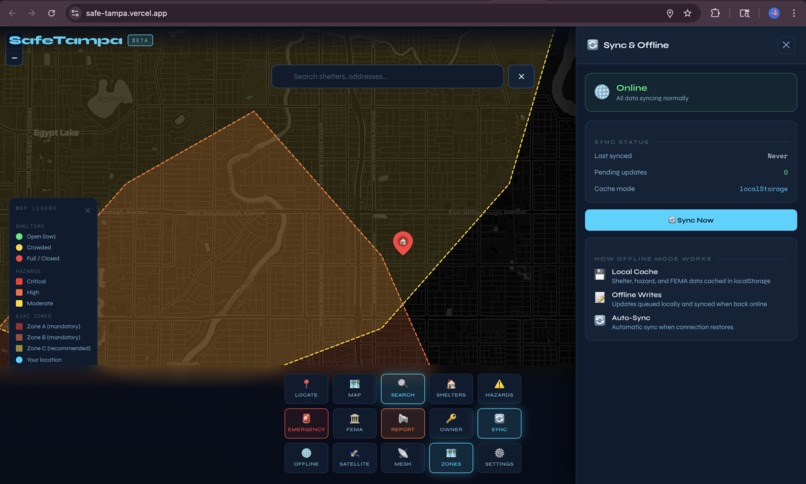
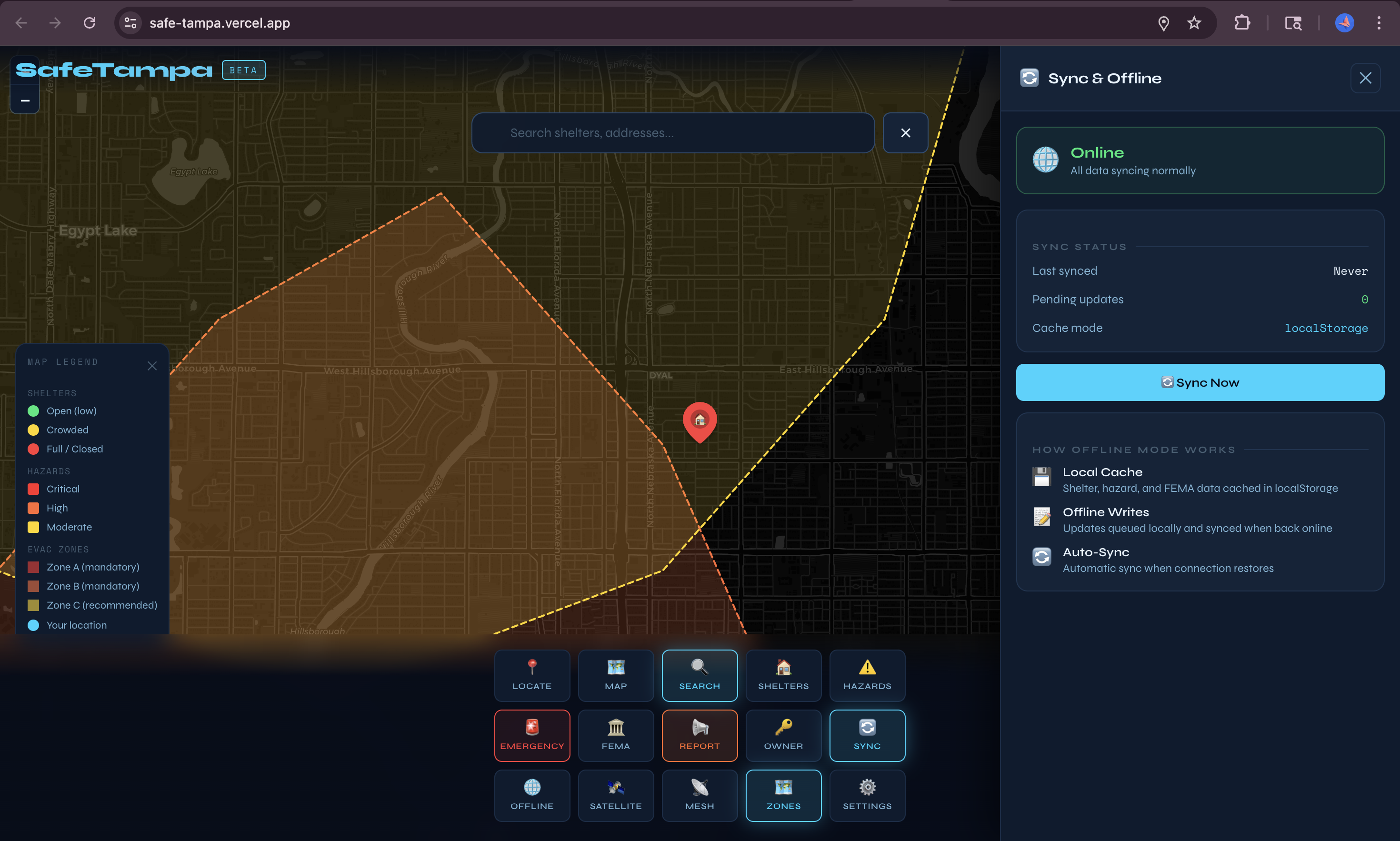
Sync and Offline
-
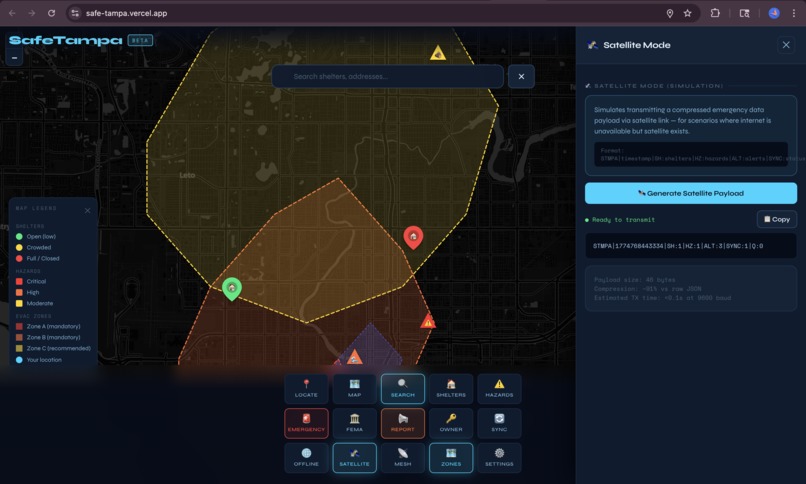
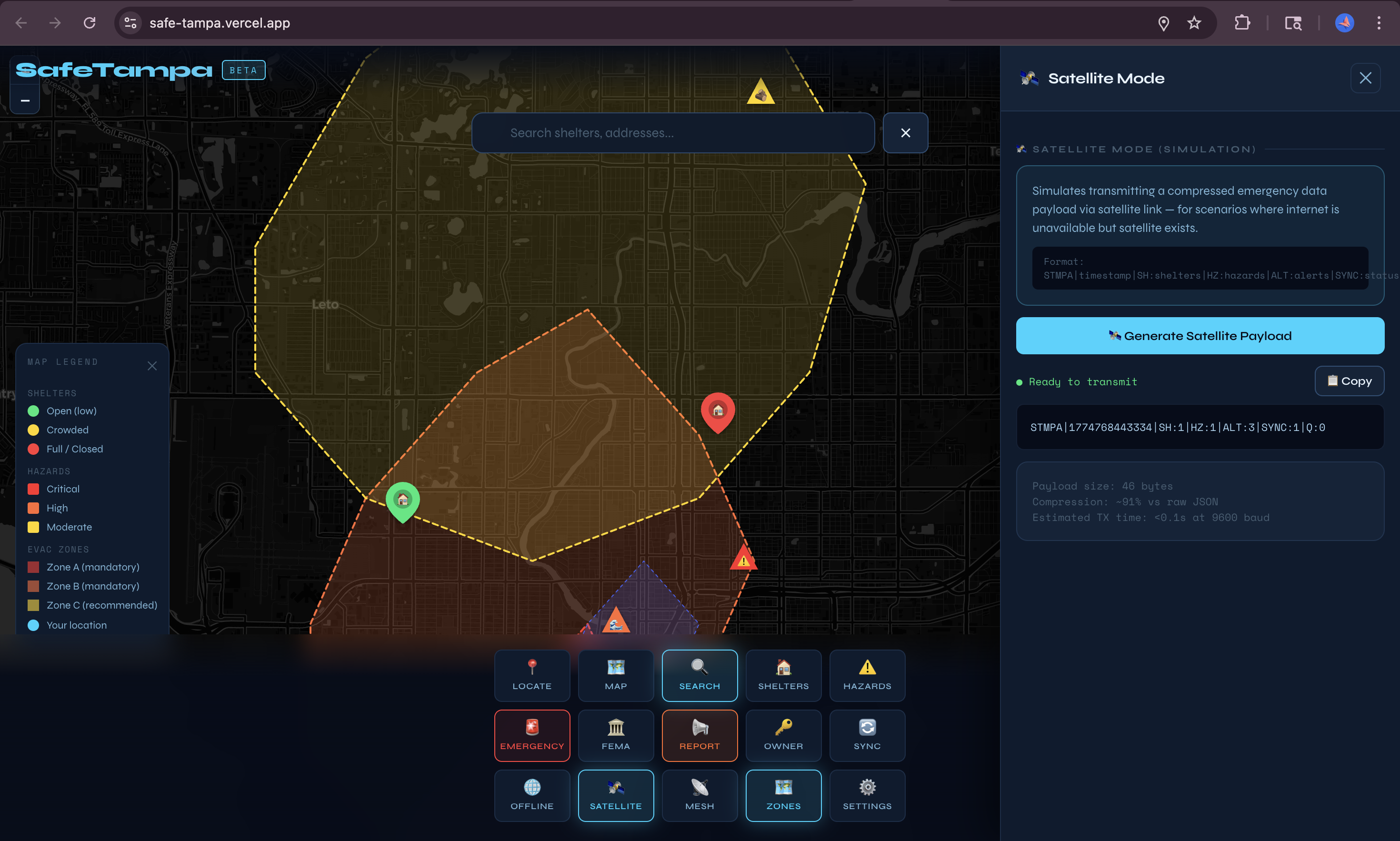
Satellite Mode
-
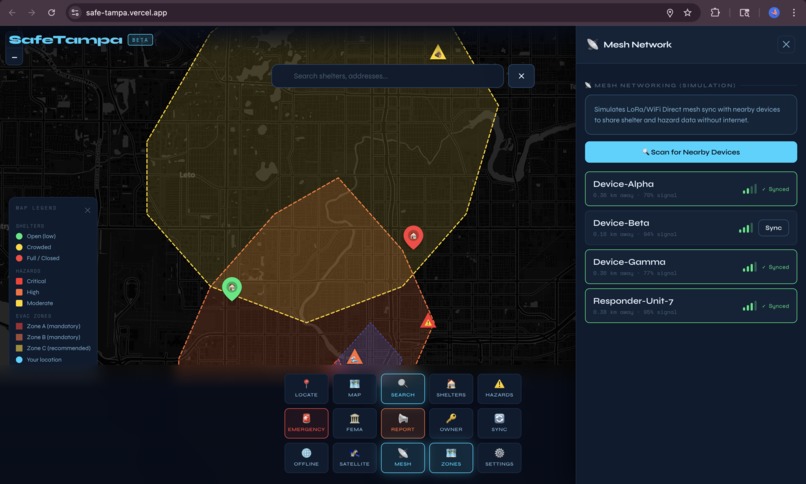
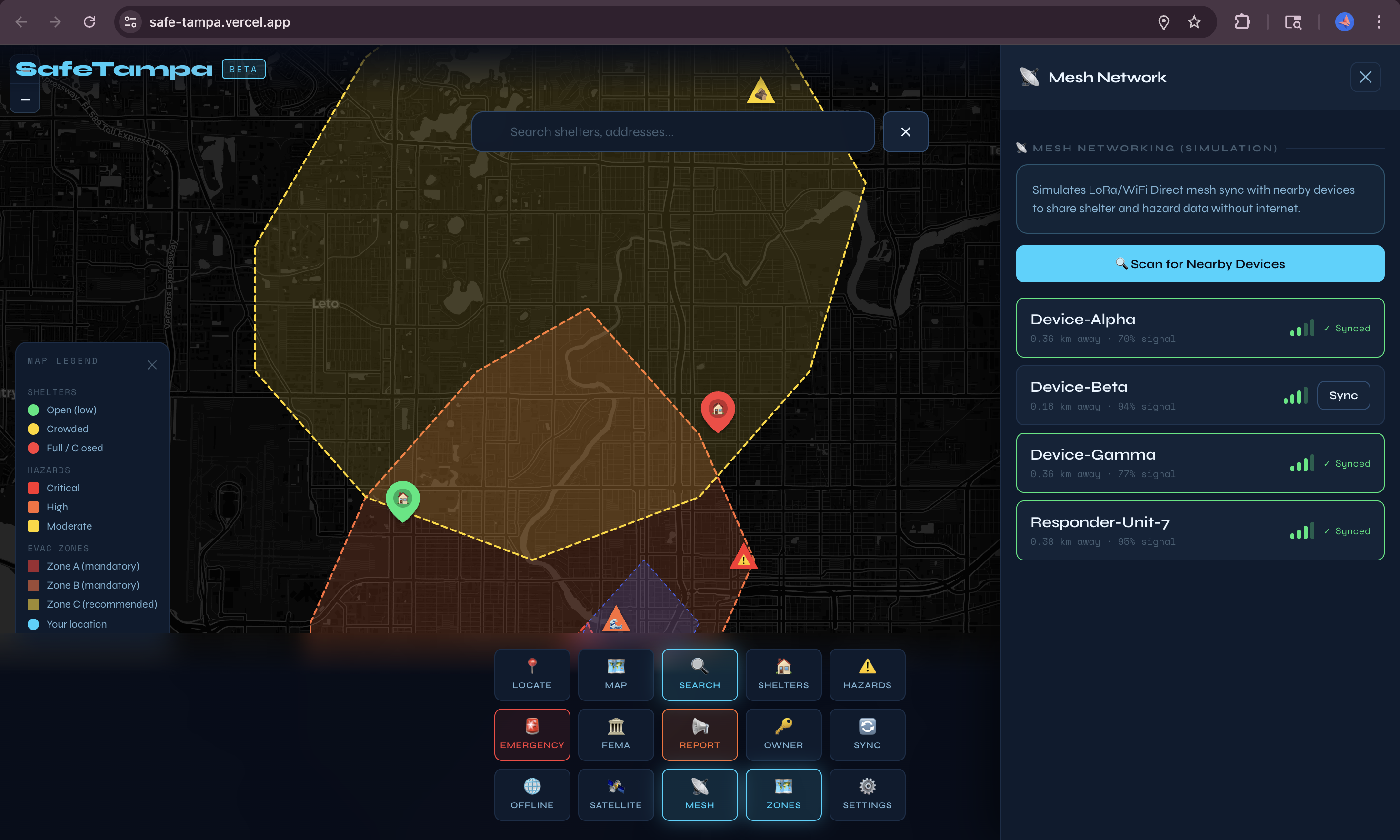
Mesh Network
-
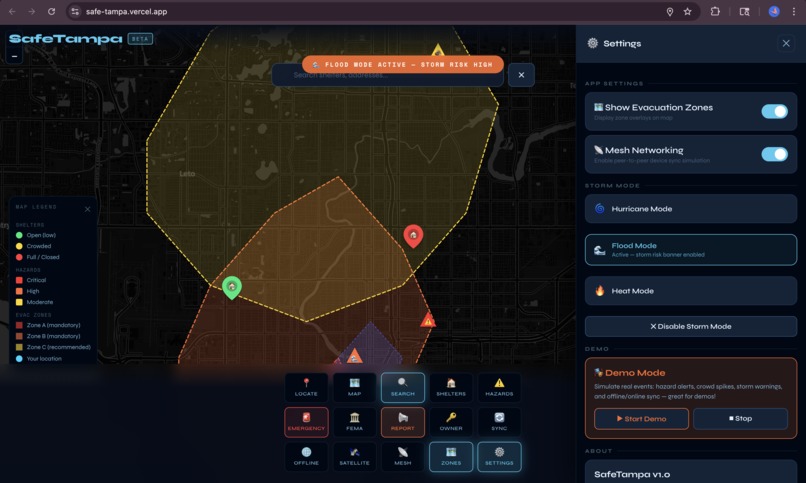
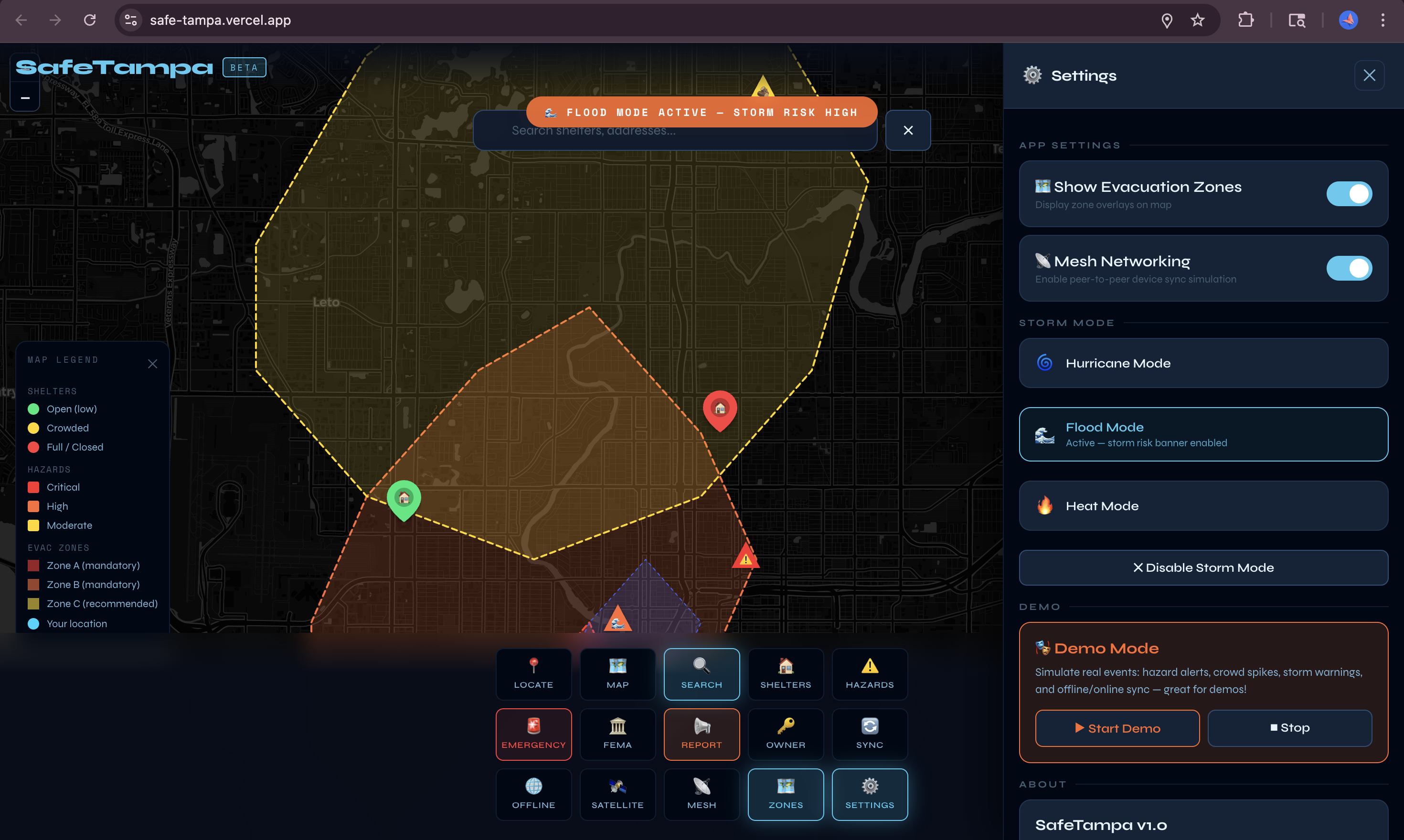
Storm Modes and Settings
-
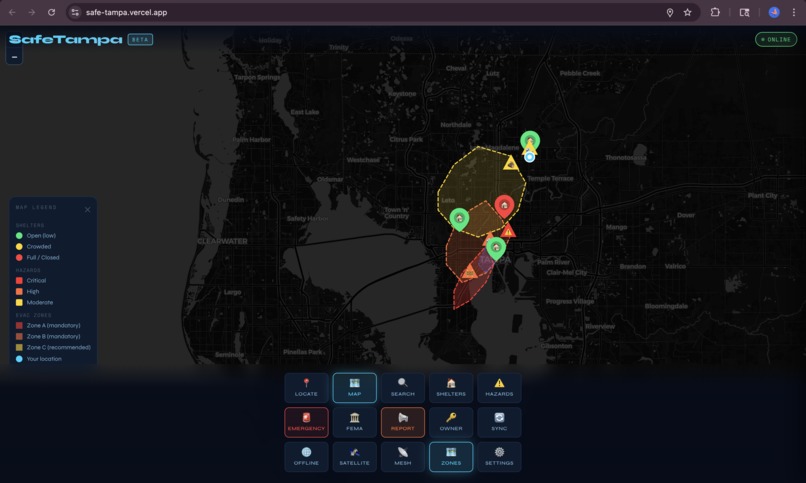
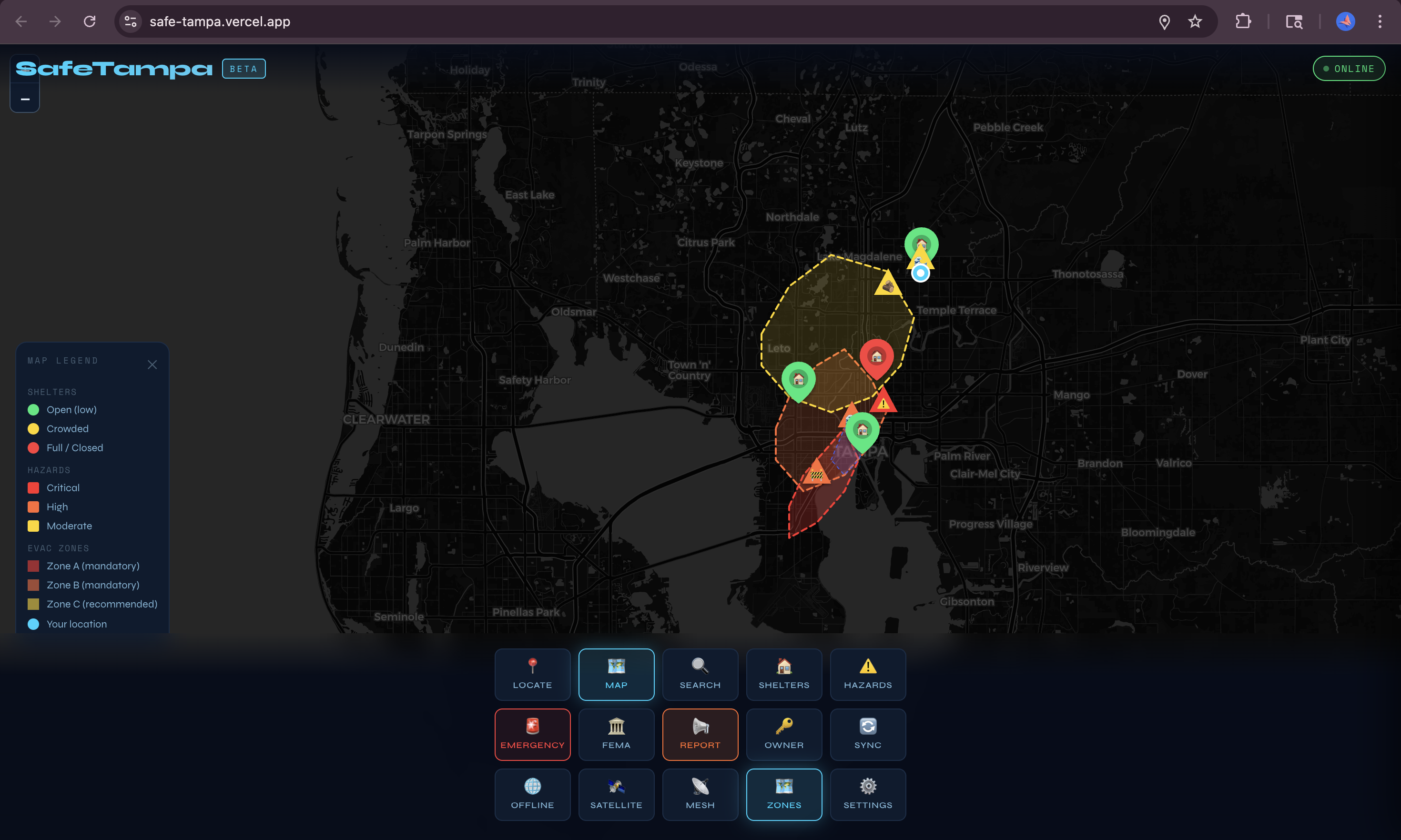
Full Map
Inspiration
Florida, especially Tampa, frequently faces hurricanes, flooding, and severe weather events. During these emergencies, internet connectivity often becomes unreliable or completely unavailable. However, people still need access to shelters, hazard updates, and emergency guidance.
We were inspired by the idea of building a disaster coordination tool that works even when connectivity fails. Many emergency apps rely heavily on real time internet access, which may not be available during hurricanes or power outages. We wanted to create something that prioritizes reliability, accessibility, and climate resilience.
SafeTampa was designed as an offline first emergency coordination platform focused specifically on Tampa. Our goal was to create a practical and realistic tool that could help communities stay informed and make safer decisions during disasters.
What it does
SafeTampa is an offline first disaster coordination web app designed for hurricanes, flooding, and outages in Tampa.
The app allows users to:
- Find nearby shelters in Tampa
- Filter shelters by pet friendly, ADA, medical, family friendly, and least crowded
- Track shelter crowding using anonymous check ins
- Report hazards such as floods, debris, blocked roads, and unsafe areas
- View flood zones and evacuation areas
- Access FEMA style emergency guidance
- Use emergency mode with simplified UI
- Generate emergency summaries
- Use the app offline during outages
- Queue updates and sync later when connectivity returns
SafeTampa also simulates low connectivity disaster scenarios including:
- Offline caching
- Sync queue behavior
- Satellite ready payload simulation
- Mesh networking simulation
These features help SafeTampa remain useful during real world climate emergencies.
How we built it
SafeTampa was built as a frontend first, offline capable web application.
We used:
- React for UI development
- Vite for fast development and builds
- Leaflet for map functionality
- OpenStreetMap for map data
- LocalStorage and IndexedDB for offline data storage
We designed the app using an offline first architecture. Shelter data, hazard reports, and emergency information are stored locally so the app continues working even without internet.
We also created simulated sync queues and low bandwidth communication features to demonstrate how the system could work during real disaster scenarios.
The app was deployed using Vercel for free hosting and easy deployment.
Challenges we ran into
One of the biggest challenges was designing an offline first architecture. Most web apps assume constant connectivity, but we had to design SafeTampa to work even without internet.
We also faced challenges with:
- Managing local storage and cached data
- Designing sync queue behavior
- Building a map first interface
- Simulating realistic disaster coordination features
- Keeping the project feasible for a beginner team
Balancing realism with simplicity was another challenge. We wanted SafeTampa to feel like a real emergency coordination tool while still being achievable within a hackathon timeframe.
Accomplishments that we're proud of
We are proud that SafeTampa:
- Works offline
- Uses a map first emergency interface
- Supports hazard reporting and shelter discovery
- Simulates low bandwidth emergency communication
- Includes emergency mode UI
- Demonstrates climate resilience use cases
- Was built by a beginner team using free tools
We are especially proud of the offline first design and the realistic emergency coordination workflow.
What we learned
Through building SafeTampa, we learned:
- Offline first architecture design
- Map based UI development
- Emergency focused UX design
- Local data storage strategies
- Hackathon project scoping
- Climate resilience product thinking
We also learned how to build a meaningful project quickly while balancing usability and feasibility.
What's next for SafeTampa
Future improvements for SafeTampa include:
- Real emergency data integration
- Real time shelter occupancy updates
- True peer to peer device syncing
- Mobile optimized version
- Multi city support
- Real emergency alert integration
We hope to continue developing SafeTampa into a practical tool that can help communities stay safe during climate emergencies.
SafeTampa is designed to support resilience, accessibility, and safety when connectivity is limited.
Built With
- app
- architecture
- based
- concepts
- css
- data
- design
- first
- git
- html
- indexeddb
- javascript
- json
- leaflet.js
- localstorage
- map
- offline
- openstreetmap
- progressive
- pwa
- react
- service
- ui
- vercel
- vite
- web
- workers

Log in or sign up for Devpost to join the conversation.