Inspiration
We wanted to build something that could be genuinely useful in a real emergency. Australia already has emergency warning systems, but we realised that not everyone can easily understand or access these warnings. This inspired us to create SafeSignal.
What it does
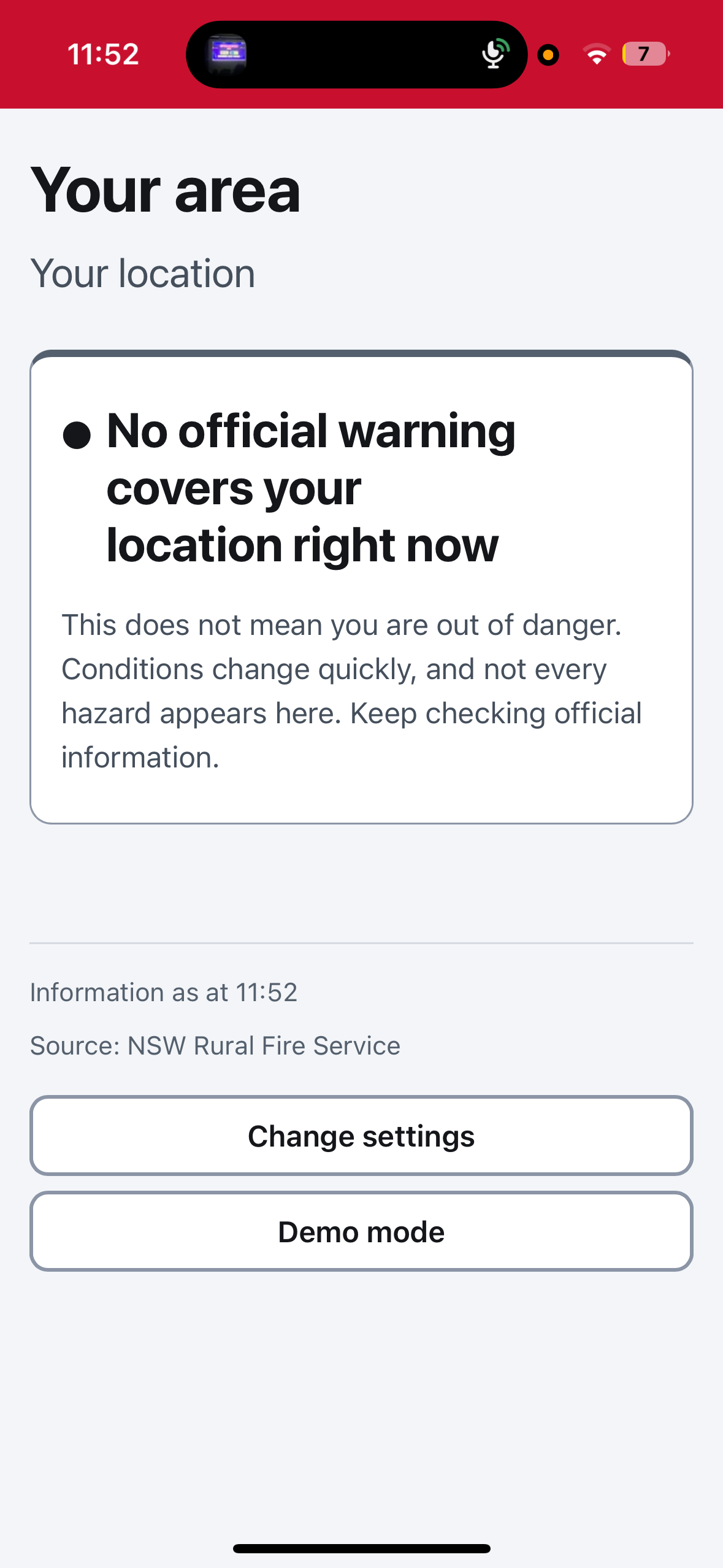
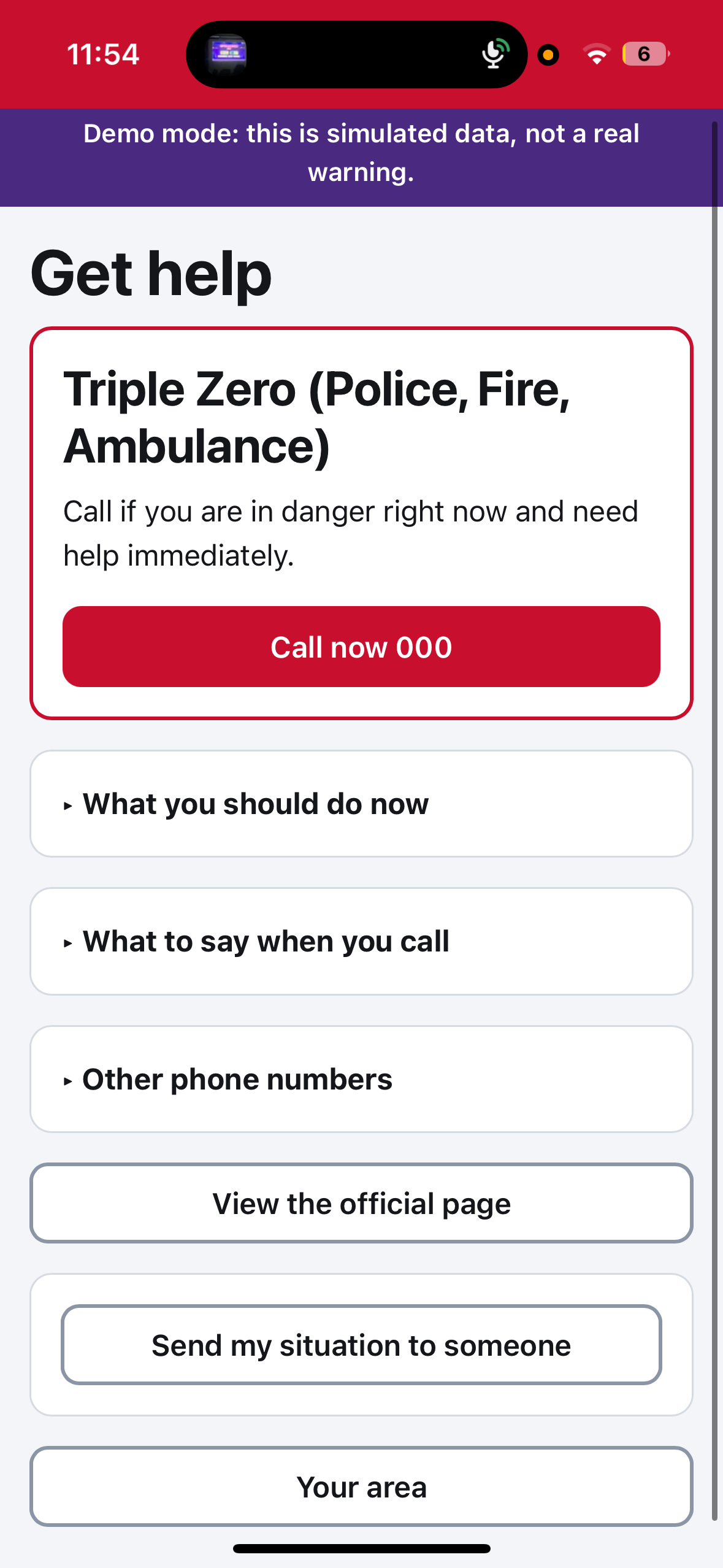
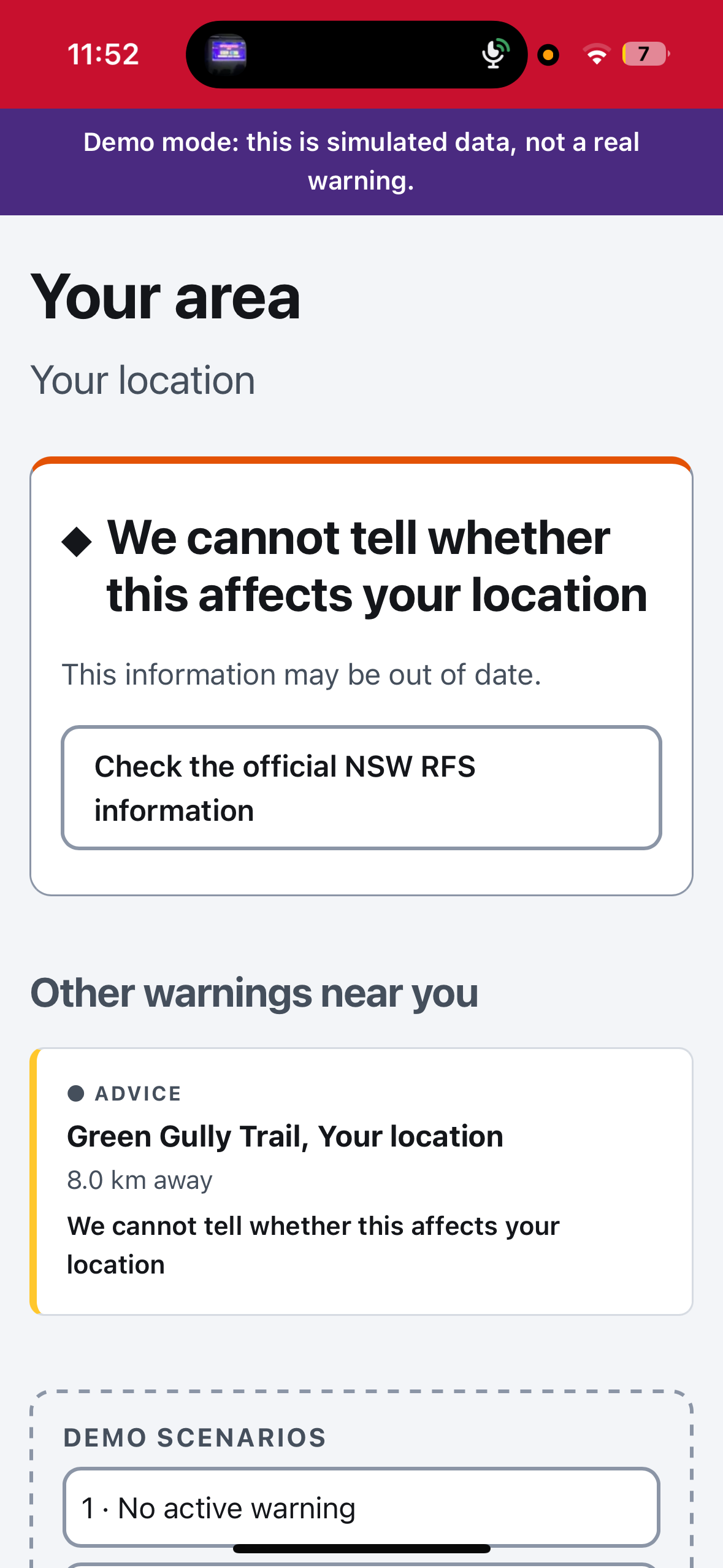
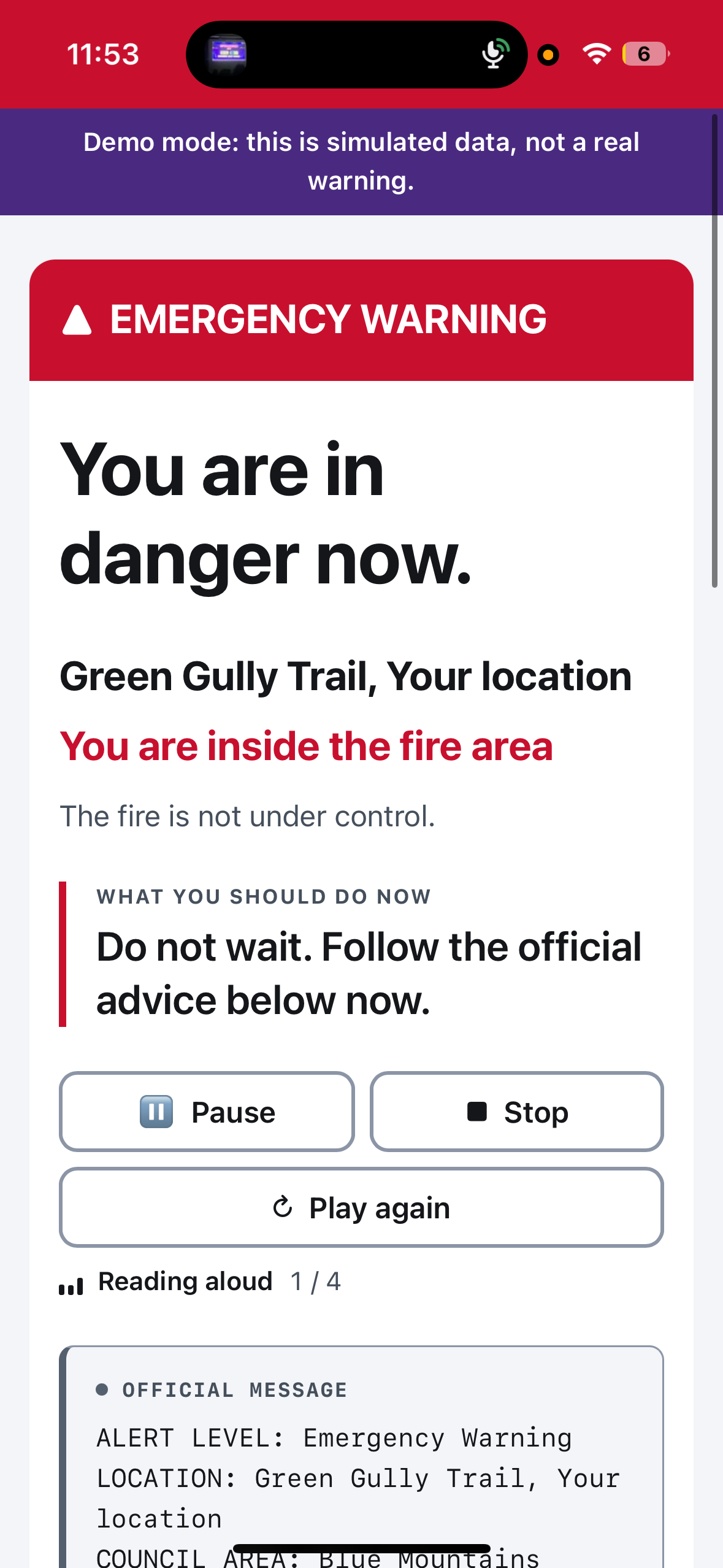
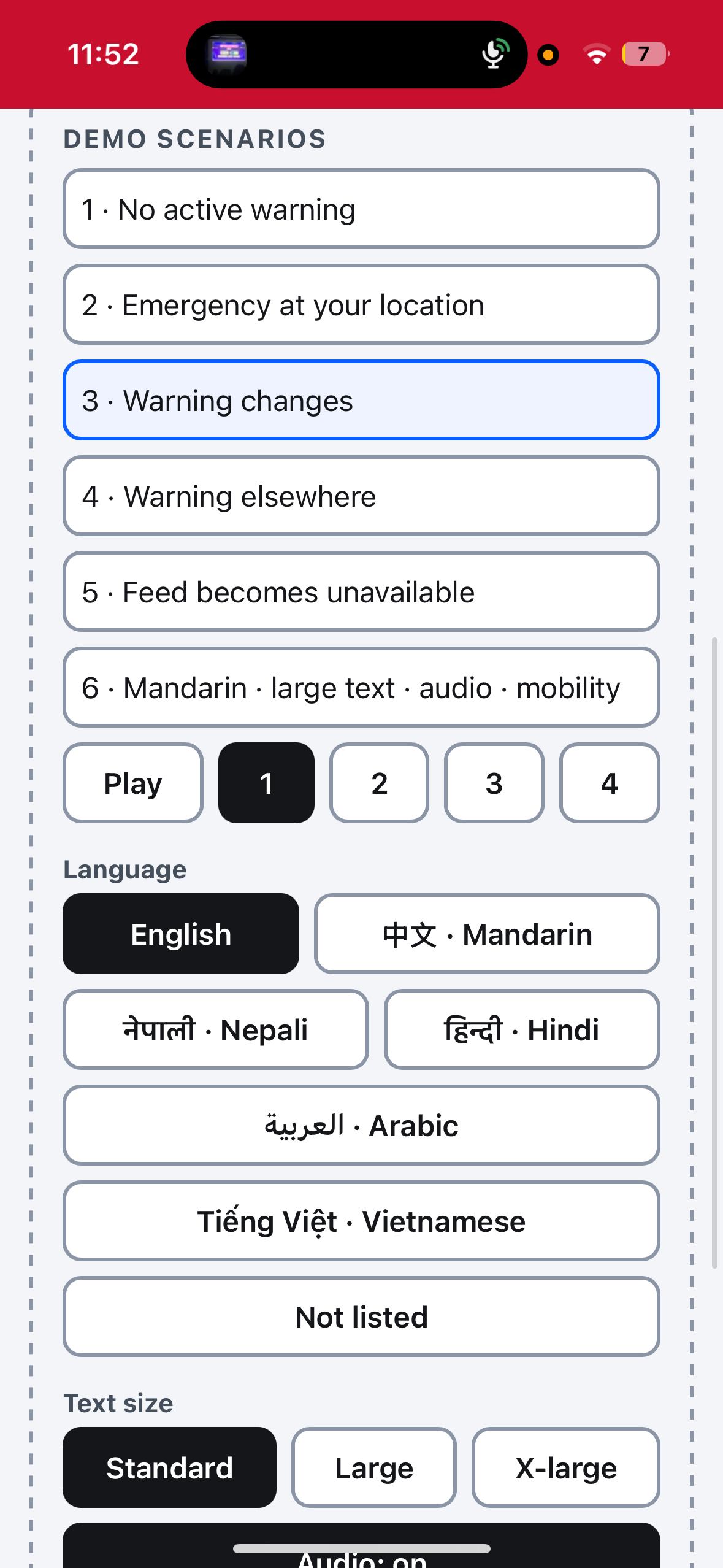
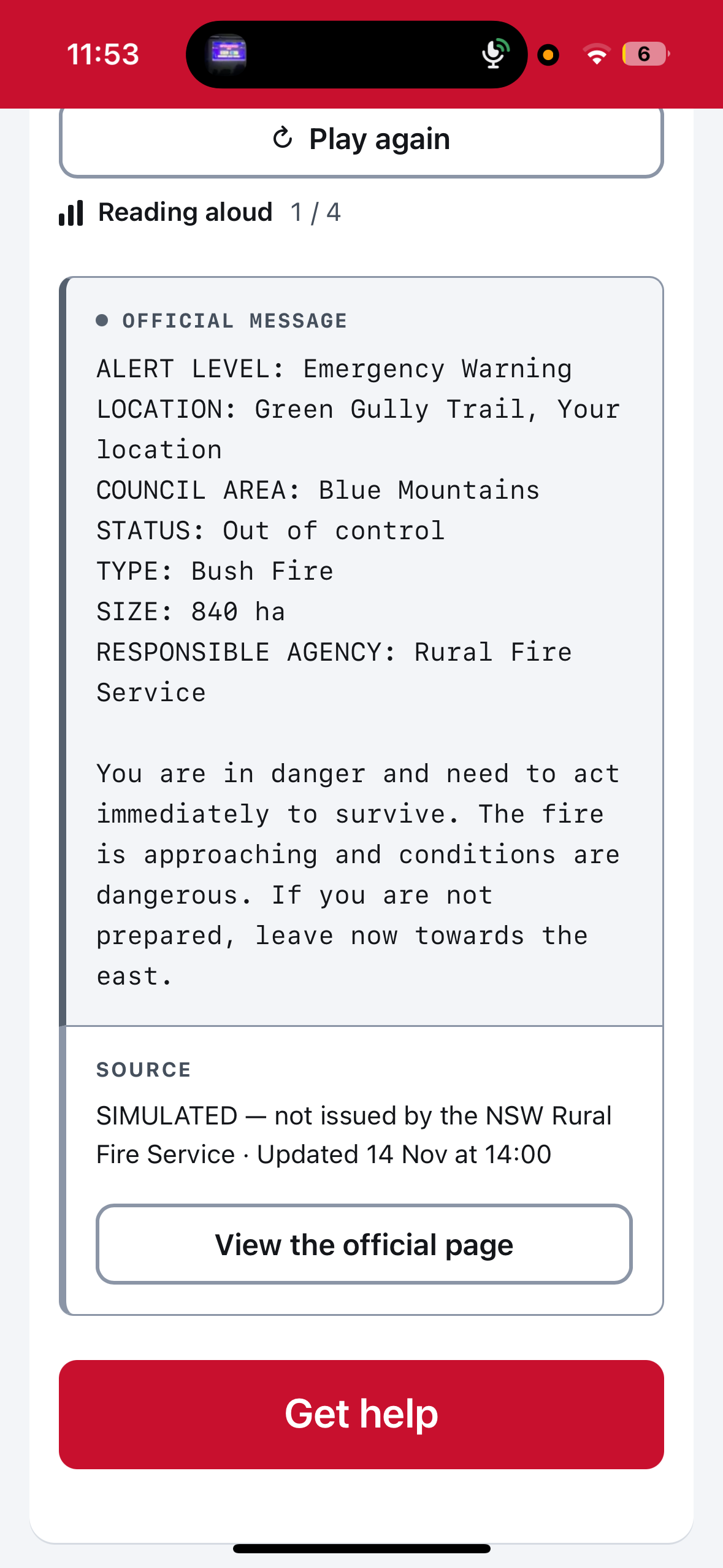
SafeSignal takes official emergency warnings and makes them easier to understand and access. It uses the user's location and preferences to provide relevant information, with features such as language options, larger text, and audio support.
How we built it
We are a team of three and divided the work between development, design, research, testing, and technical implementation. We built SafeSignal as a mobile-first web application and connected it with official emergency information sources.
Challenges we ran into
One of our biggest challenges was making the information simple and accessible without changing the meaning of official emergency advice. We also had to work with changing data and build a reliable experience within a short hackathon timeframe.
Accomplishments that we're proud of
We are proud that we turned an idea into a working prototype that focuses on a real-world problem. We also built accessibility and reliability into the product rather than treating them as an afterthought.
What we learned
We learned a lot about working with real-world data, accessibility, mobile-first design, and building as a team under time pressure. Most importantly, we learned that a good solution is not always about adding more features, but making important information easier for people to use.
What's next for SafeSignal
We would like to expand SafeSignal to support more types of emergencies and more regions. We also want to improve its accessibility, real-time capabilities, and support for different languages and user needs.
Built With
- anthropic-claude
- css
- geojson
- next.js
- nsw-rfs
- react
- service-workers
- typescript
- vercel
- vitest
- web-speech-api

Log in or sign up for Devpost to join the conversation.