-
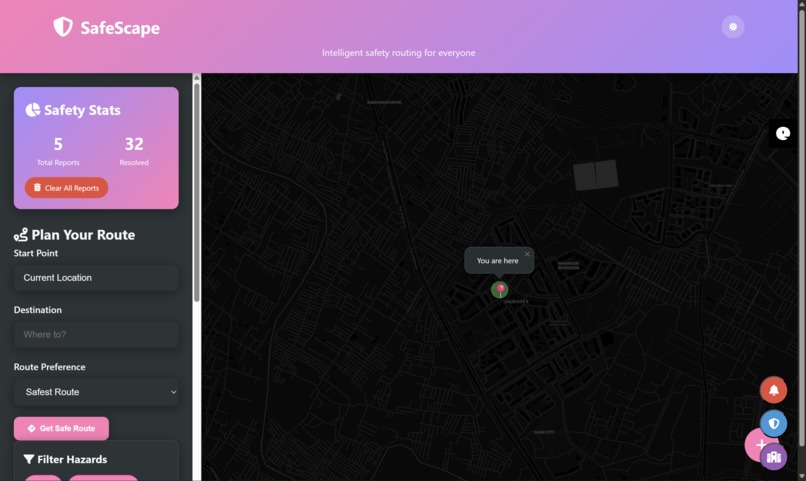
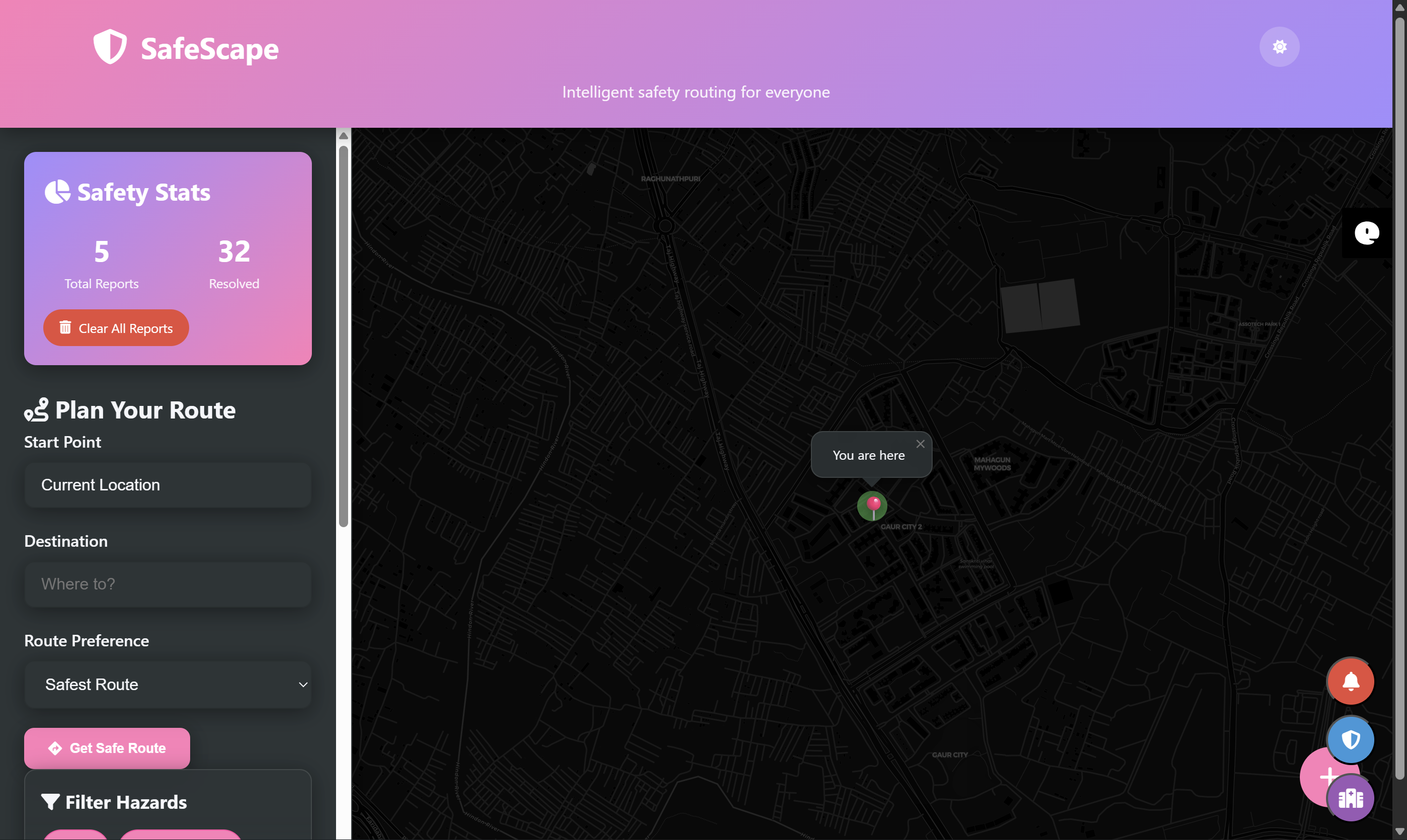
Dashboard
-
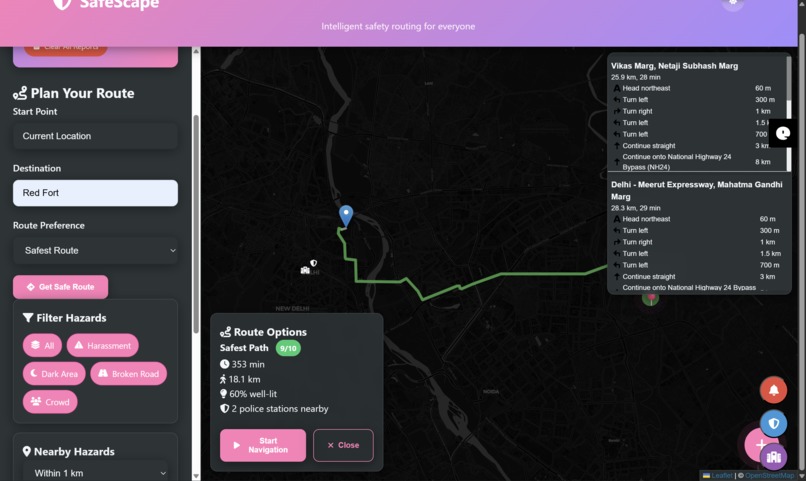
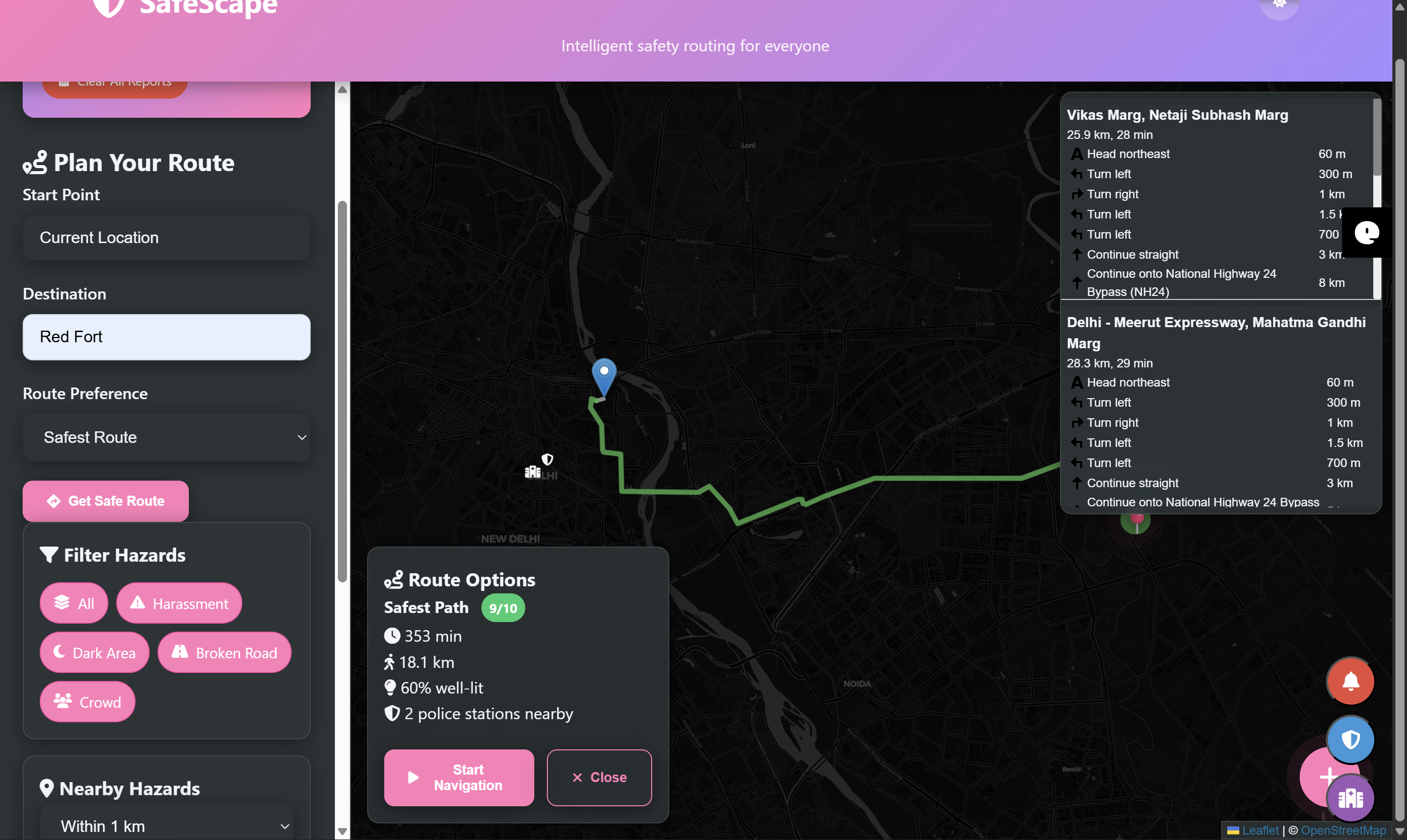
Safest Route
-
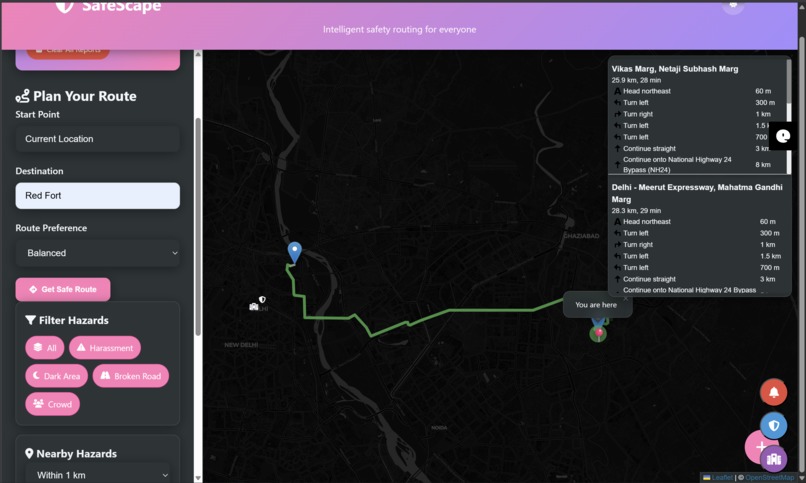
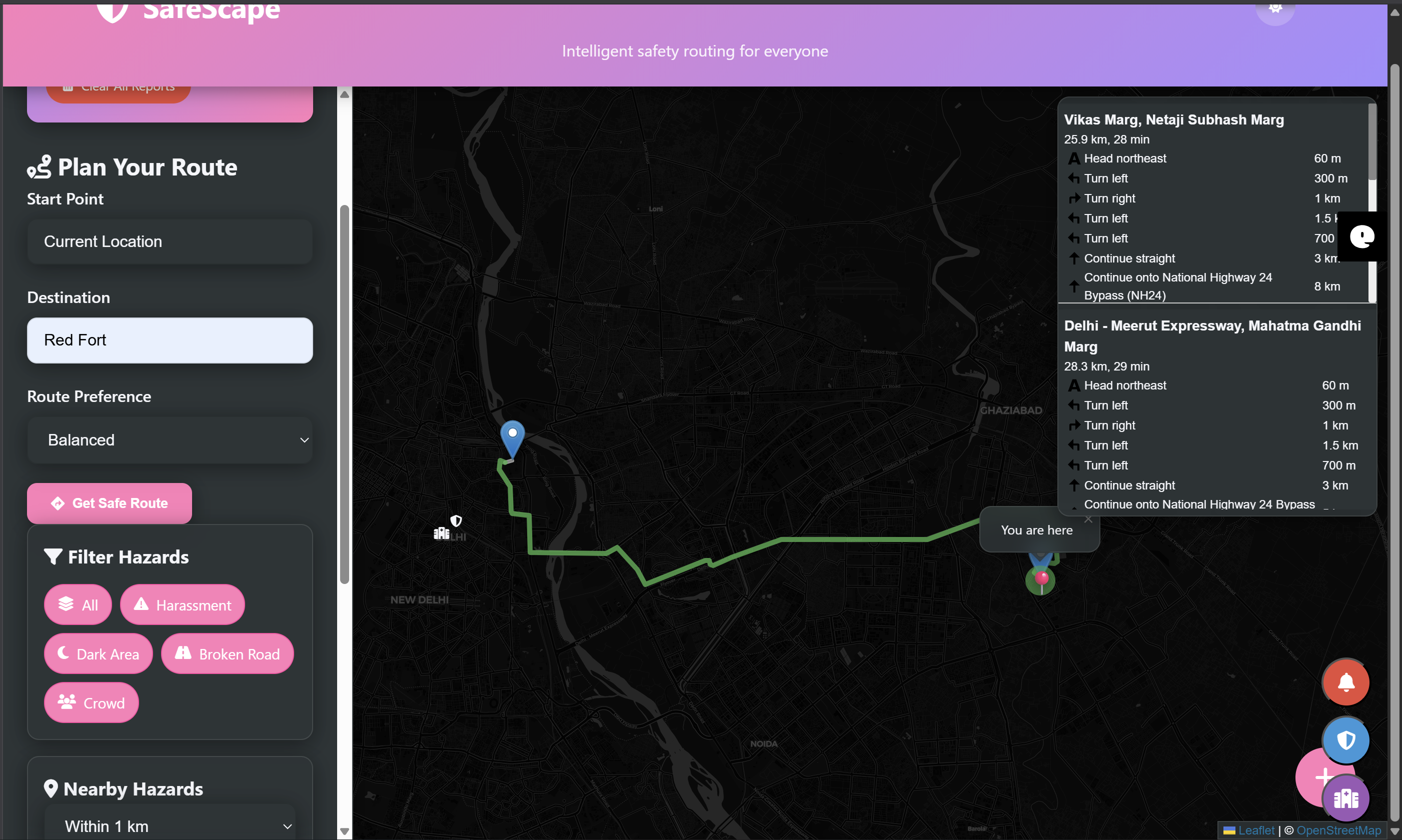
Balanced Route
🌱 Inspiration
Safety is something people assume until it is missing. Maps tell us where to go, but never whether we should. Women walking at night, tourists in unfamiliar cities, and people with disabilities often move without knowing which streets are risky. SafeScape was inspired by this gap between navigation and safety.
🛡️ What it does
SafeScape is an offline-first, community-powered safety map that highlights unsafe, dangerous, and inaccessible streets at a hyperlocal level. It uses real-time reports, crime data, and AI-based safety scoring to help users choose safer routes even without internet access.
🧱 How we built it
SafeScape was built as a Progressive Web App using HTML, CSS, and JavaScript for a fast frontend. Leaflet.js with OpenStreetMap powers the map. Offline functionality is handled through service workers and local caching. Firebase supports backend services, while Python is used for AI-based safety scoring and route intelligence.
⚔️ Challenges we ran into
Building a system that works without internet while still feeling reliable was a major challenge. Ensuring trust in crowdsourced reports, converting abstract danger into measurable safety scores, and keeping the interface simple yet informative required constant iteration. Accessibility had to be treated as a core feature, not an optional add-on.
🏆 Accomplishments that we're proud of
We delivered a working offline-first safety platform instead of just a concept. The system provides hyperlocal insights down to specific streets and corners. SafeScape successfully integrates social impact, accessibility, and technology into one solution and has real potential for adoption by governments and NGOs.
📘 What we learned
We learned that safety is both a data problem and a design problem. Offline-first architecture forces better engineering decisions. Community-driven systems require responsibility and moderation. Most importantly, real impact comes from solving meaningful problems, not just building features.
🚀 What's next for SafeScape
Future plans include AI-based crime prediction using historical data, voice-enabled navigation for visually impaired users, multi-language support, partnerships with ride-hailing platforms, and AR-assisted safe route guidance.
SafeScape is not a finished product. It is a foundation for safer cities.
Built With
- css3
- fastapi
- firebase
- html5
- javascript
- leaflet.js
- openstreetmap
- pillow
- python
- pytorch
- tensorflow

Log in or sign up for Devpost to join the conversation.