-
-
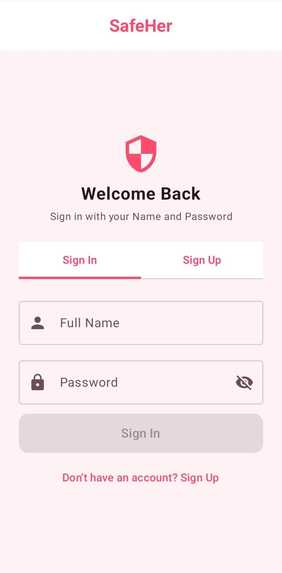
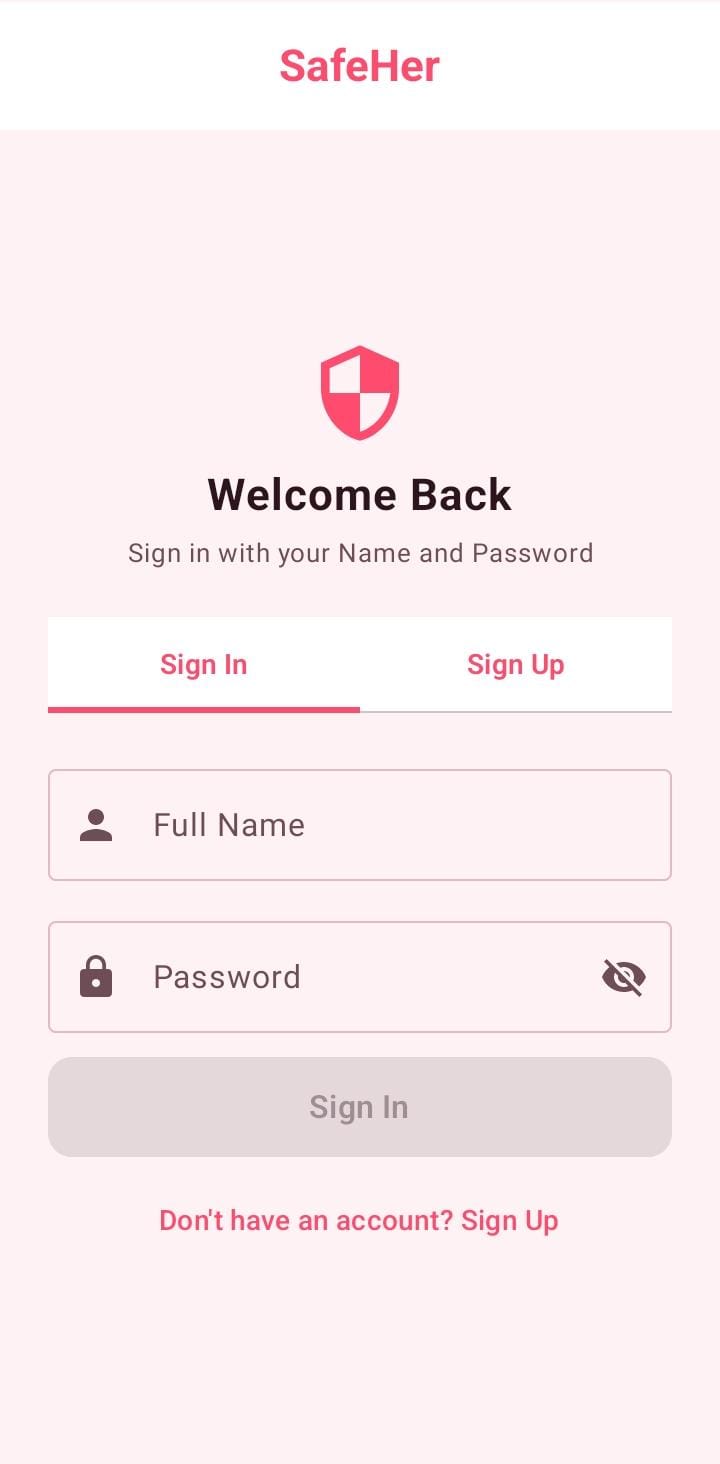
SIGN IN PAGE
-
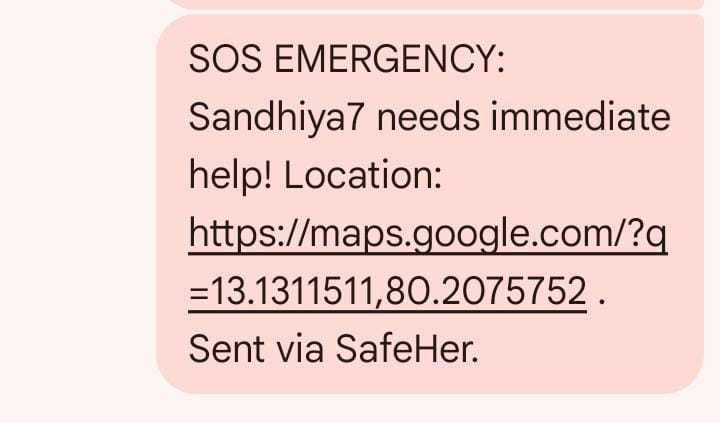
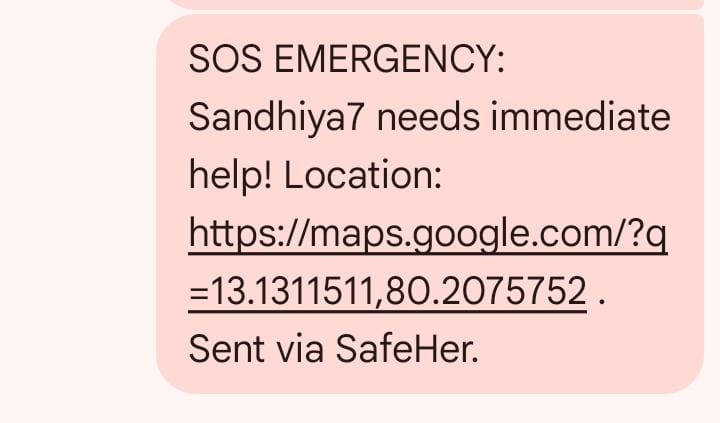
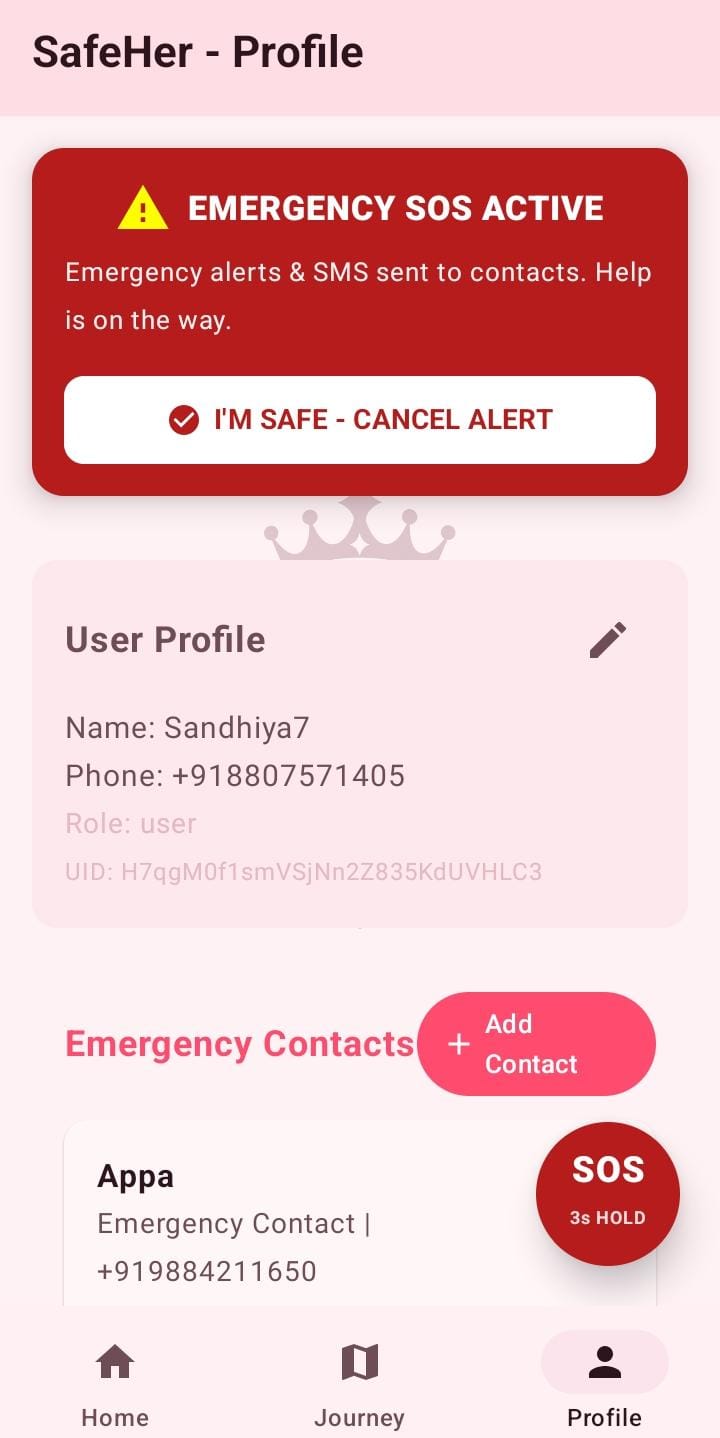
SOS MESSAGE
-
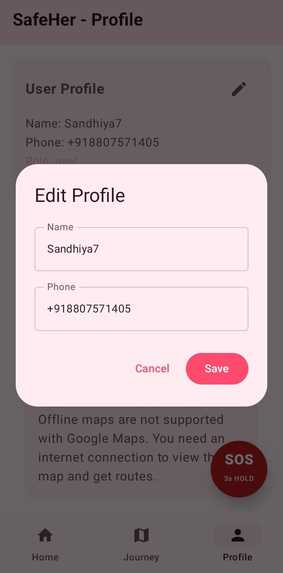
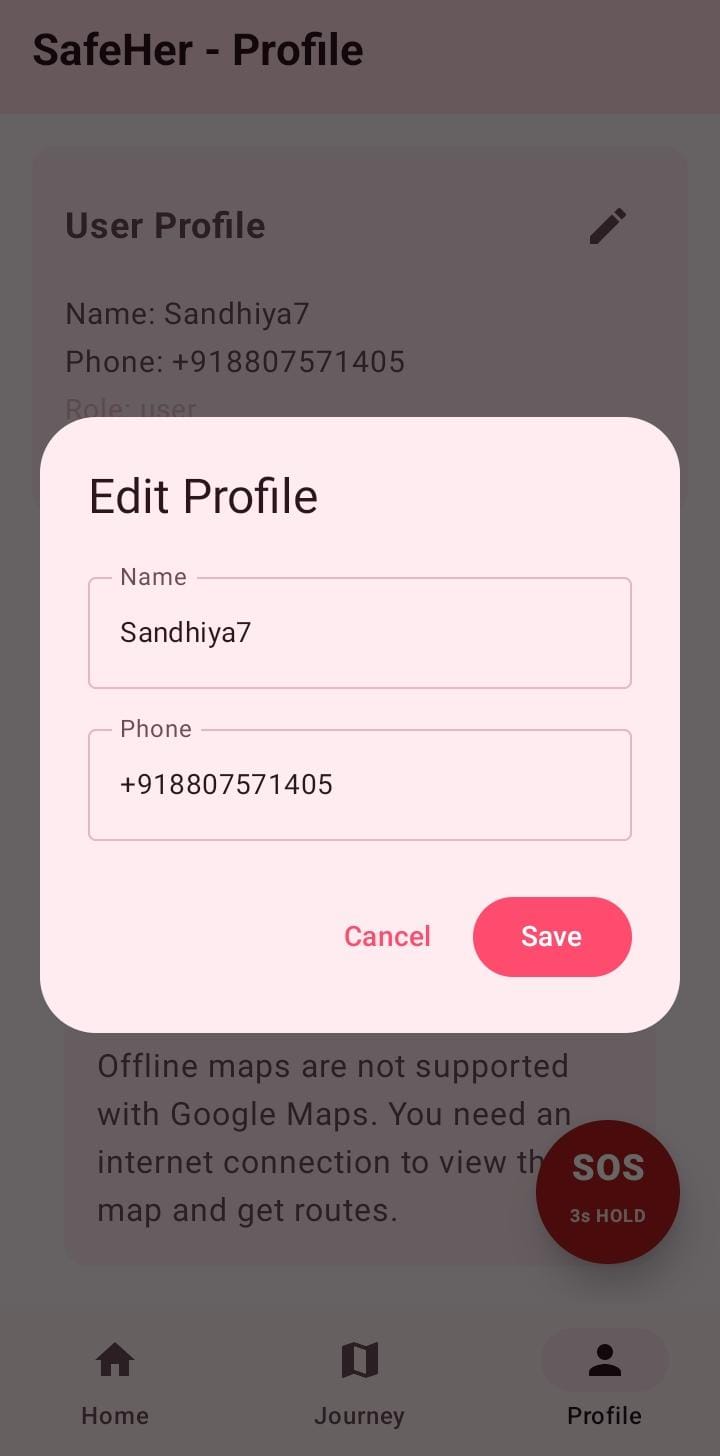
PROFILE EDIT
-
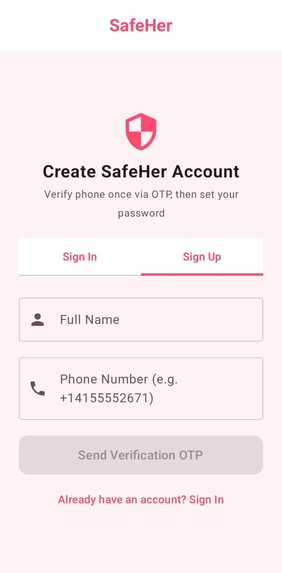
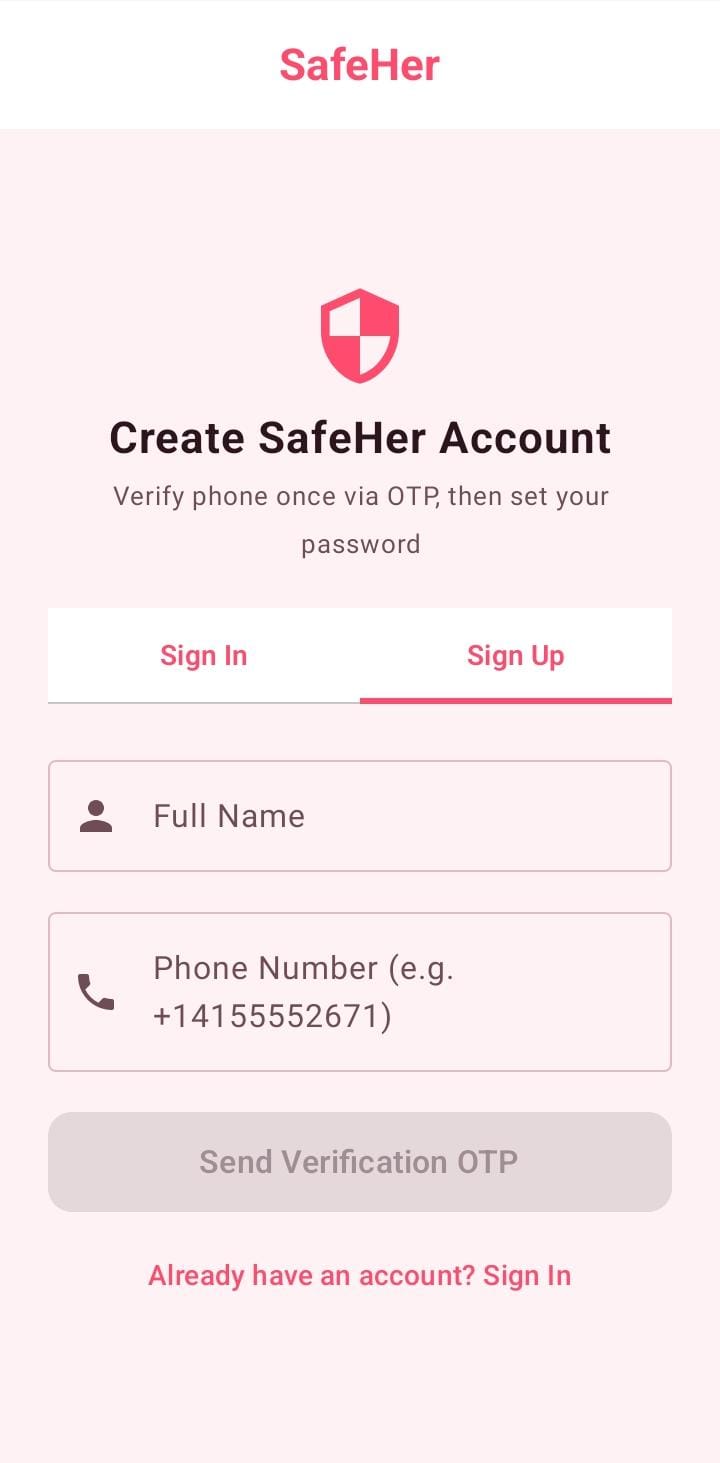
SIGN UP PAGE
-
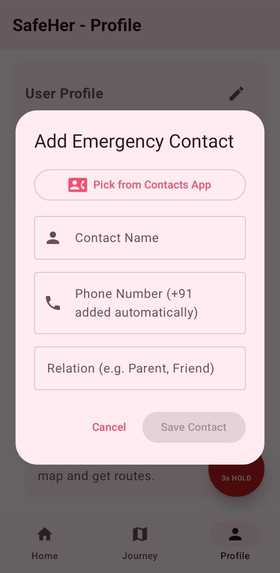
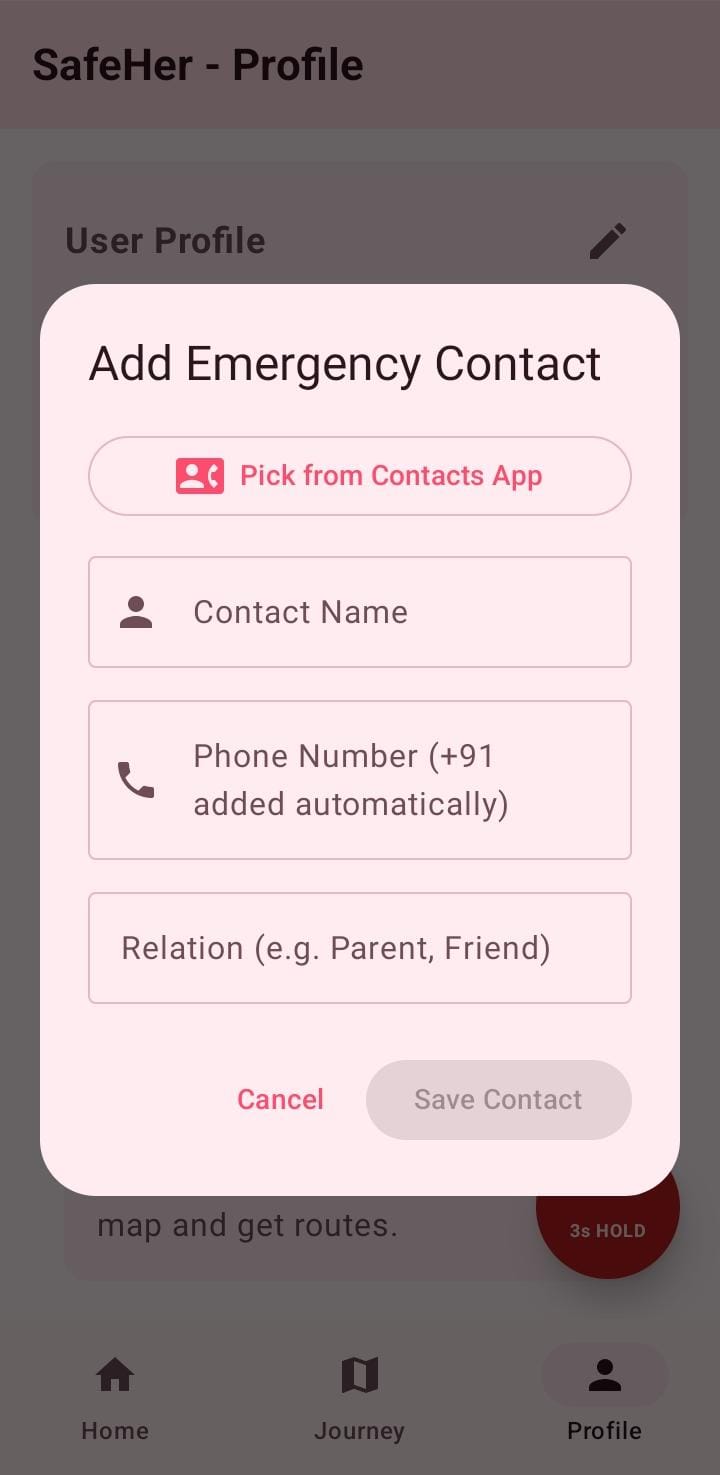
ADDING CONTACT
-
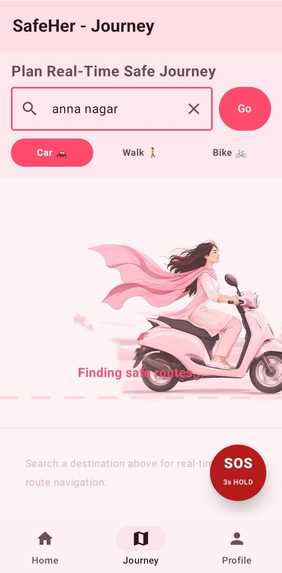
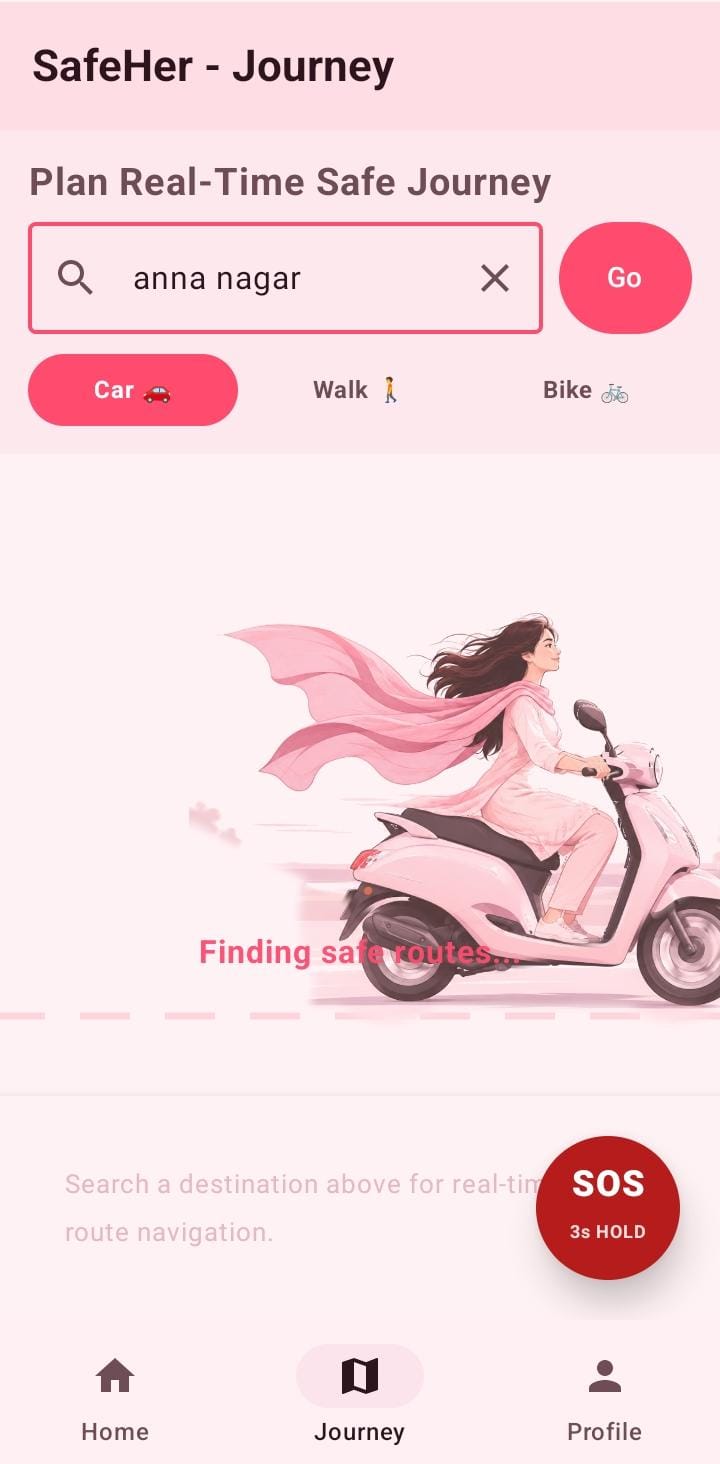
LOADING PAGE
-
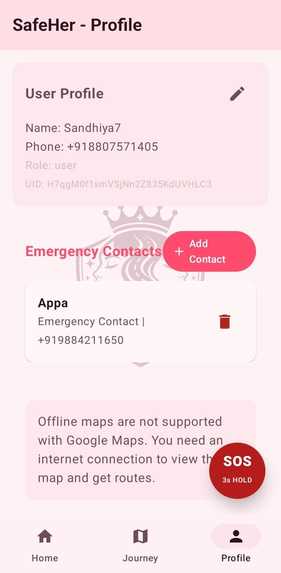
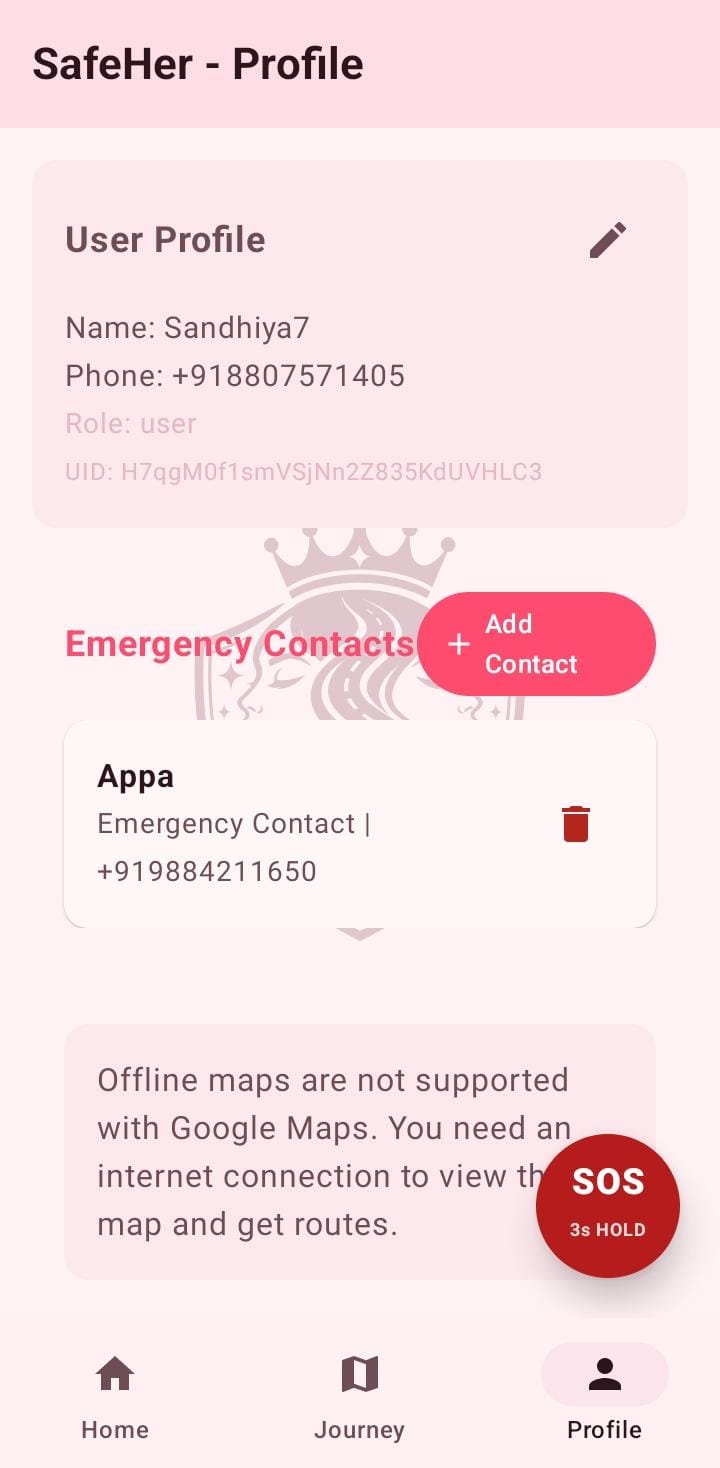
EMERGENCY CONTACTS
-
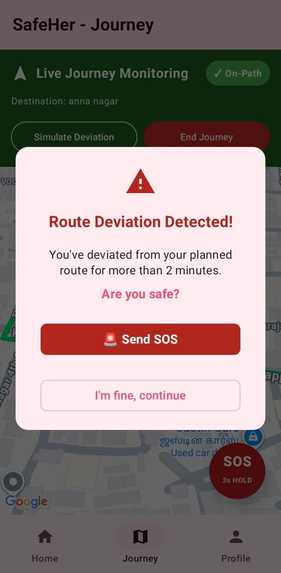
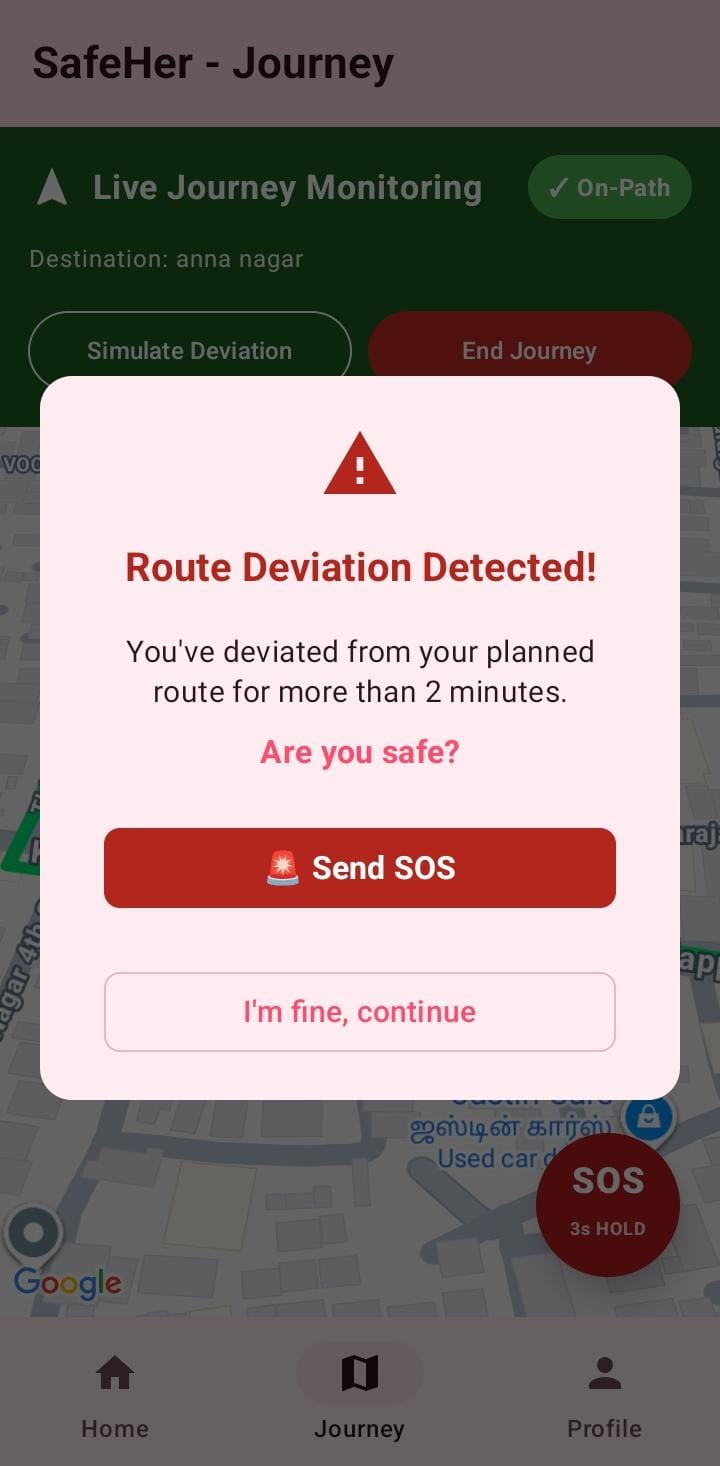
DEVIATION POP UP MESSAGE
-
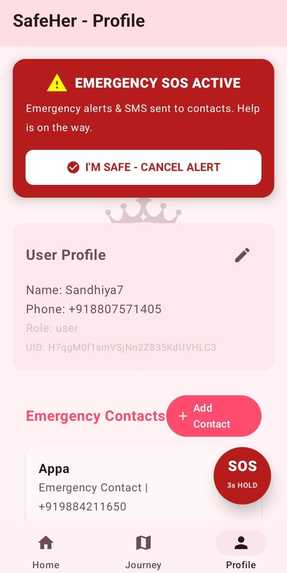
EDITING PROFILE PAGE
-
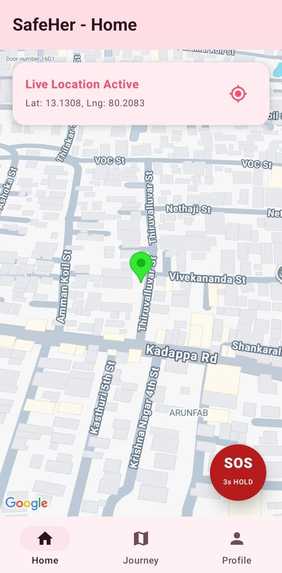
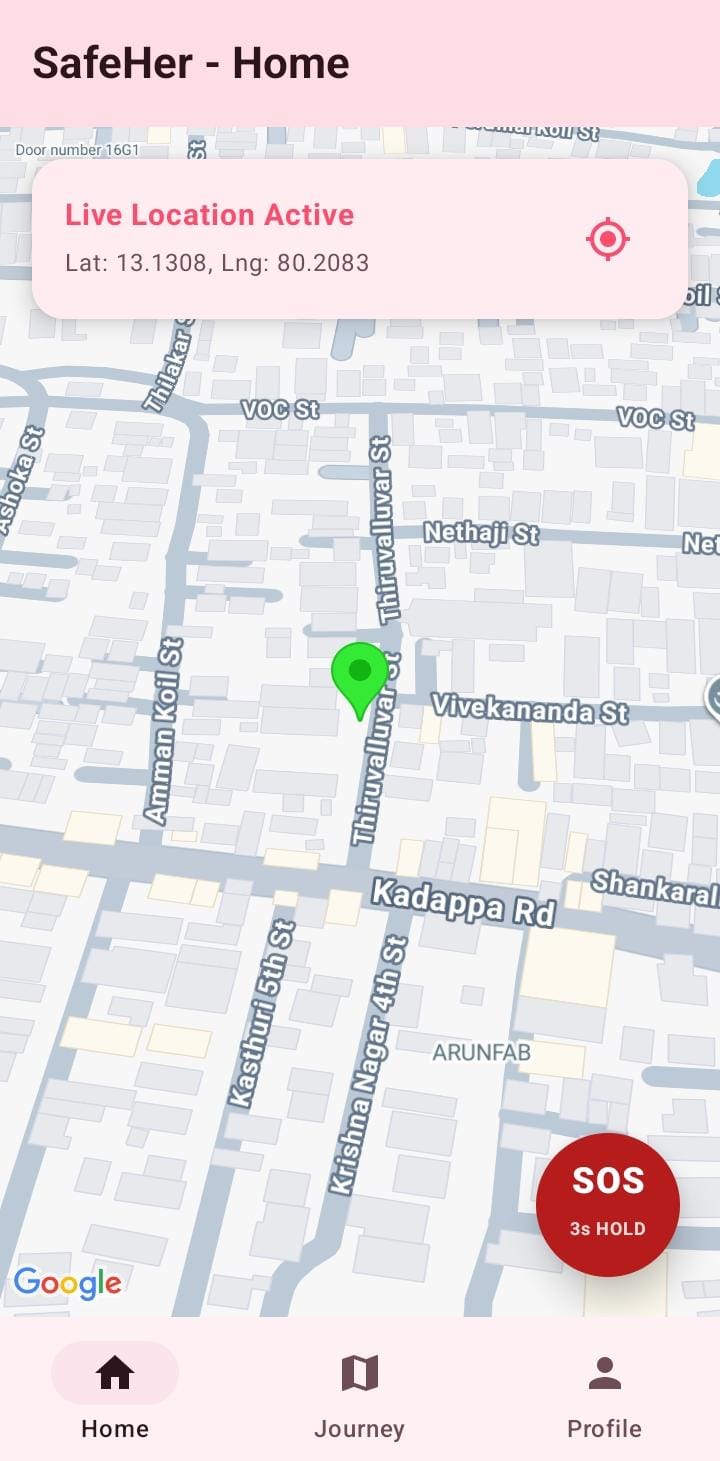
HOME PAGE
-
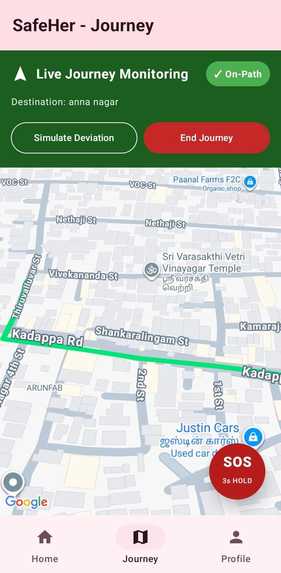
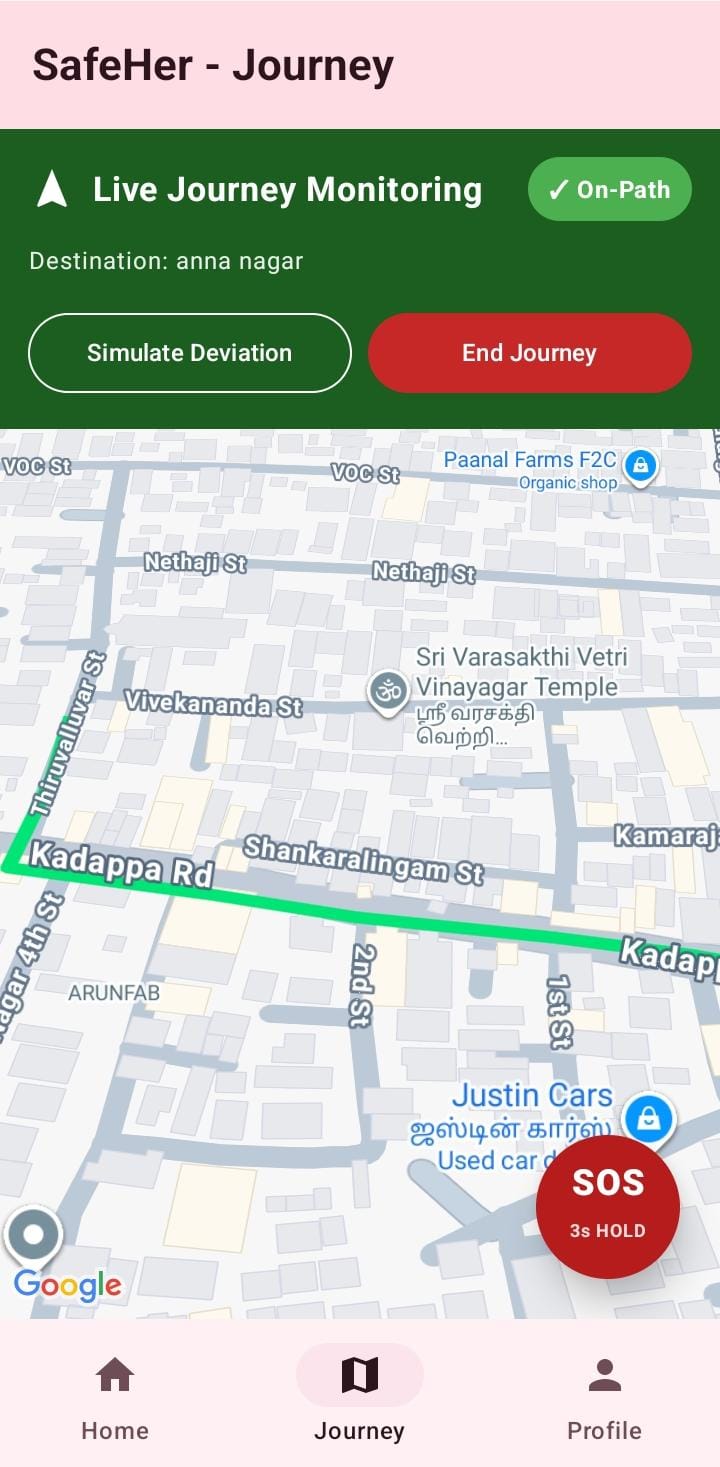
NAVIGATION PAGE
-
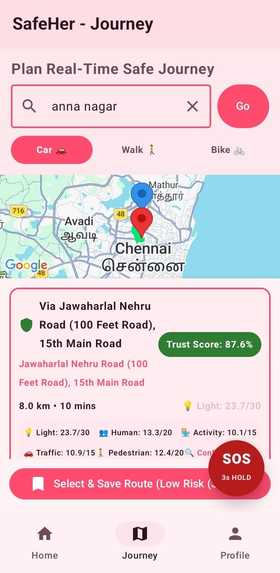
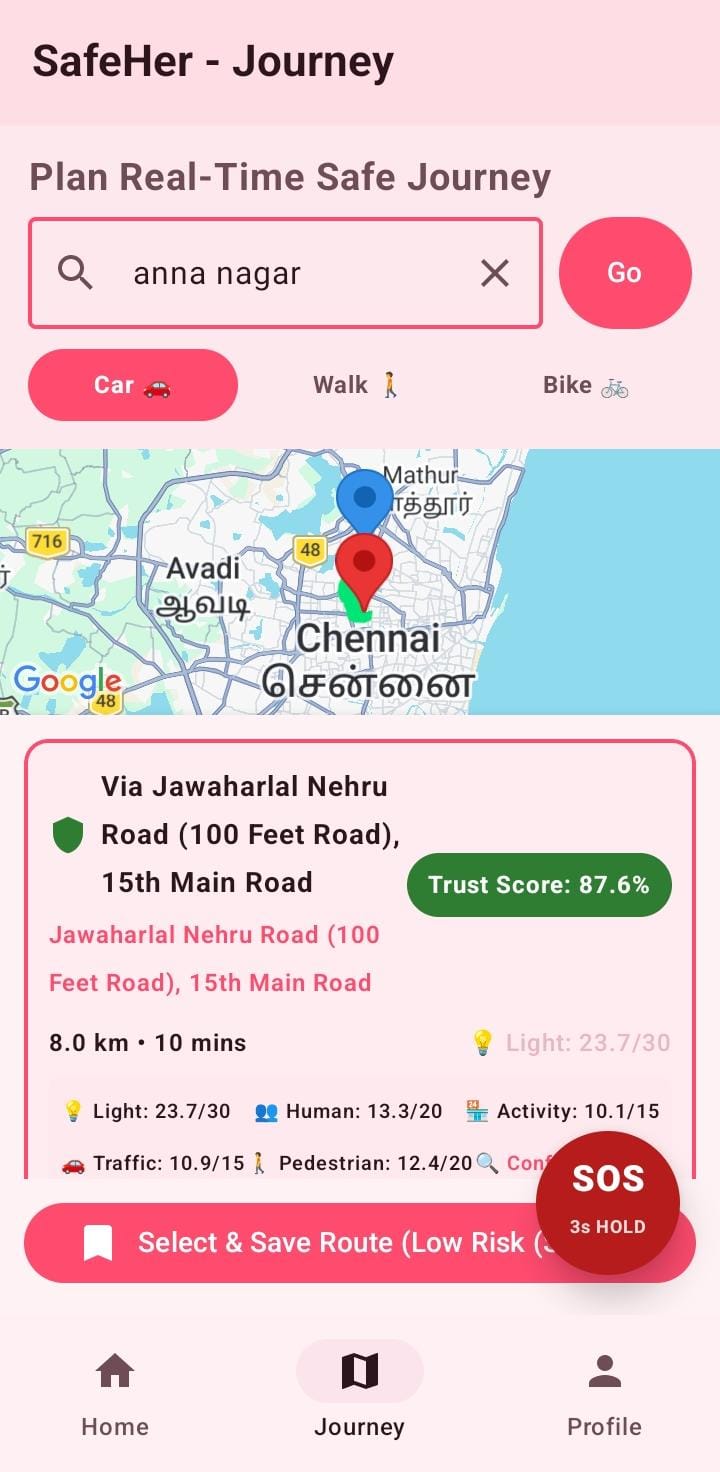
SAFE ROUTE
Inspiration
Women travel every day for college, work, and other activities. Even when they know their regular routes, the conditions on those routes can change due to poor lighting, isolated areas, traffic, crowd conditions, or transportation issues.
Existing navigation systems mainly focus on the shortest and fastest routes, creating a gap in safety-focused navigation. This inspired us to build SafeHer—a system that adds a safety layer to everyday transportation.
What it does
SafeHer—Smart Transportation for Women provides:
- Safer Route Recommendation based on safety conditions
- Lighting-based safety analysis
- Crowd/activity and traffic analysis
- Live location sharing with trusted contacts
- Instant SOS assistance
- Real-time journey monitoring
- Safe and high-risk zone identification
- Verified transportation options
The system continuously evaluates the journey instead of stopping after recommending a route.
How we built it
SafeHer uses a mobile-first architecture built with:
Kotlin + Jetpack Compose – Mobile application MVVM architecture—Application structure Room Database – Offline data storage WorkManager – Background synchronization Firebase Authentication – User authentication Cloud Firestore – Users, contacts, journeys, and SOS data Firebase Cloud Functions + FastAPI/Python – Backend processing Google Maps / Directions API – Routes and traffic information NASA Black Marble – Nighttime lighting data Hugging Face risk model – Route/risk intelligence
For the safety score, lighting, crowd/activity, and traffic factors are combined into a composite score that supports safer route selection.
Challenges we ran into
The major challenges were
Combining different data sources such as maps, lighting, and risk information. Converting different safety factors into a meaningful safety score. Providing real-time journey monitoring while keeping the application practical. Supporting offline situations, especially for safety-related actions. Designing emergency functionality that can work reliably when connectivity is limited. Balancing safety and practicality, because the safest theoretical route may not always be the most practical route.
Our architecture addresses connectivity challenges using Room for local storage and WorkManager for background synchronization.
Accomplishments we're proud of
We are proud that SafeHer brings several safety capabilities together in one platform:
Safety-aware routing + journey monitoring + location sharing + SOS assistance
We also developed a safety scoring approach that considers lighting, crowd/activity, and traffic, rather than relying only on distance or travel time.
Another important accomplishment is the offline-first design, where important data can be stored locally and synchronized when connectivity becomes available.
What we learned
Through building SafeHer, we learned that a real-world safety application is not just about implementing features.
We learned how to:
Combine multiple data sources for decision-making. Design a safety scoring mechanism. Build an offline-first mobile architecture. Integrate maps, location, and cloud services. Think about privacy, emergency workflows, and user control. Design technology around a real-world problem rather than simply building another navigation application.
Most importantly, we learned that technology should support better-informed decisions rather than claim to guarantee safety.
What's next for SafeHer?
Our future scope includes:
- AI-based prediction of emerging risk zones
- Public transportation integration
- Voice-activated emergency assistance
- AI chatbot assistance
- Wearable device integration
- Community-based safety reporting
- Multilingual support
- Smart-city infrastructure integration
These extensions can help SafeHer move from a safety-aware travel application toward a more connected women's transportation safety ecosystem.
Built With
- android
- cloudfirestore
- fastapi
- firebase
- google-maps
- jetpackcompose
- kotlin
- openstreetmap
- osrm
- python


Log in or sign up for Devpost to join the conversation.