-
-
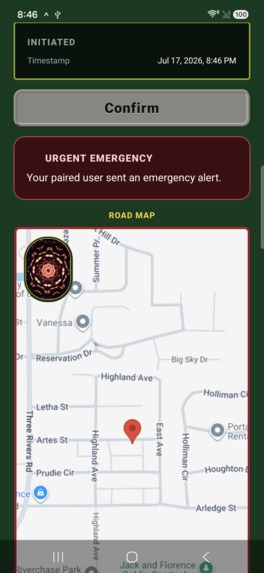
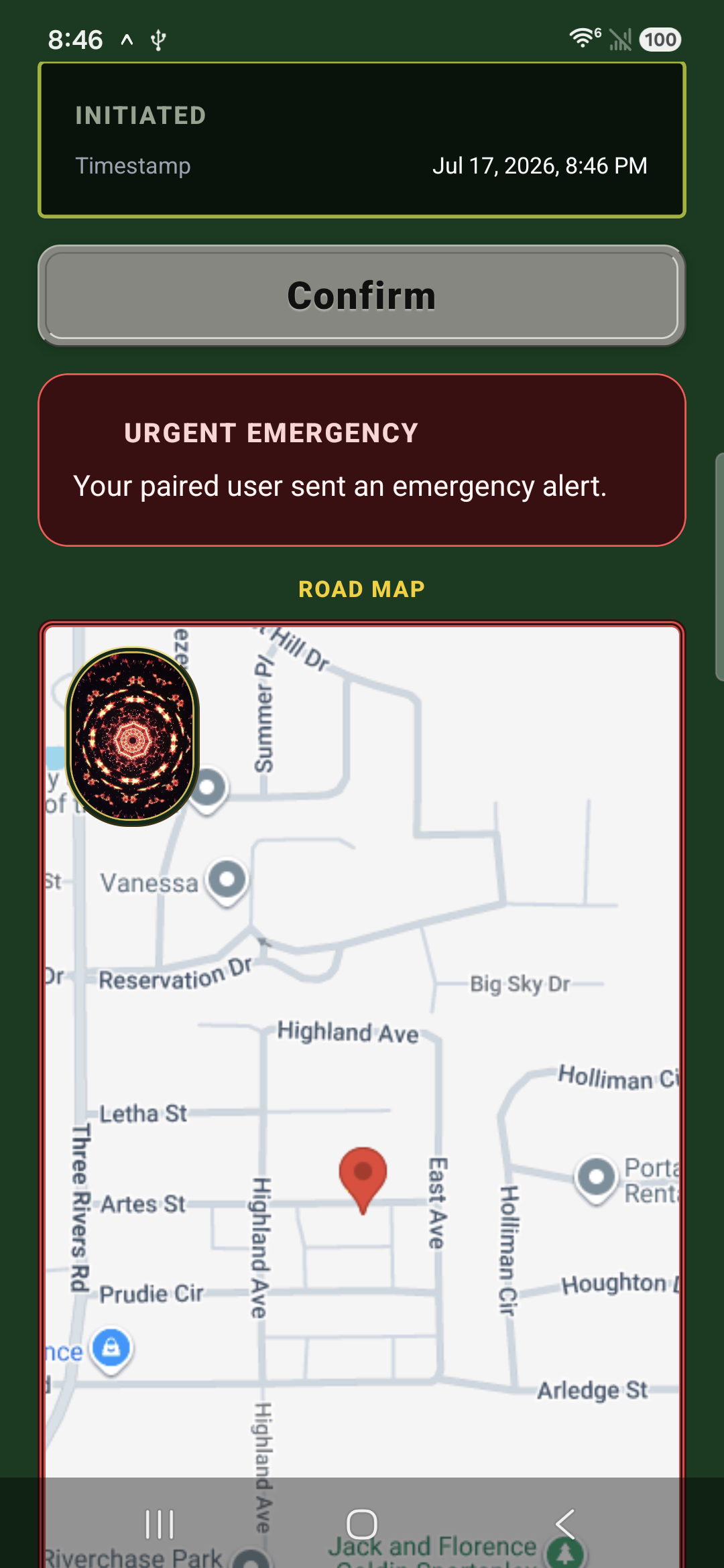
EMERGENCY MAP
-
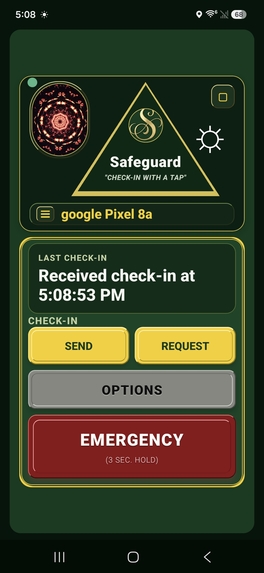
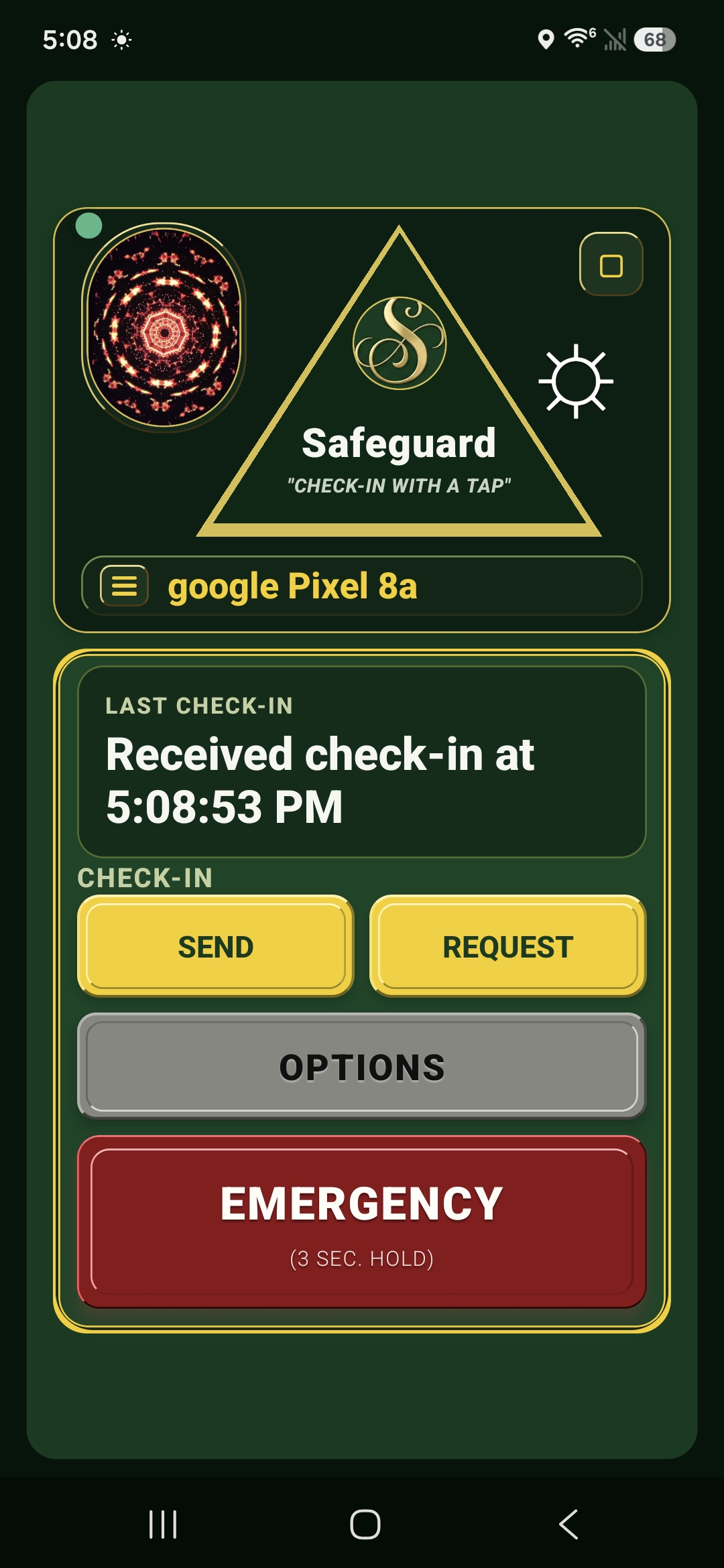
HOME SCREEN
-

SAFEGUARD LOGO
-
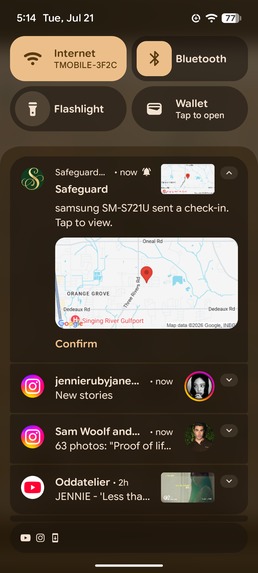
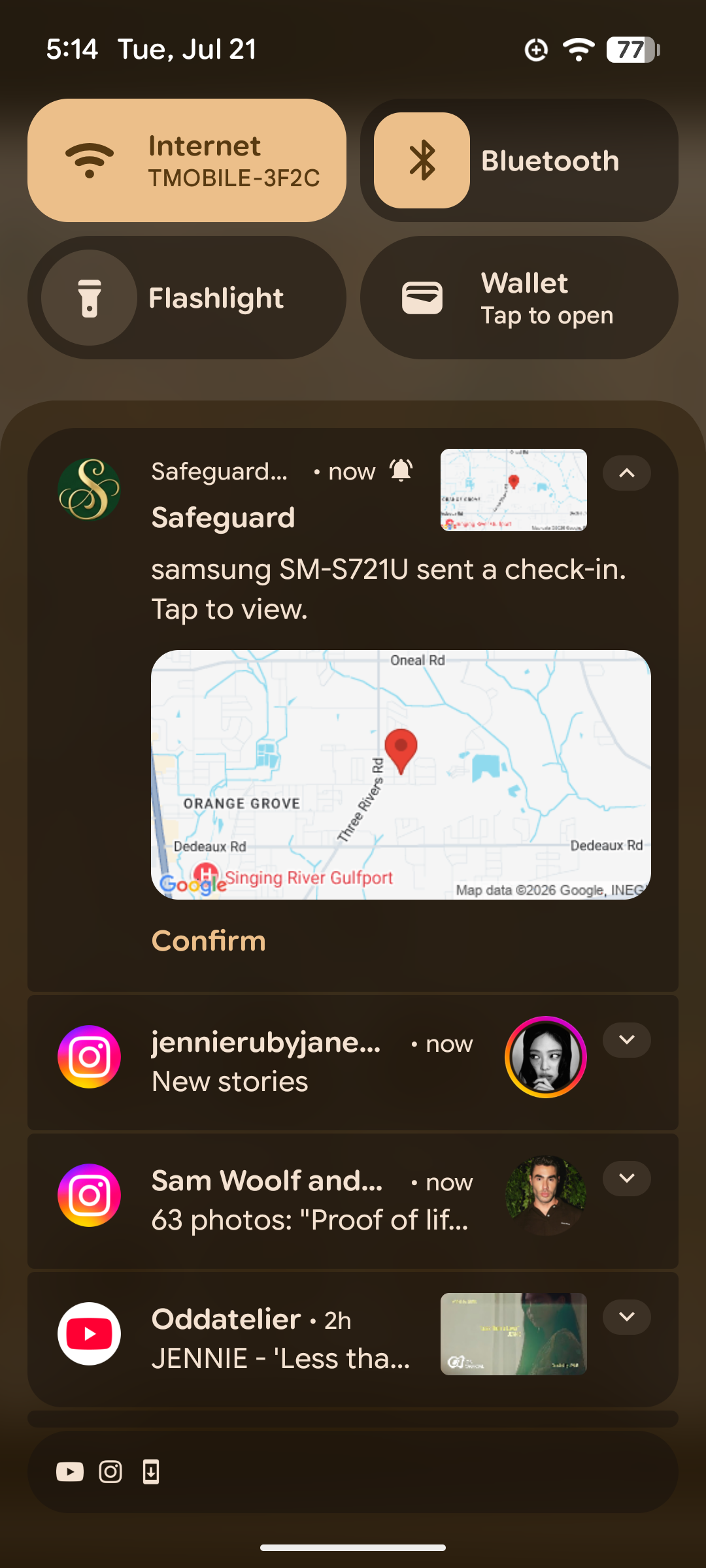
NOTIFICATION QUICK MAP (QM )& QUICK REPLY (QR)
-
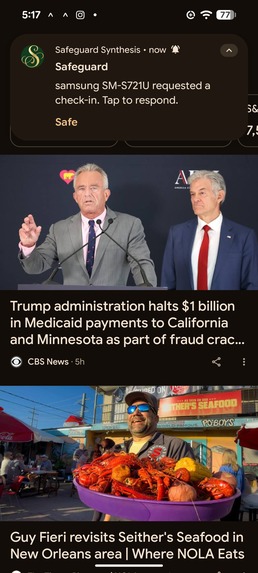
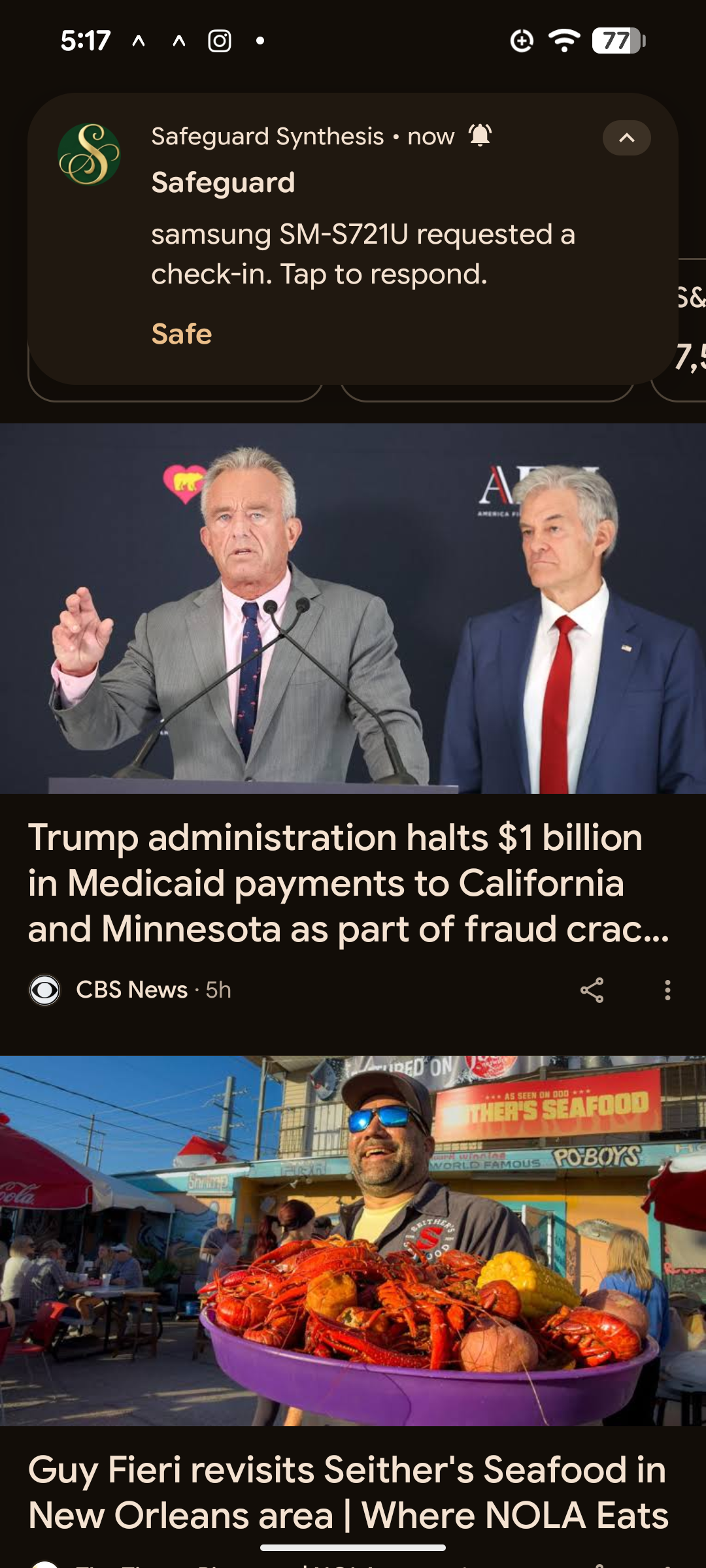
NOTIFICATION CHECK IN REQUEST & QUICK REPLY (QR)

Inspiration:
Safeguard Synthesis was inspired by a simple question: How can we help the people we care about know we're okay—or know we need help—as quickly as possible? While developing SGS, I learned about the tragic case of Nancy Guthrie. It reinforced something I had already been thinking about: in some emergencies, there simply isn't enough time to unlock a phone, dial 911, and wait for an operator. I wanted to build a consent-first platform that allows trusted family members, caregivers, and friends to be informed immediately when someone needs them most.
What it does:
Safeguard Synthesis is a consent-first safety platform for trusted Circles. Participants create private Circles with the people they trust most. From there, they can intentionally SEND or REQUEST wellness check-ins with specific Circle members, while Emergency Fan-Out rapidly notifies trusted participants when an emergency occurs. Notification persistence helps ensure those critical alerts remain available until they can be acknowledged.
How we built it:
I have no formal education in software engineering and began using AI regularly only about eight or nine months before this project. SGS was built through a collaborative process. I provided the product vision, system governance, safety principles, and architectural direction, while GPT-5.6 and Codex became my engineering collaborators, helping transform those ideas into a working software platform. Together, we navigated financial limitations, technical uncertainty, and countless engineering challenges to build a system that we are proud to share with the world.
Challenges we ran into:
Every part of the stack presented a new learning opportunity. We learned Cloudflare Workers, Supabase, Firebase Cloud Messaging, identity management, endpoint architecture, Git, deployment workflows, and mobile application development while simultaneously building the product. Along the way, SGS was redesigned and rebuilt multiple times as our understanding evolved. Perhaps our greatest engineering lesson was realizing that disciplined governance was just as important as writing code. We developed structured engineering workflows, archival practices, and architectural review processes that allowed us to rebuild, verify, and improve SGS without losing the project's direction.
Accomplishments that we're proud of:
I'm incredibly proud that a vision which began with no formal software background has become a working multi-device safety platform. I'm equally proud of the collaboration itself. GPT-5.6 and Codex were instrumental in helping transform ideas into architecture, implementation, documentation, and verification. This project demonstrates what thoughtful human leadership and AI collaboration can accomplish together. Most importantly, I'm proud that SGS has the potential to provide comfort, strengthen trusted relationships, and one day help people during moments when every second matters.
What we learned:
Build Week reinforced that successful AI-assisted software development is about much more than generating code.We learned the importance of disciplined governance, architectural review, version control, documentation, and evidence-based engineering. We also discovered that human judgment and AI complement one another exceptionally well: human leadership defines purpose, priorities, e thics, and governance, while AI accelerates implementation, technical reasoning, verification, and iteration. Above all, we learned that building trustworthy safety software requires patience, humility, and a willingness to rebuild when a better architectural truth is discovered.
What's next for SAFEGURAD-SYNTHESIS:
Our roadmap focuses on strengthening trusted Circle architecture rather than adding unnecessary features. Next, we plan to expand trusted-device enrollment so participants can securely use multiple devices without consuming additional Circle seats. We also plan to introduce explicit Guardian authority for dependent participants, enforced by Worker-side authorization so Guardian permissions are always explicit rather than inferred.
Beyond that, we will continue hardening Companion Mode, cross-device acknowledgement convergence, notification cleanup, and persistent awareness surfaces so important safety information remains visible even when users leave the application. Future work includes Quick Map privacy enhancements, an expanded Notification Center, production release readiness, and continued research into multimodal safety signals that communicate urgency through audible, tactile, and visual feedback. Every future capability will follow the same engineering principle that guided this Build Week: Identity, authority, consent, privacy, and delivery truth must be verified before new runtime behavior is certified. When certainty matters... Truth is Comfort.
Built With
- ai-collaboration
- android
- cloudfalre
- codex
- companion-mode
- concent
- emergency
- expo.io
- firebase
- gps
- gpt
- identity-management
- maps
- mobile
- notifications
- open-ai
- postgresql
- privacy
- reactnative
- safety
- supabase
- trustedcircles
- typescript

Log in or sign up for Devpost to join the conversation.