Inspiration
Operations work gets noisy fast. One service slows down, a few logs look suspicious, alerts pile up, and suddenly the person on call has to decide what matters first.
Runbook Relay Agent started from that moment. We wanted a simple way to turn noisy service logs into a calmer queue, with enough context for an operator to make the next move without digging through everything manually.
What it does
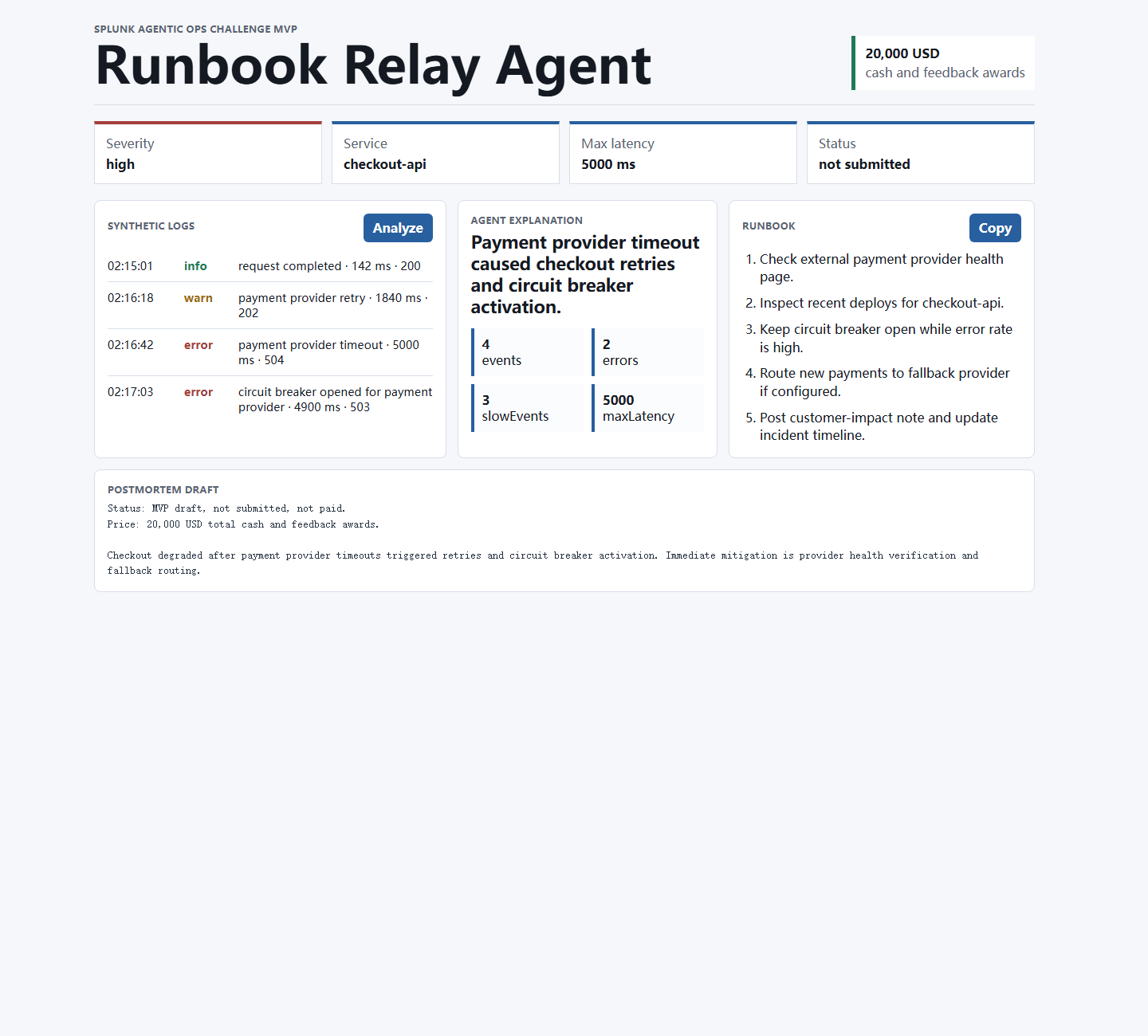
Runbook Relay Agent reads a stream of synthetic service logs and turns it into an incident review queue.
It groups signals by service, severity, latency, and error pattern. Then it suggests runbook steps, writes a short explanation of what changed, and drafts a lightweight postmortem note.
The goal is not to replace the operator. It is to give the operator a cleaner starting point when the system is loud.
How we built it
We built the prototype as a browser based demo with HTML, CSS, JavaScript, synthetic log data, and a small Node.js analysis script.
The demo models the kind of workflow we would connect to Splunk: ingest events, detect service level patterns, explain the likely issue, and hand off a runbook that a person can review.
Challenges we ran into
The main challenge was keeping the demo useful without pretending it had access to a live production system.
We used synthetic logs so the project could be reviewed safely, but still made the data realistic enough to show the flow: noisy input, grouped signals, an incident summary, and next steps.
Accomplishments that we're proud of
We got the project into a clear operator flow. A reviewer can open the demo, see the signal counters, read the runbook steps, and understand why the agent is recommending them.
We are also happy that the project stays honest about the handoff. It helps with triage, but the operator still decides what to run and when to escalate.
What we learned
A good ops assistant does not need to sound dramatic. It needs to be calm, specific, and easy to check.
We also learned that the most useful output is often the small stuff: a short explanation, a clean queue, and a runbook that saves a few minutes when those minutes matter.
What's next for Runbook Relay Agent
Next we would connect the workflow to a real Splunk environment and replace the synthetic log fixture with live or replayed events.
We would also add saved incident reviews, better service ownership mapping, and richer runbook templates for different teams.
Built With
- css
- html
- javascript
- node.js
- splunk
- synthetic-logs
- workflow

Log in or sign up for Devpost to join the conversation.