-
-
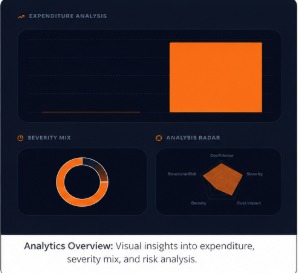
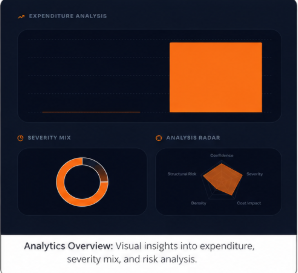
Visual insights into expenditure, severity mix, and structural risk analysis.
-
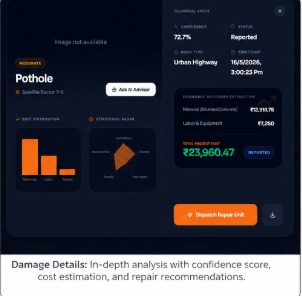
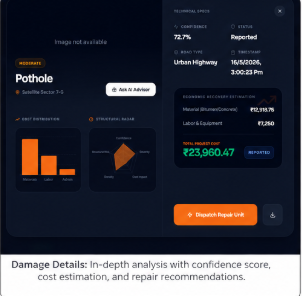
Detailed infrastructure assessment with confidence scores, repair costs, and response recommendations.
-
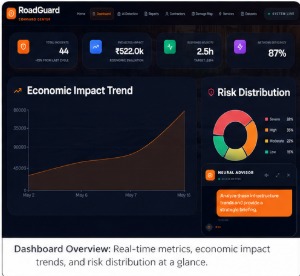
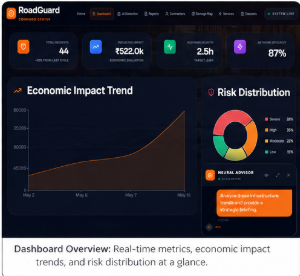
Real-time metrics, economic impact trends, and risk distribution monitoring.
-
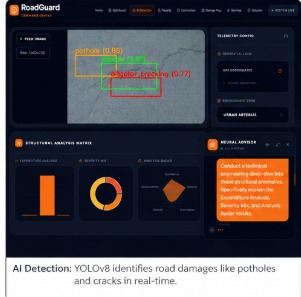
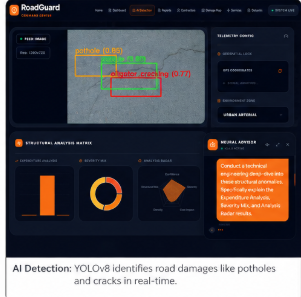
YOLOv8-powered detection of potholes, cracks, and road surface damages in real time.
-
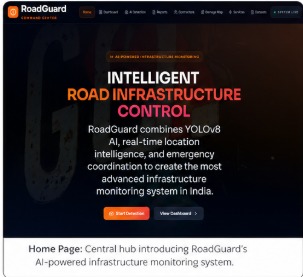
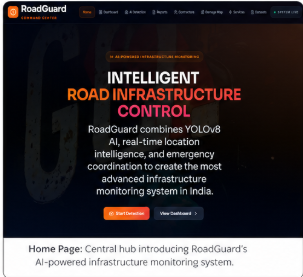
Central hub introducing RoadGuard’s AI-powered infrastructure monitoring system.
-
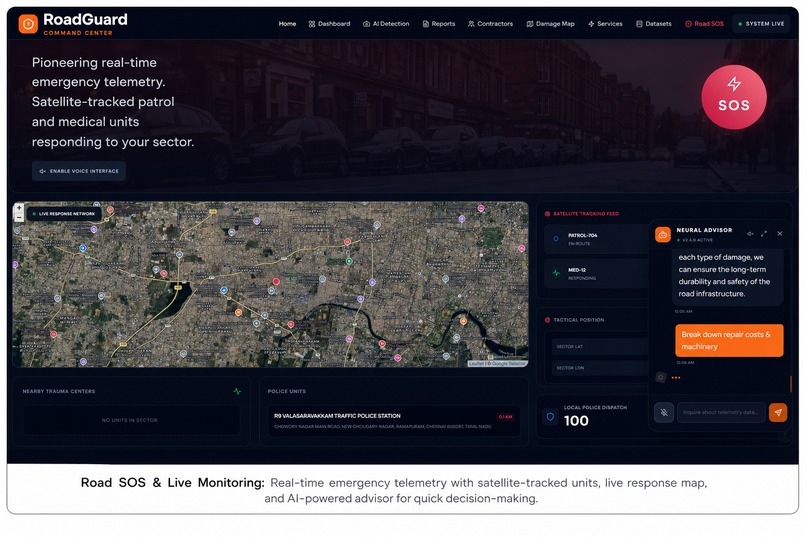
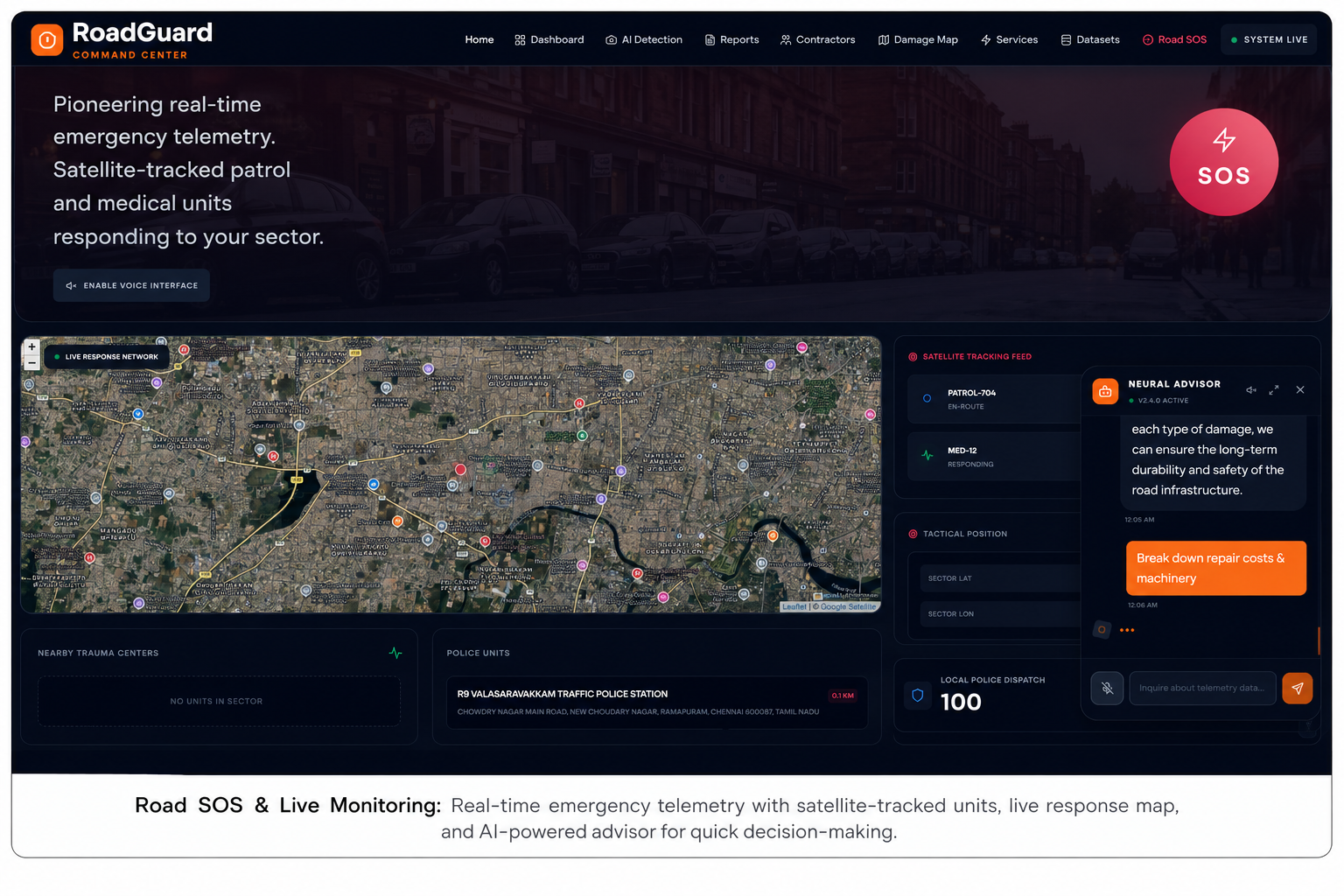
Real-time emergency monitoring with AI-powered coordination, live tracking, and rapid response for safer smart road infrastructure.
RoadX
Inspiration
Road accidents and vehicle damage caused by potholes, cracks, and poorly maintained roads are major issues in many cities. We were inspired to create RoadX after observing how delayed road maintenance affects public safety, traffic flow, and emergency response. Our goal was to design a smart and scalable solution that can automatically detect road damage and help authorities respond faster using AI and real-time monitoring technologies.
What it does
RoadX is an AI-powered smart road monitoring and safety platform that detects road damage such as potholes, cracks, and surface irregularities. The system analyzes road images and live camera feeds to identify damaged areas and generate alerts for faster maintenance action. It also supports real-time reporting, location-based tracking, and infrastructure monitoring to improve urban transportation safety and road management.
How we built it
We built RoadX using a combination of Artificial Intelligence, Computer Vision, and web technologies. The project uses deep learning models for image-based road damage detection and integrates location tracking for accurate reporting.
Technologies Used
- Python
- OpenCV
- TensorFlow / YOLO
- Flask / Streamlit
- HTML, CSS, JavaScript
- GitHub for collaboration and deployment
The AI model was trained to identify different types of road damage from uploaded or live images. The frontend interface allows users to upload road images and receive instant detection results with highlighted damaged regions.
Challenges we ran into
One of the biggest challenges was collecting and processing quality road damage datasets for accurate model training. Lighting conditions, shadows, weather, and varying road textures affected detection accuracy. We also faced challenges in optimizing the model for faster real-time performance and integrating location-based reporting efficiently.
Accomplishments that we're proud of
- Successfully developed an AI-based road damage detection system
- Achieved real-time detection capability with image analysis
- Built a user-friendly interface for easy reporting and monitoring
- Integrated smart infrastructure concepts into a practical solution
- Created a scalable idea that can support smart city development
What we learned
Through RoadX, we gained hands-on experience in:
- Computer Vision and Deep Learning
- Real-time object detection techniques
- AI model training and optimization
- Web application integration
- Team collaboration and project management
We also learned how technology can directly contribute to public safety and urban infrastructure improvement.
What's next for RoadX
We plan to enhance RoadX by:
- Integrating drone-based road inspection
- Adding live traffic and weather analysis
- Developing a mobile application for citizens and authorities
- Implementing cloud-based real-time monitoring
- Expanding the AI model to classify multiple infrastructure damages
In the future, RoadX aims to become a complete smart infrastructure management platform for safer and smarter cities.
Built With
- ai-based
- api
- computer
- css3
- detection
- flask
- github
- gps
- html5
- image
- javascript
- learning
- machine
- maps
- object
- opencv
- processing
- python
- services
- streamlit
- tensorflow
- vision
- yolo


Log in or sign up for Devpost to join the conversation.