-
-
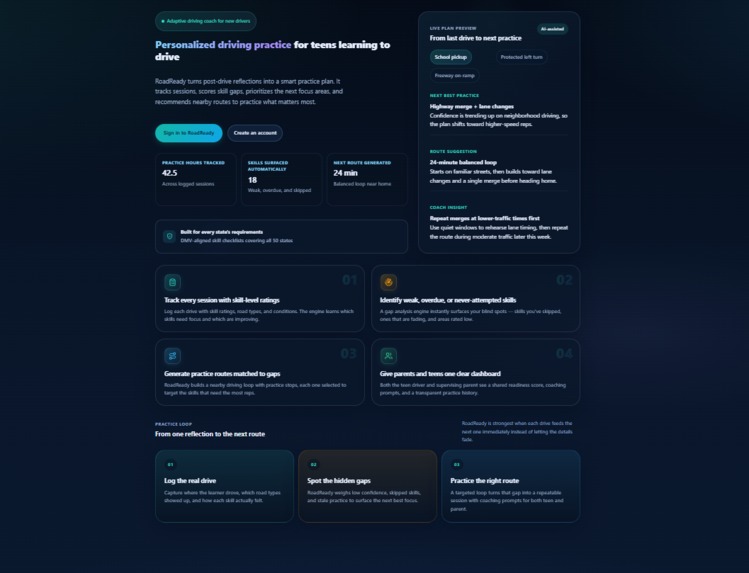
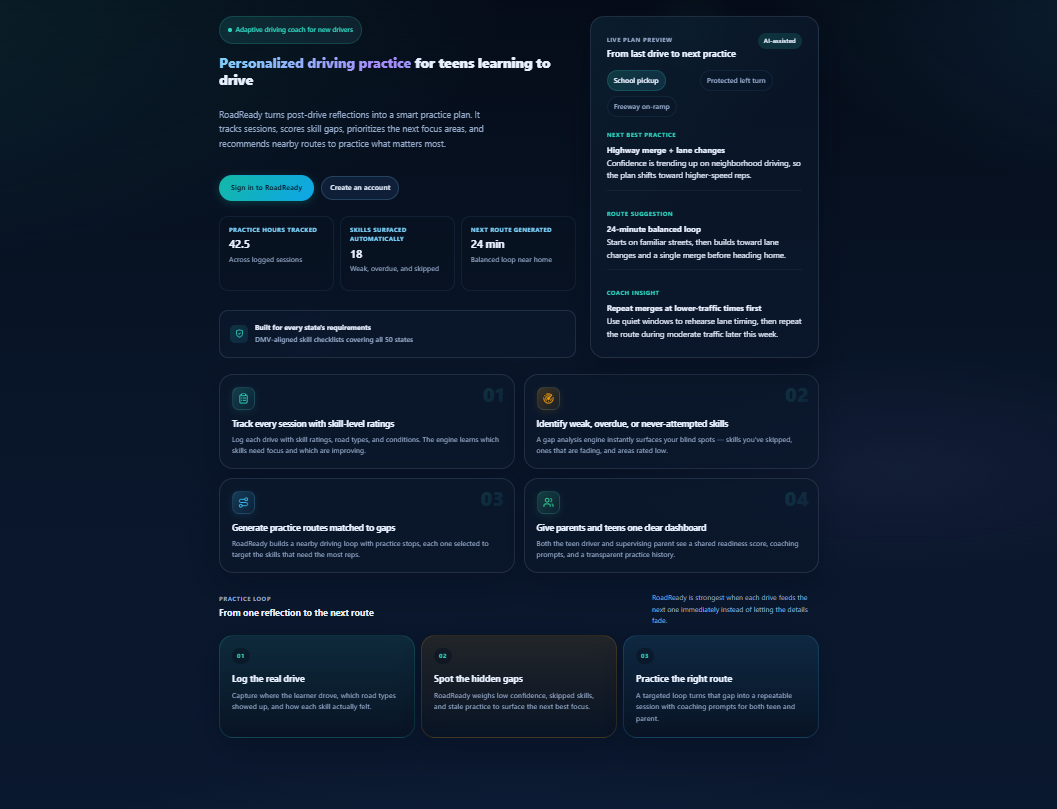
Landing Page
-
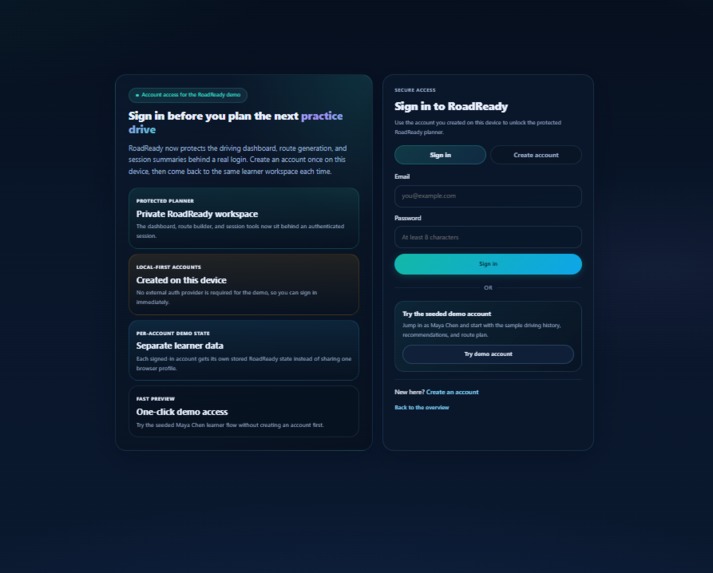
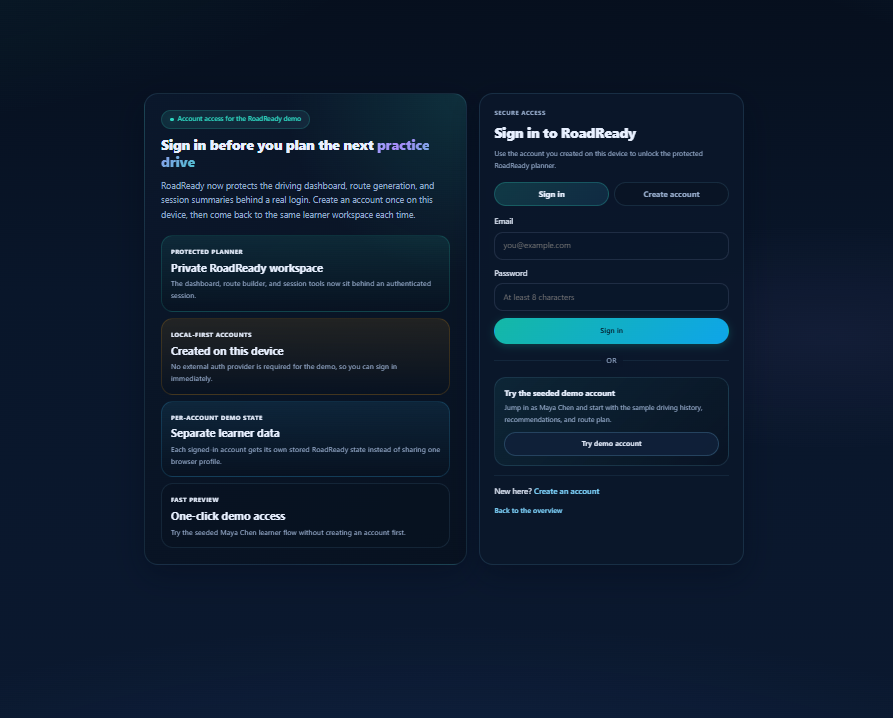
Sign in Page
-
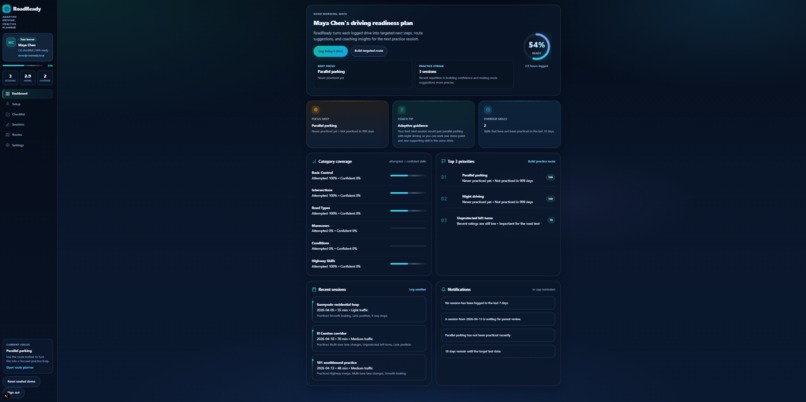
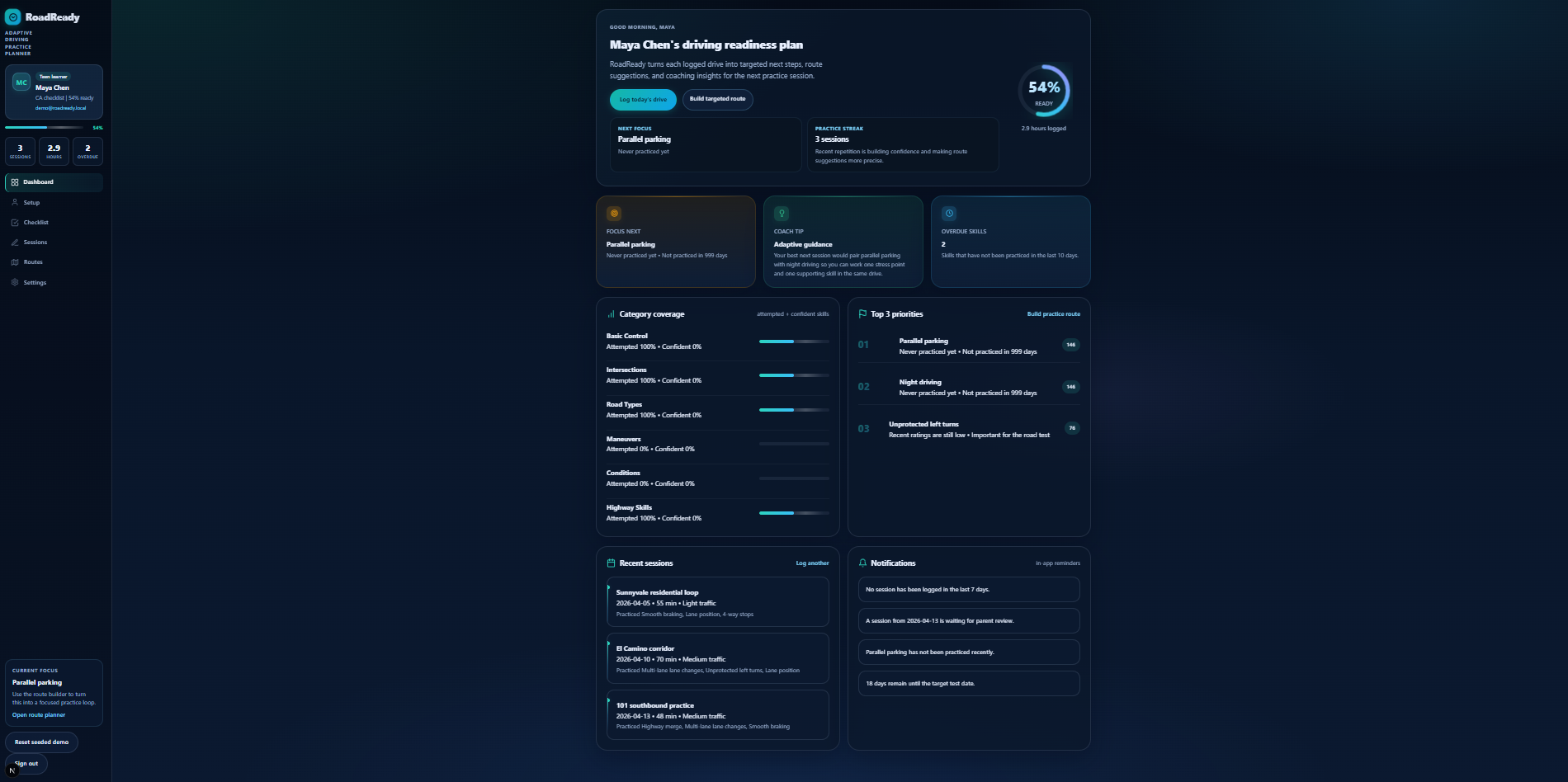
Dashboard Page
-
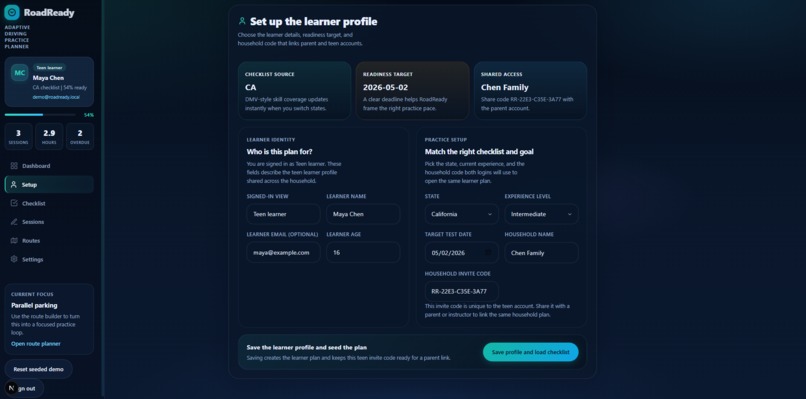
Setup Page
-
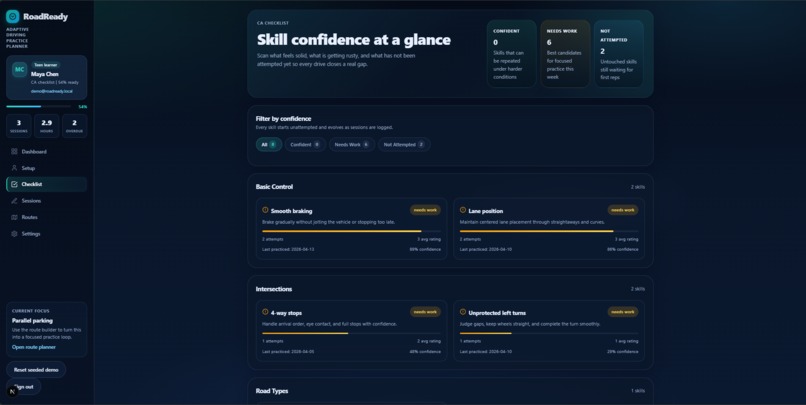
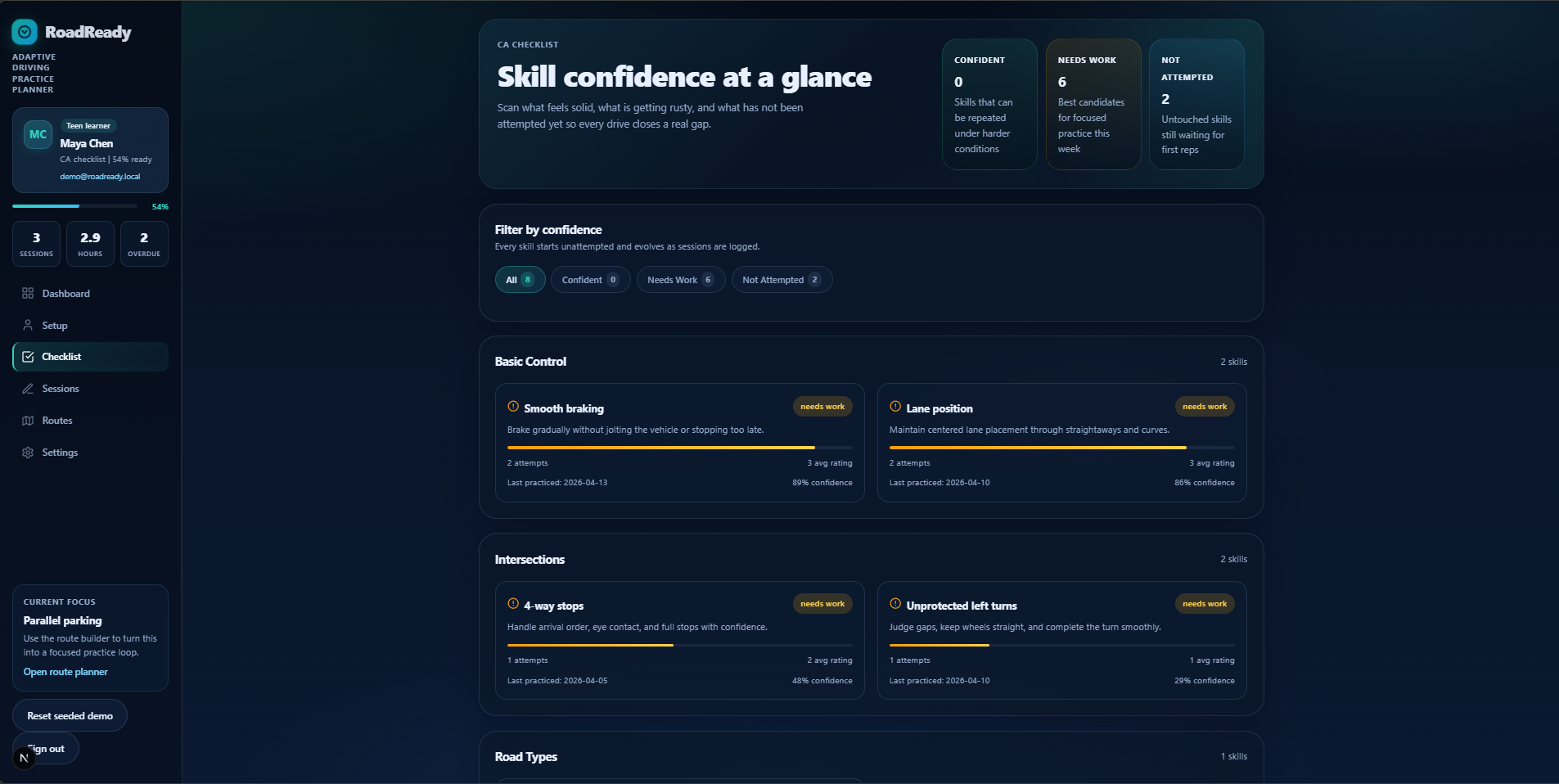
Checklist Page
-
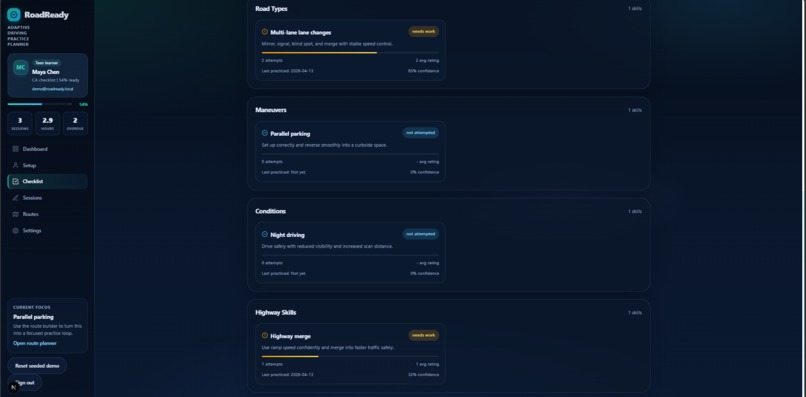
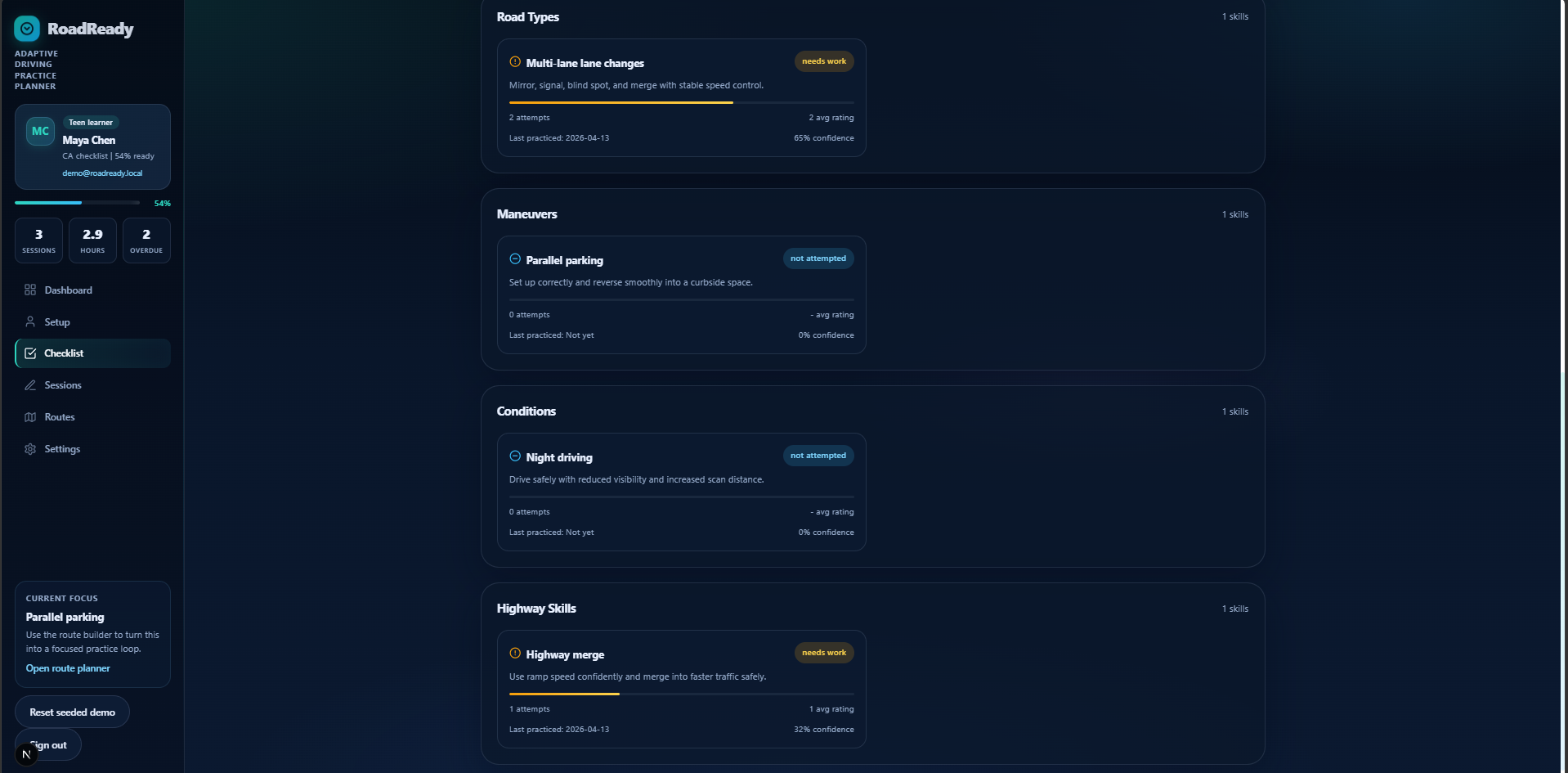
Checklist Page Part 2
-
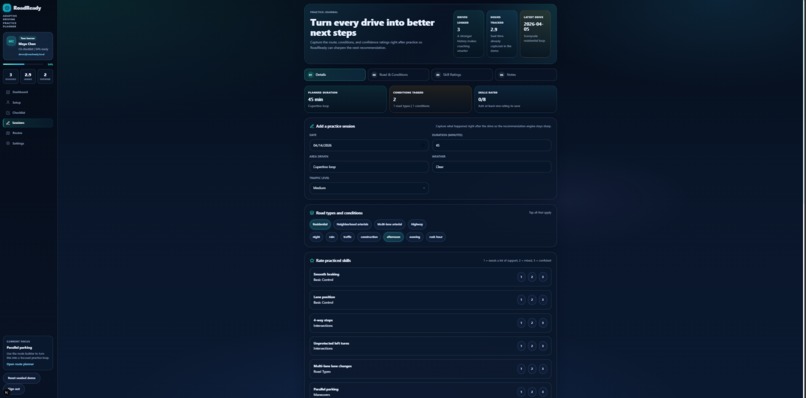
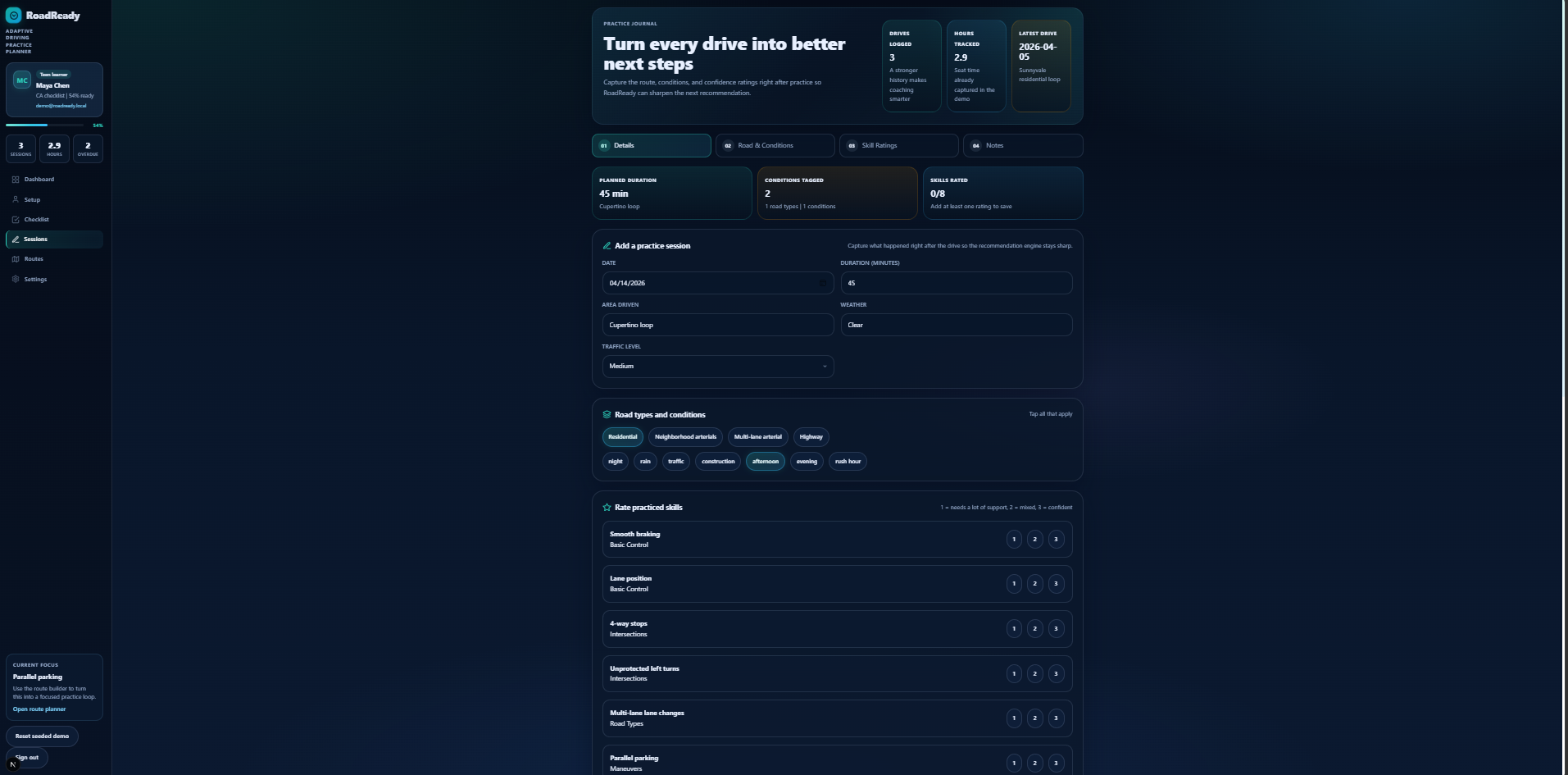
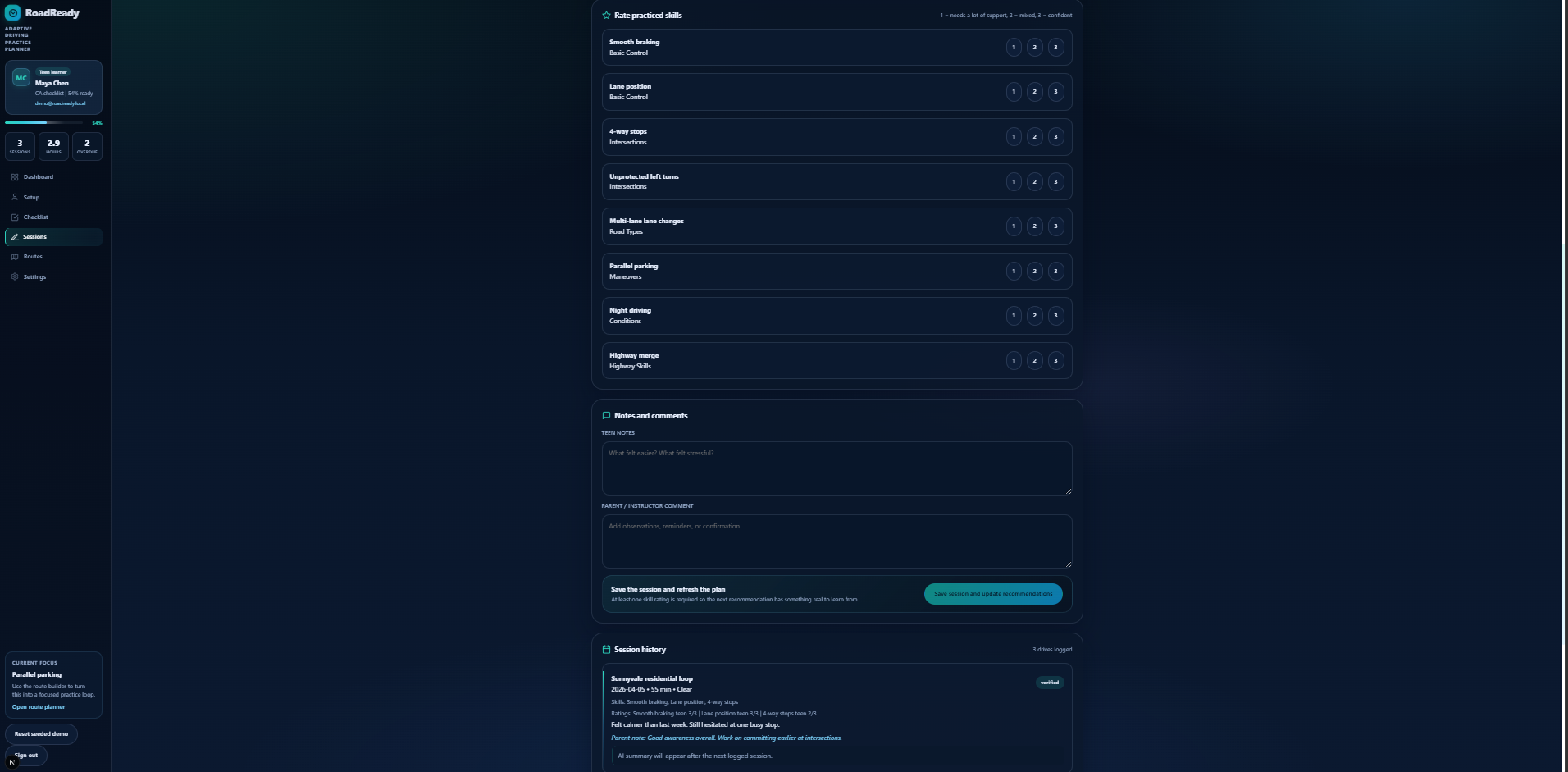
Sessions Page Part 1
-
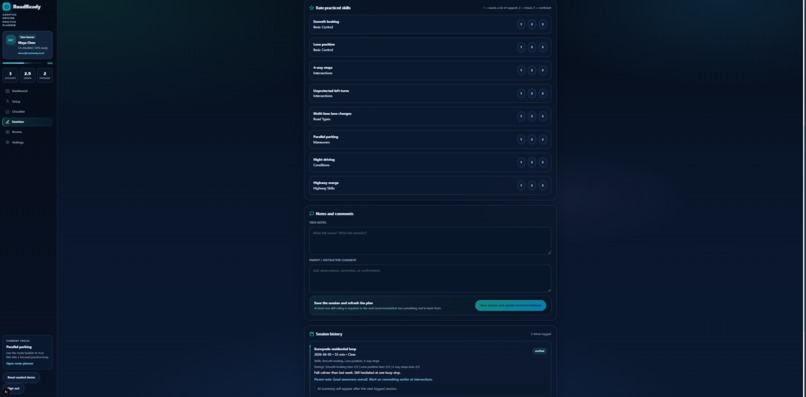
Sessions Page Part 2
-
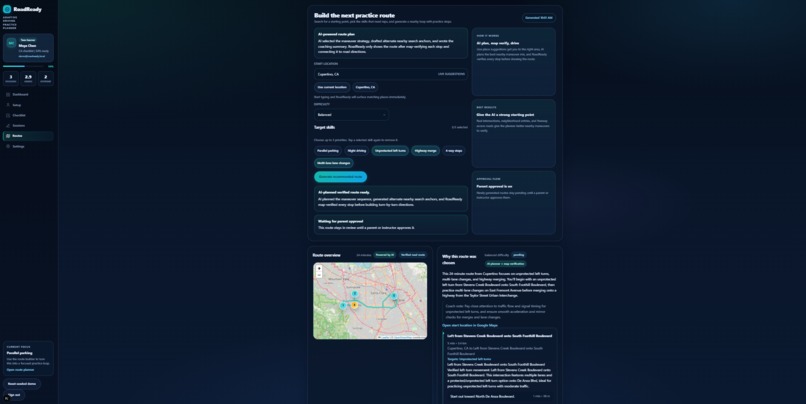
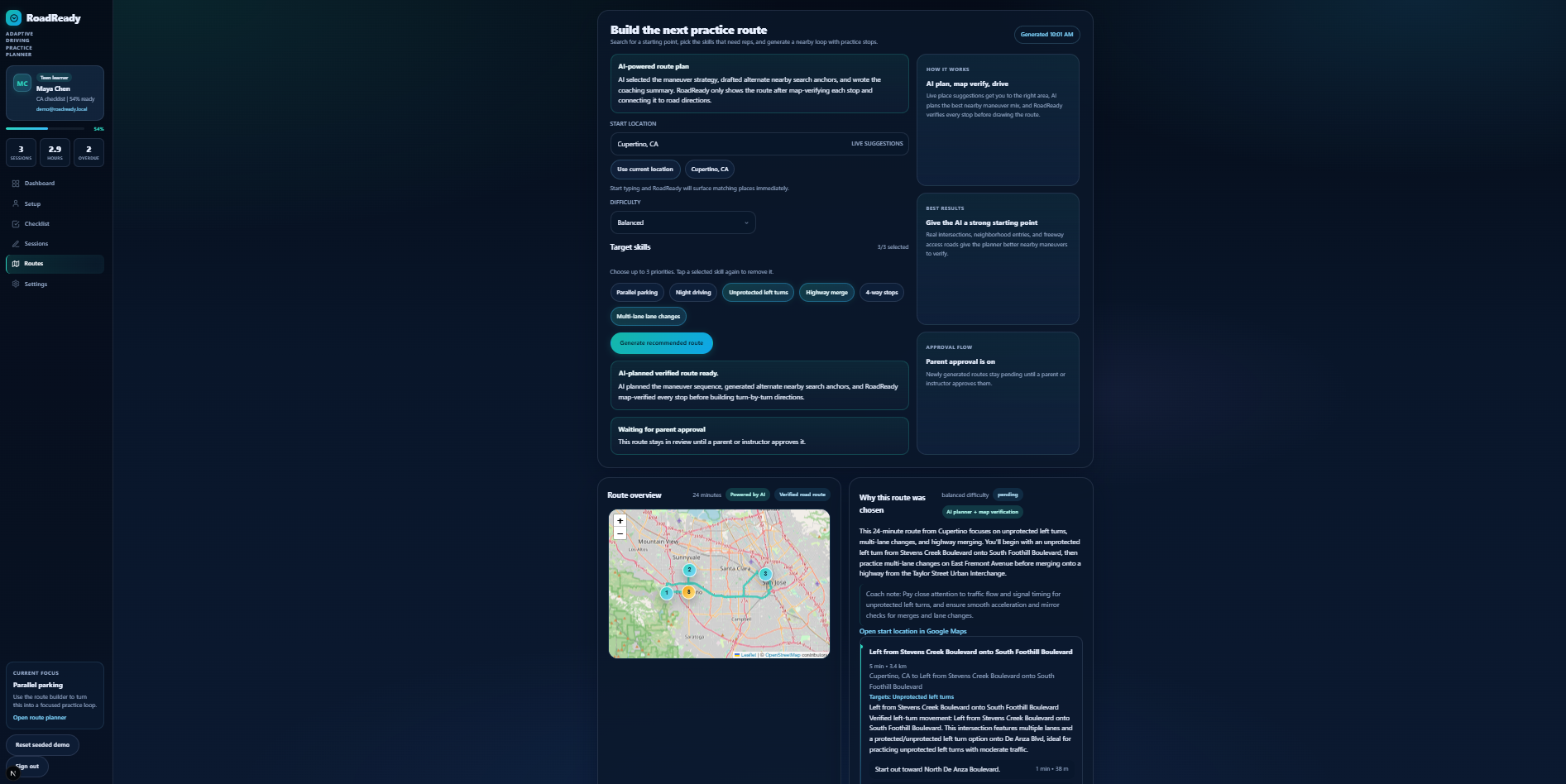
Routes Page Part 1
-
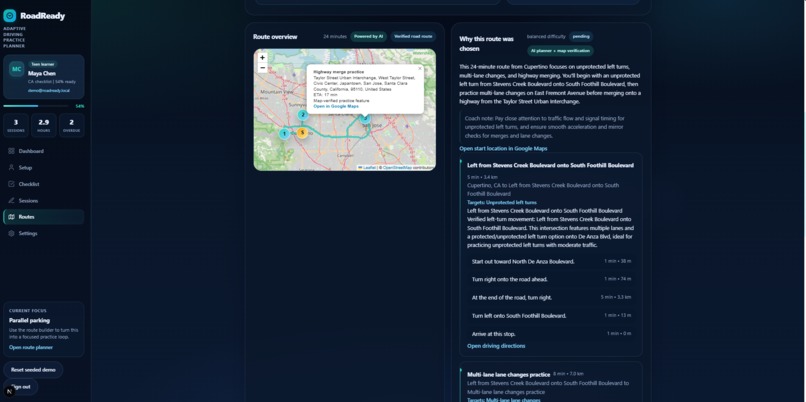
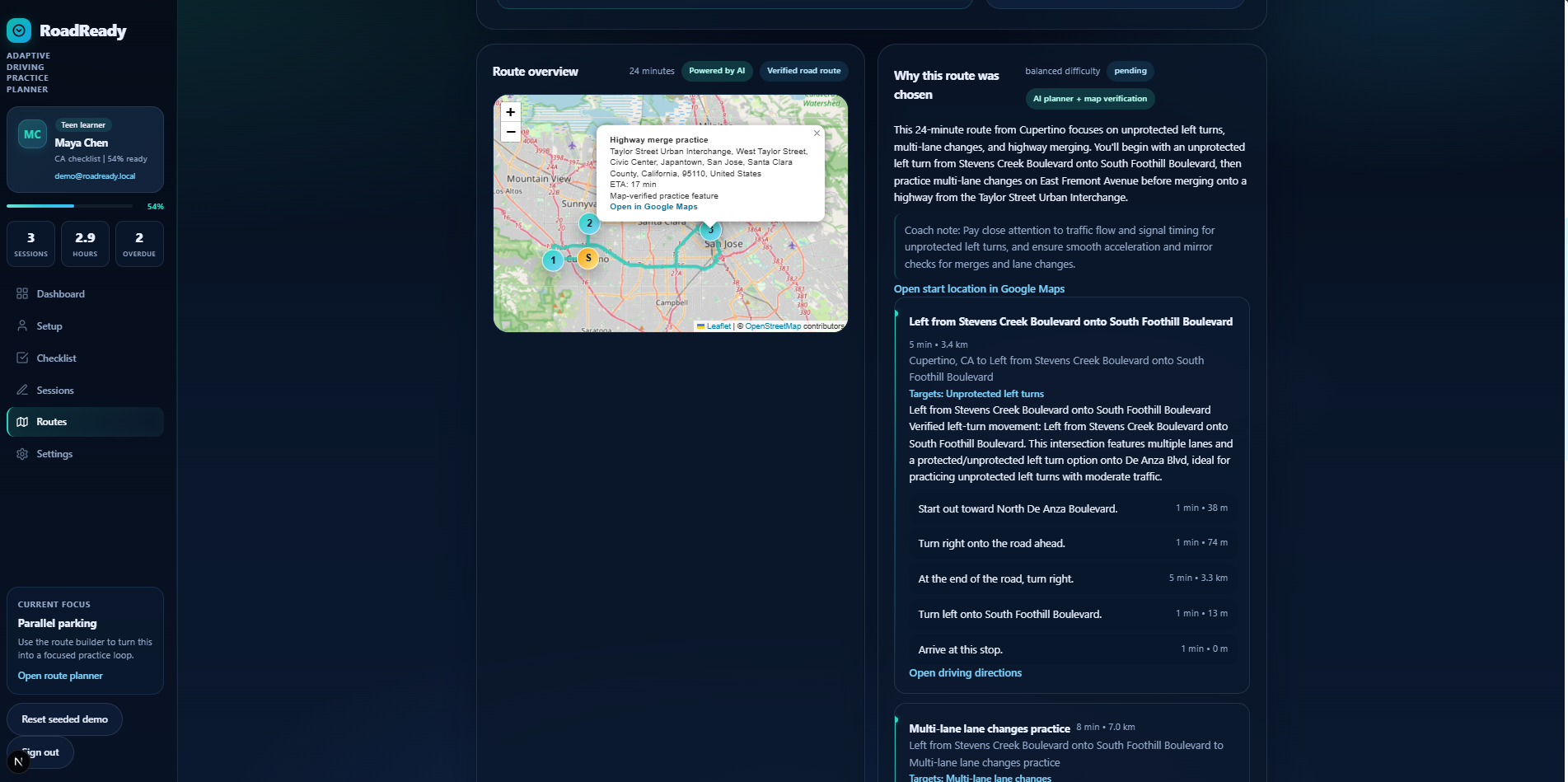
Routes Page Part 2
-
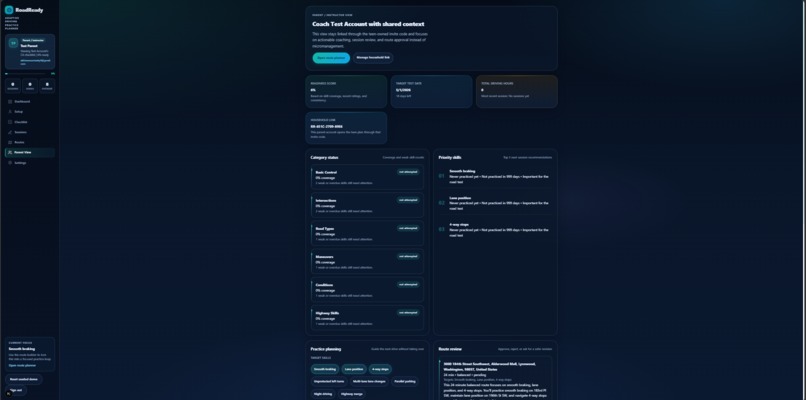
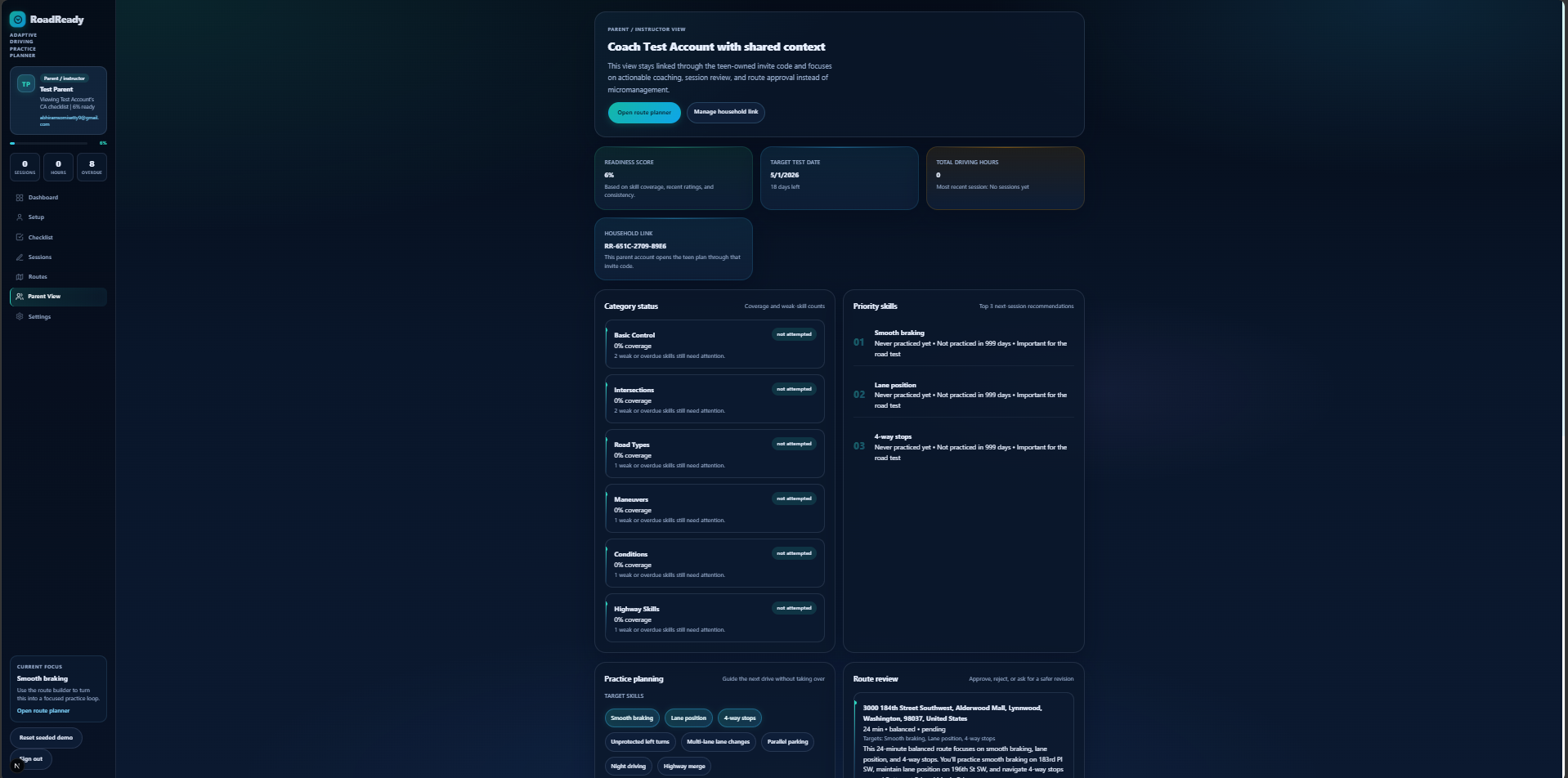
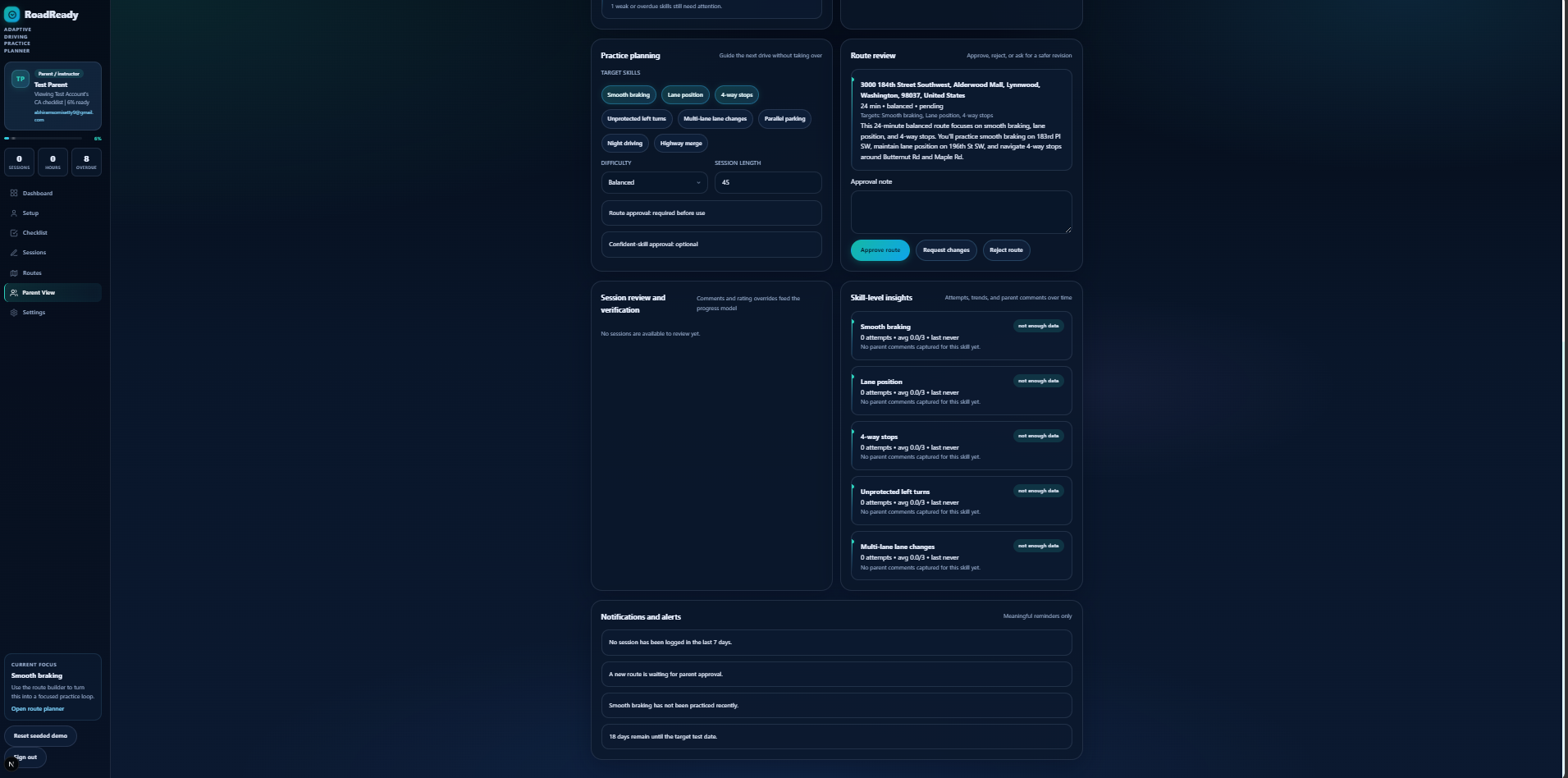
Parent View Page Part 1
-
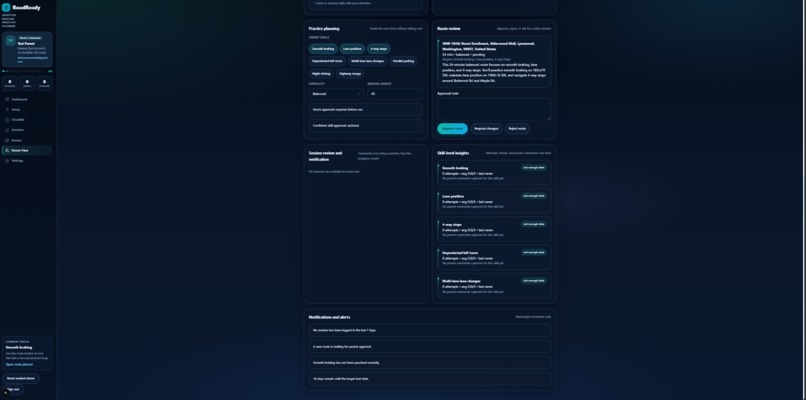
Parent View Page Part 2
-
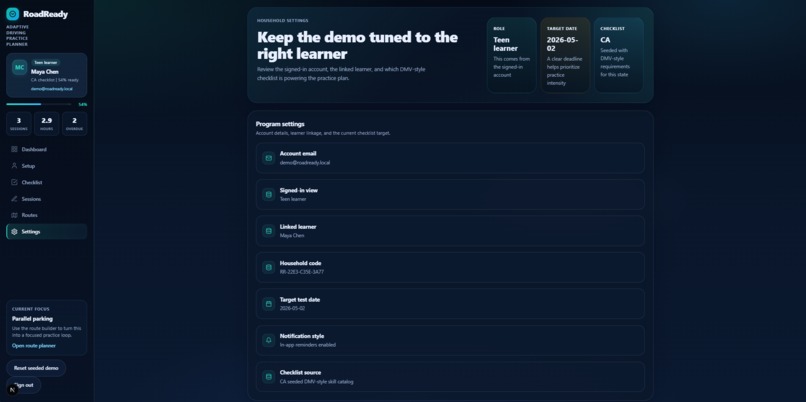
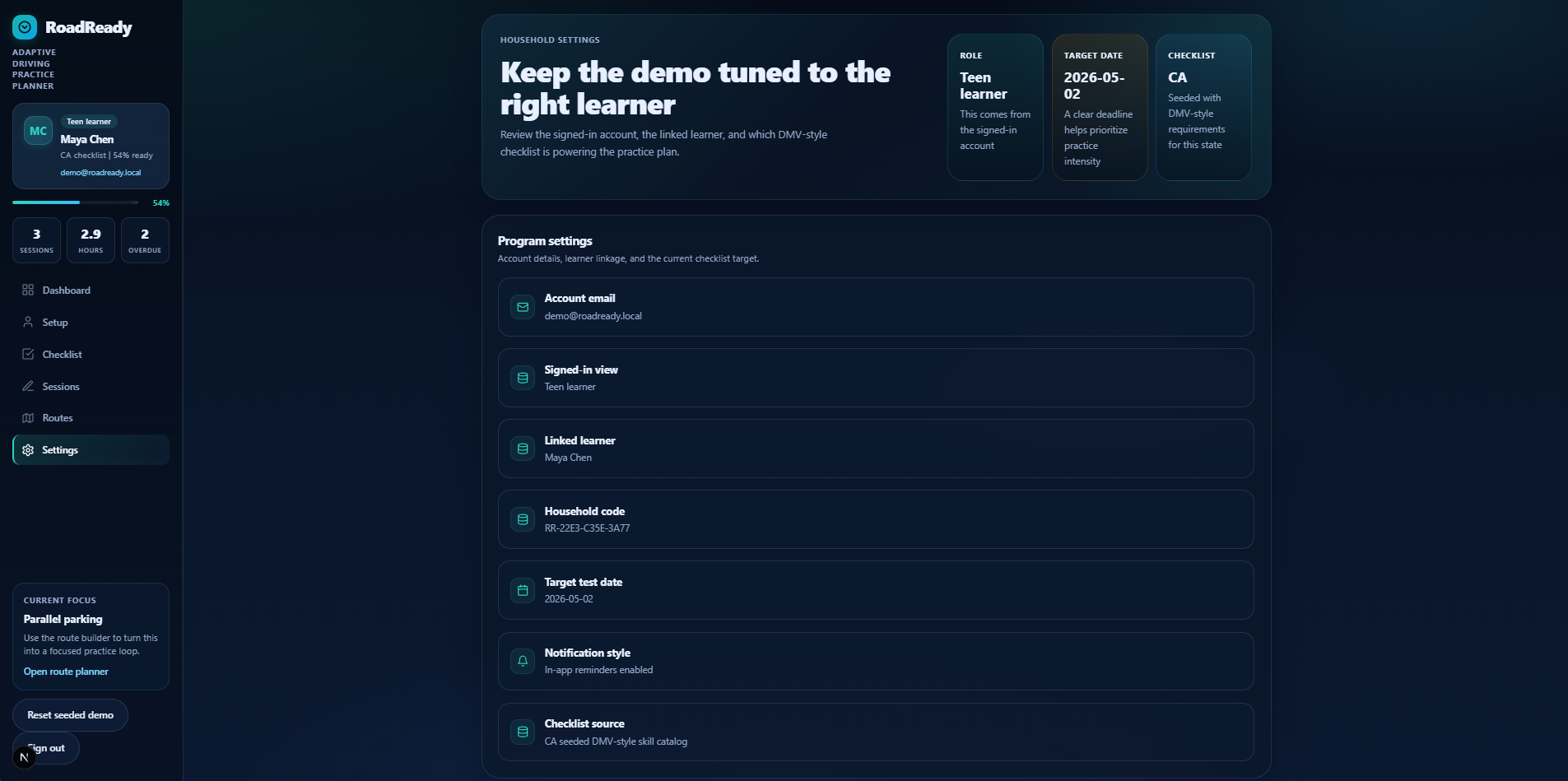
Settings Page
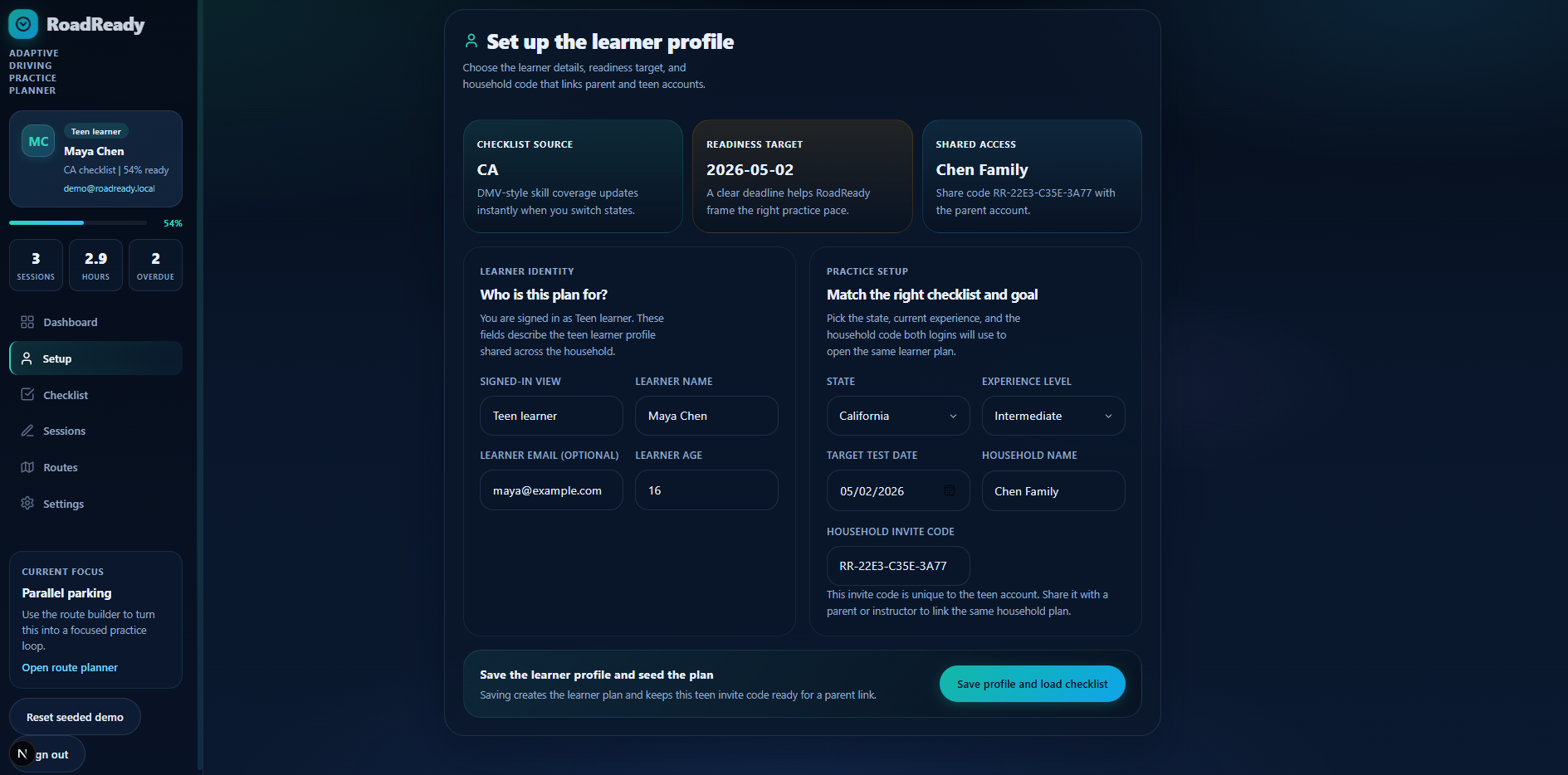
Inspiration
Learning to drive is stressful for both teens and parents, and most practice is surprisingly unstructured. From my experience, sessions often depend on whatever route feels easiest that day, which means important skills like lane changes, turns, parking, night driving, or busy intersections can get skipped. I wanted to build something that turns scattered practice into a real plan and helps families answer one simple question: what should we practice next?
What it does
RoadReady is a driving-practice planner for teen drivers and parents. It logs driving sessions, tracks skill confidence over time, highlights weak or overdue areas, and recommends the next best practice focus. It also generates nearby practice routes that match those skill gaps, so learners are not just repeating the same comfortable drive over and over.
The platform gives both the teen and parent a shared view of progress, readiness, coaching notes, and next steps. Today, RoadReady supports onboarding and planning for all 50 U.S. states through a shared driving skill framework with state-aware defaults, and I plan to expand that into deeper official state-specific checklist guidance over time.
How we built it
I built RoadReady as a full-stack web app using Next.js, React, and TypeScript. The app includes onboarding, local authentication, a learner dashboard, a session logger, a parent review view, and a route recommendation flow.
For mapping and route planning, I integrated Leaflet with OpenStreetMap-based services to search locations and generate practice routes. I also added AI-assisted summaries and route guidance, while keeping deterministic fallback logic in place so the app still works even without an API key. To make the project easy to demo, I used seeded local data and a local-first state model.
Challenges we ran into
One of the biggest challenges was turning driving practice into something adaptive instead of just another checklist. I had to figure out how to score readiness, detect stale or under-practiced skills, and make recommendations feel helpful rather than random.
Route generation was another challenge. It was not enough to simply show a map. I wanted the suggested route to actually match the learner's current needs and make sense as a realistic practice session. Balancing AI-assisted guidance with reliable fallback behavior was also important so the experience stayed useful in all cases.
Accomplishments that we're proud of
I'm proud that RoadReady feels like more than a tracker. It actively helps families decide what to practice next, why it matters, and where to do it.
I am also proud of the shared teen-and-parent workflow, the gap-based route recommendation system, and the fact that the app is demo-ready end to end with onboarding, session logging, progress tracking, and parent review all working together.
What we learned
I learned that good coaching tools are not just about storing data. They need to turn data into decisions. I also learned a lot about designing recommendation logic, working with mapping APIs, and building an experience that stays useful even when AI features are unavailable.
Most importantly, I learned how much value there is in narrowing the problem: instead of trying to build a generic driver's ed app, I focused on helping families practice more intentionally.
What's next for RoadReady
Next, I want to add persistent cloud-backed accounts and storage, integrate official state-specific checklist requirements, improve household linking and collaboration, and make route generation even smarter with better controls and validation.
I also want to add reminders, richer coaching insights, longer-term progress analytics, and a more production-ready maps and data stack so RoadReady can move from hackathon MVP to a tool families could genuinely rely on.
Built With
- gemini-api
- leaflet.js
- local-authentication
- next.js
- openai-compatible-api-support
- openstreetmap
- osrm
- overpass-api
- photon
- react
- react-leaflet
- typescript

Log in or sign up for Devpost to join the conversation.